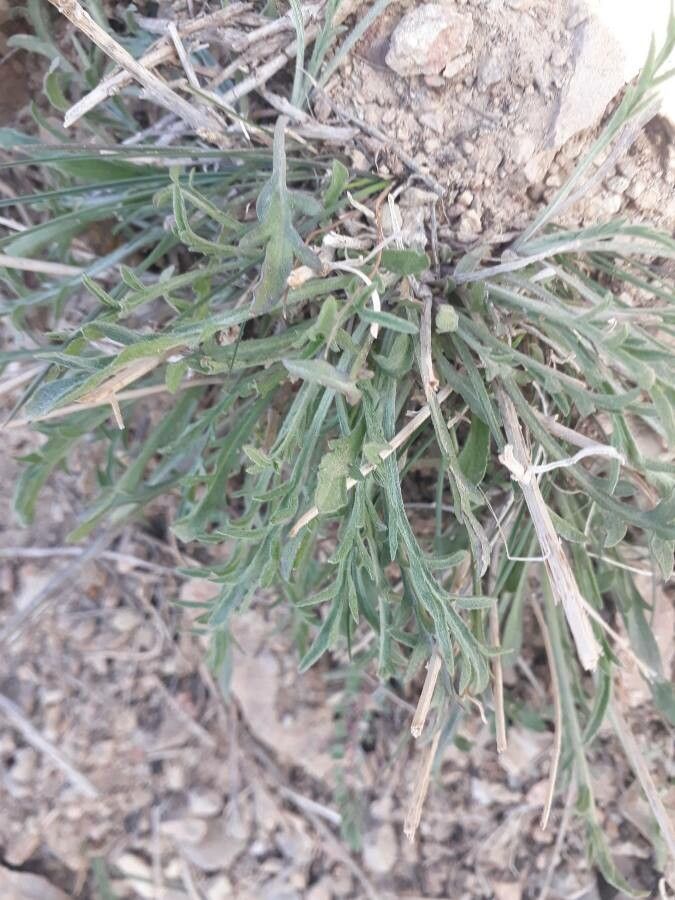
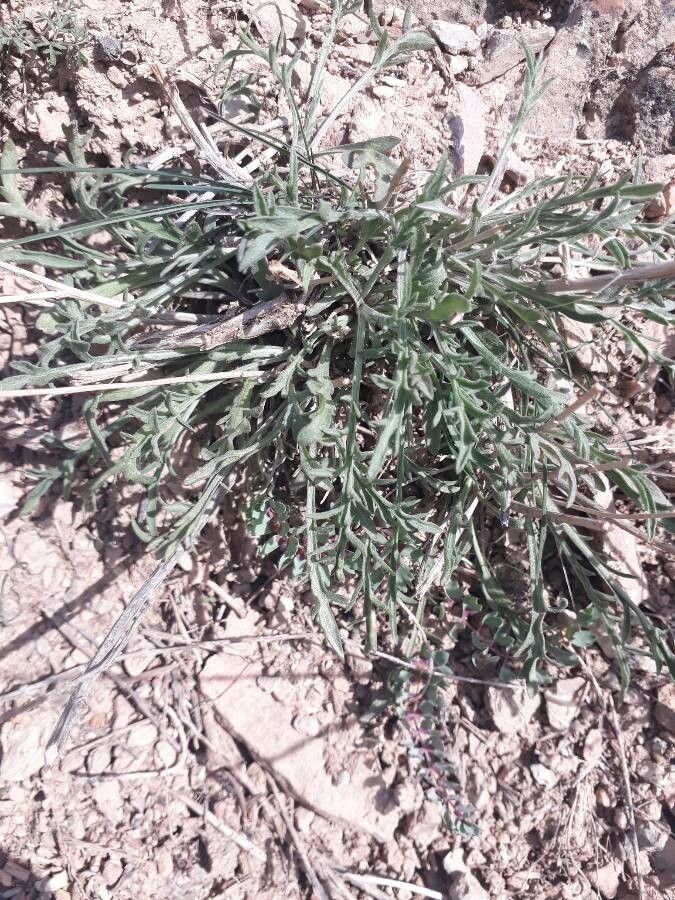
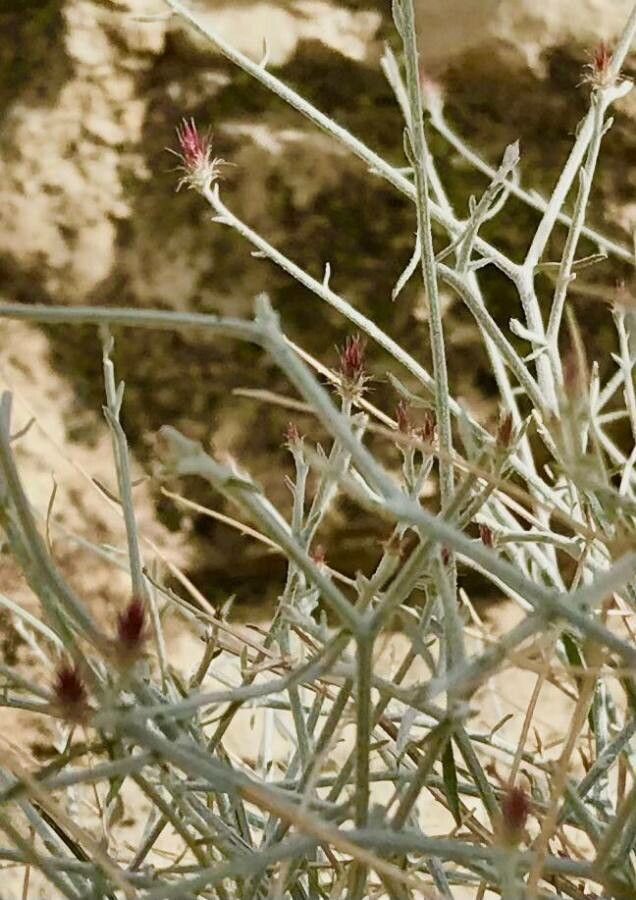
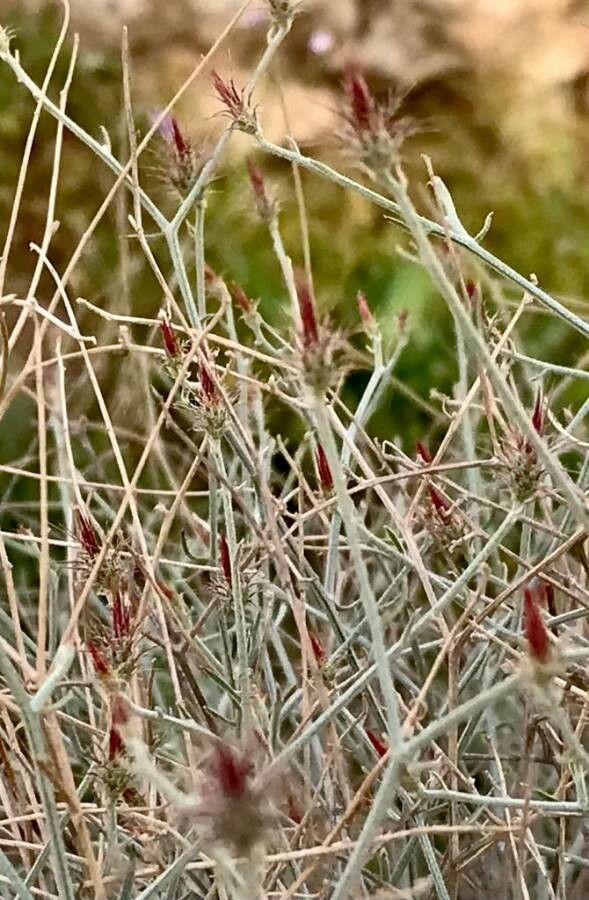
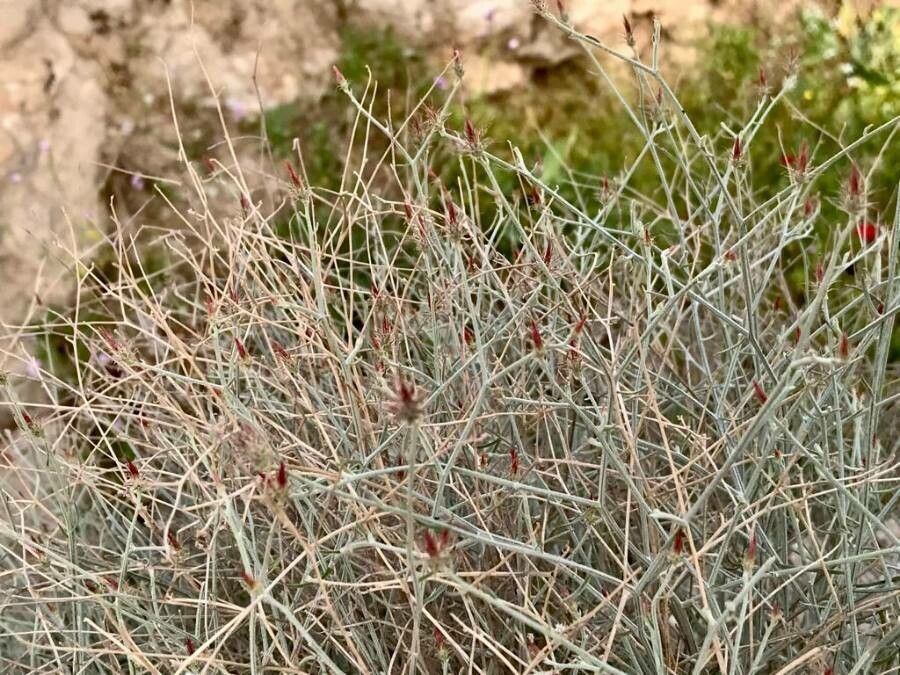
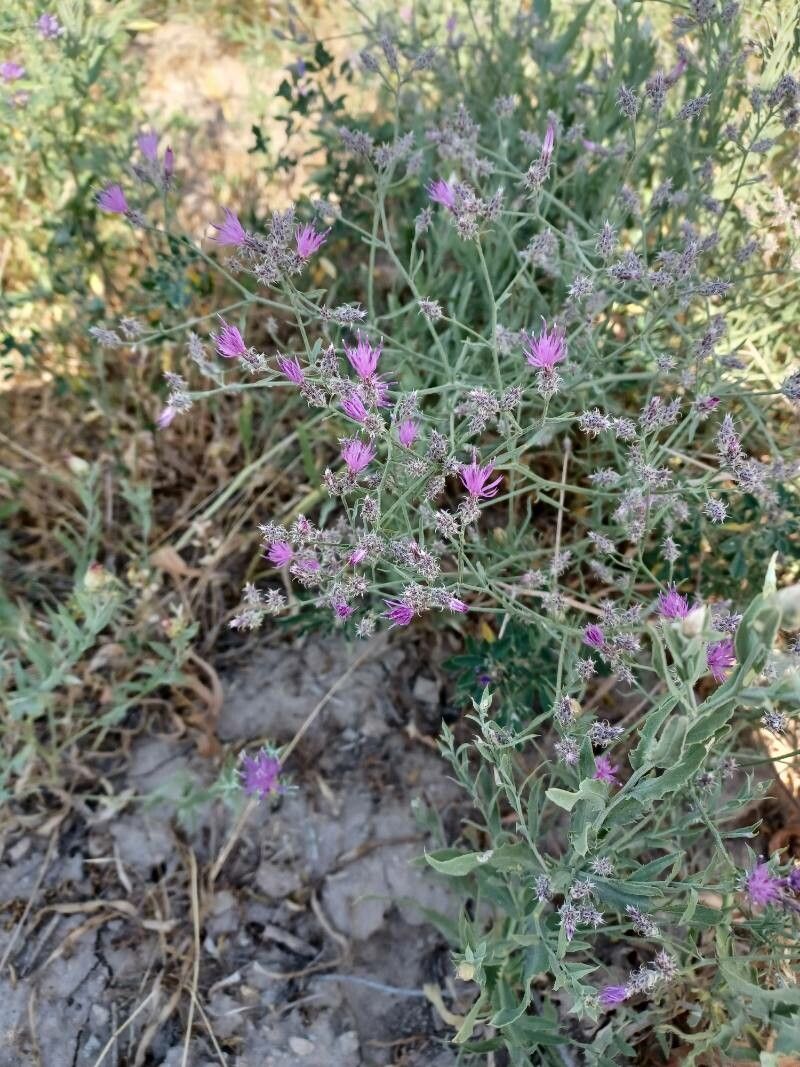
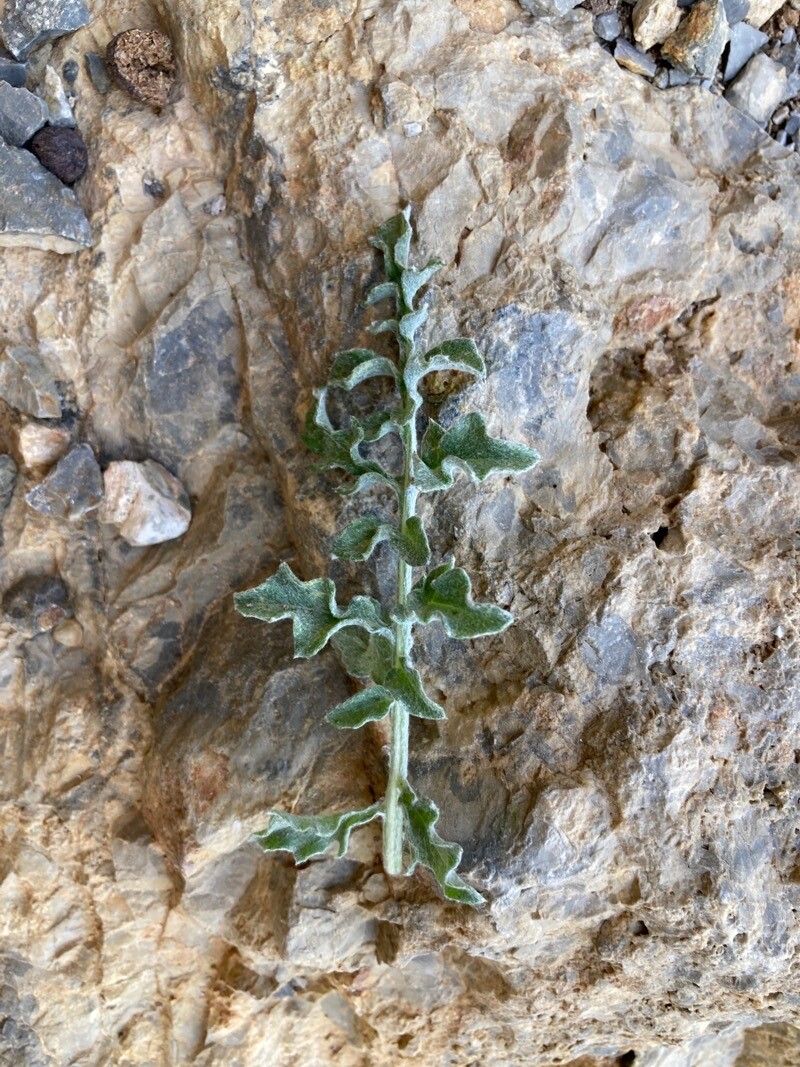
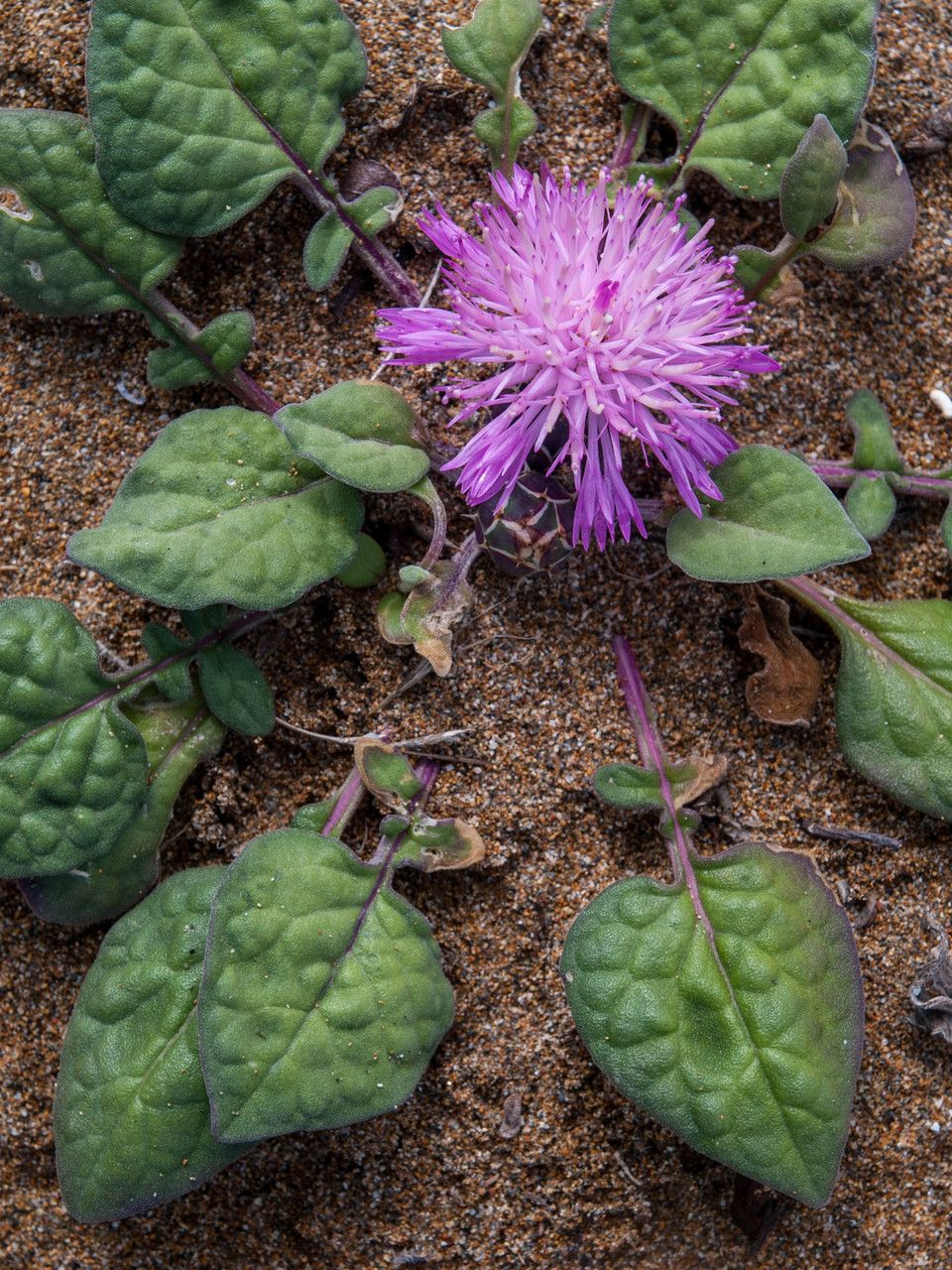
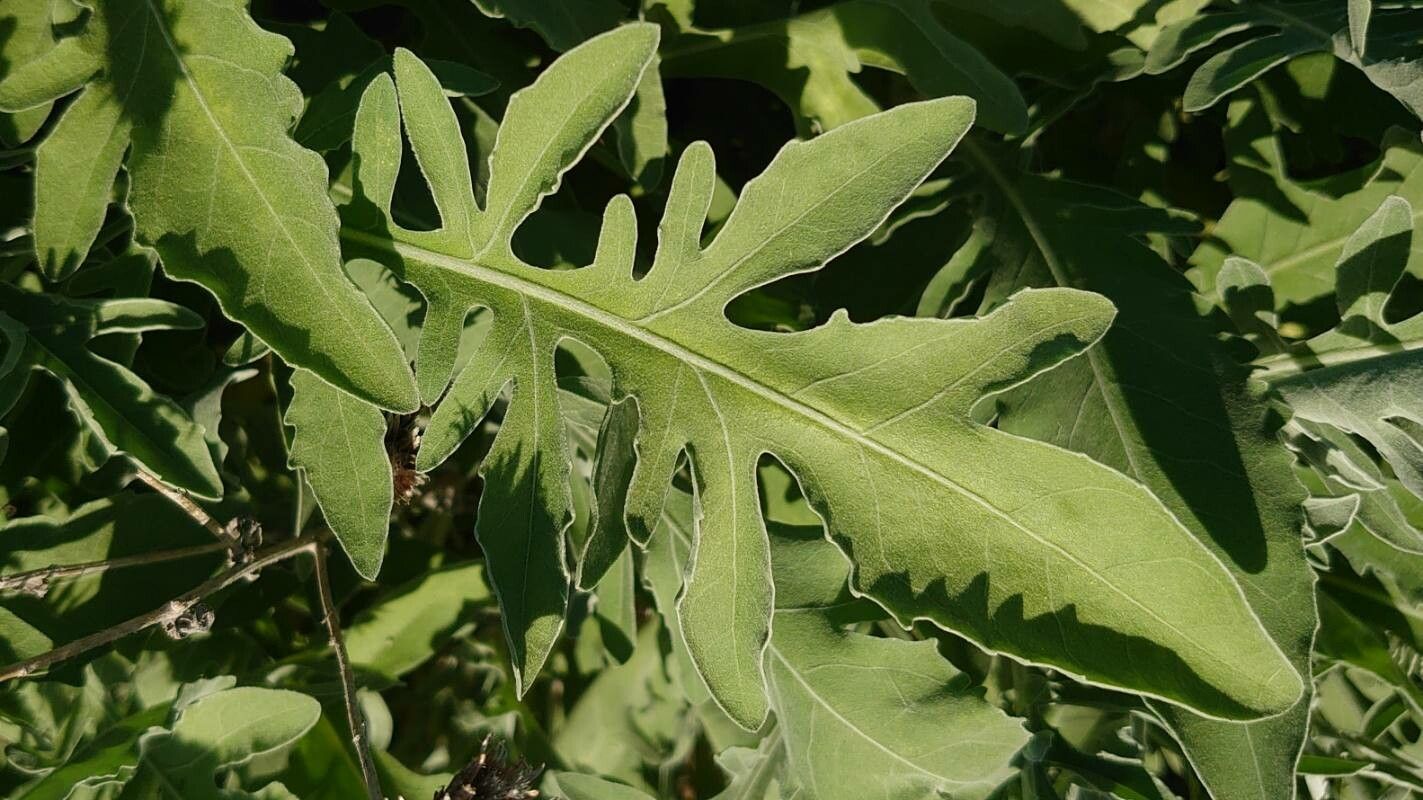
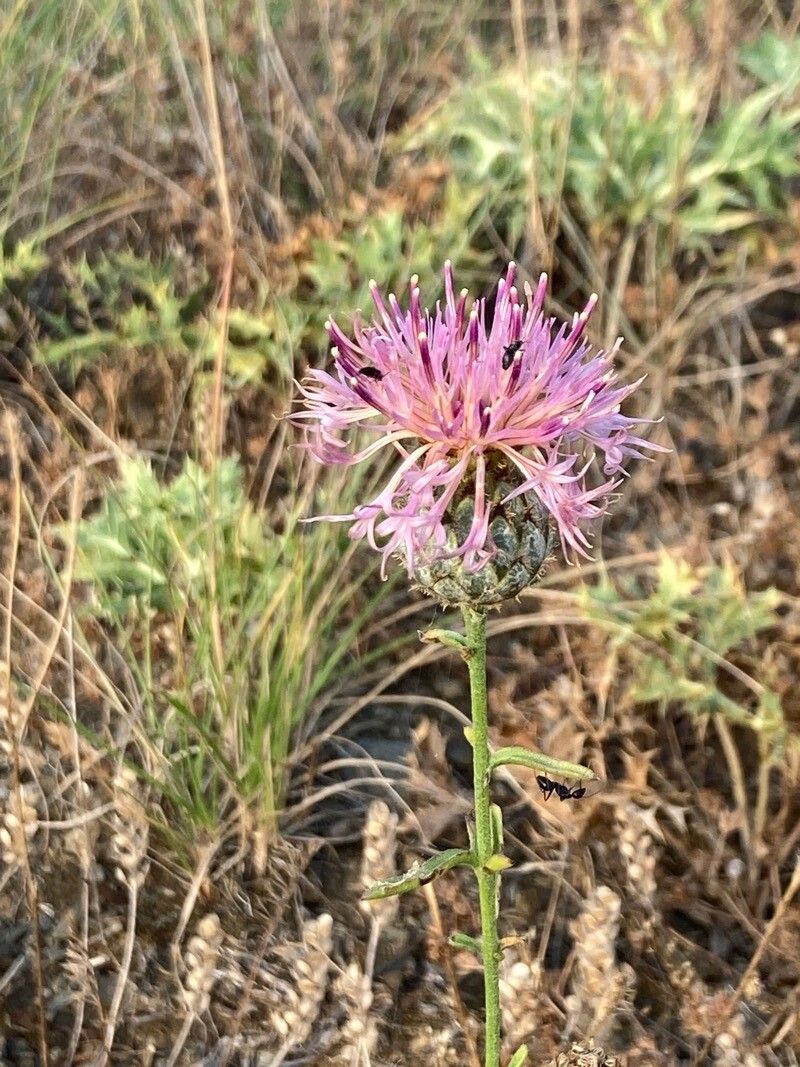
Centaurea virgata is a species of Centaurea. It is native to Western Asia. The subspecies C. virgata subsp. squarrosa is known as squarrose knapweed. It is found in northern California, Idaho, Utah and eastern Oregon. Plants are taprooted perennials and may reach a height of 36 inches. Flowers are formed in a slender urn-shaped head (4 to 8 flowers per head). Heads are slightly curved downward and resemble diffuse knapweed (Centaurea diffusa Lam.) on a diet but with rose-purple flowers. The head is made of a cluster of bracts and the tip of the bract is bent out. Seeds are pale brown and may disperse 60 feet when not spread by animals. The bent bract often allows the head to catch a ride on passing animals and is considered the mechanism for long distant dispersal. Older plants may have multiple rosettes on top of the long taproot. The taproot allows this weed to thrive in dry sites so it maybe more invasive than diffuse knapweed in ultra-dry rangeland.
Cheirolophus intybaceus has strong disease resistance and is generally not prone to illnesses. However, it can be affected by pests and diseases present in its surroundings. These infections are typically not severe. Regarding care, this plant requires moderate maintenance. It should be pruned regularly to preserve a neat appearance and promote healthy growth. Fertilizing can also assist in encouraging flowering. Cheirolophus intybaceus is suitable for anyone with outdoor space, such as a garden or patio, and does not demand extensive care experience. It may need more attention when grown indoors.
How to keep Centaurea Virgata.
Light
Cheirolophus intybaceus is a sun-loving perennial herbaceous plant that comes from open habitats and is frequently found in meadows and grasslands. It prefers full sun but can also tolerate partial sun conditions.
Water
Squarrose knapweed thrives in dry conditions and requires minimal moisture, needing only weekly watering. Overwatering can be harmful, so it's important to use well-draining soil to prevent root rot. Typically grown outdoors, squarrose knapweed is highly drought-tolerant and well-suited for arid environments.
Temperature
Cheirolophus intybaceus can tolerate a wide range of temperatures, but its distribution may still be restricted by particular combinations of moisture and heat. It does best in warm summers with sufficient rainfall or watering. Extended periods of cloudy, rainy weather, as well as prolonged high temperatures, can raise the chance of Cheirolophus intybaceus dying. In winter, protecting the plant from cold can improve its survival rate.
Fertilizer
The best time to fertilize a Cheirolophus intybaceus is in early spring, as it comes out of dormancy and starts active growth. Fertilizing supplies essential nutrients for healthy development. Although Cheirolophus intybaceus has fairly low fertilizer requirements, applying fertilizer annually can boost its survival and encourage better, longer-lasting flowers.
Pruning
Pruning squarrose knapweed from early to late spring encourages healthy growth and prevents the spread of seeds. Cut the stems back to ground level and remove any dead or diseased parts. This not only enhances the plant's overall health but also promotes tidiness and encourages new blooms, adding to the aesthetic appeal of squarrose knapweed in gardens.
Botanical profile.
- Plant Type
- Herb
- Life Cycle
- Perennial
- Genus
- Centaurea
- Family
- Asteraceae
- Hardiness Zone
- 8-11
- Mature Height
- 49 cm to 91 cm
- Mature Spread
- 40 cm to 61 cm
- Leaf Color
- Green, Dark Green
- Leaf Type
- Evergreen
- Flower Color
- Purple, Lavender
- Flower Size
- 2.03 cm to 3.05 cm
- Bloom Time
- Summer
- Planting Time
- Spring, Summer, Autumn
- Harvest Time
- Late summer, Early fall, Mid fall
Other names.