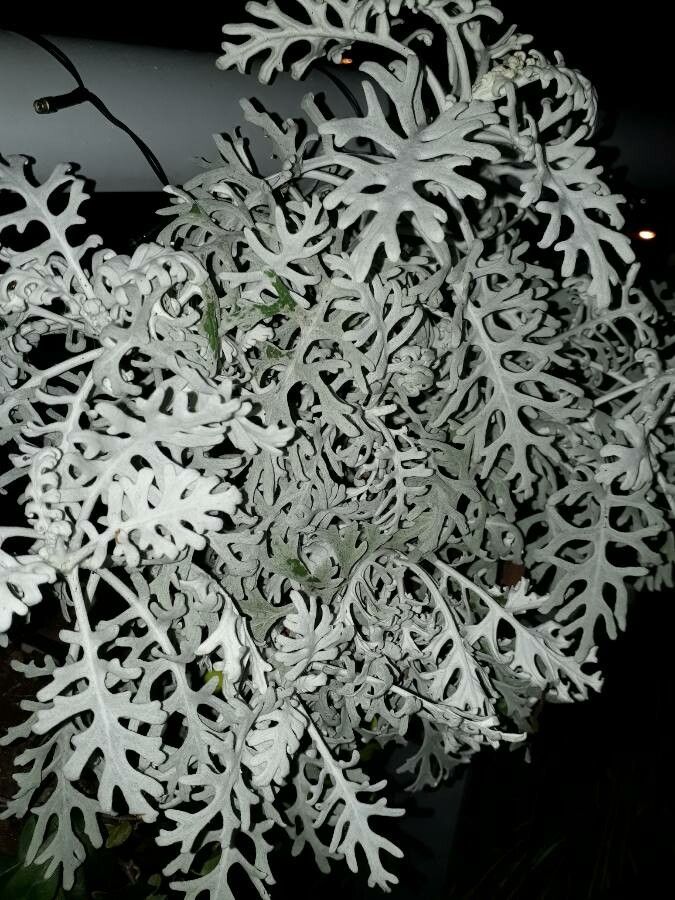
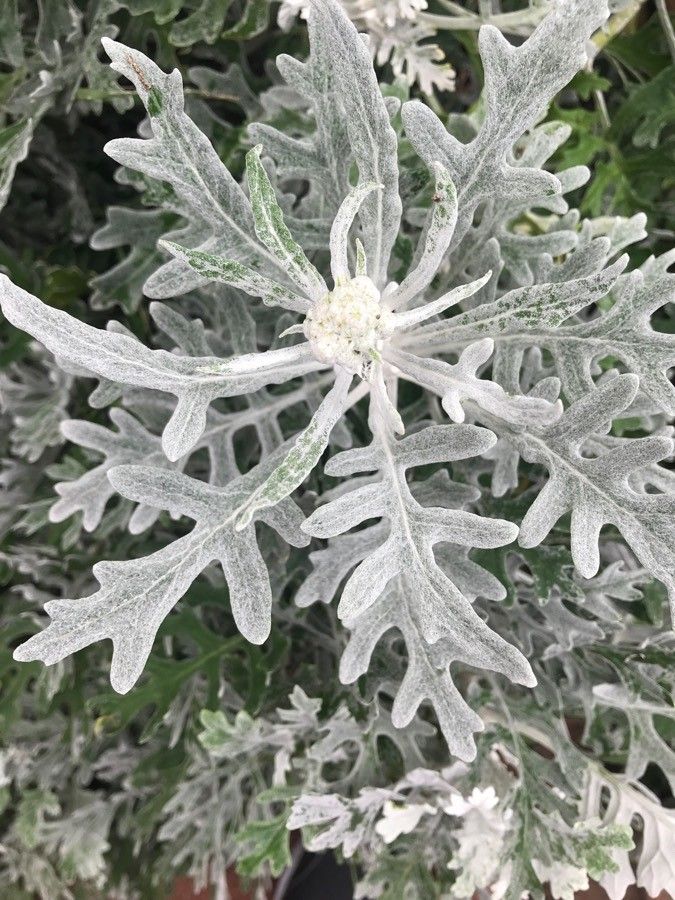
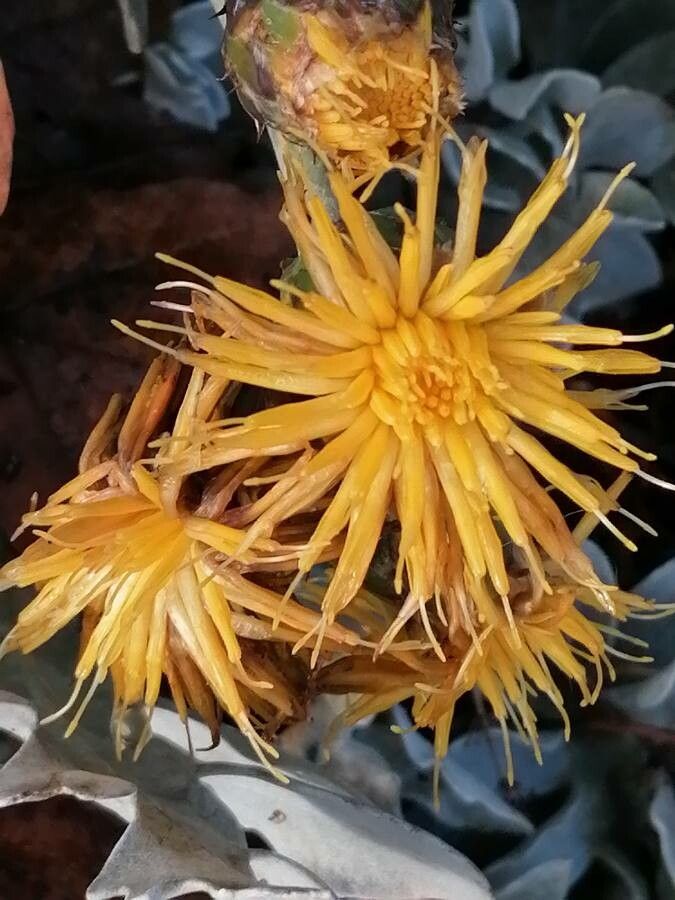
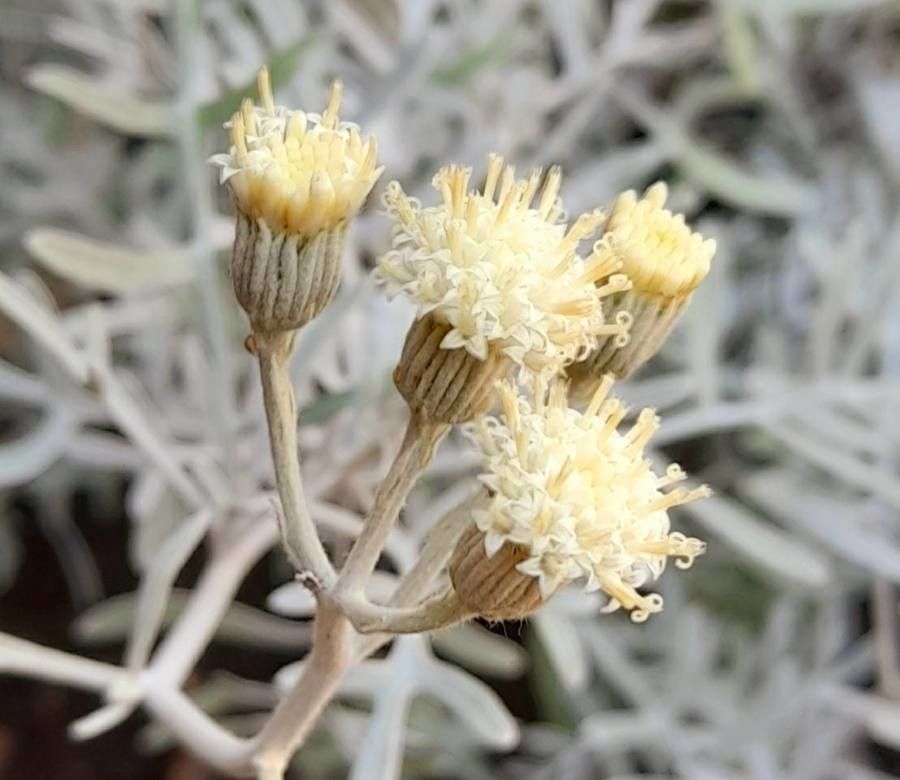
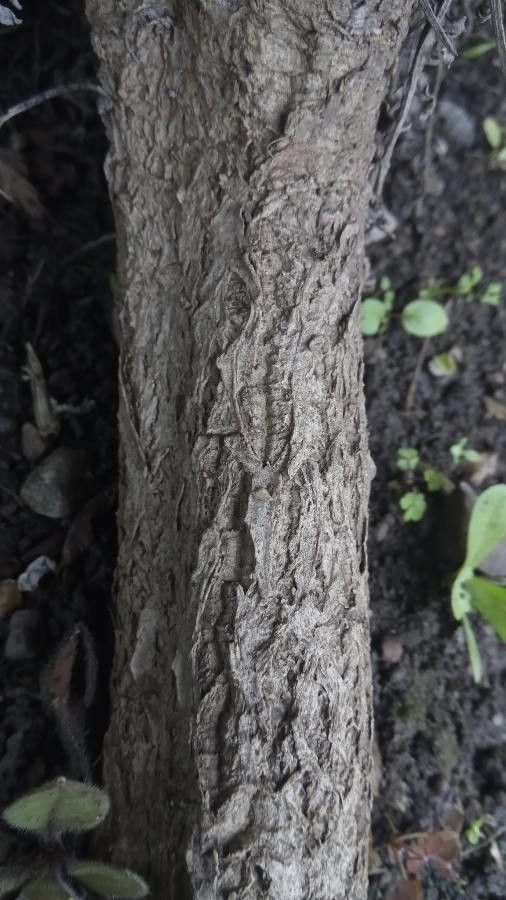
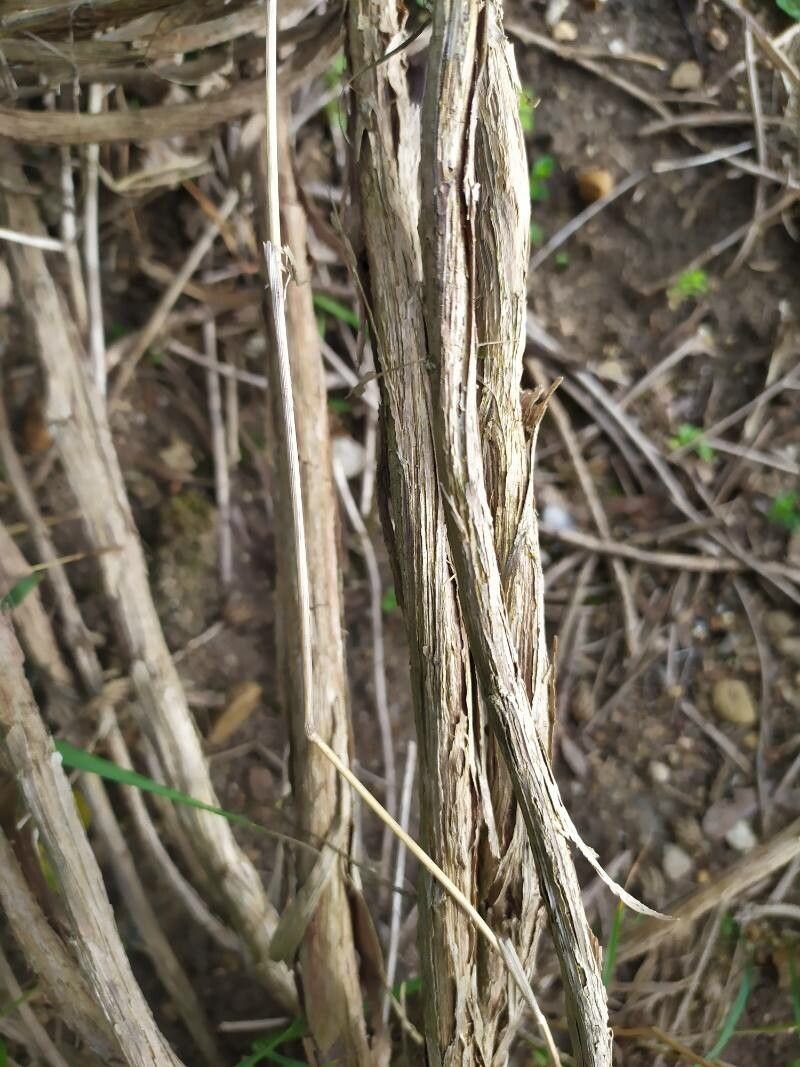
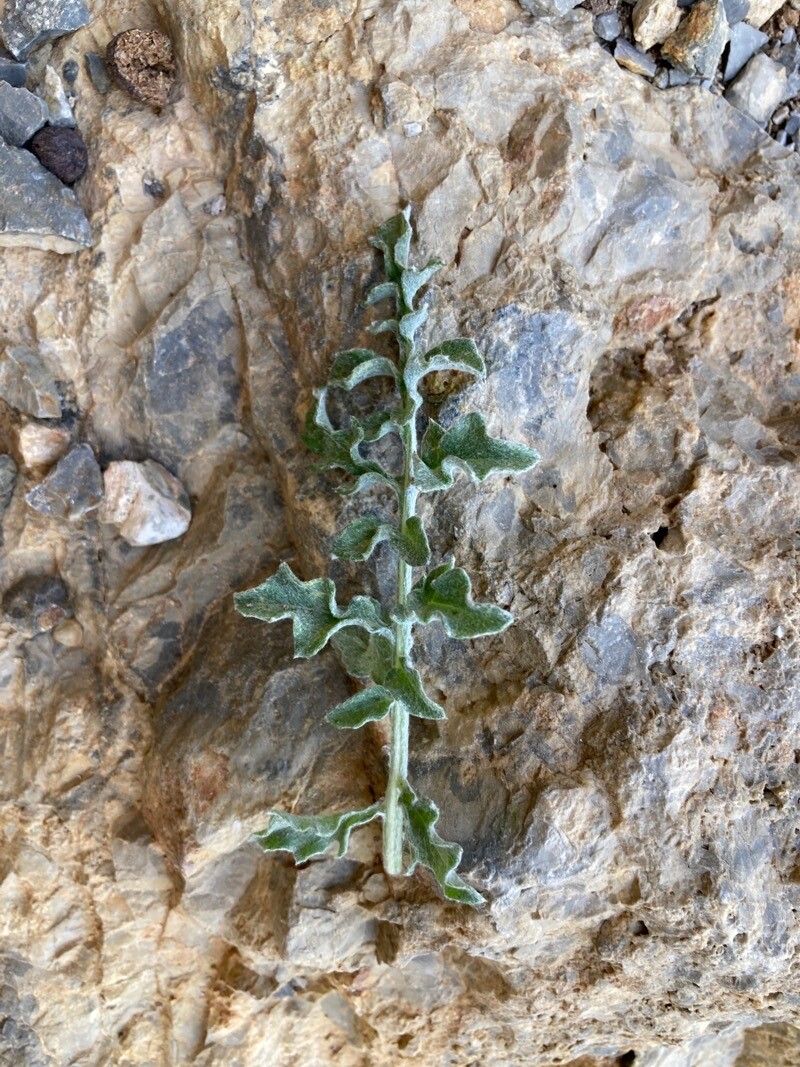
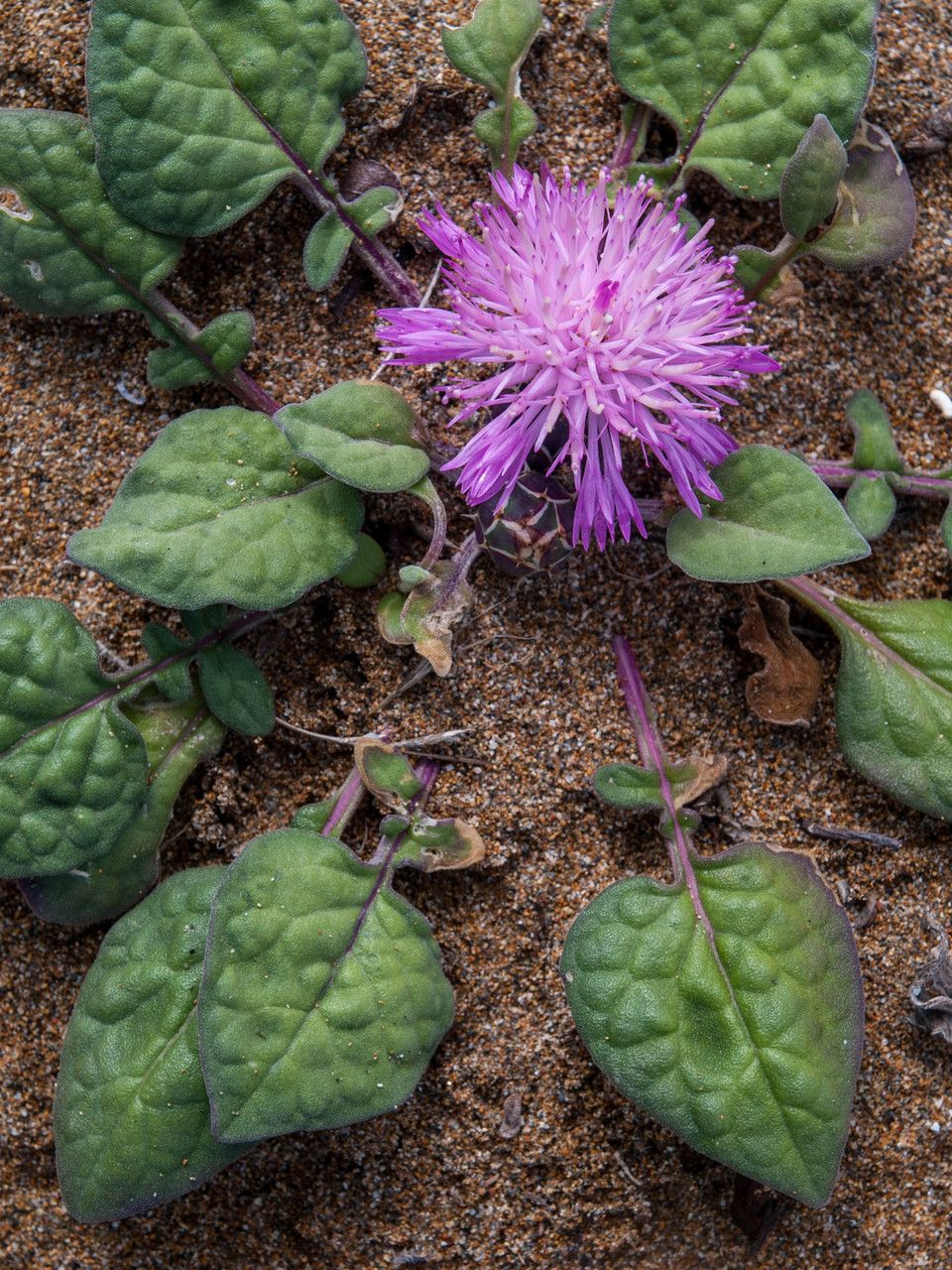
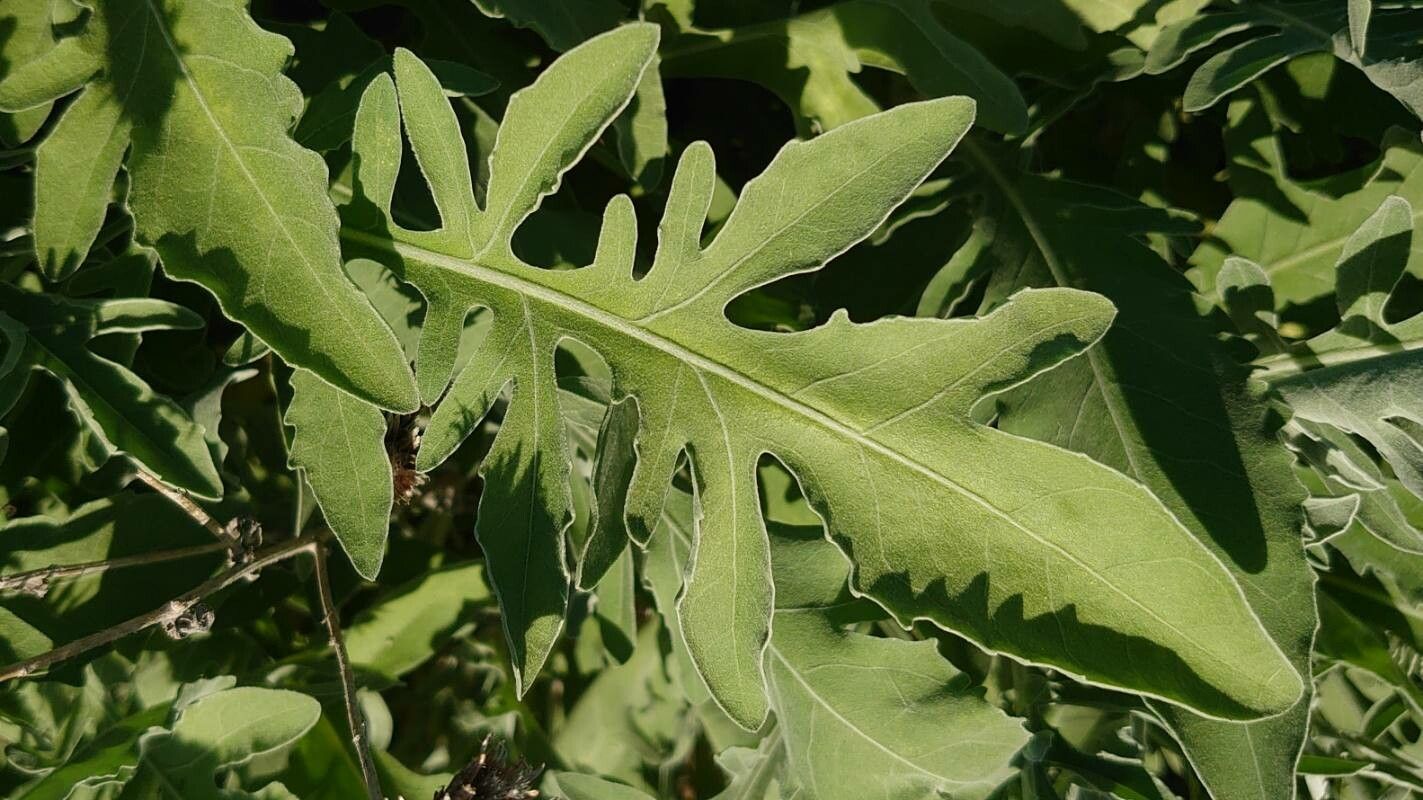
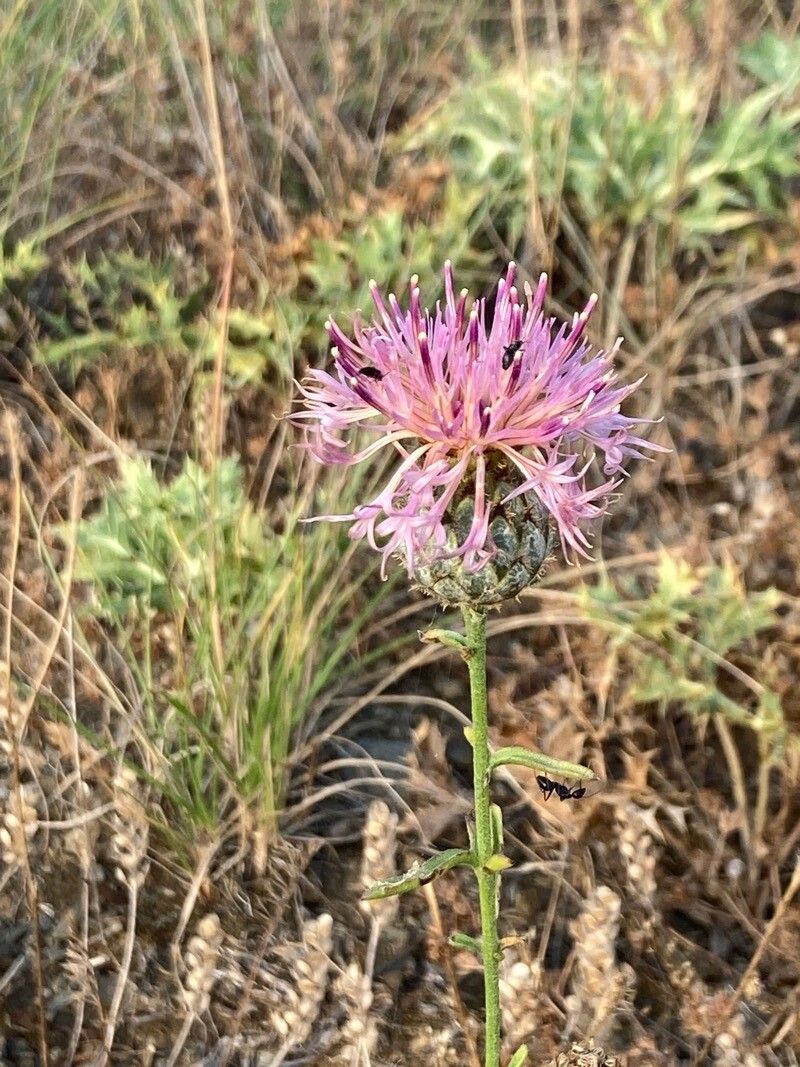
Centaurea cineraria, the velvet centaurea, is – like some other plants – also known as dusty miller and silver dust. It is a small plant in the family Asteraceae and originates from the Island of Capraia in Italy, where it is called fiordaliso delle scogliere.The mature plants will grow from 15 to 60 cm (6 to 23.5 in). They prefer full sun, but will tolerate light shade, and also prefers average to rich well-drained soil.Centaurea cineraria will produce small white or yellow flowers in summer, but these are usually trimmed because the plant is normally grown as foliage. Depending on climate, it can be grown as either an annual or as a perennial. Centaurea cineraria is polymorphic in several characters, and the high variation within populations gives rise to many subspecies which causes C. cineraria to be referred to under a wide variety of different synonyms.Common cultivars include:'Silver Dust', 'Silver Lace' and 'Cirrus'. The image above the scientific classification is a plant of the 'Silver Lace' cultivar. Centaurea cineraria is sometimes referred to as Centaurea gymnocarpa, as a hybrid species between the two is used in gardens as an ornamental plant. However, in the wild, the two may be considered different species.In the UK Centaurea cineraria subsp. cineraria has gained the Royal Horticultural Society's Award of Garden Merit.
Velvet centaurea is fairly resistant to disease and is generally not prone to illnesses. Still, it can be vulnerable to pests and diseases present in its surroundings. These problems are usually not serious. For care, this plant requires moderate maintenance. It should be pruned regularly to keep a neat appearance and support healthy growth. Fertilizing can also help encourage flowering. Velvet centaurea is suitable for anyone with outdoor space, such as a garden or patio, and does not demand extensive care experience. It may need more attention when grown indoors.
How to keep Centaurea Cineraria.
Light
The velvet centaurea prefers plenty of sunlight for healthy growth. While it can tolerate some shade, it truly thrives in sunnier spots. This reflects its native habitat, where it basks in abundant sun. However, too much light can sometimes damage its vigor.
Water
Velvet centaurea, native to the Mediterranean region, thrives in well-drained soil and prefers moderate rainfall. It can tolerate brief periods of drought. To maintain its health, water it weekly. Full sun exposure promotes its growth, and mimicking coastal moisture levels is crucial for its optimal development.
Temperature
Velvet centaurea is native to temperate climates and thrives best when temperatures range from 68 to 95 °F (20 to 35 °C). Seasonal adjustments may be needed to cope with warmer conditions that fall outside its preferred warmth.
Fertilizer
The best time to fertilize a Velvet centaurea is in early spring, as it comes out of dormancy and starts active growth. Fertilization supplies essential nutrients for healthy development. Although Velvet centaurea has fairly low fertilizer requirements, applying fertilizer once a year can improve its survival and encourage better, longer-lasting flowers.
Pruning
Velvet centaurea is highly valued for its distinctive silver foliage. To keep the plant healthy and promote denser growth and vibrant blooms, prune it in early to late spring. Use clean tools to remove any dead stems. Light shaping is recommended, and regular maintenance can help minimize the risk of pests. Always consult reliable gardening sources to verify pruning techniques.
Pot & Repot
To support healthy and compact growth, repot your velvet centaurea every 2-3 years in early spring. Choose a slightly larger pot with good drainage to reduce stress on the plant. After repotting, water the plant sparingly until you notice new growth, which will help ensure a strong start for its continued thriving.
Botanical profile.
- Plant Type
- Herb
- Life Cycle
- Perennial, Annual, Biennial
- Genus
- Centaurea
- Family
- Asteraceae
- Hardiness Zone
- 5-10
- Mature Height
- 15 cm to 61 cm
- Mature Spread
- 61 cm to 91 cm
- Leaf Color
- Green, White, Gray, Silver
- Leaf Type
- Evergreen
- Flower Color
- Yellow, Pink
- Flower Size
- 2.54 cm to 5.08 cm
- Bloom Time
- Summer
- Planting Time
- Spring
- Harvest Time
- Late summer, Early fall, Mid fall
Other names.
Reader questions.
How should I water my Velvet centaurea plant?
To properly water the Velvet centaurea, it is best to use filtered water at room temperature. Tap water may contain harmful particles, so filtering it is preferable. The water should be at room temperature or slightly warmer because the Velvet centaurea is native to warm climates, and cold water can be a shock to the plant. It is recommended to avoid watering from above, as this can cause issues with the foliage. Instead, simply water the soil with the filtered room temperature water until it is fully soaked. This method helps to moisten the roots and allows them to spread and collect necessary nutrients in the soil.
Why should I put fertilizer on my Velvet centaurea?
To keep your Velvet centaurea both beautiful and functional, fertilization is key. The leaves of this plant are its primary structure, so proper fertilization is essential for maintaining consistent color and a healthy texture. Fertilization also has important benefits below the surface, helping your Velvet centaurea develop new roots and maintain existing ones. By fertilizing your plant, not only will it thrive right now, but it will also be better equipped to absorb soil nutrients in the future.
What are the sunlight requirements for Velvet Centaurea?
Velvet Centaurea, also known as Centaurea cineraria, thrives best in locations that receive a generous amount of sunlight. It requires above 6 hours of sunlight daily for full sun exposure, but it can also grow in conditions of partial sun, which is about 3-6 hours of sunlight. Although capable of growing in shaded areas to a degree, its optimal health and flourishing are closely tied to being in more sunlit spots. Observing how the sunlight travels through your garden can help in picking the best spots that balance light and shade for these plants.
What is Velvet Centaurea?
Velvet Centaurea, with the botanical name Centaurea cineraria, is a plant native to moderate climates. It thrives in temperatures ranging from 68 to 95 °F (20 to 35 °C). This plant has strong cold resistance, making it a robust choice for a variety of gardens.
What should I do if I give my Velvet centaurea too much or too little water?
Both overwatering and underwatering can harm your Velvet centaurea, but overwatering is more common. Too much water can cause wilting, yellowing leaves, and even diseases like root rot, mold, and mildew that can kill your plant. Underwatering is less likely since Velvet centaurea can tolerate drought, but it can still happen, resulting in brittle, brown leaves. It's important to spot the signs of overwatering early to prevent irreversible damage. Reduce watering immediately if you notice these signs and consider using well-draining soil. If your Velvet centaurea is not getting enough water, simply increase your watering routine until the signs of drought subside.
When should I fertilize my Velvet centaurea?
To properly fertilize your Velvet centaurea, pay attention to the emergence of new growth in early spring. This signals the ideal time to start fertilization. While a single application of fertilizer is generally sufficient, if you want to maximize growth, consider feeding the plant multiple times throughout the spring and early summer. In this case, feed your Velvet centaurea approximately once every month to a month and a half.
Can artificial lighting be used for Velvet Centaurea and how?
Yes, artificial lighting can be a vital solution for growing Velvet Centaurea indoors, especially when natural sunlight is insufficient. This is particularly useful in winter or less sunny spaces. Using artificial light like LED lights, which can be tailored to provide specific wavelengths, supports optimal growth. Full sun plants need 30-50W/sq ft of artificial light, whereas partial sun plants require 20-30W/sq ft. It's important to place the light source 12-36 inches above the plant, mimicking natural sunlight's distance, and ensure the plants receive 8-12 hours of light per day to simulate the natural daylight hours.
What are the optimal growth conditions for Velvet Centaurea?
The optimal growth temperatures for Velvet Centaurea are between 68 to 95 °F (20 to 35 °C). Seasonal adjustments may need to be made to shelter the plant from temperatures beyond its preference range. It is well-adapted to cold climates and usually does not require special frost protection measures. However, preparing for winter by watering the plant abundantly before the first freeze can help ensure the soil remains moist and prevents drought during the colder months.
How frequently should I water my Velvet centaurea?
If your Velvet centaurea is in a pot, the best way to determine if it needs water is by checking the soil with your finger. If the top two to three inches of soil are dry, it's time to water. When growing Velvet centaurea outdoors in the ground, you can use the same method. If the top few inches of soil are dry, water the plant. In the spring and early fall, watering once a week is often sufficient. However, during very hot weather, watering may need to be increased to twice a week or more. It's worth noting that mature, well-established Velvet centaurea plants can tolerate drought well.
When is it not a good idea to add fertilizer to my Velvet centaurea plant?
During the late fall and winter, your Velvet centaurea goes into a dormant phase and stops growing. During this time, it's best to avoid fertilizing it. In the spring and summer, if you decide to fertilize, start reducing the amount as summer approaches because the growth rate slows down. It's important to never fertilize your Velvet centaurea during extremely hot weather or when the soil is unusually dry. Fertilizing in these conditions can stress the plant and cause it to die prematurely.
What are the symptoms of inadequate light for Velvet Centaurea?
When Velvet Centaurea doesn't receive sufficient light, several symptoms can manifest, indicating light deficiency. These include the growth of smaller leaves than previously matured, leggy or sparse growth due to longer spaces between leaves or stems, faster leaf drop as the plant conserves resources, delayed or completely halted new growth, paler new leaves signalling a lack of chlorophyll, yellowing of leaves (chlorosis) from excessive sunlight, sunscald marked by pale, bleached areas on the plant, leaves curling or twisting as a defense against extreme sunlight, wilting due to loss of water, and leaf scorching characterized by brown, dry edges or patches on leaves because of excessive sunlight exposure.
How should Velvet Centaurea be cared for during winter?
Velvet Centaurea is cold-tolerant but should be kept above 0°C during winter. If winter temperatures are expected to drop below -25°C, cold protection should be provided by covering the plant with soil or straw. Watering the plant abundantly before the first freeze of autumn ensures the soil enters a frozen state moist, aiding the plant's resistance to drought and water scarcity during winter and early spring.