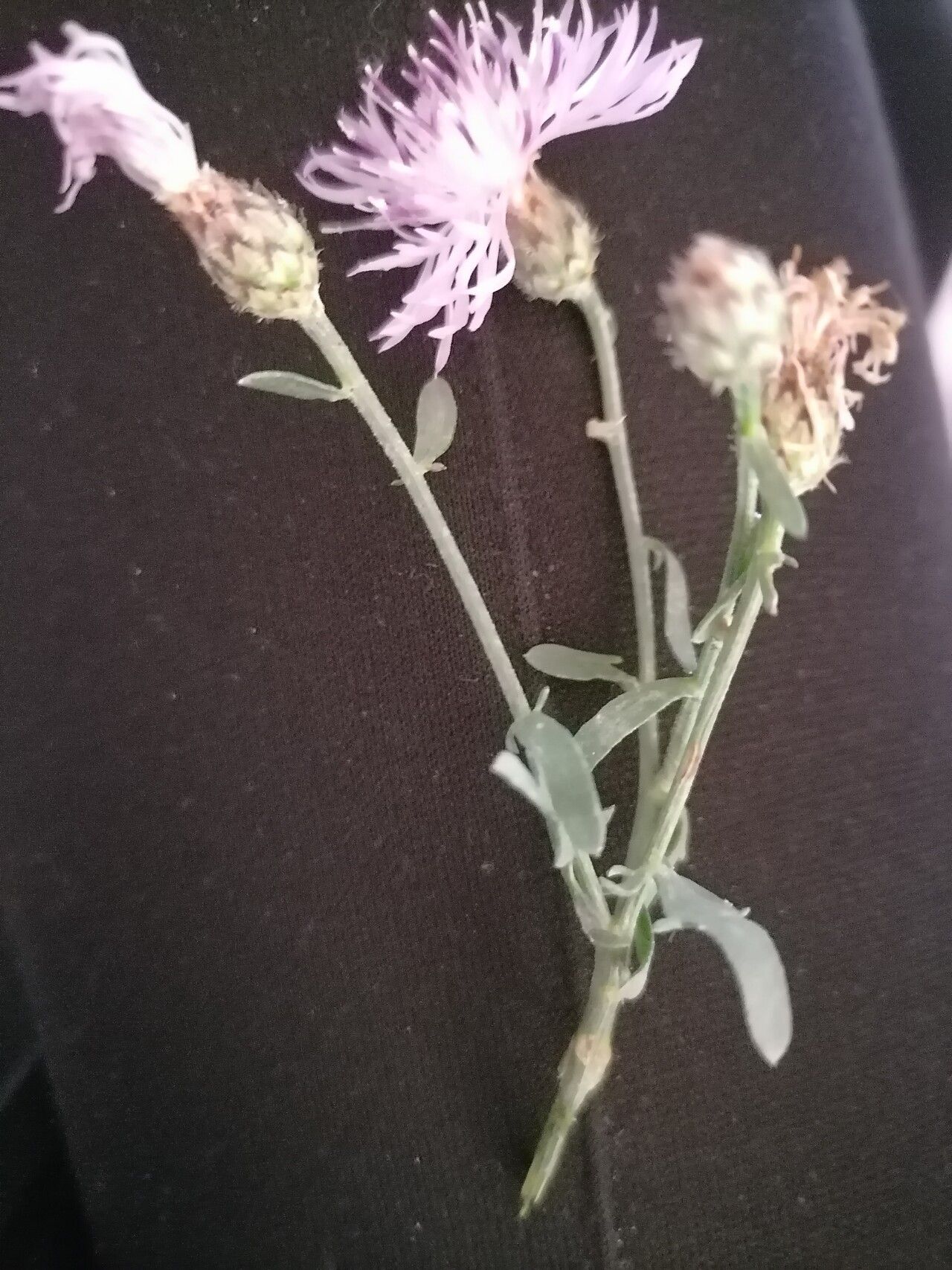
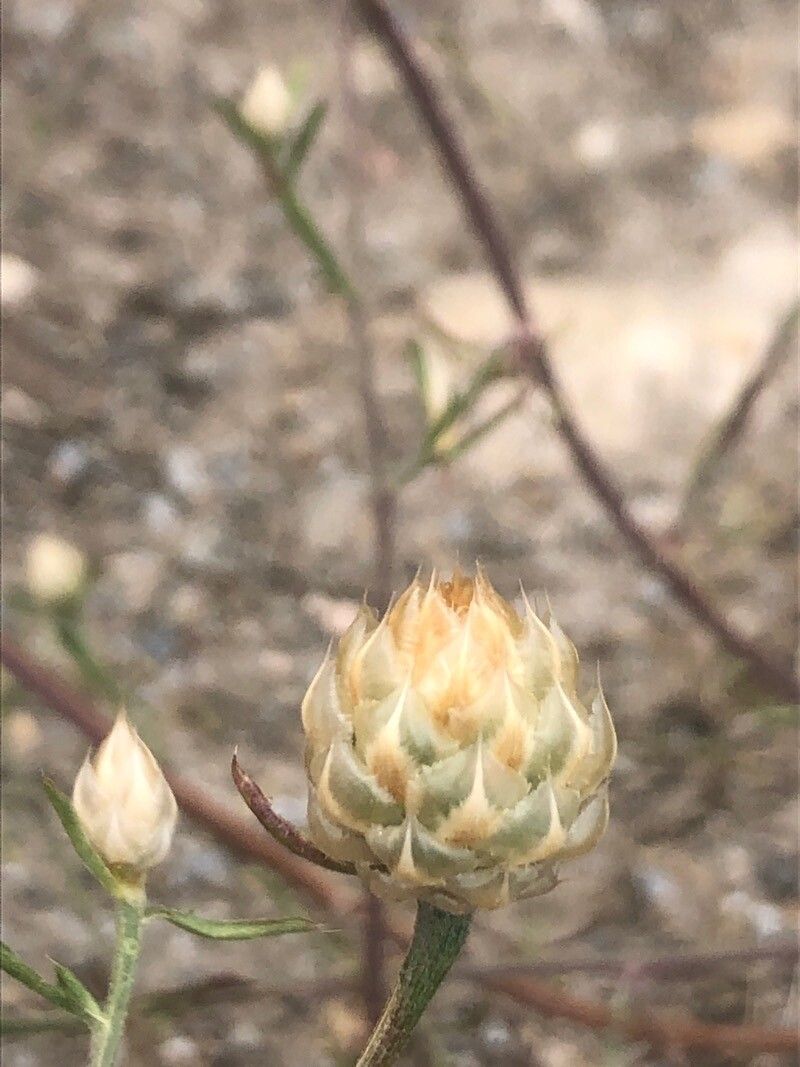
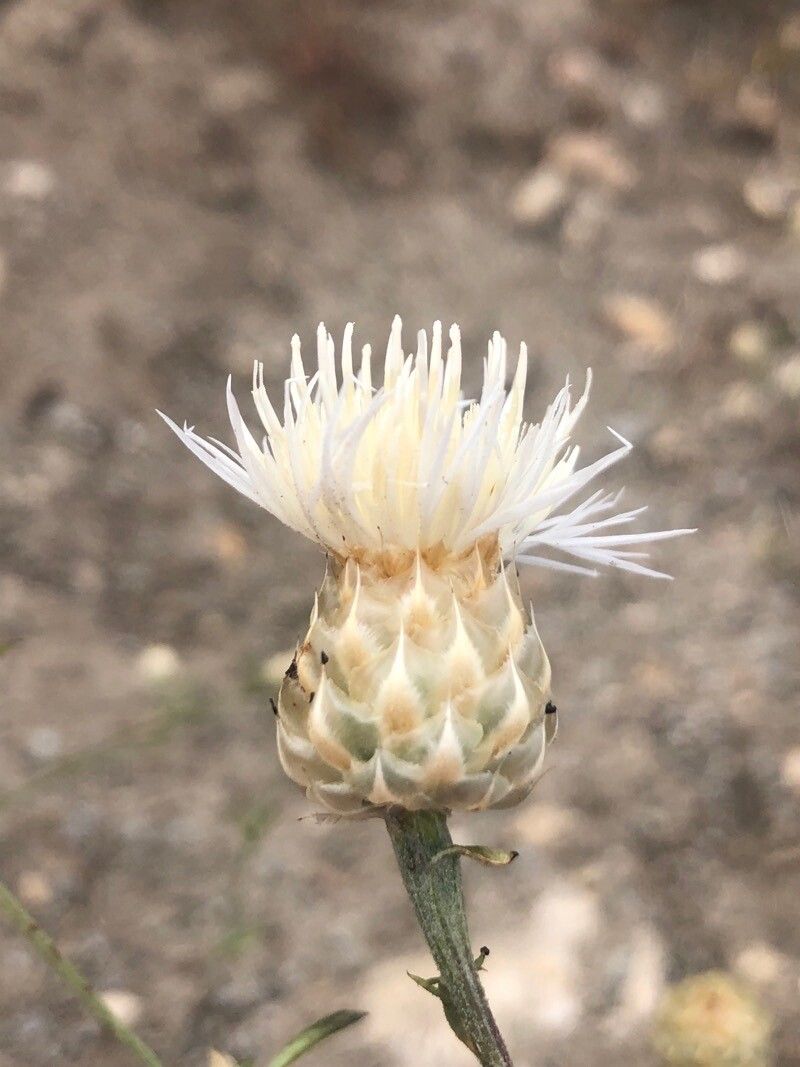
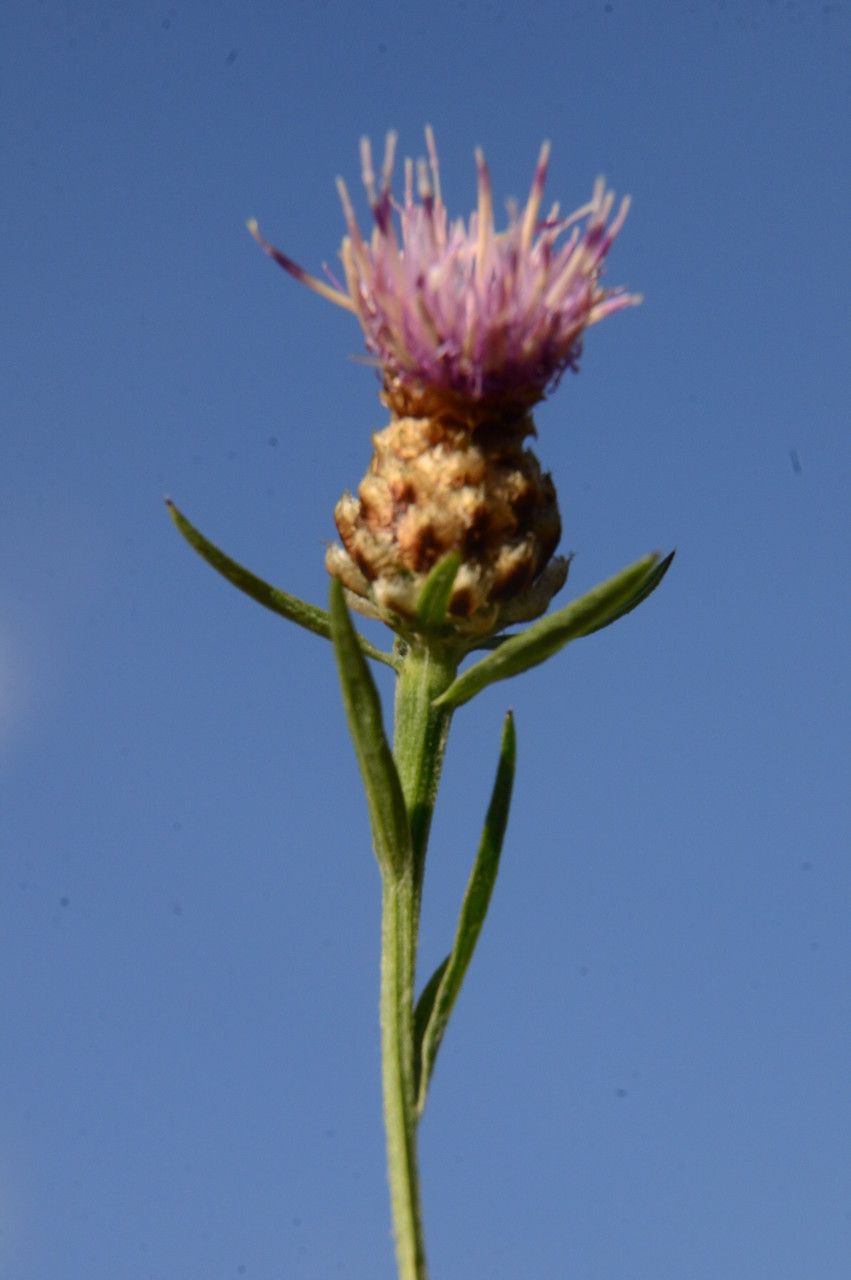
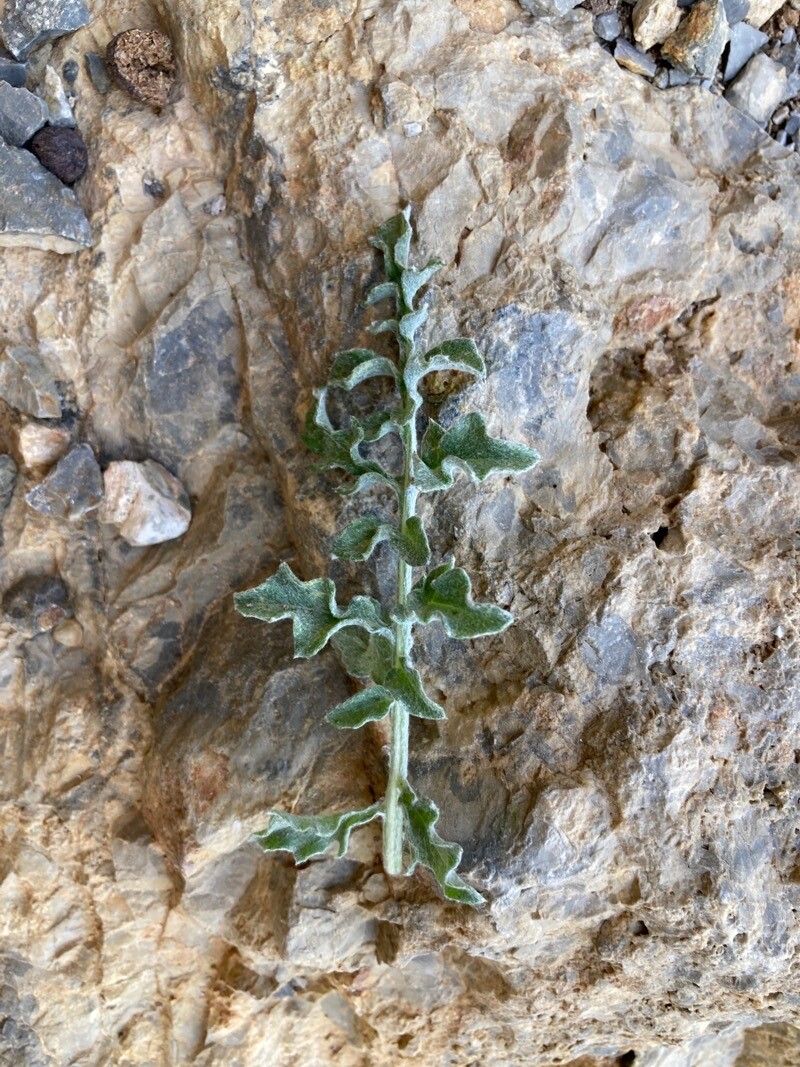
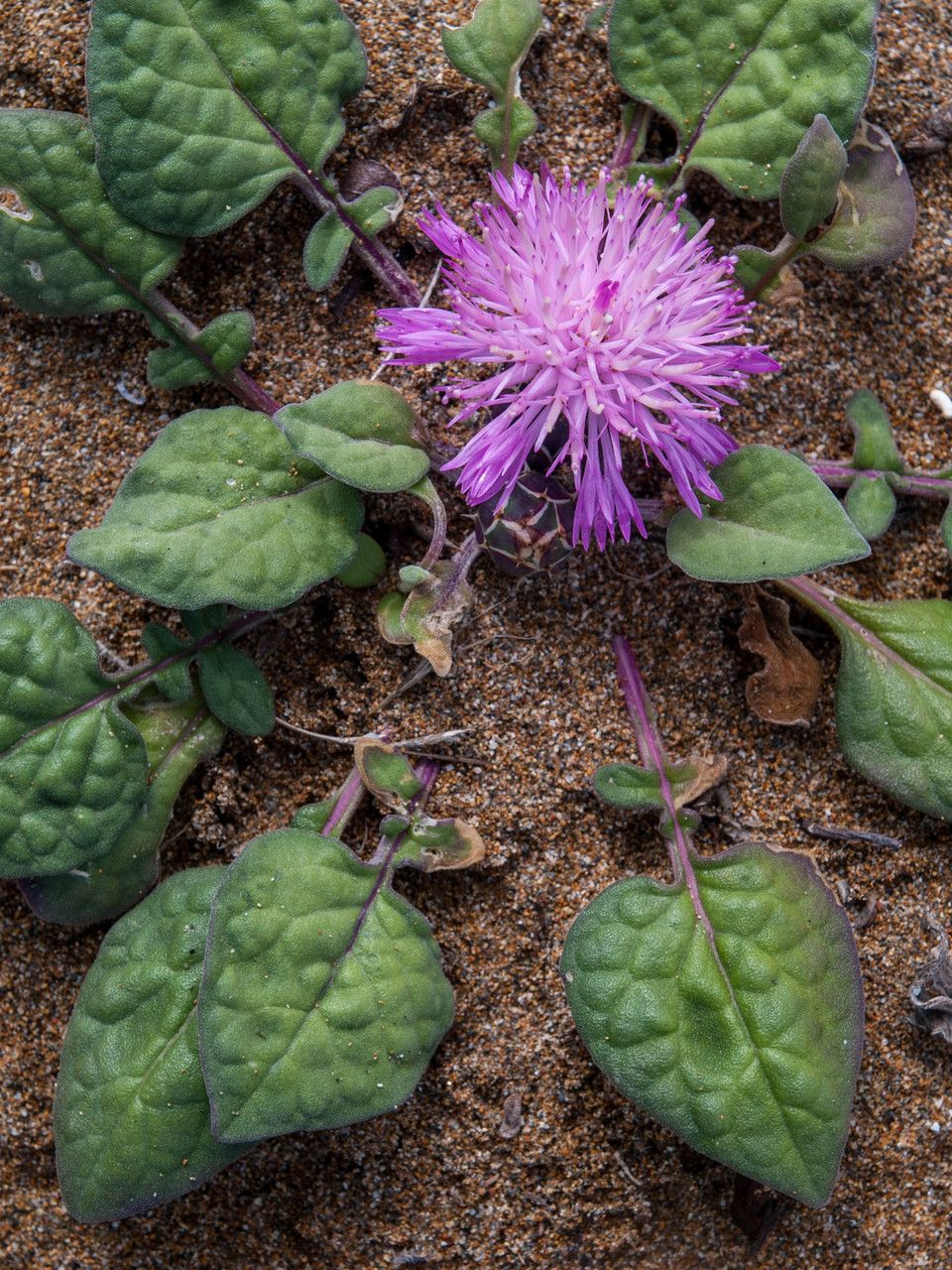
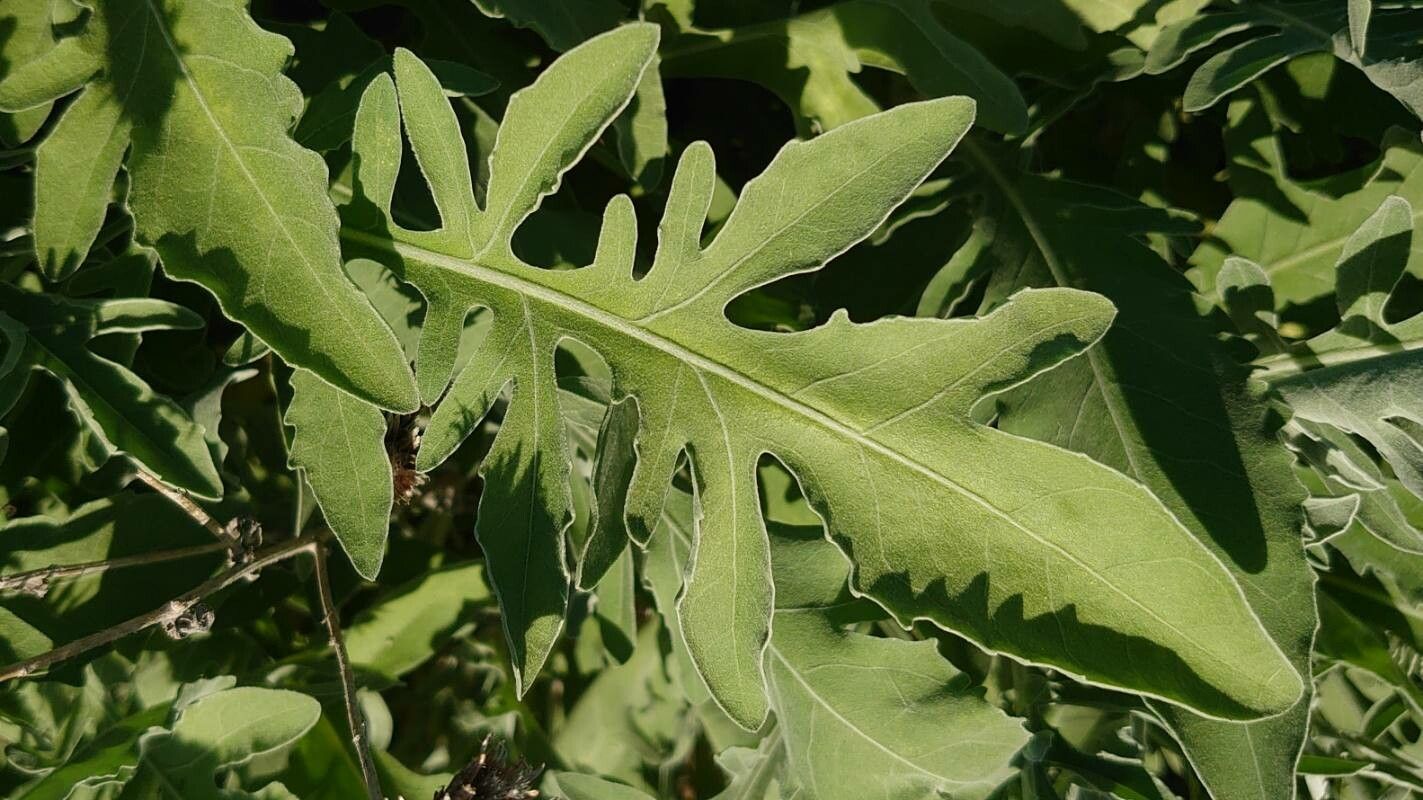
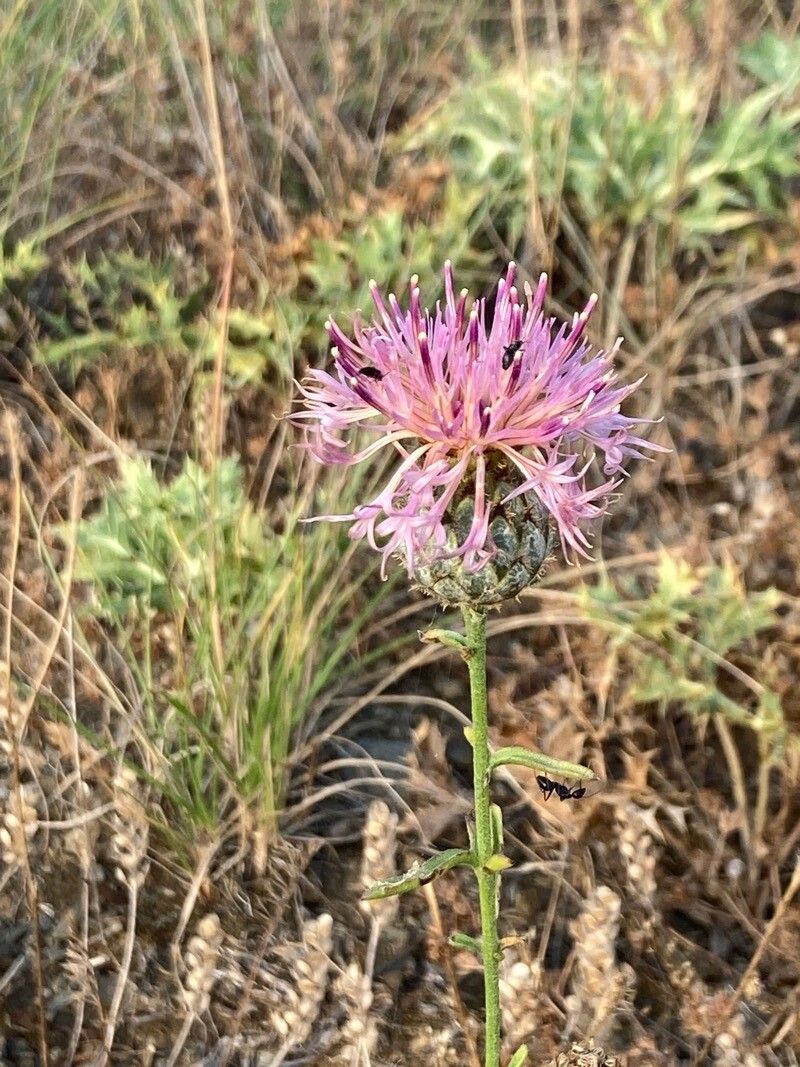
Centaurea alba is a species of Centaurea found in the Iberian Peninsula in southern and central Spain and in a small neighbouring area in the interior of Portugal. There are three recognised subspecies, and of one subspecies, the nominate, there are furthermore three varieties. It has been called pale knapweed in English. Vernacular names which have been recorded for this herb in Castilian Spanish are calcitrapa, cardo estrellado, centaura estrellada, garbanzos del cura, siempre nueva, siempre-nueva, and trapacaballos. Other local recorded names in Spanish are abreojos, abrepuños, amargosa, amargosilla, amargoso, ardolla, arzolla, cardo abrepuños, cardo de la arzolla, marbosilla, margosilla, piropo, planta para hemorroides and raíz de la arzolla. In the Catalan language it is known as raspallera in the Valencian dialect.
Pale knapweed is fairly disease-resistant and generally not prone to illnesses. Nonetheless, it can be affected by pests and diseases present in its environment. Such infections tend to be mild. As for care, this plant requires moderate maintenance. It should be pruned regularly to preserve a tidy appearance and healthy growth. Fertilizing can also encourage flowering. Pale knapweed is well-suited for anyone with outdoor space, like a garden or patio, and does not demand a lot of gardening experience. It may need more attention when grown indoors.
How to keep Centaurea Alba.
Light
Pale knapweed is a sun-loving, perennial herbaceous plant that occurs in open habitats and is often found in meadows and grasslands. It prefers full sun but can also tolerate partial sun.
Temperature
Pale knapweed can tolerate a broad range of temperatures, but its distribution may still be restricted by different combinations of moisture and heat. It does best in warm summer climates with sufficient rainfall or watering. Long periods of cloudy, rainy weather, as well as extended high temperatures, can raise the probability of Pale knapweed dying. In winter, adequate protection from cold can increase the plant’s survival rate.
Fertilizer
For Pale knapweed, a single fertilizer application in spring is typically enough, although repeated feedings can boost growth. Fertilize every month to six weeks. Fertilization improves the appearance and function of the leaves, encouraging even color and a healthy texture. It also promotes root development and nutrient uptake for sustained plant health.
Botanical profile.
- Plant Type
- Herb
- Life Cycle
- Perennial
- Genus
- Centaurea
- Family
- Asteraceae
- Hardiness Zone
- 5-9
- Mature Height
- 30 cm to 76 cm
- Mature Spread
- 20 cm to 40 cm
- Leaf Color
- Gray, Light Gray
- Leaf Type
- Deciduous
- Flower Color
- White
- Flower Size
- 3.05 cm to 5.08 cm
- Bloom Time
- Summer
- Planting Time
- Autumn, Winter
- Harvest Time
- Late summer, Early fall, Mid fall
Other names.