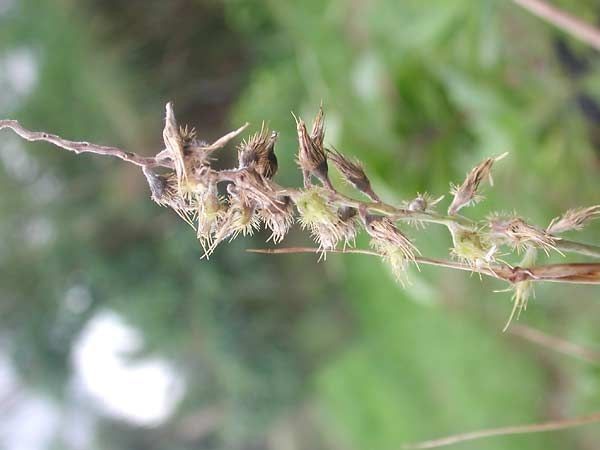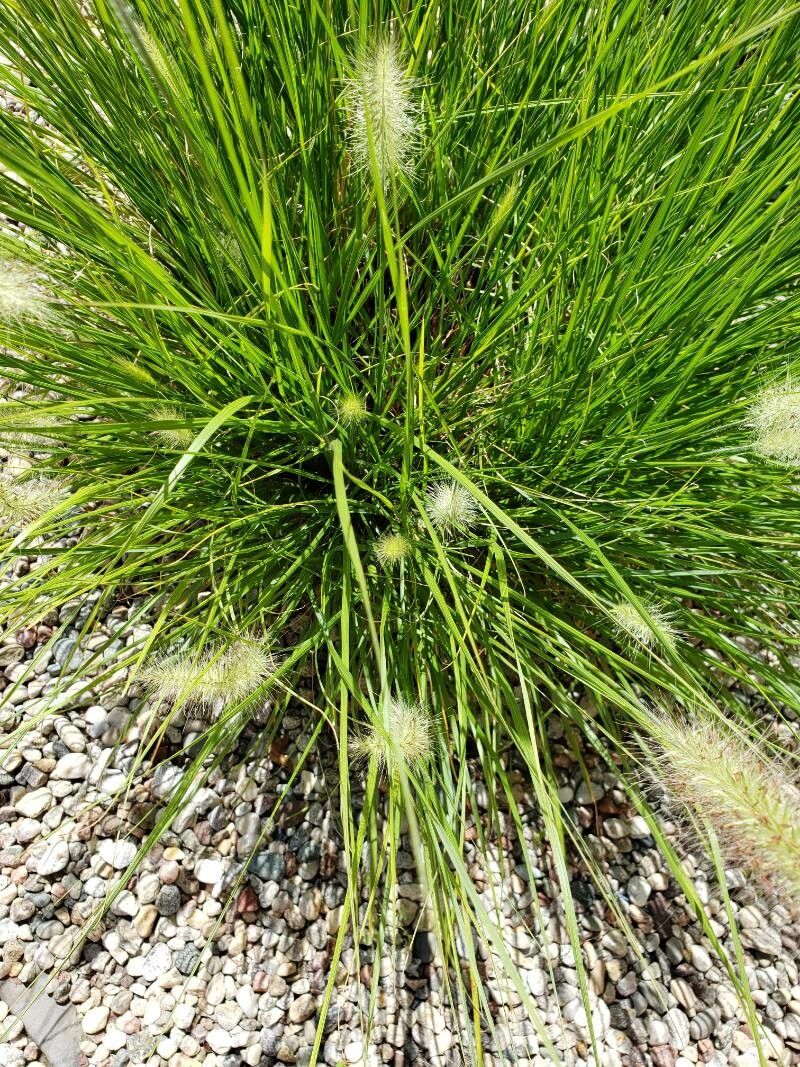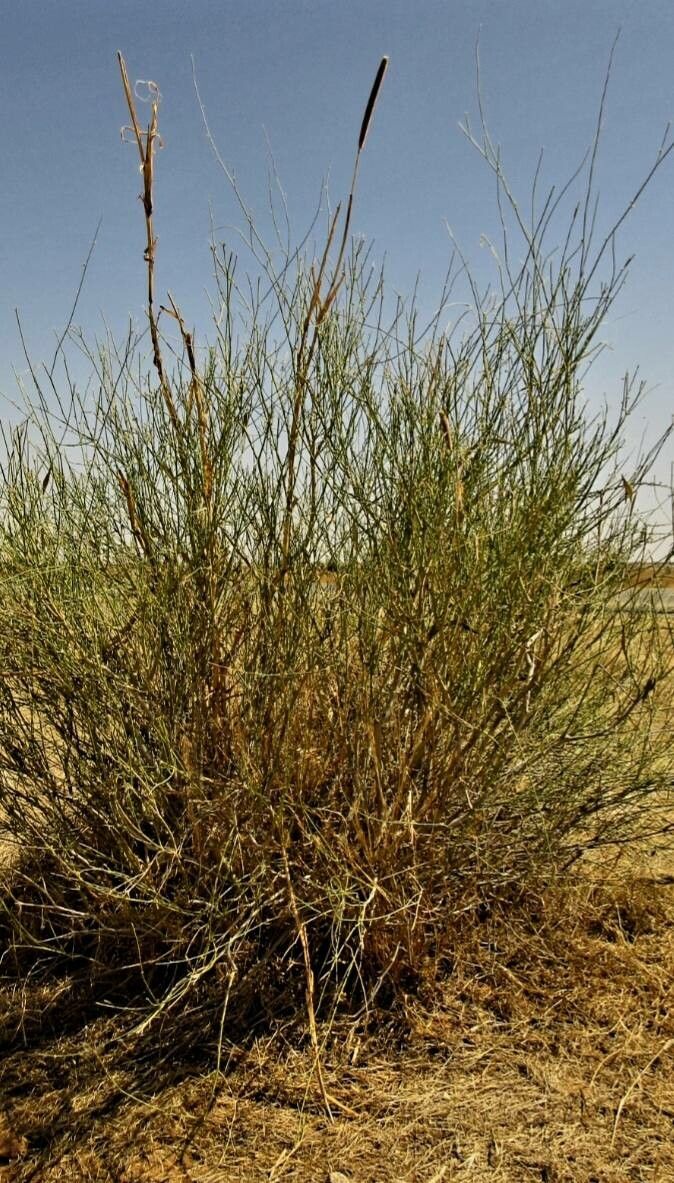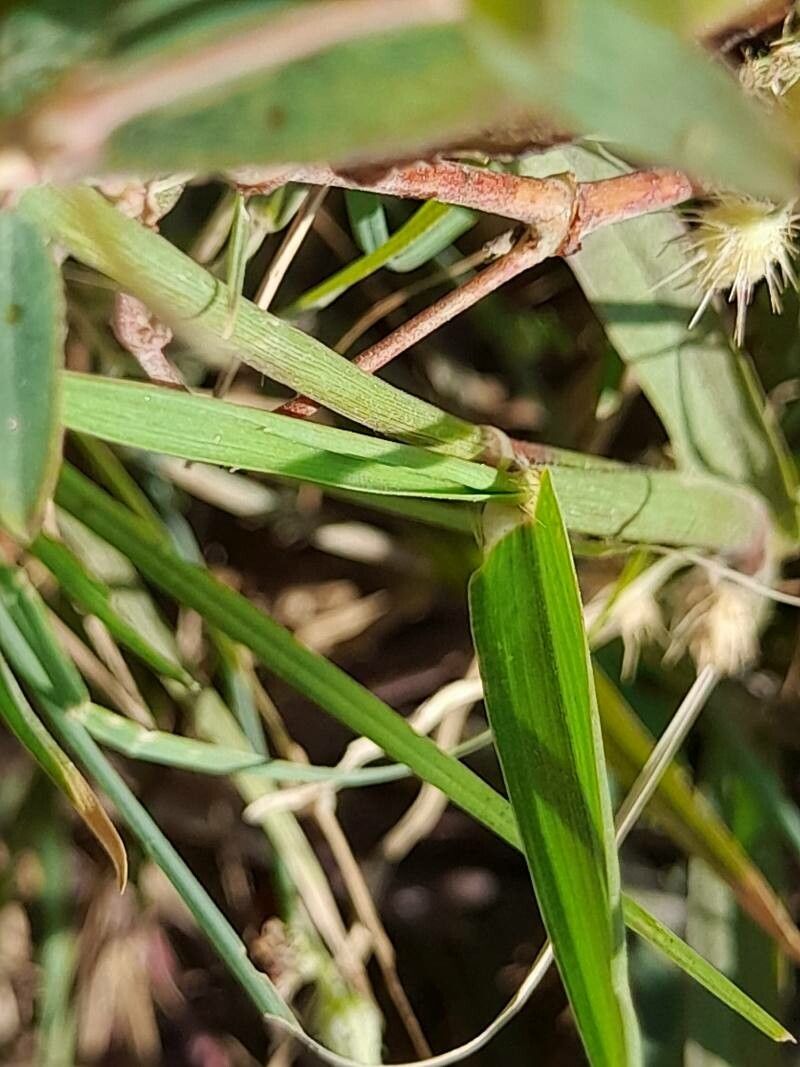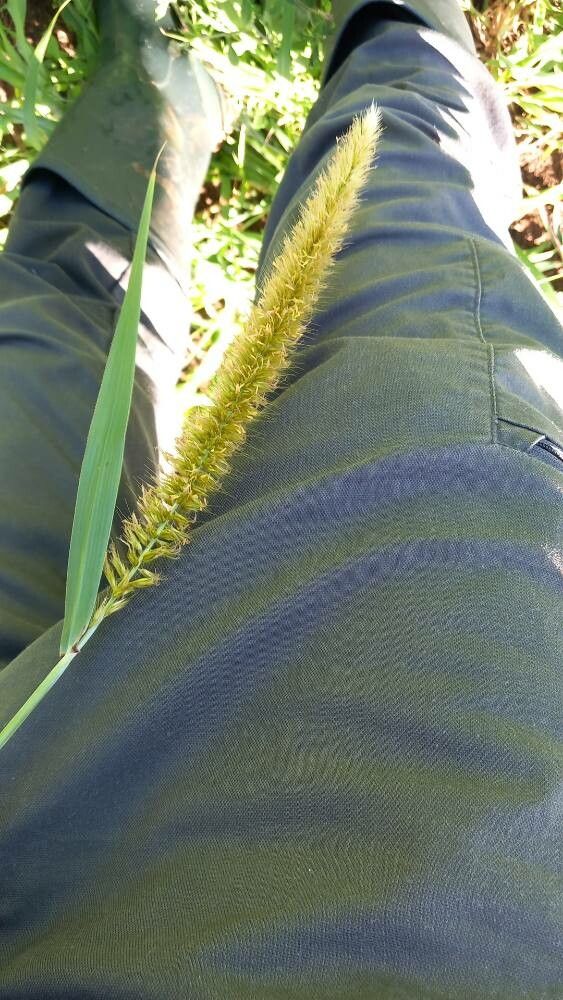
Cenchrus setosus, the feathery pennisetum, is a species of grass in the family Poaceae, first described in Prodr. Veg. Ind. Occ. (1788). It is native to Africa, the Arabian Peninsula, and South and Southeast Asia, extending from India to Indo-China, and has been widely introduced to tropical and subtropical regions across the Americas, Pacific Islands, and parts of Asia. It is sometimes cultivated as a pasture or fodder grass. Distinguishing features include the soft, crinkled hairs surrounding the spikelet and the deciduous upper floret, which serve as diagnostic characters for identification.
Blue buffel grass has strong resistance to disease and is generally not susceptible to illnesses. Care-wise, this plant is fairly low-maintenance. When grown outdoors it needs little watering, and larger plants usually do not require pruning. Smaller plants, however, should be pruned after they have finished blooming. Blue buffel grass is suitable for anyone with an outdoor area, such as a garden or deck, and does not demand a lot of care experience.
How to keep Cenchrus Setosus.
Light
Blue buffel grass prefers abundant sunlight to achieve strong growth. Its natural environments are usually sun-drenched. During its different growth stages, plenty of sunlight is important, though it can still show resilience in less bright conditions. Still, either too much or too little sunlight can limit its healthy development.
Temperature
Blue buffel grass comes from tropical areas, where the climate is generally warm and humid. Therefore, it is well-suited to high temperatures and moisture. It does not tolerate sudden temperature shifts and prefers a steady thermal environment, so avoiding indoor temperature fluctuations is important. It typically cannot endure cold conditions and needs warmer temperatures to grow. If the surrounding temperature falls too low, the plant may stop growing or even die.
Fertilizer
Blue buffel grass needs extra nutrients to encourage healthy new growth. In spring, placing compost around the base of the plant will provide the nutrition it requires. Fertilizing supports vigorous growth and helps the plant resist diseases and pests.
Botanical profile.
- Plant Type
- Grass
- Life Cycle
- Perennial
- Genus
- Cenchrus
- Family
- Poaceae
- Hardiness Zone
- 9-12
- Mature Height
- 2.13 m to 3.05 m
- Mature Spread
- 30 cm to 61 cm
- Leaf Color
- Light Green
- Leaf Type
- Evergreen
- Flower Color
- Yellow, Purple, Brown
- Flower Size
- 1.27 cm to 2.59 cm
- Bloom Time
- Early summer, Mid summer
- Planting Time
- Spring, Summer, Autumn
- Harvest Time
- Mid summer, Late summer
- Native Area
- Burkina Faso, Angola, Madagascar, Rwanda, Nigeria, Kenya, Uganda, Guinea-Bissau, Niger, Benin, Mali, Tanzania, Sierra Leone, Equatorial Guinea, Cameroon, Liberia, Burundi, Ghana, Ethiopia, Central African Republic, Congo, Sudan, Guinea, Togo, Senegal, Côte d'Ivoire, Gambia, Congo (DRC), Gabon