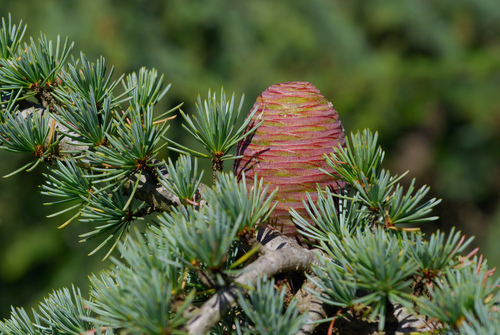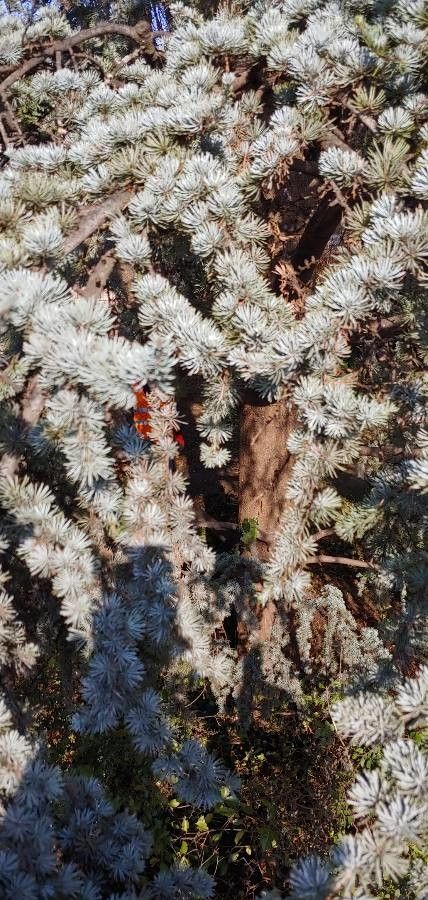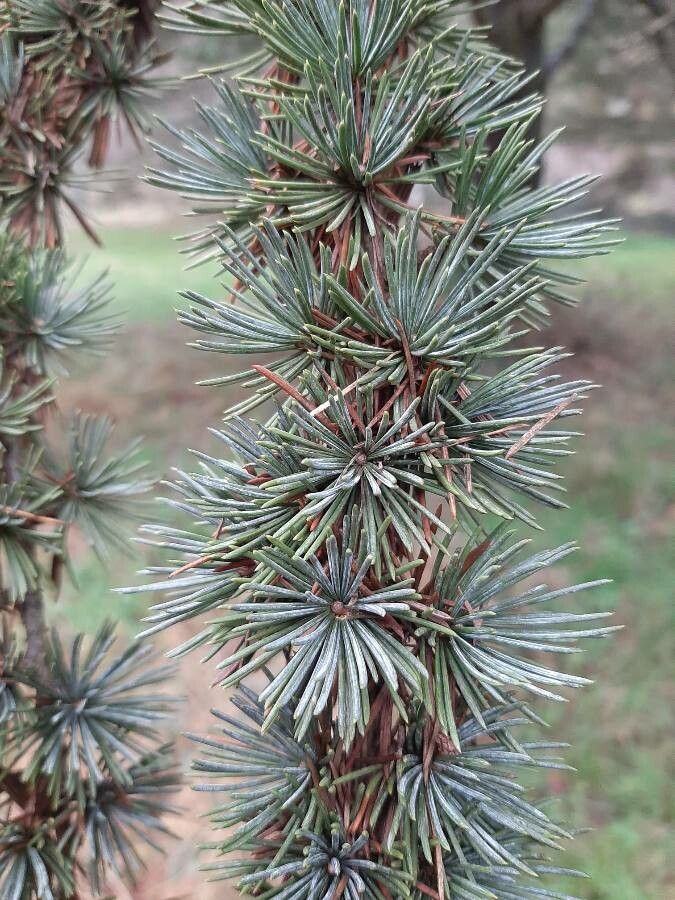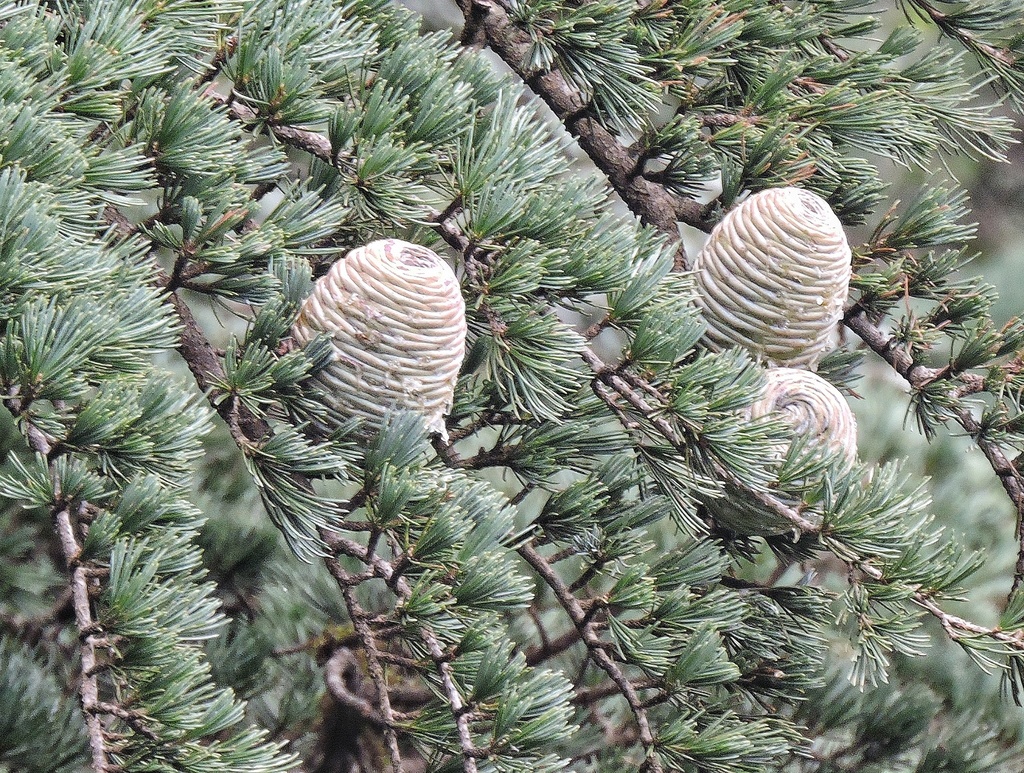
Cedrus deodara, commonly known as the deodar cedar, is a large evergreen coniferous tree native to the western Himalayas. Renowned for its attractive blue-green needles and gracefully drooping branches, it is a popular choice for ornamental planting in gardens and parks. This majestic tree can reach heights of up to 60 meters with a trunk diameter of up to 3 meters. The bark is gray-brown and deeply furrowed, and the needles are arranged in clusters of 20 to 30 on short shoots. The large cones, which can grow up to 20 cm long, are barrel-shaped with woody scales that open upon maturing.
Deodar cedar has been valued for centuries for its durable wood, which is used in construction, furniture making, and shipbuilding due to its resistance to rot.
Beyond its ornamental appeal, Cedrus deodara holds significance in traditional medicine, serving as an anti-inflammatory agent to treat ailments such as arthritis and asthma.
Overall, Cedrus deodara is an impressive evergreen tree that enhances the beauty of any landscape while providing valuable resources such as wood and medicinal properties.
Deodar cedar is highly resistant to disease and typically does not suffer from many illnesses. Regarding maintenance, this tree is fairly easy to care for. When grown outside, it needs only light watering, and mature specimens usually do not require pruning. Smaller specimens, however, should be trimmed after they finish blooming. Deodar cedar is appropriate for anyone with an outdoor area, like a garden or deck, and does not demand extensive gardening experience.
How to keep Cedrus Deodara.
Light
The deodar cedar prefers abundant sunlight to thrive but can tolerate moderate light as well. Native to bright, sunlit habitats, these trees do best in full, strong sun. Too much shade can inhibit a deodar cedar's growth, while excessive sun raises the likelihood of sun scorch on its leaves.
Water
The Deodar Cedar, native to the Himalayas, thrives in conditions with moderate moisture and can tolerate short periods of dryness. It's best to water the tree every 1-2 weeks, ensuring a balance between sufficient hydration and drought periods. As an evergreen species, the Deodar Cedar is ideally suited for outdoor cultivation, where it can make the most of natural rainfall during its growing season.
Humidity
This plant will thrive in moderate humidity, which is probably the level in your home. However, misting it a few times a week can be very beneficial. Make sure the room has good ventilation.
Temperature
Deodar cedar naturally grows in temperate climates and prefers temperatures between 0 and 35 ℃ (32 to 95 ℉). In hot summers it can benefit from occasional misting or increased watering, while in colder months it may need protection from freezing temperatures.
Fertilizer
Deodar cedar has specific nutrient needs and does not require heavy fertilization. Spring is the best time to apply fertilizer for optimal growth. Providing nutrients enhances its health, increases resistance to pests and diseases, and helps sustain a long lifespan.
Pruning
The Deodar cedar is an evergreen conifer known for its pyramidal shape and drooping branches. To maintain its shape and health, it is advisable to prune it lightly during its dormant winter period. This involves removing dead or crossing branches and improving air circulation. Such pruning helps enhance the tree's structural integrity, reduces the risk of disease, and promotes its long-term vitality and aesthetic appeal.
Pot & Repot
When repotting Deodar cedar, select a pot 1-2 inches (2.5–5.1 cm) larger with good drainage. Use a well-draining potting mix. Repot in spring or fall, ensuring the root ball sits slightly below the rim of the flower pot. Water thoroughly after repotting and place it in a warm spot with indirect sunlight.
Toxicity
Deodar cedar trees have no reported toxic traits to people or pets.
Further reading →
The toxicity and danger assessments provided are for reference only. We do not assure their accuracy, so it's crucial not to depend on them. Seek professional advice when necessary for accurate guidance.
Botanical profile.
- Plant Type
- Tree
- Life Cycle
- Perennial
- Genus
- Cedrus
- Family
- Pinaceae
- Hardiness Zone
- 3-9
- Mature Height
- 29.87 m
- Mature Spread
- 3.05 m
- Leaf Color
- Green, Blue, Gray
- Leaf Type
- Evergreen
- Flower Color
- Violet, Gold
- Flower Size
- 0.51 cm
- Bloom Time
- Mid summer, Late summer
- Planting Time
- Spring, Autumn
- Harvest Time
- Fall, Winter
- Native Area
- Nepal, Afghanistan, India, Pakistan, China
Other names.
Reader questions.
How should I water my Deodar cedar tree?
Watering your Deodar cedar is a simple task. Using a garden hose to slowly soak the soil is the best way to water mature trees. Large trees need a lot of water, so a garden hose with high volume is ideal. For smaller trees, a watering can or smaller tool will suffice. It's important to avoid overhead watering as excess moisture on the leaves can cause disease, particularly in young trees.
Why do I have to use fertilizer on my Deodar cedar?
In order to promote the healthy growth of Deodar cedar, it is important to fertilize it in the spring. The plant has a long lifespan, and it requires support to thrive. Adding nutrients to the soil not only enhances its health, but also strengthens its ability to withstand common pests and diseases, which can otherwise hinder growth or reduce its lifespan.
What are the sunlight requirements for Deodar Cedar?
Deodar Cedar requires abundant sunlight to thrive, ideally flourishing under unobstructed, intense sun exposure due to its origins in sun-drenched environments. It can tolerate moderate sunlight exposure but excessive shade may inhibit its growth, while extensive sun can increase the risk of sun scorch on its leaves. Full sun exposure means the plant should receive above 6 hours of sunlight, whereas partial sun indicates about 3-6 hours of sunlight. Observing the movement of sunlight through your garden and selecting locations that offer a balance of light and shade are crucial for the plant's well-being.
What is the native growth environment of Deodar cedar?
Deodar cedar thrives in temperate regions with temperature preferences ranging from 0 to 35°C (32 to 95°F). It has a strong cold resistance, making it well-suited for environments that can fluctuate within these temperatures. Despite its cold resistance, during hot summers, Deodar cedar may benefit from occasional misting or increased watering to combat the heat. In contrast, colder months might not typically require special frost protection due to the plant's resilience, though precautions should be taken if temperatures are expected to drop below -35°C by wrapping the trunk and branches with insulative materials. Additionally, watering the plant abundantly before the first freeze in autumn is recommended to ensure the soil remains moist and protects the plant from drought and water scarcity during winter and early spring.
What should I do if I give my Deodar cedar too much water or too little water?
Overwatering can occur due to poor soil conditions. If the soil does not allow for effective drainage, your Deodar cedar may start to decline. To address this issue, you can either amend the soil to improve drainage or relocate your cedar to a more suitable area. If you are growing your cedar in a pot, you may need to repot it with looser soil and a container that allows for better drainage. Overwatering can also lead to diseases, so it is important to treat any signs of illness promptly. On the other hand, if your Deodar cedar is being underwatered, the solution is simple: water it more frequently. By doing so, your plant will regain its health. To determine if your cedar is being overwatered, examine its foliage, particularly the new growth. If the new growth appears discolored or is easily breakable, it is a clear indication of excessive moisture. Additionally, if you notice standing water or slow drainage in the plant's growing area, the soil may be too moist. In the case of an underwatered cedar, the leaves may become sparse and turn brown. It is important to consider recent rainfall or consistent high temperatures when assessing these symptoms.
When should I fertilize my Deodar cedar tree?
The growing medium may not always provide sufficient nutrients for healthy growth. However, Deodar cedar differs from typical garden plants in that it does not require excessive amounts of extra nutrients. For optimal results, it is best to fertilize Deodar cedar in the spring, prior to new growth emerging.
How does artificial lighting support indoor Deodar Cedar growth?
Indoor Deodar Cedars require adequate lighting for optimal growth, especially in conditions where natural sunlight is insufficient, such as during winter or in less sunny indoor areas. Artificial lights are an essential solution, promoting faster, healthier growth. LED lights are recommended for their ability to provide specific wavelengths needed by the plants. Full sun plants should have 30-50W/sq ft of artificial light, partial sun plants need 20-30W/sq ft, and full shade plants require 10-20W/sq ft. The artificial light source should be placed 12-36 inches above the plant to mimic natural sunlight, and the lighting should span 8-12 hours per day to simulate the length of natural daylight hours.
How does Deodar cedar respond to low temperatures?
Deodar cedar is exceptionally cold-tolerant, ideally thriving in temperatures above 0°C. During the winter, it's vital to ensure the temperature does not fall below -30°C. If temperatures plummet below -35°C, the cedar may not show immediate signs of distress during winter. However, come spring, the branches may become brittle and dry, and the plant may fail to produce new shoots. To mitigate damage, it's recommended to prune away any dead branches that haven't produced new leaves in the spring. This helps maintain the health and aesthetics of the Deodar cedar after a harsh winter.
How frequently do I need to water my Deodar cedar?
A mature Deodar cedar is drought tolerant and can survive on rainfall alone. During the hottest months, you may need to water it about once a week, but in other seasons, watering may not be necessary. Newly planted Deodar cedars require regular watering to establish roots and maintain soil moisture. However, it is important to avoid overwatering as this species does not tolerate standing water. It is safer to err on the side of not watering rather than risking overwatering.
When is it not a good idea to add fertilizer to my Deodar cedar?
Unlike other plants, such as those that require monthly or weekly fertilization, the Deodar cedar doesn't need a significant amount of extra nutrients. In fact, excessive fertilizer can actually harm it and cause it to deteriorate. For this reason, it is recommended to only apply fertilizer to the Deodar in the spring, and refrain from doing so during the summer, fall, and winter months. Additionally, it's best to avoid adding any fertilizer or organic matter to the soil during these seasons.
What are the symptoms of inadequate light exposure in Deodar Cedar?
Deodar Cedar, when not receiving sufficient sunlight, may exhibit various symptoms indicating light deficiency. Such symptoms include smaller new leaves compared to older ones, leggy or sparse growth characterized by elongated spaces between leaves or stems, earlier dropping of older leaves to conserve resources, and a halt or slow down in new growth as the plant enters survival mode. Insufficient sunlight can also cause new leaves to develop lighter colors or irregular patterns, indicating a lack of chlorophyll and essential nutrients. Furthermore, the plant may experience chlorosis, where leaves lose their green color and turn yellow, sunscald with damaged leaves or stems due to intense sunlight, leaf curling as a defense against excessive sunlight, wilting from water loss through transpiration, and leaf scorching where leaves show brown, dry, and crispy edges or patches.
What should I do if Deodar cedar experiences high temperatures?
During the summer, it's crucial to keep Deodar cedar's surrounding temperature below 35°C. Exposure to temperatures above 38°C can result in the plant's leaves becoming lighter in color, tips drying and withering, and increased susceptibility to sunburn. To care for a Deodar cedar in such conditions, trim away the sunburned and dried-up parts to promote healthier growth. Moving the plant to a location with shade during the midday and afternoon sun or utilizing a shade cloth can effectively protect it. Moreover, watering the plant in the morning and evening can help maintain soil moisture, essential for the plant's well-being in high temperatures.