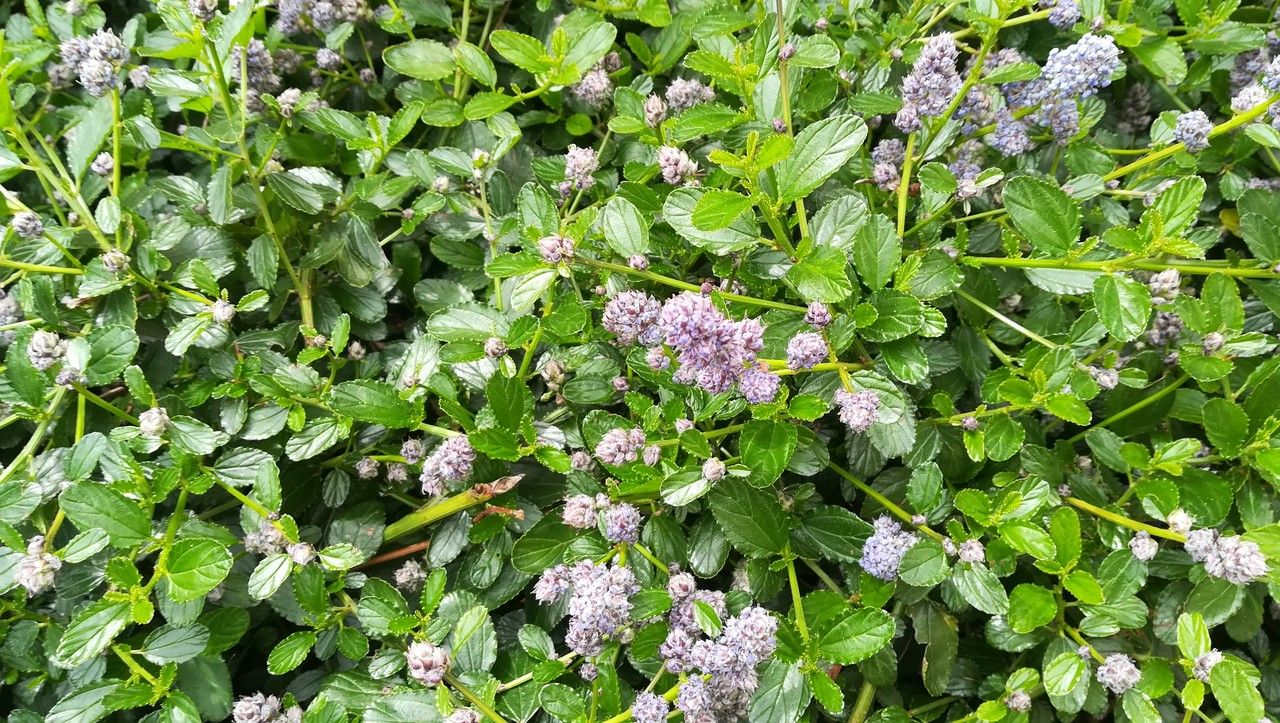
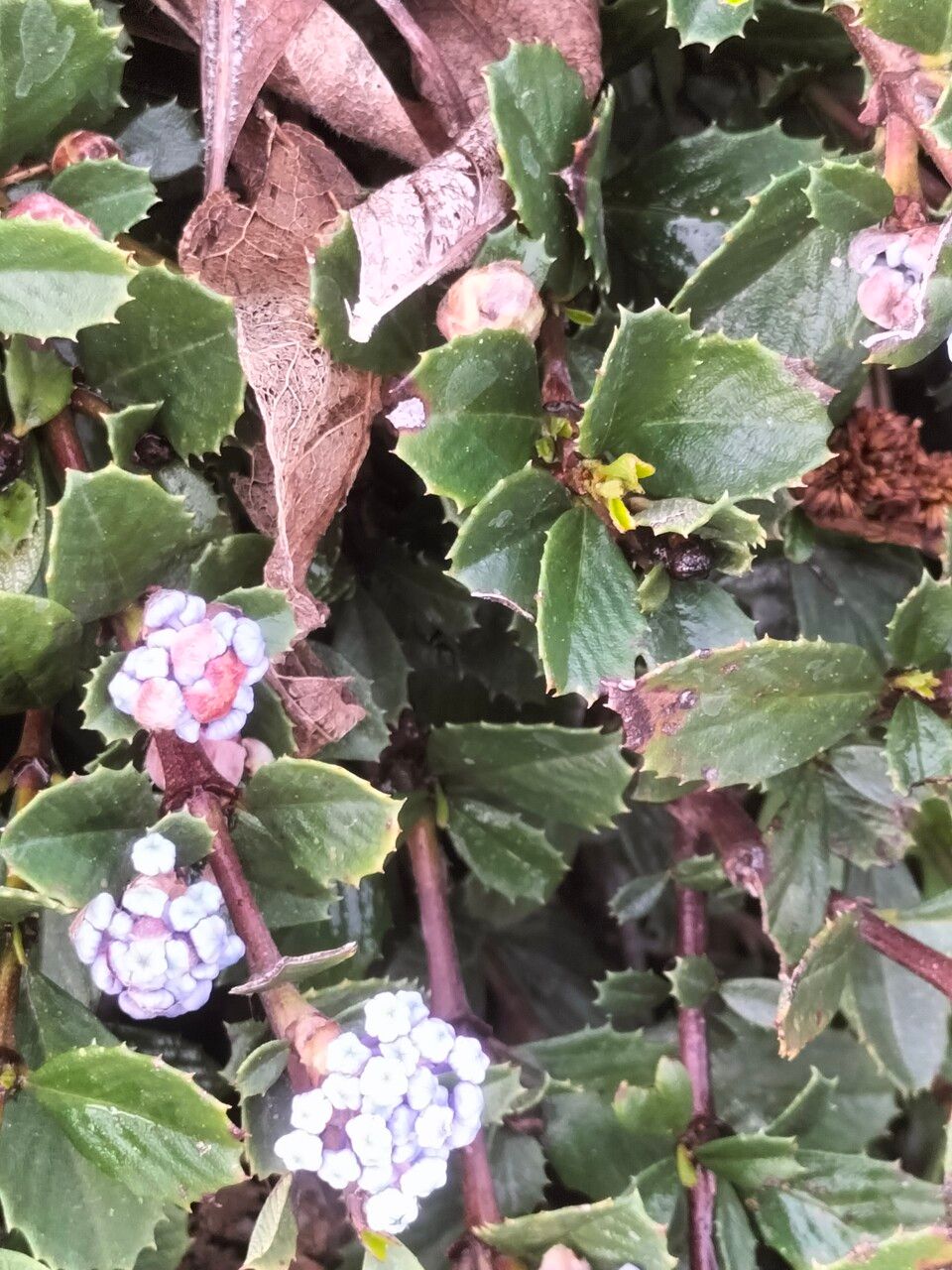
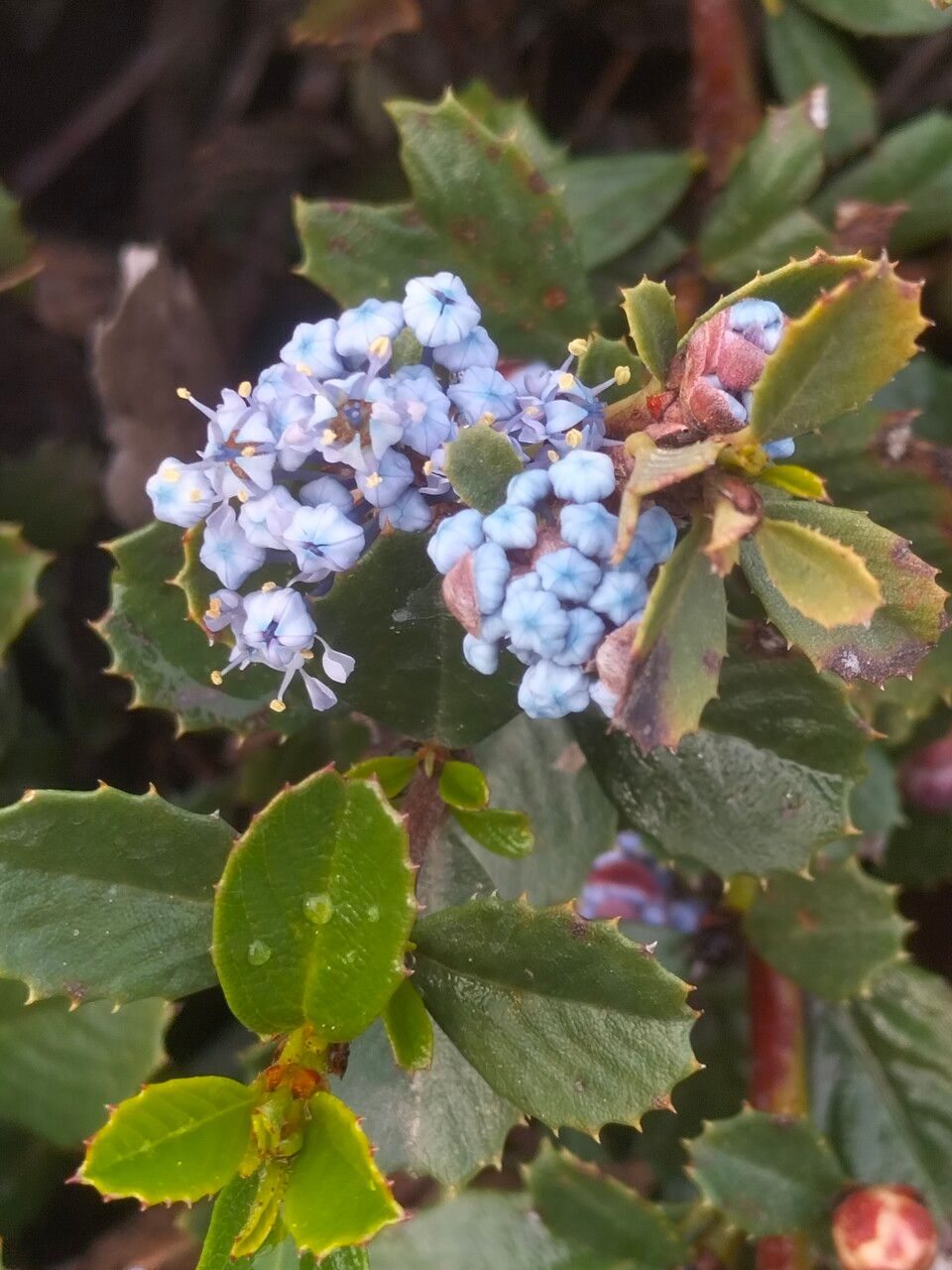
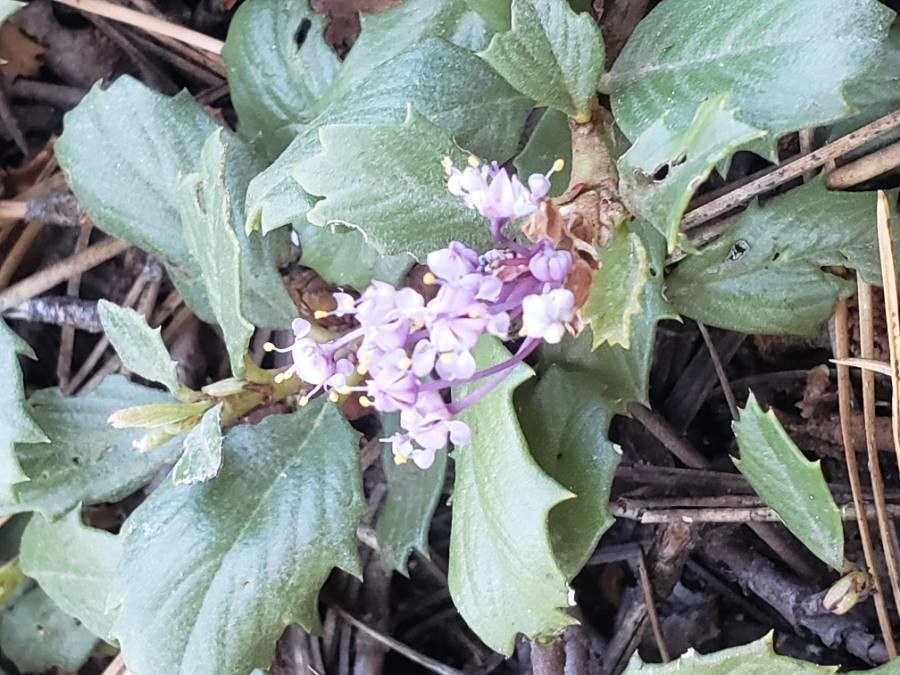
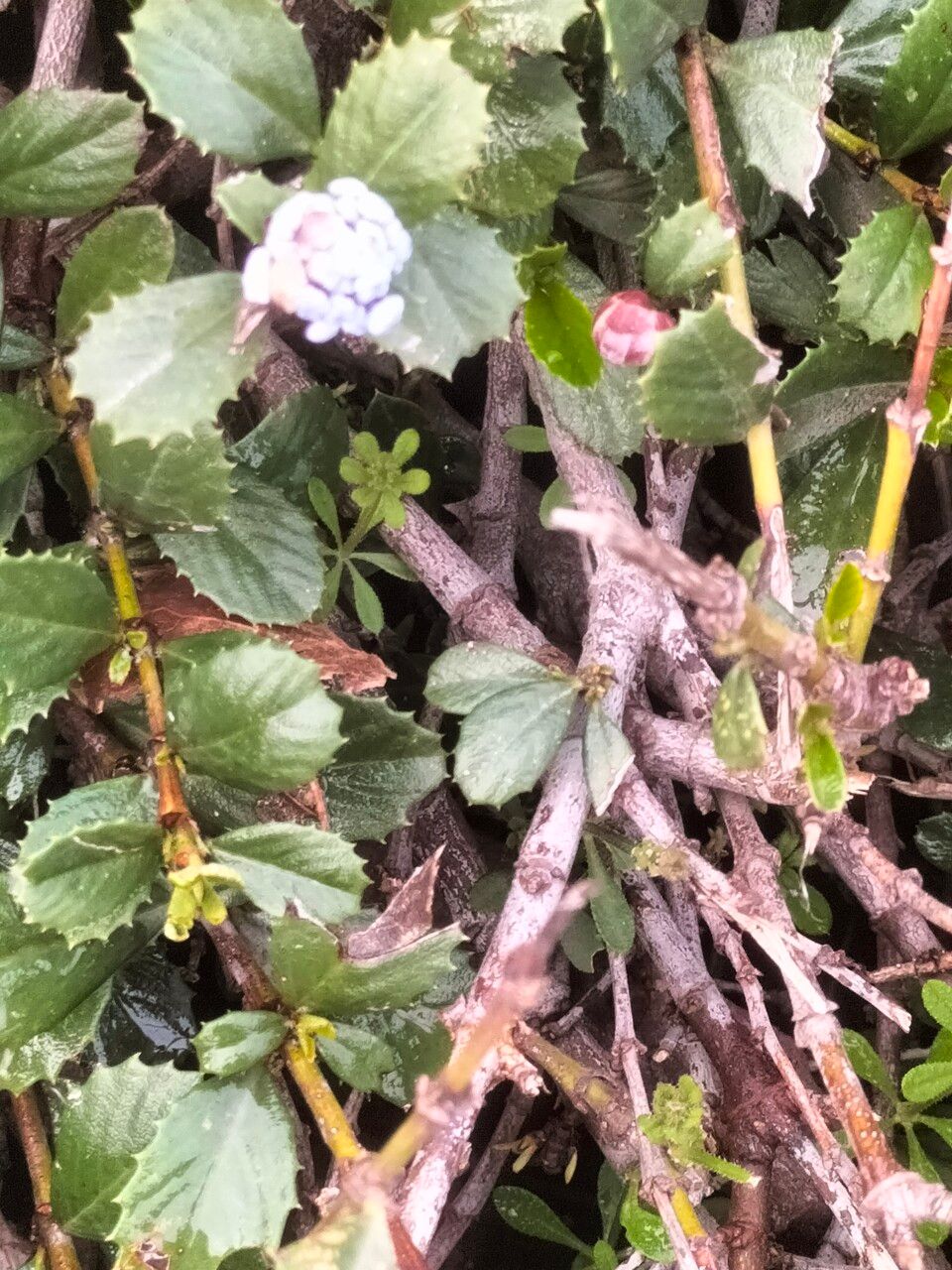
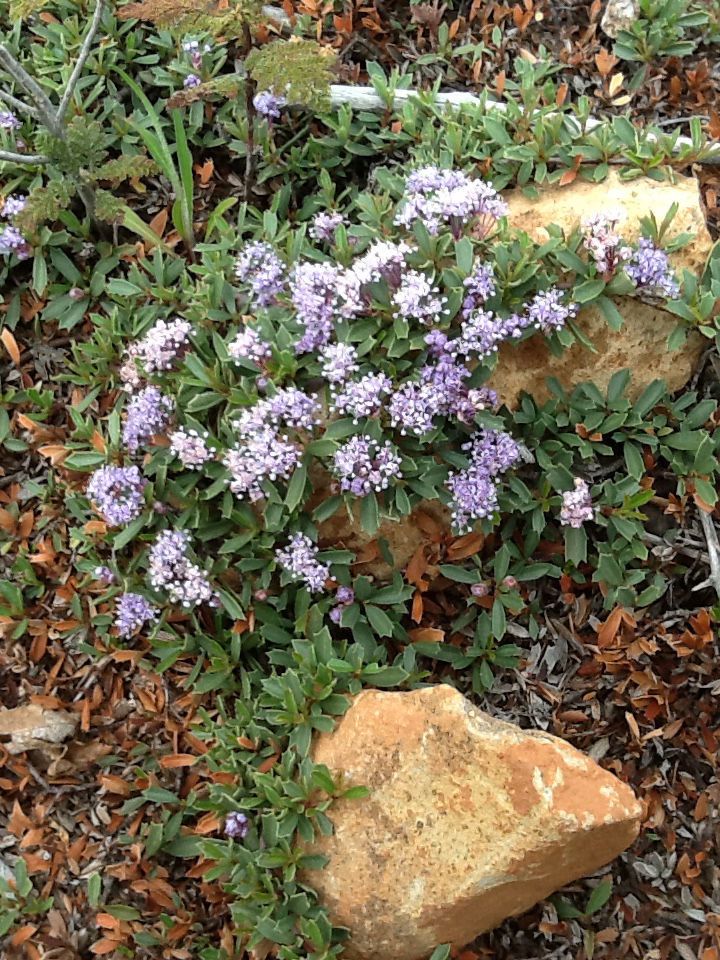
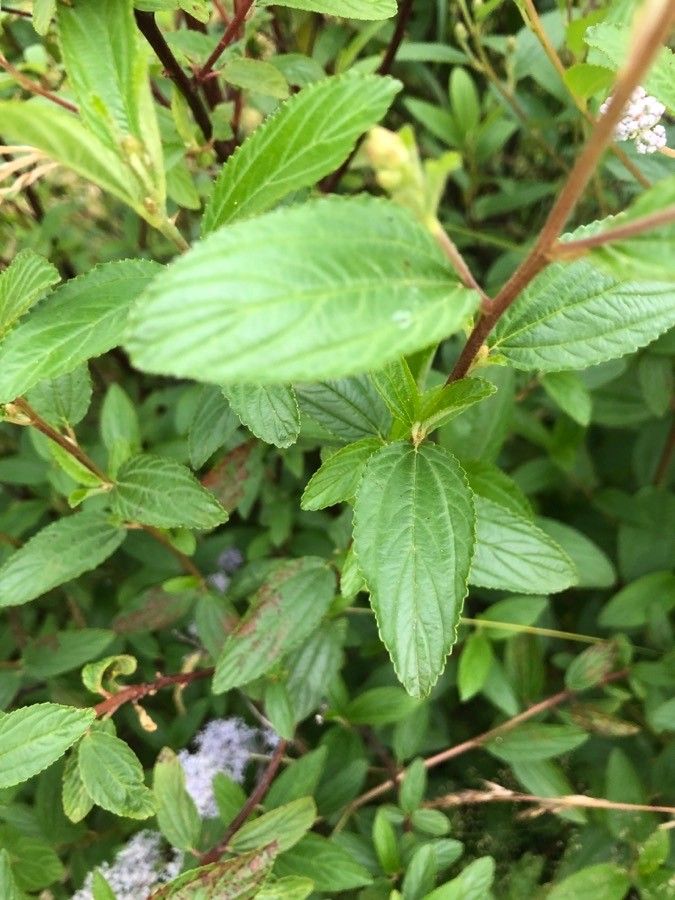
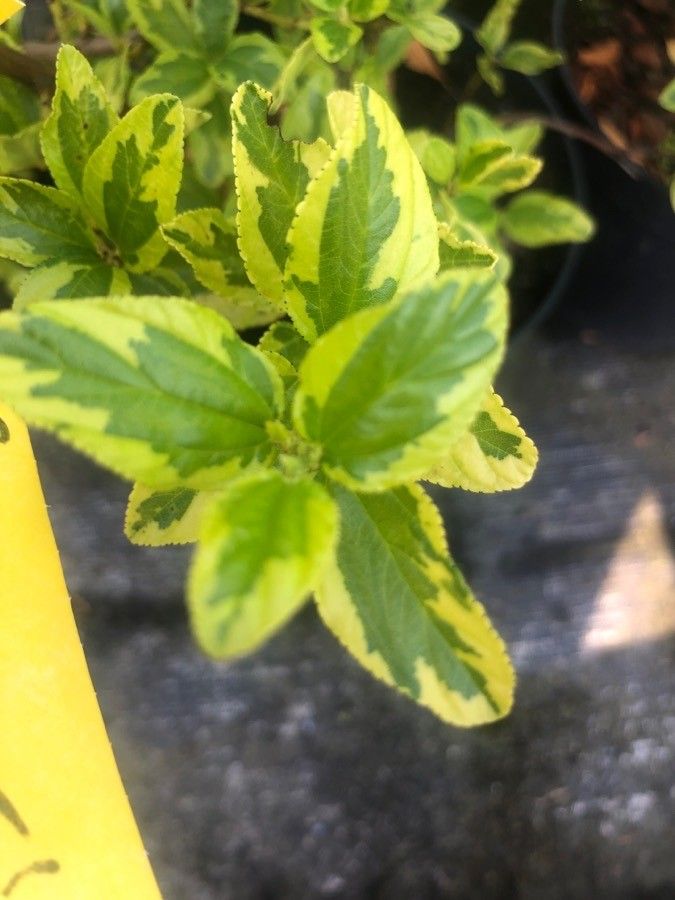
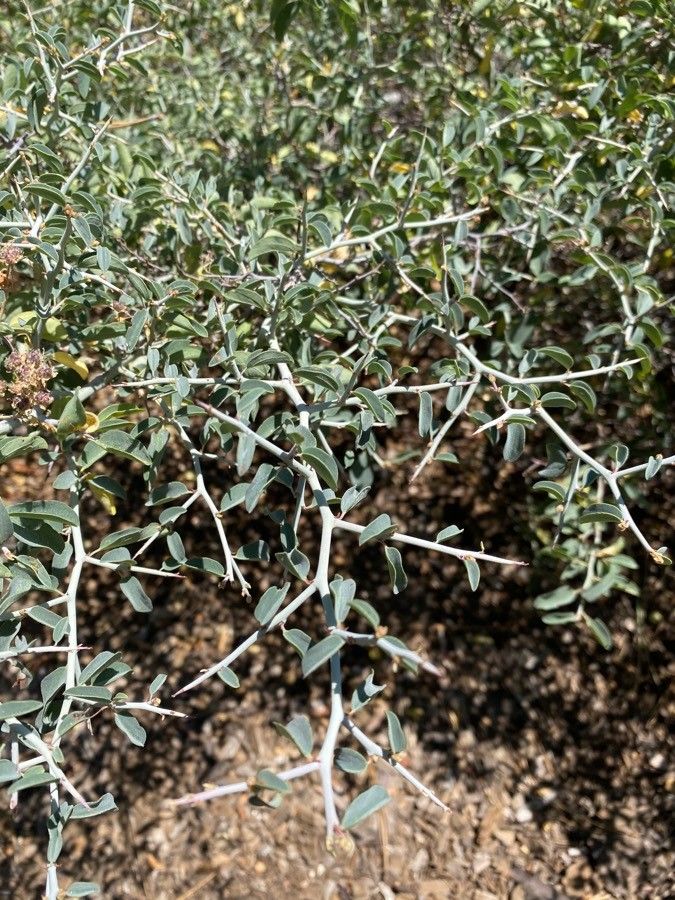
Ceanothus prostratus, commonly known as the prostrate ceanothus, is a low-growing evergreen shrub native to the western United States. It typically reaches a height of 1 to 2 feet and spreads up to 6 feet wide. The plant features small, glossy green leaves that are oval-shaped with serrated edges. In the spring, it produces clusters of small blue flowers that attract bees and butterflies. The prostrate ceanothus prefers well-drained soil and full sun exposure but can tolerate some shade. While it is drought-tolerant once established, occasional watering during prolonged dry spells can be beneficial. Due to its low-growing habit and attractive foliage, this plant is commonly used as ground cover or in rock gardens. It also provides habitat for wildlife, such as birds and butterflies. Overall, Ceanothus prostratus is an excellent choice for gardeners seeking an easy-to-grow native plant that offers year-round interest in their landscape design.
Mahala mat shows strong resistance to disease and is usually not susceptible to illnesses. Regarding care, this plant is fairly low-maintenance. When grown outdoors it needs only light watering, and larger specimens generally do not require pruning. However, smaller plants should be pruned after they have finished blooming. Mahala matt is appropriate for anyone who has an outdoor area, such as a garden or deck, and does not need extensive care experience.
How to keep Ceanothus Prostratus.
Light
Mahala mat is native to open habitats — like sunlit meadows and forest margins — that receive abundant light. It prefers full sun but can tolerate partial sun, demonstrating good adaptability to varying light conditions.
Humidity
This plant prefers dry conditions, so don't mist it. However, watering it less often can also thrive in higher humidity.
Temperature
Mahala mat shows strong adaptability to a range of climate conditions, from scorching summers to cold winters. However, it has a preferred temperature range for growth. If temperatures become too high, the plant is susceptible to heat and humidity stress, which can lead to its death. In areas where temperatures approach the lower limit of its cold tolerance, it is important to use insulation measures to protect the plant.
Fertilizer
The timing of fertilizing Mahala mat is important. Apply fertilizer in early spring and continue monthly until early summer. Fertilizer promotes attractive blooms and supplies energy during both dormant and active growth stages.
Pruning
Mahala mat benefits greatly from being pruned in early spring. This process involves removing dead or overgrown branches, which helps to encourage vibrant foliage and fuller coverage. Pruning also improves air circulation, reduces the risk of disease, and promotes strong growth, longevity, and visual appeal. For best results, use sharp, sterile tools when pruning.
Botanical profile.
- Plant Type
- Shrub
- Life Cycle
- Perennial
- Genus
- Ceanothus
- Family
- Rhamnaceae
- Hardiness Zone
- 6-9
- Mature Height
- 30 cm
- Mature Spread
- 3.05 m
- Leaf Color
- Dark Green, Forest Green
- Leaf Type
- Evergreen
- Flower Size
- 0.51 cm to 0.76 cm
- Bloom Time
- Mid spring, Late spring
- Planting Time
- Spring, Summer, Autumn
- Harvest Time
- Mid summer, Late summer, Early fall
Other names.