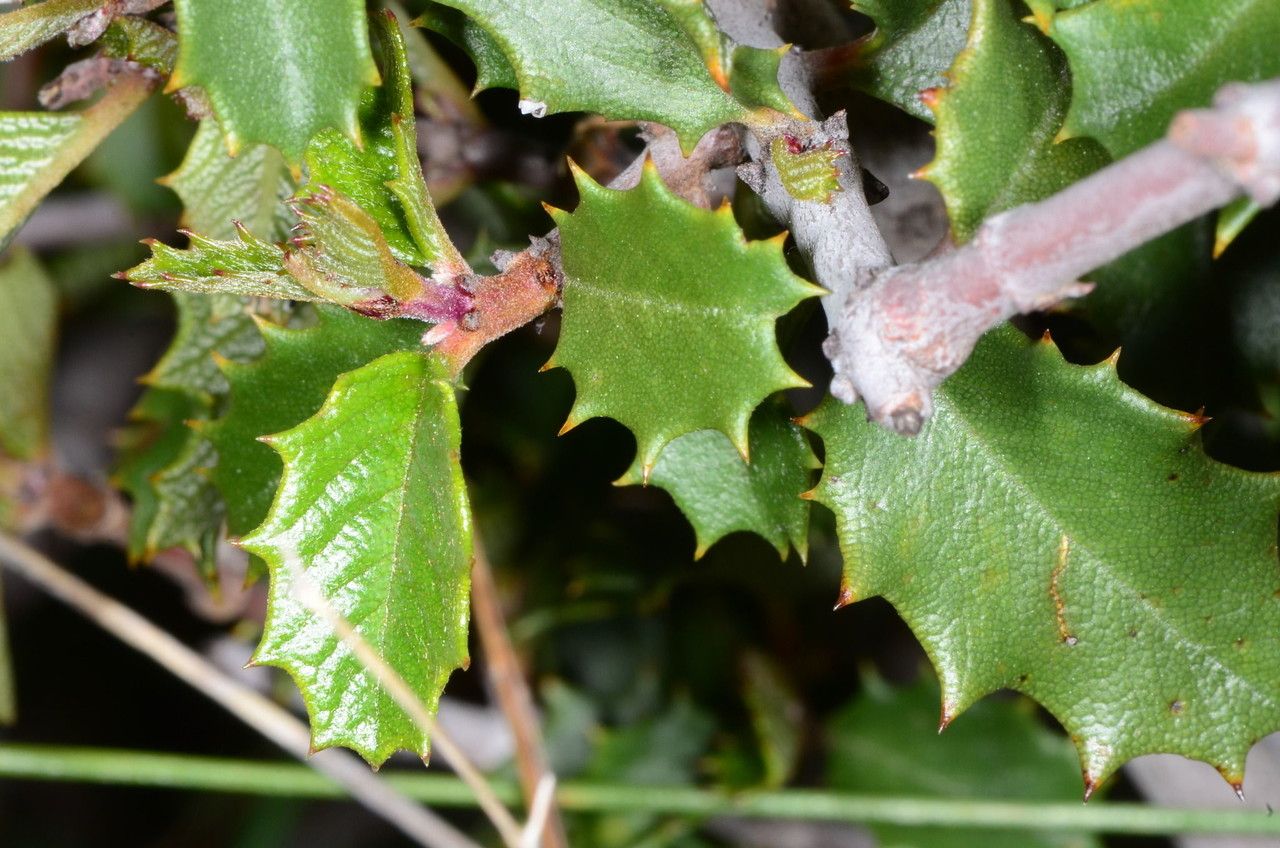
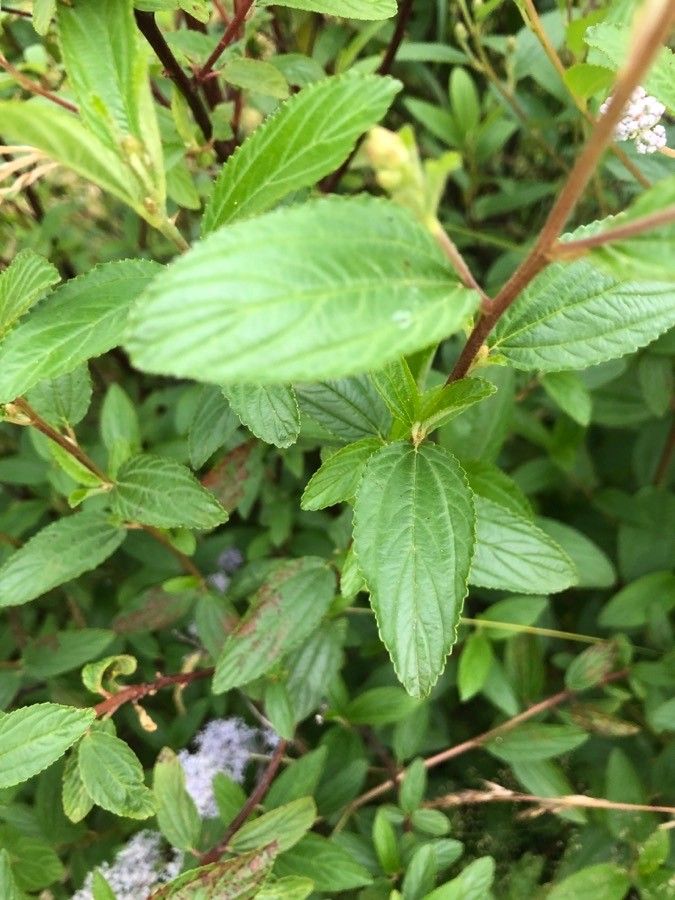
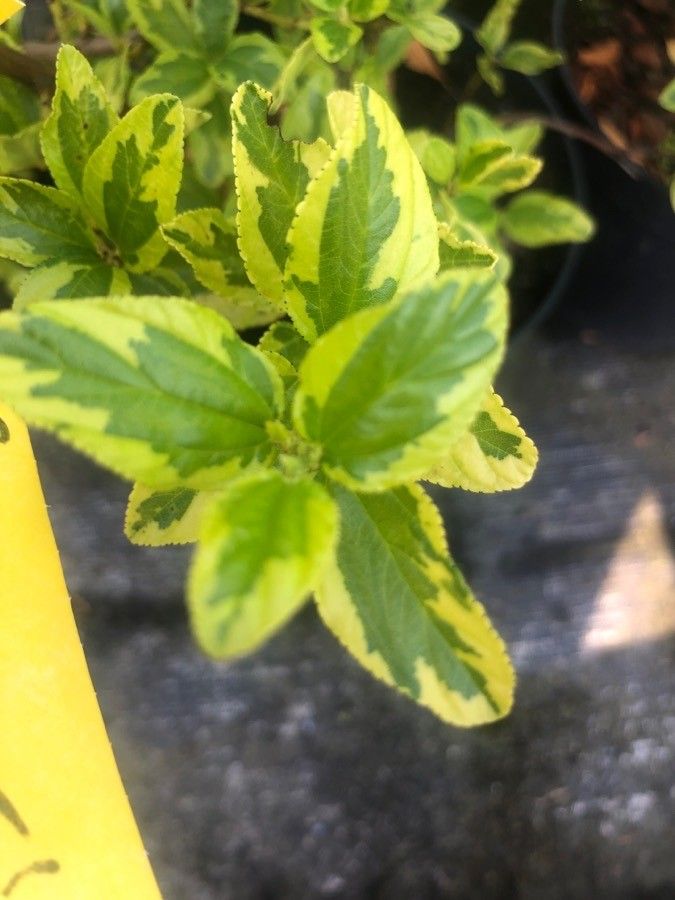
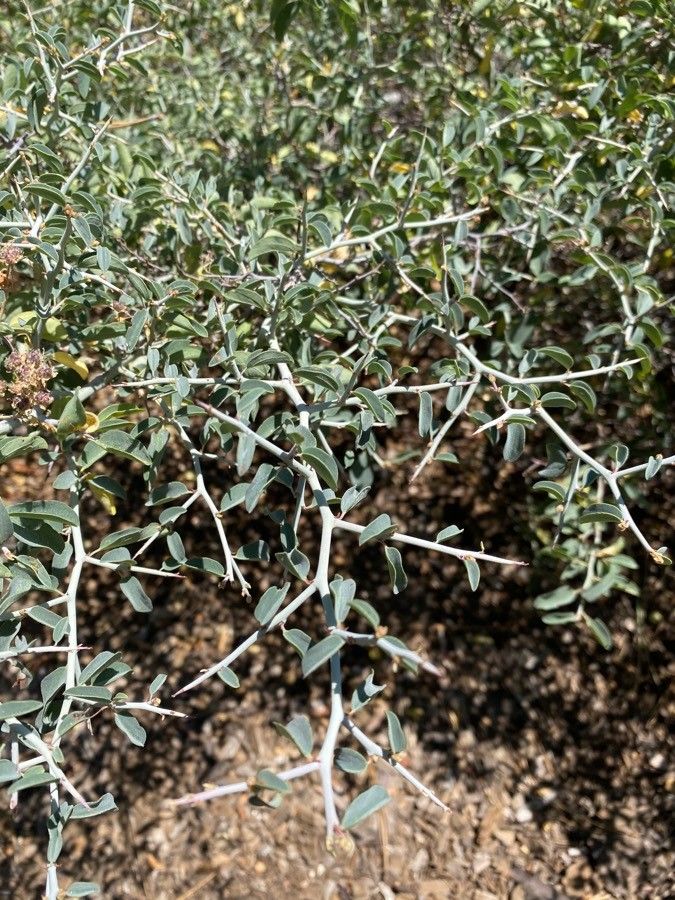
Ceanothus jepsonii, commonly known as Jepson's ceanothus, is a species of evergreen shrub native to California. Belonging to the Rhamnaceae family, it can grow up to 6 feet tall and 8 feet wide. This plant features a dense growth habit with small, glossy, oval-shaped green leaves that have serrated edges.
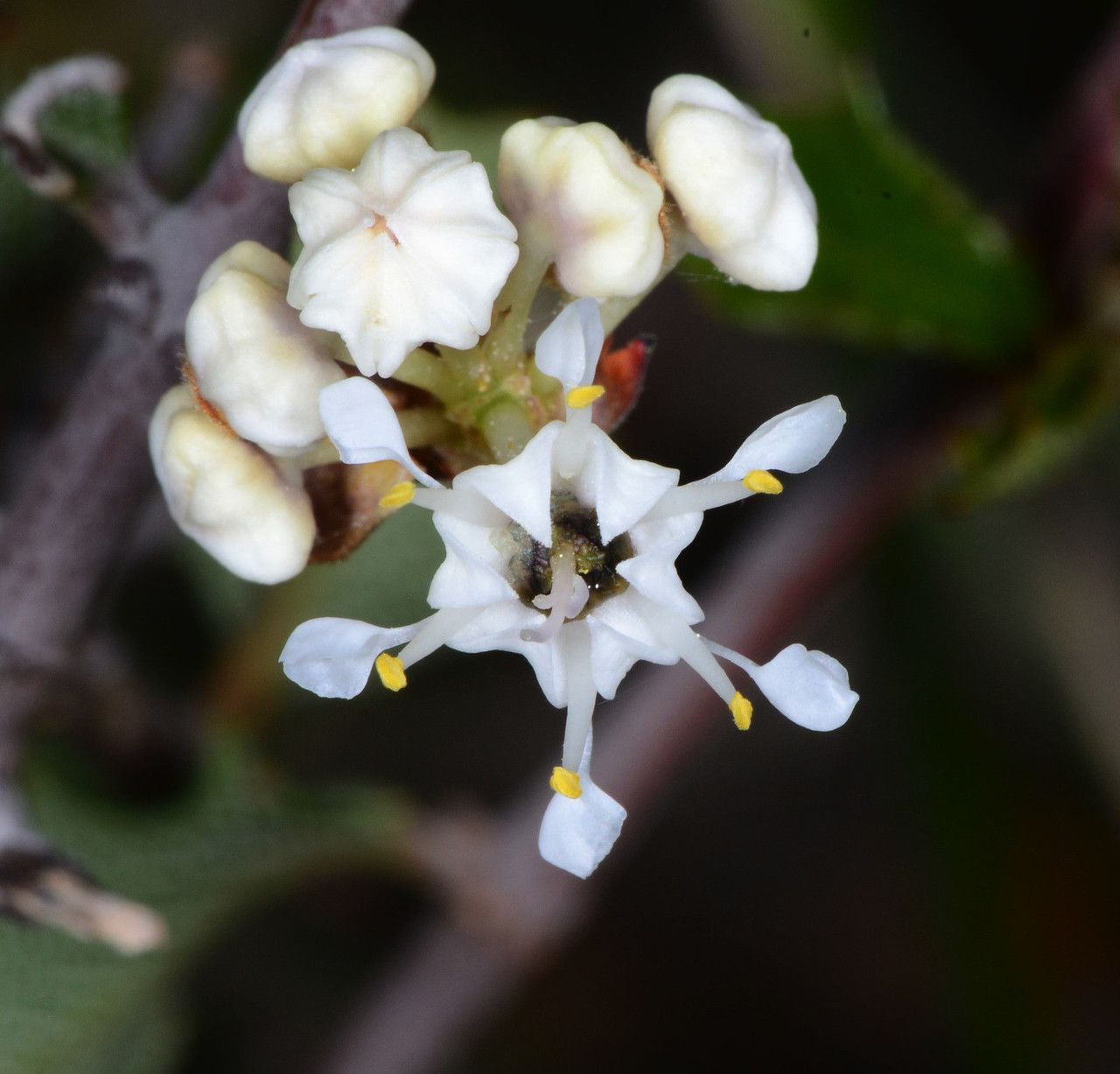
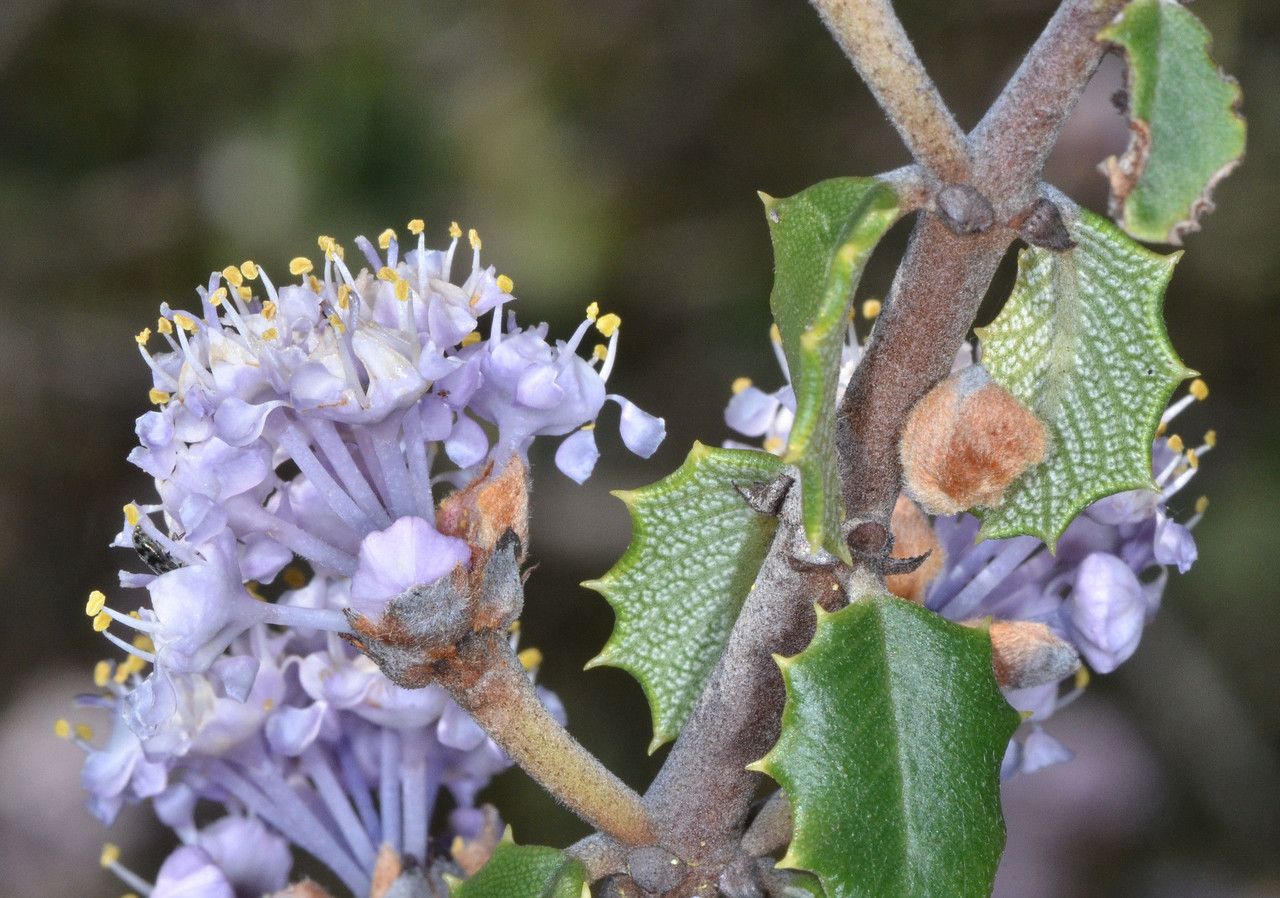
The flowers of Ceanothus jepsonii are small and blue-purple, blooming in clusters from late winter through early spring. The plant prefers full sun exposure but can tolerate partial shade. It thrives in well-drained soil with moderate watering.
Jepson's ceanothus is an important plant for wildlife, providing food for bees, butterflies, and birds such as quail and finches, as well as other pollinators. It also serves as a habitat for various animals, including lizards.
In landscaping design, Ceanothus jepsonii is often used in rock gardens or mixed borders due to its attractive foliage throughout the year. Its drought tolerance makes it an ideal choice for xeriscaping or water-wise gardening projects.
Overall, Ceanothus jepsonii is a visually appealing evergreen shrub that provides ecological benefits while enhancing any landscape design project in which it is used.
Jepson ceanothus is resistant to disease and typically does not suffer from illnesses. In terms of care, this plant is fairly low-maintenance. When grown outdoors it needs little watering, and larger plants usually do not require pruning. Smaller plants, however, should be pruned after they have finished blooming. Jepson ceanothus is suitable for anyone with outdoor space, such as a garden or a deck, and does not demand much care experience.
How to keep Ceanothus Jepsonii.
Light
Jepson ceanothus does best in locations that receive abundant sunlight throughout the day. Its growing sites are typically open to direct, unfiltered solar rays. Such plentiful sun supports healthy development and growth at every stage. Both excessive and insufficient light can negatively affect Jepson ceanothus, causing stunted growth or a lack of flowering.
Water
Jepson ceanothus flourishes in semi-arid environments and demonstrates strong drought tolerance due to its ability to thrive with infrequent watering. To support its growth, water it every 2-3 weeks, ensuring the soil is well-draining. This schedule allows the soil to dry out between waterings, showcasing the plant's resilience to drought conditions.
Temperature
Jepson ceanothus is native to temperate regions and performs best in mild temperatures from 59 to 95 °F (15 to 35 ℃). In summer, intense heat may require providing shade or extra water to prevent overheating. Prolonged cold below this range can damage the plant.
Fertilizer
Timing matters when fertilizing Jepson ceanothus. Apply fertilizer in early spring and continue monthly until early summer. Fertilizer encourages lovely blooms and supplies energy during both dormant and active growth phases.
Pruning
The Jepson ceanothus is known for its dense foliage and vibrant blooms. To maintain its health and shape, it is best to prune it in late spring, once it has finished flowering. During pruning, focus on removing dead branches and thinning out crowded areas to improve air circulation and shape the plant. Be careful to avoid heavy pruning, as this can cause stress to the plant. Proper pruning not only enhances blooming but also helps prevent pests and boosts the overall health of the plant.
Botanical profile.
- Plant Type
- Shrub
- Life Cycle
- Perennial
- Genus
- Ceanothus
- Family
- Rhamnaceae
- Hardiness Zone
- 8-10
- Mature Height
- 0.91 m to 1.22 m
- Mature Spread
- 0.61 m to 1.83 m
- Leaf Color
- Green
- Leaf Type
- Evergreen
- Flower Color
- White, Purple
- Flower Size
- 0.76 cm
- Bloom Time
- Mid spring, Late spring
- Planting Time
- Spring, Summer, Autumn
- Harvest Time
- Summer
Other names.
Reader questions.
What are the sun requirements for Jepson ceanothus?
Jepson ceanothus requires full sun exposure, defined as above 6 hours of sunlight a day, to thrive optimally. It's essential to observe the movement of sunlight through your garden to ensure that you select locations offering a suitable balance of light and shade, conducive to the plant's growth and well-being. Areas with ample sunlight throughout the day are ideal since Jepson ceanothus grows best in environments unshielded from the sun's rays, contributing to its healthy development at every stage. Note that both overexposure and underexposure to sunlight can negatively impact the plant, leading to issues such as stunted growth or a lack of flowering.
What are the ideal temperature conditions for Jepson ceanothus?
Jepson ceanothus, also known as Ceanothus jepsonii, is native to temperate regions and thrives in a temperature range between 59°F (15°C) and 95°F (35°C). It has some tolerance to cold, generally not requiring extra protection if the temperature stays above -5°C. However, during summer, additional measures such as providing shade or water may be necessary to prevent overheating, especially in temperatures above 95°F (35°C).
How does artificial lighting support plant growth?
Artificial lighting plays a crucial role, especially for indoor plants or in situations where natural sunlight is insufficient, such as during winter or in less sunny locations. Plants require adequate lighting to grow optimally. When access to natural sunlight is limited, artificial lights can provide a significant boost, promoting faster and healthier growth. Specifically, LED lights are favorable due to their ability to be tailored to emit specific wavelengths needed by plants. Full sun plants require 30-50W per square foot of light, partial sun plants need 20-30W per square foot, and full shade plants should get 10-20W per square foot. The lights should be placed 12-36 inches above the plant to simulate natural sunlight conditions, and it's ideal to provide 8-12 hours of light per day, mimicking the natural daylight duration.
How should Jepson ceanothus be protected from low temperatures?
Jepson ceanothus has a moderate tolerance to low temperatures, ideally staying above 15°C. It should be kept above -5°C during winter to avoid damage. If temperatures drop below -10°C, leaves may droop, wilt, and eventually fall off in severe cases. To protect the plant from cold damage, trim off frost-damaged parts and wrap the plant with materials like non-woven fabric or cloth. Additionally, constructing a wind barrier can help protect it from the cold wind.
What are the symptoms of light deficiency in Jepson ceanothus?
When Jepson ceanothus does not receive sufficient sunlight, it may exhibit several symptoms indicating light deficiency. These include smaller new leaves compared to older ones, leggy or sparse growth due to elongated spaces between leaves or stems, premature leaf drop as the plant sheds older leaves to conserve resources for new growth, slower growth or a complete halt in new leaf production as the plant enters survival mode, and paler new leaves or chlorosis, where leaves lose their green color and turn yellow. Excessive sunlight can also cause issues such as sunscald, leaf curling, wilting due to excessive water loss, leaf scorching indicating damage from too much light, and overall reduced plant health.
What steps should be taken if Jepson ceanothus experiences high temperatures?
During summer, it is crucial to ensure that Jepson ceanothus does not exceed temperatures of 35°C. Exposure to temperatures above 41°C can cause the leaves to lighten in color, tips to dry and wither, leaves to curl, and increase susceptibility to sunburn. To mitigate this, trim away sunburned and dried-up parts, move the plant to a shaded location or use a shade cloth to protect it from midday and afternoon sun. Furthermore, watering the plant in the morning and evening can help keep the soil moist and reduce temperature stress.
What solutions can help Jepson ceanothus thrive in optimal light conditions?
To ensure Jepson ceanothus receives optimal sunlight, gradually transition plants to sunnier locations until they get at least 6 hours of direct sunlight daily. For indoor plants, utilize a south-facing window and keep curtains open during daylight hours. If natural light is inadequate or the plant is too large to move easily, consider artificial lighting, keeping lights on for a minimum of 8 hours per day. Outdoor plants should be moved carefully to avoid shock from sudden light intensity changes, aiming for gradual adaptation to sunnier spots. If direct sunlight is obstructed, consider pruning or transplanting to more suitable locations. Keep in mind that while parts of the plant affected by insufficient light may not recover, new growth should be healthy with improved lighting.