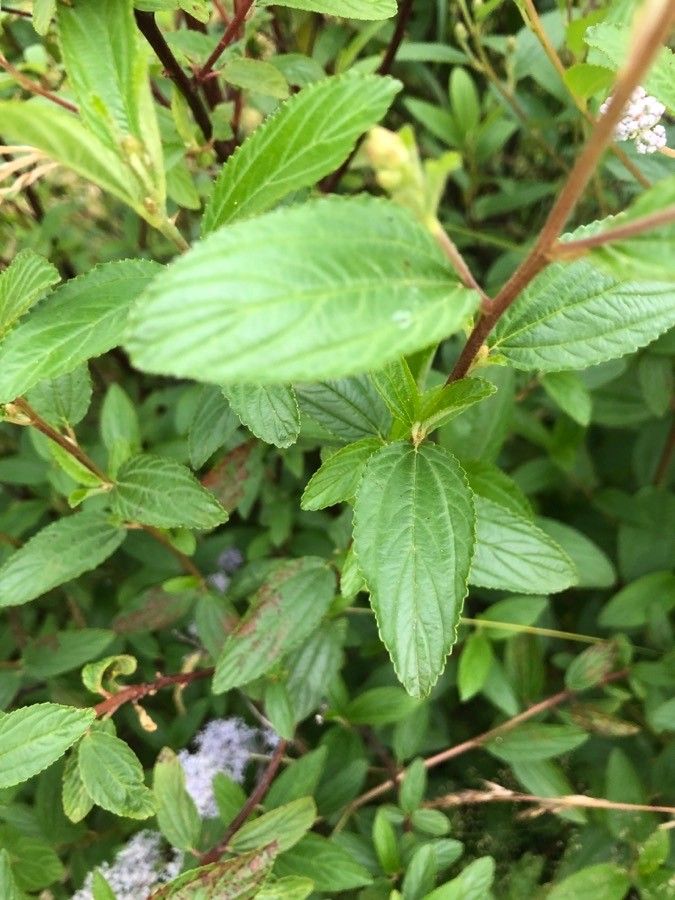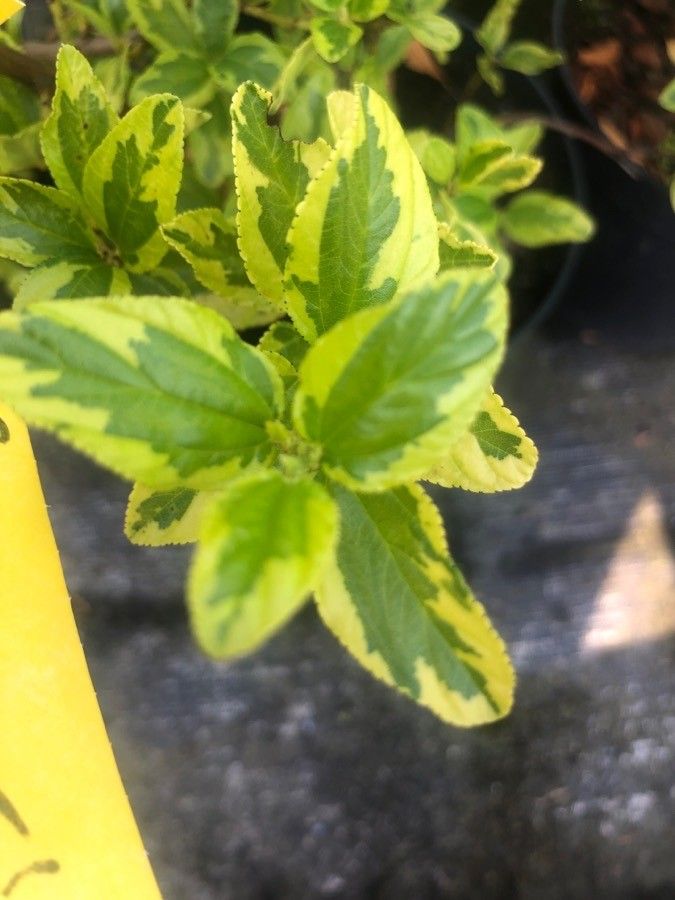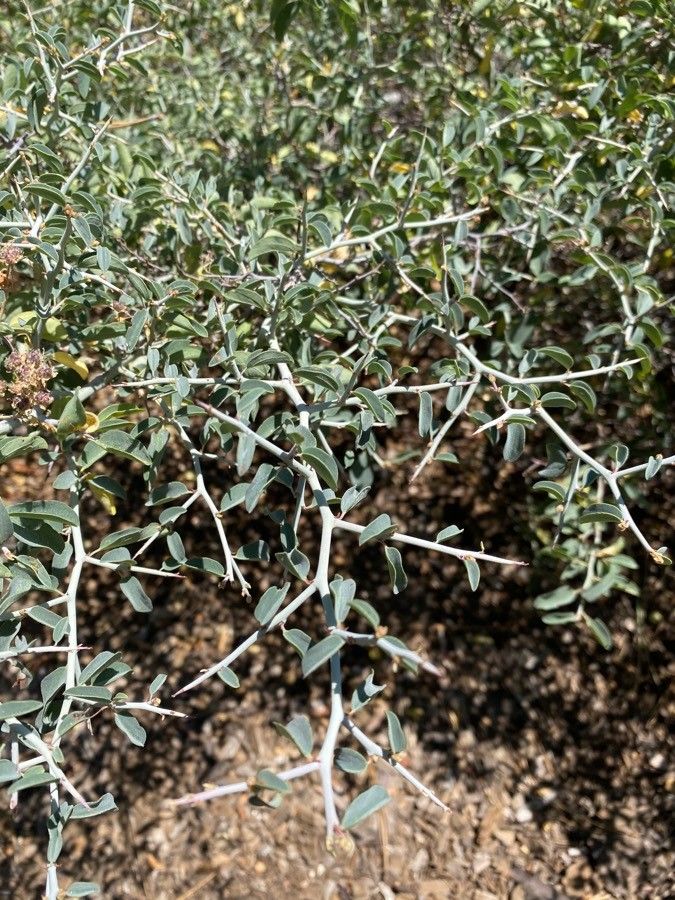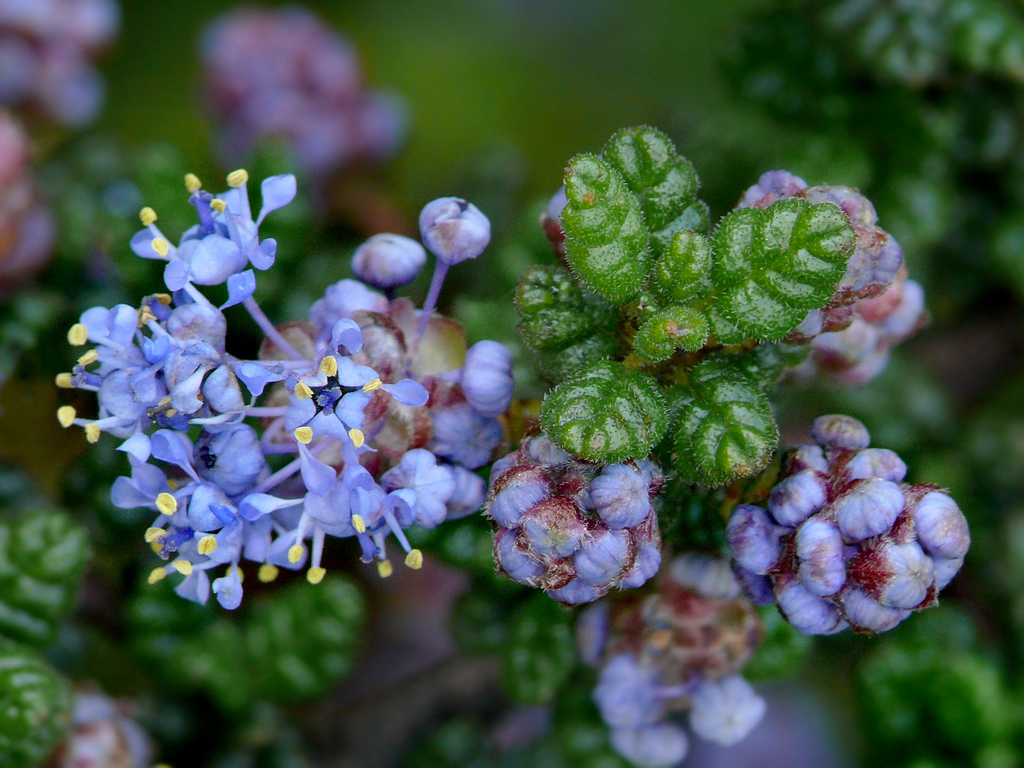
Ceanothus impressus, commonly known as Santa Barbara ceanothus, is an evergreen shrub native to California. It typically reaches a height of 6-10 feet and spreads 8-12 feet wide. This plant features glossy, dark green leaves and produces clusters of small, blue flowers in the spring. Drought-tolerant, it thrives in well-drained soil and can be planted in full sun or partial shade. Santa Barbara ceanothus is popular in landscaping for its attractive foliage and showy flowers, and it also attracts pollinators like bees and butterflies.
Santa Barbara ceanothus has strong resistance to disease and is typically not susceptible to illnesses. Regarding care, this plant is fairly low-maintenance. When grown outdoors it needs little watering, and larger plants usually do not require pruning. Smaller plants, however, should be trimmed after they finish blooming. Santa Barbara ceanothus is suitable for anyone with an outdoor area, like a garden or a deck, and does not demand extensive plant-care experience.
How to keep Ceanothus Impressus.
Light
Santa barbara ceanothus is native to open habitats, such as sunny meadows and forest margins, where light is abundant. It flourishes in full sun but can also tolerate partial sun, adapting well to a range of sunlight conditions.
Water
Santa Barbara ceanothus thrives in coastal habitats and is moderately drought-tolerant. To mimic its natural moisture conditions, water it every 1-2 weeks. As an evergreen, Santa Barbara ceanothus requires consistent soil moisture to maintain its foliage, particularly when grown outdoors, where it can also benefit from seasonal rains.
Temperature
Santa barbara ceanothus shows good adaptability to temperature, able to tolerate higher heat and wider temperature swings. In hot weather, attention should be paid to watering and offering appropriate shade to prevent sunburn. However, Santa barbara ceanothus has comparatively poor cold tolerance; while it can endure a certain amount of chill, excessively low temperatures can cause frost damage.
Fertilizer
The timing is important for fertilizing Santa barbara ceanothus. Apply fertilizer in early spring and repeat monthly until early summer. Fertilizer encourages attractive blooms and supplies energy during both dormant and active growth periods.
Pruning
Santa Barbara ceanothus benefits greatly from early spring pruning, which promotes healthy growth and helps shape the plant. To encourage vigor, remove dead branches and trim one-third of the oldest stems. However, be careful not to prune too heavily, as this can hinder flowering. After the plant has bloomed, a light trim can enhance foliage density, aiding in recovery and supporting abundant future blooms.
Pot & Repot
Repot Santa Barbara Ceanothus every 2 to 3 years during the spring. Choose a slightly larger pot that provides good drainage. After repotting, place the plant in bright light and water it sparingly, as it is drought-tolerant. Be careful not to disturb the root system to prevent transplant shock and ensure a smooth transition.
Botanical profile.
- Plant Type
- Shrub
- Life Cycle
- Perennial
- Genus
- Ceanothus
- Family
- Rhamnaceae
- Hardiness Zone
- 7-10
- Mature Height
- 1.83 m to 3.66 m
- Mature Spread
- 2.44 m
- Leaf Color
- Green
- Leaf Type
- Evergreen
- Flower Color
- Blue
- Flower Size
- 0.51 cm to 0.76 cm
- Bloom Time
- Spring
- Planting Time
- Spring, Summer, Autumn
- Harvest Time
- Summer