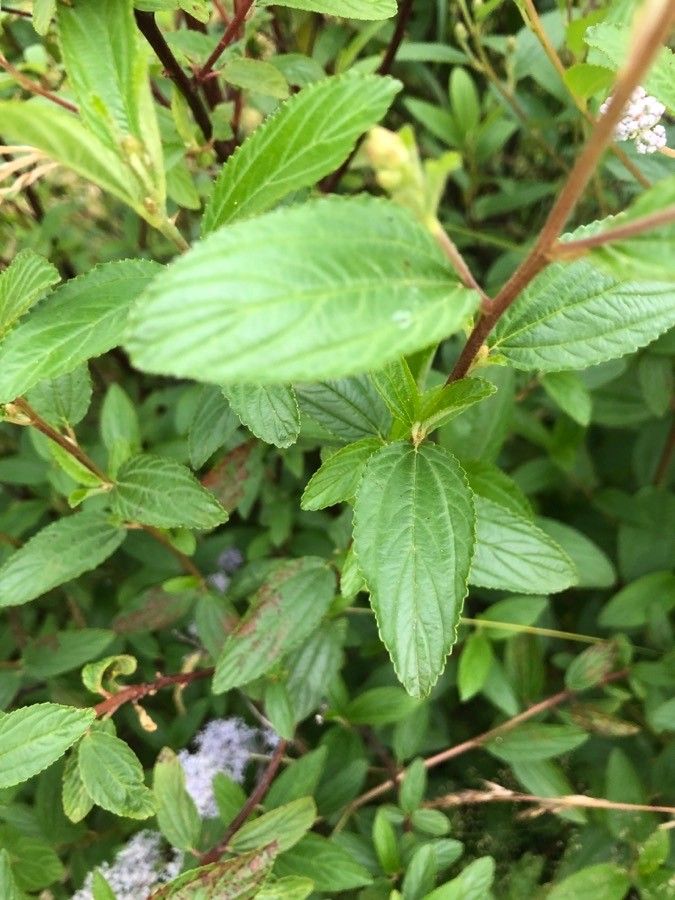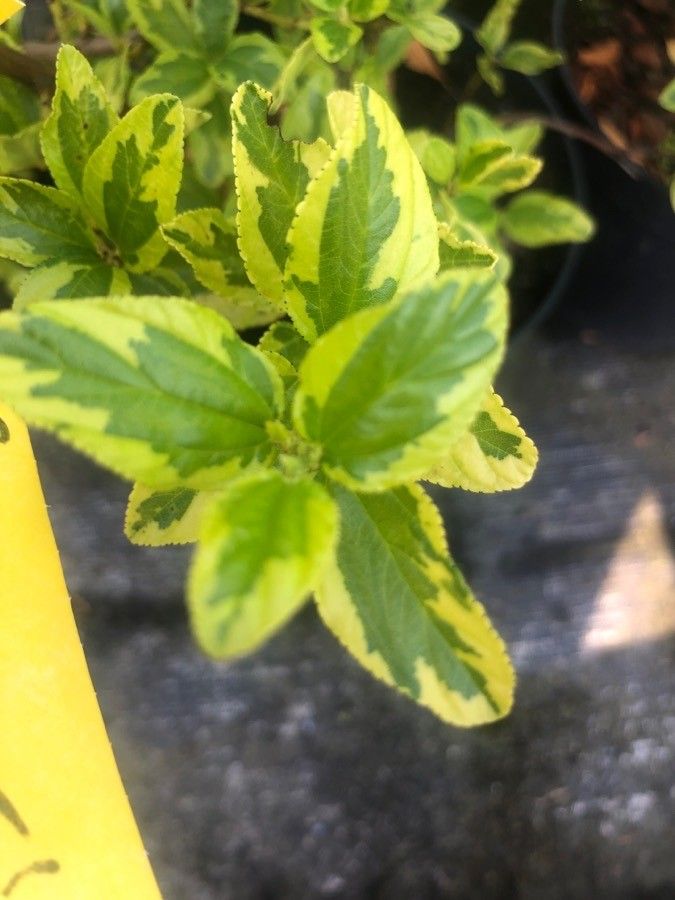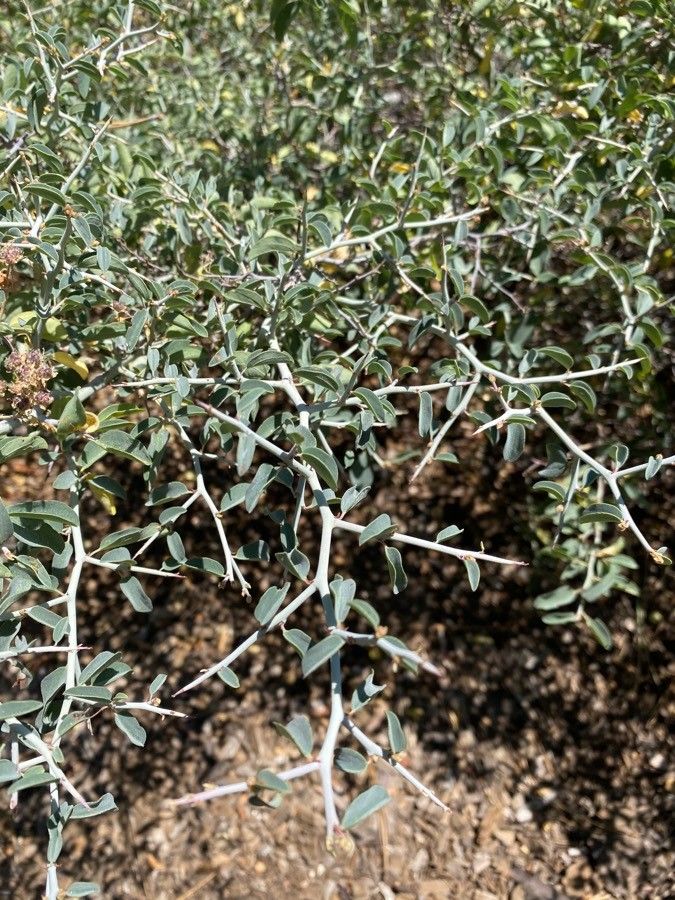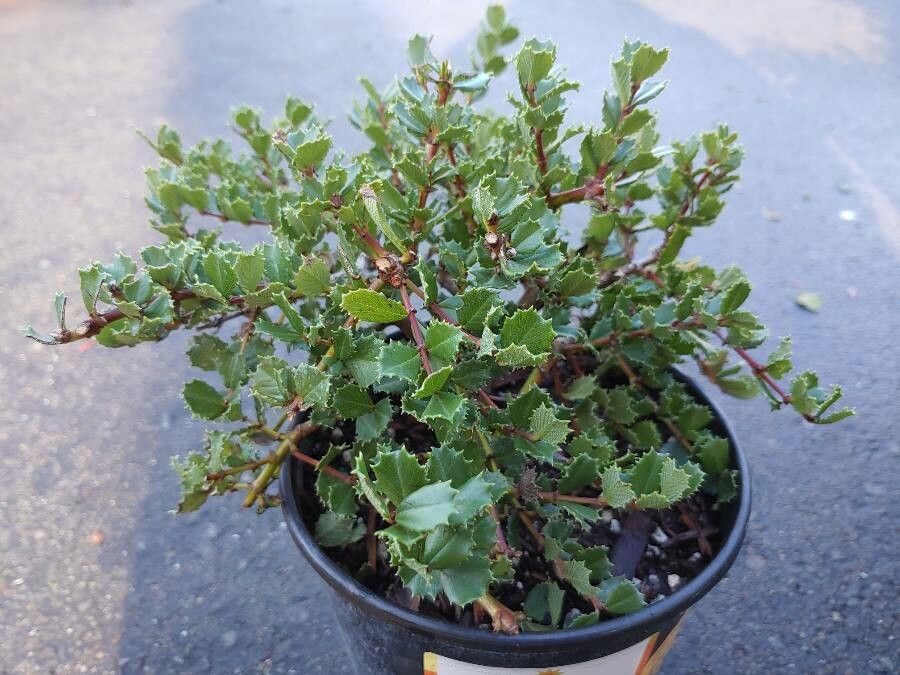
Ceanothus gloriosus is a species of shrub in the family Rhamnaceae known by the common name Point Reyes ceanothus. It is endemic to California, where it is known from the coastline of the San Francisco Bay Area and areas north and south. It grows on seaside bluffs and the slopes of the coastal mountains. This shrub grows flat and spreading to erect, approaching two meters in maximum size. The evergreen leaves are oppositely arranged and up to 5 centimeters long, rounded to oval in shape. The edges are toothed, the teeth sometimes spine-tipped. The inflorescence is a small cluster of bright blue to purple flowers. The fruit is a horned capsule about 4 millimeters wide. There are three varieties of this species:
C. g. var. exaltatus (glory bush) - found north of the Bay Area C. g. var. gloriosus (glory mat) - smaller mat-forming variety known mainly from Marin County C. g. var. porrectus (Mt. Vision ceanothus) - rare variety endemic to Marin County in the vicinity of Point Reyes
Point reyes ceanothus has strong resistance to disease and is usually not susceptible to illnesses. Regarding care, this species is fairly low-maintenance. When grown outdoors it needs only minimal watering, and larger specimens typically do not require pruning. Smaller specimens, however, should be trimmed after they finish blooming. Point reyes ceanothus is appropriate for anyone with outdoor space, like a garden or deck, and does not demand much gardening experience.
How to keep Ceanothus Gloriosus.
Light
Point reyes ceanothus is native to open habitats, such as sunny meadows and forest margins, which provide abundant light. It does best in full sun but can also withstand partial sun, adapting well to different light conditions.
Water
The Point Reyes ceanothus thrives in coastal scrub environments and is well-adapted to drought conditions. For optimal growth, it should be watered every 1-2 weeks, imitating the seasonal rains of its natural habitat. This watering schedule supports healthy development while preventing waterlogging.
Temperature
Point reyes ceanothus is highly adaptable to a range of climate conditions, whether in blazing summers or cold winters. Nevertheless, it has an optimal temperature range for healthy growth. If temperatures become too high, the plant is susceptible to heat and humidity stress, which can lead to its death. In places where temperatures approach the lower limit of its cold tolerance, providing insulation to protect the plant is important.
Fertilizer
Timing is crucial when fertilizing Point reyes ceanothus. Begin fertilizing in early spring and continue monthly through early summer. Fertilizer encourages lovely blooms and supplies energy during both dormant and active growth phases.
Pruning
The Point Reyes ceanothus is an evergreen shrub with blue flowers that should be pruned from early to late winter. Begin by removing any dead or diseased branches, and lightly shape the shrub to promote growth and density. Be careful not to cut into old wood, as it recovers slowly. Proper pruning improves air circulation and reduces the risk of fungal diseases.
Botanical profile.
- Plant Type
- Shrub
- Life Cycle
- Perennial
- Genus
- Ceanothus
- Family
- Rhamnaceae
- Hardiness Zone
- 8-10
- Mature Height
- 91 cm
- Mature Spread
- 3.96 m
- Leaf Color
- Green
- Leaf Type
- Evergreen
- Flower Color
- Lavender
- Flower Size
- 1.02 cm to 2.03 cm
- Bloom Time
- Spring
- Planting Time
- Spring, Summer, Autumn
- Harvest Time
- Summer