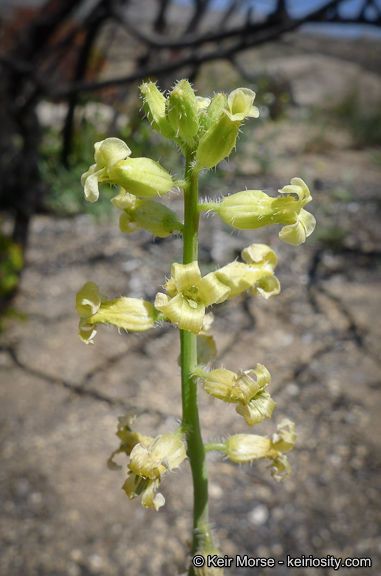
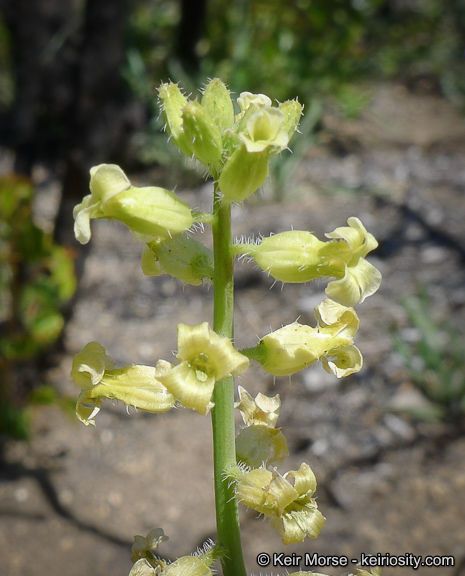
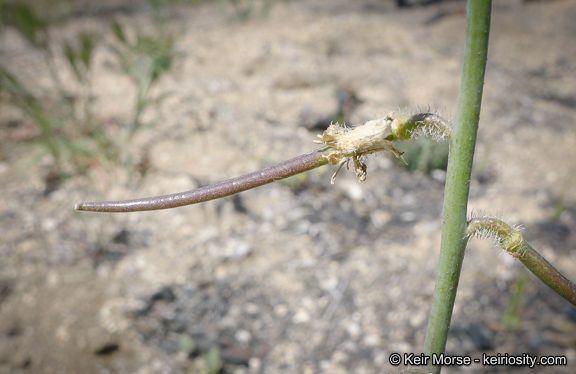
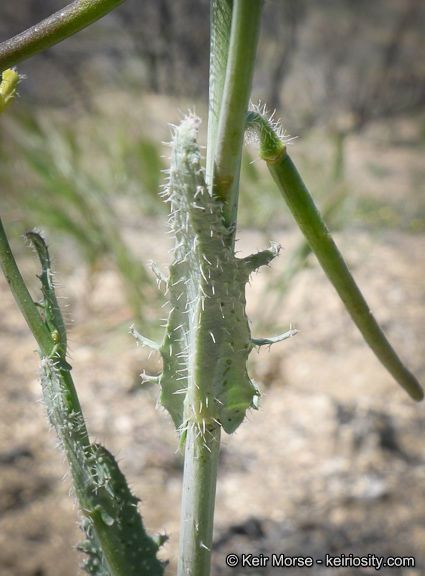
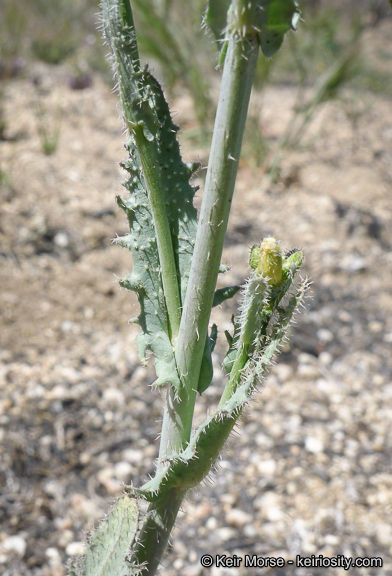
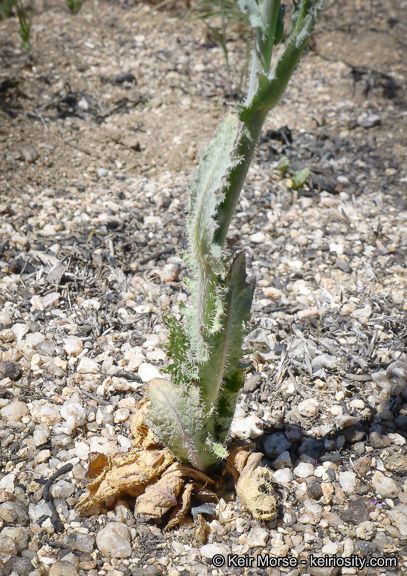
Caulanthus simulans, commonly known as the Simi Valley jewelflower, is a rare and endangered plant species native to the Simi Hills and Santa Susana Mountains in Southern California. This small annual herb, belonging to the Brassicaceae family, typically grows up to 30 cm tall. It features narrow, deeply lobed leaves with toothed edges, and produces clusters of bright yellow flowers with four petals each at the top of its stem.
The Simi Valley jewelflower usually blooms between March and May, although its flowering period can vary depending on environmental conditions. It thrives in well-drained soils found in open grasslands or rocky slopes at elevations ranging from 300 to 900 meters.
Habitat loss due to urbanization and agricultural development, along with competition from invasive species such as mustard plants, has pushed Caulanthus simulans to a critically endangered status. Conservation efforts, including habitat restoration projects and seed banking programs, are underway to protect this rare species.
Caulanthus simulans is vital for maintaining biodiversity within its native ecosystem. It provides food for pollinators such as bees and serves as an indicator of ecosystem health for conservationists.
How to keep Caulanthus Simulans.
Pruning
Payson's wild cabbage is a drought-tolerant perennial that features clustered flowers and a basal rosette of leaves. To maintain its form, prune the plant in early spring, taking care not to make heavy cuts. Thinning the plant can improve air circulation and reduce the risk of diseases. Regular, light pruning promotes blooming and overall health. For advice specific to your area, consider consulting local gardening experts.
Botanical profile.
- Plant Type
- Herb
- Genus
- Caulanthus
- Family
- Brassicaceae
Other names.