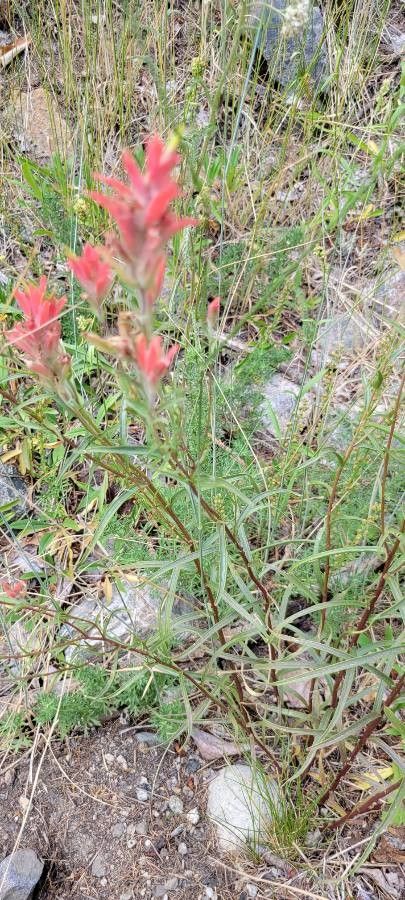
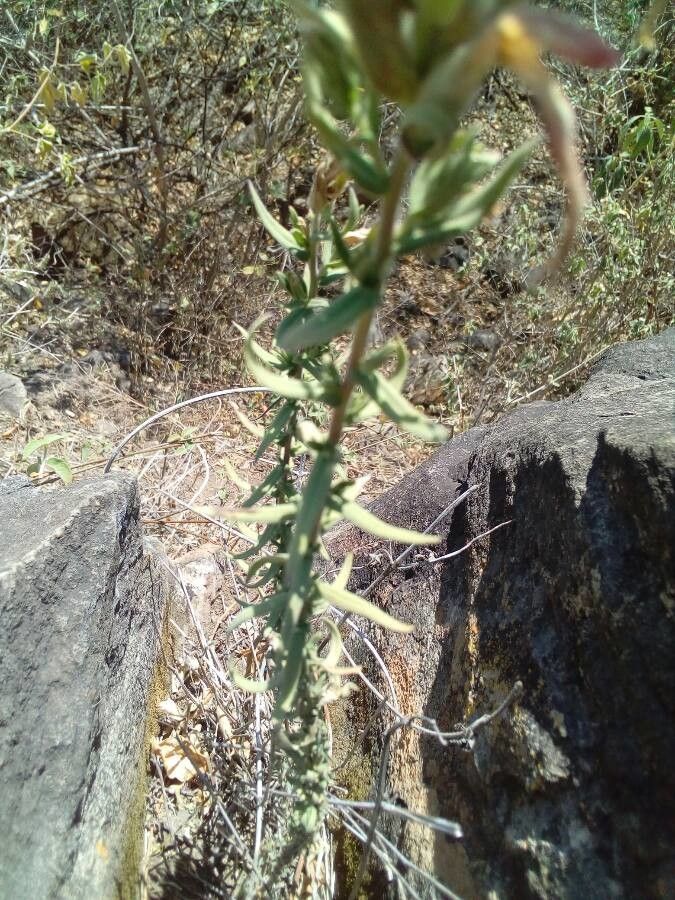
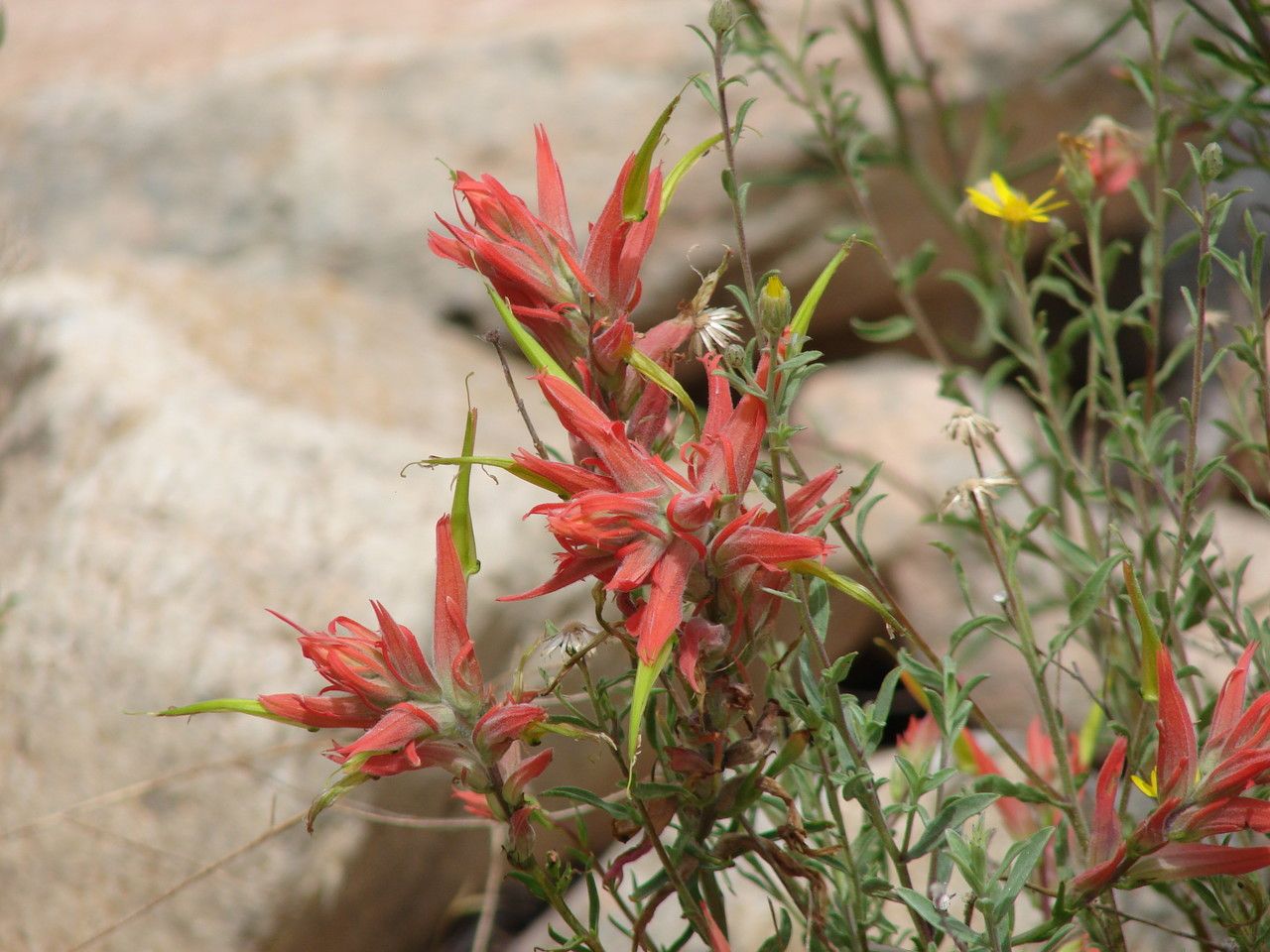
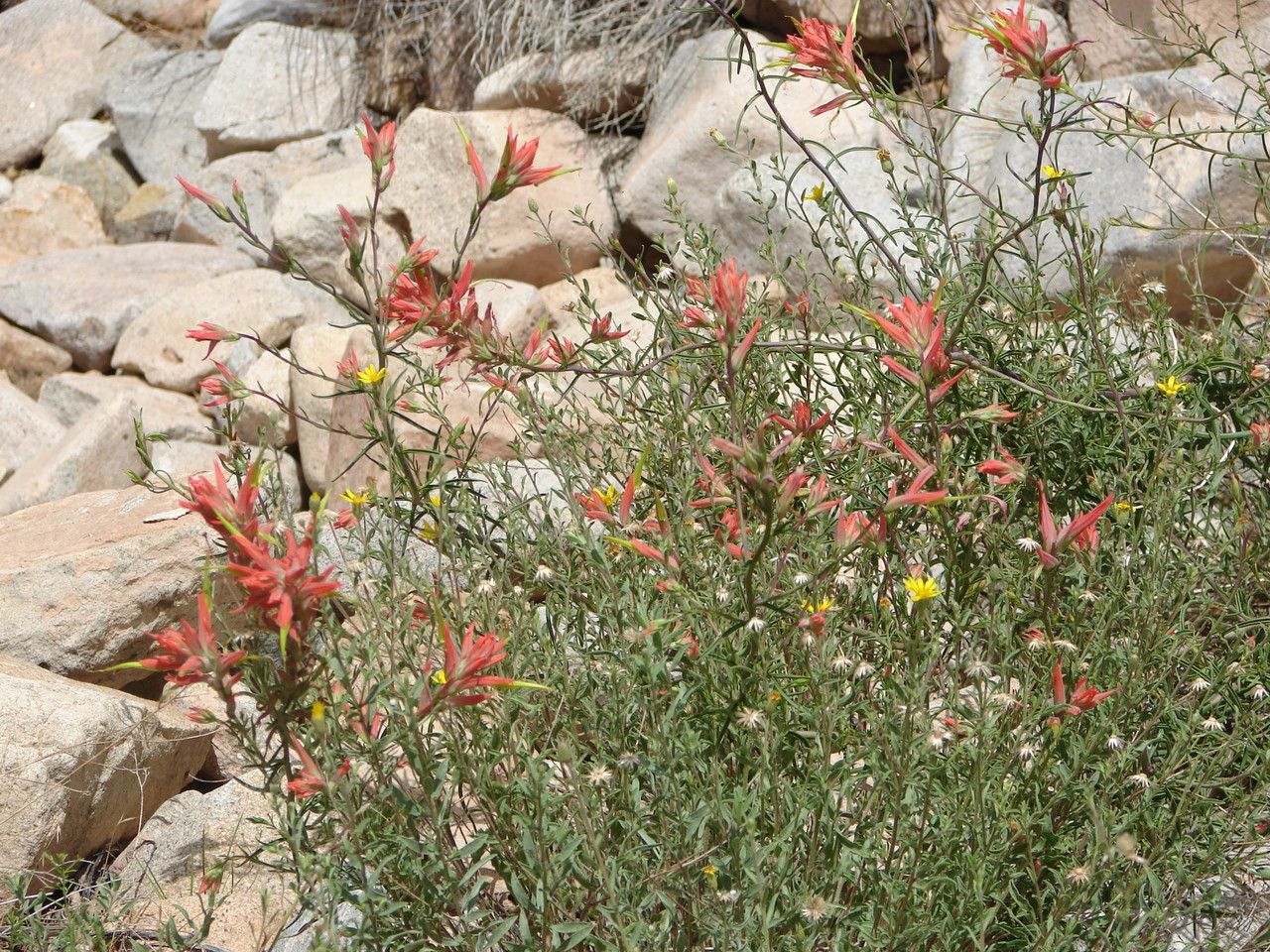
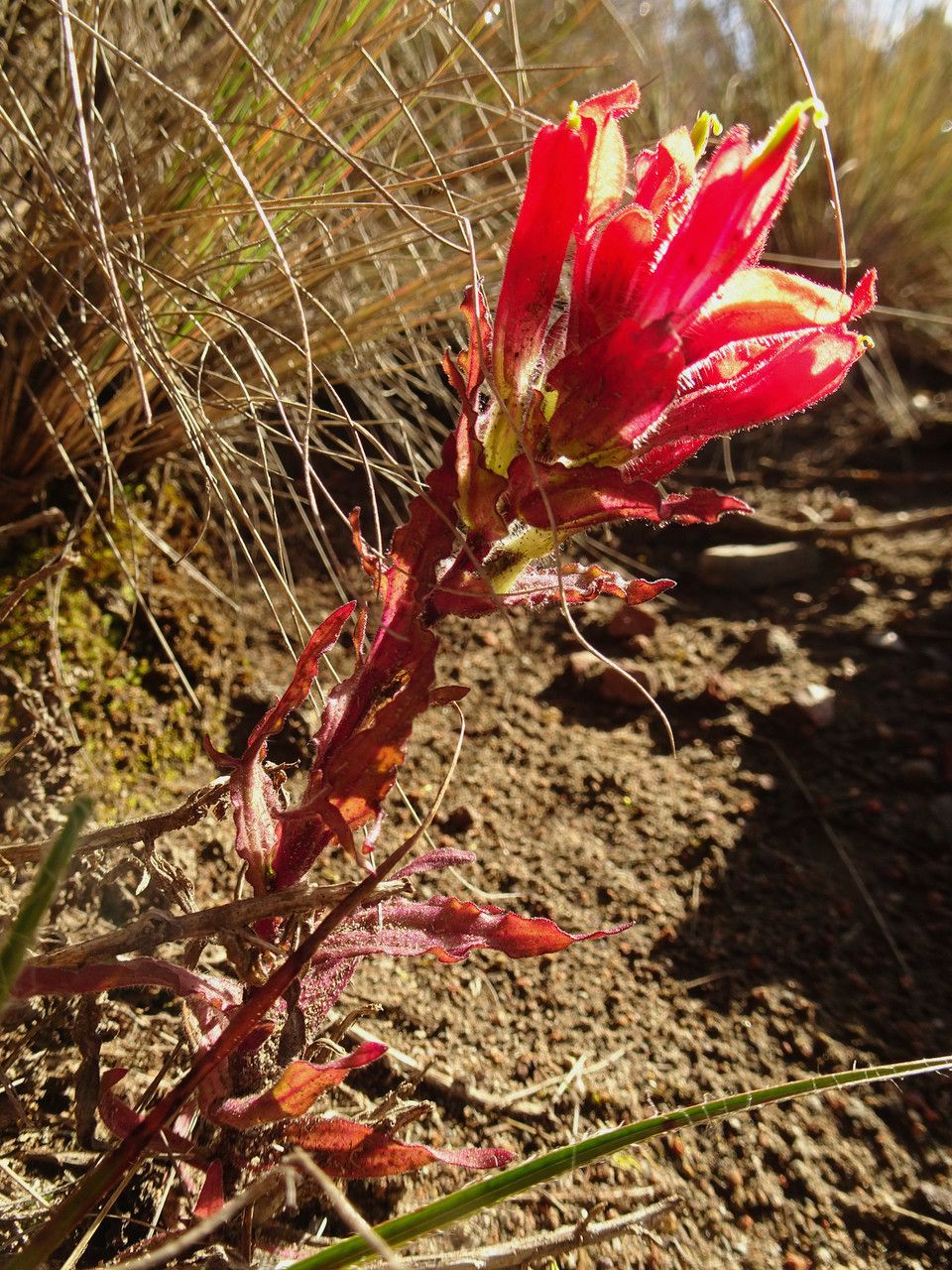
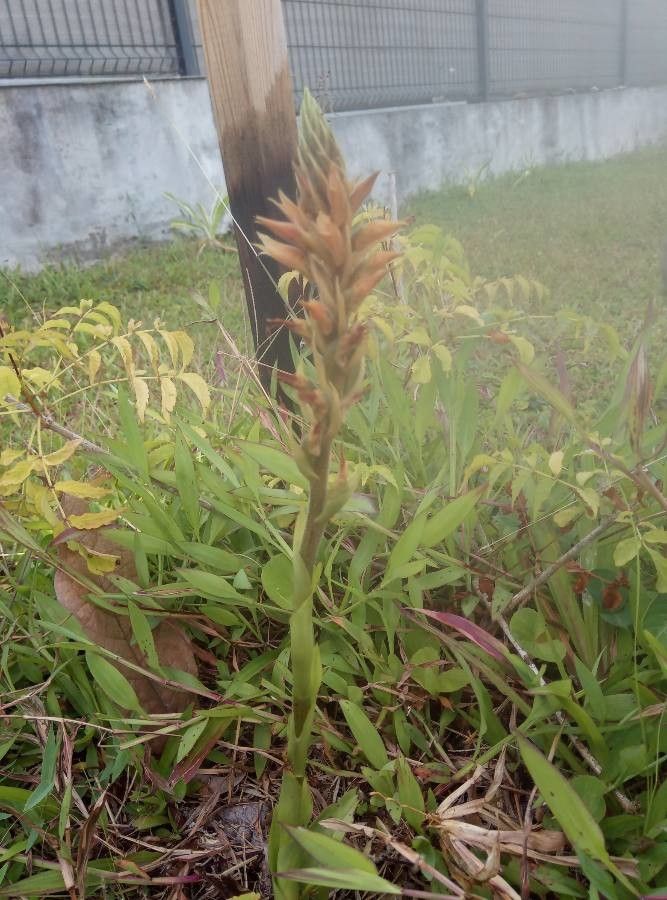
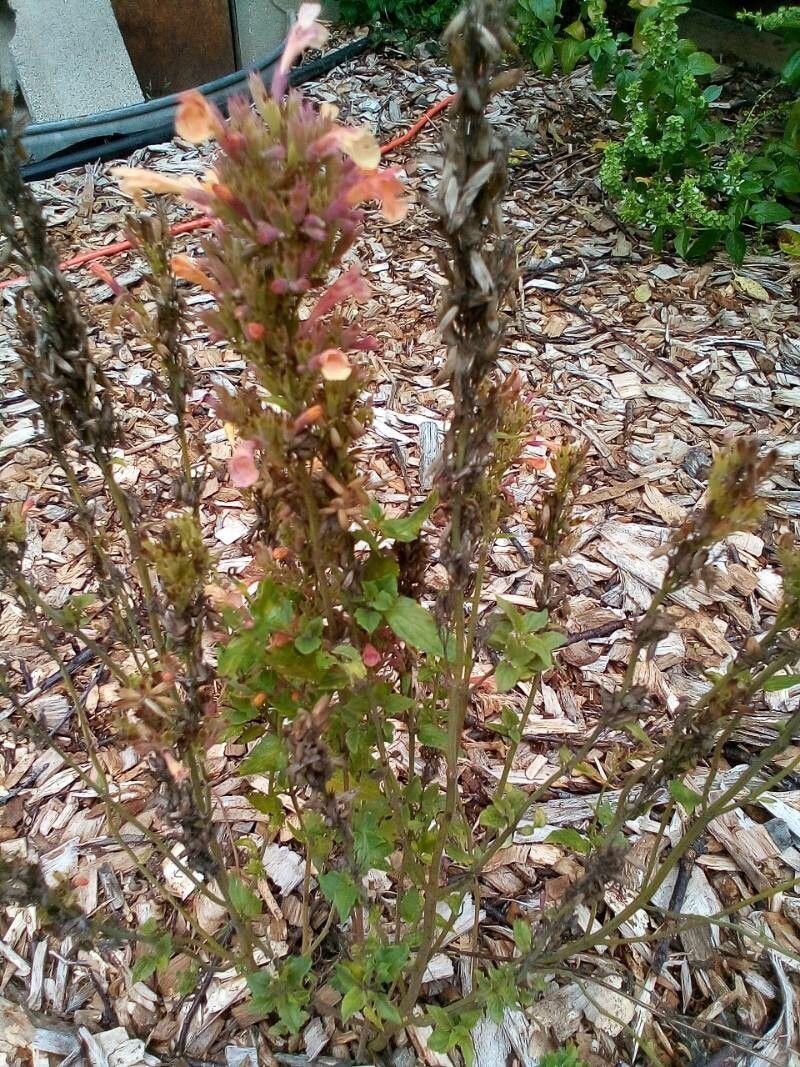
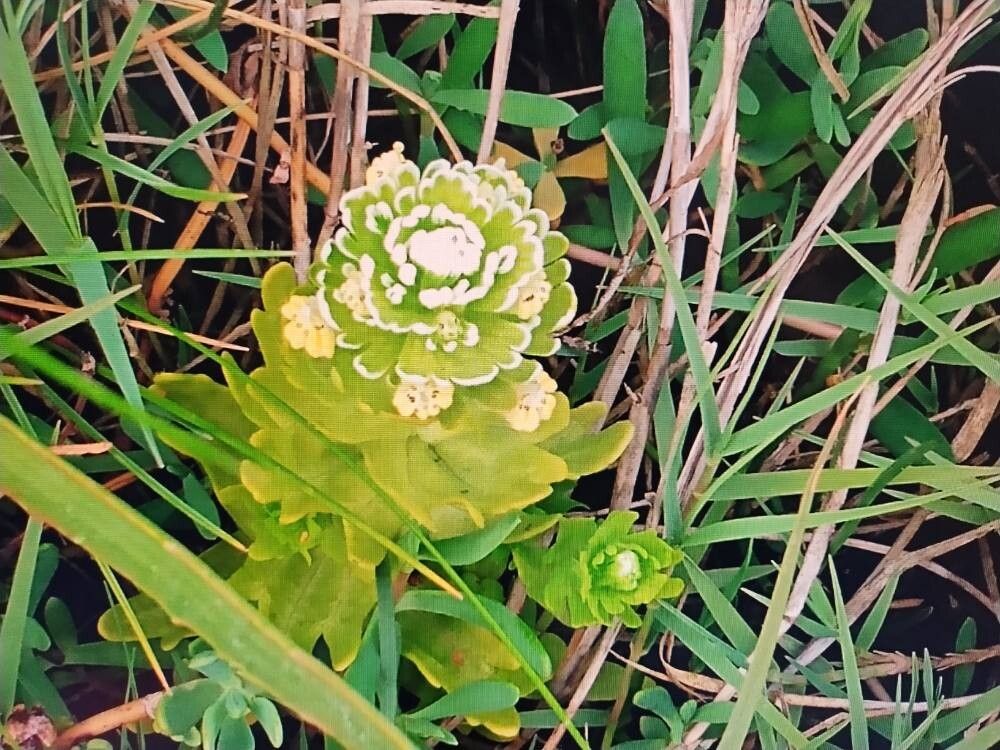
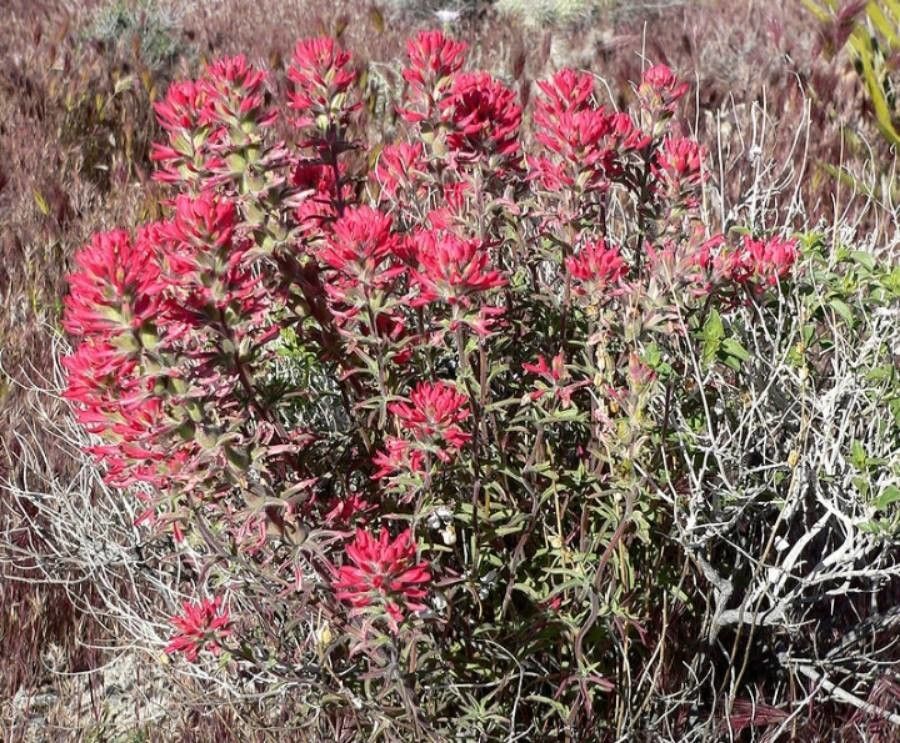
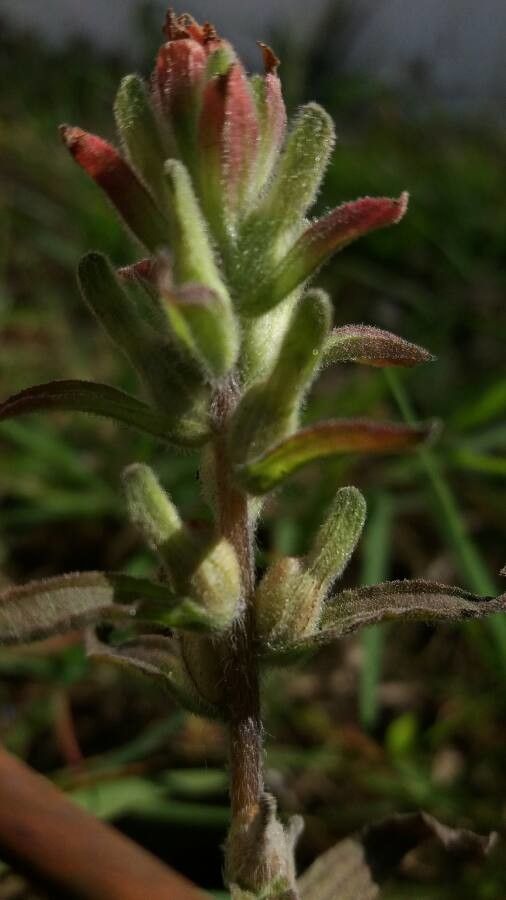
Castilleja tenuiflora, commonly known as the narrow-leaved Indian paintbrush, is a herbaceous perennial plant belonging to the Orobanchaceae family. Native to North America, it flourishes in meadows, prairies, and open woodlands. This plant can grow up to 60 cm tall, featuring narrow leaves that range from 2-10 cm in length. Its flowers, typically bright red or orange-red with yellow tips, are densely arranged in spikes at the top of the stem and bloom from May to August. As a hemiparasitic plant, Castilleja tenuiflora derives some of its nutrients from other plants through its roots, often parasitizing grasses like blue grama (Bouteloua gracilis) or buffalo grass (Bouteloua dactyloides). The narrow-leaved Indian paintbrush holds cultural significance for many Native American tribes, who use it for medicinal purposes and in ceremonies. Additionally, it serves as a vital food source for various pollinators, including hummingbirds and butterflies. Overall, Castilleja tenuiflora is a unique species that plays a crucial role in North American ecosystems and holds cultural importance for many indigenous communities.
Catalina indian paintbrush is fairly resistant to disease and usually does not suffer from many illnesses. However, it can be vulnerable to pests and diseases present in its surroundings. These problems are typically minor. In terms of care, this plant needs moderate maintenance. It should be pruned regularly to preserve a good appearance and encourage healthy growth. Fertilizing can also help stimulate flowering. Catalina indian paintbrush is appropriate for anyone with an outdoor area, such as a garden or patio, and does not demand extensive care experience. It may need more attention when grown indoors.
How to keep Castilleja Tenuiflora.
Light
Catalina indian paintbrush is a sun-loving perennial herbaceous plant native to open habitats and commonly found in meadows and grasslands. It prefers full sun but can also tolerate partial sun.
Water
Catalina Indian paintbrush thrives in moderately moist environments, requiring regular watering to keep it healthy without causing waterlogging. Watering once a week usually maintains its health and vigor. As an outdoor plant, it makes good use of rainfall, which influences its growth cycles and seasonal water requirements.
Temperature
Catalina indian paintbrush can tolerate a wide range of temperatures, but its distribution can still be constrained by particular combinations of moisture and heat. It grows best in warm summer conditions with sufficient rainfall or supplemental watering. Extended periods of cloudy, rainy weather or sustained high temperatures can increase the chance of the plant dying. In winter, protecting it from cold can boost its likelihood of survival.
Fertilizer
The ideal time to fertilize a Catalina indian paintbrush is in early spring, as it comes out of dormancy and begins active growth. Fertilizing supplies important nutrients for healthy development. Although the Catalina indian paintbrush has relatively low fertilizer requirements, giving it fertilizer once a year can improve its survival and encourage better, longer-lasting flowers.
Pruning
Catalina Indian paintbrush features vibrant red blooms and thrives with annual pruning from early to late spring. The key is to focus on light pruning: remove dead stems and shape the plant to improve airflow. This practice promotes healthy growth and blooming, reduces the risk of disease, and ultimately enhances the plant's vitality.
Toxicity
The Indian paintbrush plant is known to contain high amounts of selenium, which can be toxic if ingested in large amounts. Symptoms include nausea, vomiting, and fatigue. High amounts of selenium can be fatal in horses.
Further reading →
The toxicity and danger assessments provided are for reference only. We do not assure their accuracy, so it's crucial not to depend on them. Seek professional advice when necessary for accurate guidance.
Botanical profile.
- Plant Type
- Herb
- Life Cycle
- Perennial
- Genus
- Castilleja
- Family
- Orobanchaceae
- Hardiness Zone
- 7-10
- Mature Height
- 91 cm
- Mature Spread
- 20 cm to 30 cm
- Leaf Color
- Green, Olive Drab
- Leaf Type
- Deciduous
- Flower Color
- Red
- Flower Size
- 2.03 cm to 3.05 cm
- Bloom Time
- Mid spring, Late spring, Early summer, Mid summer
- Planting Time
- Spring, Summer
- Harvest Time
- Summer, Early fall
- Native Area
- Mexico
Other names.
Reader questions.
How should I water my Catalina indian paintbrush the best way?
To ensure the health of your Catalina indian paintbrush, follow these watering guidelines. It is recommended to use filtered water at room temperature. Tap water may contain harmful particles for this plant. The plant originates from warm surroundings, so avoid using cold water as it can be a shock. Additionally, refrain from overhead watering to prevent foliage issues. Instead, water directly to the soil until it is fully soaked. This practice is beneficial as it helps moisten the roots and support their spread, aiding nutrient absorption.
What should I do if I give too much or too little water to my Catalina indian paintbrush?
Overwatering is a more common problem for Catalina Indian Paintbrush plants, while underwatering is less common due to their drought tolerance. Overwatering can cause wilting, yellowing leaves, and diseases like root rot, mold, and mildew that can be fatal to the plant. Underwatering can cause brittle, brown leaves. It's important to recognize signs of overwatering early, as some diseases may be irreversible if not addressed promptly. Reduce watering immediately when signs of overwatering appear and consider improving soil drainage. If underwatering is suspected, water more regularly until signs improve.
How often should I give water to my Catalina indian paintbrush plant?
If your Catalina indian paintbrush plant is in a pot, the best way to check if it needs water is to stick your finger in the soil. If the top two to three inches of soil feels dry, then it's time to water it. If you're growing your Catalina indian paintbrush outdoors in the ground, you can use the same method to test the soil. Once again, if the top few inches of soil are dry, it's time to water. Typically, during the spring and early fall, you'll need to water this plant about once a week using this method. However, during extremely hot weather, you might have to water it twice or even more per week. But it's worth noting that mature and well-established Catalina indian paintbrush plants have the remarkable ability to survive drought conditions.
How much water does my Catalina indian paintbrush require?
To properly water your Catalina indian paintbrush, don't be stingy with the amount of water you give. Make sure the first two to three inches of soil are dry, and then water the plant thoroughly until the soil is soaked. The water should be enough to cause excess water to flow through the drainage holes at the bottom of the pot. If you don't see excess water draining, you probably haven't watered enough. However, be careful not to let water accumulate in the soil, as this can harm the plant. Poorly draining soil is also harmful, so make sure the water drains properly. If the plant is outside, 1 inch of rain per week should be sufficient.
How do I water my Catalina indian paintbrush at different stages of growth?
The water needs of the Catalina indian paintbrush vary depending on its growth stages. In the first few years and after transplantation, it requires more water than usual as it focuses on developing new roots for future growth. These roots perform best with a higher level of moisture. However, as the plant matures, it will require less water. Additionally, during the bloom period, when the flowers are developing, the Catalina indian paintbrush may need extra water to support the process.
What is the best way to water my Catalina indian paintbrush in different seasons?
The Catalina indian paintbrush has different water needs throughout the year. It requires the most water during the hottest months of summer. Depending on how quickly the soil dries out, you may need to water this plant more than once a week in summer. However, in winter, the plant enters a dormant phase and requires much less water. You may not need to water it at all during the winter months, but if you choose to, it should be done only about once a month. Over-watering during this time can increase the chances of the plant getting sick.
How is it different to water my Catalina indian paintbrush plant inside and outside?
If you don't live in temperate or tropical regions, it's common to grow the Catalina Indian paintbrush indoors. However, it's important to know that soil in containers can dry out faster than ground soil. Additionally, if there are drying elements like air conditioning units, you may need to water your plant more frequently. On the other hand, if you plant it outside and receive regular rainfall, you may not need to water it much at all. But if you grow it indoors, you'll need to water it more often since rainwater won't be able to soak the soil.