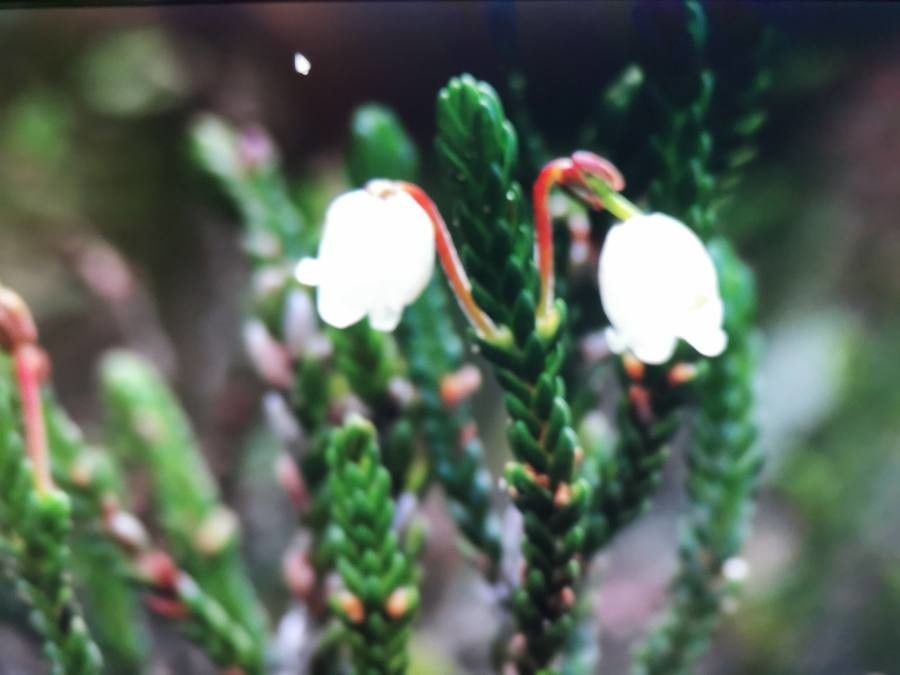
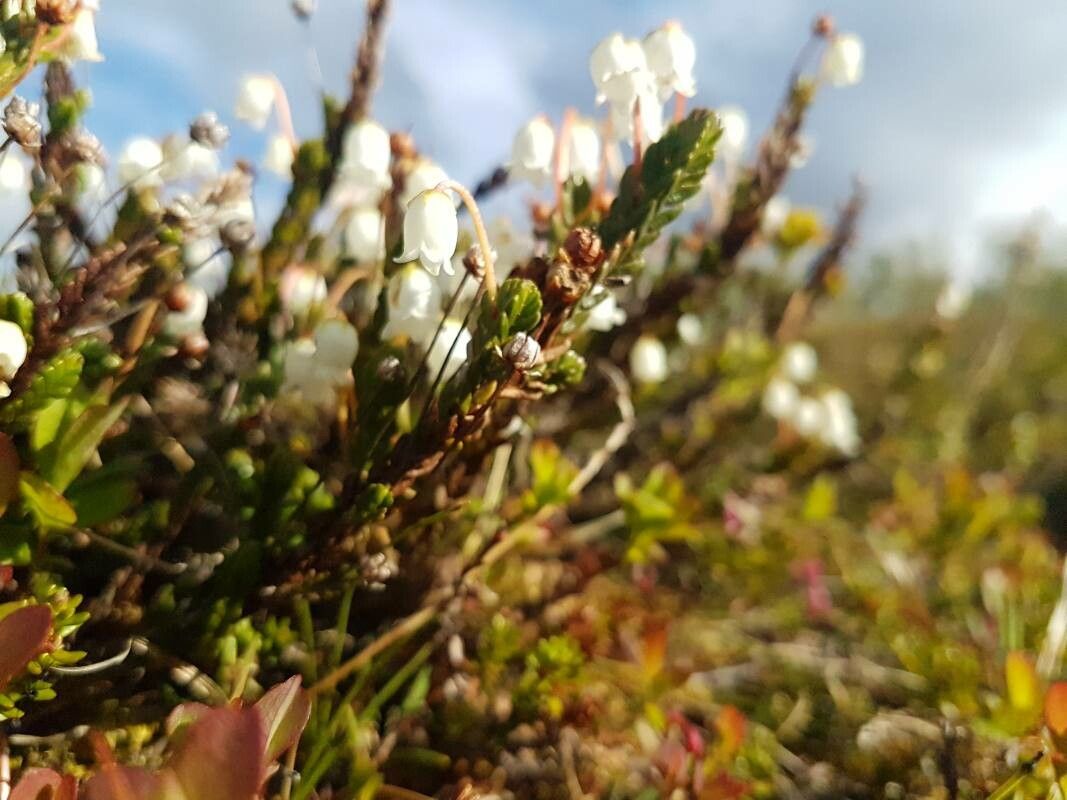
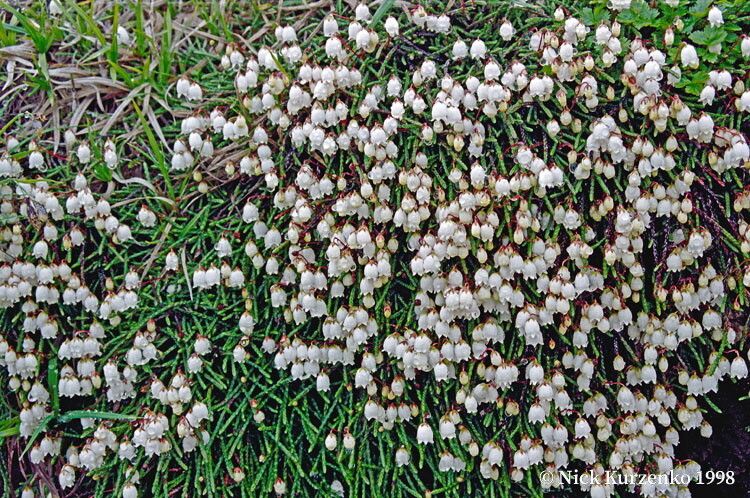
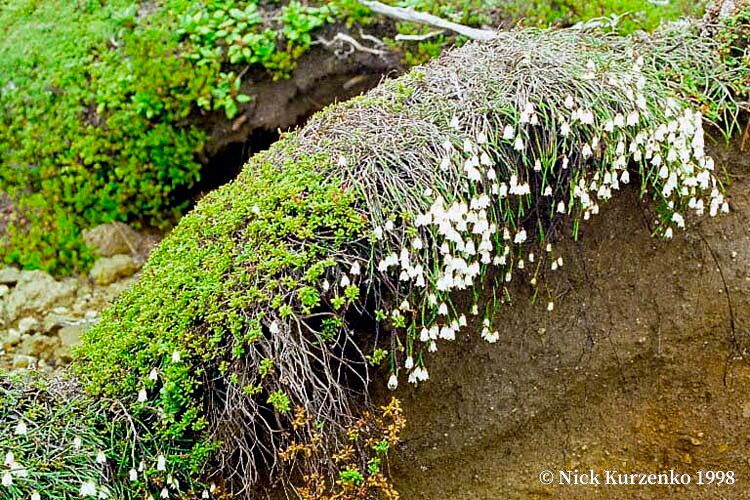
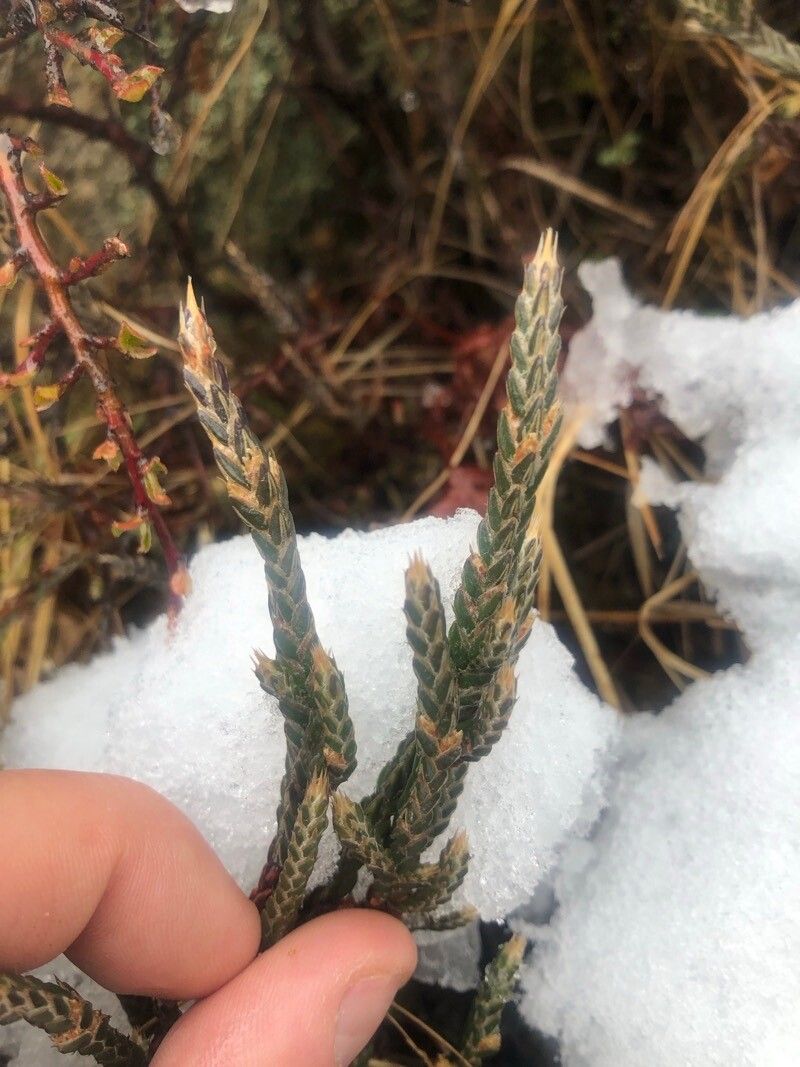
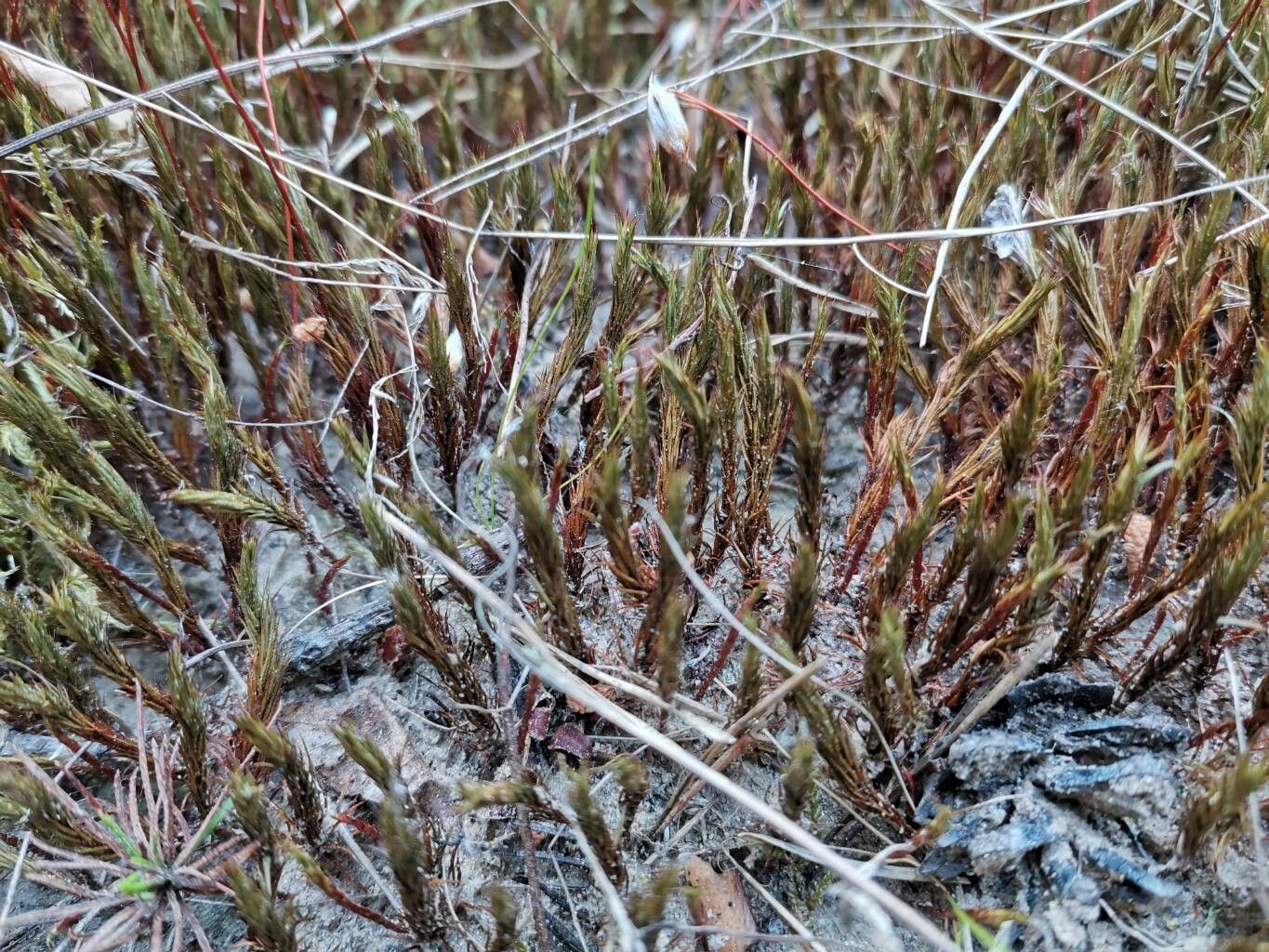
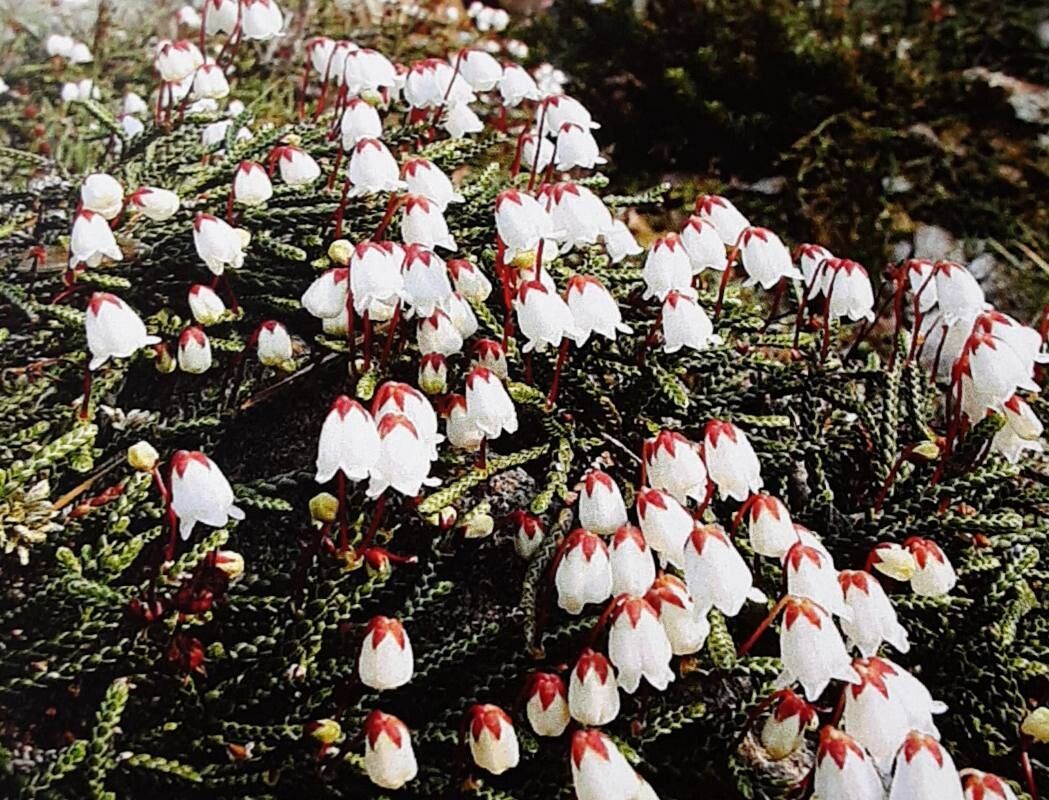
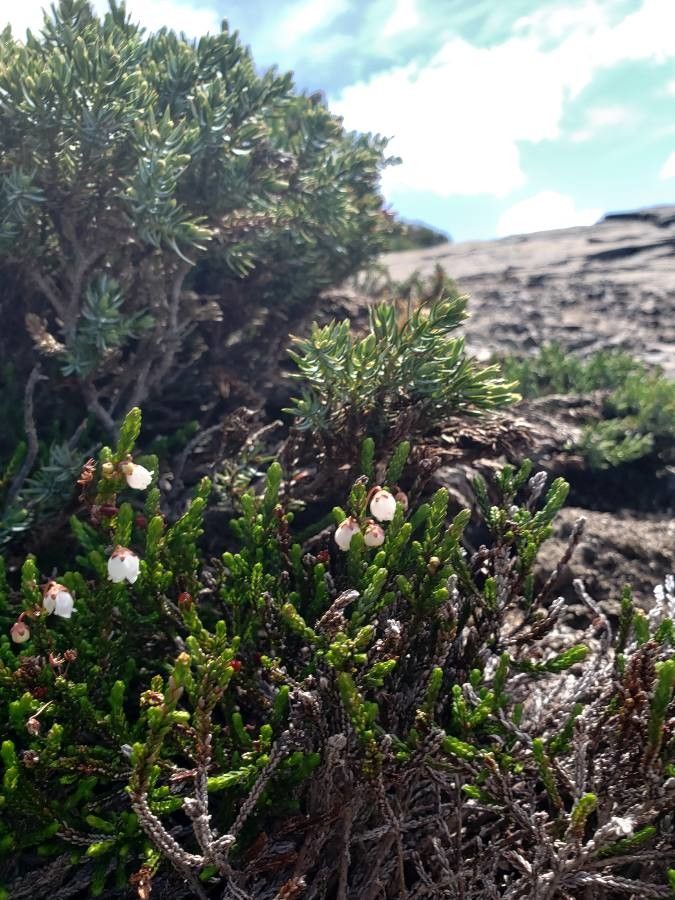
Cassiope tetragona (common names include Arctic bell-heather, white Arctic mountain heather and Arctic white heather) is a plant native to the high Arctic and northern Norway, where it is found widely. Growing to 10–20 cm in height, it is a strongly branched dwarf shrub. The leaves are grooved, evergreen, and scale-like in four rows. Pedicels are long and arched. The plant bears bell-shaped, solitary flowers usually with white and pink lobes and pink anthers. The flower stalks and sepals are red, but the petals may also be yellowish-white. The anthers can also be brownish-yellow and flower stalks and sepals yellowish-green.
It grows on ridges and heaths, often in abundance and forming a distinctive and attractive plant community. In Greenland, indigenous peoples use the plant as important source of fuel. Because of high resin content, it burns even when wet.The plant can also be used in cooking. Canadian chef Louis Charest used arctic heather as a smoked herb for the 2016 Three Amigos Summit state dinner.
White arctic mountain heather is resistant to disease and generally not susceptible to illnesses. In terms of care, this plant is fairly low-maintenance. When planted outdoors it needs minimal watering, and larger specimens usually do not require pruning. Smaller plants, however, should be trimmed after they finish blooming. White arctic mountain heather is appropriate for anyone with outdoor space, such as a garden or a deck, and does not demand extensive care experience.
How to keep Cassiope Tetragona.
Light
White arctic mountain heather naturally occurs in habitats like forest understories or rocky sites where it receives natural shade. It prefers partial sun but can tolerate full sun or full shade, showing its versatile and hardy nature.
Water
The white arctic mountain heather is an evergreen plant that thrives in cold, dry regions due to its high drought tolerance. It benefits from being watered every 2-3 weeks, although its water requirements decrease in winter. As a plant native to alpine areas, it retains its foliage throughout the year and adapts well to environments with limited moisture and occasional rainfall.
Temperature
White arctic mountain heather is indigenous to cold, severe habitats and grows best between 32 °F (0 °C) and 90 °F (32 °C). Winter survival is especially important, so make sure to protect it from extreme temperatures, particularly during the colder months.
Fertilizer
Timing is essential when fertilizing White arctic mountain heather. Apply fertilizer in early spring and then once a month through to early summer. Fertilizer encourages attractive blooms and supplies energy both during dormancy and periods of active growth.
Pruning
The white Arctic mountain heather features evergreen leaves and small, bell-shaped flowers, and it flourishes in cool climates. To maintain its shape and improve air circulation—thereby reducing the risk of disease—prune it lightly in late spring after flowering. Be sure to use sharp, sanitized tools for clean cuts, which will promote healthy and vigorous growth.
Botanical profile.
- Plant Type
- Shrub
- Life Cycle
- Perennial
- Genus
- Cassiope
- Family
- Ericaceae
- Hardiness Zone
- 3-7
- Mature Height
- 10 cm to 30 cm
- Mature Spread
- 20 cm
- Leaf Color
- Dark Green
- Leaf Type
- Evergreen
- Flower Color
- White
- Flower Size
- 0.76 cm to 1.27 cm
- Bloom Time
- Mid spring, Late spring
- Planting Time
- Spring
- Harvest Time
- Mid summer, Late summer
Other names.
Reader questions.
What is the native environment for white arctic mountain heather?
White arctic mountain heather (Cassiope tetragona) is native to cold, harsh environments. It thrives best in temperatures ranging between 32 °F (0 °C) and 90 °F (32 °C). These conditions mimic its native habitat, allowing it to grow and flourish optimally.
How should white arctic mountain heather be cared for in winter?
During the colder months, it's crucial to protect white arctic mountain heather from temperature extremes. Although the plant is highly cold-tolerant and doesn't need additional frost protection, it's recommended to water it generously before the first freeze. This ensures that the soil remains moist and enters a frozen state, which helps prevent drought and water scarcity for the plant during winter and early spring.
What are the signs of low temperature damage in white arctic mountain heather, and how can it be treated?
If winter temperatures drop below -35°C, white arctic mountain heather can survive without noticeable changes during the winter. However, the plant may show signs of brittleness and dryness in its branches come spring, with no new shoots emerging. To address this, prune away any dead branches in spring that have failed to produce new leaves.
How does white arctic mountain heather respond to high temperatures, and what are the solutions?
White arctic mountain heather struggles with high temperatures, notably when it exceeds 32°C. This may lead to significant leaf drop, and in severe cases, the plant may wither and die. To mitigate this, trim away sunburned and dried-up parts of the plant, move it to a shaded location, or use a shade cloth to protect it from the midday and afternoon sun. Additionally, ensure the soil remains moist by watering the plant in the morning and evening.