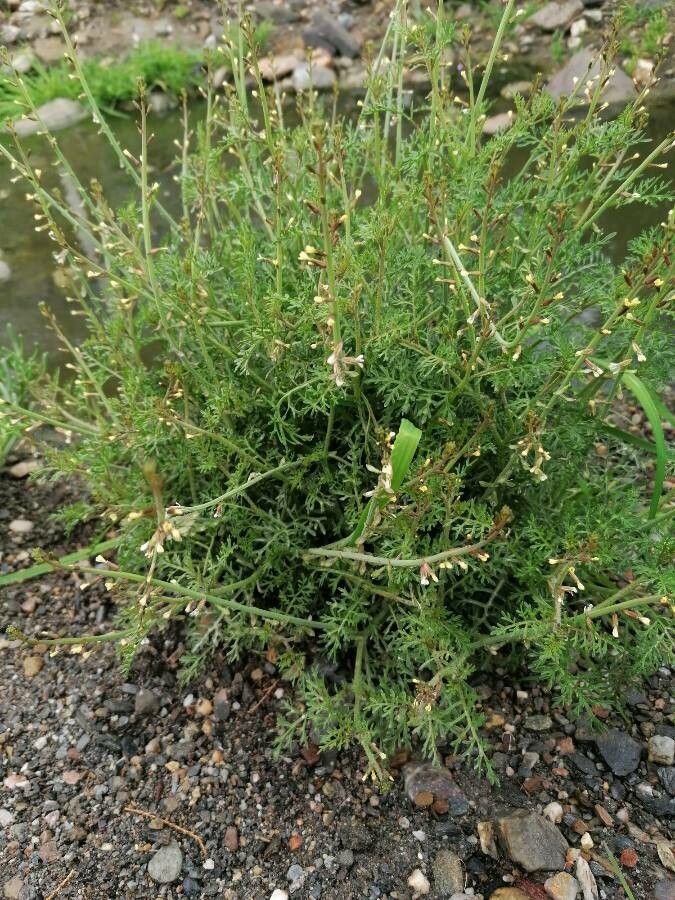
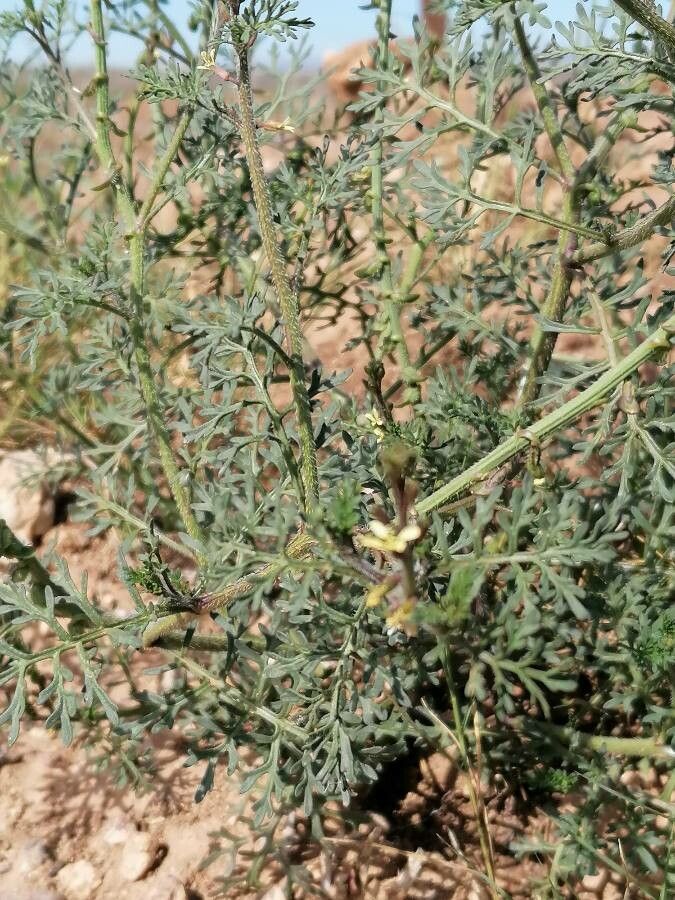
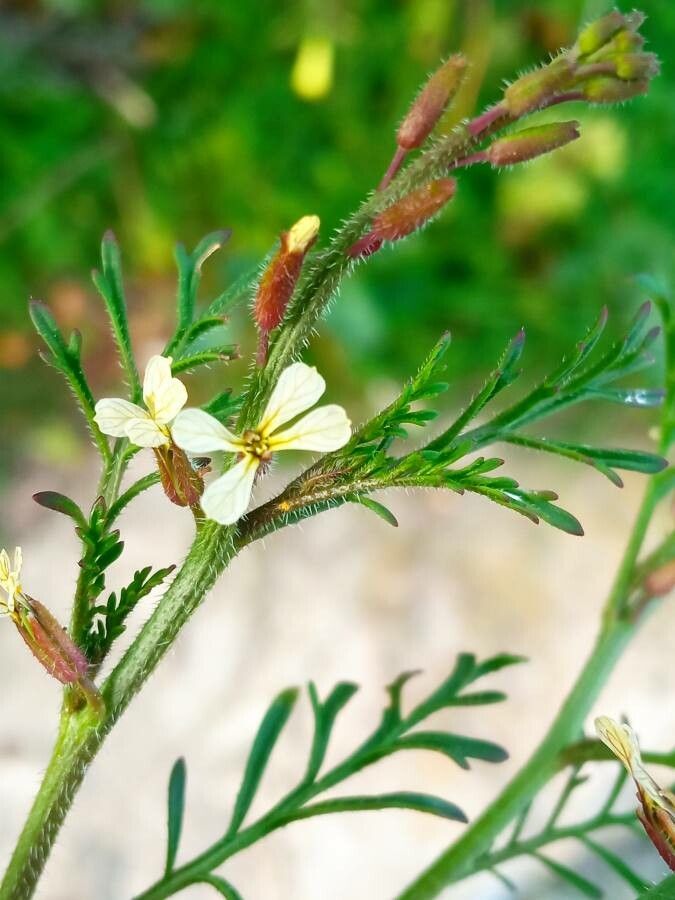
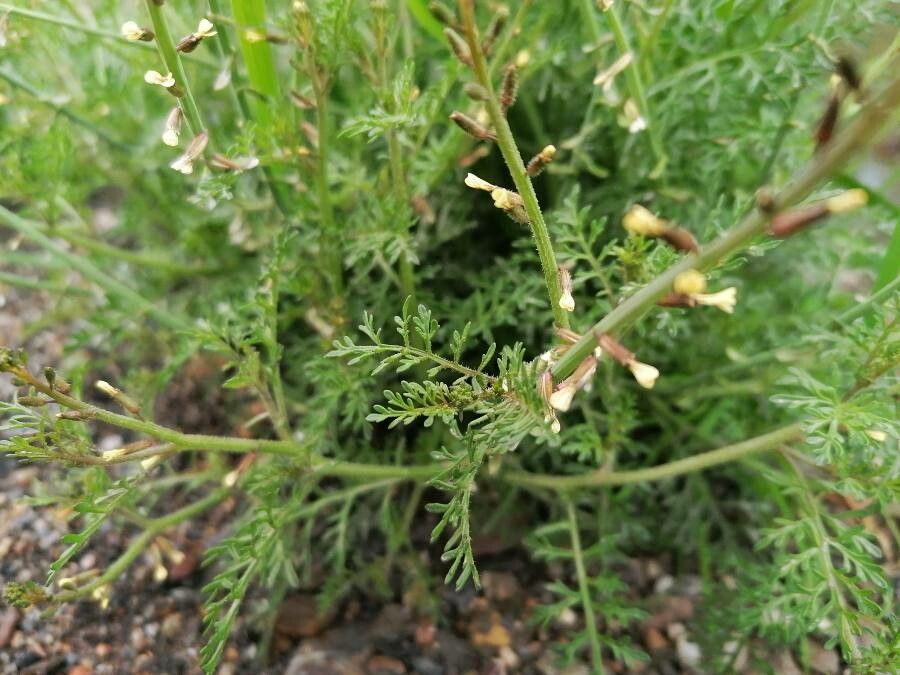
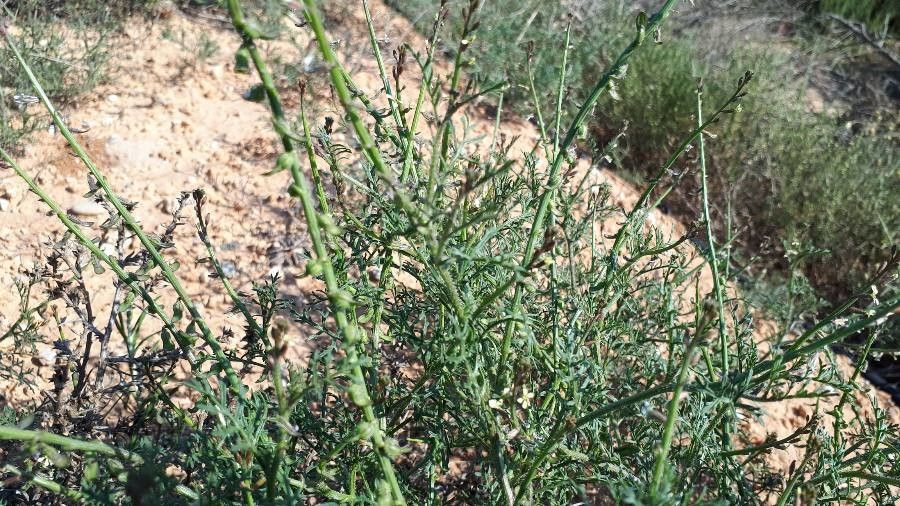
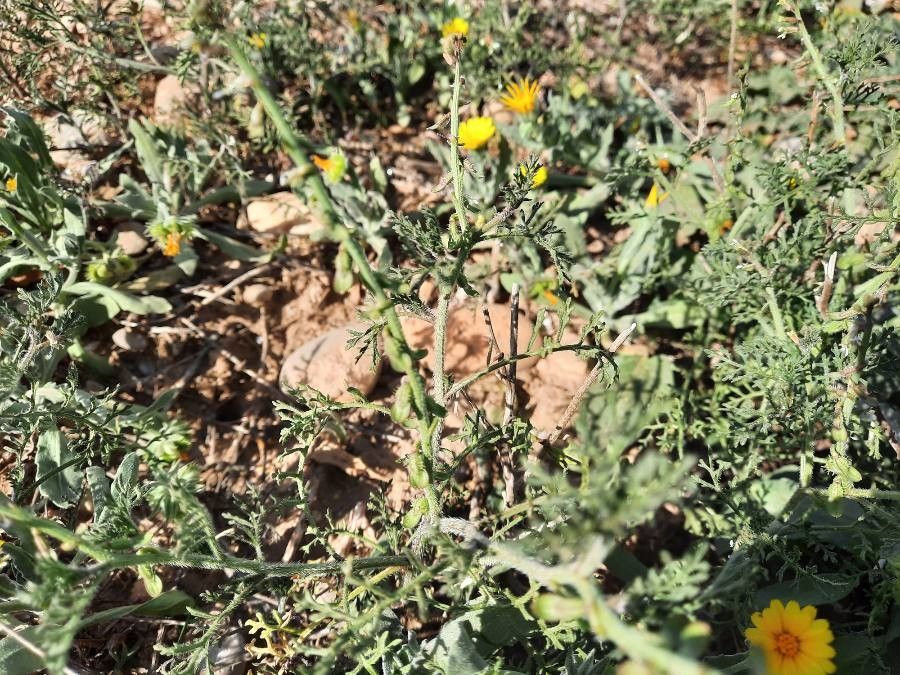
Carrichtera is a genus of flowering plants belonging to the family Brassicaceae.It has a single species, Carrichtera annua (L.) DC., commonly known as Ward's weed. Its native range is from Macaronesia across North Africa and Western Asia to Iran and Saudi Arabia, and in Portugal and Greece in southern Europe.It has been introduced to Italy, Japan, Australia, New Zealand, and California, where it is considered invasive.
Ward's weed has strong disease resistance and is generally not prone to illnesses. Still, it can be affected by pests and diseases present in its surroundings, though these infections are typically not severe. Regarding care, this plant needs a moderate level of maintenance. It should be pruned regularly to preserve a neat appearance and healthy growth. Applying fertilizer can also encourage flowering. Ward's weed is appropriate for anyone with outdoor space, such as a garden or patio, and does not demand extensive care experience. It may need more attention if grown indoors.
How to keep Carrichtera Annua.
Light
Ward's weed comes from sunny, open habitats where it does best in full sunlight. It can tolerate some shade but favors direct sun for optimum growth. This plant, which may be annual or biennial, is noted for its sun-loving habits.
Water
Ward's weed is an annual herb well-suited for xeriscaping, as it thrives in arid conditions and requires minimal water. It demonstrates remarkable drought tolerance, preferring to dry out between weekly waterings. Its ability to quickly complete its life cycle makes it an excellent choice for outdoor gardens where low water use is a priority.
Temperature
Ward's weed is fairly adaptable to temperature, able to endure higher heat and substantial temperature fluctuations. In hot weather, care should be taken with watering and providing adequate shade to prevent sunburn. On the other hand, Ward's weed is not very tolerant of low temperatures. While it can handle some cold, very low temperatures can cause frost damage.
Fertilizer
Ward's weed benefits from regular, light applications of fertilizer to encourage healthy leaf growth. You should fertilize Ward's weed about once a month during the summer. Nitrogen is essential for foliage, and supplementing with nitrogen-rich fertilizers helps Ward's weed thrive.
Pruning
Ward's weed is an annual herb known for its dense foliage and small yellow flowers. To maintain its health and appearance, prune it in early to late spring. Remove dead stems and thin out overcrowded areas to enhance air circulation. Regular pruning encourages healthy growth, helps prevent excessive spreading, and maintains the plant's optimal health and aesthetics.
Botanical profile.
- Plant Type
- Herb
- Life Cycle
- Annual
- Genus
- Carrichtera
- Family
- Brassicaceae
- Hardiness Zone
- 8-11
- Mature Height
- 5 cm to 40 cm
- Mature Spread
- 15 cm to 25 cm
- Leaf Color
- Green
- Leaf Type
- Semi-evergreen
- Flower Color
- White
- Flower Size
- 0.76 cm to 1.27 cm
- Bloom Time
- Late winter, Early spring, Mid spring
- Planting Time
- Spring, Summer, Autumn
- Harvest Time
- Late spring, Early summer, Mid summer
- Native Area
- Saudi Arabia, Libya, Iraq, Syria, Tunisia, Italy, Egypt, Spain, Iran, Cyprus, Algeria, Greece, Kuwait, Morocco, Lebanon
Other names.
Reader questions.
How should I water my Ward's weed in the most effective way?
To water Ward's weed, you have a few options for watering tools such as a garden hose with a spray nozzle or a watering can. Ward's weed is not fussy about the type of water it receives, as it can thrive with rainwater, tap water, or filtered water. Avoid watering this plant from above as it can harm the leaves and flowers and potentially cause disease. A drip irrigation system is often the best way to water Ward's weed, as it applies water evenly and directly to the soil. If you have Ward's weed in a container, you can use a cup, watering can, or tap to water it directly into the soil.
What are the sunlight requirements for Ward's weed?
Ward's weed, known botanically as Carrichtera annua, thrives in environments that offer full sunlight, necessitating above 6 hours of sunlight daily for optimal growth. It can also tolerate partial sun, which means about 3-6 hours of sunlight per day. The plant originates from bright, open environments preferring direct sunlight for its growth. While indoor cultivation is possible, attention must be given to providing adequate light to mimic its natural habitat, especially during winter or in less sunny spaces.
What do I do if I give my Ward's weed too much or too little water?
To remedy underwatering of Ward's weed, simply water it more regularly when you notice it lacks moisture. However, overwatering can be a serious issue. This can lead to diseases and death of the plant. To prevent this, choose a growing location with ample sunlight and good drainage. If you overwater a potted Ward's weed, consider changing it to a pot with better drainage and loose soil.
What should I do if my Ward's weed is not getting enough sunlight?
If your Ward's weed is not getting enough sunlight, you can adopt several strategies to improve its light intake. For indoor plants, gradually move them to a sunnier location each week, aiming for at least 6 hours of direct sunlight daily. Utilizing a south-facing window and keeping curtains open during the day could significantly enhance sunlight exposure. If the plant is large or not easily movable, consider artificial lighting solutions. Desk, ceiling lamps, or professional plant grow lights should be on for at least 8 hours daily to supplement light. Outdoors, you should also aim for a gradual transition to sunnier spots to avoid sunburn, acknowledging that parts affected by previous insufficient sunlight may not fully recover, though new growth will be healthy.
How often do I need to water my Ward's weed?
To properly care for your Ward's weed, it is important to water it regularly during the growing season. In the spring, you should aim to water the plant once a week. As the season progresses and the weather gets warmer, you may need to increase the watering to two or three times a week. However, be careful not to overwater, as this can harm the plant. It is important to keep the soil moist but not wet, regardless of how often you water. Watering Ward's weed in a pot requires slightly different care. The soil in a pot can dry out faster, so you should increase the watering frequency. Generally, watering a container-grown Ward's weed a few times per week is recommended, compared to just once a week for an in-ground plant.
How does artificial lighting benefit indoor Ward's weed plants, and what are the guidelines?
Artificial lighting serves as a vital supplement for indoor Ward's weed plants when natural sunlight is insufficient, especially during winter or in less sunny locations. For optimal growth, choosing the right type of artificial light is crucial, with LED lights being popular for their customizability to the plant's light wavelength needs. Full sun plants require 30-50W/sq ft, partial sun plants need 20-30W/sq ft, and full shade plants require 10-20W/sq ft of artificial light. The light source should be placed 12-36 inches above the plant, and the duration should mimic natural daylight hours, typically 8-12 hours per day.
How much water does my Ward's weed require?
There are a few ways to determine how much water to give your Ward's weed. Some gardeners rely on feeling the soil to gauge moisture. They suggest watering until the top six inches of soil are moist. Another approach is to use a set measurement. Typically, giving your Ward's weed about two gallons per week is recommended, but adjust based on weather conditions and soil dryness. Be cautious not to overwater if your plant requires less. When growing in a container, a different method is needed. Moistening all dry layers of soil is advised. Test for moisture by inserting a finger into the soil or watering until excess water trickles from drainage holes.
What are common symptoms of inadequate light in Ward's weed, and how can they be addressed?
Symptoms of inadequate light in Ward's weed include smaller new leaves, leggy or sparse growth, faster leaf drop, slower or no new growth, lighter-colored new leaves indicating a lack of chlorophyll and essential nutrients, chlorosis, sunscald, leaf curling, wilting, and leaf scorching. To address these symptoms, increase light exposure gradually. Indoors, use south-facing windows or artificial lights for at least 8 hours a day. Outdoors, move plants to sunnier locations weekly. Note that affected parts might not recover, but new growth after improving light conditions will be healthy.
How can I know if I'm giving enough water to my Ward's weed?
Avoiding overwatering your Ward's weed can be somewhat difficult due to the unique characteristics of these plants. While they have deep roots that require regular moistening of the soil, Ward's weed is also highly vulnerable to root rot and can experience browning if overwatered. Underwatering is less of a concern as these plants can survive for a period without additional watering. However, if you neglect to water them for too long, they will likely wilt and develop dry leaves.
How can outdoor gardening practices improve sunlight exposure for Ward's weed?
To improve sunlight exposure for Ward's weed in outdoor gardens, start by reducing obstructions that block sunlight. This might involve pruning trees that cast shadows over your plants. If dealing with smaller plants, consider transplanting them during their dormant period, usually late winter or early spring. Carefully dig up the plant, maintaining the root and soil ball, and relocate it to a sunnier spot with good drainage. This proactive adjustment serves to enhance the plant's access to natural light, promoting healthier growth.
How should I water my Ward's weed throughout the year?
As the season progresses, your Ward's weed's water needs will increase. In spring, watering once a week is sufficient. However, as the summer heat intensifies, your Ward's weed will likely require more water, sometimes up to three times a week. This is particularly important for Ward's weed that are grown in containers since container soil tends to dry out quicker in warm weather. In autumn, when your Ward's weed is still blooming, it may need slightly less water due to cooler temperatures and less intense sunlight compared to the summer.
How do I properly water my Ward's weed at different stages of growth?
Throughout the year, Ward's weed goes through various growth stages, each with different water requirements. To begin, when you start your Ward's weed from a seed, you should provide more water than it will later need. This is important while the seed is germinating, so water consistently to maintain soil moisture. After a few weeks, the plant will emerge from the soil and require slightly less water than during the seedling phase. Once the plant reaches maturity, you can water it about once per week. During flower development, you may need to give a little extra water to support the process.