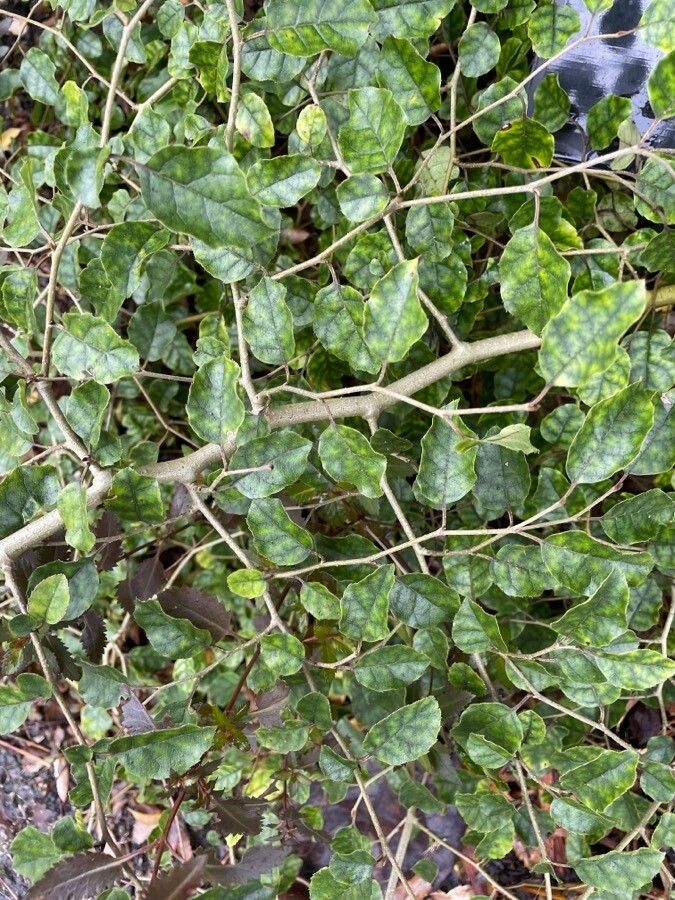
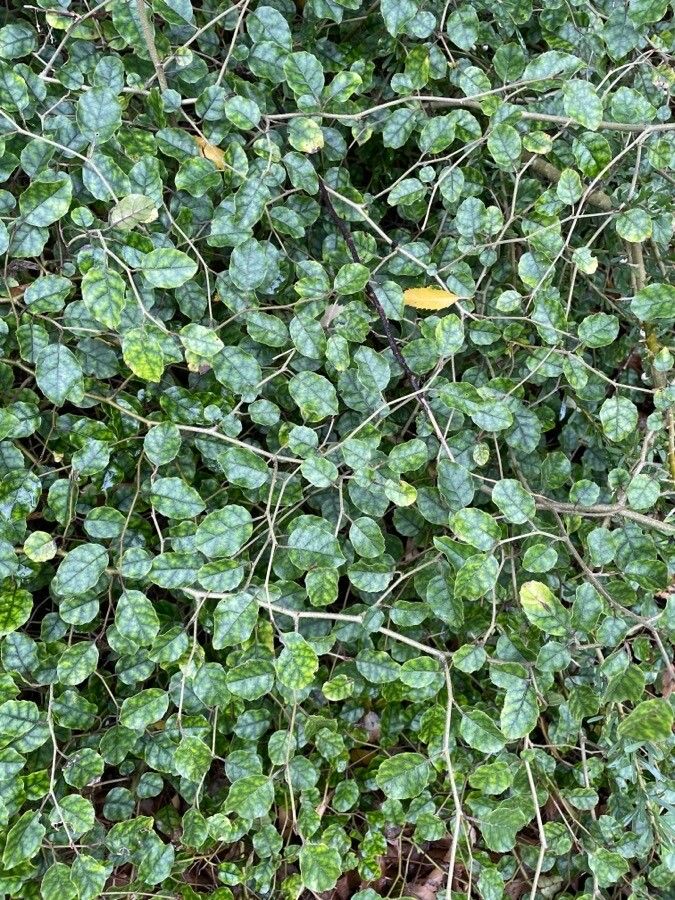
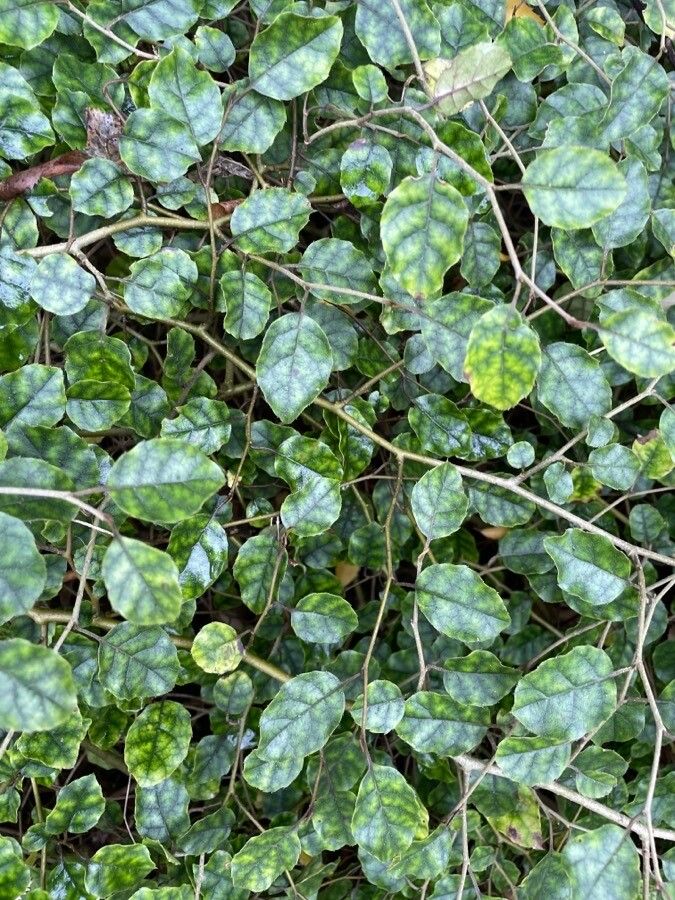
Carpodetus serratus is an evergreen tree with small ovate or round, mottled leaves with a toothy margin, and young twigs grow zig-zag, and fragrant white flowers in 5 cm panicles and later black chewy berries. It is an endemic of New Zealand. Its most common name is putaputāwētā which means many wētā emerge - referring to the nocturnal Orthoptera that live in holes in the trunk of this tree made by Pūriri moth caterpillars. Regional variations on the name also refer to this insect that lives and feeds on it such as kaiwētā, and punawētā. The tree is also sometimes called marbleleaf. It is found in broadleaf forest in both North, South and Stewart Islands. It flowers between November and March, and fruits are ripe from January to February.
Bucket-of-water-tree is resistant to disease and typically not susceptible to illnesses. In terms of upkeep, this plant is fairly low-maintenance. When grown outdoors it needs only light watering, and larger specimens usually do not require pruning. Smaller plants, however, should be pruned after they finish blooming. Bucket-of-water-tree is well suited for anyone with an outdoor area, such as a garden or a deck, and does not demand much gardening experience.
How to keep Carpodetus Serratus.
Light
The Bucket-of-Water-Tree does best with plenty of light each day. It can use intense sunlight at every stage of growth, though it also tolerates moderate light levels. Native to bright habitats, excessive light can scorch its leaves, and insufficient light may harm its overall health.
Water
The bucket-of-water tree thrives in humid, forest-like environments and prefers soil with balanced moisture. It needs watering every two weeks. Although it has moderate drought tolerance, it benefits from mulching when grown outdoors in temperate zones. This helps retain moisture during its growth cycle.
Temperature
Bucket-of-water-tree is native to temperate regions and grows best at temperatures of 59 to 95 °F (15 to 35 ℃). In periods of extreme heat or cold, it is recommended to apply temperature-control measures to replicate its natural habitat.
Fertilizer
Timing is essential for fertilizing the Bucket-of-water-tree. Fertilize in early spring and then every month up to early summer. Fertilizer encourages attractive blooms and supplies energy during both dormant and active growth phases.
Pruning
The bucket-of-water tree has serrated leaves and requires winter pruning to enhance air circulation and light exposure. Important pruning techniques include thinning out branches and removing dead wood. This process promotes new growth, controls the tree's size, and prevents disease. Regular pruning ensures vigorous growth throughout the year.
Pot & Repot
Repot your bucket-of-water tree every 2 to 3 years in early spring. Choose a new pot that is 2 to 3 inches wider than the previous one. Use well-draining soil and water moderately after repotting. Place the tree in indirect light and shield it from extreme temperatures to encourage recovery and healthy growth.
Botanical profile.
- Plant Type
- Tree
- Life Cycle
- Perennial
- Genus
- Carpodetus
- Family
- Rousseaceae
- Hardiness Zone
- 8-9
- Mature Height
- 4.88 m
- Mature Spread
- 3.96 m
- Leaf Color
- Dark Green, Forest Green
- Leaf Type
- Evergreen
- Flower Color
- White
- Flower Size
- 2.54 cm
- Bloom Time
- Winter
- Planting Time
- Spring, Summer, Autumn
- Harvest Time
- Spring
- Native Area
- New Zealand
Other names.
Reader questions.
What is the ideal temperature for a Bucket-of-water-tree?
The Bucket-of-water-tree, botanically known as Carpodetus serratus, is indigenous to temperate regions and thrives in temperatures ranging from 15 to 35 °C (59 to 95 °F). It has some cold tolerance and generally does not require any additional measures when the temperature is above -5°C. However, in extreme temperatures, either cold below -5°C or hot above 35°C, it's advisable to use temperature control measures to mimic its native environment for optimal growth.
How does low temperature affect the Bucket-of-water-tree and what are the solutions?
The Bucket-of-water-tree has moderate tolerance to low temperatures and thrives best when it's above 15°C. During winter, keeping it above -5°C is recommended. If the temperature falls below -10°C, the leaves may droop; they can recover in mild cases, but in severe cases, leaves will wilt and eventually fall off. Solutions include trimming off frost-damaged parts, wrapping the plant with non-woven fabric or cloth, and constructing a wind barrier to protect from cold winds.
How does high temperature affect the Bucket-of-water-tree and what are the solutions?
During summer, it's important to ensure the Bucket-of-water-tree remains below 35°C. Exceeding 38°C can cause the leaves to lighten in color, tip dryness, curling, and increased susceptibility to sunburn. Solutions for high temperature stress include trimming away sunburned and dried-up parts, moving the plant to a shaded location or using a shade cloth to protect it from midday and afternoon sun, and keeping the soil moist by watering in the morning and evening.