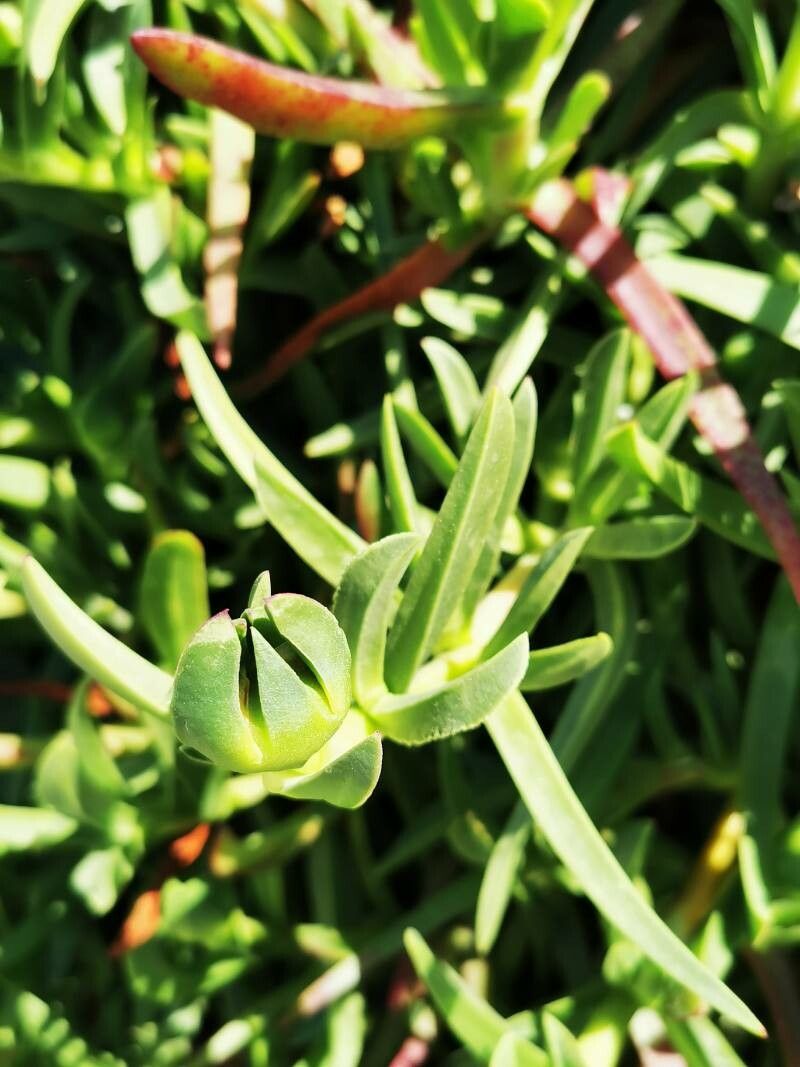
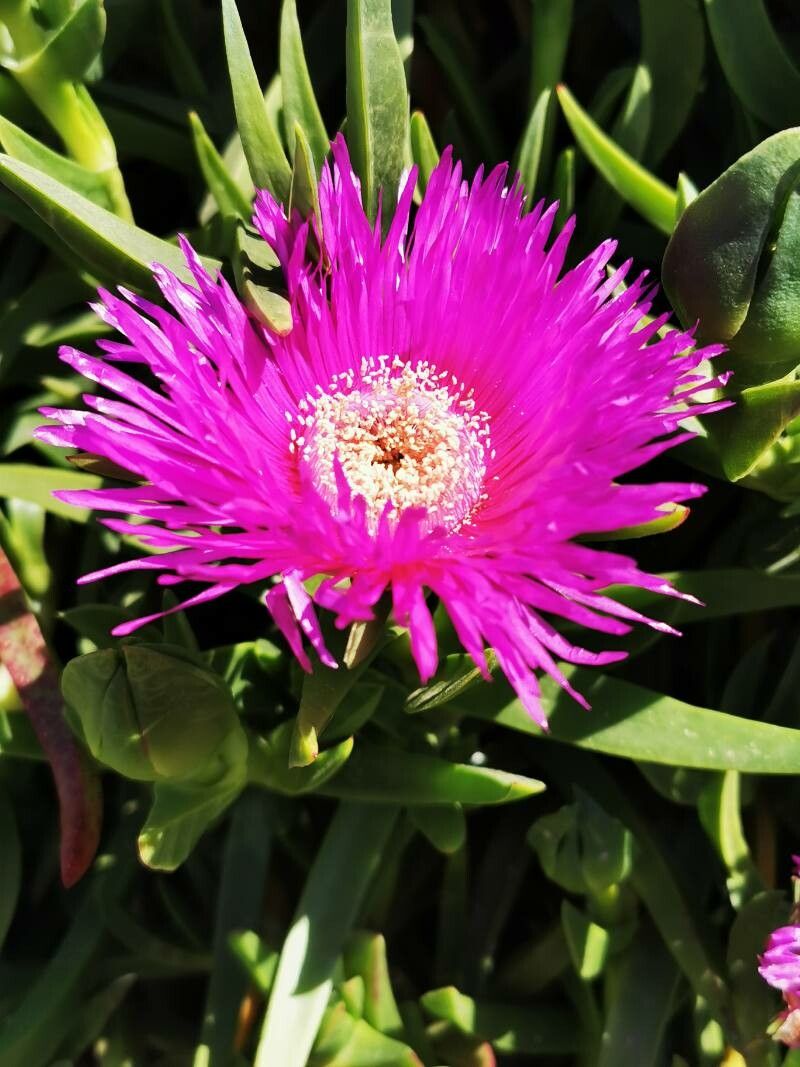
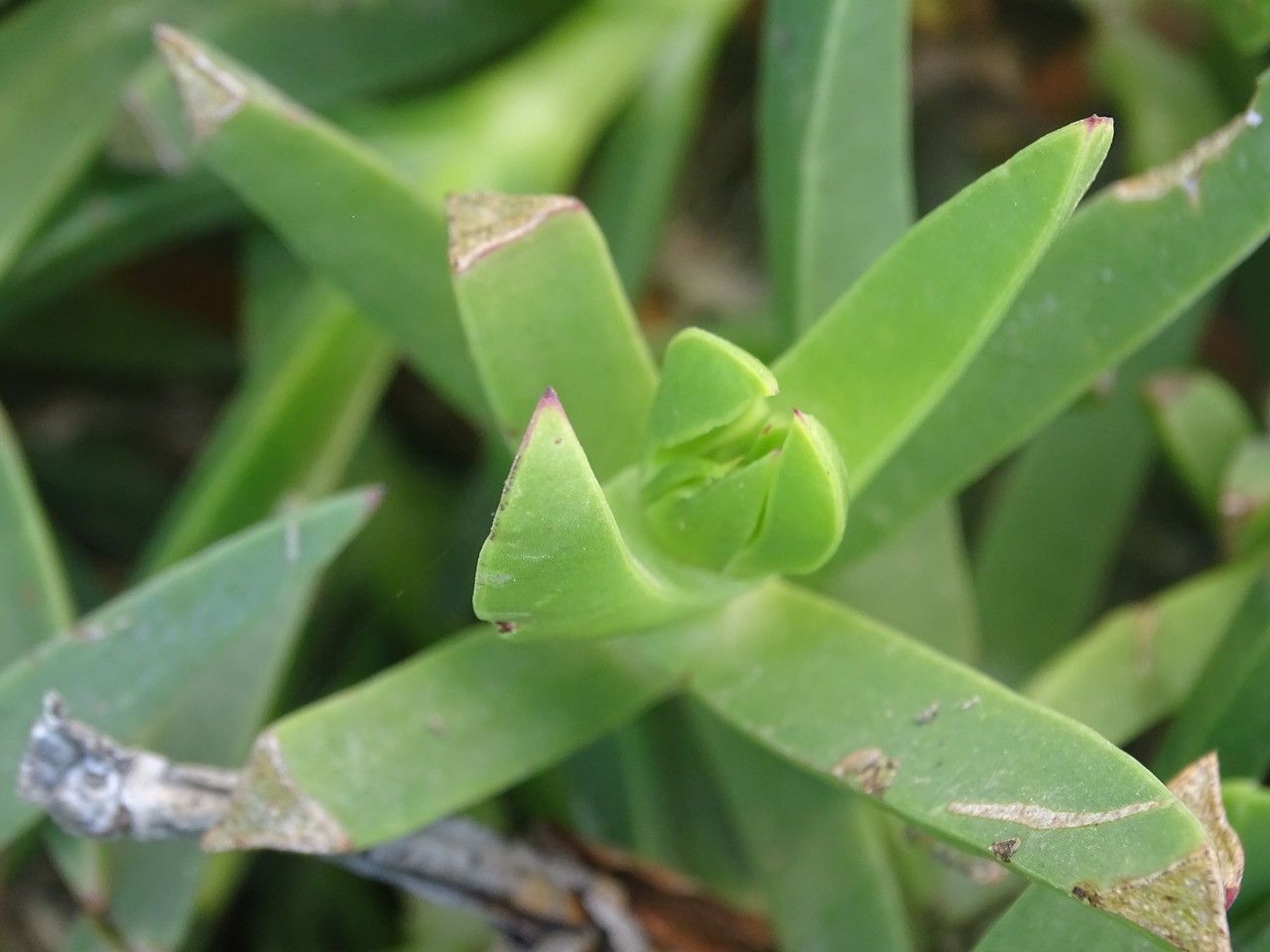
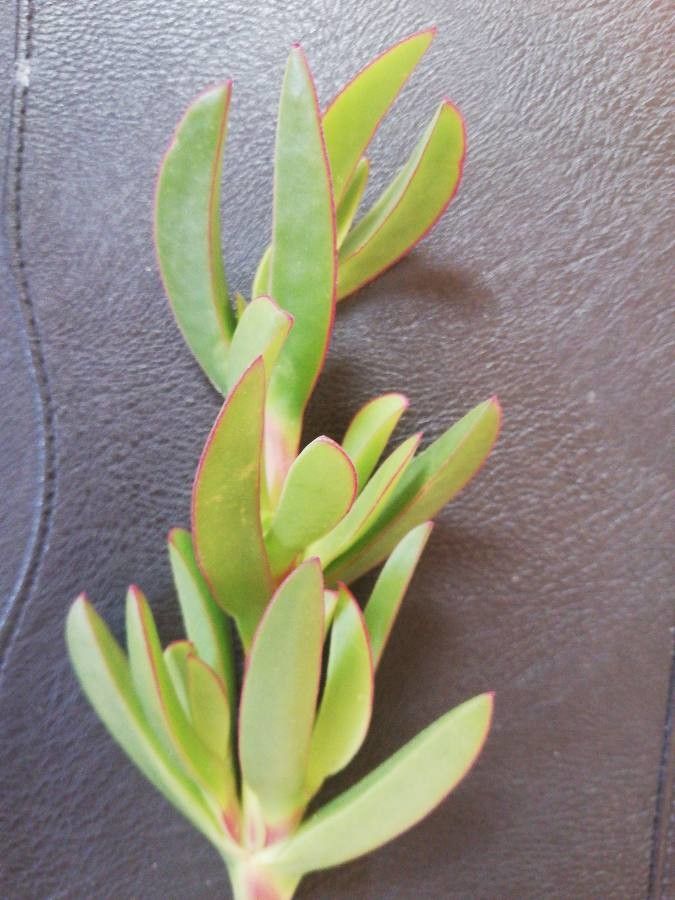
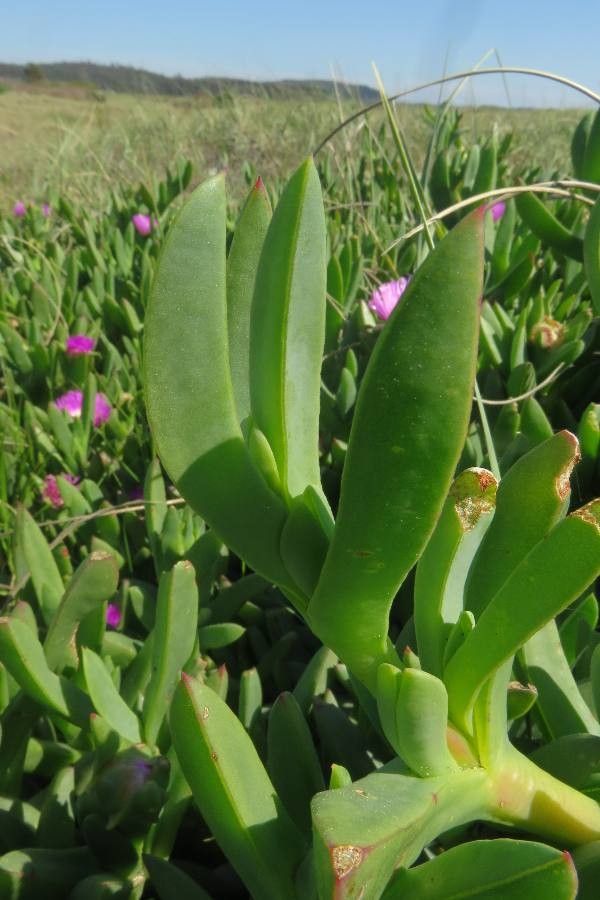
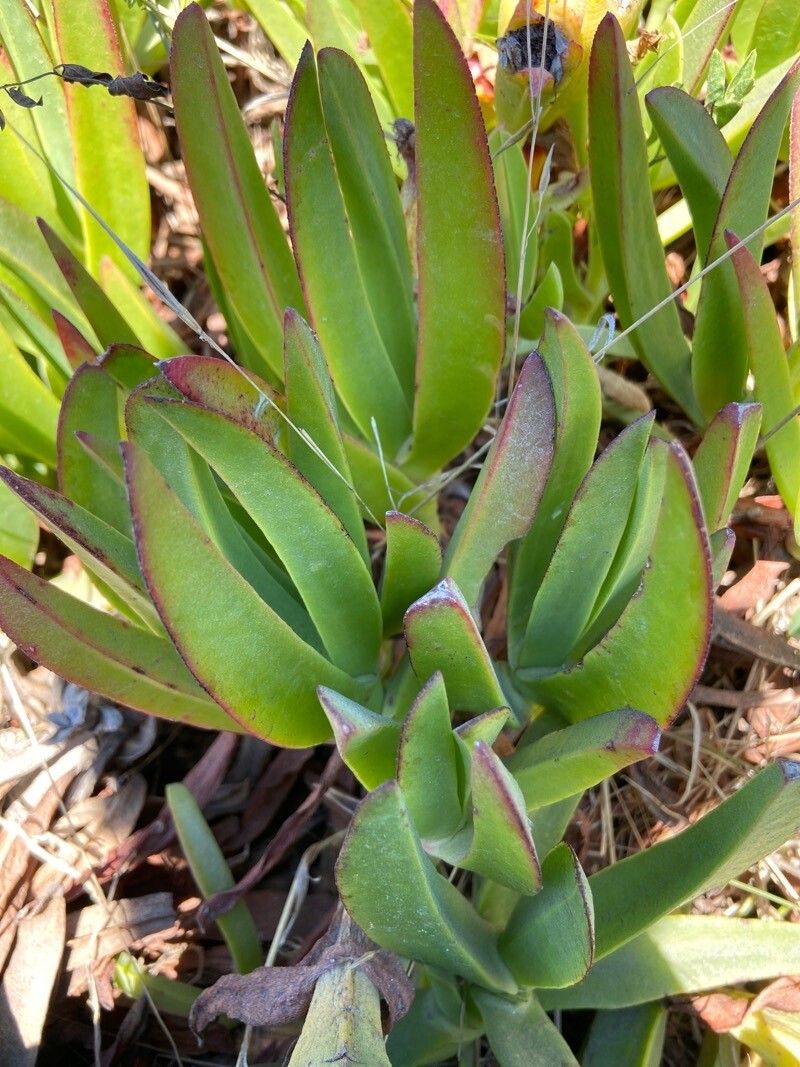
Carpobrotus deliciosus is a succulent perennial of the family Aizoaceae, native to a strip along the south coast of South Africa.
Sour fig has moderate disease resistance and is more sensitive to humidity and excessive watering. It is also more prone to disease when it receives insufficient light and is overwatered. In terms of care, Sour fig is drought-tolerant and can withstand long stretches without watering. It requires little fertilizer and only occasional pruning. This makes it suitable for people of all experience levels, especially those who prefer to spend less time on plant care and who may sometimes be away from home for long periods. It is a good option for people who do not want to invest a lot of time in maintenance but still want an easily cared-for plant.
How to keep Carpobrotus Deliciosus.
Light
Originating in arid regions, Sour fig flourishes in full sun, its native habitat marked by intense sunlight and minimal shade. It also tolerates partial sun, providing some flexibility in its growth.
Water
Sour fig needs careful watering that depends on the environmental conditions. During its dormant period, reduce watering to once every 1-2 weeks. In the summer, water the plant in the evening to prevent rot. Pay attention to the plant's leaf symptoms and the soil's moisture level to decide when it needs watering, and adjust the frequency based on the type of pot used.
Temperature
Sour fig prefers warm conditions and needs elevated temperatures during the growing season to encourage growth and metabolic activity. It does well with abundant sunlight, proper moisture, and good air circulation. However, it can be damaged by very low temperatures and by excessive watering. It's also important to maintain a balance and avoid temperatures that are too high or conditions that are overly dry.
Fertilizer
For Sour fig, light applications of fertilizer once or twice a year during the growing season are sufficient. Avoid fertilizing in winter or in summer when the plant is dormant. Reduce fertilizer for repotted plants and wait a couple of months after repotting before applying fertilizer. Fertilizing supports healthy growth and encourages blooms.
Pruning
Pruning sour fig in early spring encourages healthy growth and helps control its spread. To achieve this, it's important to remove dead stems and thin out overgrown areas to improve air circulation. Regular pruning helps prevent the plant from becoming invasive and promotes a compact, attractive shape.
Botanical profile.
- Plant Type
- Succulent
- Life Cycle
- Perennial
- Genus
- Carpobrotus
- Family
- Aizoaceae
- Hardiness Zone
- 9-11
- Mature Height
- 15 cm to 30 cm
- Mature Spread
- 49 cm to 91 cm
- Leaf Color
- Dark Green, Green
- Leaf Type
- Evergreen
- Flower Color
- Pink
- Flower Size
- 7.62 cm to 10.16 cm
- Bloom Time
- Mid spring, Late spring, Early summer, Mid summer
- Planting Time
- Spring, Summer
- Harvest Time
- Summer, Early fall
- Native Area
- South Africa
Other names.