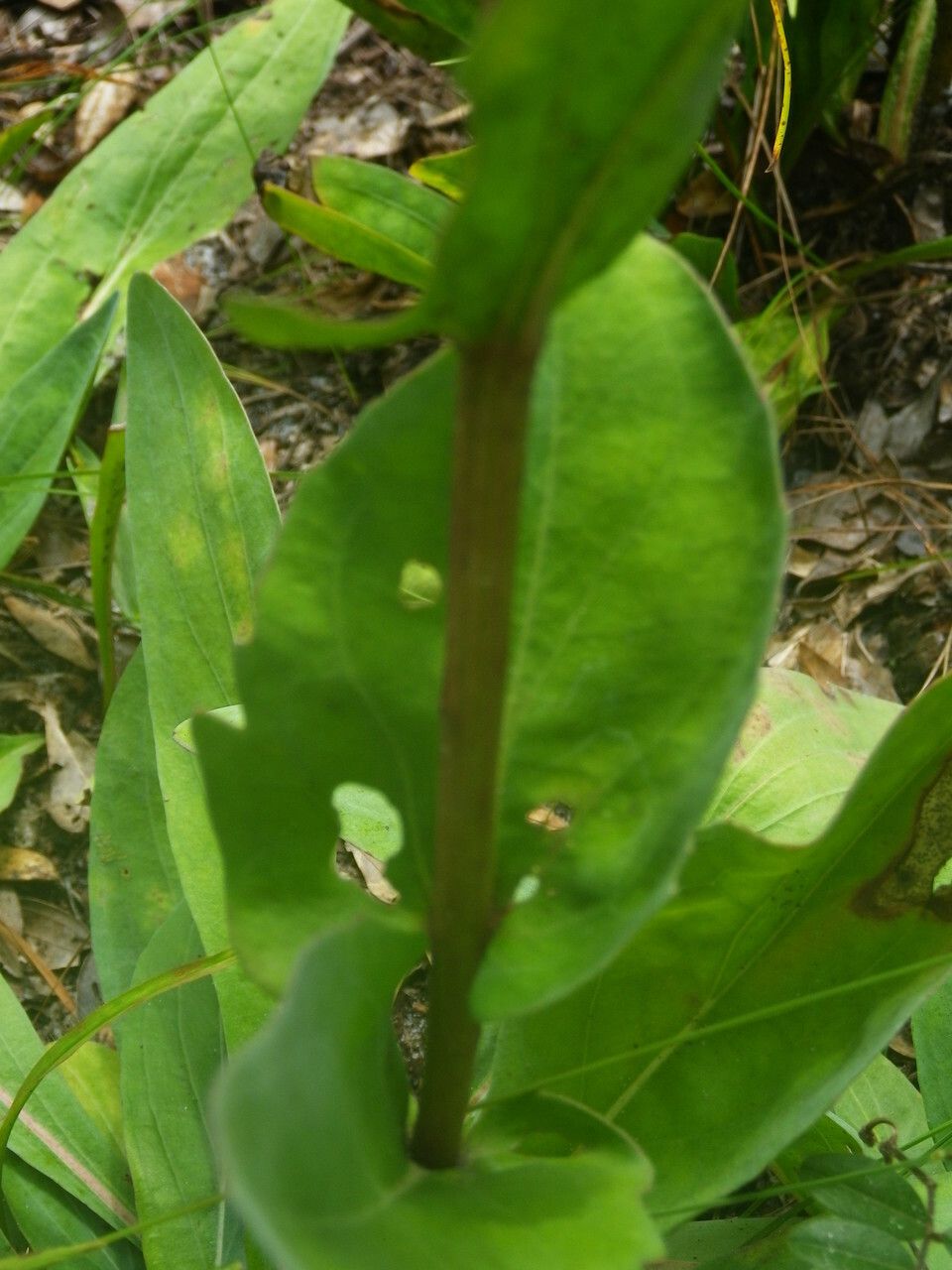
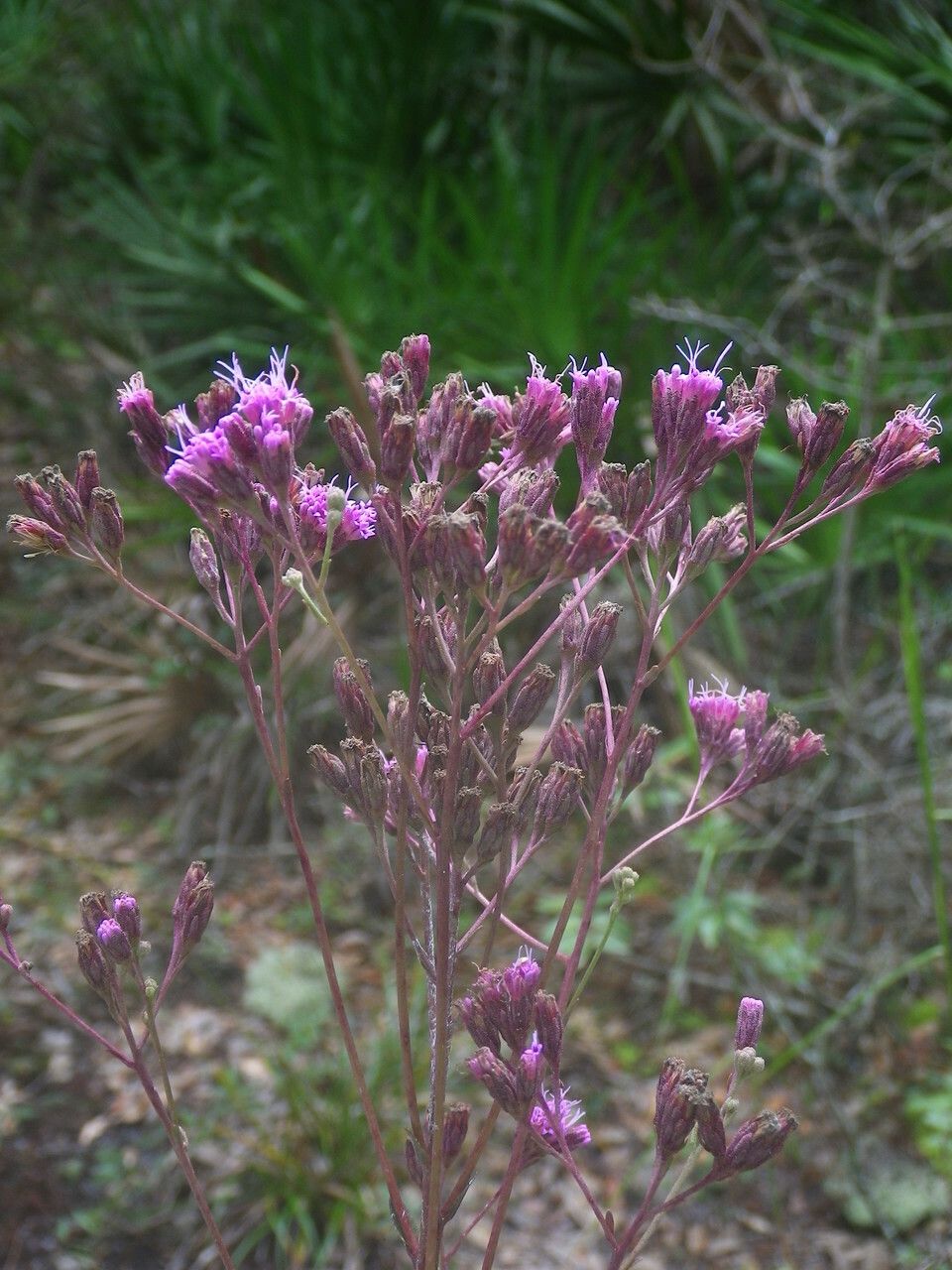
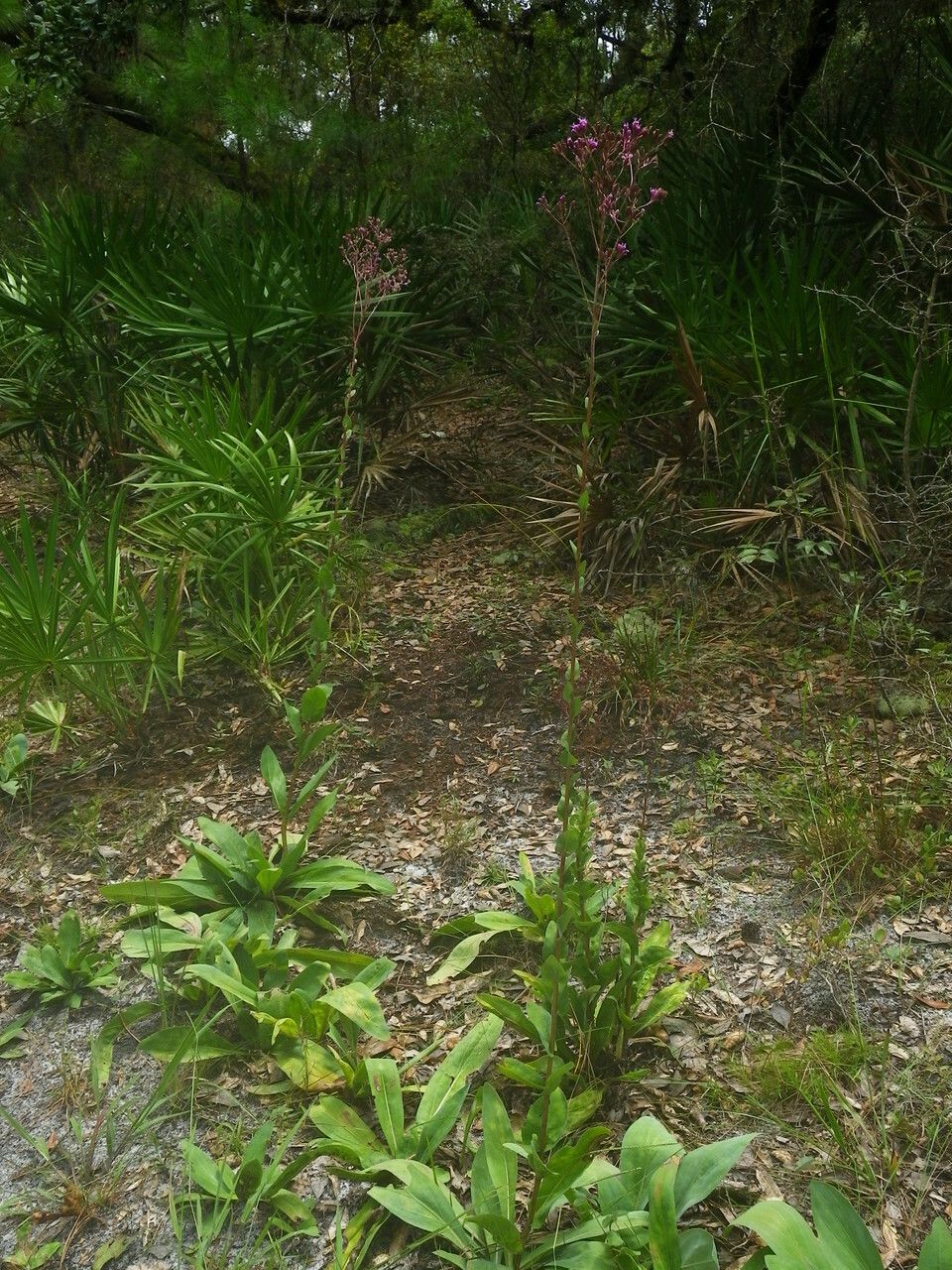
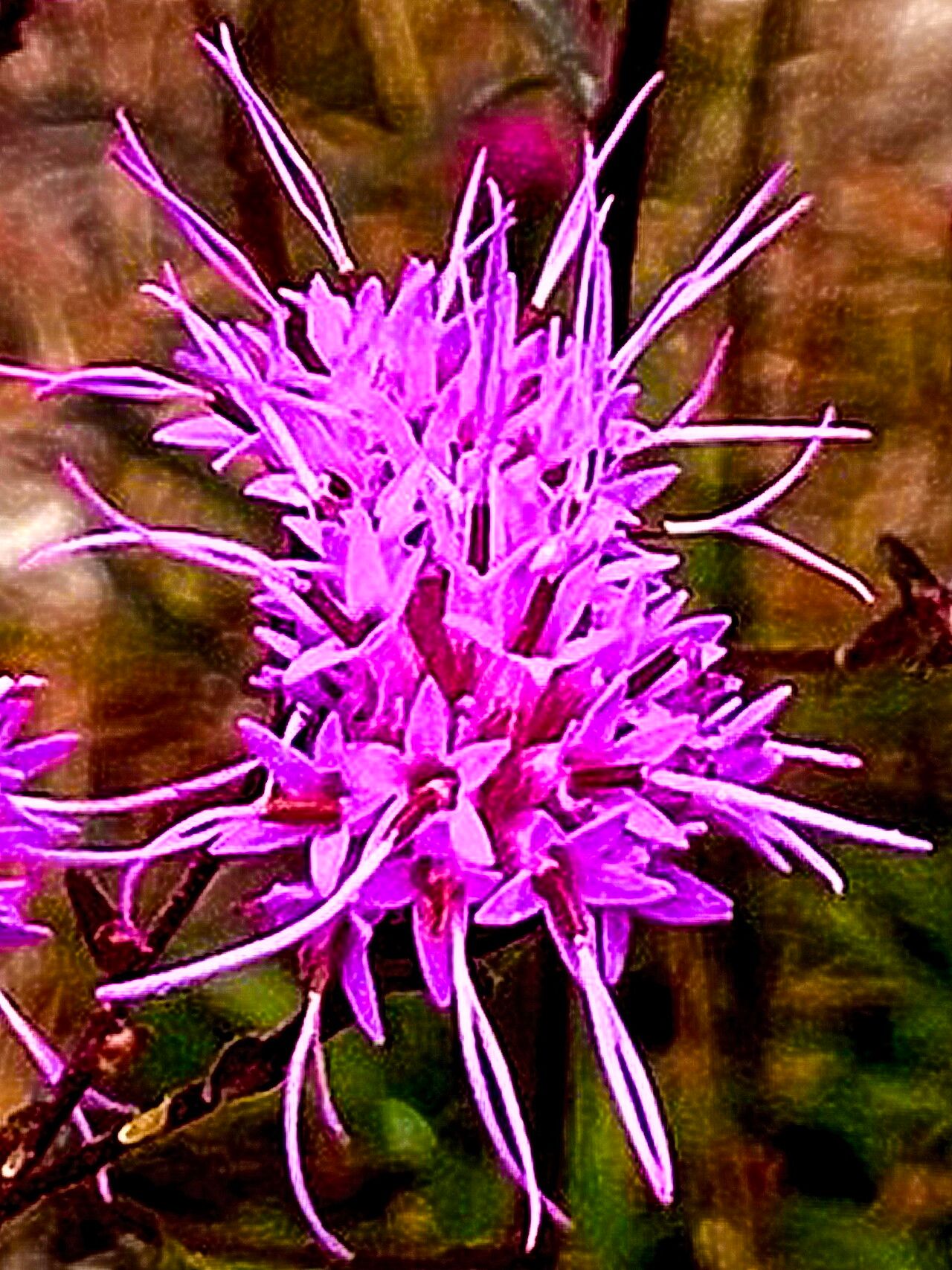
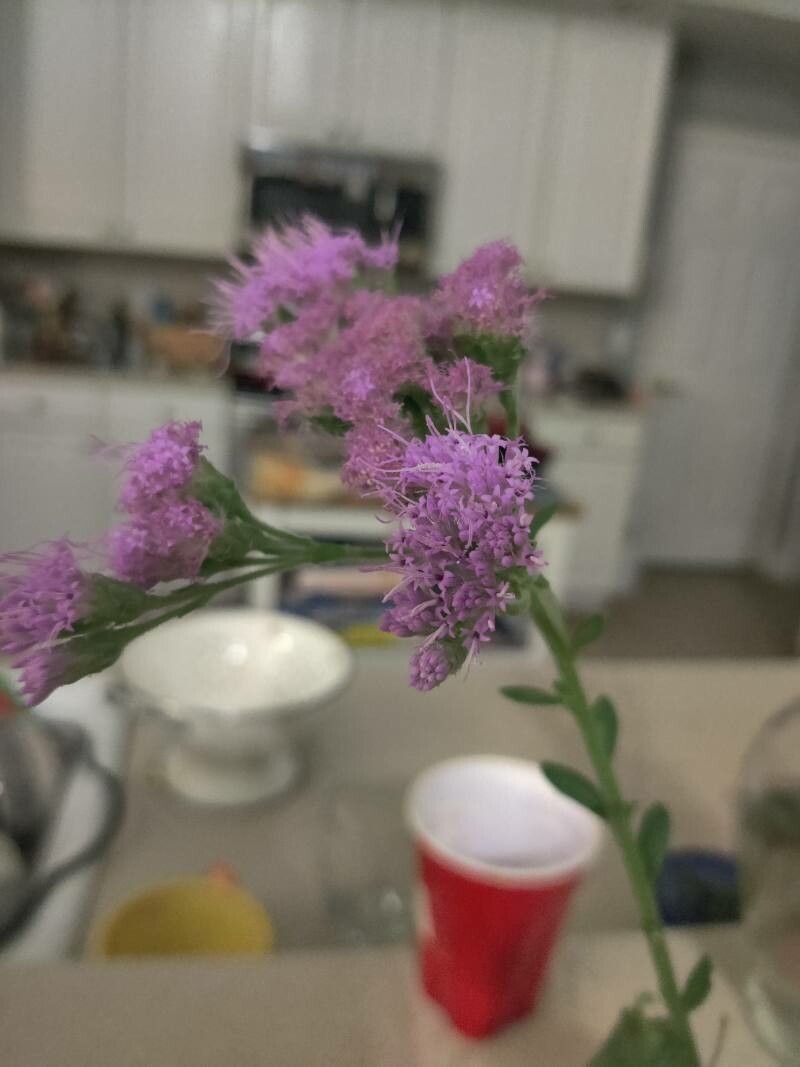
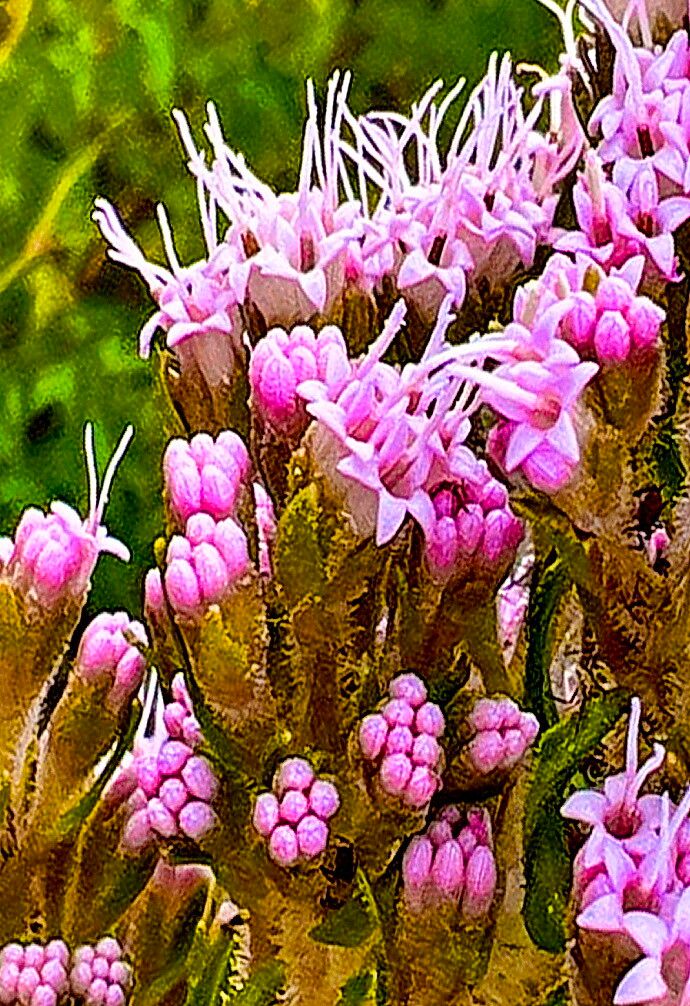
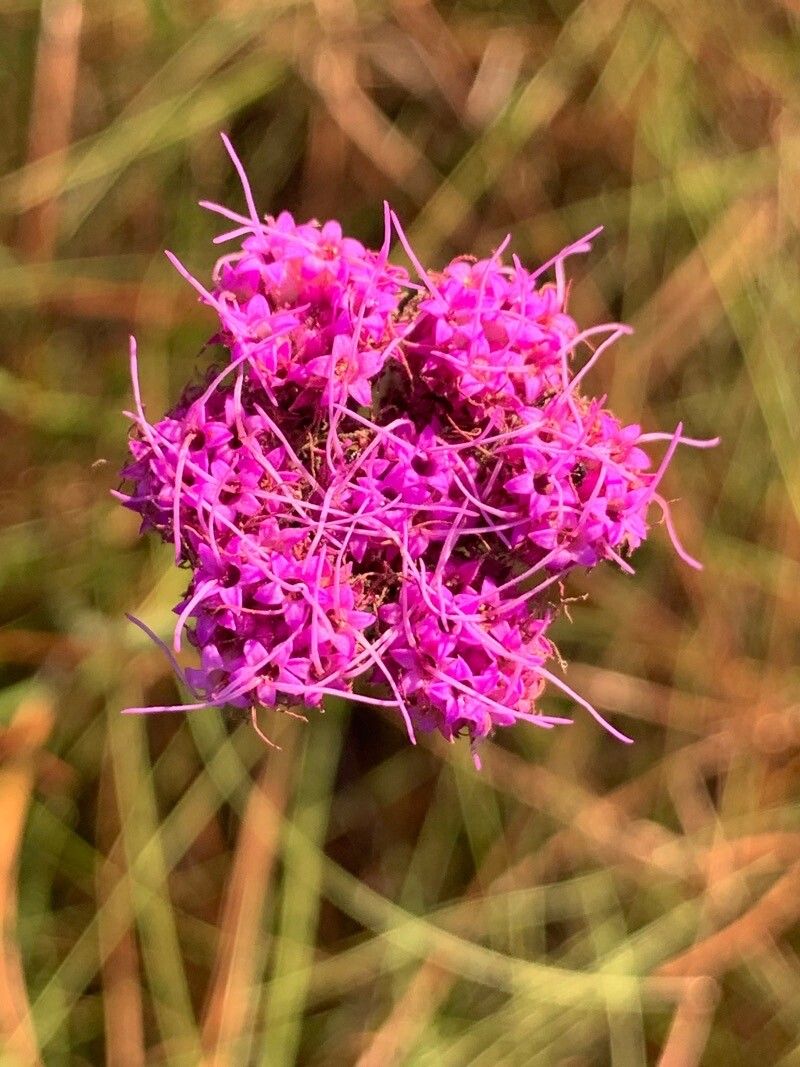
Carphephorus odoratissimus (syn. Trilisa odoratissima), common name vanillaleaf, is a species of North American plants in the family Asteraceae. This species is native to the southeastern United States, including the states of Georgia, North Carolina, South Carolina, Alabama, Mississippi, Louisiana, and Florida.Carphephorus odoratissimus is a herbaceous perennial up to 180 cm (6 feet) in height, and is largely glabrous. It produces a flat-topped inflorescence with many small purplish flower heads containing disc florets but no ray florets. VarietiesCarphephorus odoratissimus var. odoratissimus - Georgia, North Carolina, South Carolina, Alabama, Mississippi, Louisiana, and Florida Carphephorus odoratissimus var. subtropicanus Wunderlin & B.F.Hansen - Central and South Florida
Vanillaleaf is fairly disease-resistant and generally not prone to illness. However, it can be vulnerable to pests and diseases present in its environment. These issues are typically mild. The plant is medium maintenance. It should be pruned regularly to preserve a neat appearance and support healthy growth. Fertilizing can also encourage flowering. Vanillaleaf works well for anyone with outdoor space, like a garden or patio, and does not demand extensive care experience. It may need more attention when grown indoors.
How to keep Carphephorus Odoratissimus.
Light
Vanillaleaf typically does best with plenty of sunlight, yet it can adapt to somewhat dimmer conditions, possibly because it originates from areas with abundant sun. Finding the proper balance promotes optimal growth; conversely, too much or too little light can result in suboptimal development.
Water
Vanillaleaf thrives in temperate regions with consistent moisture and regular rainfall. While it can withstand short dry periods, it should be watered weekly for optimal growth. Ideally suited for outdoor cultivation, vanillaleaf adapts well to a variety of climates, making it an excellent choice for different garden settings.
Temperature
Vanillaleaf is native to temperate regions and prefers temperatures of 59 to 95 °F (15 to 35 ℃). To maintain optimal health and growth, make sure seasonal temperature variations stay within this range.
Fertilizer
The best time to fertilize a Vanillaleaf is in early spring, as it comes out of dormancy and starts active growth. Fertilizing supplies essential nutrients needed for healthy development. While Vanillaleaf has fairly low fertilizer requirements, giving it fertilizer once a year can improve its survival and encourage better, longer-lasting flowers.
Pruning
Vanillaleaf is a plant known for its fragrant, vanilla-scented leaves and beautiful purple blooms. To promote healthy growth and improve its appearance, prune it between early and late spring. This helps remove dead stems, enhances growth, and improves the plant's overall look. Regular pruning also aids in air circulation and prevents overcrowding, which can be harmful to the plant. Make sure to keep your pruning tools clean to prevent the spread of diseases.
Botanical profile.
- Plant Type
- Herb
- Life Cycle
- Perennial
- Genus
- Carphephorus
- Family
- Asteraceae
- Hardiness Zone
- 8-10
- Mature Height
- 1.83 m
- Mature Spread
- 30 cm to 61 cm
- Leaf Color
- Green
- Leaf Type
- Deciduous
- Flower Color
- Purple, Pink, Lavender
- Flower Size
- 2.54 cm
- Bloom Time
- Late summer, Early fall, Mid fall
- Planting Time
- Spring, Summer, Autumn
- Harvest Time
- Fall
Other names.
Reader questions.
What are the sun requirements for Vanillaleaf?
Vanillaleaf thrives best with abundant sunlight, requiring above 6 hours of sunlight daily for full sun exposure, and about 3-6 hours of sunlight for partial sun conditions. It is vital to observe how sunlight moves through your garden to select spots that provide a balance of light and shade, ensuring the optimal growth and happiness of your plants. Despite its preference for ample sunlight, Vanillaleaf can adapt to less illuminated environments, thanks to its origins in sunny habitats. However, both overexposure and insufficient sunlight can impede its growth.
What is the optimal temperature range for Vanillaleaf?
Vanillaleaf thrives best in temperate climates, preferring temperatures between 59 to 95°F (15 to 35°C). For the plant to maintain optimal health and growth, it's important that seasonal temperature adjustments stay within this range. Vanillaleaf has some level of cold tolerance, generally not requiring additional protection if the temperature is above -5°C. However, if temperatures are expected to fall below -5°C, temporary cold protection measures, such as wrapping the plant with plastic film, fabric, or other materials, should be taken and removed once temperatures rise again.
How can artificial lighting support Vanillaleaf growth indoors?
When natural sunlight is lacking, especially during winter or in spaces with less sun, artificial lighting becomes crucial for the growth of indoor plants, including Vanillaleaf. To ensure optimal growth under artificial lighting: choose efficient light types like LED, which can be tailored to provide necessary wavelengths; adjust the light intensity, with full sun plants needing 30-50W/sq ft, partial sun plants 20-30W/sq ft, and full shade plants 10-20W/sq ft; set the correct distance of 12-36 inches above the plant; and mimic natural daylight hours, generally providing 8-12 hours of light per day.
How does Vanillaleaf react to low temperatures?
Vanillaleaf possesses a moderate tolerance to low temperatures, performing best when the temperature remains above 15°C. During winter, it's crucial to keep the plant above -5°C to prevent damage. If the temperature drops below -10°C, the leaves may begin to droop; they might recover in mild cases but will wilt and eventually fall off in severe conditions. To combat frost damage, it's advised to trim off the frost-damaged parts and wrap the plant with materials such as non-woven fabric or cloth for protection against the cold wind, in anticipation of low-temperature occurrences.
What are the common symptoms of incorrect lighting for Vanillaleaf?
Inadequate lighting can lead to several issues for Vanillaleaf, including smaller new leaves, leggy or sparse growth, accelerated leaf drop, halted or no new growth, irregularly colored or pale new leaves, chlorosis (yellowing leaves due to chlorophyll breakdown), sunscald (leaf or stem damage from intense sunlight), leaf curling as a defense against excessive sun, wilting from transpiration losses, and leaf scorching characterized by brown, dry edges or patches on leaves. These symptoms highlight the plant's struggle with either too little or too much light.
How should Vanillaleaf be cared for during high temperatures?
In the summer, it's important to ensure that Vanillaleaf's environment does not exceed 35°C. Temperatures higher than 41°C can cause the leaves to lighten in color, tips to dry and wither, leaves to curl, and increase the plant's susceptibility to sunburn. To manage this, trim away the sunburned and dried-up parts of the plant. Relocating the plant to a shaded area during the midday and afternoon sun or using a shade cloth can be beneficial. Additionally, watering the plant in the morning and evening helps keep the soil appropriately moist, alleviating stress from high temperatures.
What solutions exist for Vanillaleaf experiencing poor lighting conditions?
To combat poor lighting, gradually increase sunlight exposure for your Vanillaleaf, aiming for at least 6 hours of direct sun daily. For indoor plants, use a south-facing window or artificial grow lights to supplement light for 8+ hours a day. Outdoor plants should be moved progressively to sunnier spots to avoid shock and sunburn. Minimize obstructions to sunlight by pruning nearby foliage and, if necessary, transplant smaller plants to sunnier locations during their dormant period for improved light access and better health. Note that while parts of the plant damaged by poor light might not recover, new growth will be healthy following these adjustments.