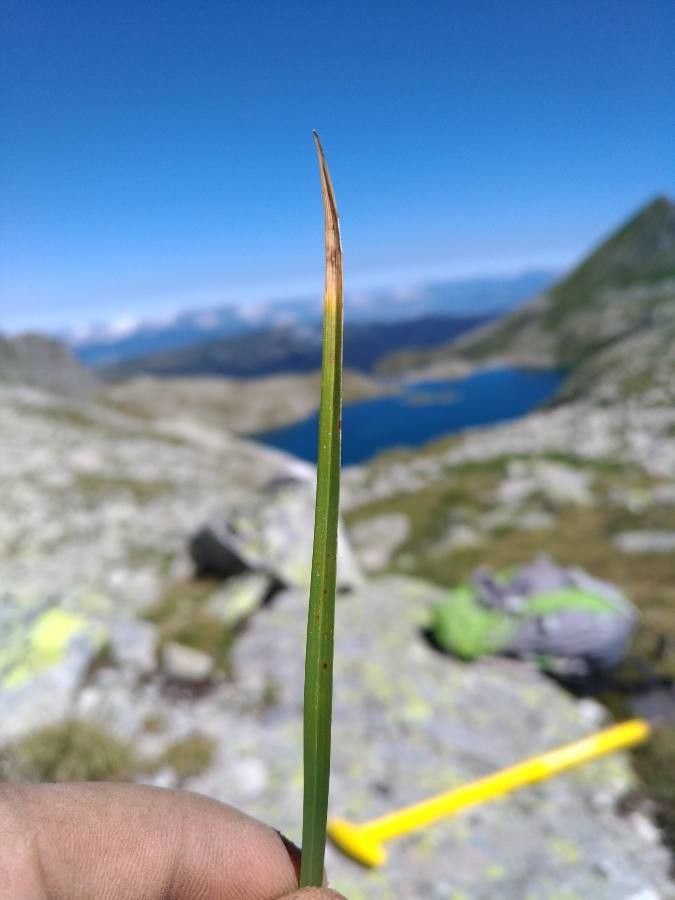
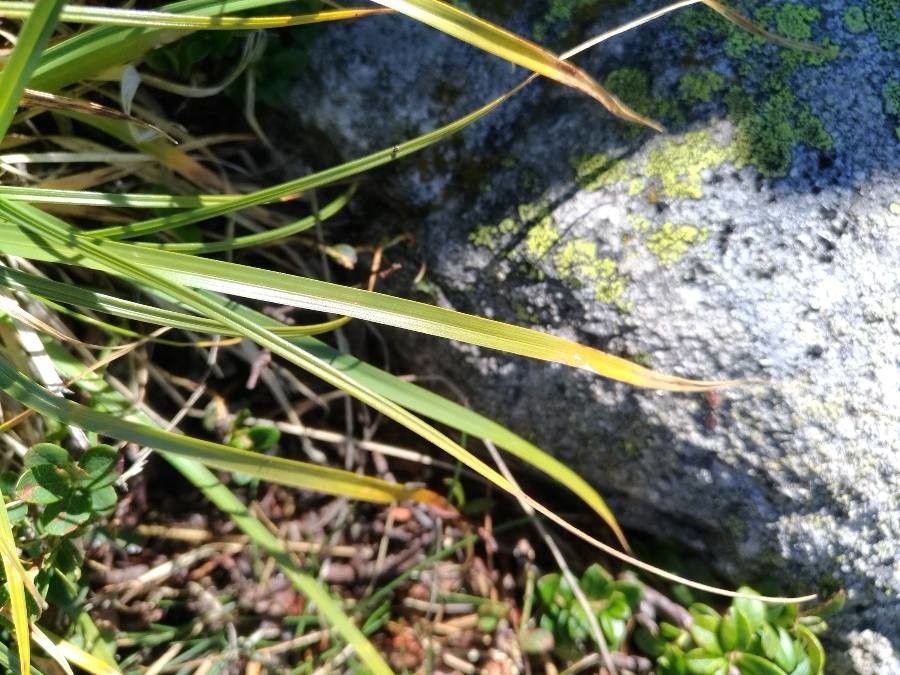
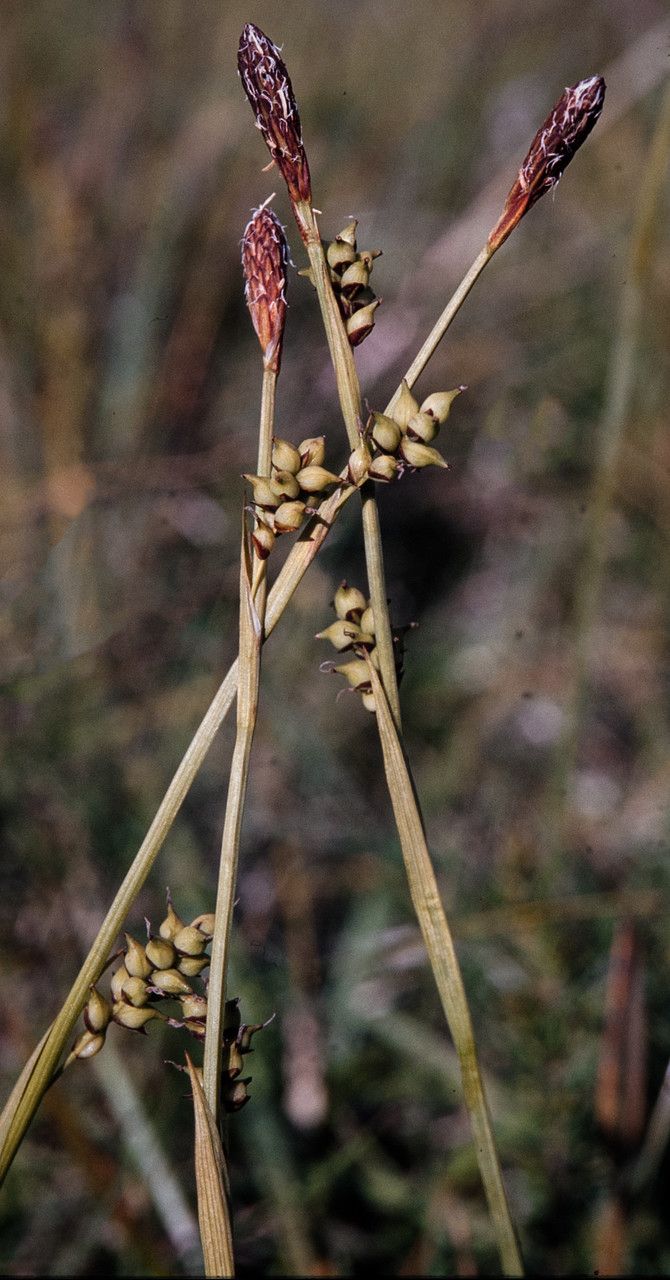
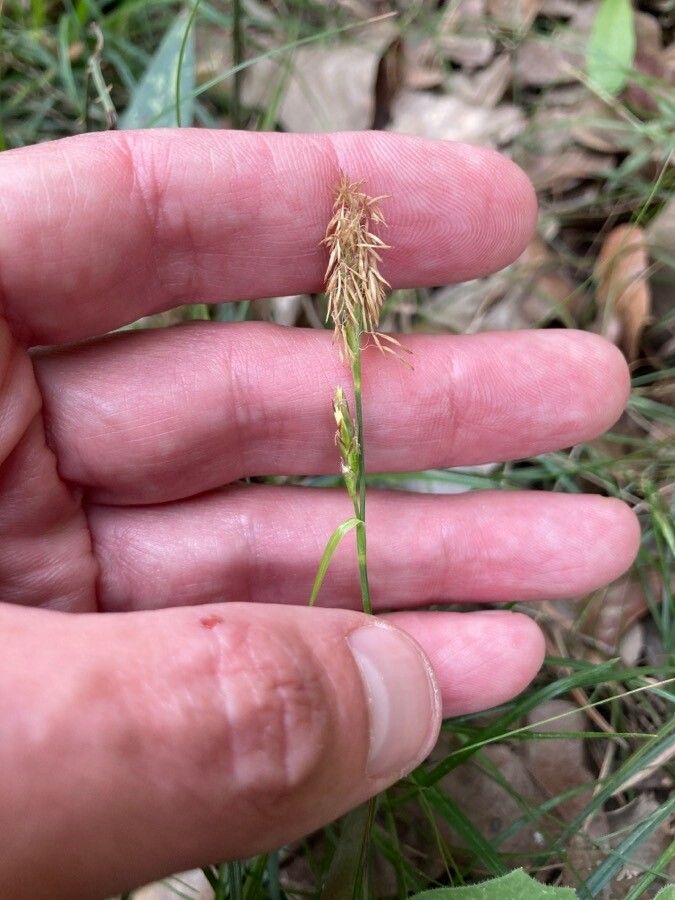
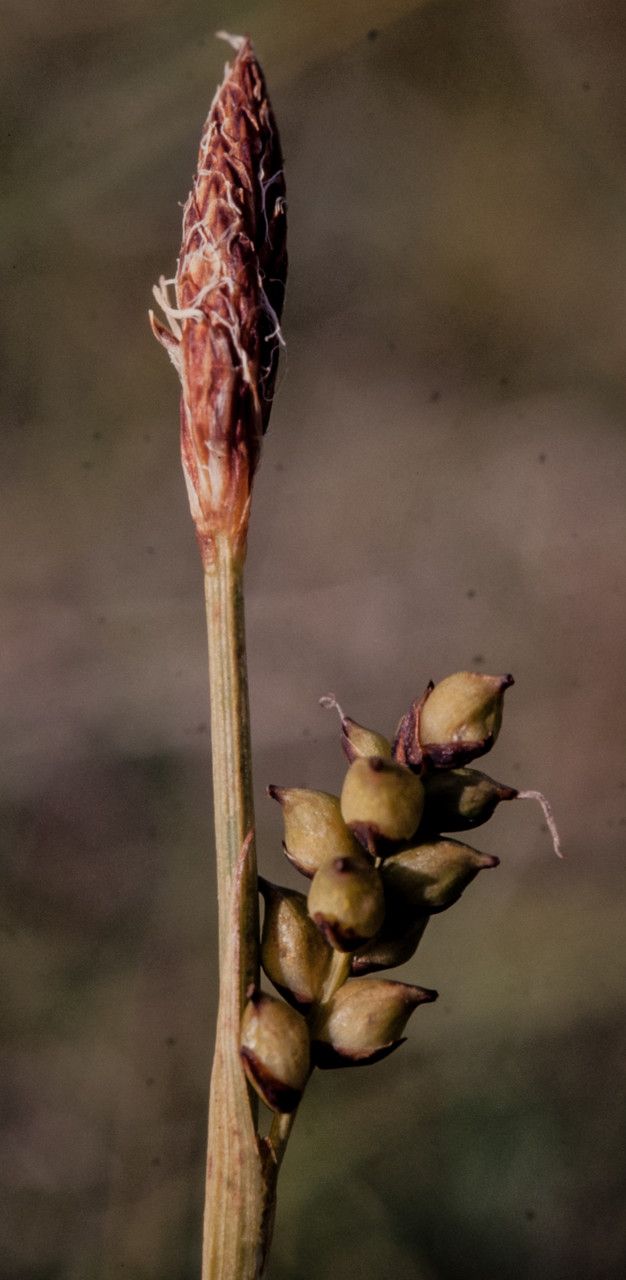
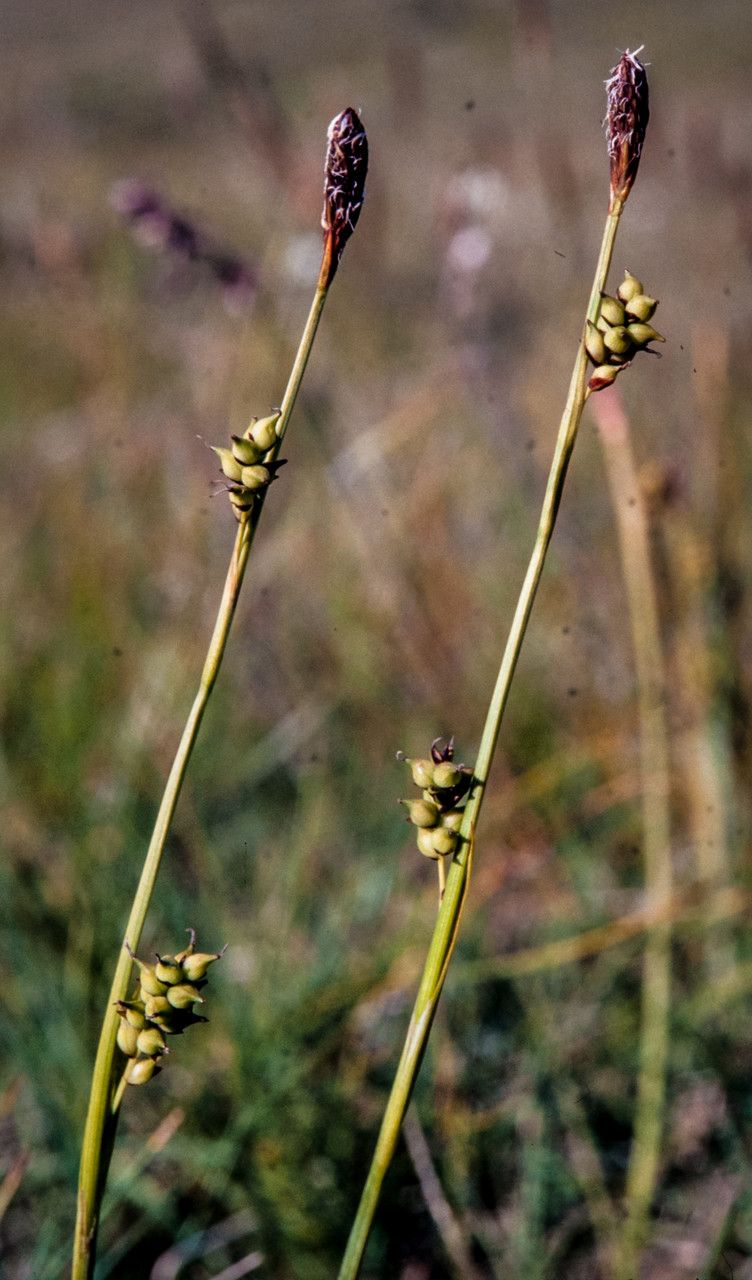
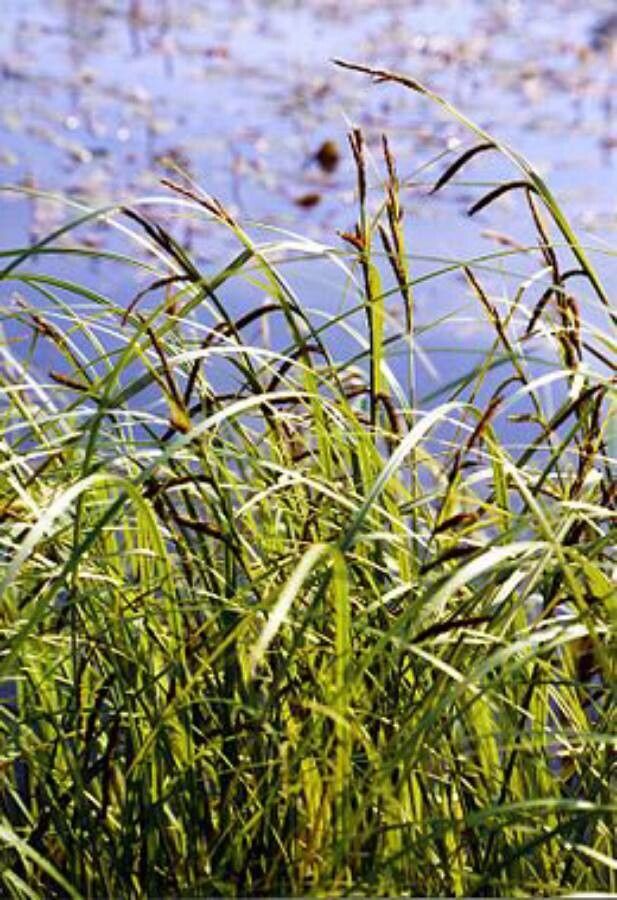
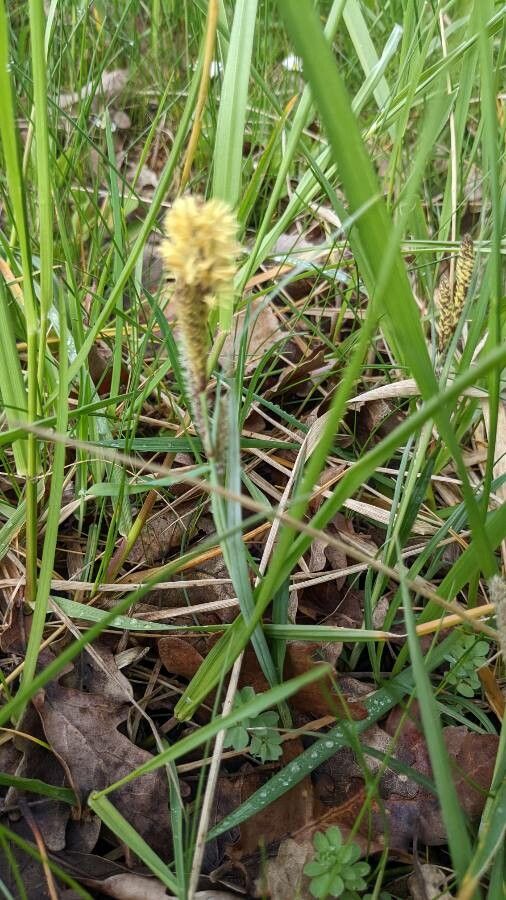
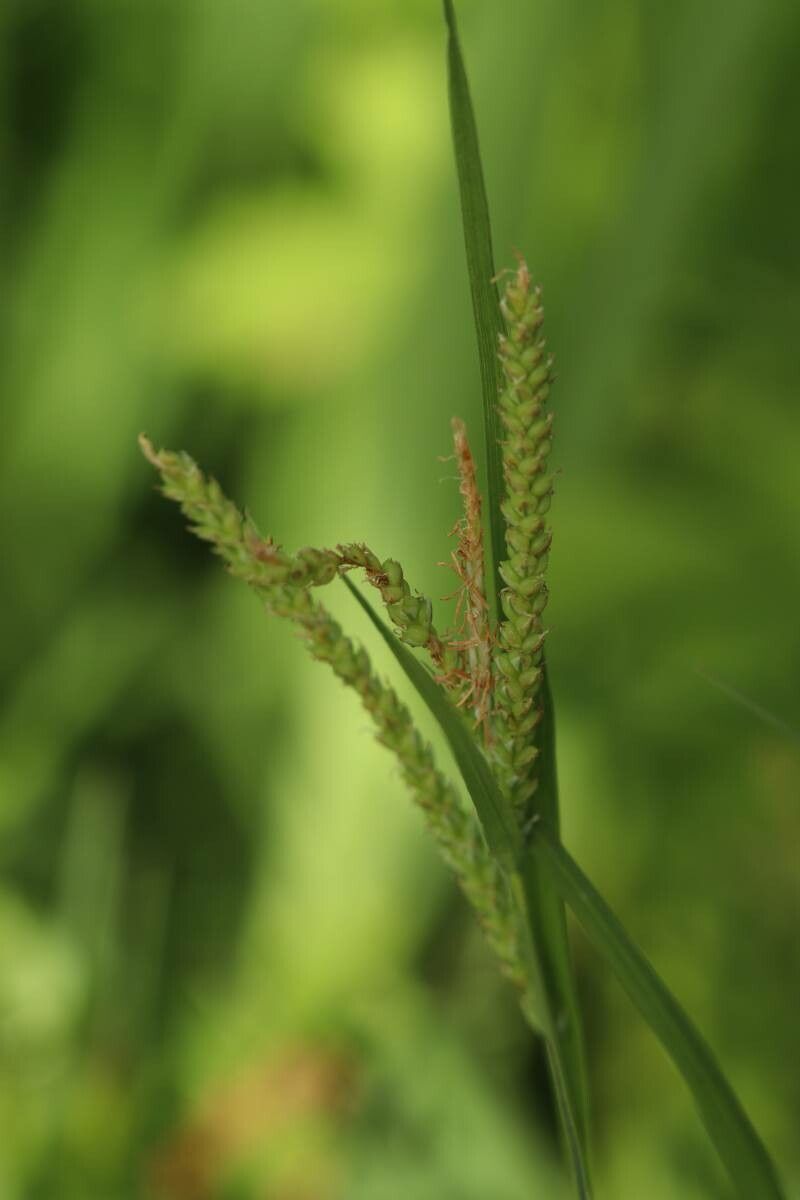
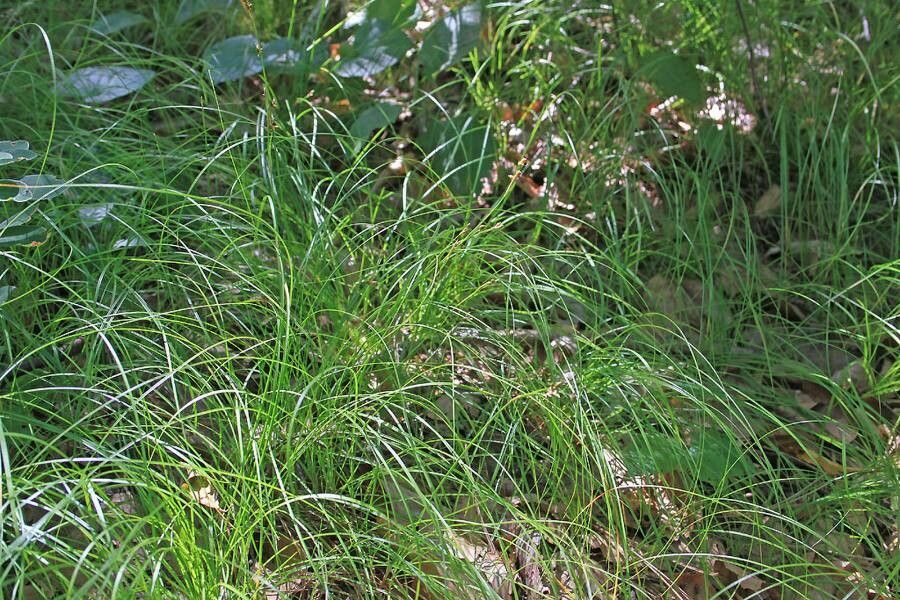
Carex vaginata is a species of sedge known by the common name sheathed sedge. It has a circumboreal distribution, occurring throughout the northern latitudes of the Northern Hemisphere. It occurs in Alaska, throughout most all of Canada to Greenland and in Eurasia. In North America it occurs as far south as Minnesota and New York.This sedge produces stems up to 60 centimeters tall, growing from a long rhizome. The stem just below the inflorescence is sheathed in the base of the bract, the characteristic that gives the plant its name. The inflorescence contains a terminal spike and usually at least one lateral spike. The plant reproduces by seed and by sprouting from the rhizome and the stolons, and from buds at the bases of the stems.This sedge grows in many types of moist and wet habitat. It is present on tundra and in boreal forests. It grows in sandy, calcareous, and acidic, peaty soils. It may be found growing in snow, which might help to protect it from dry and cold conditions.
Sheathed sedge resists disease well and is generally not prone to infections. Regarding care, this plant is fairly low-maintenance. When grown outdoors it needs little watering, and larger plants typically do not require pruning; smaller plants should be pruned after they have bloomed. Sheathed sedget is suitable for anyone with an outdoor area, such as a garden or deck, and does not demand much experience in plant care.
How to keep Carex Vaginata.
Light
Sheathed sedge is native to habitats like forest understories or rocky sites, where it occurs in natural shade. It prefers partial sun but can tolerate both full sun and full shade, showing its adaptable, hardy nature.
Fertilizer
Sheathed sedge needs supplemental nutrients to encourage healthy new growth. In spring, spreading compost around the base of the plant will effectively supply the required nourishment. Fertilizing supports vigorous growth and helps the plant fend off diseases and pests.
Pruning
Sheathed sedge is a tough, clump-forming perennial with narrow, grass-like leaves. To encourage new growth and prevent disease, prune it in early spring by removing dead foliage and damaged stems. Regularly trimming the plant and removing faded blooms will promote robust development. For best results, always use clean, sharp tools.
Botanical profile.
- Plant Type
- Grass
- Life Cycle
- Perennial
- Genus
- Carex
- Family
- Cyperaceae
- Hardiness Zone
- 6-10
- Mature Height
- 20 cm to 61 cm
- Leaf Type
- Evergreen
- Flower Color
- White, Yellow, Green, Brown
- Native Area
- Sweden, Austria, Czech Republic, Armenia, Poland, Belarus, Ukraine, China, Russia, Lithuania, Norway, Germany, Kazakhstan, Switzerland, Denmark, Iceland, Estonia, Mongolia, Finland, Koppen, United Kingdom, Latvia, France
Other names.
Reader questions.
What are the sun requirements for Sheathed sedge (Carex vaginata)?
Sheathed sedge (Carex vaginata) thrives in various sunlight conditions. For full sun exposure, it requires above 6 hours of sunlight a day, which is ideal for its growth and health. Those looking to plant it in areas with partial sun should ensure the spot gets about 3-6 hours of sunlight daily. It's important to observe how sunlight moves through your garden to find spots that offer a good balance of light and shade. This careful selection will ensure your Sheathed sedge plants are happy and healthy.