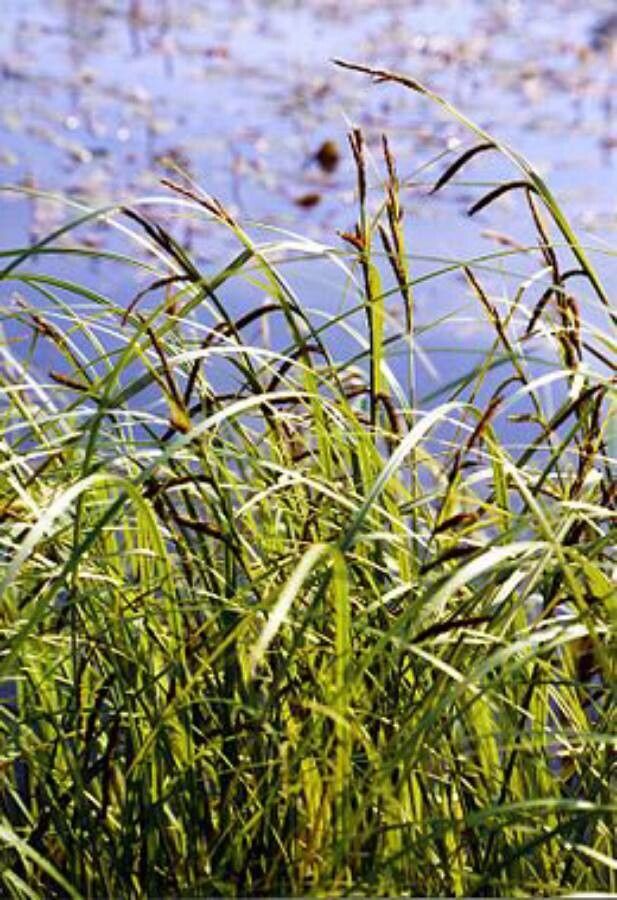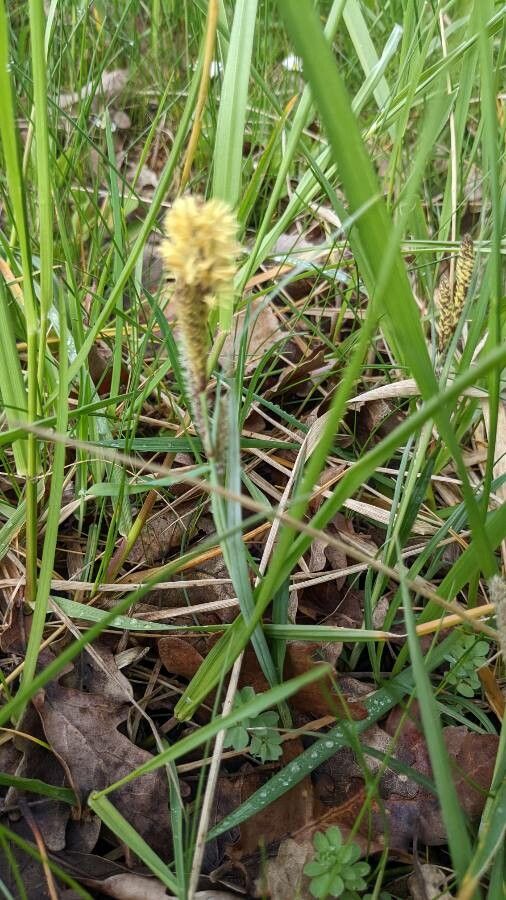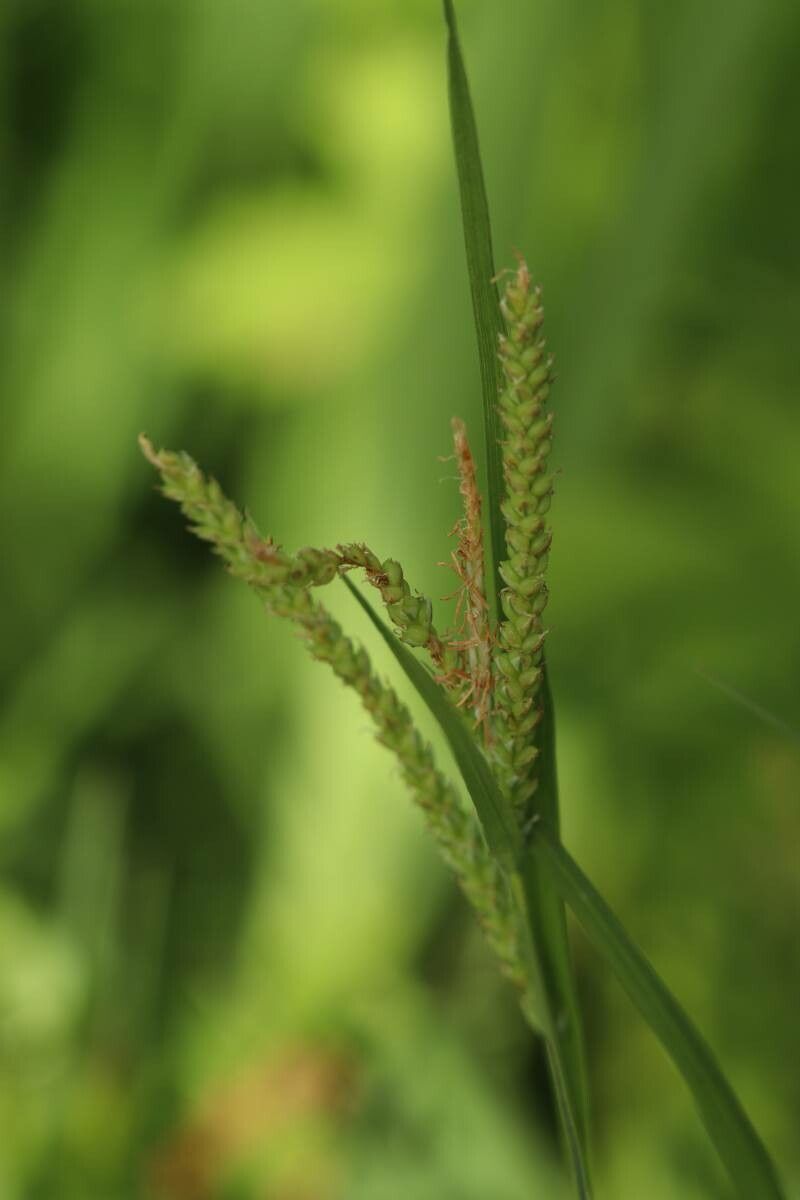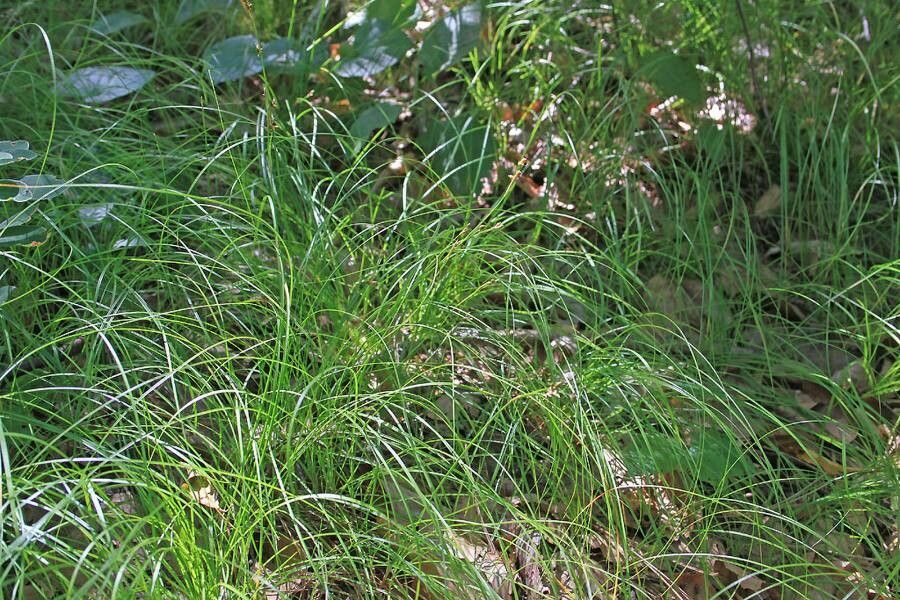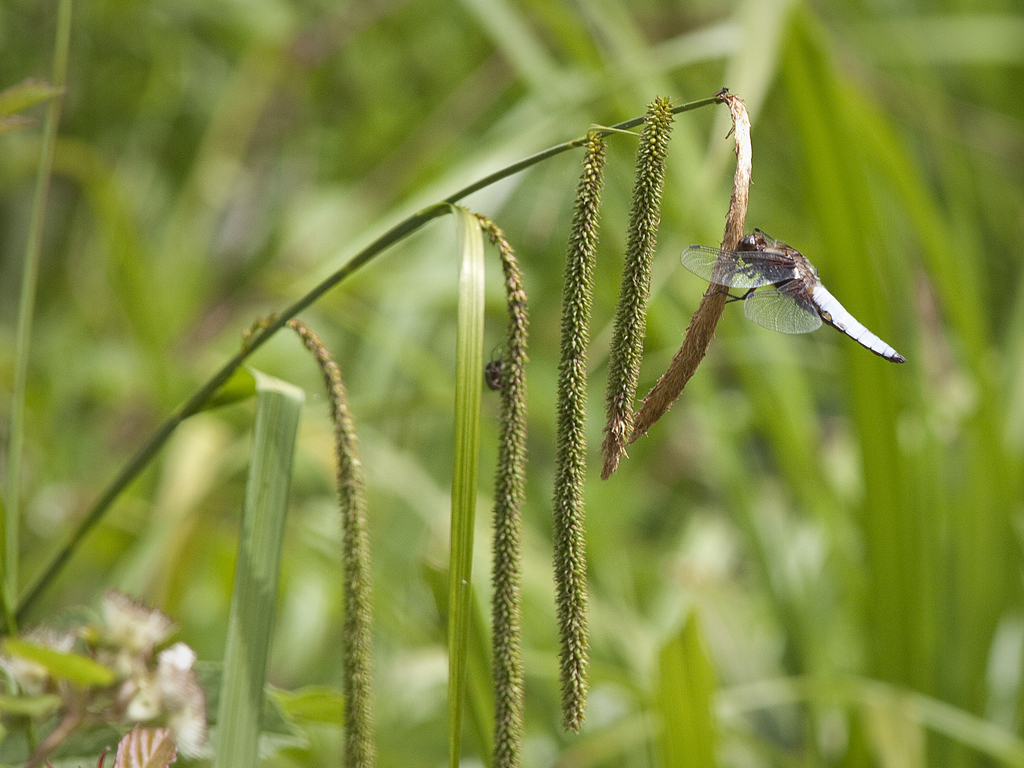
Carex pendula, commonly known as Pendulous Sedge, is a perennial plant belonging to the Cyperaceae family. Native to Europe and Asia, it thrives in damp woodlands, meadows, and along riverbanks. The plant features long, arching leaves that can grow up to 1 meter in length, forming dense clumps. Its tall, slender stems bear drooping flower spikes that emerge in late spring or early summer. These flower spikes are small, brownish-green, and hang down from long stems that can also reach up to 1 meter in height.
Pendulous Sedge prefers moist soil conditions but can tolerate some drought once established. It is an excellent choice for planting near water features or in damp areas of the garden, where its arching leaves and graceful flower spikes add texture and visual interest.
This plant has various uses, including erosion control along riverbanks, thanks to its deep root system that helps stabilize the soil. Additionally, it provides habitat for wildlife, such as birds, which use its dense foliage for nesting sites.
In 1754, Lin Nai established the genus known as "true sedge." This plant is a significant component of China's flora and is the dominant grass species in the lowest layer of many forests. In some areas, true sedge makes up most of the lower vegetation. FUN FACT · FROM THE LIBRARY
Overall, Carex pendula is an attractive, grass-like perennial with graceful, arching foliage. It makes a valuable addition to any garden or landscape design project where moisture levels are sufficient for its growth requirements.
Drooping sedge possesses good disease resistance and is generally not prone to diseases. Regarding care, this plant is fairly low-maintenance. When grown outdoors it needs only light watering, and larger specimens usually do not require pruning. Smaller specimens, however, should be pruned after they have finished blooming. Drooping sedge is suitable for anyone with an outdoor area, such as a garden or deck, and does not demand a great deal of care experience.
How to keep Carex Pendula.
Light
Drooping sedge grows best with moderate sunlight but tolerates a range of light conditions. Native to well-lit woodland edges, it can adjust to strong direct sun or to low-light situations. However, too much or too little light can hinder the plant's proper growth.
Water
Drooping sedge thrives in moist woodland environments. It requires consistently moist soil, as it is neither drought-tolerant nor able to handle excessive moisture well. Watering once a week helps maintain healthy foliage. This plant is usually grown outdoors, where it flourishes in cool, shaded conditions that resemble its natural habitat.
Humidity
This plant needs special care because it loves high humidity levels of 60-80% or more. The best way to achieve this is by placing a humidifier near the plant. Daily misting is also essential! Make sure the room has good ventilation.
Temperature
Drooping sedge comes from temperate areas and flourishes in temperatures of 41 to 95 °F (5 to 35 ℃). During extreme seasons, conditions may need to be modified to emulate its natural habitat.
Fertilizer
Drooping sedge needs extra nutrients to encourage healthy new growth. In spring, adding compost around the plant’s base will effectively supply the nourishment it requires. Fertilizing helps support vigorous growth and assists the plant in resisting diseases and pests.
Pruning
Drooping sedge benefits from early spring pruning, which involves removing dead or damaged leaves to promote healthy growth and improve air circulation. Cutting back old flower stems not only enhances the plant's appearance but also reduces self-seeding. Regular pruning helps control the spread of drooping sedge, ensuring a more organized and attractive garden display.
Pot & Repot
When repotting Drooping sedge, select a pot 1–2 inches (2.5–5.1 cm) larger with ample drainage. Use a well-draining potting mix. Repot in spring or fall, ensuring the root ball is positioned slightly lower than the rim of the flower pot. Water thoroughly after repotting and place it in a warm spot with indirect sunlight.
Botanical profile.
- Plant Type
- Grass
- Life Cycle
- Perennial
- Genus
- Carex
- Family
- Cyperaceae
- Hardiness Zone
- 5-9
- Mature Height
- 1.83 m to 2.44 m
- Mature Spread
- 1.22 m
- Leaf Color
- Green, Blue
- Leaf Type
- Evergreen
- Flower Color
- Green, Brown
- Flower Size
- 0.51 cm to 0.76 cm
- Bloom Time
- Late spring, Early summer, Mid summer
- Planting Time
- Autumn
- Harvest Time
- Mid summer
- Native Area
- Germany, Tunisia, Austria, Morocco, Italy, Spain, Switzerland, Czech Republic, Denmark, Portugal, France, Ireland, United Kingdom, Algeria, Croatia, Slovenia, Belgium, Netherlands
Other names.
Reader questions.
What do I need to do if I give my Drooping sedge plant too much or too little water?
Proper watering is essential for the health of this beautiful ornamental grass. Watering issues can be resolved when it's planted in the ground, but overwatering or underwatering will quickly kill it when in a container. Insufficient watering can cause stunted growth, drooping leaves, reduced seed head production, and browned leaves. On the other hand, overwatering may result in yellow leaves with brown tips. If you suspect improper watering, first determine if it's receiving too much or too little water. If it's receiving too much, stop watering immediately and allow the soil to dry out. Once new growth appears, check the moisture level of the soil and decide whether more water is necessary. In the case of insufficient watering, simply give the grass a thorough watering to see if it revives. It's important to note that deep watering is preferable to shallow, frequent waterings as it encourages the growth of deep roots, making the grass more resistant to drought and water-related issues.
Why is it necessary to fertilize my Drooping sedge plant?
Fertilizing Drooping sedge is important for several reasons. Firstly, your plant requires additional nutrients for healthy new growth. Additionally, these nutrients also benefit the health of existing growth and can aid your plant in combating diseases and pests.
How much sunlight is required for Drooping sedge?
Drooping sedge thrives under moderate levels of sunlight and shows tolerance to varying light conditions. It can adapt from well-lit woodland margins to intense solar exposure or scarce light. For healthy development, it requires about 3-6 hours of sunlight, corresponding to partial sun conditions. Full sun or full shade conditions imply more than 6 hours of sunlight. It's essential to watch how sunlight moves through your garden, selecting spots that offer a balanced light and shade environment for the plants.
What is the native climate for Drooping sedge, and how does it withstand seasonal temperature changes?
Drooping sedge, or Carex pendula, is native to temperate climate regions, thriving in temperatures ranging from 41 to 95 °F (5 to 35 °C). It has strong cold resistance and usually doesn't require special frost protection measures. However, in extreme winter conditions where temperatures drop below -25°C, providing cold protection by covering the plant with soil or straw is important. Additionally, watering the plant abundantly before the first freeze of autumn to keep the soil moist helps prevent drought and water scarcity during winter and early spring.
How frequently should I water my Drooping sedge plant?
The watering needs of Drooping sedge depend on its location. In general, it should be watered once a week. In hot climates, watering once or twice a week may be necessary. In moderate climates, watering once every seven days or more may be enough. Grass in containers usually needs more frequent watering than grasses in the ground. However, the amount of sunlight the grass receives also affects its watering needs. Shaded grasses need to be watered less frequently than those in the ground. It is important to water Drooping sedge only when the soil is dry. You can check the soil by pressing your finger a couple of inches into it or by weighing the pot. If the blades appear folded along their centers and thinner than usual, it may be a sign that the grass needs more water. Despite being drought-tolerant, regular deep waterings will help maintain the grass's beautiful color. Although Drooping sedge can survive in harsh conditions, it still requires care and attention, including consistent watering. When newly planted, it will need more water until its roots are established. Potted Drooping sedge tends to dry out quickly, especially if placed in direct sunlight for most of the day. It is recommended to test the soil every 3 to 4 days and water only when it feels dry. In-ground Drooping sedge generally needs less watering, but the type of soil it is grown in also plays a role. Clay soil retains moisture below the surface even when it feels dry at the top, while sandy soil drains quickly and requires more frequent watering.
When should I fertilize my Drooping sedge?
To ensure the survival of Drooping sedge in the garden, it is important to know when to fertilize. Since it is not a heavy feeder and doesn't need additional nutrients while dying back, applying diluted fertilizer at the start of the growing season is not advised. Instead, it is recommended to place mulch or compost around the base of the plant.
Can Drooping sedge grow under artificial lighting?
Yes, Drooping sedge can grow under artificial lighting, which is especially beneficial for indoor plants when natural sunlight is insufficient, such as in winter or less sunny spaces. Adequate lighting is crucial for optimal growth. LED lights are recommended because they can be customized to provide specific wavelengths needed by the plants. Full sun plants require 30-50W/sq ft, partial sun plants need 20-30W/sq ft, and full shade plants need 10-20W/sq ft of artificial light. The light source should be placed 12-36 inches above the plant, mimicking natural sunlight for 8-12 hours per day.
What should be done if Drooping sedge is exposed to temperatures below -25\u00b0C?
If Drooping sedge is exposed to temperatures below -25°C, there may not be noticeable changes during winter, but a decrease in sprouting or complete lack thereof can occur in spring. To mitigate this, it's recommended to remove any parts of the plant that have failed to sprout in spring. This action helps in managing the plant's health and potentially encouraging new growth.
What do I need to be cautious about when watering my Drooping sedge in various seasons, climates, or during different stages of growth?
You can determine if you are watering enough by observing the growth rate of your grass. Drooping sedge, for example, tends to double in size within a year's time, especially during the hottest months. If the weather is hot but the grass is not growing vigorously, you may need to adjust your watering schedule. In winter, you could potentially water only once a month, but it's still important to check the soil for moisture. During the growth cycle in warm months, the grass requires more water than usual, but during winter and cooler months, the water needs decrease significantly. A key point to remember about Drooping sedge is that the soil should always be allowed to completely dry out before adding water.
When is it not a good idea to fertilize my Drooping sedge plant?
If you're not using packaged fertilizers, you don't need to worry about when to stop feeding Drooping sedge. Simply apply a layer of compost or mulch in the spring, and that will be sufficient to keep the plant happy all year round. During the winter when the plant is dormant, there's no need to mulch or compost. Rest easy!
What are the symptoms of incorrect lighting for Drooping sedge?
Incorrect lighting can cause several symptoms in Drooping sedge, including small or lighter-colored new leaves, leggy or sparse growth, faster leaf drop, slower or no new growth, chlorosis, sunscald, leaf curling, wilting, and leaf scorching. These symptoms indicate either too much or too little light, affecting the plant's ability to photosynthesize properly and maintain healthy growth.
How does high temperature affect Drooping sedge, and what are the solutions?
High temperatures can significantly affect Drooping sedge, particularly when temperatures exceed 35°C during the summer. Symptoms of heat stress include leaves becoming lighter in color, curling, becoming prone to sunburn, and, in severe cases, wilting and drying out. To address this, sunburned and dried parts should be trimmed away. The plant should be moved to a location that offers shade during midday and afternoon sun or covered with a shade cloth. Additionally, watering the plant in the morning and evening to keep the soil moist is crucial in preventing further stress.