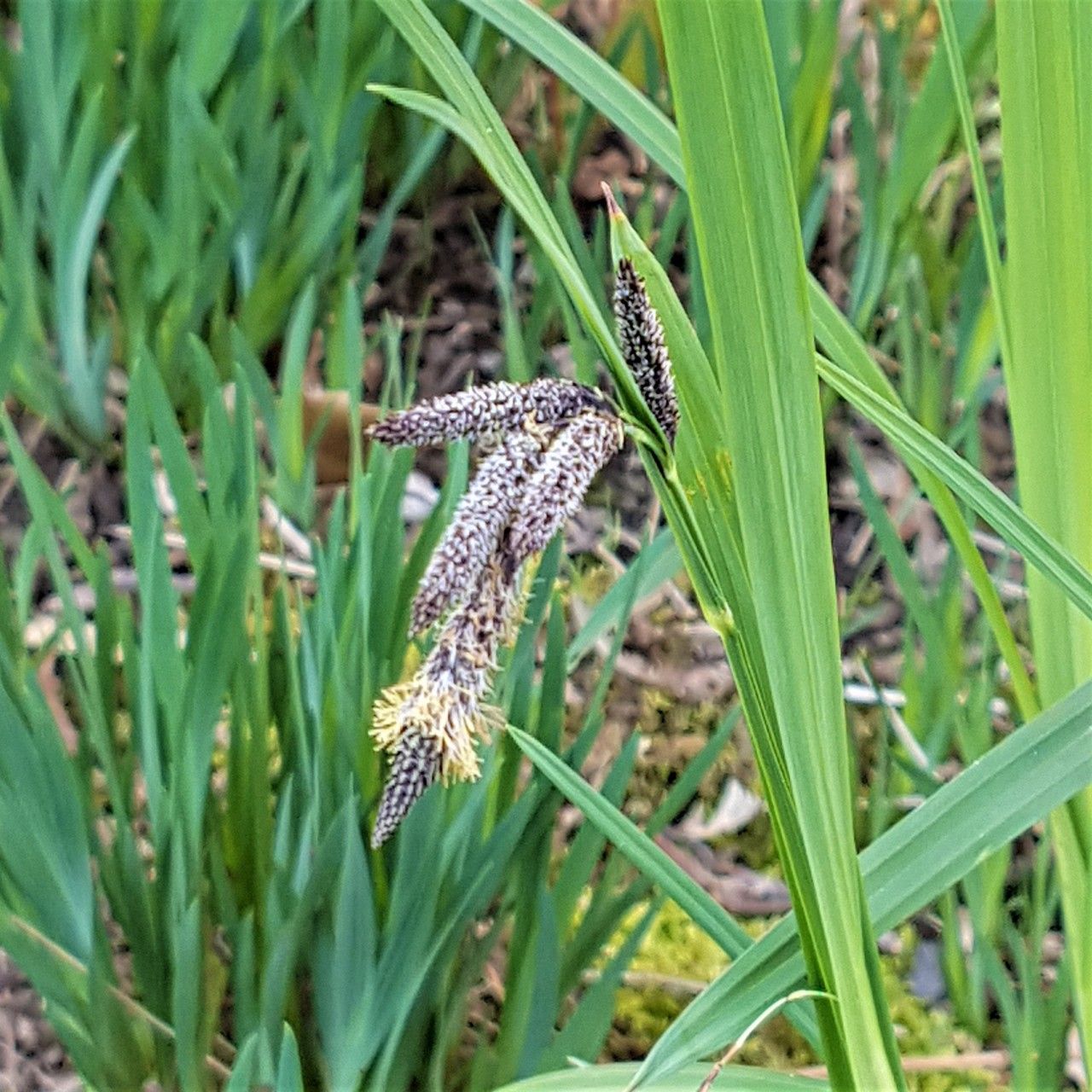
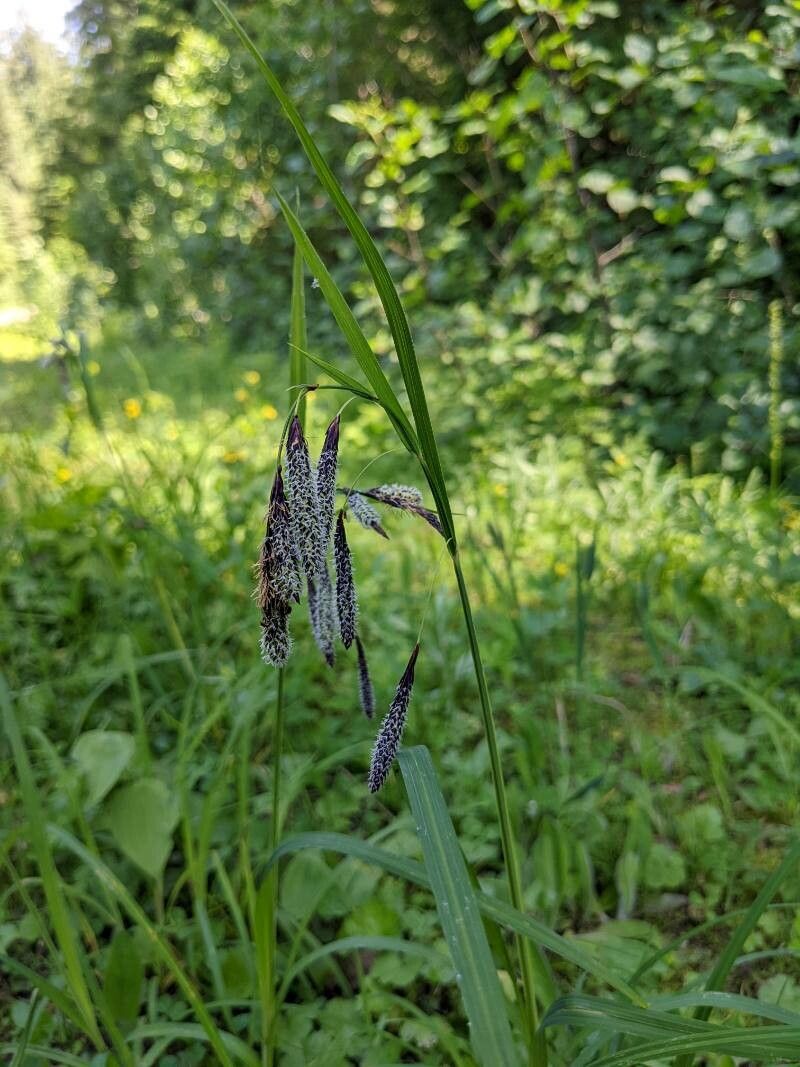
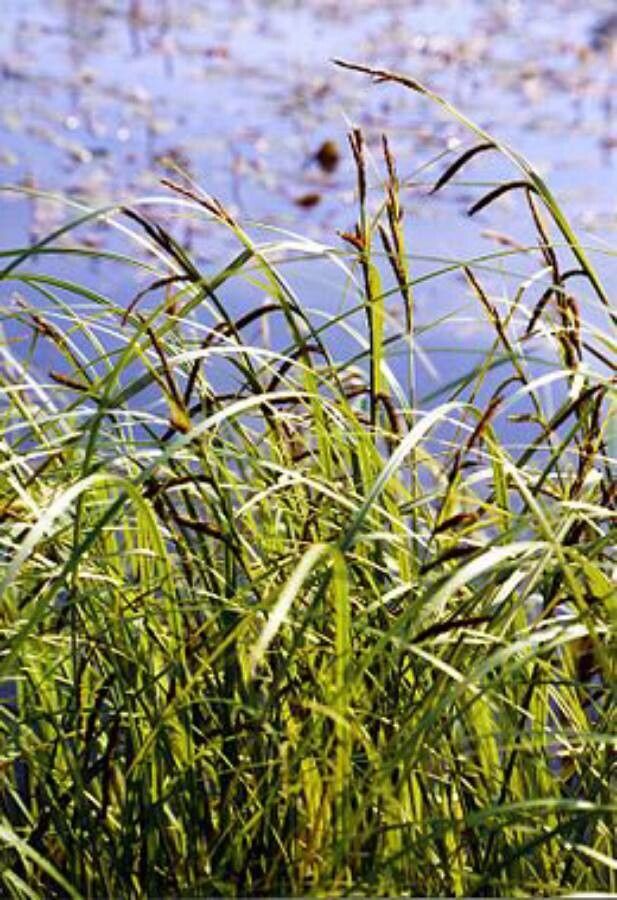
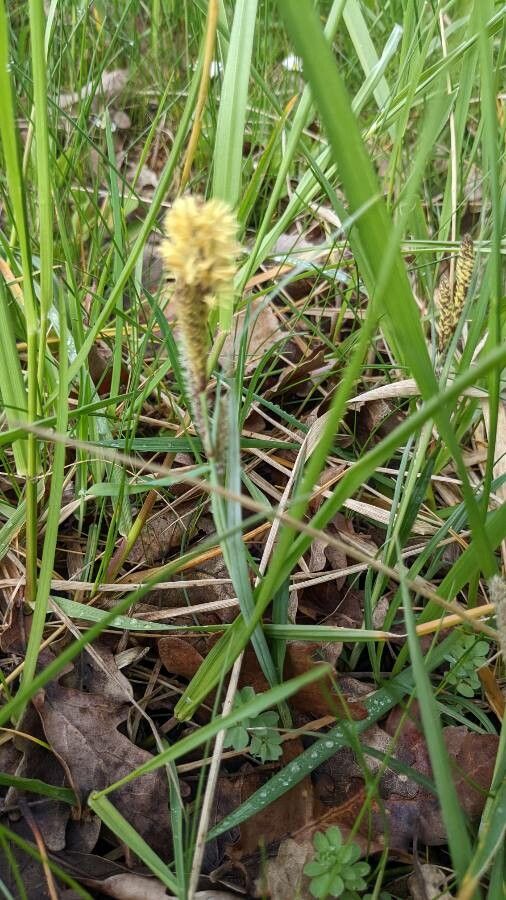
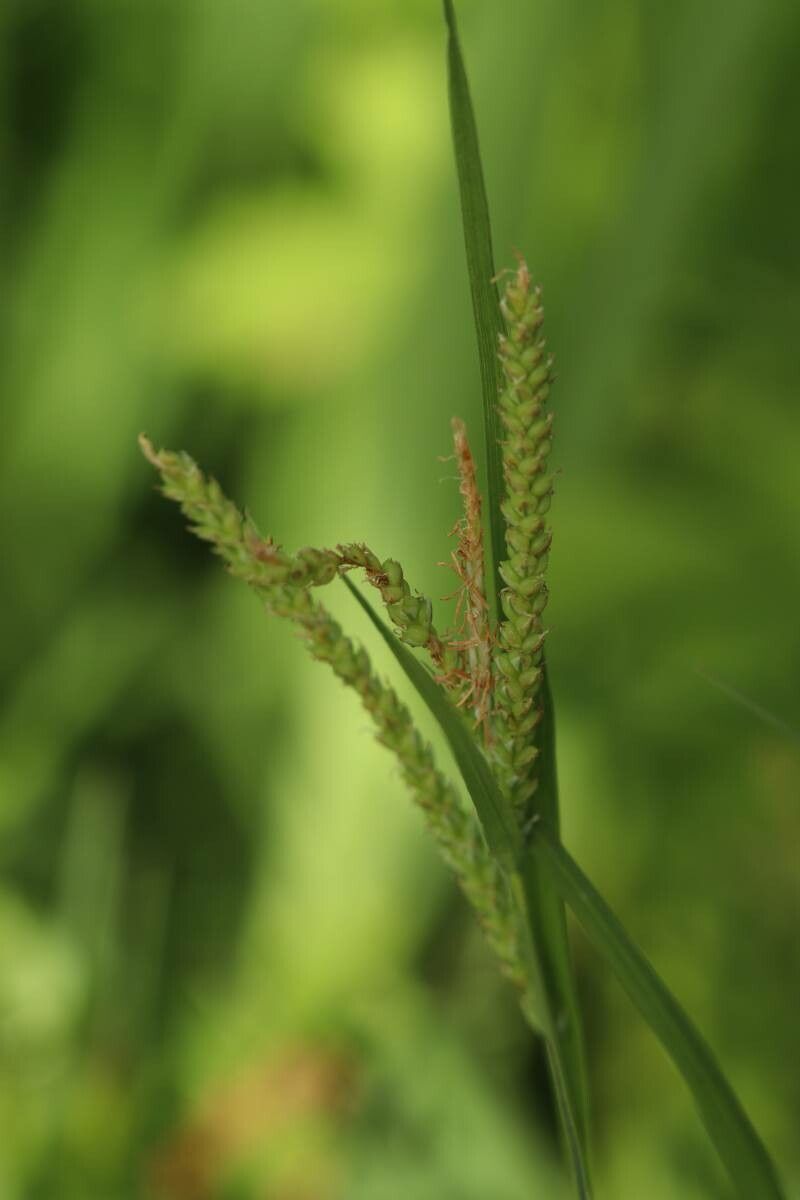
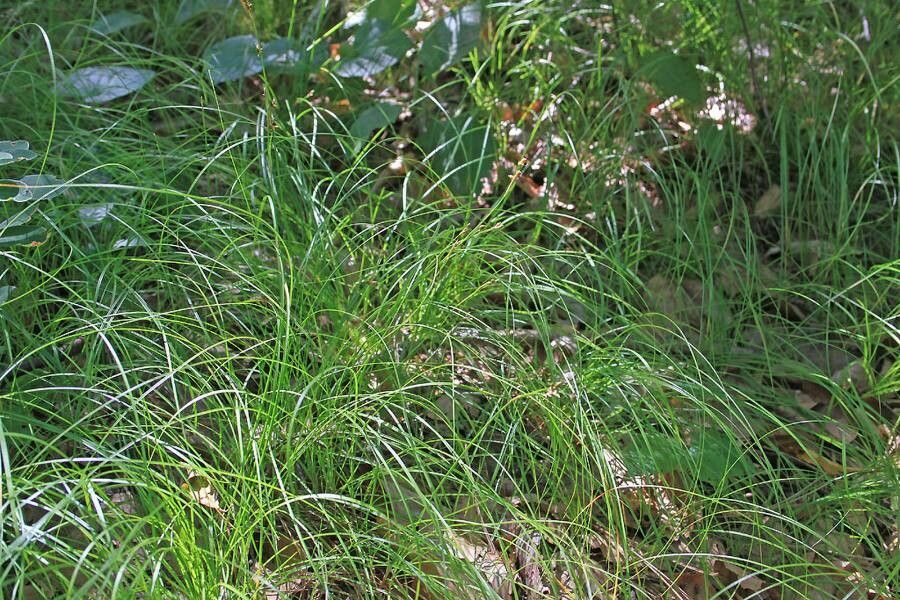
Carex mertensii is a species of sedge known by the common name Mertens' sedge. It is native to western North America from Alaska to California to Montana, where it grows in moist and wet habitat in mountain forests and meadows. This sedge produces clumps of stems reaching maximum heights between 80 and 120 centimeters. The leaves are small; those toward the bases of the stems are reduced to sheaths only. The inflorescence is a densely packed, bullet shaped cluster of overlapping flowers, mainly hanging on long peduncles. Each inflorescence is generally 2 to 4 centimeters long. Each of the flowers has a dark-colored bract.
Mertens' sedge is resistant to disease and usually does not develop illnesses. Regarding maintenance, this plant is fairly low-maintenance. When grown outdoors it needs only minimal watering, and larger plants typically do not require pruning. Smaller plants, however, should be pruned after they have finished blooming. Mertens' sedge is well suited for anyone with an outdoor area, such as a garden or deck, and does not demand much horticultural experience.
How to keep Carex Mertensii.
Light
Mertens' sedge naturally occurs in habitats such as forest understories and rocky sites, where it grows in natural shade. It prefers partial sunlight but can tolerate both full sun and deep shade, showing its hardy and adaptable character.
Fertilizer
Mertens' sedge needs extra nutrients to encourage healthy new growth. In spring, placing compost around the base of the plant will provide the nutrition it requires. Fertilizing helps support vigorous growth and improves the plant's resistance to diseases and pests.
Pruning
Mertens' sedge, known for its tufted, grass-like appearance, benefits from pruning in early spring. To encourage new growth, maintain its shape, and prevent disease, remove any dead foliage. Be careful not to cut too close to the base of the plant. Regular pruning helps keep Mertens' sedge healthy and vibrant, making it an excellent choice for garden landscapes.
Botanical profile.
- Plant Type
- Grass
- Life Cycle
- Perennial
- Genus
- Carex
- Family
- Cyperaceae
- Hardiness Zone
- 3-7
- Mature Height
- 30 cm to 76 cm
- Mature Spread
- 20 cm to 40 cm
- Leaf Color
- Green, Dark Green
- Leaf Type
- Evergreen
- Bloom Time
- Early summer, Mid summer
- Planting Time
- Spring, Summer, Autumn
- Harvest Time
- Late summer, Early fall
- Native Area
- Russia, Japan
Other names.
Reader questions.
What are the sunlight requirements for Mertens' sedge (Carex mertensii)?
Mertens' sedge (Carex mertensii) requires specific sunlight conditions to thrive. For a plant to be considered in 'full sun,' it must receive above 6 hours of sunlight daily. Conversely, 'partial sun' refers to receiving about 3-6 hours of sunlight each day. It's essential to observe how sunlight moves through your garden, ensuring you select locations that offer an optimal balance of light and shade to meet your plants' needs and keep them healthy.
What is Mertens' Sedge?
Mertens' Sedge, known botanically as Carex mertensii, is a type of plant. It does not have further provided information about its essentials or symptoms.