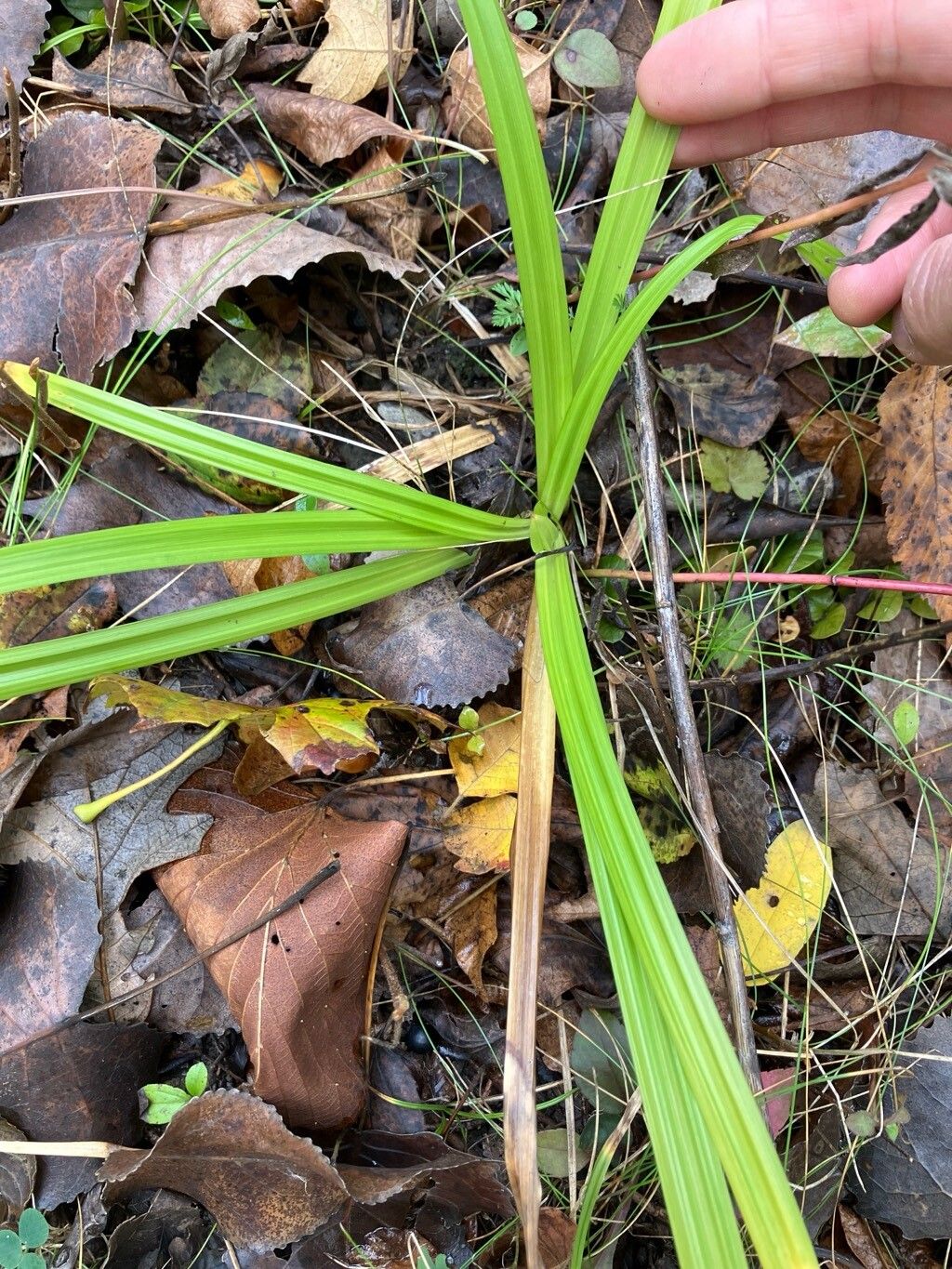
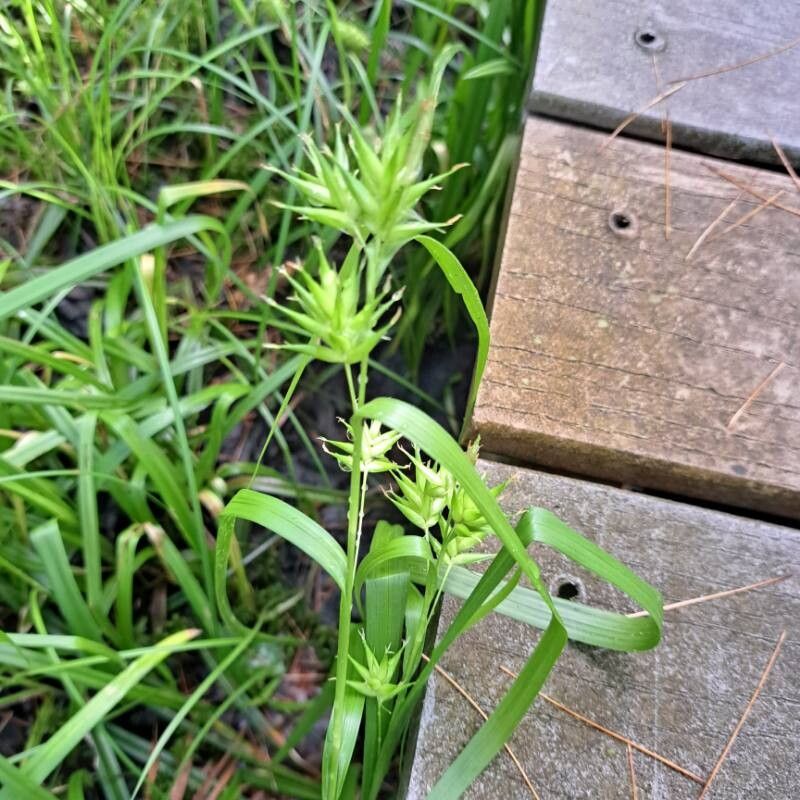
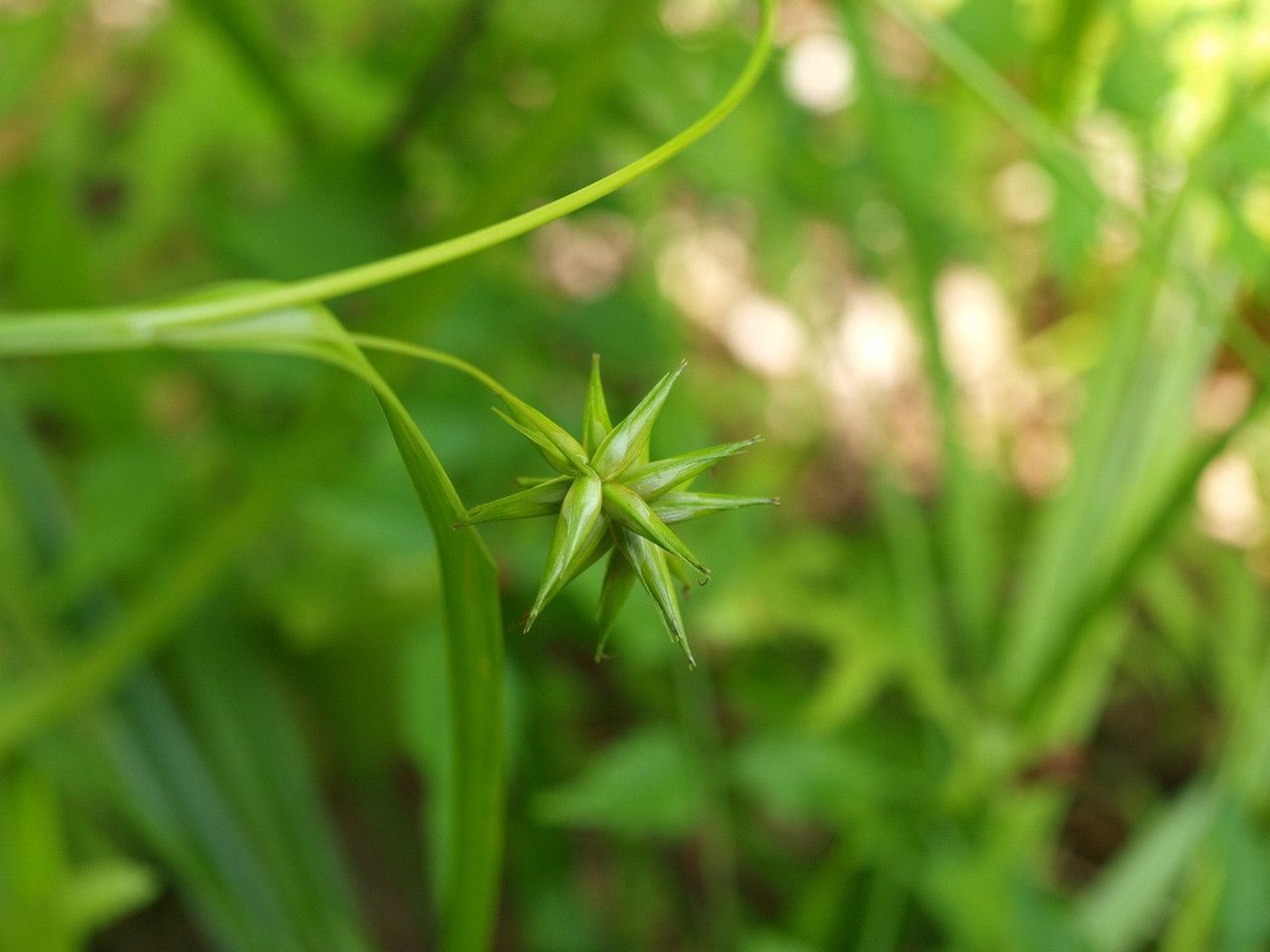
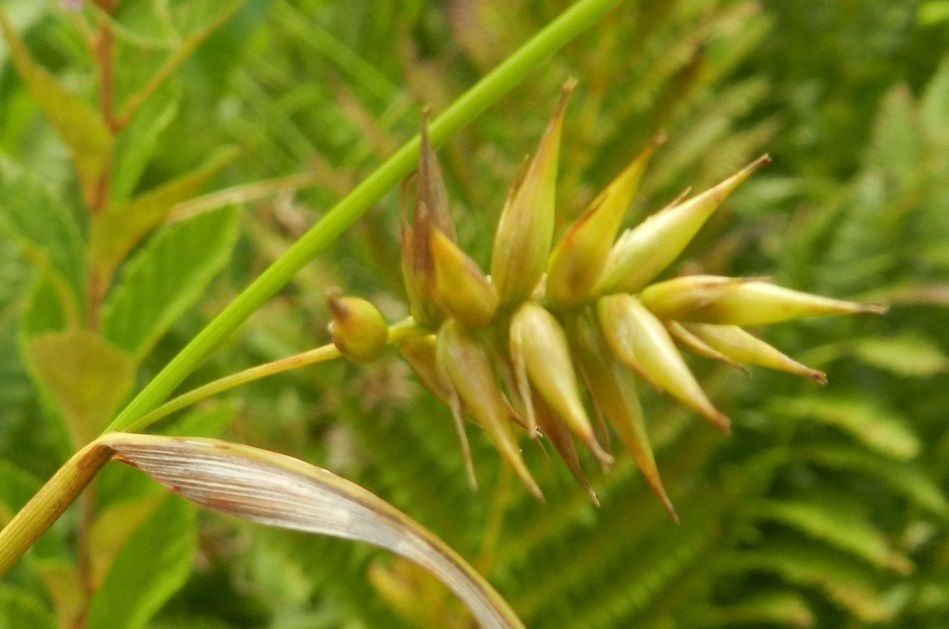
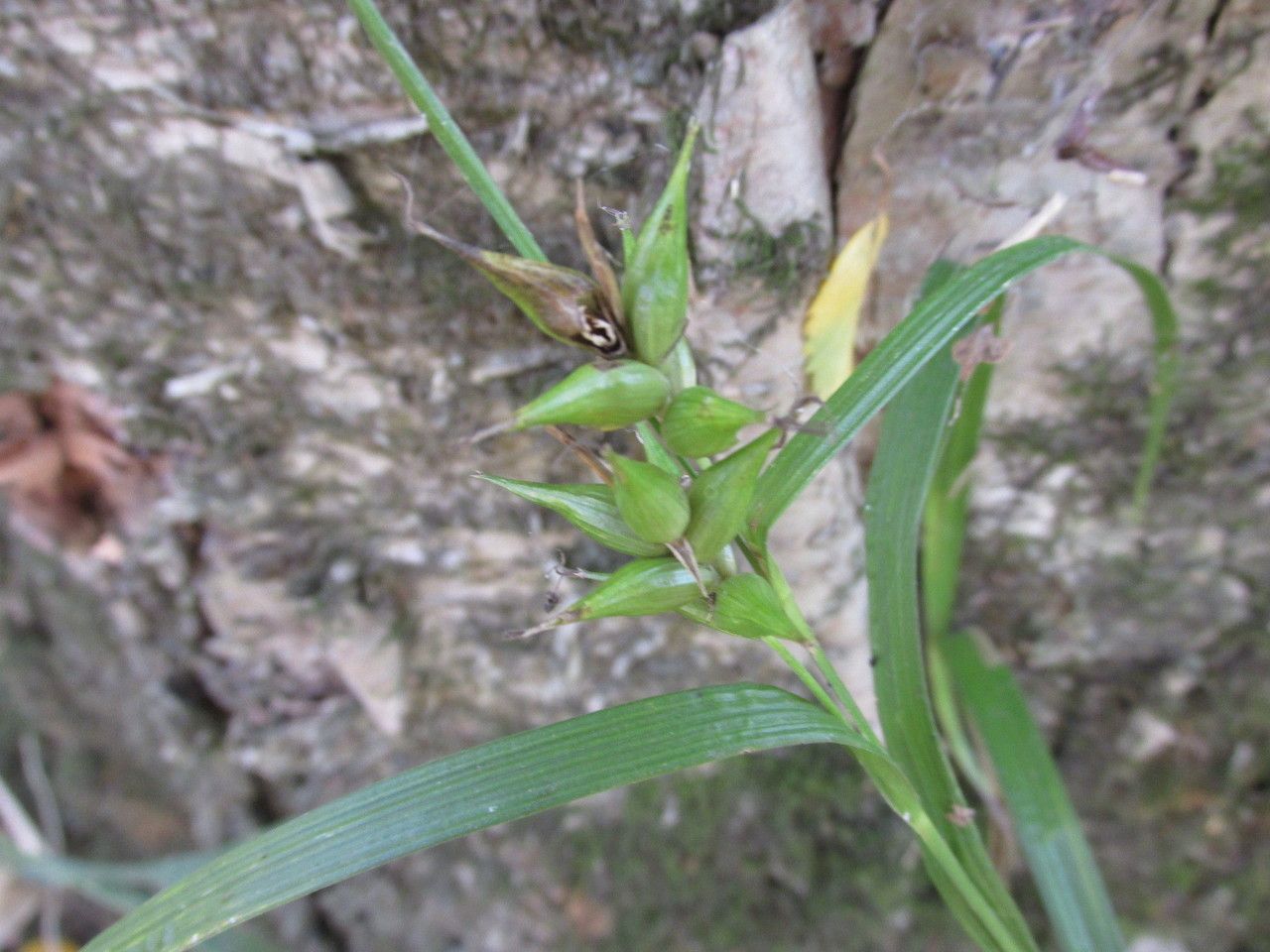
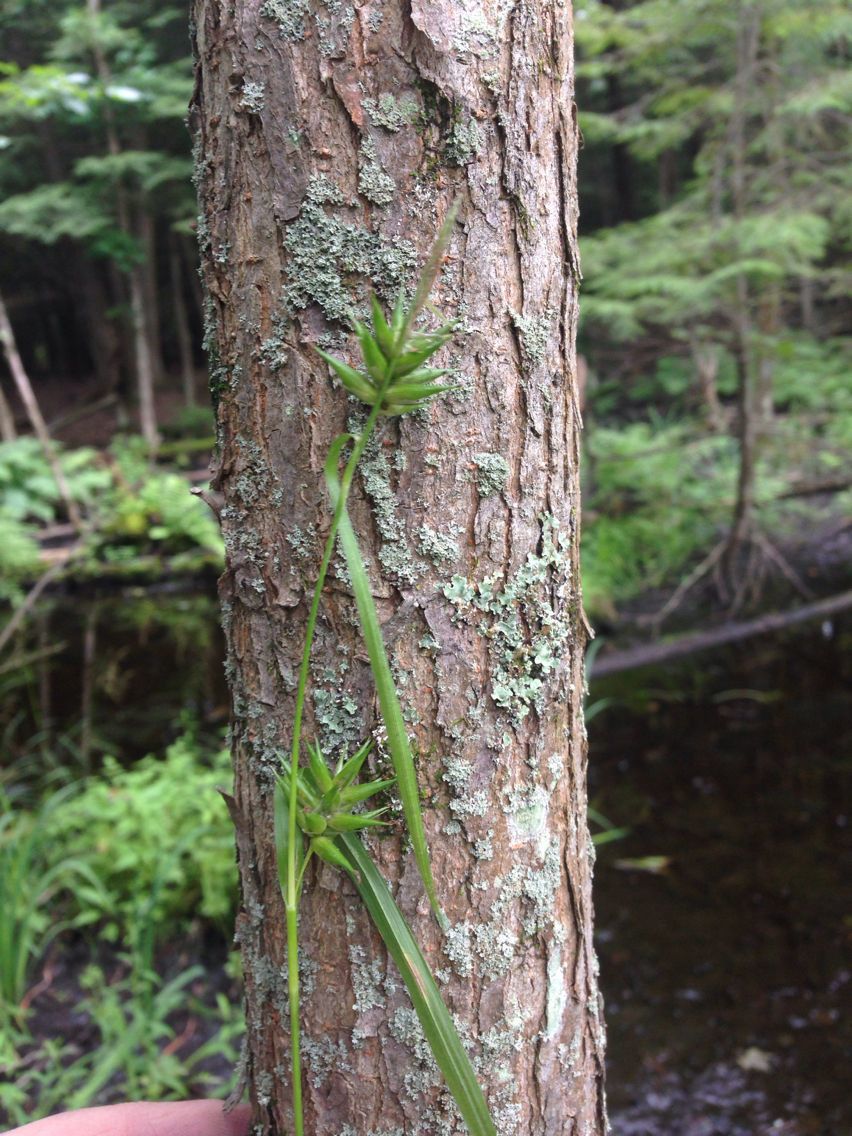
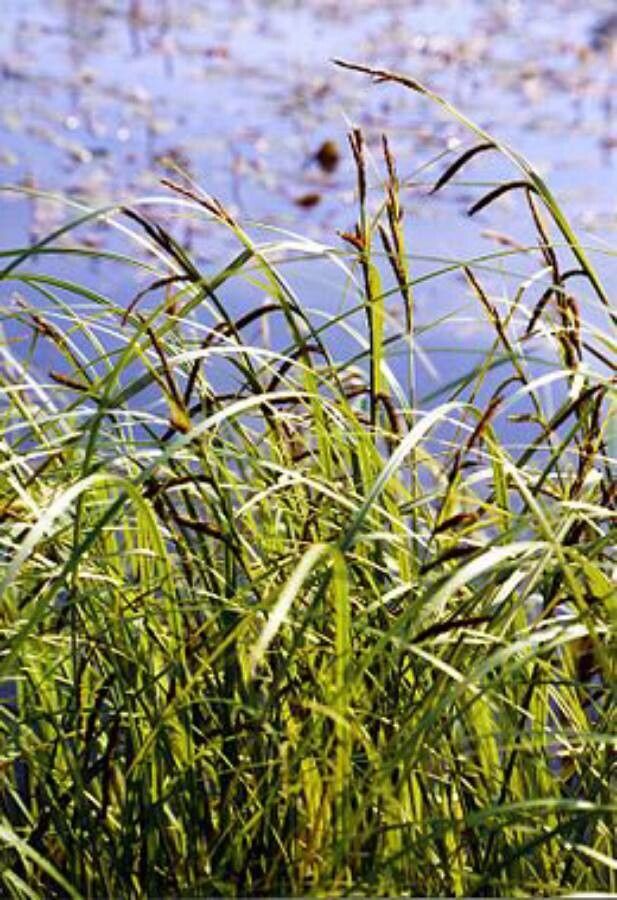
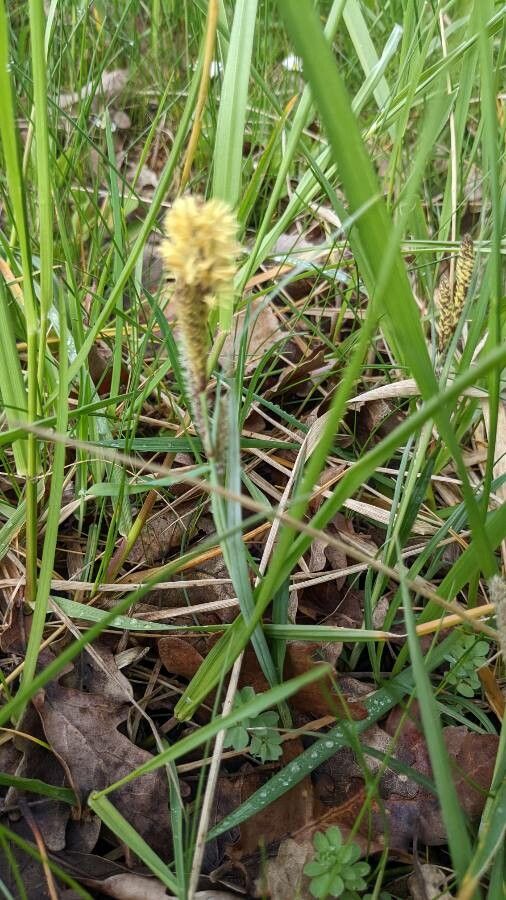
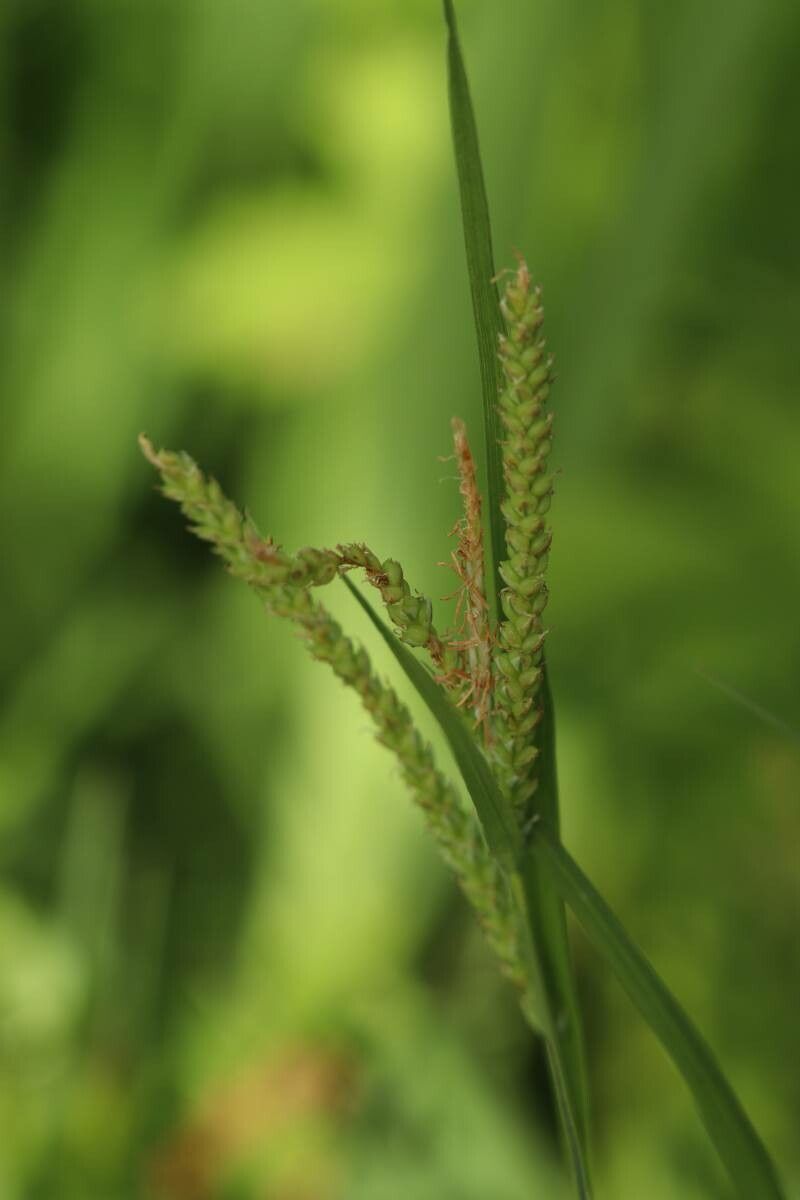
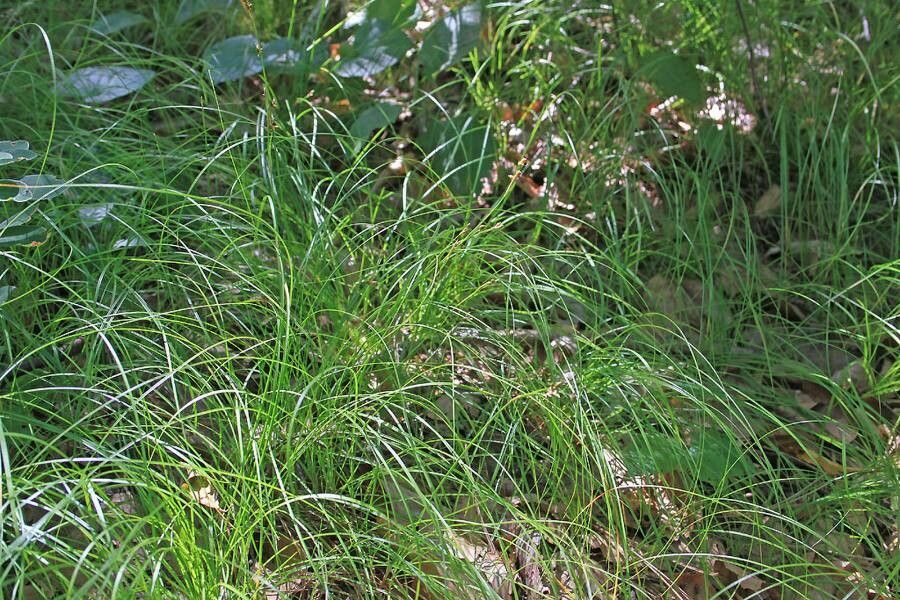
Carex folliculata, the northern long sedge, is a species of flowering plant in the family Cyperaceae. It is native to eastern Canada, and the eastern United States. A clumping perennial reaching 150 cm (5 ft) but usually shorter, it has broad, yellowish-green leaves. An obligate wetland species, it is found in a wide variety of wet habitats from sea level up to 1,800 m (5,900 ft), and can handle acidic, neutral, and basic conditions.
Greater bladder sedge has strong disease resistance and is usually not prone to illness. However, it can be affected by pests and diseases present in its environment. These infections are typically not serious. As for care, this plant requires moderate maintenance. It should be pruned regularly to maintain a neat appearance and healthy growth. Fertilizing can also help encourage flowering. Greater bladder sedge is suitable for anyone with outdoor space, such as a garden or patio, and does not demand extensive experience in plant care. It may need more attention when grown indoors.
How to keep Carex Folliculata.
Light
Greater bladder sedge does best in lighting that is neither too bright nor too dim. Its health and vigorous growth are maximized by a balance of sun and shade, resembling its natural habitat. Excessive exposure can cause its health to decline, while too little light may restrict its growth.
Water
The northern long sedge, which originates from wetland areas, thrives in consistently moist soil and needs to be watered weekly. It can tolerate high humidity, and its ability to retain water in its foliage is crucial during the peak transpiration period of the growing season. This water retention helps maintain the optimal health of this evergreen species.
Temperature
The Greater bladder sedge thrives in regions having temperate climates, ideally flourishing in temperatures ranging from 41 to 89.6 °F (5 to 32 ℃). It may necessitate adjusting the temperature based on the time of year in order to mimic this optimal range.
Fertilizer
One fertilizer application in spring is typically enough for Greater bladder sedge, though multiple feedings can boost growth. Fertilize once every month to a month and a half. Fertilization improves leaf appearance and function, helping maintain even color and a healthy texture. It also promotes root development and nutrient uptake for long-term plant health.
Pruning
The northern long sedge, a perennial herb, thrives in wet environments and benefits from having its dead foliage pruned in early spring. This practice promotes new growth, improves air circulation, and maintains the plant's appearance. When pruning, do so carefully to avoid disrupting the plant's growth cycle. This approach helps control the plant's spread while preserving the integrity of its habitat.
Botanical profile.
- Plant Type
- Herb
- Life Cycle
- Perennial
- Genus
- Carex
- Family
- Cyperaceae
- Hardiness Zone
- 4-7
- Mature Height
- 30 cm to 76 cm
- Mature Spread
- 30 cm to 61 cm
- Leaf Color
- Green
- Leaf Type
- Semi-evergreen
- Flower Size
- 2.03 cm to 15.24 cm
- Bloom Time
- Late spring, Early summer
- Planting Time
- Spring, Summer, Autumn
- Harvest Time
- Mid summer, Late summer
Other names.
Reader questions.
What are the sunlight requirements for Northern long sedge?
Northern long sedge thrives best when exposed to full sun for above 6 hours a day, but it can also tolerate partial sun to full shade conditions, receiving about 3-6 hours of sunlight. It's essential to observe how sunlight moves through your garden to select locations that offer a balance of light and shade, ensuring your plants' optimal health. Originating from environments that receive ample sunlight, Northern long sedge requires sufficient sunlight for its health and growth. However, it's important to avoid both overexposure and underexposure to sunlight to prevent adverse effects.
What is the ideal temperature range for Northern long sedge?
Northern long sedge (Carex folliculata) thrives in a temperature range of 50 to 95 °F (10 to 35 °C). Originating from temperate regions, it prefers mild environmental conditions and has strong cold resistance. Although it generally doesn't require special frost protection measures, if temperatures are expected to drop below -25°C, it's crucial to provide additional cold protection by covering the plant with soil or straw and ensuring the soil is moist before the first freeze.
How can artificial lighting benefit indoor Northern long sedge plants?
Indoor Northern long sedge plants require adequate lighting for optimal growth, especially when natural sunlight is insufficient, such as in winter or less sunny spaces. Artificial lights, like LED lights, are beneficial because they can be tailored to provide specific wavelengths needed by plants. For full sun plants, 30-50W/sq ft of artificial light is recommended, while partial sun plants need 20-30W/sq ft, and full shade plants require 10-20W/sq ft. It's important to position the light source 12-36 inches above the plant and mimic natural daylight hours, generally ensuring 8-12 hours of light per day.
How does Northern long sedge react to low temperatures?
Northern long sedge is notably cold-tolerant, withstanding best temperatures above 10°C. However, during winter, the temperature should be kept above -15°C. When temperatures drop below -25°C, the plant may not show immediate damage but can exhibit decreased sprouting or fail to sprout come springtime. In such cases, it's advised to remove any parts that have not sprouted in the spring.
What are the symptoms of inadequate lighting in Northern long sedge?
Northern long sedge displays several symptoms when exposed to inadequate lighting, including smaller new leaves, leggy or sparse growth, premature leaf drop, slowed or ceased new growth, paler new leaves, chlorosis, and symptoms of too much sunlight like sunscald, leaf curling, wilting, and leaf scorching. These symptoms indicate either a lack of sufficient light or overexposure to sunlight, affecting the plant's ability to photosynthesize and maintain overall health.
What should I do if Northern long sedge is exposed to high temperatures?
When facing high temperatures, especially above 35°C during summer, Northern long sedge can suffer various stresses such as lighter leaf color, leaf curling, susceptibility to sunburn, and severe wilting or drying. To mitigate damage from excessive heat, trim away affected parts, relocate the plant to shaded areas or provide shade using a cloth during the intense midday and afternoon sun. Additionally, maintaining soil moisture with morning and evening watering is crucial.
What solutions are available for managing light exposure in Northern long sedge?
To manage light exposure for Northern long sedge, gradually introduce the plant to brighter conditions, aiming for at least 6 hours of direct sunlight daily. For indoor plants that are large or not easily movable, consider using artificial lighting, keeping lamps on for at least 8 hours a day. For outdoor plants, avoid sudden changes in light intensity to prevent sunburn. If sunlight is obstructed, prune branches or leaves of trees blocking the light or consider transplanting smaller plants during their dormant period to a location with better sunlight and drainage. Note that parts of the plant damaged by insufficient light may not recover, but new growth should be healthy with adequate light exposure.