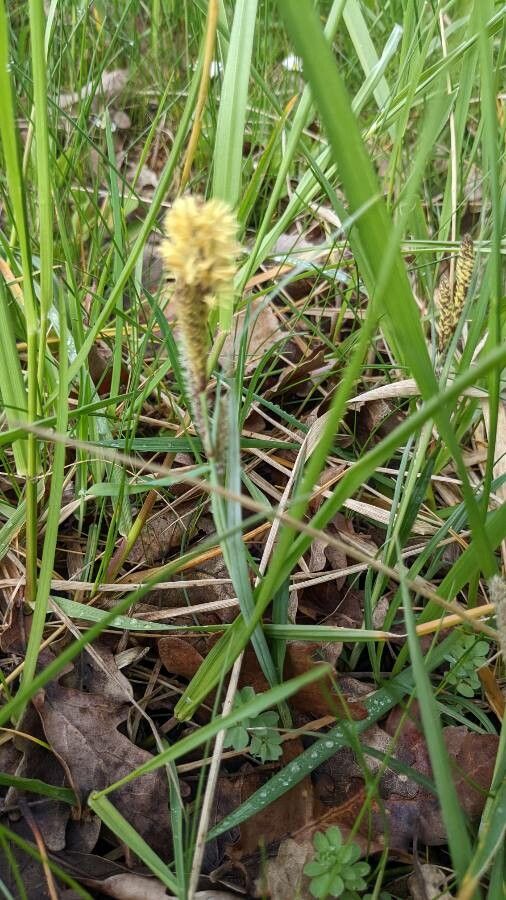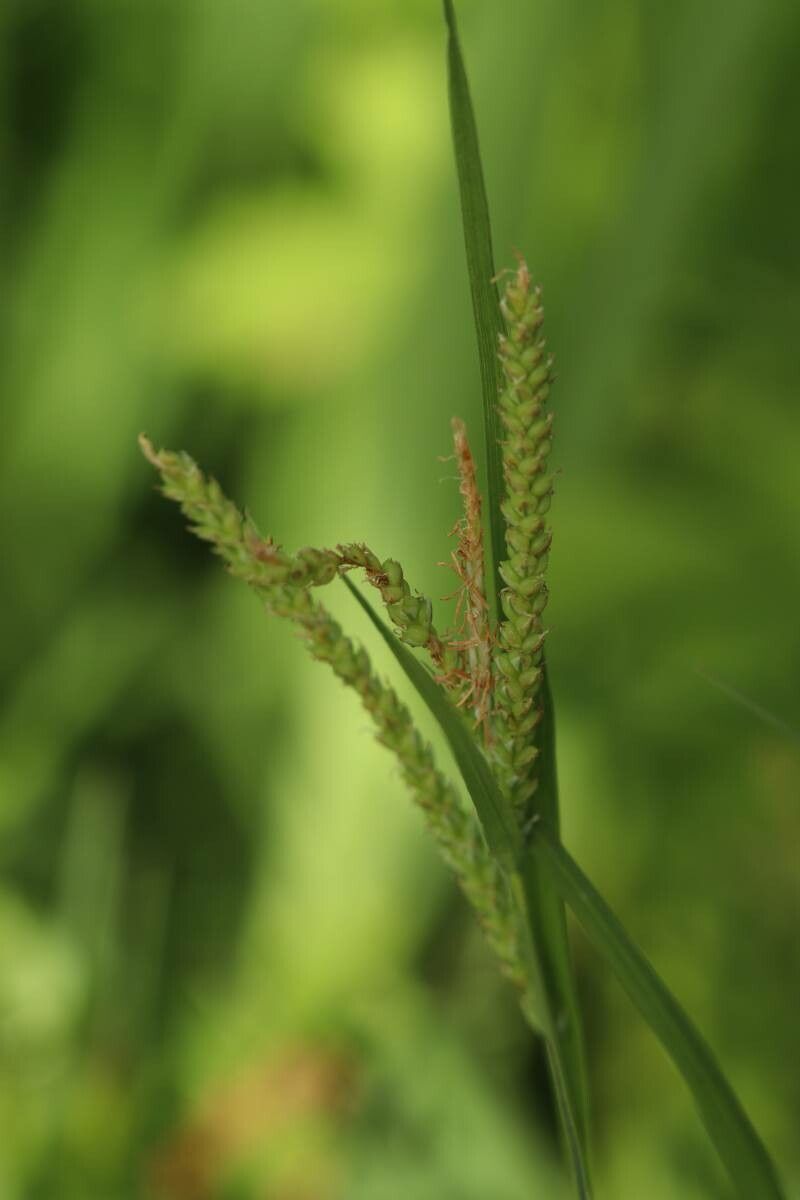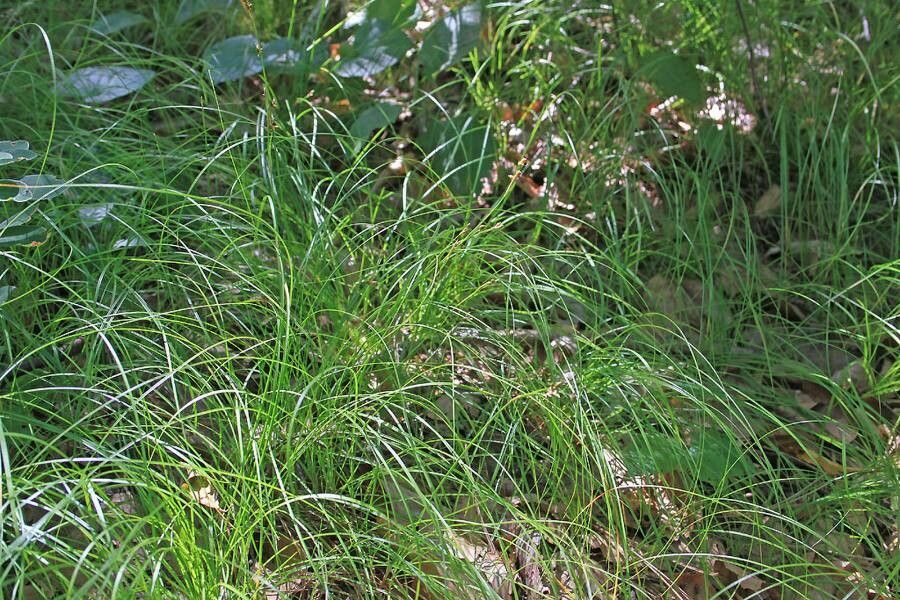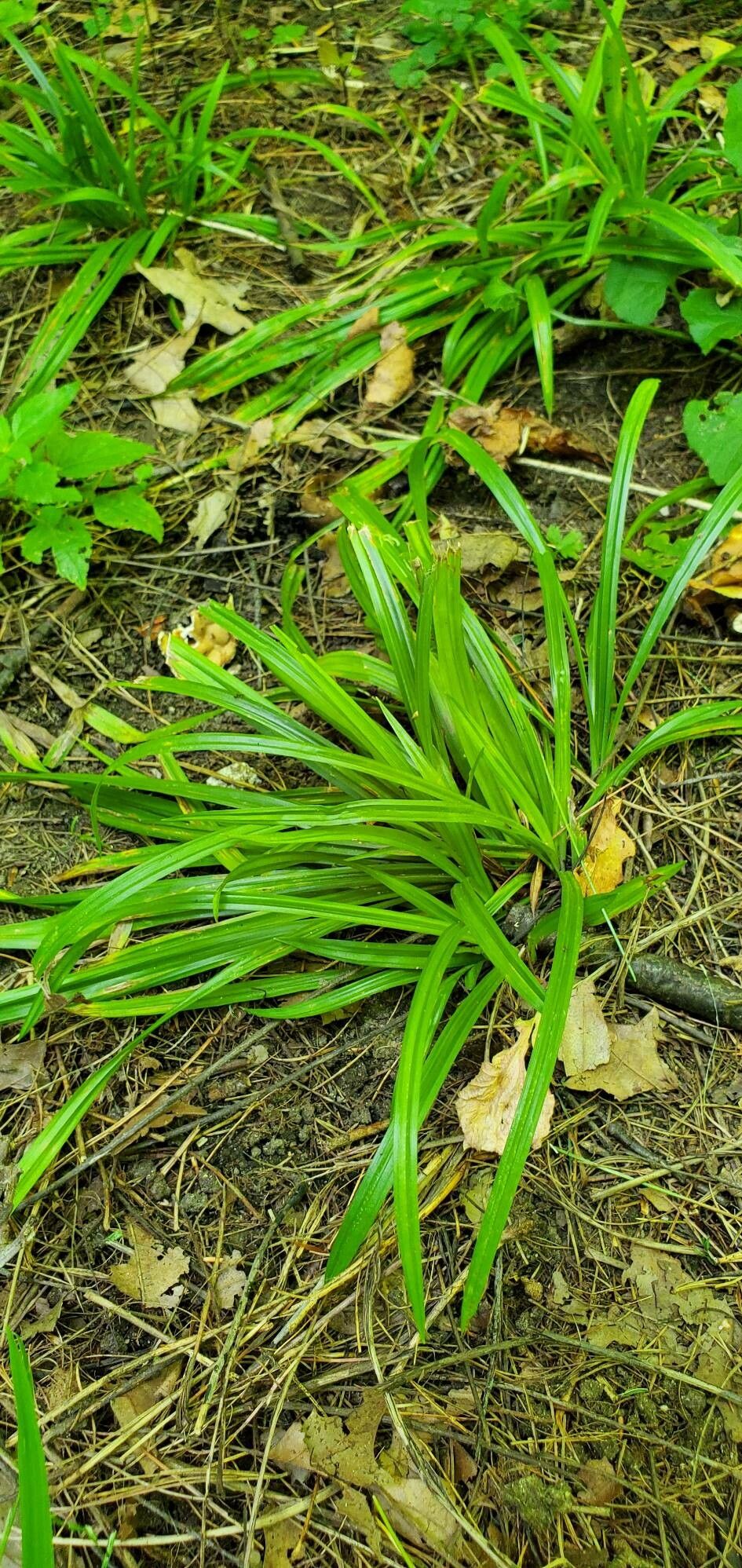
Carex careyana, commonly known as Carey's sedge, is a perennial plant species belonging to the family Cyperaceae. Native to North America, it thrives in various habitats, including wetlands, meadows, and forests. The plant forms clumps with narrow, green leaves that can grow up to 60 cm tall.
Carey's sedge blooms from May to July, producing small, greenish-brown flowers. These flowers are followed by nutlets, small fruits that contain the plant's seeds.
This sedge species plays a crucial role in wetland ecosystems. It helps stabilize soil along stream banks, reducing erosion, and provides habitat for a variety of wildlife, including birds, insects, amphibians, and mammals.
In 1754, Lin Nai established the genus known as "true sedge." This plant is a significant component of China's flora and is the dominant grass species in the lowest layer of many forests. In some areas, true sedge makes up most of the lower vegetation. FUN FACT · FROM THE LIBRARY
For cultivation, whether for ornamental purposes or restoration projects in wetland areas or gardens with moist soil conditions, Carey's sedge prefers full sun or partial shade and moist soil. Though it can tolerate some drought once established, it requires minimal maintenance, making it ideal for low-maintenance gardens and restoration projects.
Overall, Carex careyana is a versatile native perennial that offers ecological benefits and aesthetic appeal, making it an excellent choice for both ecological restoration projects and ornamental landscaping.
Carey's sedge shows strong resistance to disease and is usually not susceptible to infections. Regarding maintenance, this plant is fairly low-maintenance. When grown outdoors it needs only light watering, and larger specimens typically do not require pruning. Smaller plants, however, should be pruned after they finish blooming. Carey's sedge is appropriate for anyone with outdoor space, such as a garden or a deck, and does not demand extensive care experience.
How to keep Carex Careyana.
Light
Carey's sedge is a sun-loving perennial herbaceous plant that comes from open habitats and commonly grows in meadows and grasslands. It prefers full sun but can also tolerate partial sun conditions.
Temperature
Carey's sedge can tolerate a wide range of temperatures, but its distribution may still be restricted by different combinations of water and heat. It does best in warm summer climates with sufficient rainfall or watering. Extended periods of cloudy, rainy weather or prolonged high temperatures increase the chance of Carey's sedge dying. In winter, appropriate protection from cold can improve the plant's survival rate.
Fertilizer
Carey's sedge needs extra nutrients to encourage healthy new growth. In spring, putting compost around the base of the plant will effectively supply the nutrition it requires. Fertilizing supports vigorous growth and helps the plant resist diseases and pests.
Pruning
Carey's sedge is a perennial plant known for its attractive foliage and flowers. To maintain its beauty and health, it is important to prune it in early spring. This helps remove dead leaves and encourages dense growth. Always use clean, sharp tools during pruning to prevent the spread of disease. Regular pruning enhances the ornamental appeal and overall vitality of Carey's sedge.
Botanical profile.
- Plant Type
- Grass
- Life Cycle
- Perennial
- Genus
- Carex
- Family
- Cyperaceae
- Hardiness Zone
- 4-8
- Mature Height
- 30 cm to 52 cm
- Mature Spread
- 20 cm to 30 cm
- Leaf Color
- Light Green
- Leaf Type
- Semi-evergreen
- Flower Size
- 0.20 cm to 0.25 cm
- Bloom Time
- Early spring, Mid spring
- Planting Time
- Spring
- Harvest Time
- Late spring, Early summer, Mid summer