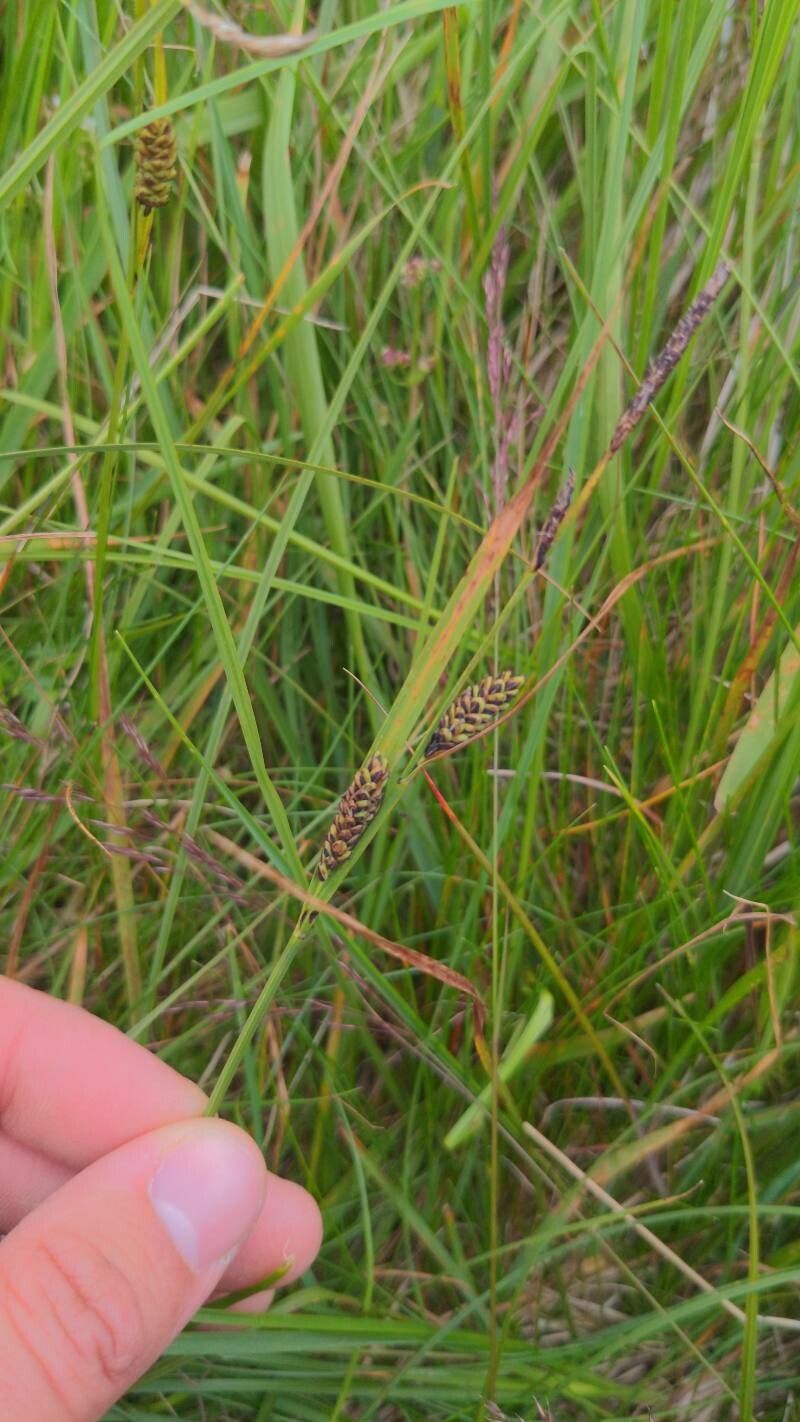
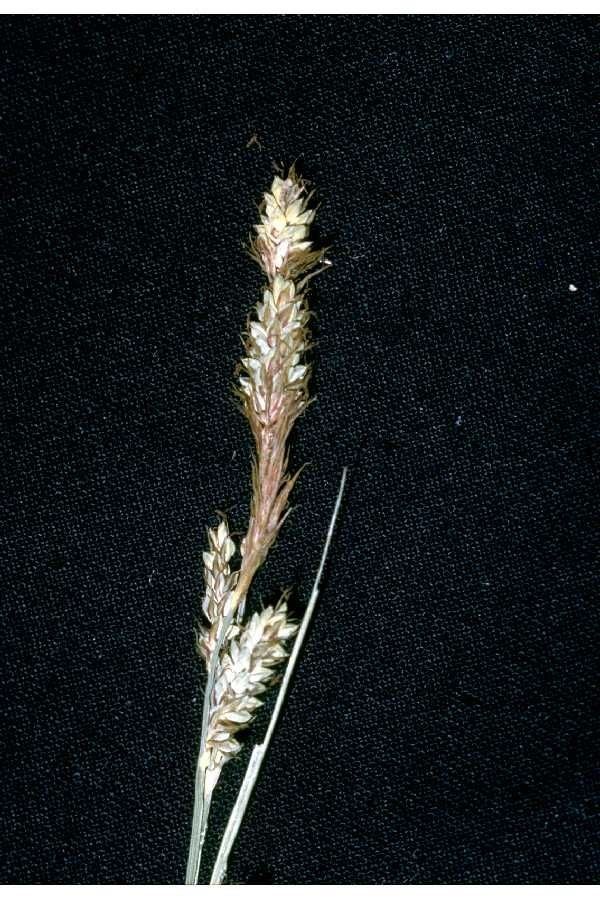
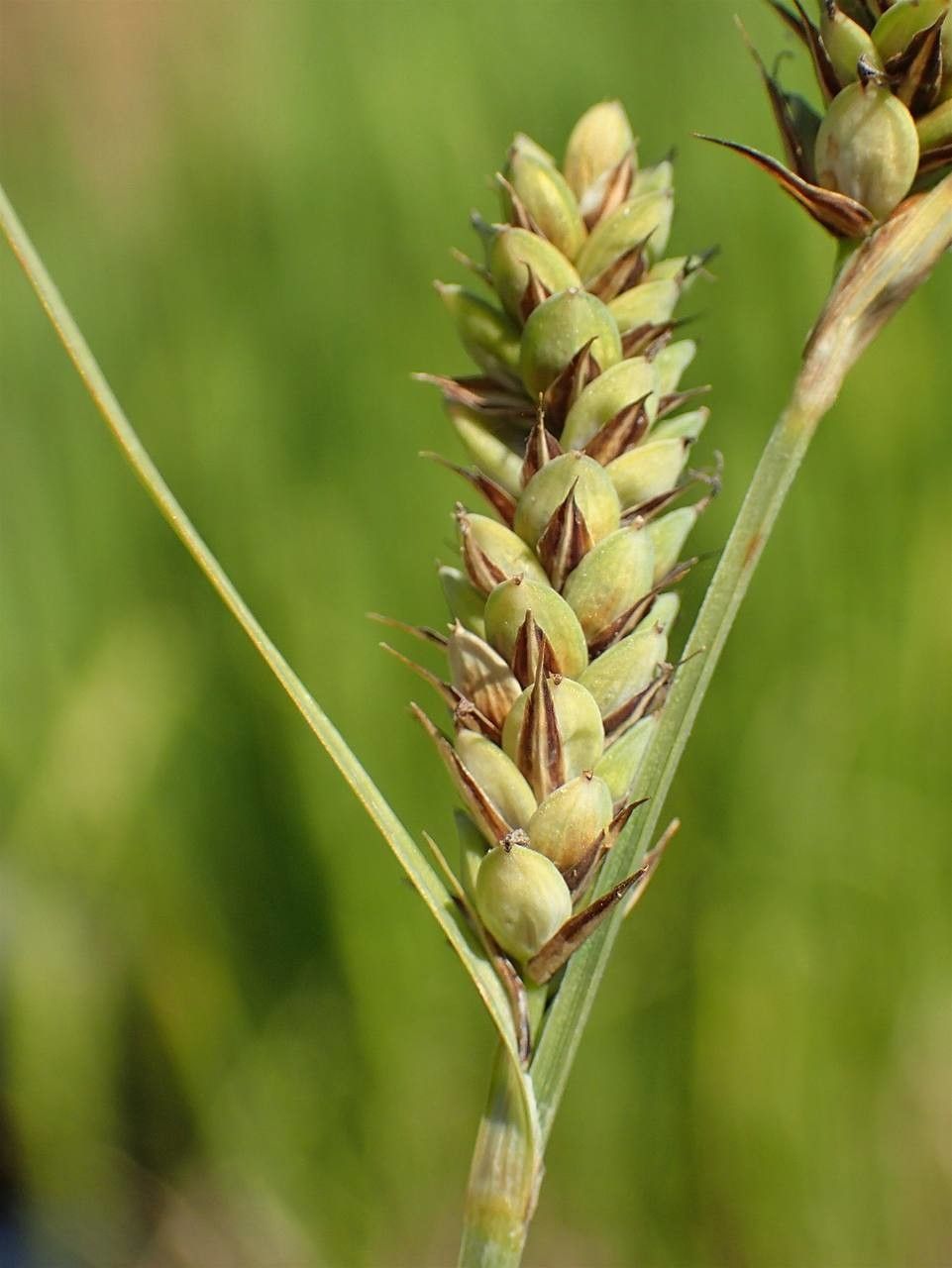
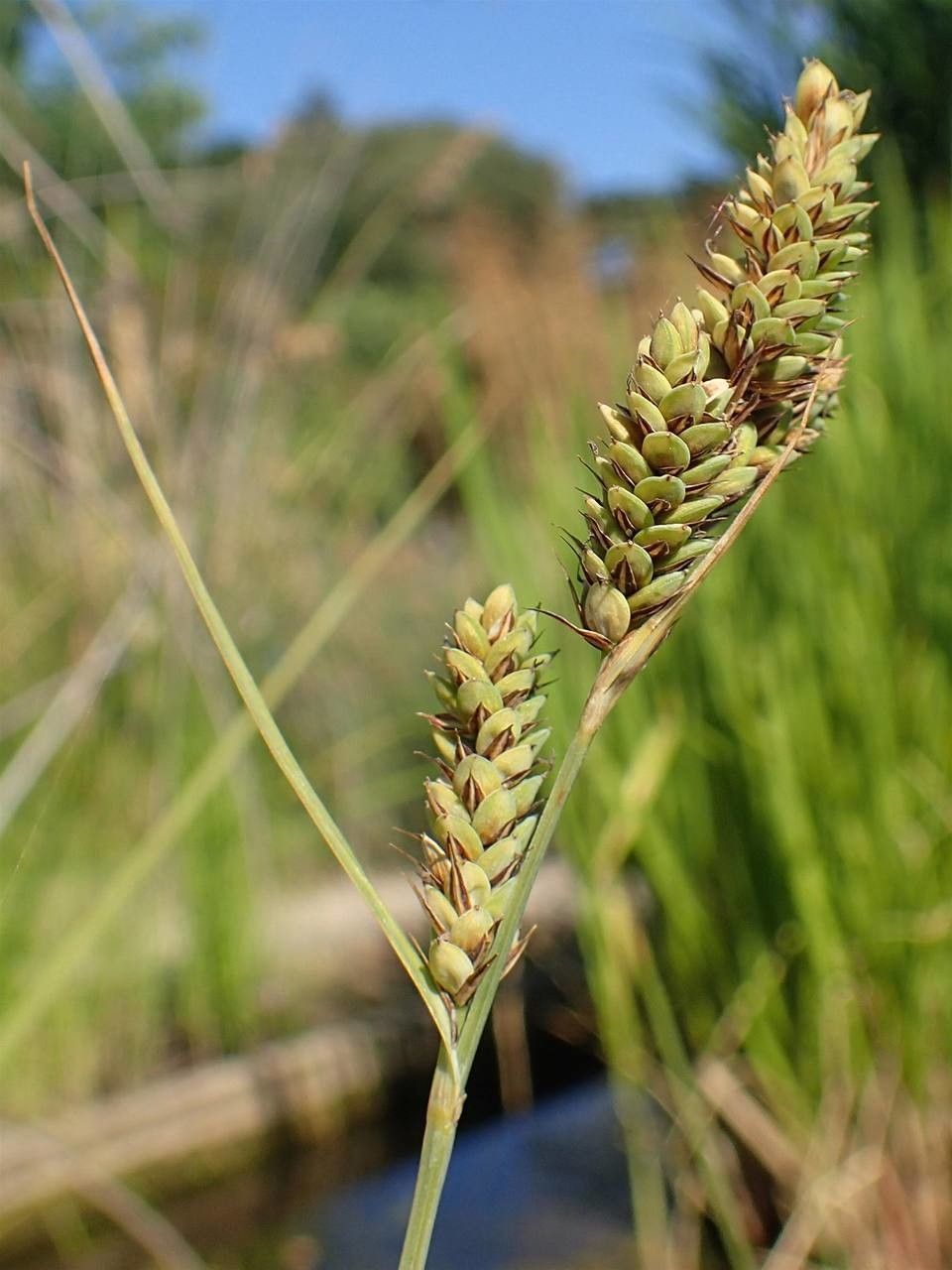
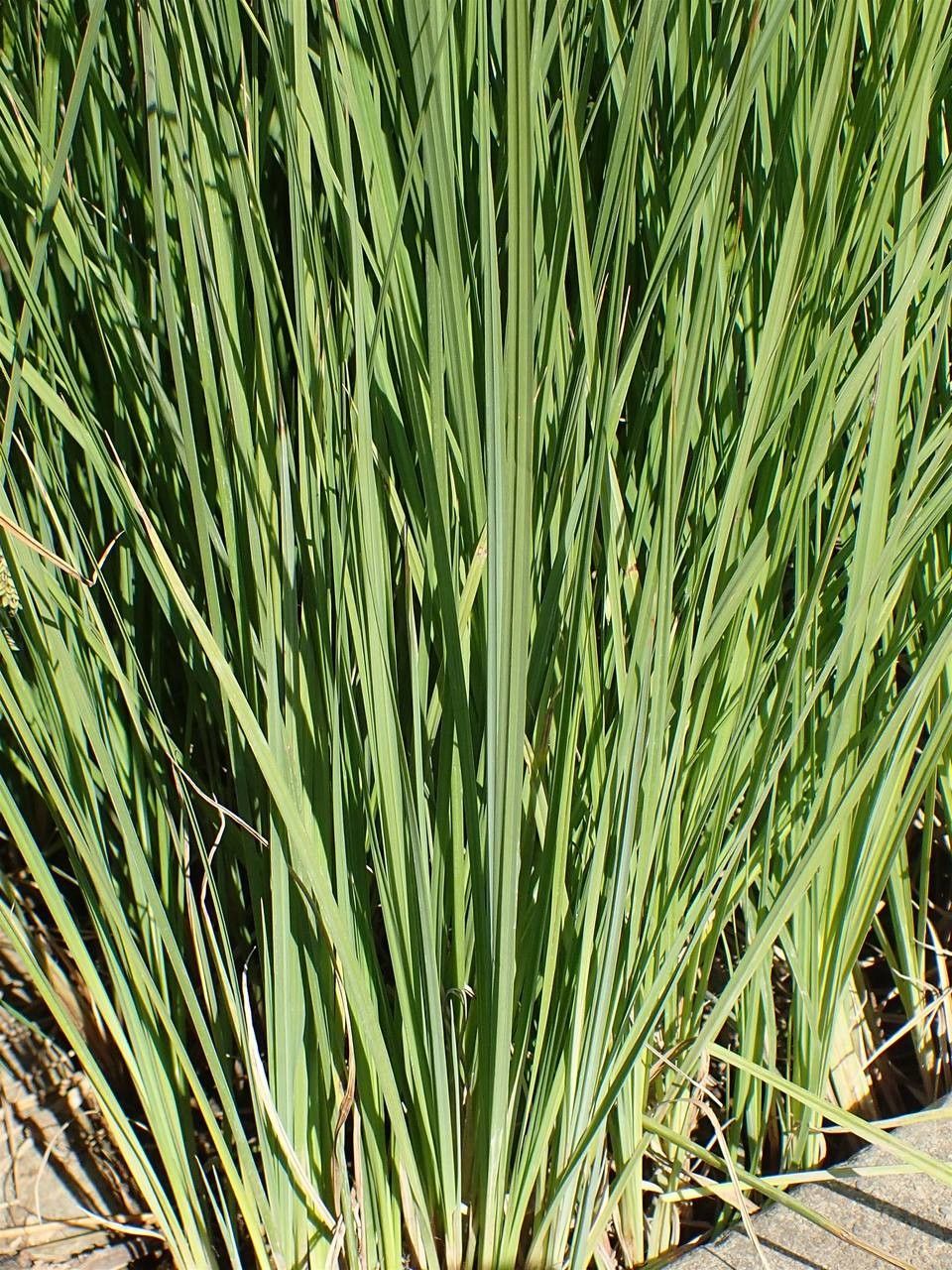
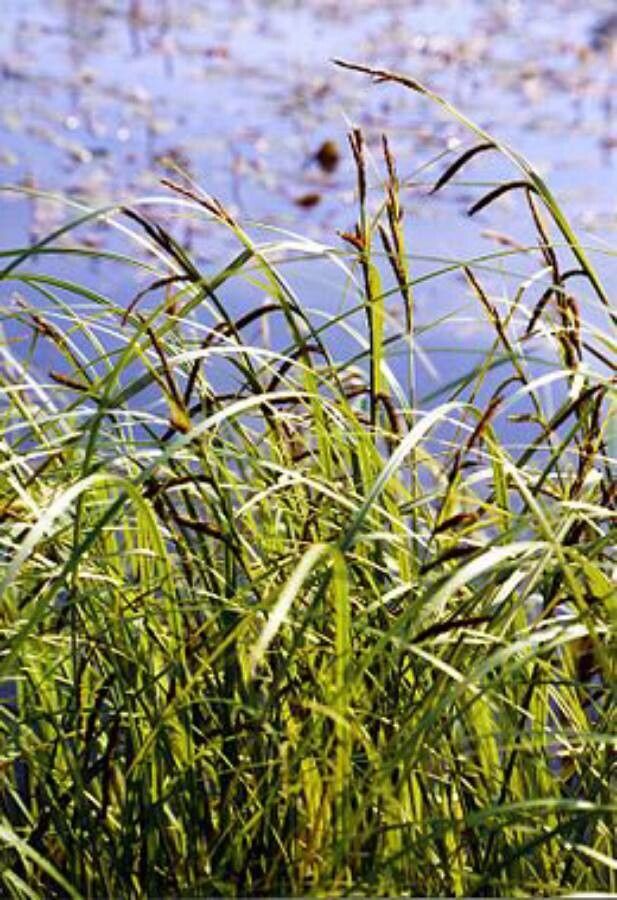
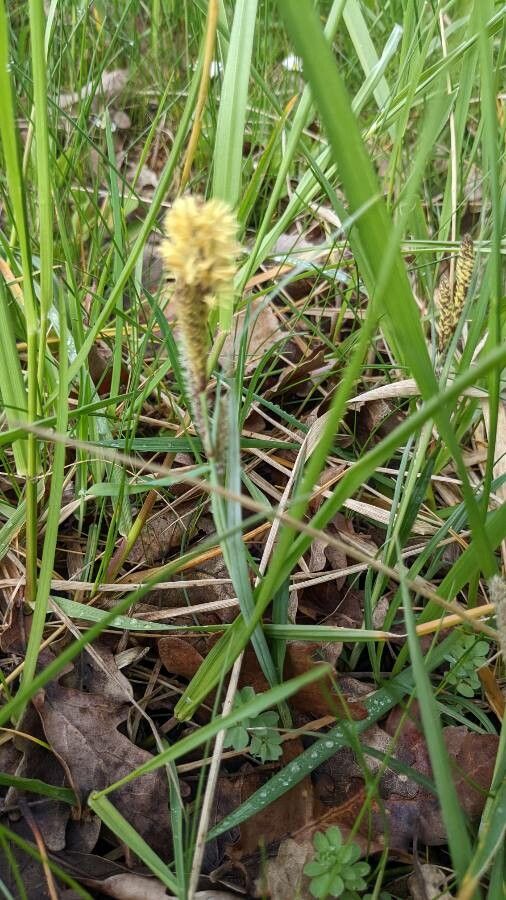
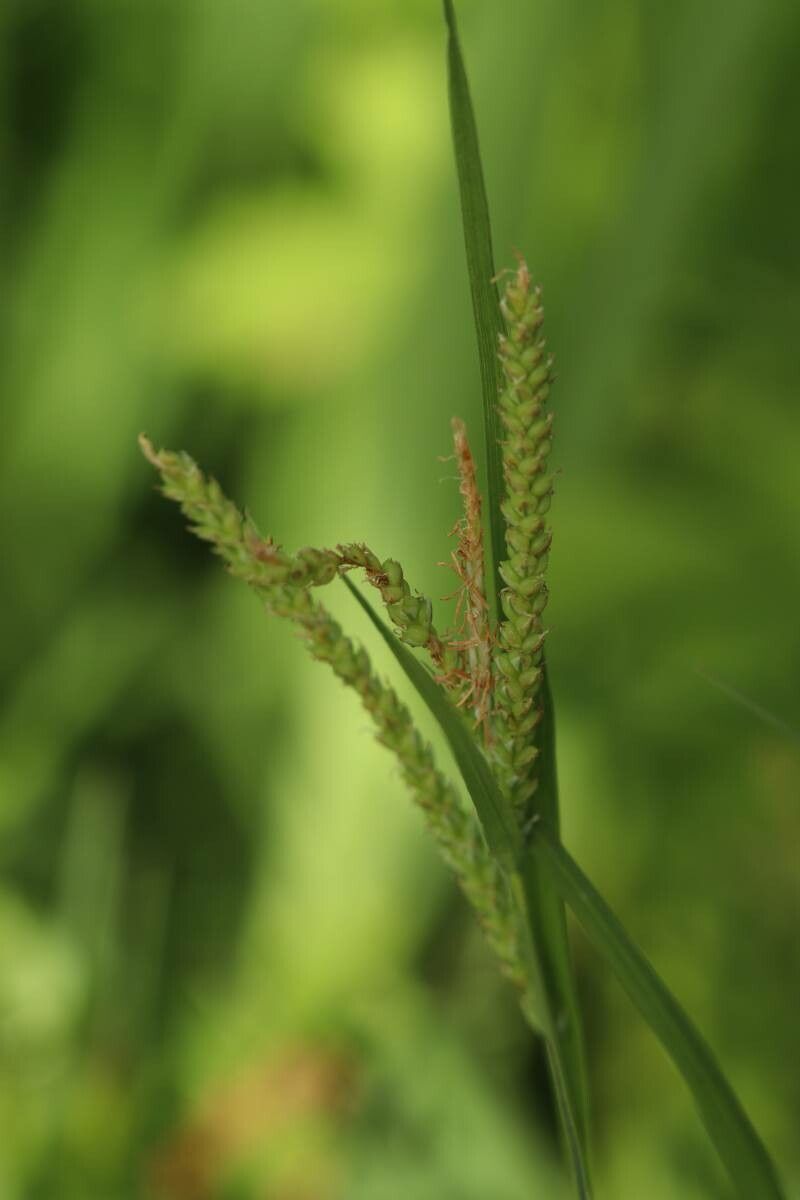
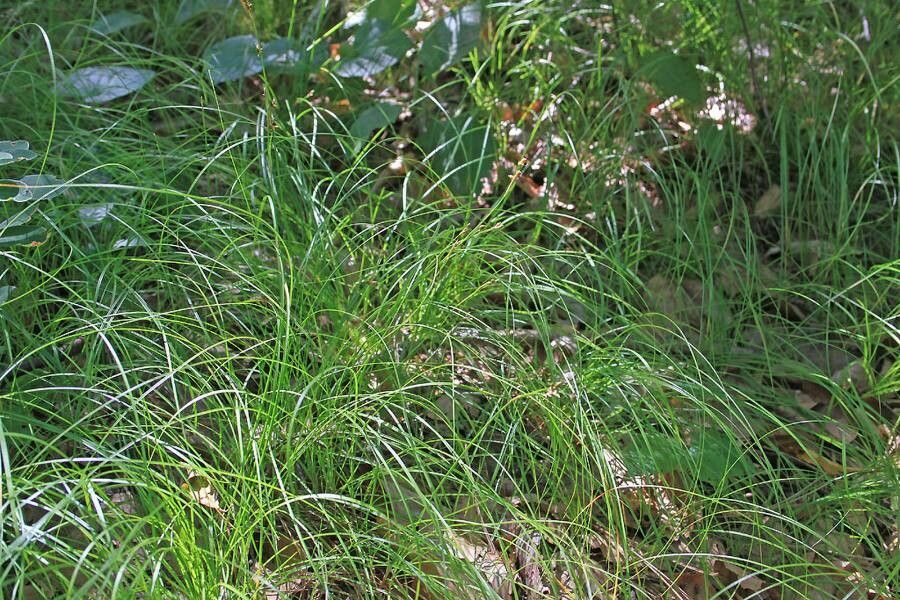
Carex buxbaumii is a species of sedge known as Buxbaum's sedge or club sedge. It is native to much of the northern Northern Hemisphere, from Alaska to Greenland to Eurasia, and including most of Canada and the United States. It grows in wet habitat, such as marshes and fens. This sedge grows in clumps from long rhizomes. The stems are 75–100 cm (30–39 in) in maximum height. The leaves are narrow and small. The inflorescence has a bract which is sometimes longer than the spikes. The fruits have dark-colored bracts and a sac called a perigynium or utricle which is gray-green and rough in texture.
Buxbaum's sedge has strong disease resistance and is generally not likely to develop illnesses. It can, however, be vulnerable to pests and diseases present in its environment, but these problems are typically mild. Regarding maintenance, this plant requires moderate care. It should be pruned regularly to keep a tidy appearance and support healthy growth. Fertilizing can also encourage flowering. Buxbaum's sedge is appropriate for anyone with outdoor space, such as a garden or patio, and does not need a lot of plant-care experience. It may demand more attention when grown indoors.
How to keep Carex Buxbaumii.
Light
Buxbaum's sedge grows best in locations that receive uninterrupted sunlight for most of the day, though it can tolerate areas with slightly less sun. Coming from a habitat with high sunlight levels, insufficient light can stunt its growth, while excessive exposure may cause stress.
Water
Buxbaum's sedge, a plant native to wet meadows, thrives in consistently moist soil and requires regular watering, ideally on a weekly schedule. As an herbaceous perennial, it benefits from rainwater to support healthy growth during its active growing season.
Temperature
Buxbaum's sedge can tolerate a wide range of temperatures, but its distribution may still be restricted by different combinations of moisture and heat. It does best in warm summer conditions with sufficient rainfall or irrigation. Extended periods of cloudy, rainy weather or prolonged high temperatures can raise the chance that Buxbaum's sedge will die. In winter, adequate protection from cold can increase the plant's survival rate.
Fertilizer
One spring application of fertilizer is generally enough for Buxbaum's sedge, though repeated feedings can boost growth. Apply fertilizer every four to six weeks. Fertilization improves the leaves' appearance and function, helping maintain uniform color and a healthy texture. It also encourages root development and nutrient uptake, supporting the plant's long-term health.
Pruning
Buxbaum's sedge is a perennial plant that thrives in wet environments with minimal maintenance. To promote healthy growth, improve air circulation, and prevent disease, it is beneficial to prune the plant from early to late spring. This involves removing dead stems and thinning out clumps, which enhances the plant's vitality and aesthetic appearance.
Botanical profile.
- Plant Type
- Herb
- Life Cycle
- Perennial
- Genus
- Carex
- Family
- Cyperaceae
- Hardiness Zone
- 3-9
- Mature Height
- 25 cm to 76 cm
- Mature Spread
- 20 cm to 40 cm
- Leaf Color
- Dark Green
- Leaf Type
- Semi-evergreen
- Flower Color
- White, Yellow, Brown
- Flower Size
- 0.20 cm to 0.51 cm
- Bloom Time
- Mid spring, Late spring
- Planting Time
- Spring, Summer
- Harvest Time
- Early summer, Mid summer
- Native Area
- Sweden, Austria, Czech Republic, Slovakia, Bulgaria, Poland, Slovenia, Belarus, Ukraine, Russia, Lithuania, Norway, Germany, Italy, Kazakhstan, Switzerland, Denmark, Iceland, Venezuela, Estonia, Japan, France, Finland, Ireland, United Kingdom, Romania, Latvia, Netherlands
Other names.
Reader questions.
What are the sunlight requirements for Buxbaum's sedge?
Buxbaum's sedge requires full sun, with over 6 hours of sunlight daily, to thrive but can also adapt to partial sun, receiving about 3 to 6 hours of sunlight. It's essential to observe your garden's sunlight patterns to find the ideal balance of light and shade that ensures the plant's well-being.
What is Buxbaum's sedge?
Buxbaum's sedge, known botanically as Carex buxbaumii, is a type of sedge. Unfortunately, there is no further detailed information provided regarding its characteristics, habitat, or any specific uses it may have.
What happens if Buxbaum's sedge does not receive adequate sunlight?
When Buxbaum's sedge doesn't receive enough sunlight, its growth can be stunted, and in cases of excessive sunlight, the plant may experience distress. It originates from environments with substantial sunlight exposure, highlighting the importance of proper sunlight for its optimal growth. Indoor plants, in particular, might require artificial lighting to compensate for inadequate natural sunlight.
How can artificial lighting help Buxbaum's sedge grow indoors?
Artificial lighting serves as an essential solution for Buxbaum's sedge when natural sunlight is insufficient, especially during winter or in less sunny spaces. LED lights are recommended for their ability to provide specific light wavelengths needed by plants. For full sun plants, 30-50W/sq ft of artificial light is needed, partial sun plants require 20-30W/sq ft, and full shade plants need 10-20W/sq ft. The light source should be placed 12-36 inches above the plant and be kept on for 8-12 hours per day to mimic natural sunlight conditions.
What are the symptoms of inadequate lighting for Buxbaum's sedge?
Symptoms of inadequate lighting in Buxbaum's sedge include smaller new leaves, leggy or sparse growth, faster leaf drop, slower or no growth, lighter-colored new leaves, chlorosis, sunscald, leaf curling, wilting, and leaf scorching. These symptoms reflect the plant's struggle to adapt to poor light conditions, underscoring the need for sufficient sunlight or artificial lighting solutions.
What solutions are available to address insufficient sunlight for Buxbaum's sedge?
To counter insufficient sunlight for Buxbaum's sedge, gradually acclimate plants to sunnier locations for at least 6 hours of direct sunlight daily, especially for indoor plants which can be further aided with artificial light. For outdoor plants, avoid abrupt changes in sunlight exposure to prevent sunburn. Pruning any obstructions and considering transplanting during the plant's dormant period can also significantly improve sunlight access. It's crucial to remember that while affected parts may not recover, new growth will be healthy with improved light conditions.