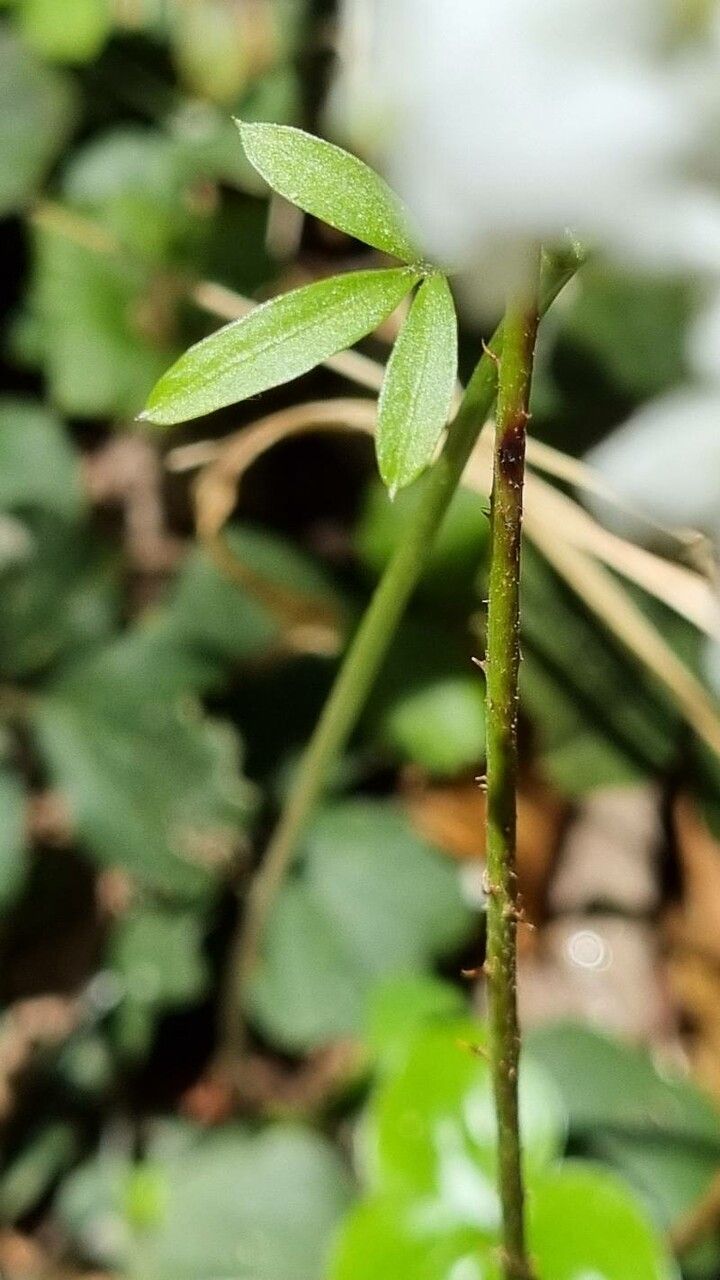
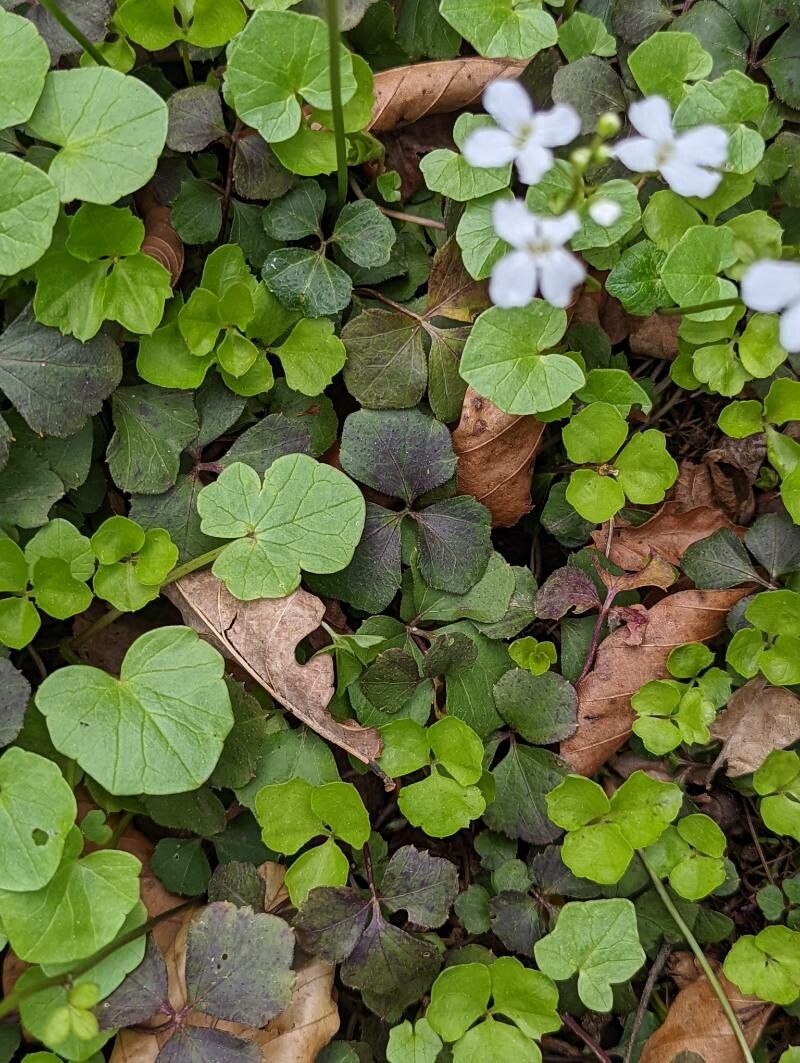
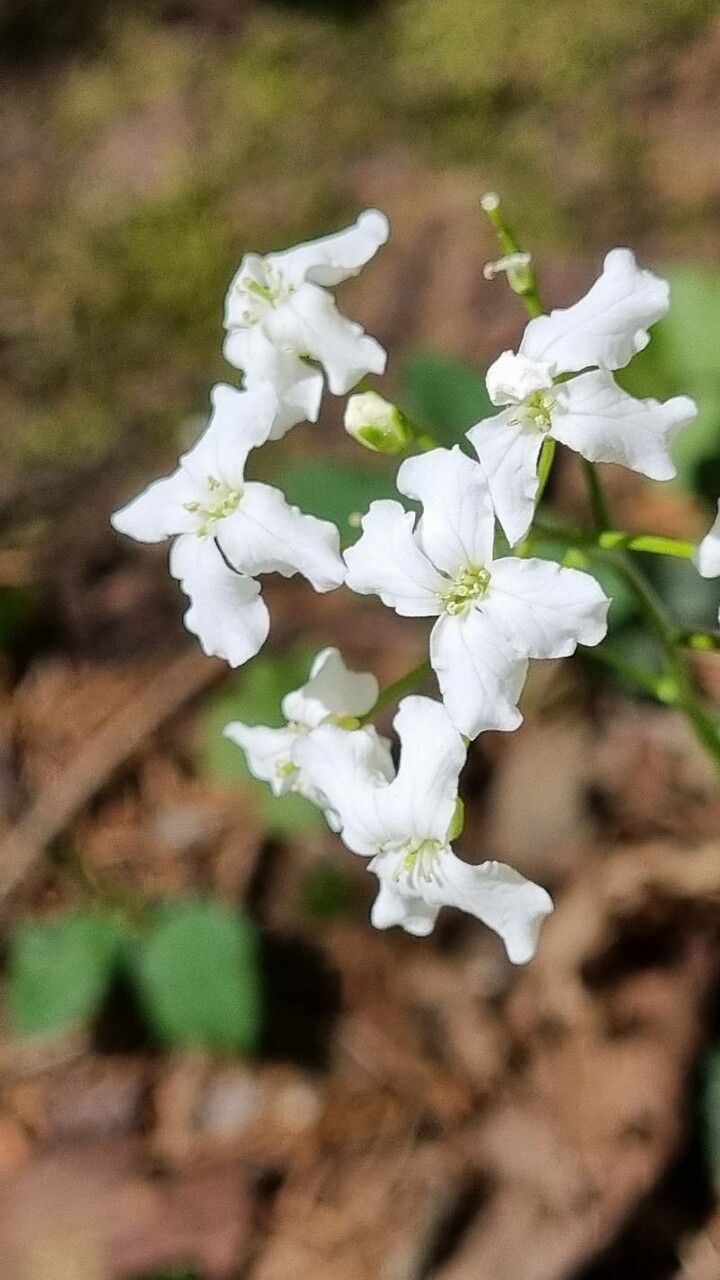
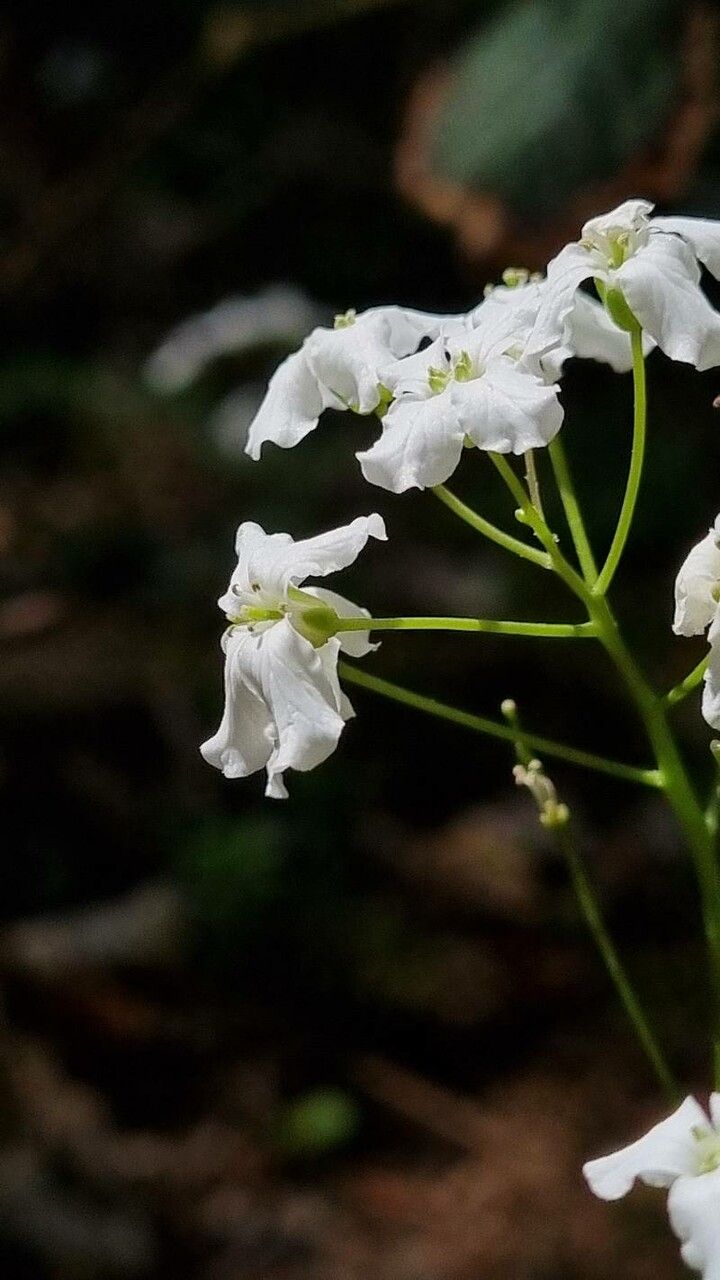
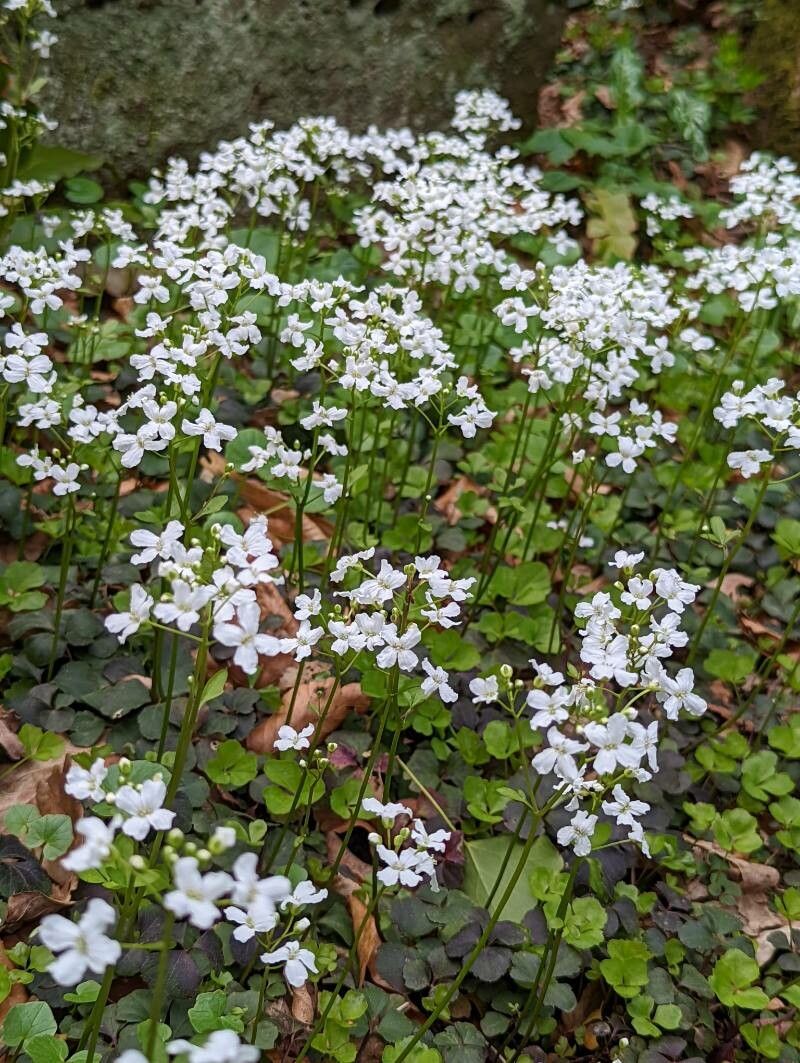
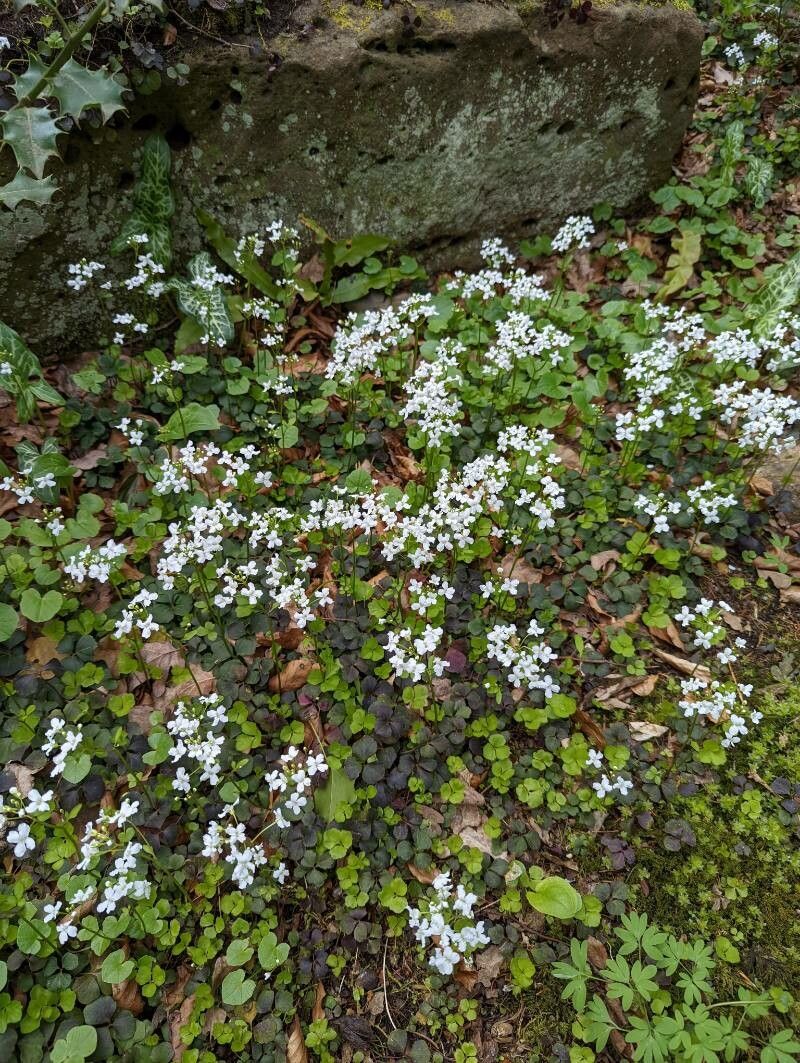
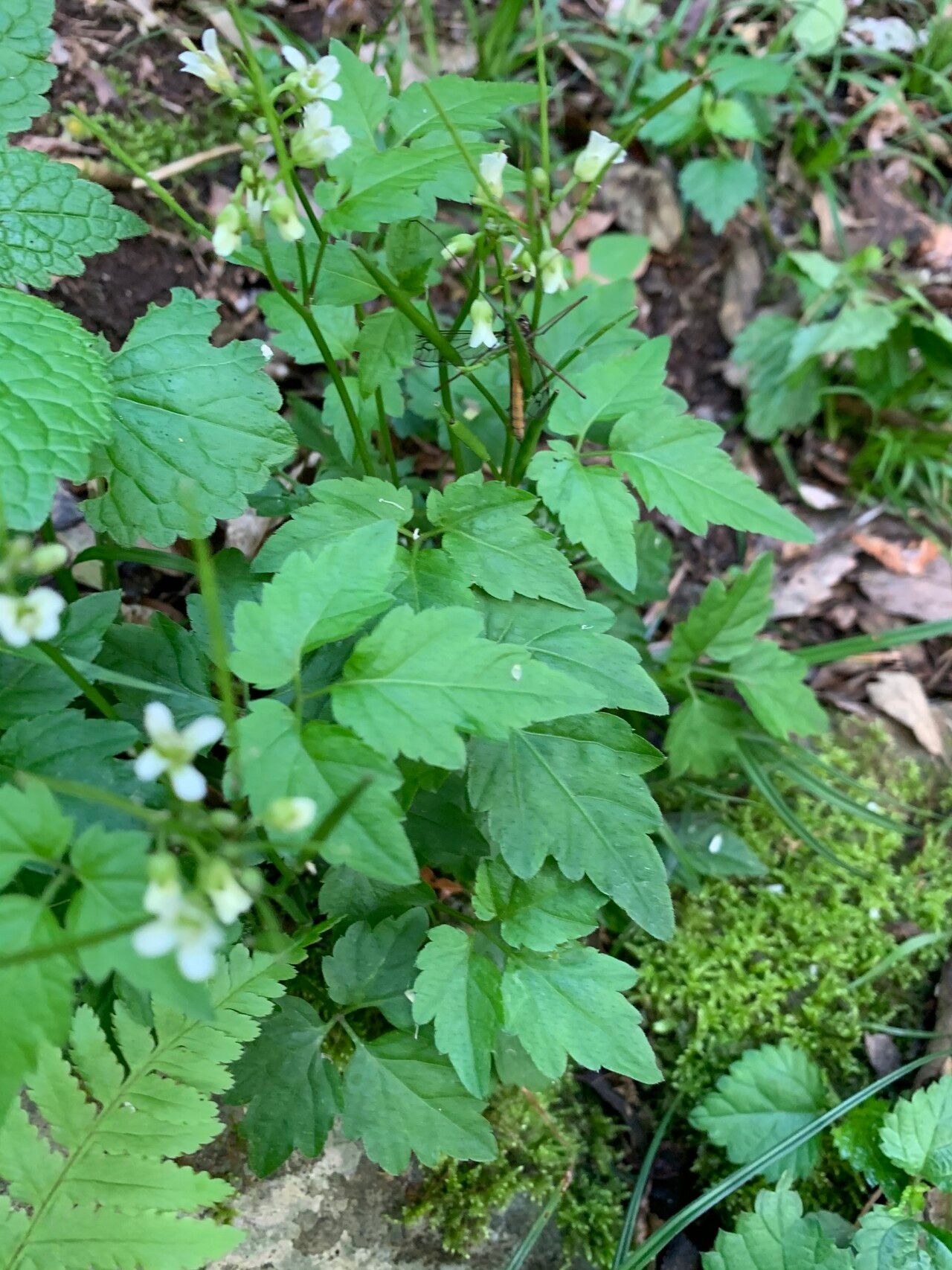
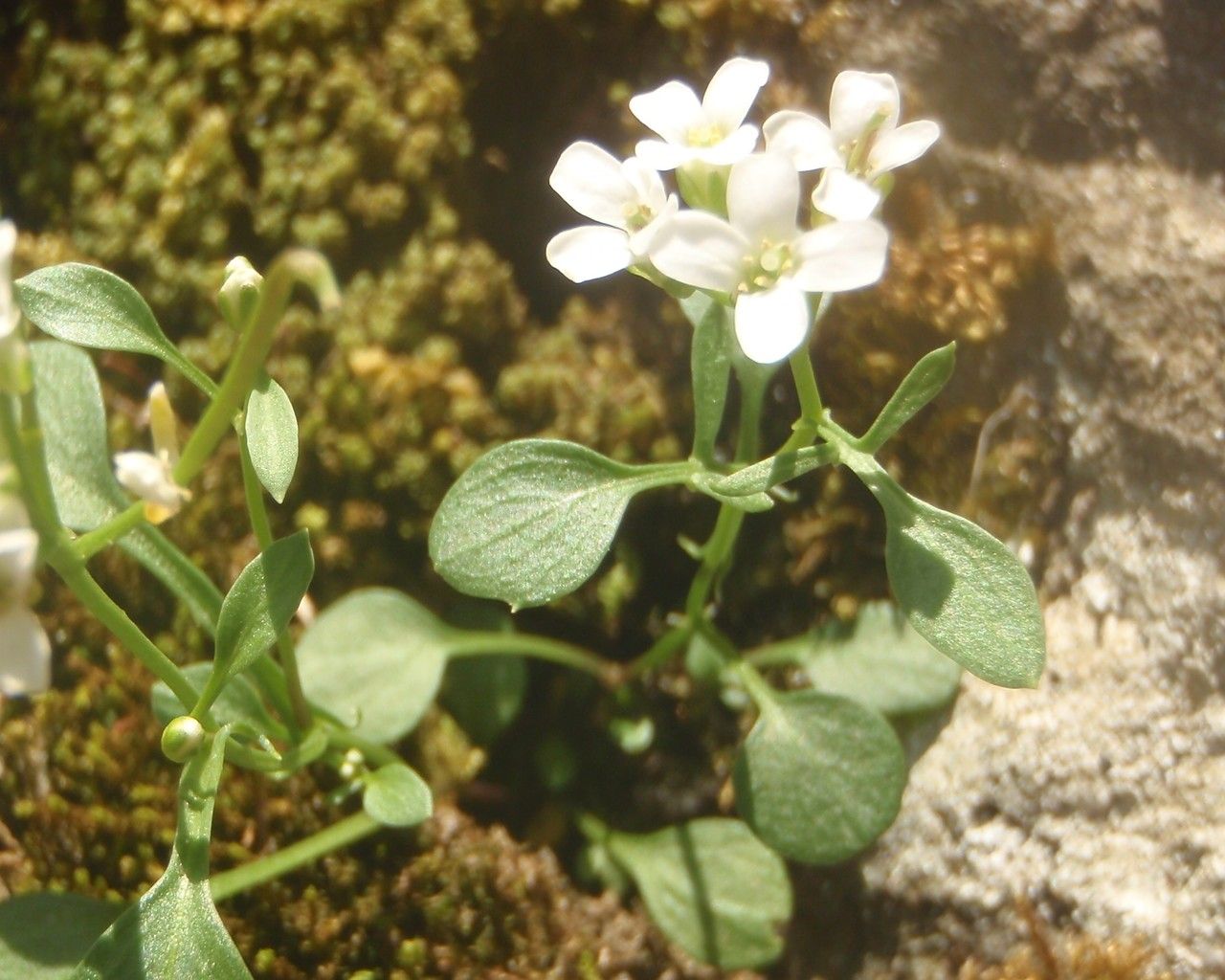
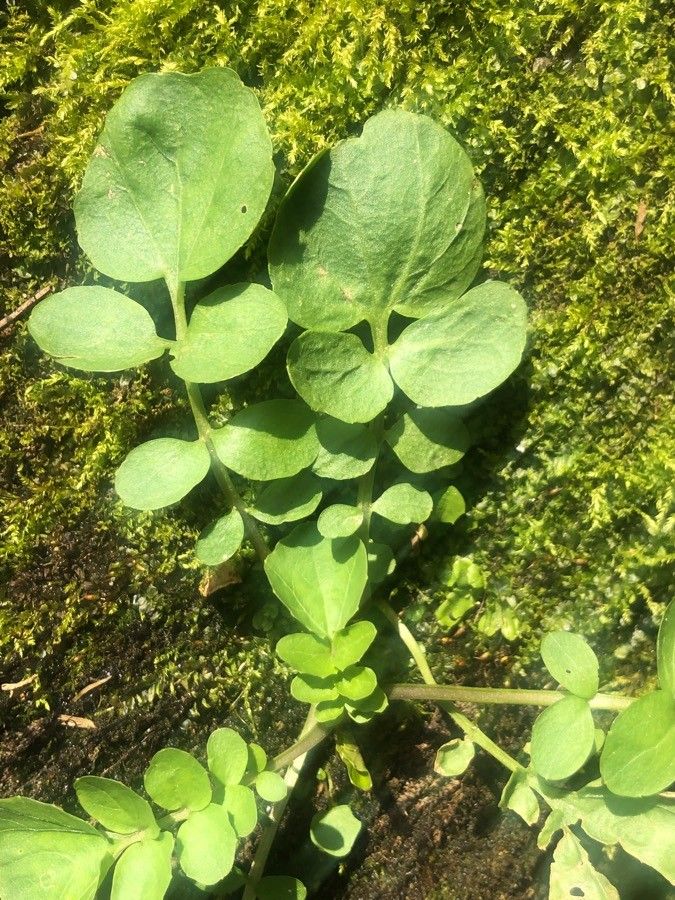
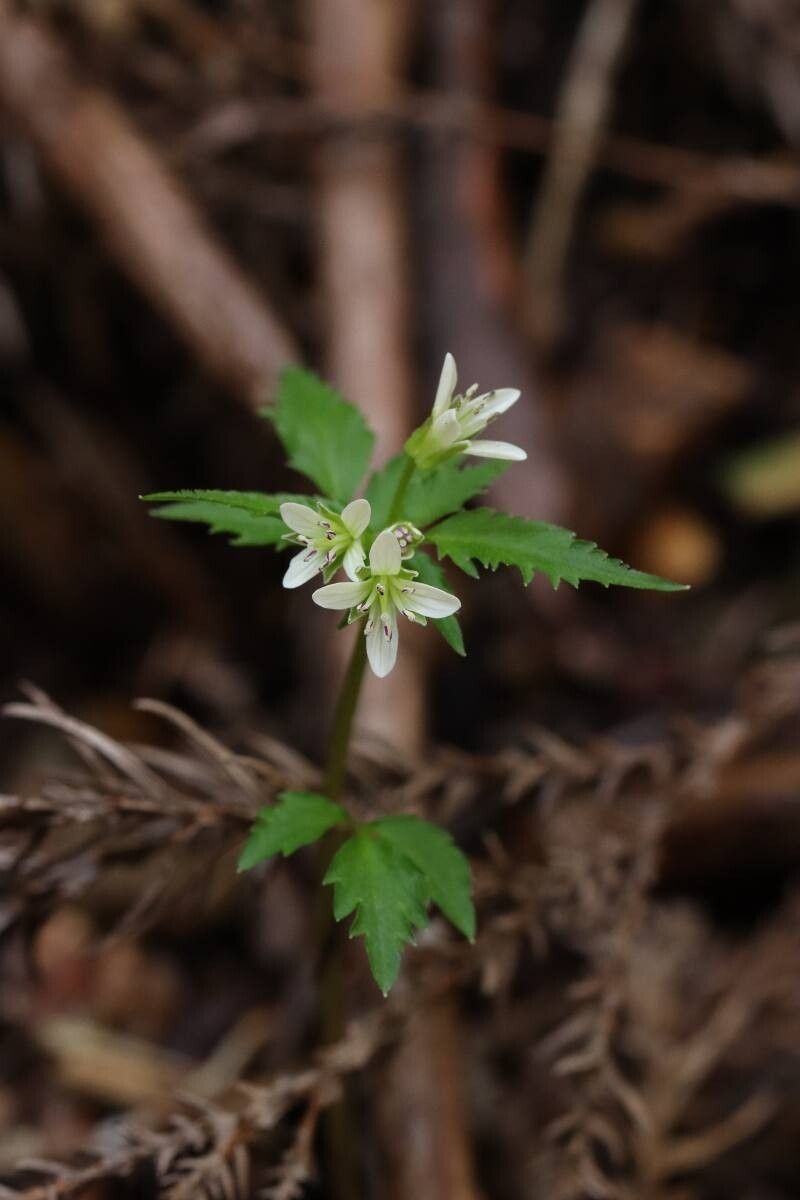
Cardamine trifolia, the trefoil cress, trifoliate bittercress, or three-leaved cuckoo flower, is a species of flowering plant in the family Brassicaceae. It is native to central and southern Europe, and has been introduced to Great Britain. It appears to have survived in several glacial refugia in the Alps, the western Carpathians and Dinaric Alps from where it spread to nearby area. A creeping perennial, in the garden it is recommended as a ground cover in shady areas.
Trefoil cress is fairly disease-resistant and generally does not develop illnesses. Nevertheless, it can be vulnerable to pests and diseases present nearby. Such infections tend to be mild. Regarding care, this plant needs moderate maintenance. It should be pruned on a regular basis to preserve a neat appearance and support healthy growth. Fertilizing can also help encourage flowering. Trefoil cress is appropriate for anyone with outdoor space, such as a garden or patio, and does not demand extensive experience in plant care. It may need additional attention when grown indoors.
How to keep Cardamine Trifolia.
Light
Trefoil cress originates in habitats such as forest understories or rocky areas, where it grows under natural shade. It prefers partial sun but can tolerate both full sun and full shade, demonstrating its versatile and hardy nature.
Water
Trefoil cress flourishes in moist, humid conditions and thrives in soil that is consistently damp but not waterlogged. To ensure optimal growth, it's important to water it weekly. Being an evergreen perennial, trefoil cress retains its foliage throughout the year. During the growing season, it needs careful watering to maintain its lush leaves.
Fertilizer
A single fertilizer application in spring is typically enough for Trefoil cress, though repeated feedings can boost growth. Feed once every month to a month and a half. Fertilization improves the leaves' appearance and function, helping maintain even color and a healthy texture. It also encourages root development and nutrient uptake for long-term plant health.
Pruning
To maintain the shape and health of trefoil cress, prune it from early to late spring. Remove any dead foliage and trim back leggy stems to encourage new growth. Regular pruning enhances air circulation, which helps prevent disease. Be sure to use clean, sharp tools, and avoid heavy pruning during the main growing season.
Botanical profile.
- Plant Type
- Herb
- Life Cycle
- Perennial
- Genus
- Cardamine
- Family
- Brassicaceae
- Hardiness Zone
- 4-8
- Mature Height
- 30 cm
- Mature Spread
- 30 cm
- Leaf Color
- Green
- Leaf Type
- Semi-evergreen
- Flower Color
- White
- Flower Size
- 1.02 cm to 1.52 cm
- Bloom Time
- Early spring, Mid spring
- Planting Time
- Spring, Summer
- Harvest Time
- Late spring, Early summer
- Native Area
- Russia, Germany, Austria, Italy, Switzerland, Czech Republic, Slovakia, Poland, Hungary, Croatia, Slovenia, Ukraine, France
Other names.