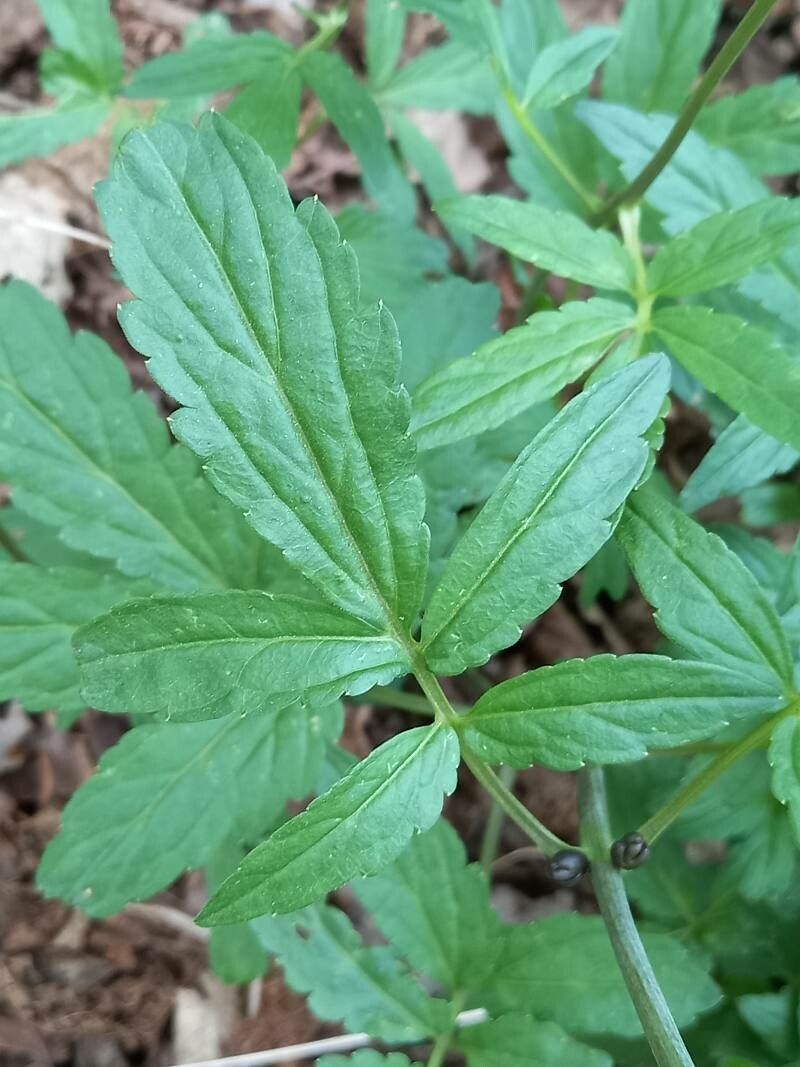
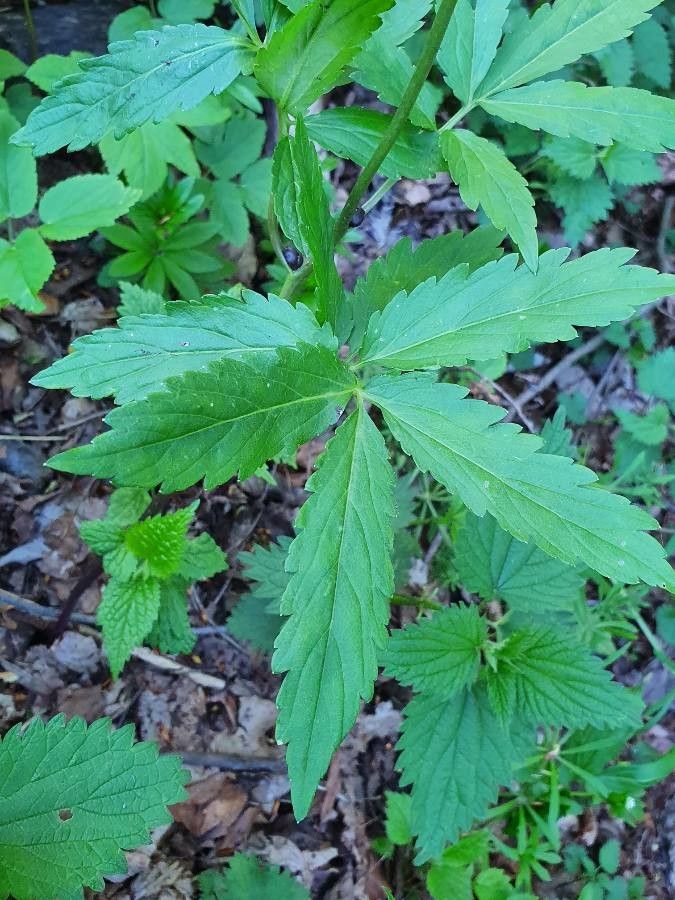
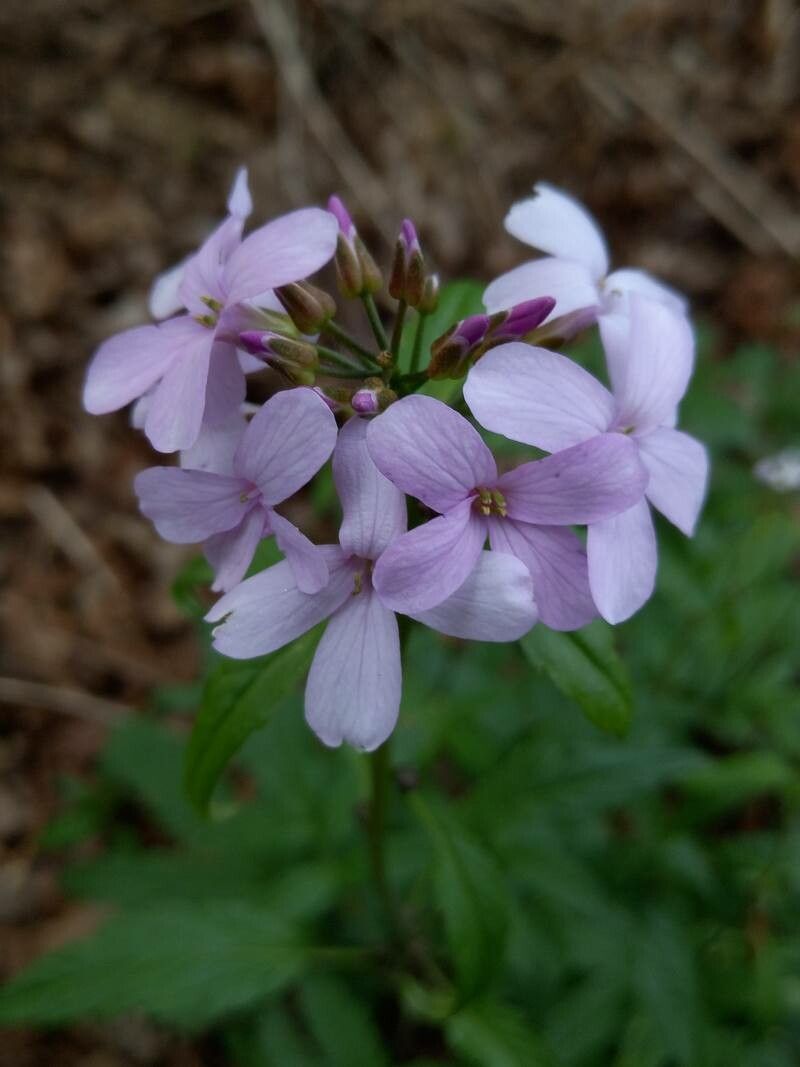
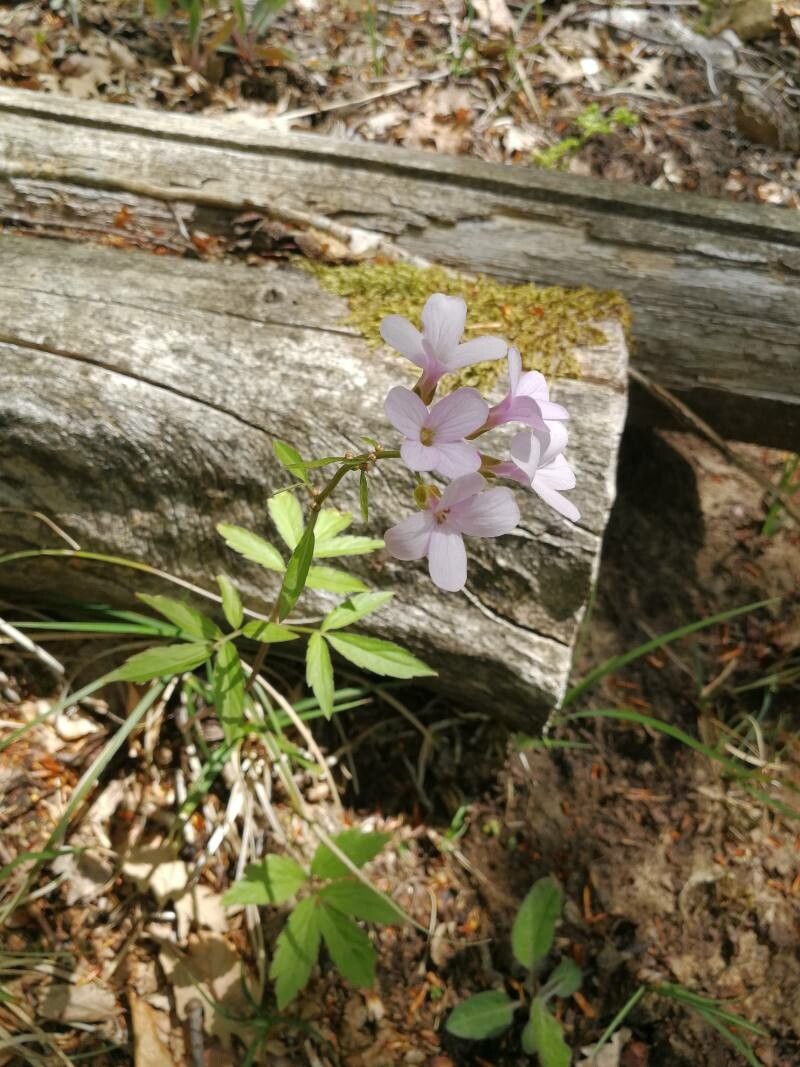
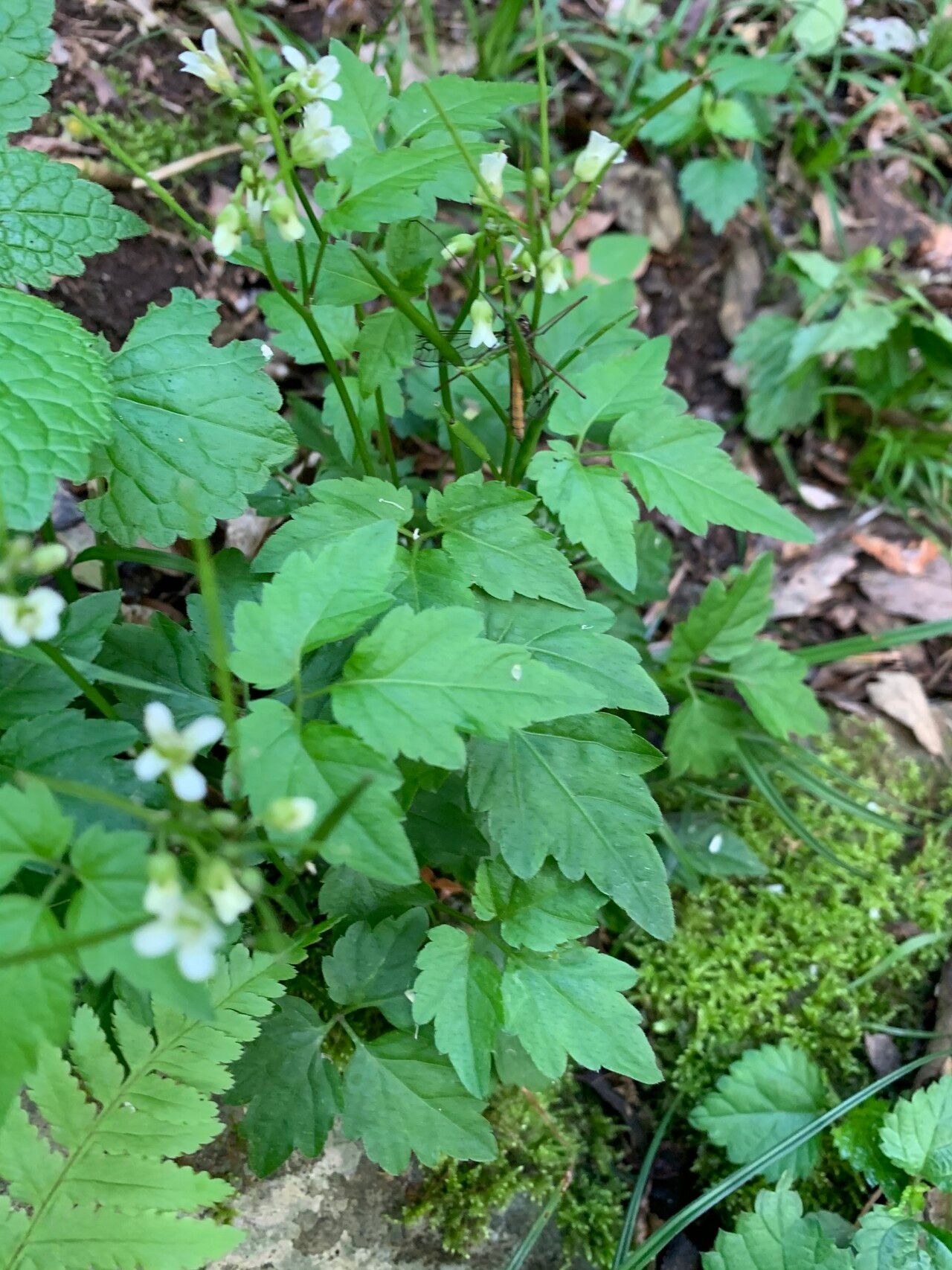
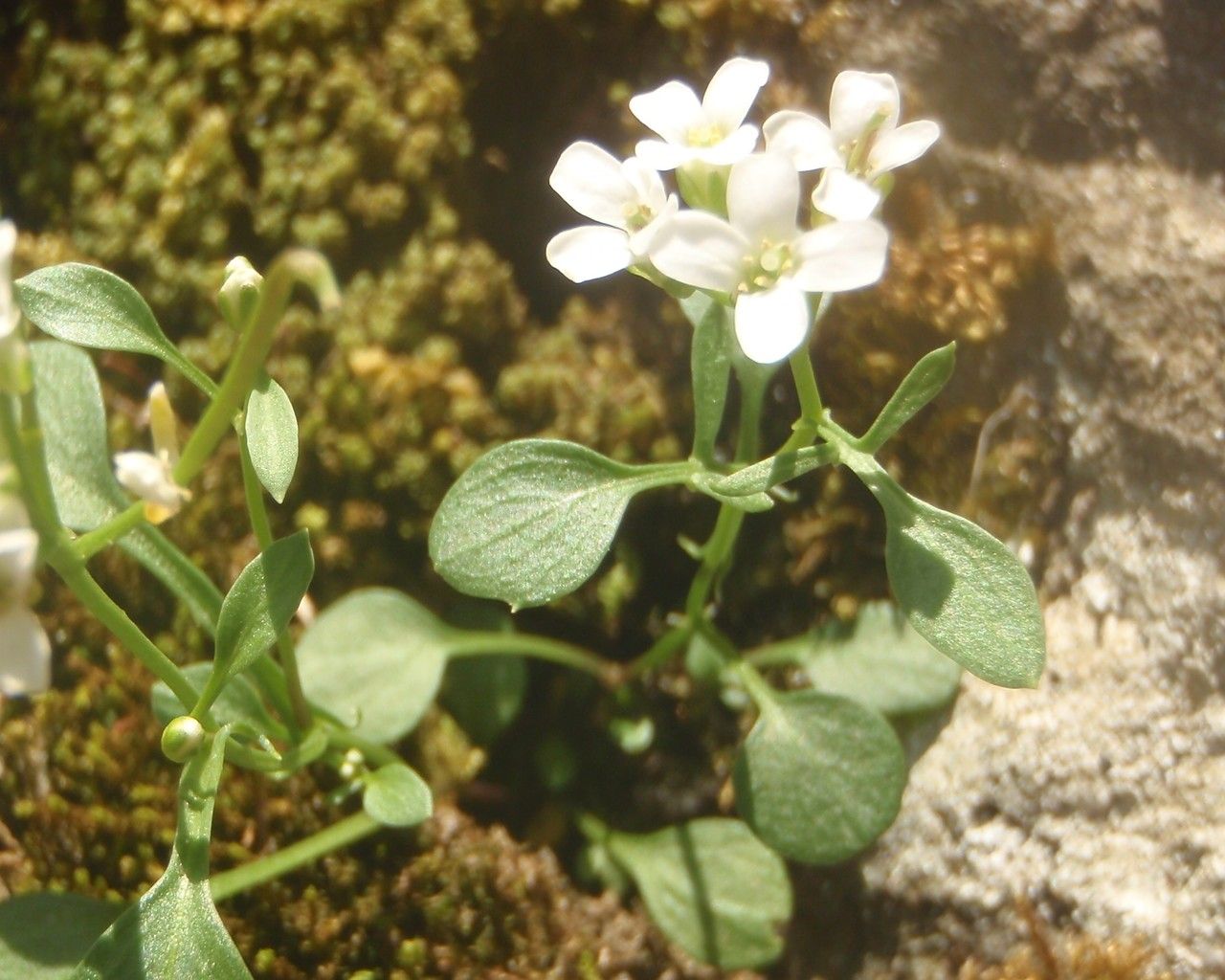
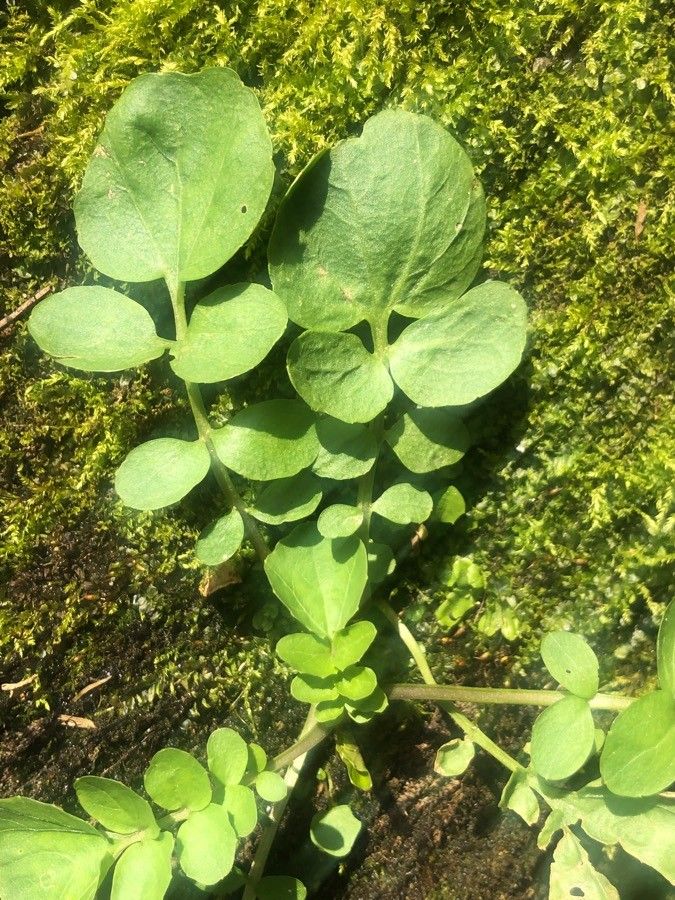
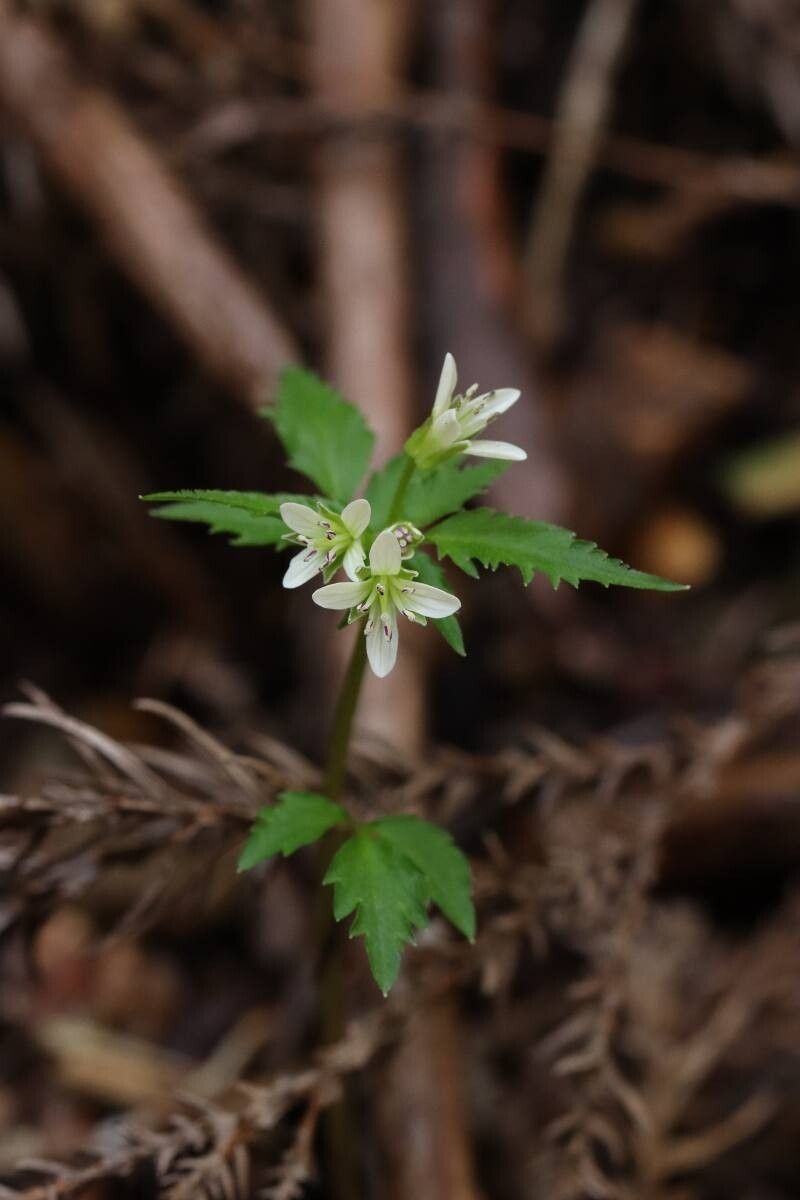
Cardamine bulbifera, commonly known as the bulb-bearing bittercress, is a perennial herbaceous plant belonging to the Brassicaceae family. Native to Europe and Asia, it has also been introduced and naturalized in North America. This plant can grow up to 60 cm tall and features a basal rosette of leaves, which are pinnately divided into 3 to 7 leaflets. From May to July, the stem produces small white or pink flowers in clusters at its top.
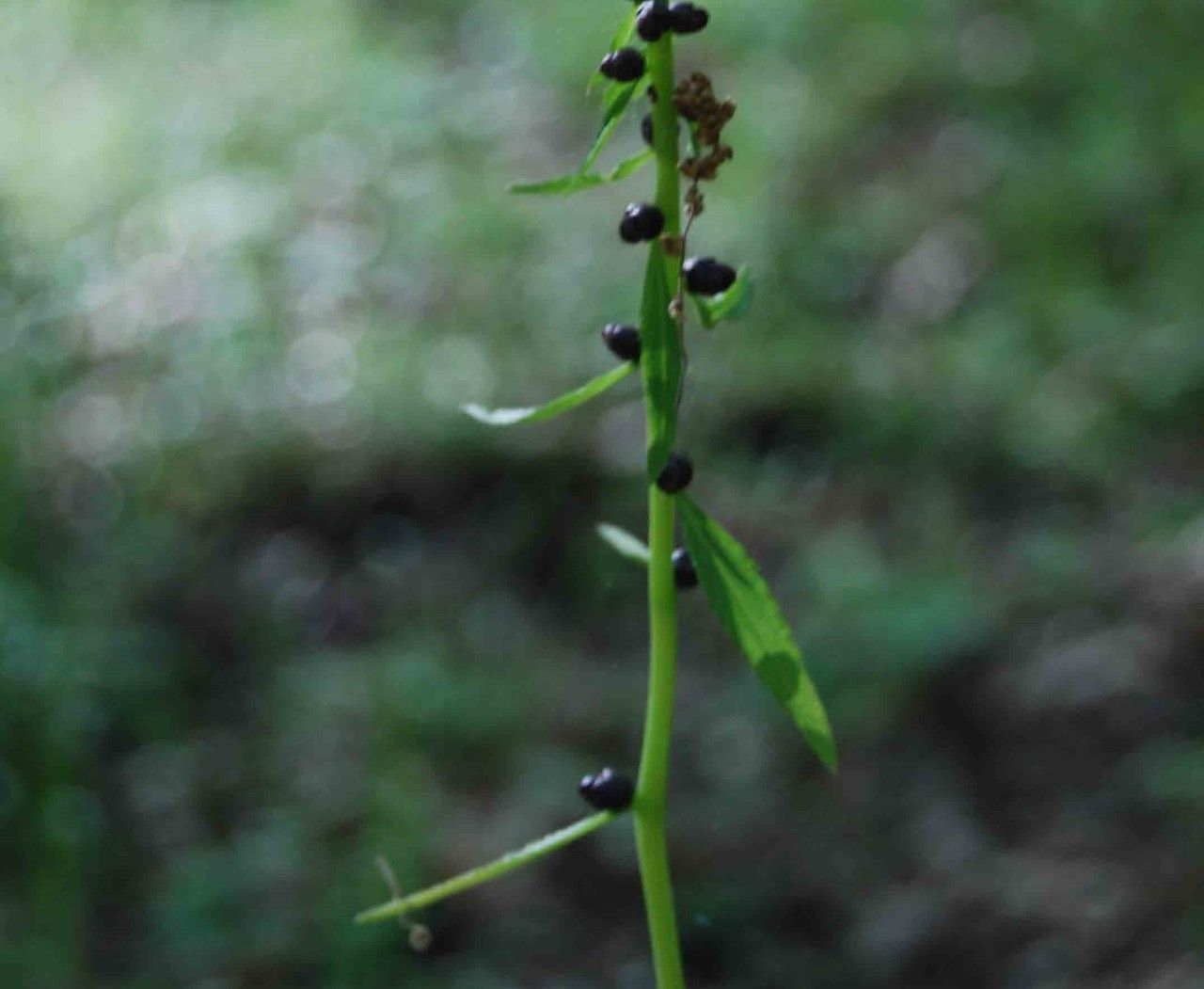
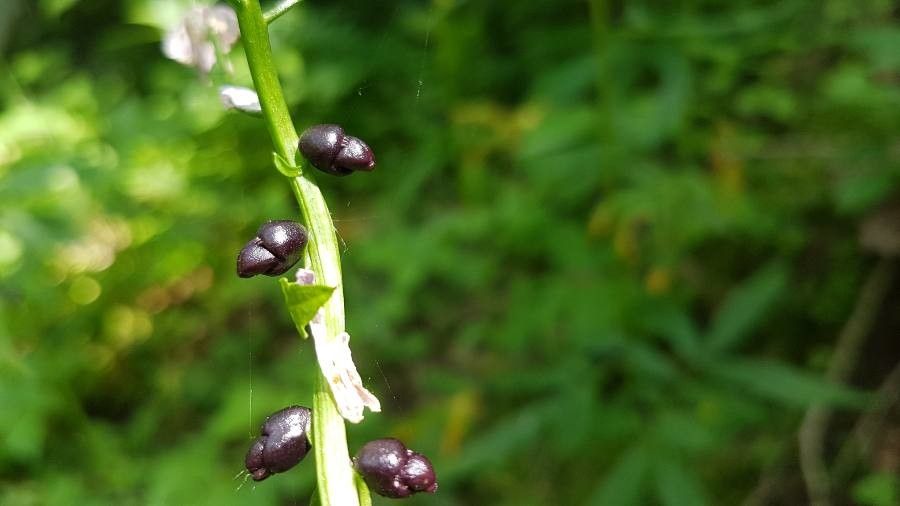
A unique characteristic of Cardamine bulbifera is its ability to produce small aerial bulbs on its stems. These bulbs can fall off and grow into new plants when they come into contact with soil or water, contributing to its reputation as an invasive species in some areas.
Cardamine bulbifera prefers moist soils, typically found along riverbanks, in wet meadows, ditches, or disturbed areas like roadsides and gardens. Additionally, it has been used for medicinal purposes, such as treating coughs and respiratory problems.
Overall, Cardamine bulbifera may interest botanists due to its unique reproductive strategy, but it can pose a threat if not properly managed, as it has the potential to become invasive in certain environments.
Botanical profile.
- Plant Type
- Herb
- Life Cycle
- Perennial
- Genus
- Cardamine
- Family
- Brassicaceae
- Hardiness Zone
- 4-8
- Mature Height
- 30 cm to 61 cm
- Mature Spread
- 30 cm
- Leaf Color
- Green
- Leaf Type
- Deciduous
- Flower Color
- Pink
- Flower Size
- 1.02 cm to 1.52 cm
- Bloom Time
- Early spring, Mid spring
- Planting Time
- Spring, Summer, Autumn
- Harvest Time
- Late spring, Early summer
- Native Area
- Turkey, Sweden, Austria, Slovakia, Croatia, Slovenia, Belarus, Russia, Germany, Estonia, Romania, Latvia, Belgium, Netherlands, France, Czech Republic, Bulgaria, Armenia, Poland, Greece, Ukraine, Serbia, Lithuania, Norway, Italy, Switzerland, Denmark, Finland, Iran, Albania, Azerbaijan, United Kingdom, Hungary
Other names.