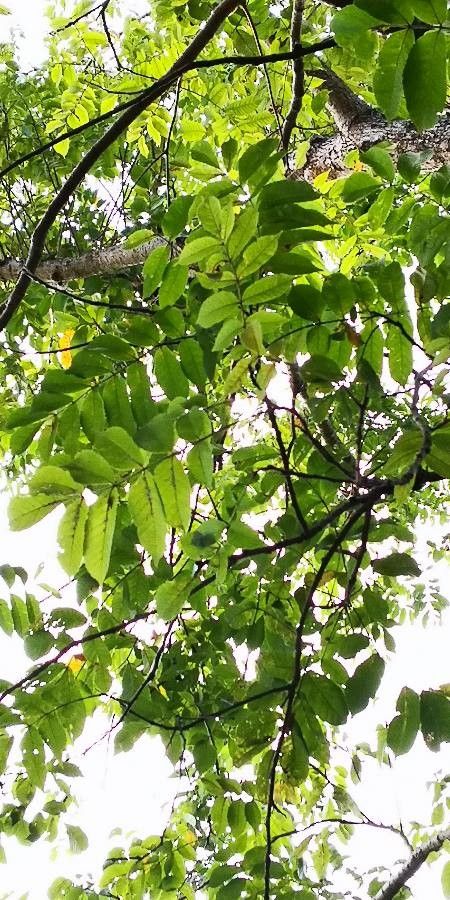
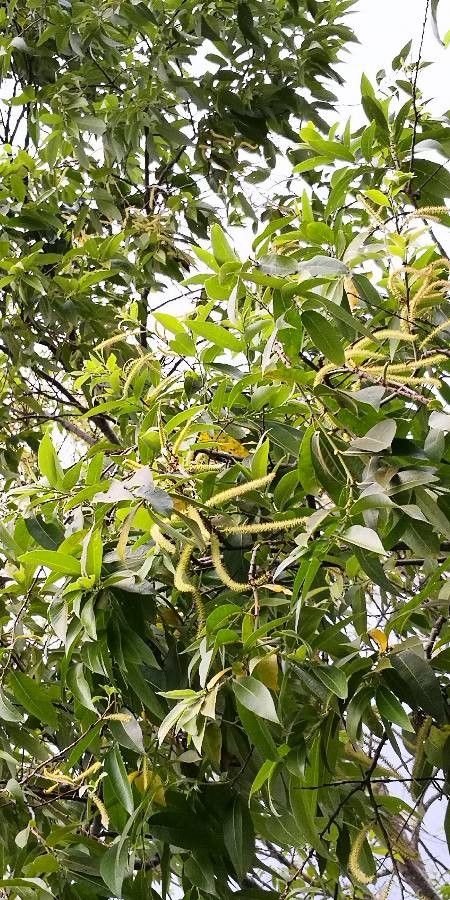
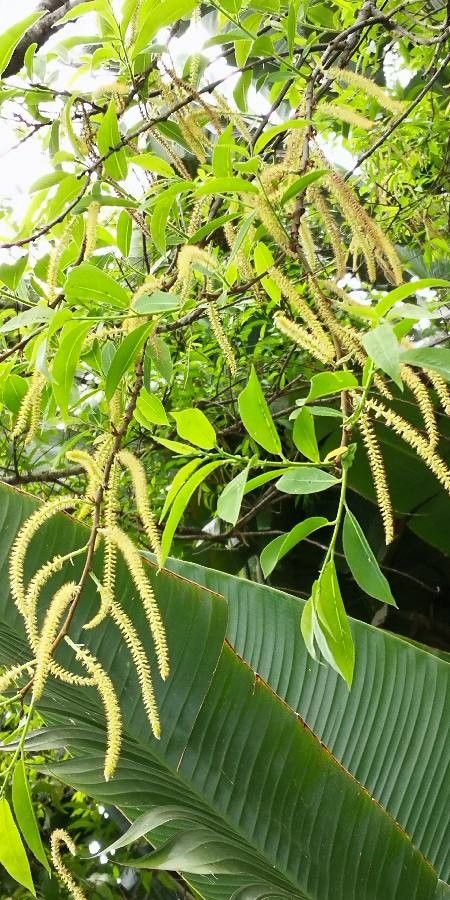
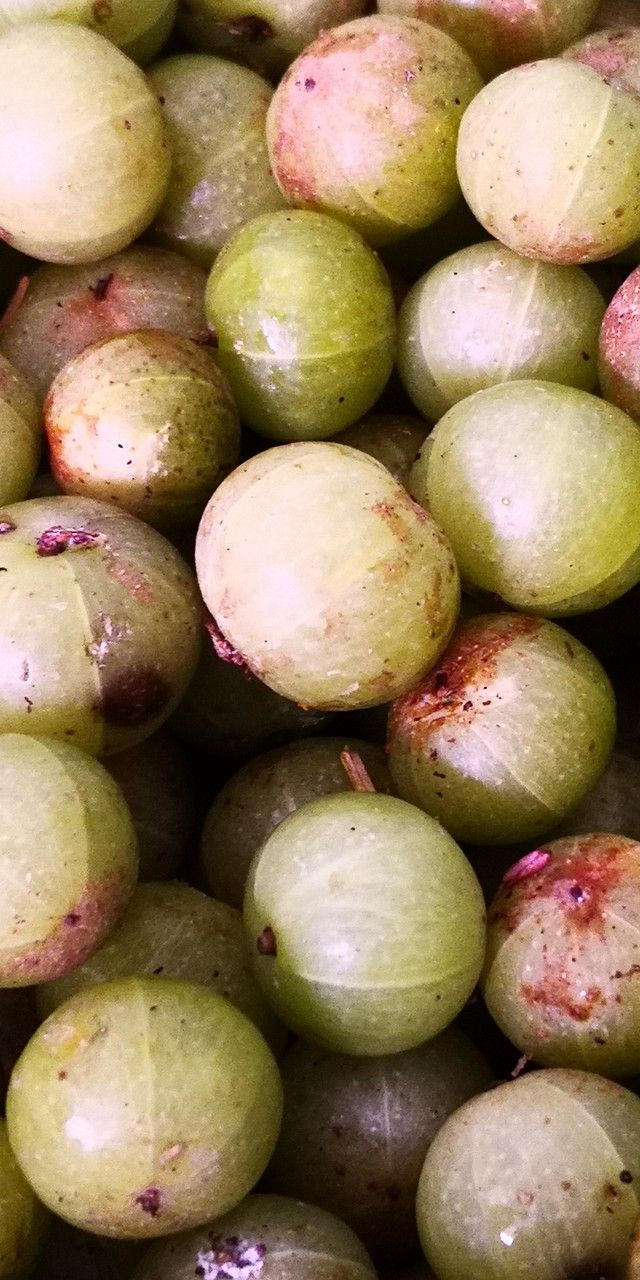
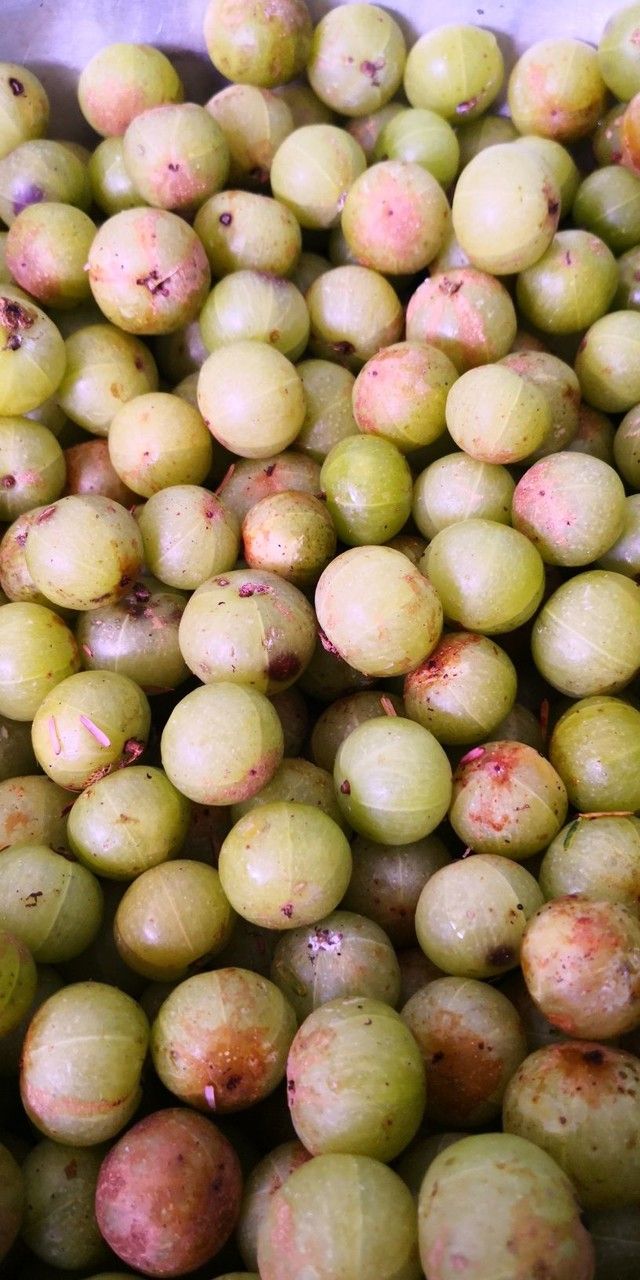
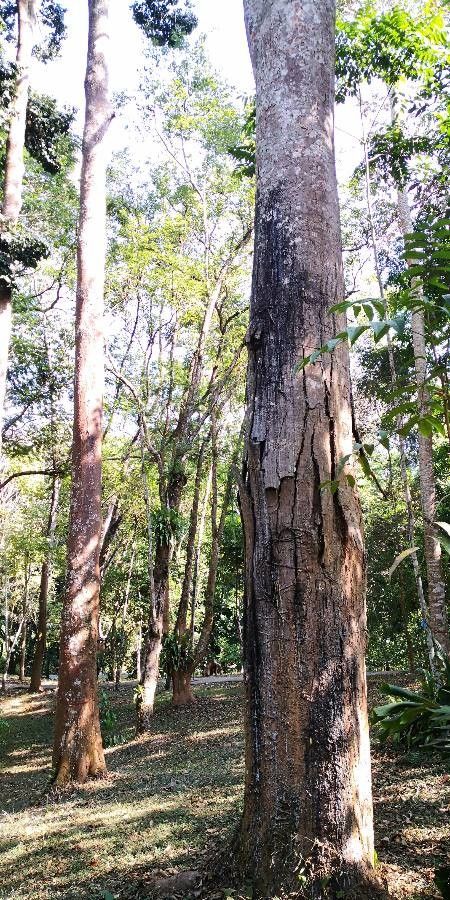
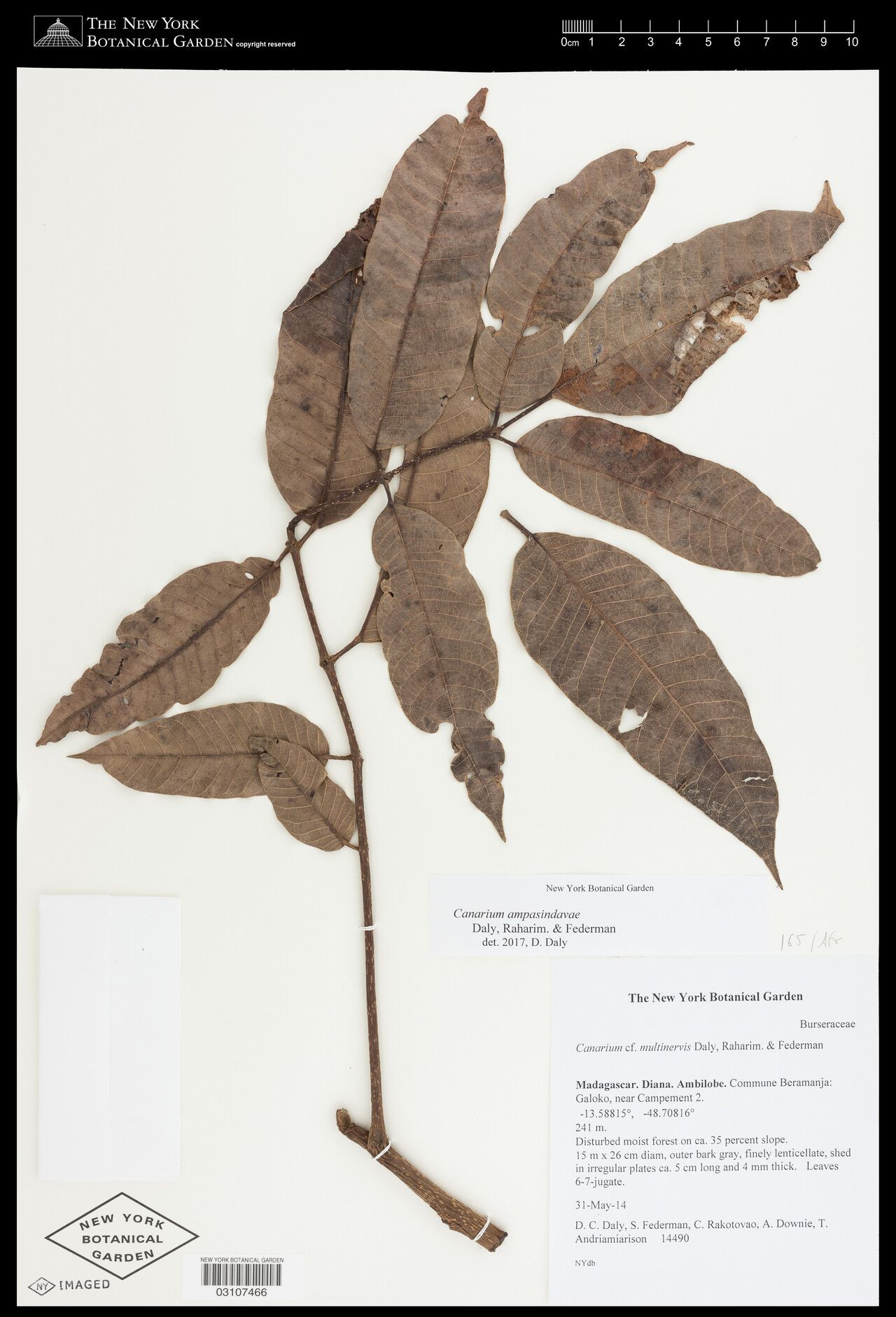
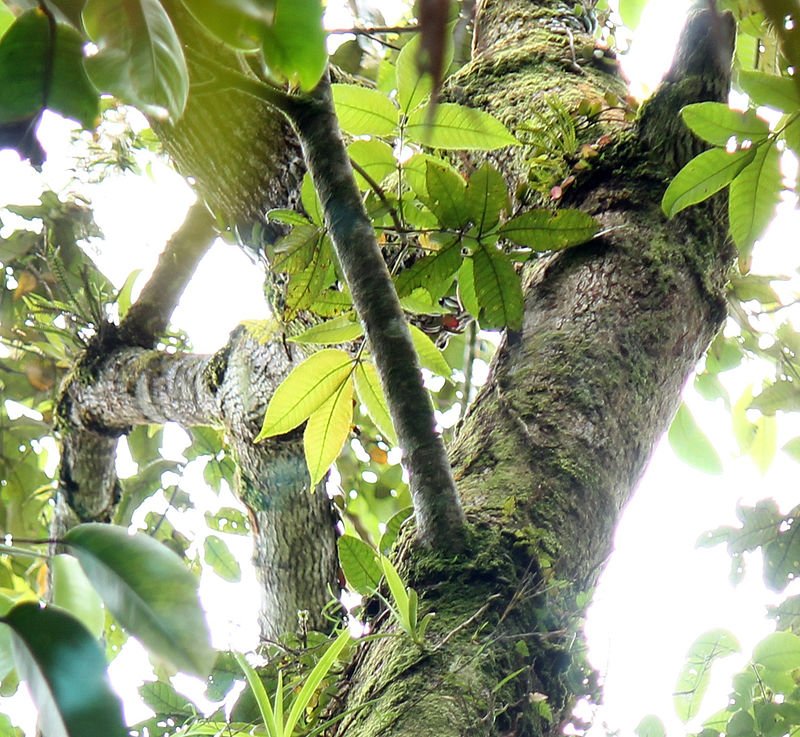
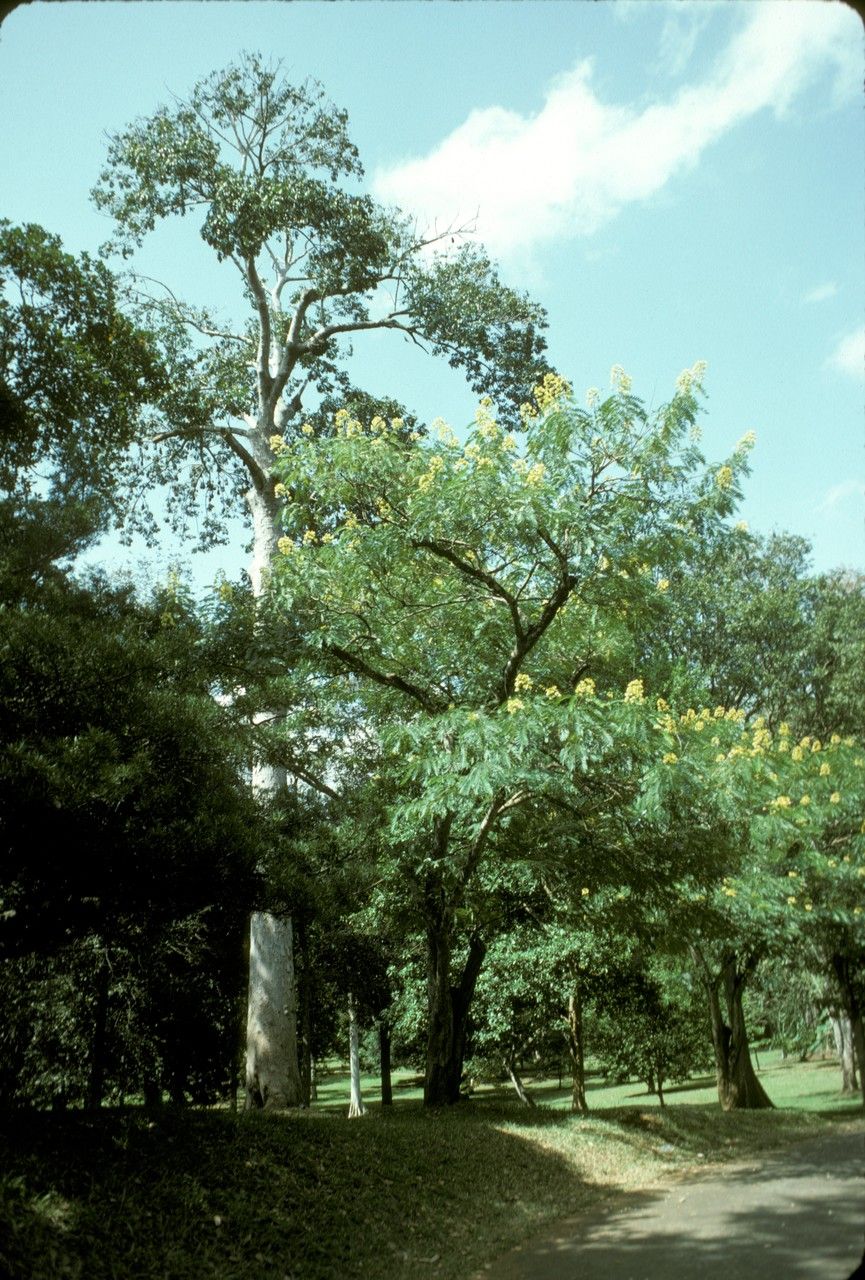
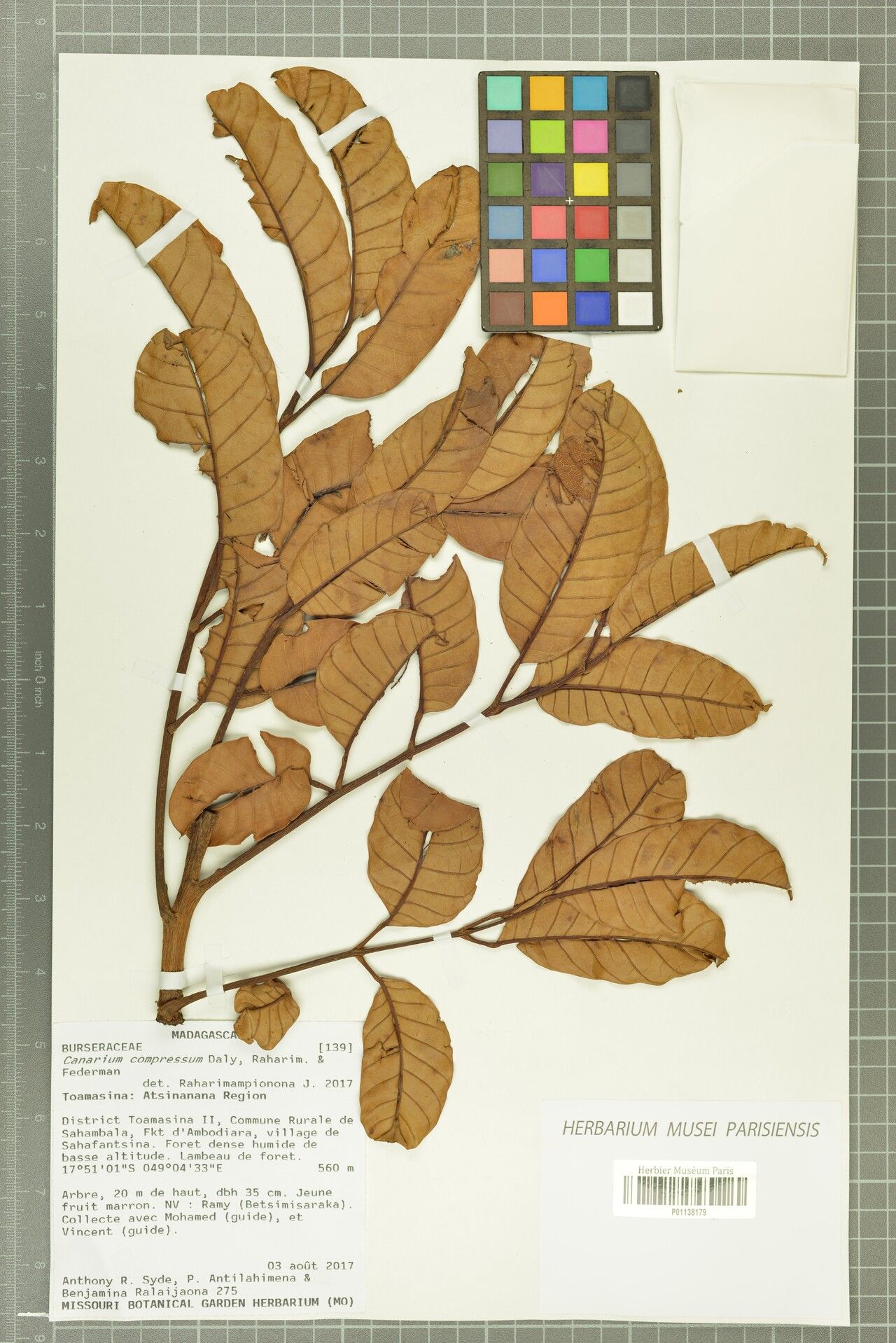
Canarium album is a tree species in the genus Canarium and the family Burseraceae, found in Indo-China; the Catalogue of Life does not record any sub-species.Canarium album produces a fruit commonly called Chinese olive or white olive, though it has no relation to Olea; it is consumed in Vietnam (Vietnamese: trám trắng, fruit quả trám), Thailand (where it is known as nam liap (Thai: หนำเลี้ยบ), samo chin (Thai: สมอจีน) or kana (Thai: กาน้า)) and in China (simplified Chinese: 橄榄; traditional Chinese: 橄欖; pinyin: gǎnlǎn).The pulp of the tree's fruit and its seeds are edible, with a strong resinous flavor when they are fresh. Culinary oil can be extracted from the seed. Preserves can be made with the fruit, both sweet like jam or pickled preserves. In China, a pickle called olive vegetable (simplified Chinese: 橄榄菜; traditional Chinese: 橄欖菜; pinyin: gǎnlǎn cài), made from a mix of Canarium album fruit and mustard greens, is commonly used as a flavoring for congee and fried rice.Mostly cultivated in Thailand, cultivation has been introduced on a smaller scale to Fiji and northern Queensland in Australia. Its fruit, resin and seed are exported to Europe where they are used in the manufacture of varnish and soap.
Chinese white olive has strong resistance to diseases and is usually not susceptible to them. In terms of care, this plant is fairly low-maintenance. When planted outdoors it needs only light watering, and larger plants typically do not require pruning. Smaller plants, however, should be pruned after they finish blooming. Chinese white olivet is appropriate for anyone with an outdoor area, such as a garden or deck, and does not demand much care experience.
How to keep Canarium Album.
Light
Chinese white olive performs best with steady, abundant sun exposure, though it can tolerate sites with less light. Plenty of sunlight promotes healthy growth and more vigorous development. Still, long periods of reduced light can impair its growth, making it less vigorous.
Water
The Chinese white olive flourishes in tropical-like conditions, where there is moderate humidity and consistent moisture. It is best to water the plant every two weeks to maintain stable moisture levels. This plant is ideally grown outdoors, where it can benefit from natural rainfall. It thrives in well-draining soil and requires heavy watering during the growing season.
Temperature
Chinese white olive comes from temperate regions, so it favors moderate climates. It performs best at temperatures of 68 to 100 °F (20 to 38 ℃). Modify its environment with the seasons to recreate this temperature range for optimal growth.
Fertilizer
Opt for organic fertilizers (e.g., fish emulsion, compost) rather than chemical fertilizers for Chinese white olive. Give young plants higher levels of nitrogen and phosphorus in spring. Mix compost or fertilizer into the soil either before or after planting. For mature plants, apply a balanced fertilizer or one targeted to specific deficiencies in spring. Nutrient shortages result in small leaves, short branches, yellow or bronze foliage, sour fruits, premature fruit drop, and fruit splitting.
Pruning
The Chinese white olive is characterized by its glossy leaves and fragrant flowers, and it requires regular pruning from early to late spring. Key tasks in this process include removing dead branches, thinning out dense areas, and shaping the plant to improve air circulation. It's essential to use clean tools to prevent infections. Regular pruning not only enhances the vitality of the Chinese white olive but also improves its appearance.
Botanical profile.
- Plant Type
- Tree
- Life Cycle
- Perennial
- Genus
- Canarium
- Family
- Burseraceae
- Hardiness Zone
- 10-12
- Mature Height
- 10.06 m to 35.05 m
- Mature Spread
- 1.52 m
- Leaf Color
- Dark Green
- Leaf Type
- Evergreen
- Flower Color
- White
- Flower Size
- 15.24 cm to 30.48 cm
- Bloom Time
- Mid spring, Late spring
- Planting Time
- Spring, Summer, Autumn
- Harvest Time
- Late summer, Early fall, Mid fall
- Native Area
- Cambodia, Vietnam, Laos, China
Other names.
Reader questions.
What is the optimal temperature range for growing Chinese white olive?
The optimal temperature range for growing Chinese white olive is between 68 to 100 °F (20 to 38 °C). This plant thrives in moderate climates and requires adjustments in its environment seasonally to mimic this temperature range for optimal growth. Especially in autumn, when temperatures drop, it's recommended to move outdoor-grown Chinese white olive plants indoors near a bright window, while ensuring they are kept away from heaters. During winter, maintaining temperatures above 20°C is beneficial, as any temperatures near 5°C can be harmful to the plant.
How does low temperature affect Chinese white olive, and what are the solutions?
Chinese white olive suffers in low temperatures, showing a preference for warmth with optimal growth above 20°C and a critical temperature threshold above 5°C during winter. Exposure to temperatures below 1°C can lead to a lightening of leaf color, progressing to browning or blackening after frost damage. This is accompanied by wilting and drooping symptoms. To counteract this, trim off frost-damaged parts and move the plant indoors to a warmer environment, near a south-facing window for ample sunlight. Additionally, avoid placing the plant near heaters or air conditioning vents to prevent air dryness.
What should be done if a Chinese white olive experiences high temperatures?
During summer, it's crucial to ensure that Chinese white olive's environment does not exceed 38°C to avoid leaf lightening and increased susceptibility to sunburn, which can occur above 43°C. In response to high temperatures, trim away sunburnt and dried-up parts of the plant. Relocating the plant to a shaded area can protect it from the intense midday and afternoon sun. Moreover, watering the plant in the morning and evening helps maintain soil moisture, providing additional relief from high temperatures.