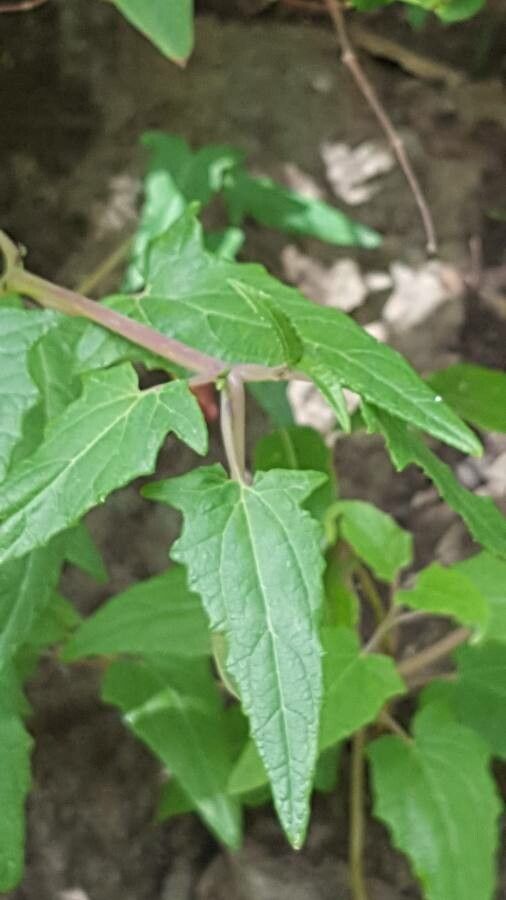
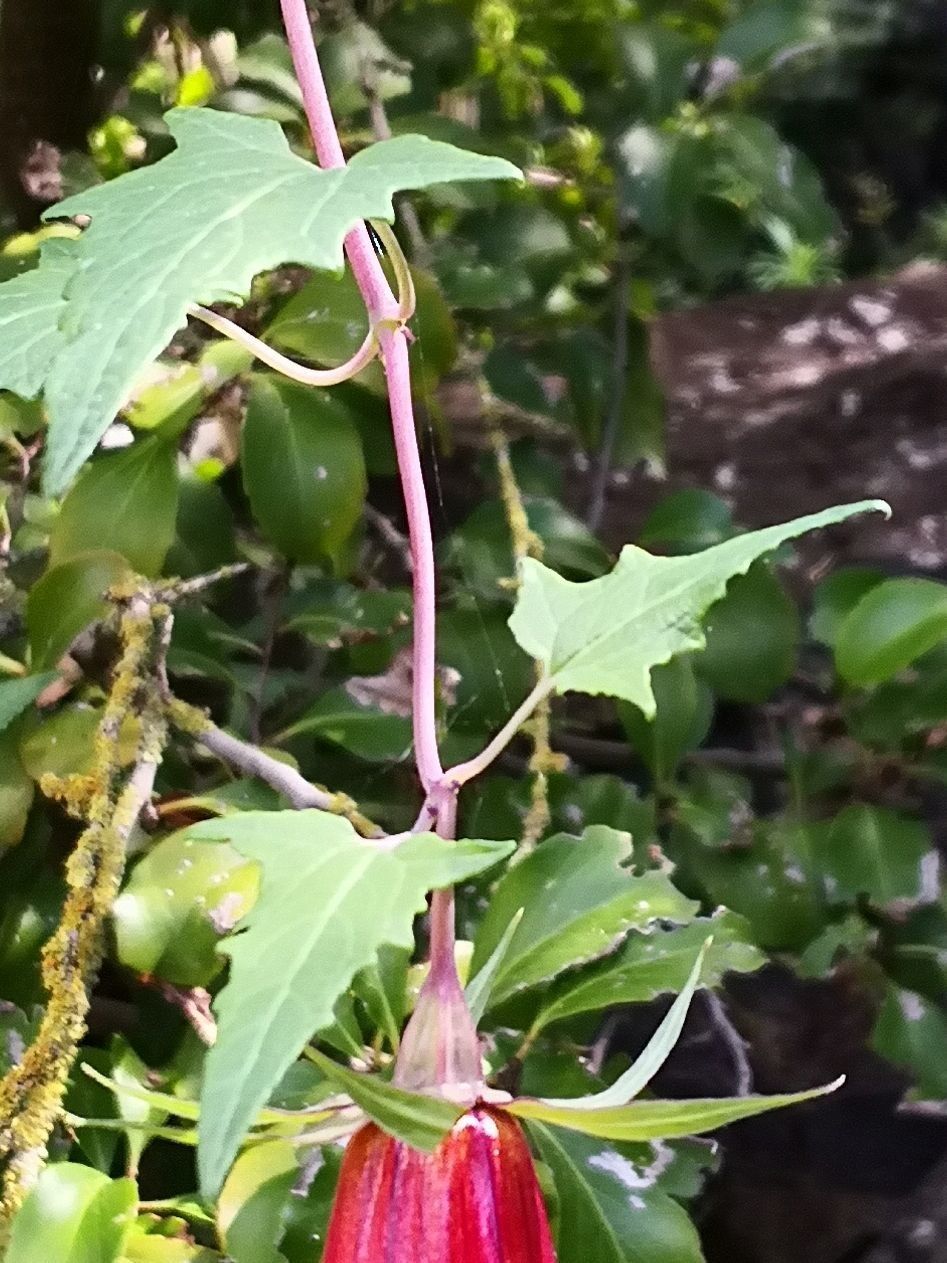
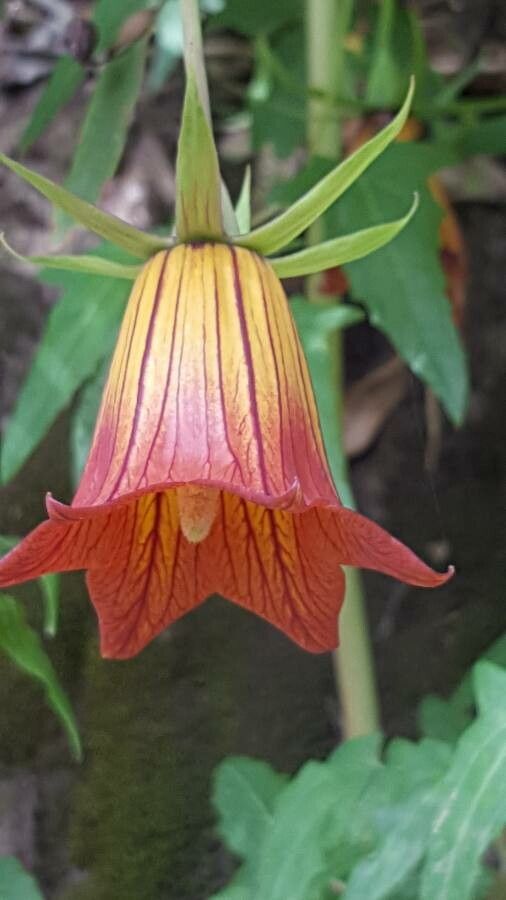
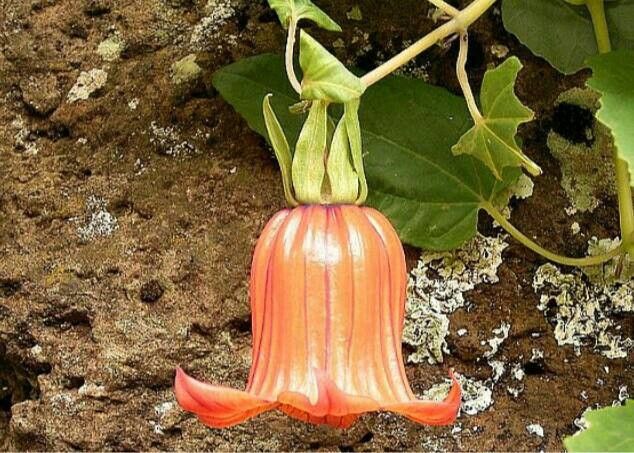
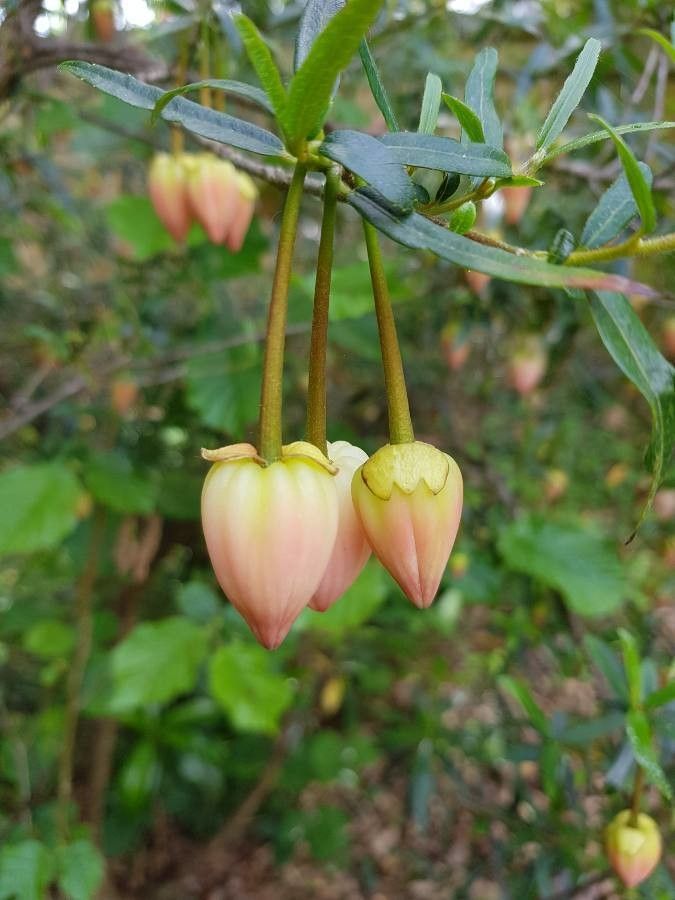
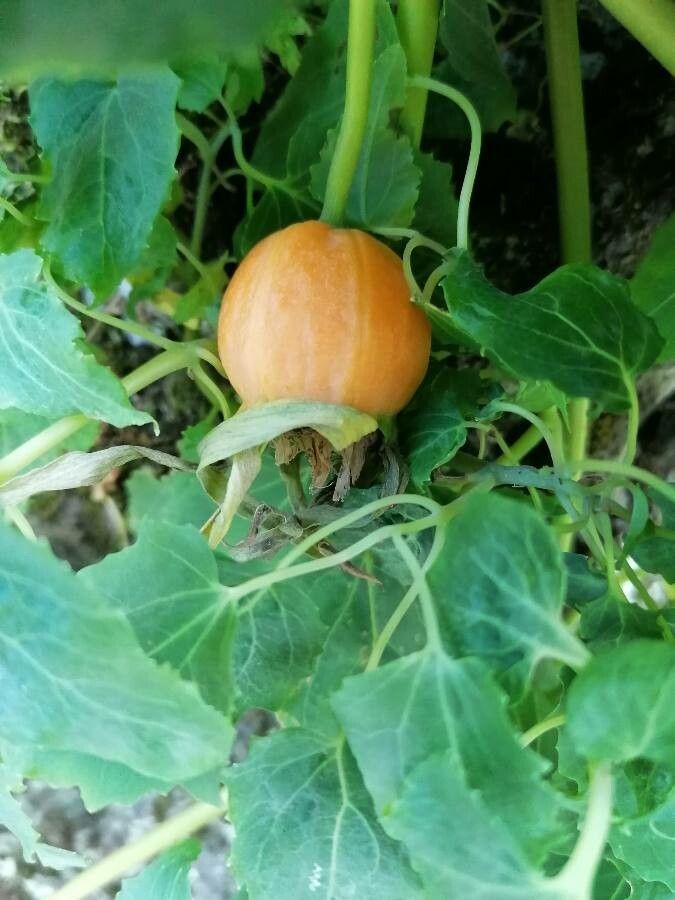
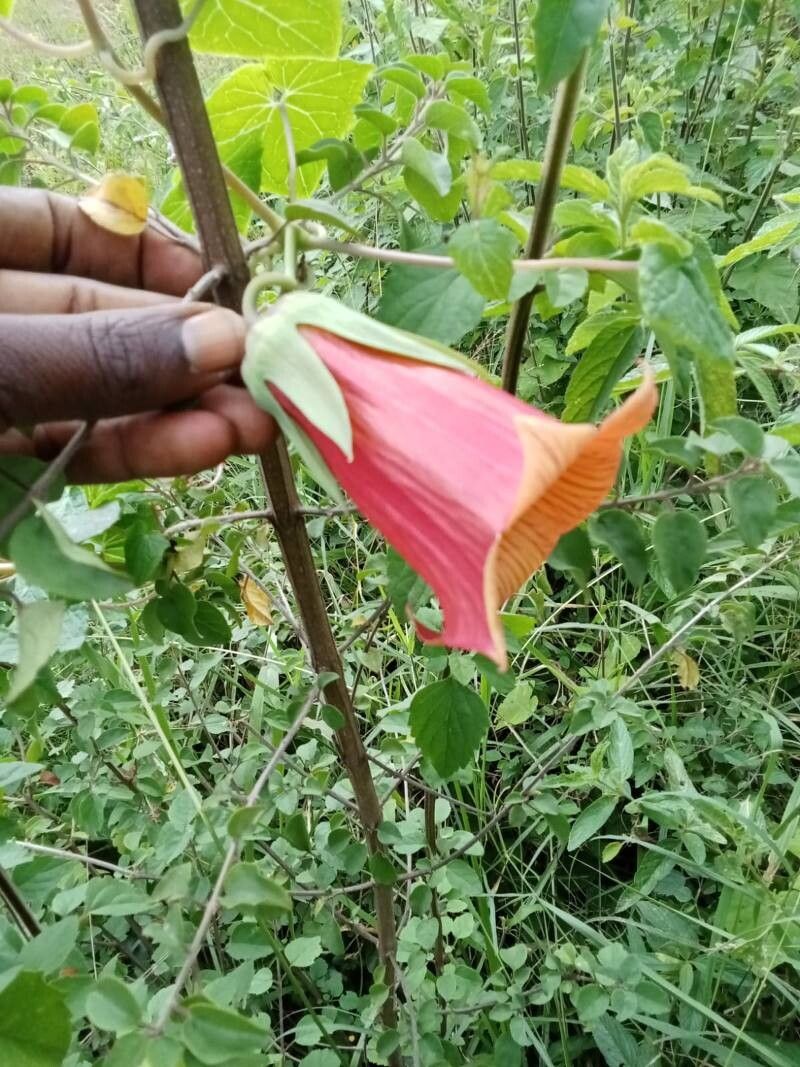
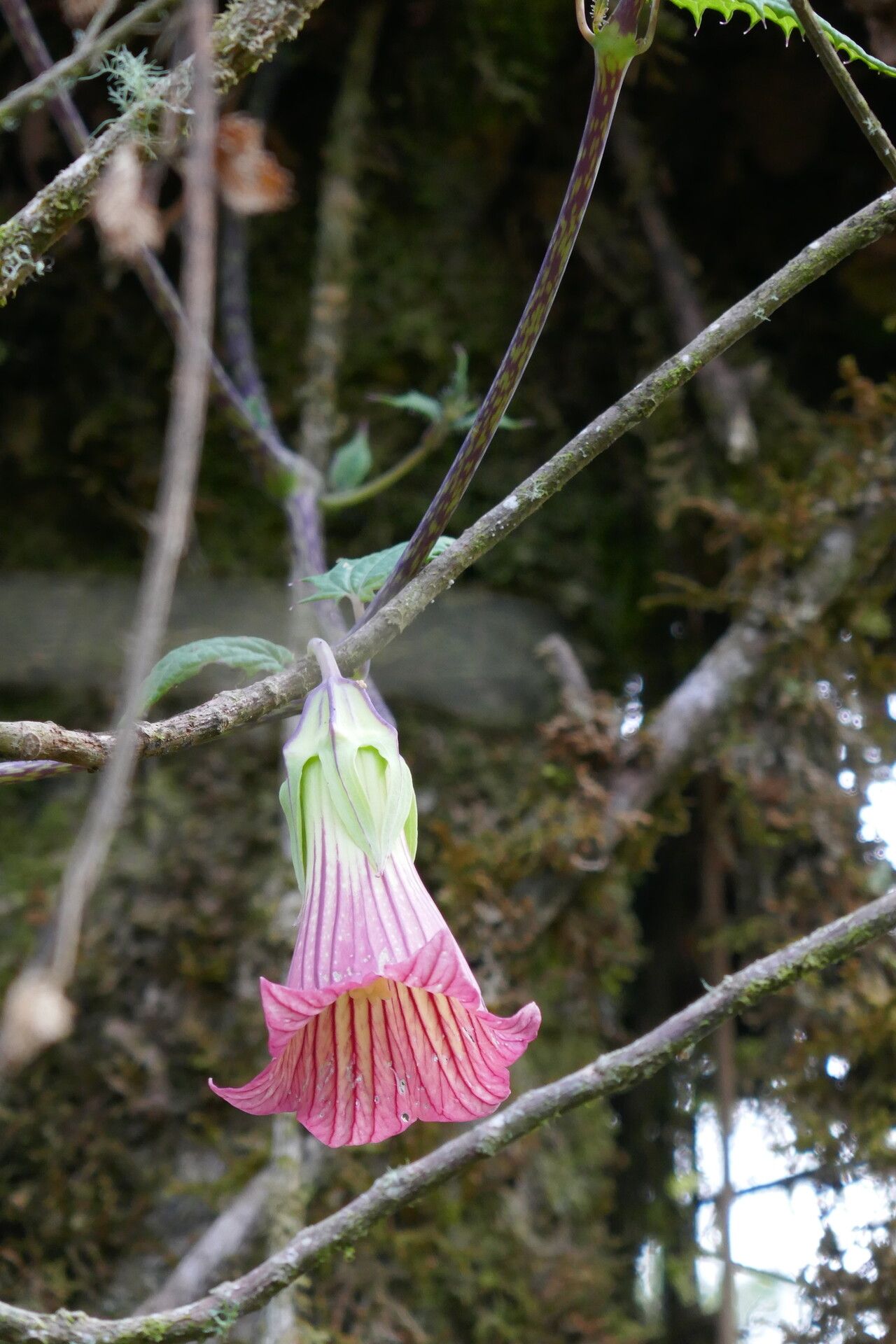
Canarina canariensis, commonly known as the Canary bellflower or Canary creeper, is a species of flowering plant in the Campanulaceae family, native to the Canary Islands. This climbing plant can reach lengths of up to 3 meters. It features heart-shaped green leaves and produces striking trumpet-shaped flowers that are orange-red with yellow centers. The flowers bloom from late summer through early winter, attracting bees, butterflies, and other pollinators.
Canarina canariensis thrives in well-drained soil with moderate moisture and can tolerate both partial shade and full sun. While it is hardy and can withstand drought conditions, it needs protection from frost during the winter months.
Traditionally, indigenous people of the Canary Islands have used this plant for its anti-inflammatory properties in medicinal applications. Additionally, its attractive foliage and vibrant flowers make it a popular choice for ornamental purposes.
In summary, Canarina canariensis is a fascinating climbing plant that enhances any garden or landscape with its beautiful blooms. It also offers medicinal benefits when used appropriately by trained professionals in traditional medicine practices.
The canary bellflower is fairly disease-resistant and generally not prone to illnesses. However, it can be affected by pests and diseases present in its environment. These problems are typically mild. Regarding care, the plant requires moderate maintenance. It should be pruned regularly to maintain an attractive appearance and healthy growth. Fertilizing can also help encourage flowering. Canary bellflower is well suited to anyone with an outdoor area, such as a garden or patio, and does not demand extensive gardening experience. It may need more attention when grown indoors.
How to keep Canarina Canariensis.
Light
Canary bellflower grows best with scattered sunlight like that found in its natural habitat. Constant direct sun can cause stress, while too little light can impede healthy growth. Filtered sunlight benefits every stage of its life cycle, promoting overall vigor and robustness.
Water
The Canary bellflower flourishes in humid subtropical climates, where consistent moisture is crucial. To support its vibrant blooms during the growing season, it is important to water the plant weekly. Providing adequate hydration is essential for successful outdoor cultivation.
Temperature
Canary bellflower naturally occurs in habitats where temperatures generally range from 68 to 95 °F (20 to 35 ℃). It favors a moderately warm setting. Across seasons, establish a temperature gradient around that range to support its healthy growth.
Fertilizer
Proper fertilization is essential for the Canary bellflower’s health and appearance. Fertilize the Canary bellflower in summer, repeating the treatment monthly throughout summer. Nutrients fuel growth and sustain the plant’s components. Fertilization improves the Canary bellflower’s flower display, ensuring the best blooms.
Pruning
The Canary bellflower produces beautiful bell-shaped blooms and benefits from pruning between early and late spring. To promote growth and abundant flowering, remove any dead stems. Lightly trimming the plant after it blooms can improve its shape and air circulation, which helps reduce the risk of disease. When pruning, make cuts just above healthy buds to encourage optimal regrowth and maintain a compact, flower-filled display.
Botanical profile.
- Plant Type
- Herb
- Life Cycle
- Perennial
- Genus
- Canarina
- Family
- Campanulaceae
- Hardiness Zone
- 10
- Mature Height
- 1.52 m
- Mature Spread
- 1.52 m to 2.74 m
- Leaf Color
- Green
- Leaf Type
- Deciduous
- Flower Color
- Red, Orange, Yellow
- Flower Size
- 5.08 cm to 7.62 cm
- Bloom Time
- Winter, Early spring, Mid spring
- Planting Time
- Autumn
- Harvest Time
- Spring, Early summer
Other names.
Reader questions.
How should I water my Canary bellflower?
To care for the Canary bellflower, it's best to use room temperature filtered water. Tap water may harm the plant due to possible contaminants. Since the Canary bellflower is accustomed to warm conditions, using cold water can shock it. It's important to avoid overhead watering, as it can lead to issues with the leaves. Instead, water the soil directly until it is thoroughly saturated. This will benefit the plant by keeping the roots moist and aiding in nutrient absorption.
Why should I add fertilizer to my Canary bellflower?
Fertilizer and soil nutrients are like fuel for your Canary bellflower, helping it grow healthily. Plants generally use these nutrients to create new plant material and maintain their existing components. Specifically for the Canary bellflower, fertilization is important for the flowers to look their best. Since the flowers are a major attraction, most gardeners try their best to ensure they appear in their finest form. Fertilization is one of the most effective ways to help your Canary bellflower produce beautiful blooms.
What are the sunlight requirements for a Canary Bellflower?
The Canary Bellflower (Canarina canariensis) thrives in conditions with partial sun, requiring about 3-6 hours of sunlight a day. It's crucial to observe the movement of sunlight through your garden to choose spots that offer a balanced environment of light and shade, ensuring the plant's well-being. In its natural habitat, the plant flourishes under scattered sunlight, with each stage of its life cycle benefiting from filtered sunlight to promote vigor and strength. However, excessive direct sunlight may cause stress, and insufficient sun might impede growth.
What is the native temperature range for Canary bellflower?
Canary bellflower thrives in environments with temperatures varying from 68 to 95°F (20 to 35°C), preferring a moderately warm setting. It is highly sensitive to cold temperatures, making it crucial to create a temperature gradient within this range across different seasons for its healthy growth.
What should I do if I give my Canary bellflower too much water or too little water?
Overwatering is a common issue for the health of your Canary bellflower. When this happens, the stems and leaves may wilt and turn yellow. Overwatering for a long time can also lead to diseases like root rot, mold, and mildew, which can be fatal for your plant. Underwatering is less likely, but it can still happen. In this case, the leaves become brittle and brown. It's important to notice the signs of overwatering early on. Some diseases caused by overwatering, like root rot, may not be fixable if you wait too long. If you see early signs, reduce watering immediately. Also, check the soil quality. If it drains poorly, replace it with a loose, well-draining potting mix. If you notice signs of underwatering, increase watering until the signs subside.
When should I fertilize my Canary bellflower?
The Canary bellflower has two main phases each year. The first is the dormant phase, which occurs during winter and has minimal new growth. The second is the active growth phase, which happens in spring and fall and is when the plant needs fertilization the most. For optimal results, it's recommended to fertilize your Canary bellflower starting in spring. During this time, feed the plant once a month throughout the rest of spring and most of summer. As fall approaches, you can reduce the fertilization rate.
How can artificial lighting support the growth of indoor Canary Bellflower plants?
For Canary Bellflower plants kept indoors, artificial lighting serves as an essential support when natural sunlight is inadequate, especially during winter or in areas with less sunlight. LED lights are recommended because they can be adjusted to provide specific wavelengths needed by the plants. Plants that prefer full sun need 30-50W/sq ft of artificial light, partial sun plants require 20-30W/sq ft, and full shade plants need 10-20W/sq ft. The light source should be placed 12-36 inches above the plant to mimic natural sunlight conditions. Most plants benefit from 8-12 hours of artificial light per day, replicating the natural length of daylight hours for optimal growth.
How should I care for Canary bellflower during autumn and winter?
In autumn, it is advised to move outdoor-grown Canary bellflower indoors to protect it from cold temperatures. Placing it near a bright window while ensuring it is not too close to heaters helps maintain an optimal environment. During winter, keeping the temperature above 20°C is beneficial for the plant, with temperatures approaching 5°C being harmful.
How often should I give water to my Canary bellflower?
If your Canary bellflower is in a pot, the most precise way to determine if it needs water is to check the soil moisture. Stick your finger in the soil and if the top two to three inches are dry, it's time to water. For Canary bellflowers grown outdoors, you can use a similar method to test the soil. Again, if the top few inches are dry, it's time to water. During spring and early fall, you'll typically need to water this plant about once a week using this method. In extremely hot weather, you may need to water it two or more times per week. However, mature, well-established Canary bellflowers have a good tolerance for drought.
When should I not use fertilizer for my Canary bellflower?
If you want to help your Canary bellflower grow, but avoid root burn, it's best to provide extra nutrients during the active growth period in spring and summer. However, once fall and winter arrive and the plant goes into its dormancy stage, it's time to stop fertilizing.
What are the symptoms of inadequate light for Canary Bellflower?
Canary Bellflower may show various symptoms under insufficient light conditions, including the development of smaller new leaves compared to mature ones, leggy or sparse growth, faster leaf drop, and a halt in new leaf production indicating a survival mode. Leaves might appear pale or develop irregular color patterns due to inadequate chlorophyll and essential nutrients, a condition known as chlorosis. Sunscald, leaf curling, wilting, and leaf scorching are additional symptoms that may occur due to inadequate light or overexposure to sunlight, affecting the plant's overall health and growth.
How does low temperature affect Canary bellflower and what are the solutions?
Canary bellflower is not tolerant of low temperatures, thriving best above 20°C and requiring temperatures to stay above 5°C during winter. Exposure to temperatures below 1°C may cause the leaves to lighten in color, leading to browning or blackening after frost damage, accompanied by wilting and drooping. To mitigate frost damage, frost-damaged parts should be trimmed off and the plant moved indoors to a warm spot near a south-facing window for cold protection, while ensuring it is not placed near heaters or air conditioning vents which could cause excessive dryness.