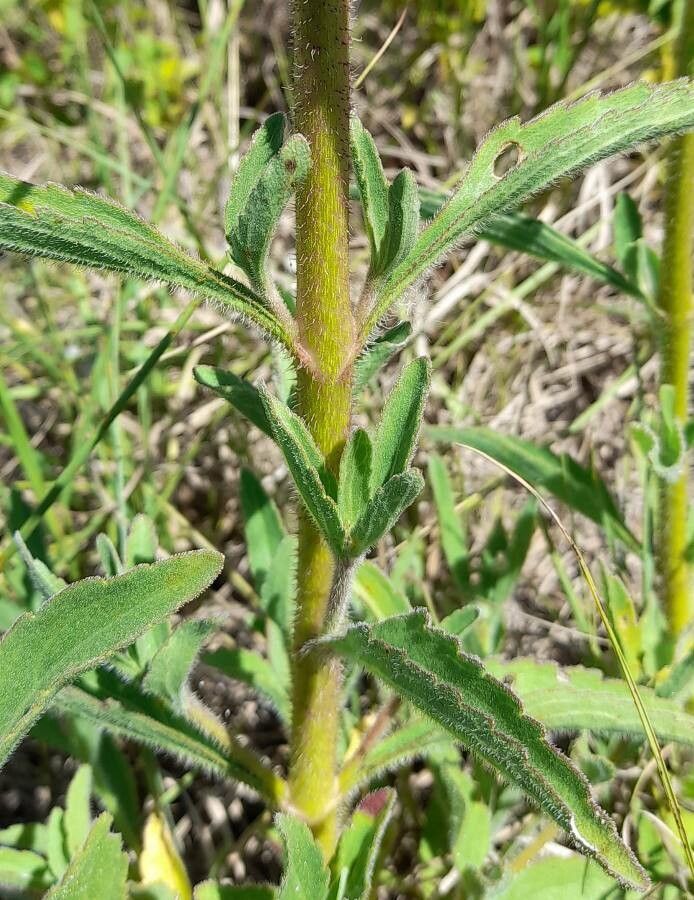
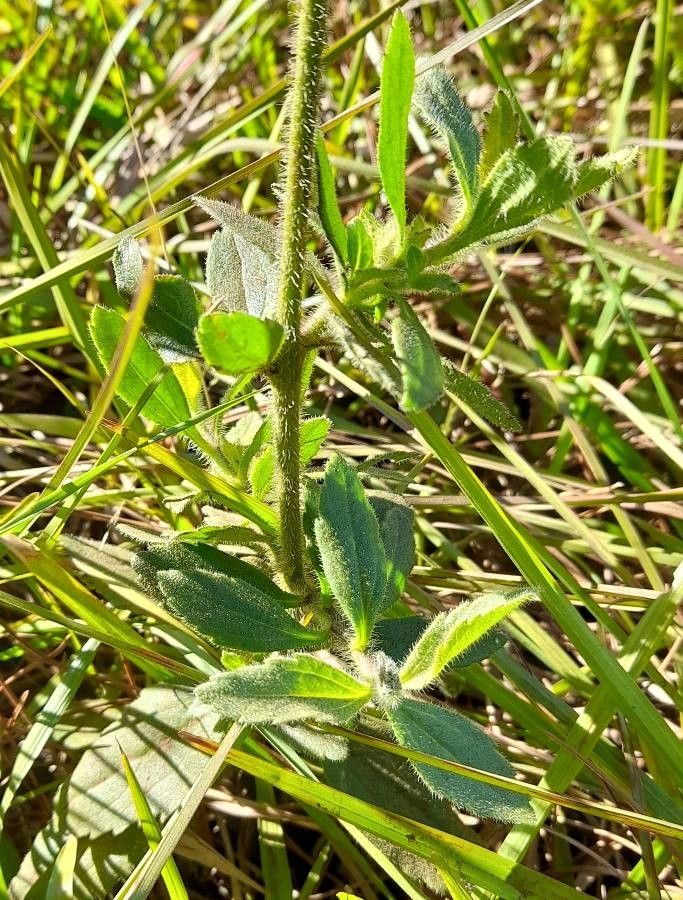
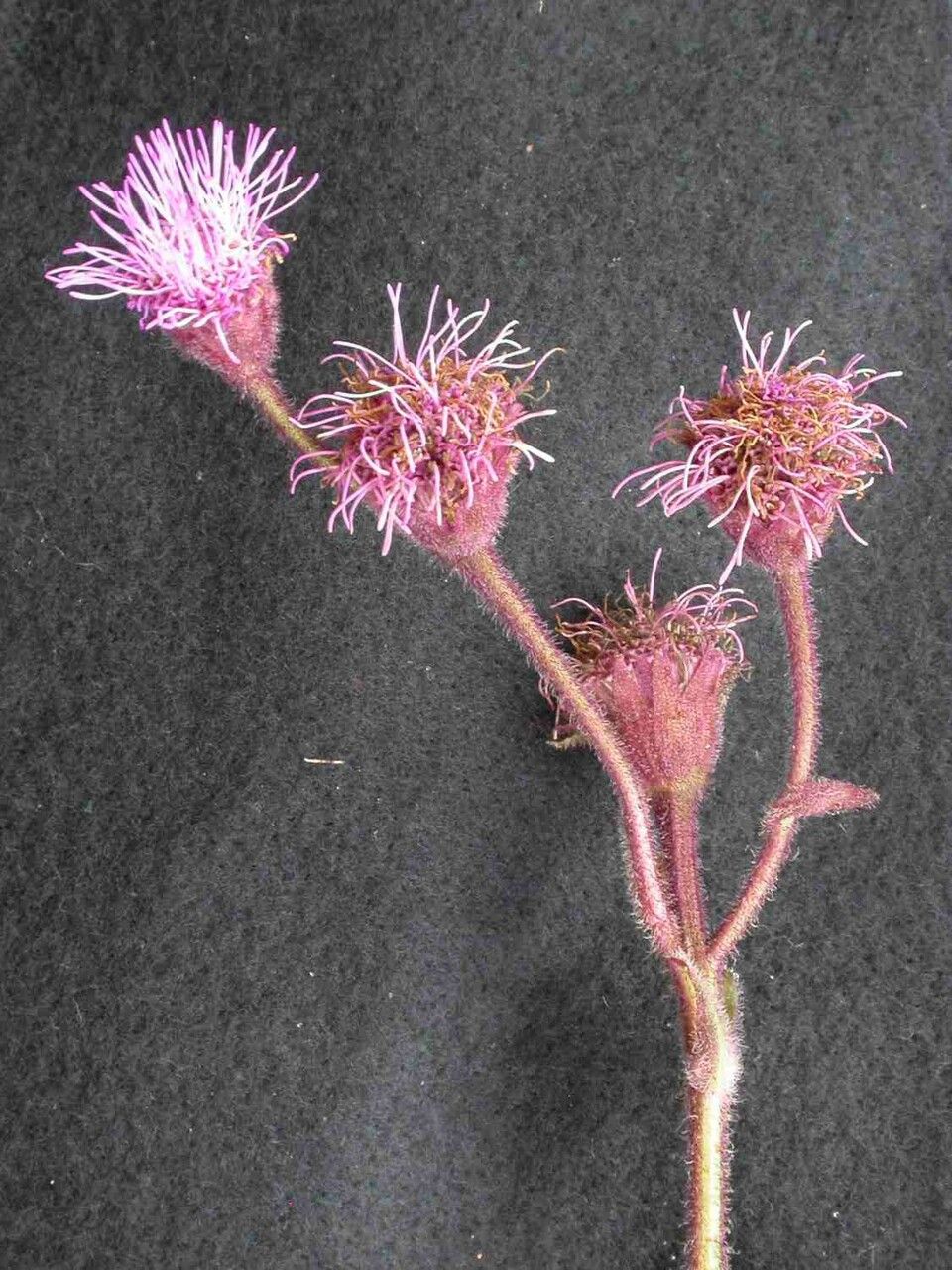
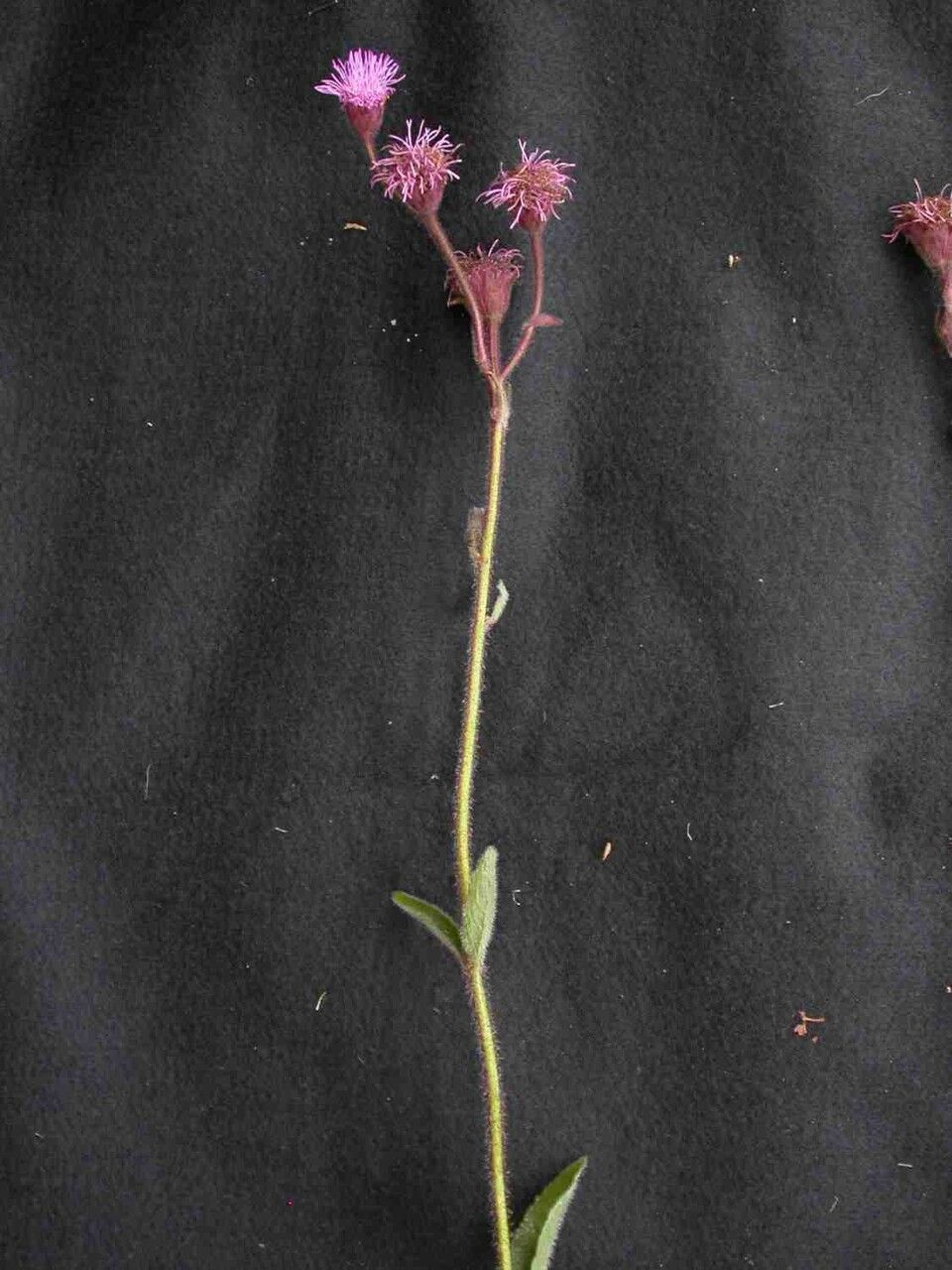
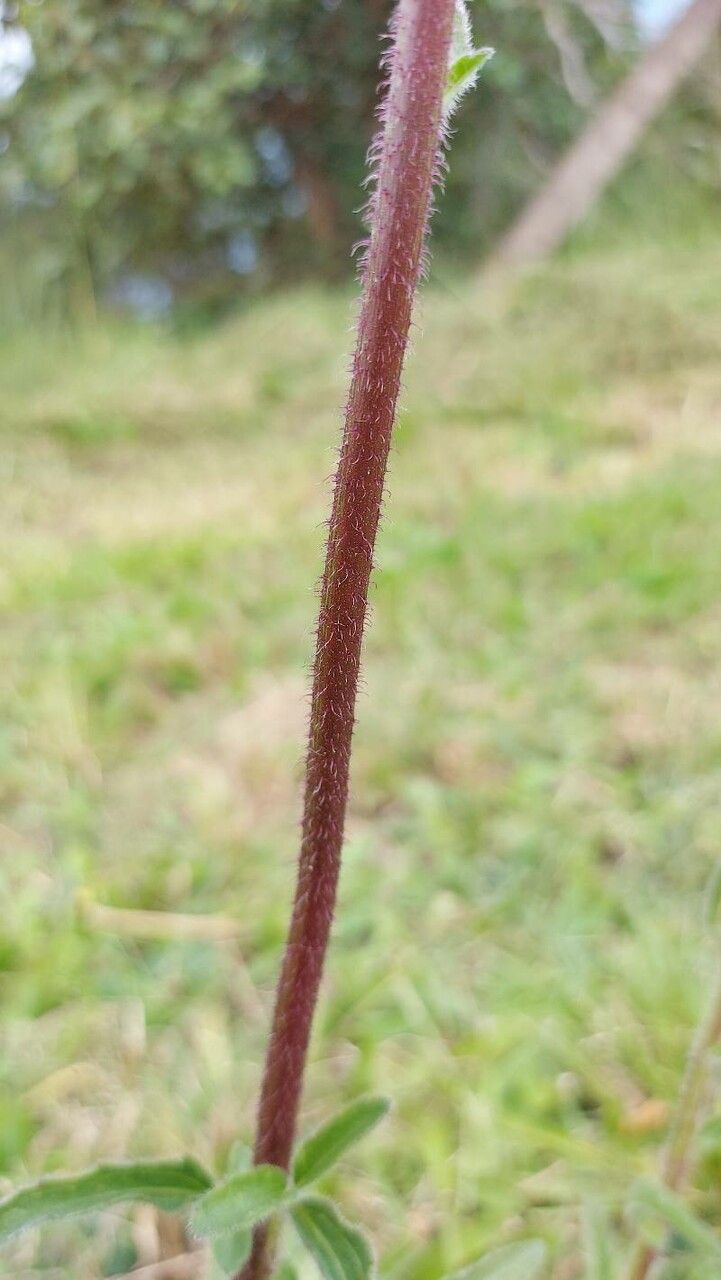
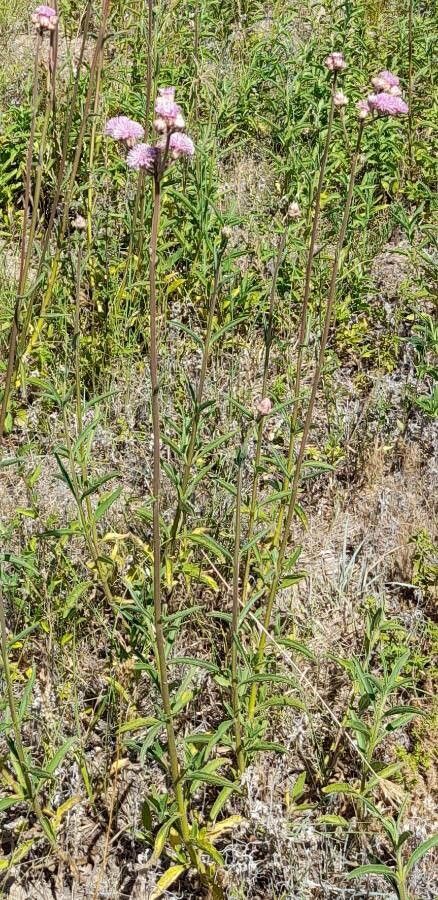
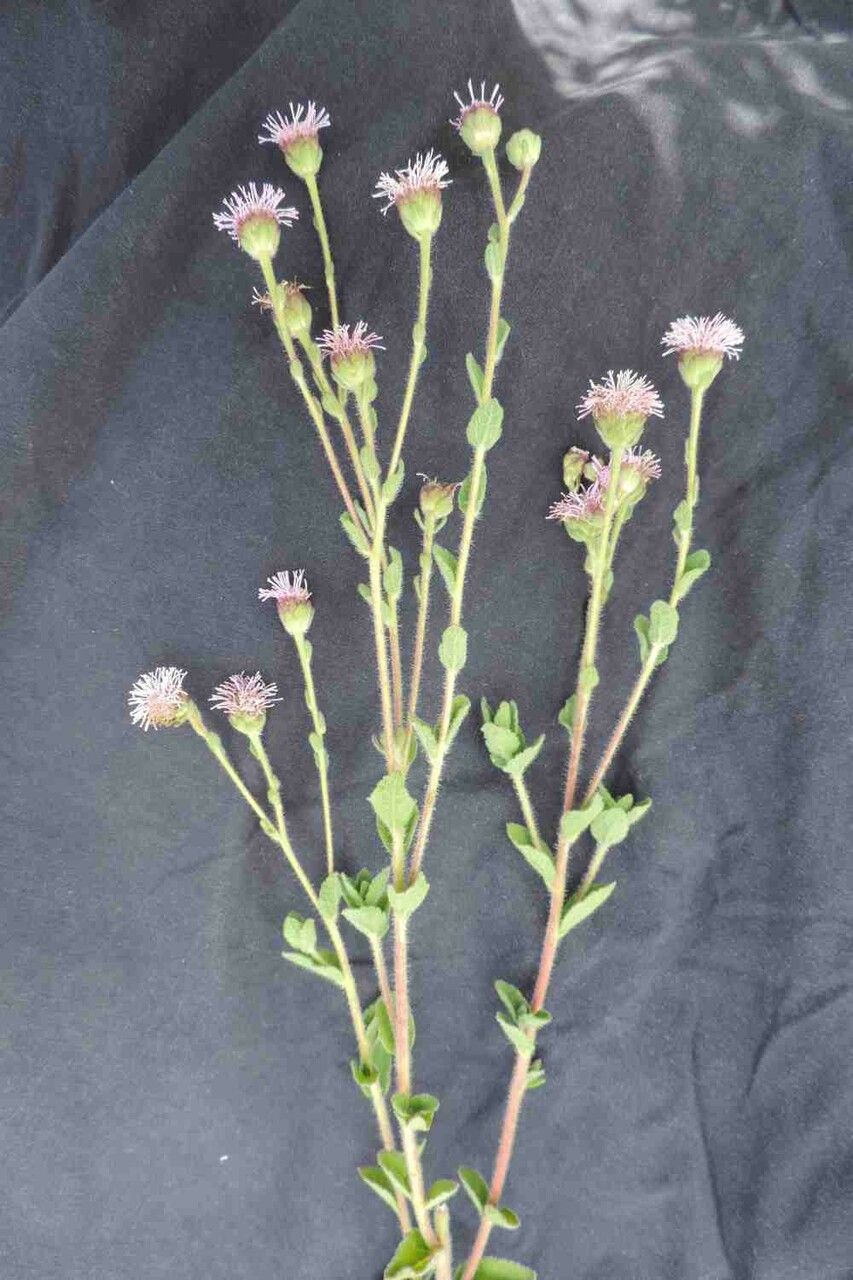
Eupatorium macrocephalum Less. aka pompom weed, is a cosmopolitan perennial plant belonging to the family of Asteraceae and regarded as an invasive weed in some countries. It is native to the southern United States, Central America, South America and was introduced to South Africa. It is classed as a principal weed in Brazil. In South Africa it has been cultivated as an ornamental, is often found on roadsides, and has become of concern for its invading of undisturbed climax grassland and wetlands since the 1960s. It is closely related to Siam weed, and is one of some 268 species in the genus.This species is rhizomatous with erect stems to 1.3 m tall, and has stem and leaves covered in rough, bristly hairs. It forms dense rosettes of leaves at ground level, suppressing the germination and growth of other species, at the same time producing allelochemicals which adversely affect the growth of neighbouring plants. The plant dies back annually to its root crown, and survives veldfires over the winter period. Its leaves are light green in colour, lanceolate-elliptic in shape, and measure 8 cm x 2 cm. Leaf margins are serrate, the teeth becoming smaller away from the stalk. Flower heads are surrounded by lanceolate, purplish bracts some 8 mm in length. Flowers are large, pink and showy, and exceed the bracts by 6–8 mm. Mature achenes are black and 5 mm long with a pappus of simple bristles.Moths of the genus Adaina and in particular Adaina microdactyla (Hübner), have been investigated as possible biological control agents. Species in the genus include flower borers, leaf feeders and also species that induce stem galls which provide food and accommodation for larvae and pupae. Research at Cedara College of Agriculture has found a rust fungus, Puccinia eupatorii, which invades the seeds and kills the whole plant, including the roots. This rust fungus is specific to E. macrocephalum and would therefore be ideal as a biological control. Other potential insect agents include a stem-galling thrips, Liothrips sp., and the moth Cochylis campuloclinium.Material from this species has been analysed, resulting in the identification of six triterpenes, one diterpene glycoside ester, six steroids, one flavonoid known as cirsilol, and six cinnamic acids derivatives.The name Eupatorium macrocephalum was first published in January 1830 by Christian Friedrich Lessing in Linnaea 5(1): 136–137. 1830. "Eupatorium" was first used by Linnaeus to honour 'Eupator Dionysius' aka Mithridates, an ancient ruler of Anatolia, while 'macrocephalum' means 'large-headed' and refers to the inflorescence.
Pompom bossie shows good disease resistance and is generally not prone to illnesses. Nevertheless, it can be affected by pests and diseases that exist nearby. Such infections are typically not severe. Regarding care, this plant needs moderate maintenance. It requires regular pruning to preserve a neat appearance and healthy growth. Applying fertilizer can also encourage flowering. Pompom bossie is appropriate for anyone with outdoor space, like a garden or patio, and does not demand extensive plant-care experience. It may need more attention when cultivated indoors.
How to keep Campuloclinium Macrocephalum.
Light
Pompom bossie thrives beneath an open sky where the sun remains unclouded for most of the day. However, it cannot tolerate shade — a characteristic of its natural outdoor habitat. Excessive sun can harm it, while insufficient sun will stunt its growth.
Water
The Pompom Bossie flourishes in moderate humidity and requires balanced watering, roughly once a week. This evergreen plant is well-suited for outdoor gardens, benefiting from natural rainfall and seasonal changes, which makes it perfect for temperate climates.
Temperature
Pompom bossie is fairly adaptable to heat and can endure higher temperatures and wider temperature swings. In hot weather, attention should be paid to watering and suitable shading should be provided to prevent sunburn. Conversely, Pompom bossie is less tolerant of cold. While it can tolerate some chill, very low temperatures can cause frost damage.
Fertilizer
The ideal time to fertilize a Pompom bossie is in early spring, as it comes out of dormancy and starts active growth. Fertilization provides the essential nutrients needed for healthy development. Although the Pompom bossie has relatively low fertilizer requirements, an annual application can boost its survival and encourage better, longer-lasting flowers.
Pruning
The pompom bossie is known for its vibrant clusters of pink flowers. To manage its growth and shape, prune the plant from early to late spring. This involves removing dead stems to improve air circulation. Regular pruning not only helps control its spread but also enhances its aesthetic appeal. Always use clean, sharp tools to prevent disease and keep the plant healthy.
Botanical profile.
- Plant Type
- Herb
- Life Cycle
- Perennial
- Genus
- Campuloclinium
- Family
- Asteraceae
- Hardiness Zone
- 9-11
- Mature Height
- 1.52 m
- Mature Spread
- 30 cm to 61 cm
- Leaf Color
- Green
- Leaf Type
- Deciduous
- Flower Color
- Violet, Purple
- Flower Size
- 2.54 cm
- Bloom Time
- Summer
- Planting Time
- Spring, Summer
- Harvest Time
- Late summer, Early fall, Mid fall
- Native Area
- Honduras, Mexico, Guatemala, Bolivia, Venezuela
Other names.
Reader questions.
What are the sunlight requirements for a Pompom bossie?
The Pompom bossie requires full sun, which means it needs above 6 hours of direct sunlight daily. Observing the movement of sunlight through your garden and choosing locations that offer a mix of light and shade will ensure the well-being of your plants. This plant thrives under an unobstructed sky for most of the day and cannot tolerate shade, a trait inherent to its natural, open-air habitat. Although overexposure to sunlight can be harmful, inadequate sunlight exposure might stunt the plant's growth.
How can artificial lighting benefit indoor plants like the Pompom bossie?
Indoor plants require sufficient lighting for optimal growth, especially when natural sunlight is scarce, like in winter or less sunny spaces. Artificial lighting presents a viable solution to this challenge, promoting healthier and faster growth. LED lights are a popular choice as they can be customized to offer specific light wavelengths needed by the plant. Full sun plants should receive 30-50W/sq ft of artificial light, partial sun plants 20-30W/sq ft, and full shade plants 10-20W/sq ft. The light source should be placed 12-36 inches above the plant, mimicking natural sunlight as closely as possible, and should be kept on for about 8-12 hours per day to simulate the natural length of daylight hours appropriate for the plant species.
What are the symptoms of inadequate or excessive sunlight exposure in Pompom bossie?
Symptoms of inadequate sunlight in Pompom bossie include smaller new leaves, leggy or sparse growth, accelerated leaf drop, and slowed or halted new growth. Leaves may develop irregular color patterns or appear paler, a sign of insufficient chlorophyll and essential nutrients. Excessive sunlight exposure can cause chlorosis, where leaves lose their green color, sunscald which damages leaves or stems with intense exposure, leaf curling as a defense mechanism to reduce surface area, wilting due to loss of turgor pressure, and leaf scorching characterized by brown, dry, crispy edges on leaves.
What solutions can mitigate the effects of inadequate or excessive sunlight on Pompom bossie?
To mitigate the effects of inadequate sunlight, gradually acclimate your Pompom bossie to receive at least 6 hours of direct sunlight daily by moving it closer to a sunnier spot each week. For indoor plants, consider using artificial lighting if they are large or not easily movable, keeping a lamp on for at least 8 hours daily, or investing in professional grow lights. For outdoor plants, avoid sudden changes in light intensity to prevent sunburn. Removing obstructions that block sunlight and transplanting smaller plants during their dormant period to a location with adequate sunlight and good drainage can also help. However, parts of the plant that suffered from inadequate light might not recover, but new growth will be healthy after increasing light exposure.