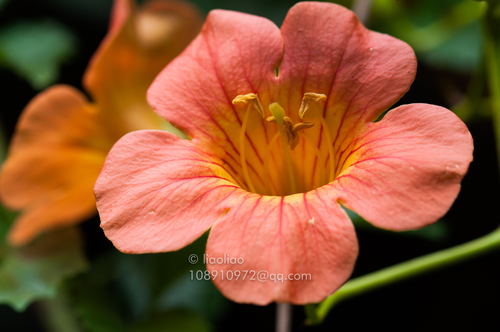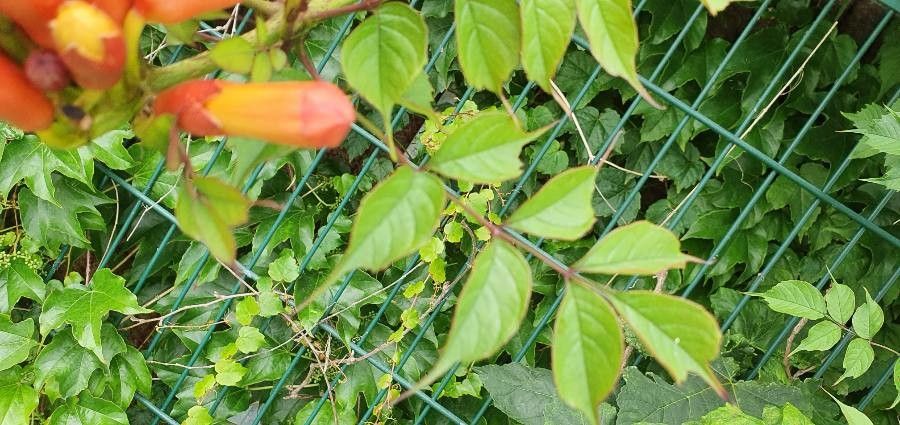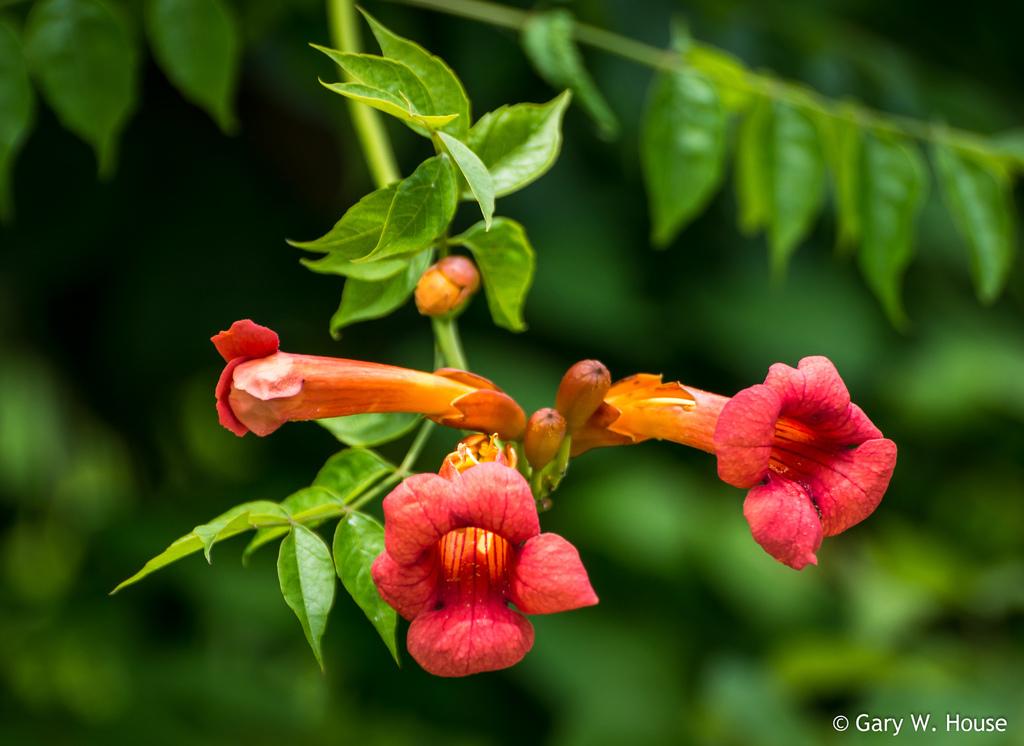
Campsis radicans, commonly known as trumpet vine or trumpet creeper, is a rapidly growing deciduous vine native to the southeastern United States. It can reach up to 30 feet in height with a spread of 5 to 10 feet. The plant produces large clusters of vivid orange-red, trumpet-shaped flowers that bloom from mid-summer to early fall, attracting hummingbirds and butterflies.
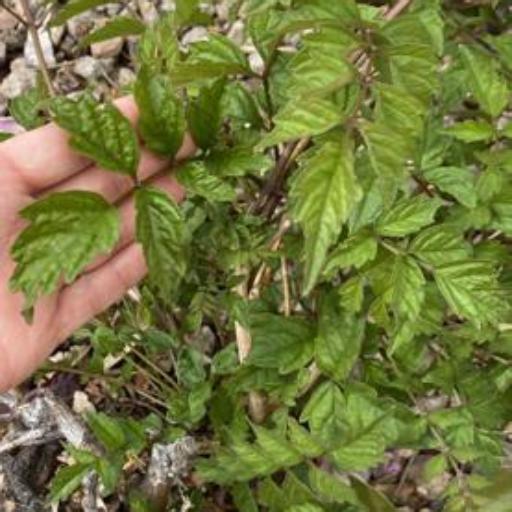
The leaves are pinnately compound, consisting of 7 to 11 leaflets, and can grow up to 15 inches long. The plant has aerial roots that enable it to climb walls, fences, or other structures.
Campsis radicans prefers full sun but can tolerate partial shade in hotter climates. It thrives in well-drained soil but can also endure poor soil conditions as long as it is not waterlogged.
Genetic studies were necessary to correctly classify the trumpet creeper (Campsis radicans). Before these studies, the plant was inaccurately classified at different times as a type of jasmine, honeysuckle, bellflower, dogbane, or bignonia. FUN FACT · FROM THE LIBRARY
Regular pruning is necessary because the plant can spread aggressively if left unchecked. Additionally, it produces suckers from the roots, which should be promptly removed if they appear outside the desired growing area.
Overall, Campsis radicans is an attractive and easy-to-grow vine that adds color and interest to any garden setting with its showy blooms and lush foliage.
The trumpet creeper is known for its robust climbing ability, often seen enveloping entire walls or adorning hedges and arches. Unlike most evergreen climbing plants, it produces beautiful trumpet-shaped flowers, which is how it earned its name.
Trumpet vine has strong disease resistance and is generally not prone to illnesses. In terms of care, this plant is fairly low maintenance. Planted outdoors, it needs little watering, and larger specimens typically do not require pruning. Smaller plants should be pruned after they finish blooming. Trumpet vine is suitable for anyone with an outdoor area, such as a garden or deck, and does not demand much care experience.
How to keep Campsis Radicans.
Light
Trumpet vine performs best in places where it gets a lot of sunlight during the day, though it can tolerate locations with only moderate light. Native to well-lit environments, its growth may slow in very shaded conditions or when light is insufficient, and excessively strong light can stress the foliage.
Water
Trumpet creeper is a plant that naturally grows in woodlands and along riverbanks, thriving in humid environments. Although it is drought-tolerant, it benefits from weekly watering. Typically grown outdoors, trumpet creeper does best when the soil remains consistently moist during its active growing season.
Temperature
The trumpet vine is a woody temperate plant that prefers temperatures between 41 and 95℉ (5 to 35℃). It is native to regions with warm summers and mild winters. In warmer periods, provide sufficient water to prevent drying out and leaf scorch. In colder periods, it is recommended to cover the plant to protect it from frost damage.
Fertilizer
The timing of fertilizing a trumpet vine is important. Apply fertilizer in early spring and continue monthly until early summer. Fertilizer promotes attractive blooms and provides energy during both dormant and active growth phases.
Pruning
The trumpet creeper is a hardy climbing plant admired for its vibrant, trumpet-shaped flowers. To keep it healthy and flourishing, prune the plant in early spring. This will help remove dead or weak stems, control its size, and encourage more blooms. Pruning also improves air circulation, reduces the risk of disease, and stimulates new growth. Be sure to use clean, sharp tools for the best results.
Pot & Repot
Repot the trumpet vine in early spring, selecting a pot only slightly larger than the current one and with good drainage. Use a well-draining potting mix and position the root ball at the same level as before. Gently loosen any root-bound roots. After repotting, water thoroughly and place the plant in a warm, shady spot. Prune regularly to keep its size in check and to encourage new growth.
Botanical profile.
- Plant Type
- Vine
- Life Cycle
- Perennial
- Genus
- Campsis
- Family
- Bignoniaceae
- Hardiness Zone
- 5-9
- Mature Height
- 6.1 m to 11.89 m
- Mature Spread
- 1.22 m to 3.05 m
- Leaf Color
- Green
- Leaf Type
- Deciduous
- Flower Color
- Orange, Red, Yellow
- Flower Size
- 2.54 cm to 7.62 cm
- Bloom Time
- Early summer, Mid summer
- Planting Time
- Spring, Autumn
- Harvest Time
- Mid summer, Late summer
- Native Area
- Mexico
Other names.
Reader questions.
When Should I Water My Trumpet Creeper?
Watering your trumpet creeper appropriately is key to its health, growth, and bloom. Check the soil's dryness around the plant; if the top 1 to 2 inches of soil feels dry, it's time to water. Observing the leaves can also guide you; wilting or color loss suggests the need for water. The pre-flowering stage demands consistent moisture to prevent bud drop and ensure full flowering. Be cautious during warm seasons and high sunlight exposure, as these conditions increase the plant’s water needs. However, avoid over-watering to prevent root diseases and under-watering to prevent wilting and potential growth stunts. Proper watering contributes significantly to the trumpet creeper's longevity and vibrancy.
Why should I add fertilizer to my Trumpet creeper?
Fertilizing a Trumpet creeper is crucial for various reasons. Firstly, it helps stimulate the production of beautiful blooms. One of the most effective times to fertilize is early spring, as it significantly enhances flowering during that season. Furthermore, fertilizer provides ample energy that the Trumpet creeper can store in the ground while it is in its dormant growth phases. By giving the plant additional nutrients during fall planting or late spring, it can retain more energy to utilize when active growth resumes.
What are the sunlight requirements for a Trumpet Creeper?
The Trumpet Creeper requires full sun, defined as above 6 hours of sunlight per day, to thrive optimally. It can also grow in partial sun, which means it needs about 3-6 hours of sunlight daily. Observing how sunlight moves through your garden is crucial, as finding the right balance of light and shade ensures the plant's health and happiness.
What are the essential care tips for a Trumpet Creeper?
The Trumpet Creeper is a temperate woody plant that flourishes in a temperature range of 41 to 95°F (5 to 35°C), thriving in areas with warm summers and mild winters. It's important to keep the plant well-watered during warmer seasons to prevent drying out and leaf scorch. While the plant has strong cold resistance, in regions where winter temperatures drop below the plant's cold tolerance threshold, it's advisable to protect it by wrapping the trunk and branches with non-woven fabric or cloth. Before the first freeze in autumn, watering the plant abundantly to keep the soil moist can help it endure winter and early spring by preventing drought and water scarcity.
How Should I Water My Trumpet Creeper?
Effective watering techniques for your trumpet creeper involve deep watering to reach the roots and considering bottom watering for potted plants. Utilizing a garden hose can help achieve deep watering without causing soil erosion. A moisture meter can be invaluable to prevent over-watering by indicating the soil's moisture level accurately. Aim the water at the base of the plant, avoiding the foliage to reduce the risk of fungal diseases. These strategies ensure your trumpet creeper receives the right amount of water in the correct manner, promoting healthy growth and flowering.
When should I fertilize my Trumpet creeper?
It is important to time fertilizing for Trumpet creeper correctly. Using fertilizer too early while the plant is still dormant will be ineffective and can be wasted due to rainwater washing it away. The first application of fertilizer should be in the early spring, followed by monthly fertilizing until early summer.
What are the essential growth conditions for Trumpet Creeper?
Trumpet Creeper thrives in environments that receive a significant amount of sunlight throughout the day but can still manage in moderately lit areas. Originating from areas with plenty of light exposure, its growth may be hindered in overly shaded spots or if it experiences light deprivation. Excessive exposure, on the other hand, could lead to strain on the foliage. When natural sunlight is not enough, especially in winter or less sunny spaces, artificial lighting becomes crucial. LED lights are recommended for indoor plant lighting because they offer customizable wavelengths needed for plant growth. The amount of artificial light required varies depending on whether the plant needs full sun (30-50W/sq ft), partial sun (20-30W/sq ft), or full shade (10-20W/sq ft). The light source should be placed 12-36 inches above the plant to mimic natural sunlight, and most plants will need 8-12 hours of light daily.
What should I do if the Trumpet Creeper experiences low temperatures?
The Trumpet Creeper is notably cold-tolerant, best thriving above its minimum suitable growth temperature. However, during winters, it's key to ensure temperatures stay above its minimum tolerable growing temperature to prevent damage. If winter temperatures fall below its growth limit, you might not see immediate damage, but come spring, branches may become brittle, dry, and fail to produce new shoots. Addressing this, it's recommended to prune away any dead branches in the spring to encourage healthy new growth.
How Much Water Does Trumpet Creeper Really Need?
Trumpet creeper's water needs vary with pot size, root depth, and plant size, thriving in well-drained soils with moderate moisture. A general guideline is deep watering followed by allowing the top inch of soil to dry before the next watering. For mature plants in a 10-inch pot, about 2 cups per session is a good start, adjusted according to plant conditions. Over or under-watering can manifest in yellowing leaves, root rot, or stunted growth. Maintain a balance to foster healthy foliage, robust growth, and abundant flowering, especially during dry conditions.
When is the best time to not fertilize my Trumpet creeper?
To properly care for Trumpet creeper, it's important to be mindful of the type of fertilizer you use. Avoid using a fertilizer high in nitrogen, as this can lead to excessive leaf growth and minimal blooming. Look for a fertilizer that has a lower nitrogen content compared to other nutrients. Additionally, it's crucial not to fertilize the plant after early autumn, as this can result in excessive growth right before winter. Furthermore, refrain from fertilizing Trumpet creeper during hot and dry periods, as dry soil is not as effective in delivering the fertilizer to the plant. Fertilizing during these times can also stimulate growth that requires more water, which may not be available. It's best to apply fertilizer earlier in the season when temperatures are cooler. Lastly, keep in mind that Trumpet creeper can absorb fertilizer that has been applied to nearby plants or lawns, so take caution to avoid accidentally providing the plant with a double-dose of fertilizer.
What are the symptoms of inadequate light exposure in Trumpet Creeper?
When Trumpet Creeper doesn't receive enough light, it might show several symptoms: new leaves may grow smaller than the previous ones, spaces between leaves or stems could elongate, causing sparse growth, and the plant might shed older leaves early to conserve energy. Growth can slow down or stop due to the plant entering a survival mode under poor light conditions. New leaves might develop irregular color patterns or look paler due to insufficient sunlight, indicating a lack of chlorophyll. Too much sunlight, however, can cause chlorosis (leaves turning yellow), sunscald (pale, bleached areas on plant tissue), leaf curling, wilting, and leaf scorching (brown, dry edges on leaves).
How should I care for a Trumpet Creeper during high temperatures?
During the summer, ensure that the Trumpet Creeper remains below its maximum suitable growth temperature. Exceeding its maximum tolerable growing temperature can lead to lighter leaf color, dry and withered tips, and increased susceptibility to sunburn. To mitigate these issues, trim away any sunburned and dried parts of the plant. Relocate the plant to a shaded area during the midday and afternoon sun, or use a shade cloth. Additionally, watering the plant in the morning and evening can help maintain soil moisture and protect the plant from heat stress.