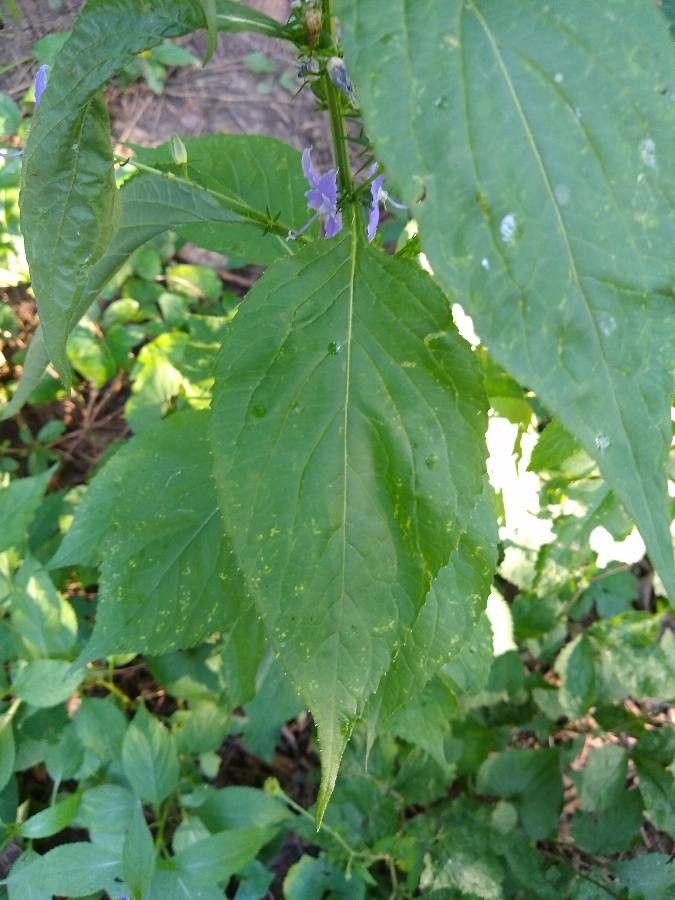
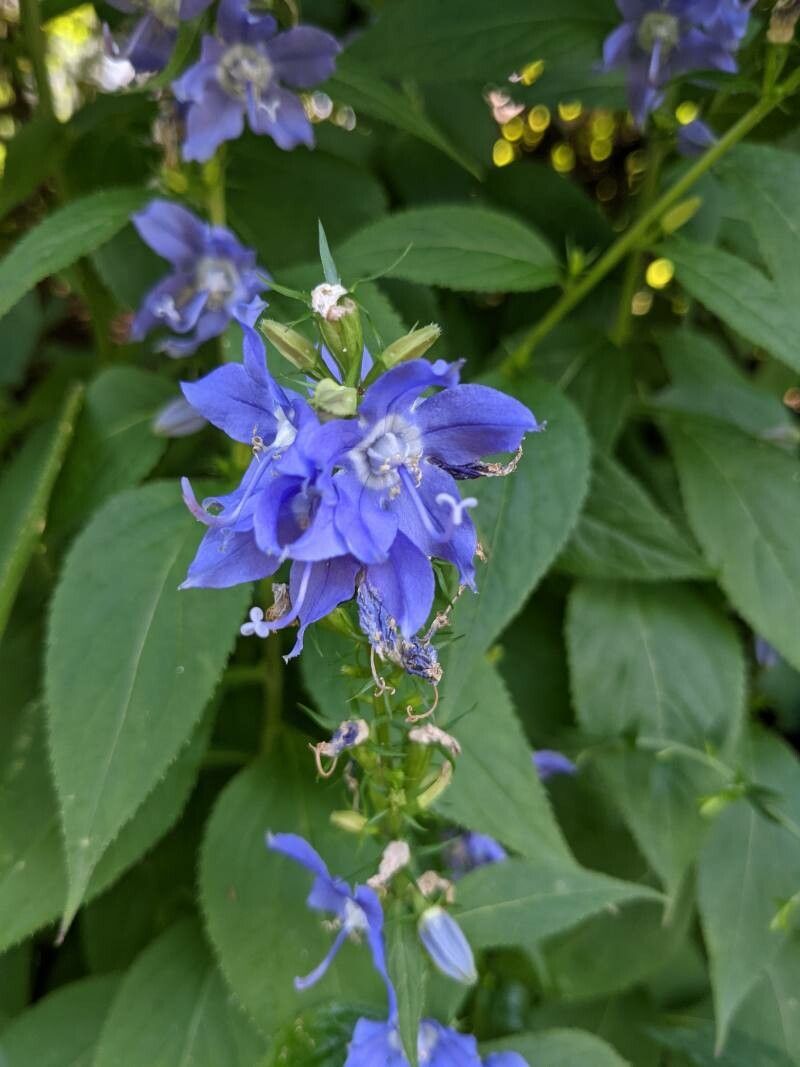
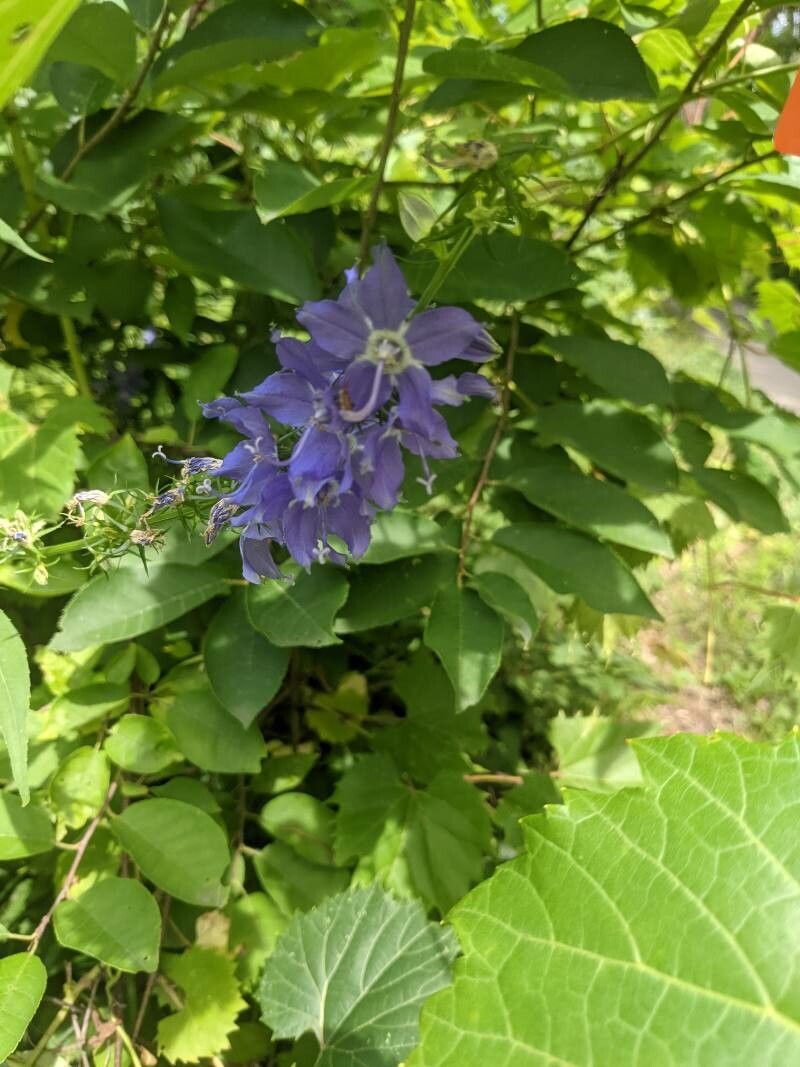
Campanula americana, the American bellflower, or tall bellflower, is a bellflower native to eastern North America. Tall bellflowers can be annual or biennial with a varying life-history with seeds germinating in the fall producing annual plants and spring-germinating seeds producing biennial plants. Long-tongued bees are the primary pollinators, including Megachile campanulae, but halictid bees, butterflies, and skippers may also act as pollinators. Tall Bellflowers do not generally self-pollinate. Some authorities, including the USDA PLANTS database, consider the name Campanulastrum americanum to be the accepted name for this species.
American Bellflower has strong disease resistance and is generally not likely to get sick. Still, it can be vulnerable to pests and diseases present in its environment. Such infections are typically mild. Regarding care, this plant needs moderate maintenance. It should be pruned regularly to preserve its appearance and support healthy growth. Fertilizing can also encourage flowering. American Bellflower is suitable for anyone who has outdoor space, like a garden or patio, and does not demand much care experience. It may need additional attention when kept indoors.
How to keep Campanulastrum Americanum.
Light
The American Bellflower thrives with abundant daylight but can also tolerate limited sunlight, which may affect its growth rate and the size of its blooms. Both excessive and insufficient daylight can produce unhealthy conditions, and its natural growing habitat reflects this variation in light.
Temperature
American Bellflower prefers warm climates and naturally does best at temperatures between 68 and 95 °F (20 and 35 ℃). Seasonal changes may require adjustments to keep it within this preferred range for optimal growth.
Fertilizer
When most of the American Bellflower's blooms have fully opened, resume fertilizing. At the peak of bloom production, fertilize every three to four weeks, as the weather allows. Then, once the plant begins producing fewer new blooms, stop fertilizing; there's no need to feed it when it can no longer produce more flowers.
Botanical profile.
- Plant Type
- Herb
- Life Cycle
- Annual, Biennial, Perennial
- Genus
- Campanulastrum
- Family
- Campanulaceae
- Hardiness Zone
- 4-8
- Mature Height
- 0.91 m to 1.83 m
- Mature Spread
- 30 cm to 61 cm
- Leaf Color
- Green, Blue
- Leaf Type
- Deciduous
- Flower Color
- Blue, Purple, Lavender
- Flower Size
- 2.54 cm to 7.62 cm
- Bloom Time
- Early summer, Mid summer
- Planting Time
- Autumn
- Harvest Time
- Mid summer
Other names.