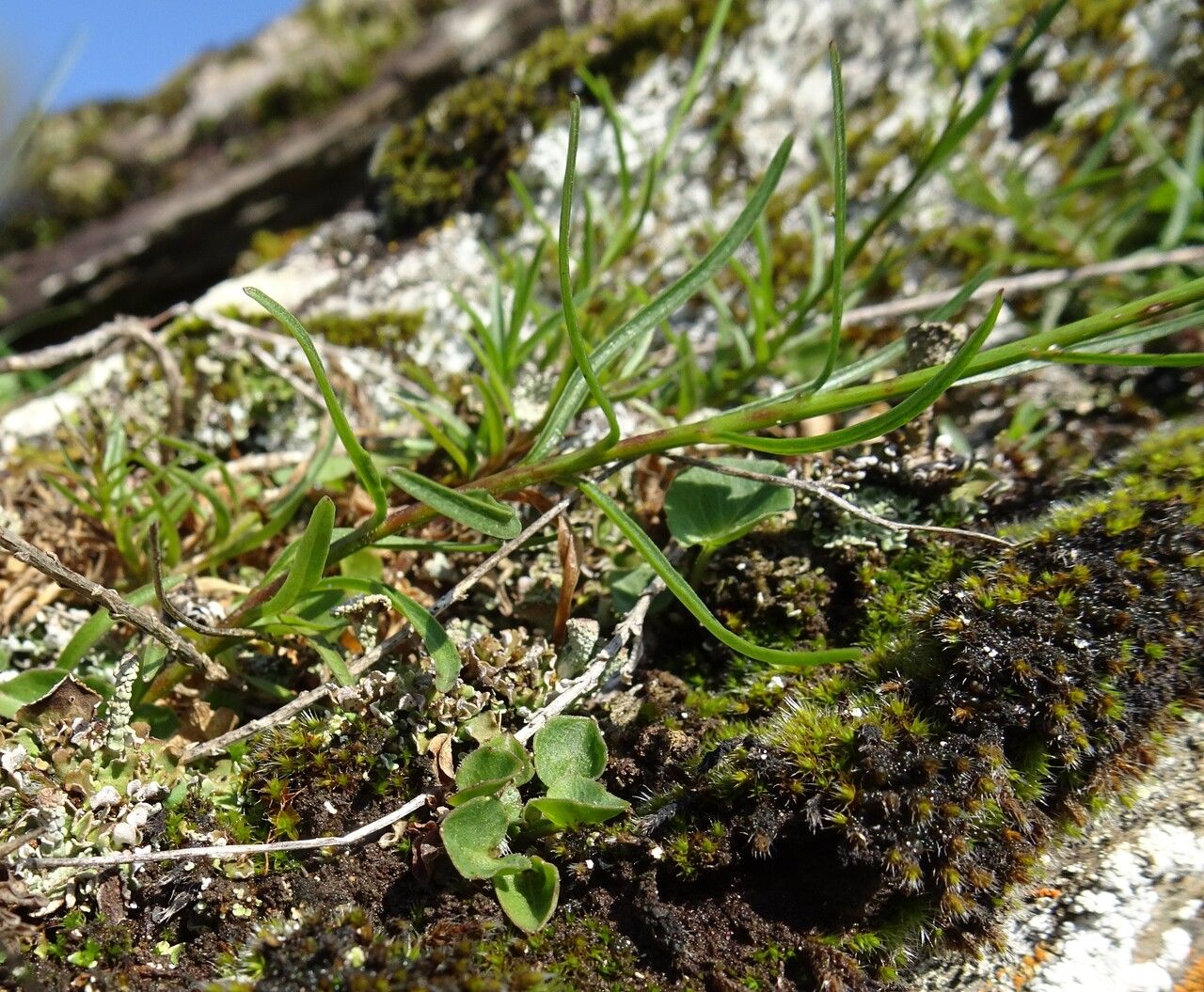
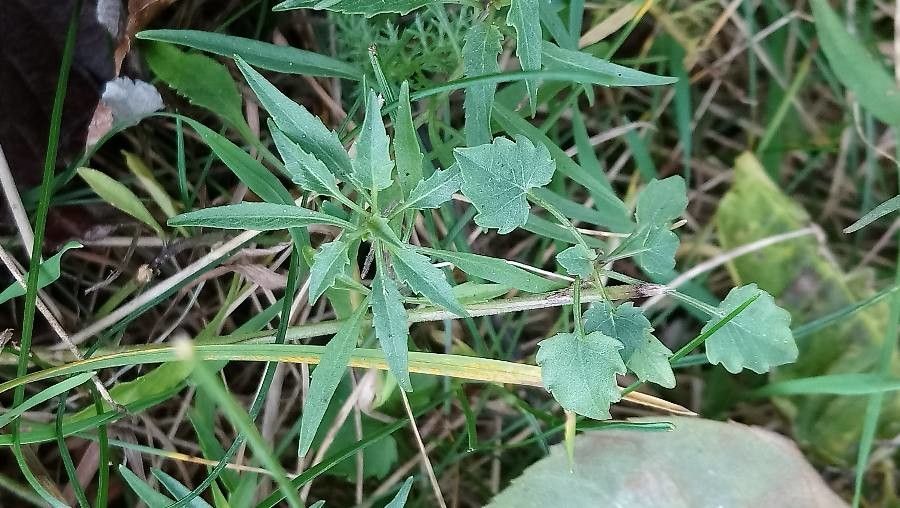
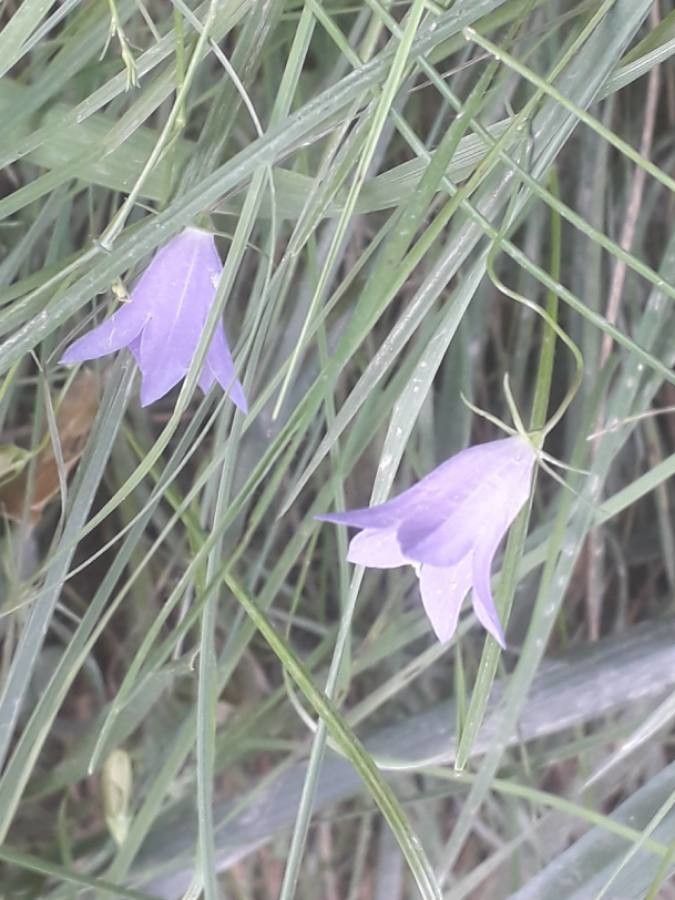
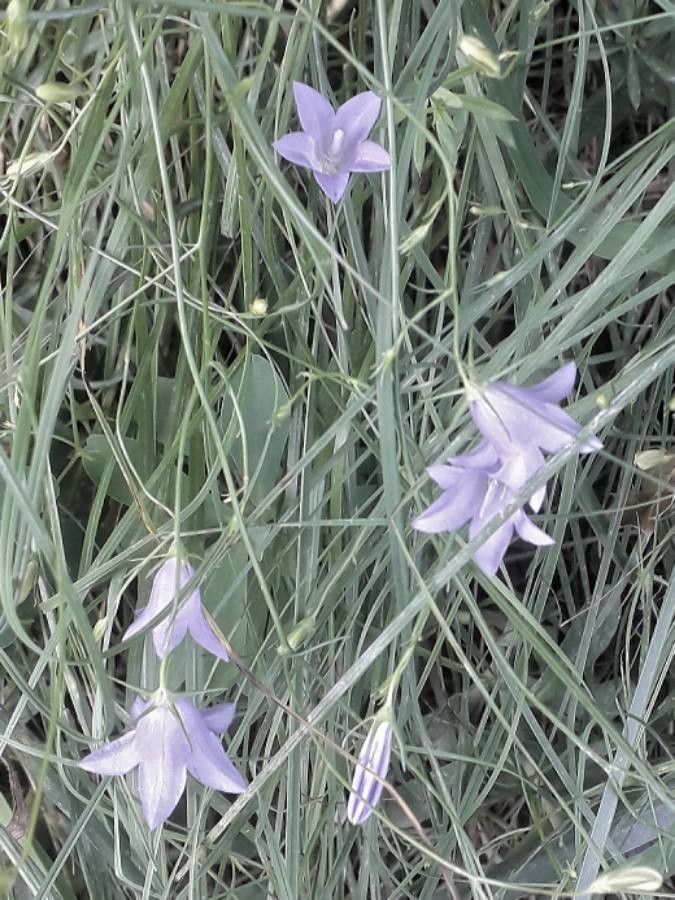
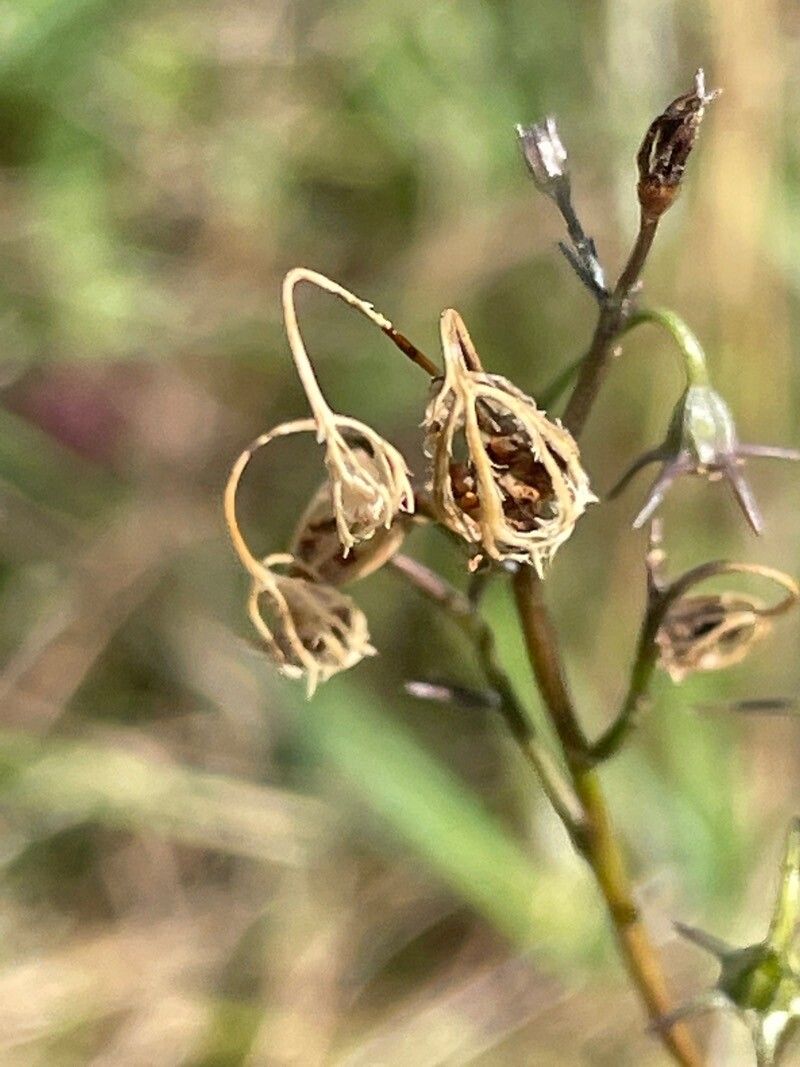
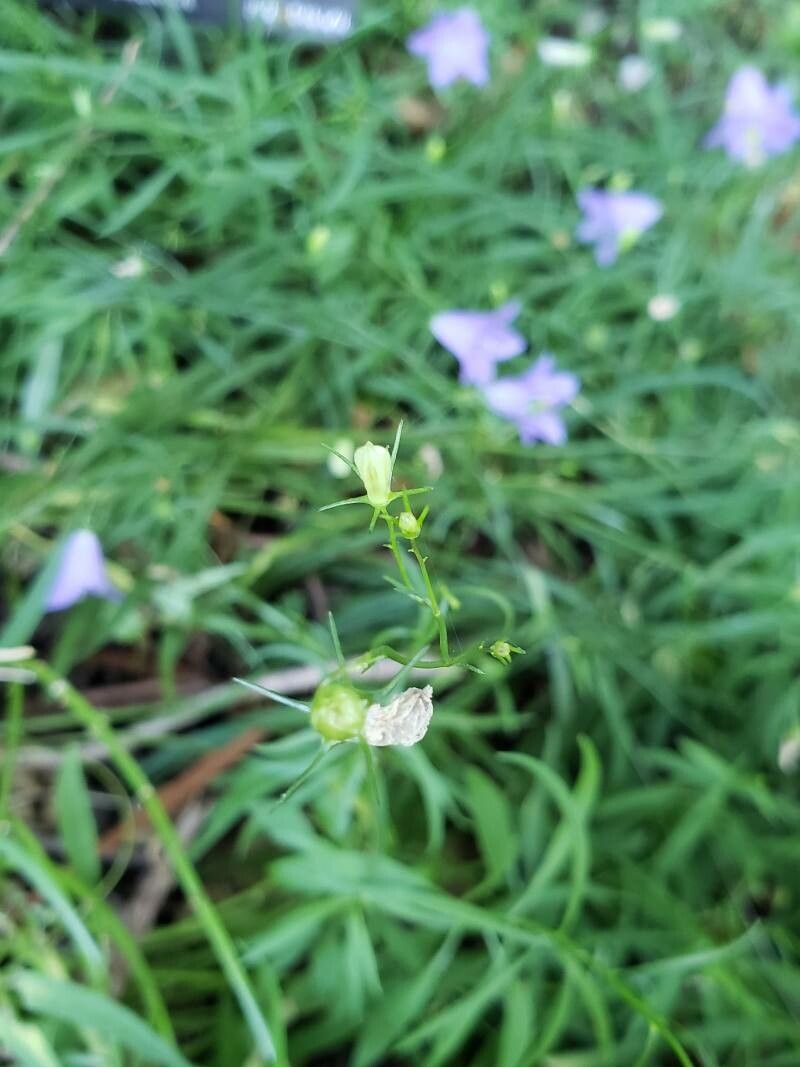
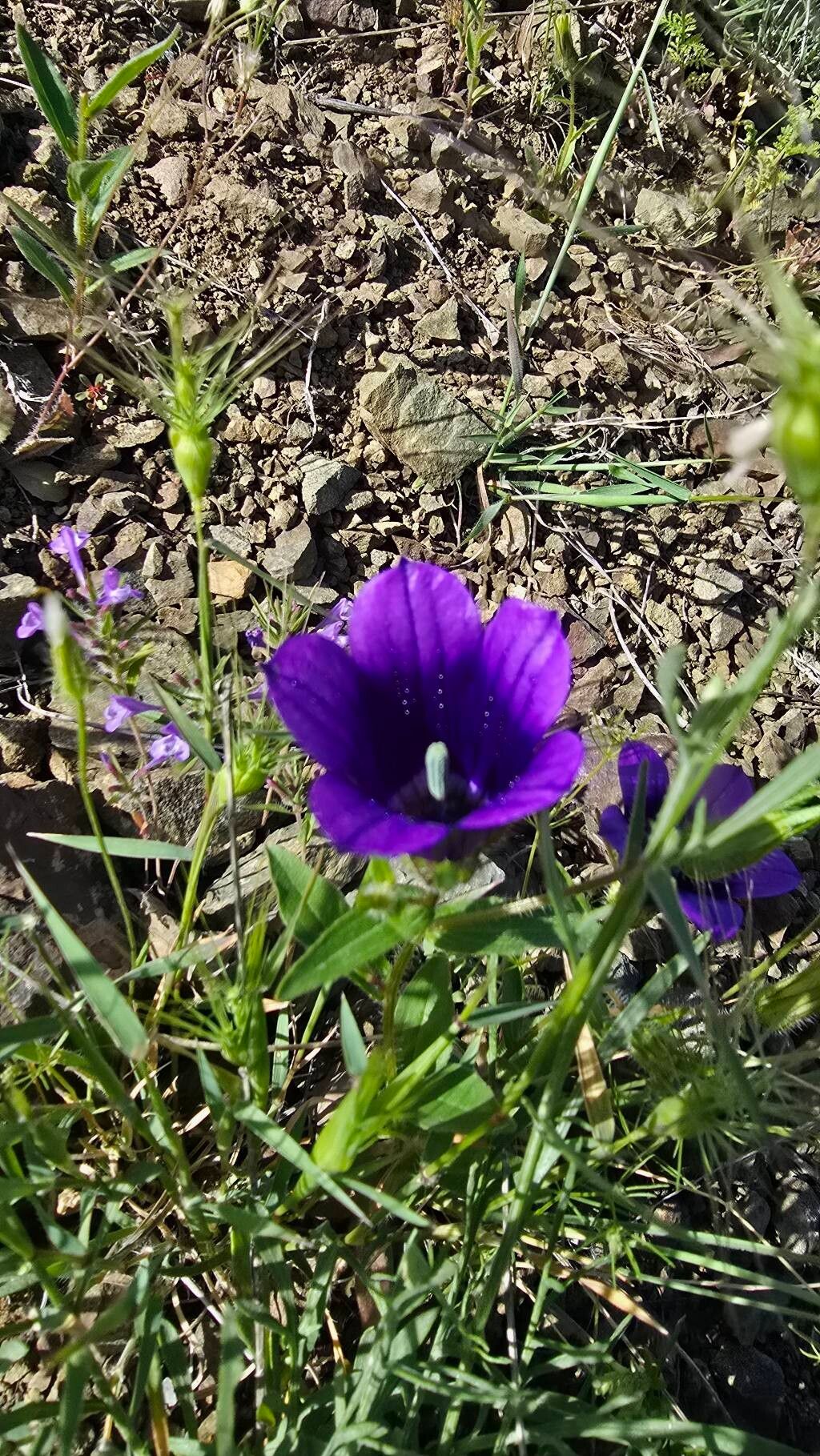
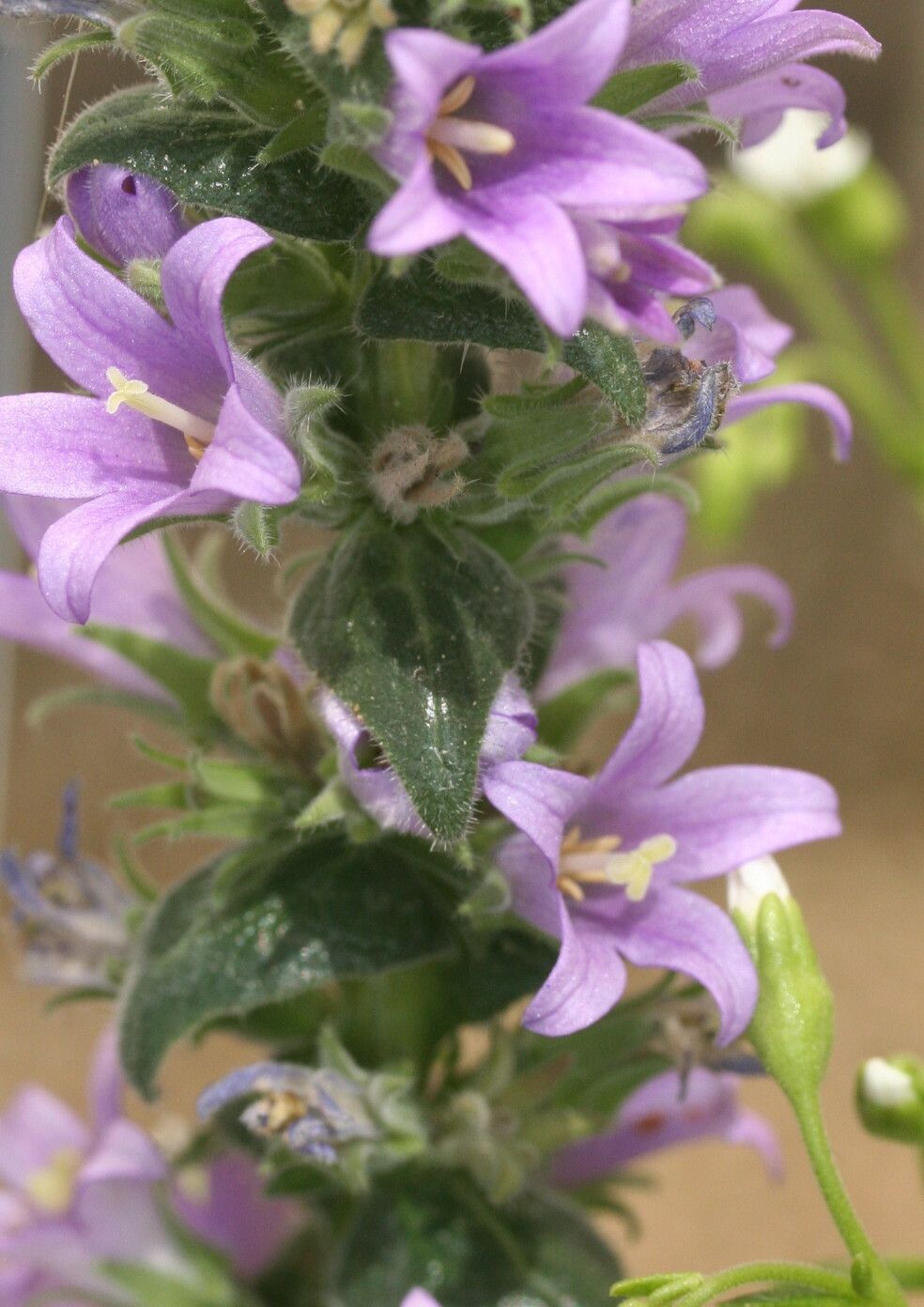
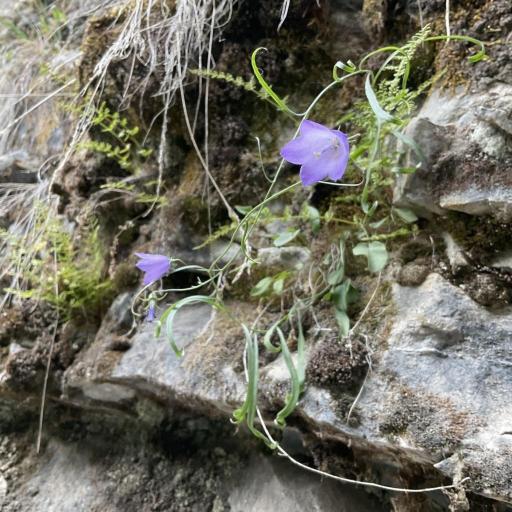
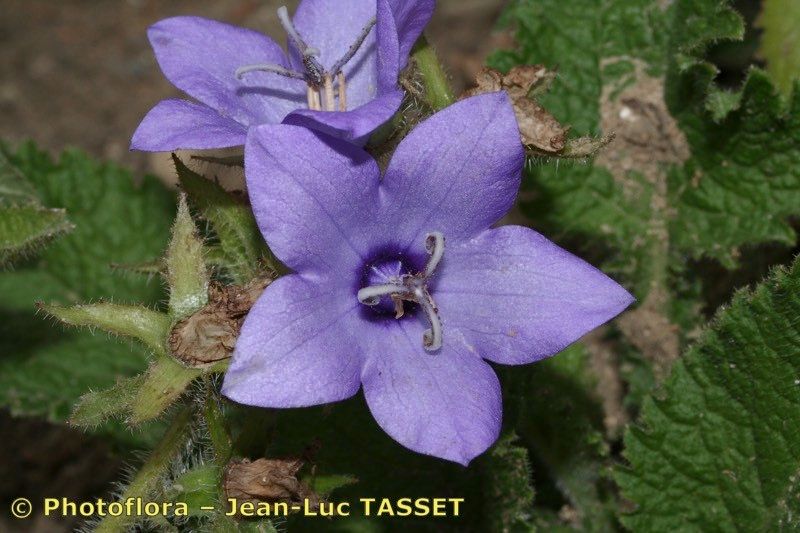
Campanula rotundifolia, the harebell, Scottish bluebell, or bluebell of Scotland, is a species of flowering plant in the bellflower family Campanulaceae. This herbaceous perennial is found throughout the temperate regions of the northern hemisphere. In Scotland, it is often known simply as bluebell. It is the floral emblem of Sweden where it is known as small bluebell. It produces its violet-blue, bell-shaped flowers in late summer and autumn. The Latin specific epithet rotundifolia means "round leaved". However, not all leaves are round in shape. Middle stem-leaves are linear.: 707
Bluebell bellflower is fairly resistant to diseases and is usually not easily affected. However, it can be vulnerable to pests and diseases found in its environment. Such infections are typically not serious. For care, this plant needs moderate maintenance. It should be pruned regularly to keep a neat appearance and support healthy growth. Fertilizing can also encourage flowering. Bluebell bellflower is well suited to anyone with outdoor space, like a garden or patio, and does not demand substantial gardening experience. It may need extra care when grown indoors.
How to keep Campanula Rotundifolia.
Light
The Bluebell bellflower grows best in situations where it has access to the sun's full spectrum, though it can tolerate locations with partially obscured light. This characteristic comes from its native habitats, which range from fully exposed to partly sheltered sun. Poor light management can cause uneven growth and may lead to wilting.
Water
The bluebell bellflower, native to cool temperate regions, thrives in moist, well-drained soil with consistent moisture. It is best to water it weekly, taking care not to oversaturate the soil. Using rainwater is beneficial, as it provides a natural source of hydration that supports the plant’s growth cycles.
Humidity
This plant will thrive in moderate humidity, which is probably the level in your home. However, misting it a few times a week can be very beneficial. Make sure the room has good ventilation.
Temperature
Bluebell bellflower prefers a temperate environment with temperatures ranging from 32 to 95 °F (0 to 35 °C). It can adjust to cooler conditions in the fall and warmer ones in the summer, though extreme temperature swings may hinder its growth.
Fertilizer
For the Bluebell bellflower, one fertilizer application in spring is generally enough, though several feedings can enhance growth. Feed it every month to every month and a half. Fertilization improves the leaves’ appearance and function, helping maintain uniform color and a healthy texture. It also encourages root development and increased nutrient uptake for long-term plant health.
Pruning
To ensure bluebell bellflowers thrive, it's important to prune them precisely from early to late spring. Removing dead stems at this time enhances growth and improves airflow. This practice not only promotes healthier blooms but also prevents self-seeding, maintaining a tidy appearance and consistent flowering throughout the growing season.
Pot & Repot
When repotting Bluebell bellflower, select a pot 1–2 inches (2.5–5.1 cm) larger that offers ample drainage. Use a well-draining potting mix. Repot in spring or fall, making sure the root ball sits slightly lower than the rim of the pot. Water thoroughly after repotting and place it in a warm location with indirect sunlight.
Botanical profile.
- Plant Type
- Herb
- Life Cycle
- Perennial
- Genus
- Campanula
- Family
- Campanulaceae
- Hardiness Zone
- 3-9
- Mature Height
- 10 cm to 52 cm
- Mature Spread
- 49 cm
- Leaf Color
- Green
- Leaf Type
- Deciduous
- Flower Color
- Lavender
- Flower Size
- 2.54 cm
- Bloom Time
- Early summer, Mid summer
- Planting Time
- Spring
- Harvest Time
- Mid summer
- Native Area
- Eurasia and North America
Other names.
Reader questions.
How should I water my Bluebell bellflower to keep it healthy?
To keep your Bluebell bellflower healthy, it's best to use filtered water at room temperature or slightly warmer. Tap water may contain harmful particles, so filtering it is a good idea. The Bluebell bellflower prefers warm environments, so cold water can be a shock to its system. Instead of watering from above, it's better to apply the filtered water directly to the soil until it's completely soaked. This helps the roots absorb moisture and nutrients, promoting healthy growth.
Why should I put fertilizer on my Bluebell bellflower?
The Bluebell bellflower has its main structure composed of leaves. To ensure that these leaves appear vibrant and function effectively, the most impactful method is fertilization. Proper fertilization will not only result in consistent leaf color and a healthy texture, but it will also benefit the plant beneath the soil's surface. Fertilization supports the growth of new roots in your Bluebell bellflower and also helps to maintain the existing roots within its root system. This means that by fertilizing, you not only keep your plant healthy now but also enhance its ability to absorb soil nutrients in the future.
What are the sunlight requirements for Bluebell Bellflower?
Bluebell Bellflower requires full sun, which means it thrives in areas receiving more than 6 hours of sunlight daily. However, it can also survive in partial sun conditions, approximately 3-6 hours of sunlight. It's crucial to observe the movement of sunlight through your garden to find spots that offer the right balance of light and shade, ensuring the plants' well-being.
What kind of environment does the Bluebell bellflower prefer?
The Bluebell bellflower, or Campanula rotundifolia, thrives in a temperate environment with a temperature range of 32 to 95°F (0 to 35°C). It is adaptable to the cooler temperatures of fall and the warmer temperatures of summer. However, it's important to note that extreme temperature fluctuations may inhibit its growth. The plant possesses strong cold resistance, and usually, special frost protection measures are not necessary during winter. Nonetheless, if winter temperatures are expected to drop below -35°C, cold protection should be provided by covering the plant with soil or straw. It is also beneficial to water the plant abundaneously before the first freeze in autumn to ensure the soil remains moist and enters a frozen state, which helps prevent drought and water scarcity during winter and early spring.
What should I do if I give my Bluebell bellflower too much or too little water?
Overwatering is a common issue that can harm your Bluebell bellflower. It causes wilting and yellowing of the stems and leaves, and if it continues for a long time, it can lead to diseases like root rot, mold, and mildew, which can be fatal to your plant. Underwatering is less common but still possible. It makes the leaves brittle and brown. It's important to recognize the signs of overwatering and take action promptly. Some diseases caused by overwatering may not be fixable if left too long. If you see early signs of overwatering, reduce your watering schedule and check the soil drainage. If it drains poorly, replace it with a loose, well-draining potting mix. If you notice signs of underwatering, water more frequently until the signs disappear.
When should I fertilize my Bluebell bellflower for the best results?
If you grow your Bluebell bellflower outdoors, you'll see new growth in early spring. This indicates that it's time to start fertilizing. Usually, one application is enough, but if you want maximum growth, you can fertilize multiple times in spring and early summer. Aim for feeding once every month to a month and a half.
Can Bluebell Bellflower grow under artificial lighting?
Yes, Bluebell Bellflower can grow under artificial lighting, especially when natural sunlight is insufficient, like during winter or in less sunny spaces. Adequate lighting is essential for optimal growth indoors. LED lights are recommended for their ability to provide specific wavelengths needed by plants. Full sun plants require 30-50W/sq ft, partial sun plants need 20-30W/sq ft, and full shade plants need 10-20W/sq ft of artificial light. The light source should be placed 12-36 inches above the plant for 8-12 hours per day to mimic natural sunlight conditions.
How should you care for a Bluebell bellflower in low temperatures?
Bluebell bellflower is quite cold-tolerant and performs best when temperatures remain above 0°C. During the winter, it's crucial to ensure the temperature does not drop below -30°C. If temperatures fall below -35°C, the plant may continue to appear unaltered throughout the winter, but a noticeable decrease in sprouting, or a complete lack of sprouting, might occur during spring. To address this, in spring, remove any parts of the plant that have failed to sprout. This proactive measure ensures the health and vitality of the Bluebell bellflower for the upcoming growth period.
How often should I water my Bluebell bellflower?
If your Bluebell bellflower is in a pot, the best way to determine if it needs water is to stick your finger into the soil. If the top two to three inches of soil are dry, it's time to water. If you have your Bluebell bellflower planted outdoors in the ground, you can do a similar soil test. When the first few inches of soil have dried out, it's time to water. Usually, during spring and early fall, you'll need to water this plant about once a week using this method. However, during extremely hot weather, you may need to water it twice a week or even more. Having said that, mature and well-established Bluebell bellflowers can tolerate dry spells quite well.
When is it not a good idea to use fertilizer on my Bluebell bellflower?
During the late fall and winter, your Bluebell bellflower goes into a dormant phase and stops producing new growth. It is recommended not to fertilize your Bluebell bellflower during this time. In the spring and summer, if you choose to fertilize, gradually reduce the amount of fertilization as summer approaches because the growth rate of your Bluebell bellflower also slows down. It is never a good idea to fertilize your Bluebell bellflower when the weather is unusually hot or the soil is extremely dry. Fertilizing under these conditions can stress the plant and cause it to die prematurely.
What are the symptoms of light deficiency in Bluebell Bellflower?
Symptoms of light deficiency in Bluebell Bellflower include smaller new leaves, leggy or sparse growth, faster leaf drop, slower or no new growth, lighter-colored new leaves, chlorosis (leaves turning yellow), sunscald (pale, bleached areas on plant tissue), leaf curling, wilting, and leaf scorching. These symptoms indicate that the plant is not receiving adequate sunlight, affecting its ability to photosynthesize and maintain health.
How should you care for a Bluebell bellflower in high temperatures?
In high temperatures, particularly during summer, it's important to keep the Bluebell bellflower below 35°C. Temperatures exceeding 38°C can cause the leaves to become lighter in color, prone to curling, susceptible to sunburn, and in severe cases, the entire plant may wilt and dry out. If such conditions occur, you should trim away the sunburned and dried-up parts of the plant. To protect the plant from excessive heat, move it to a location that provides shade during the midday and afternoon sun, or use a shade cloth. Additionally, watering the plant in the morning and evening helps keep the soil moist, mitigating the stress from high temperatures.