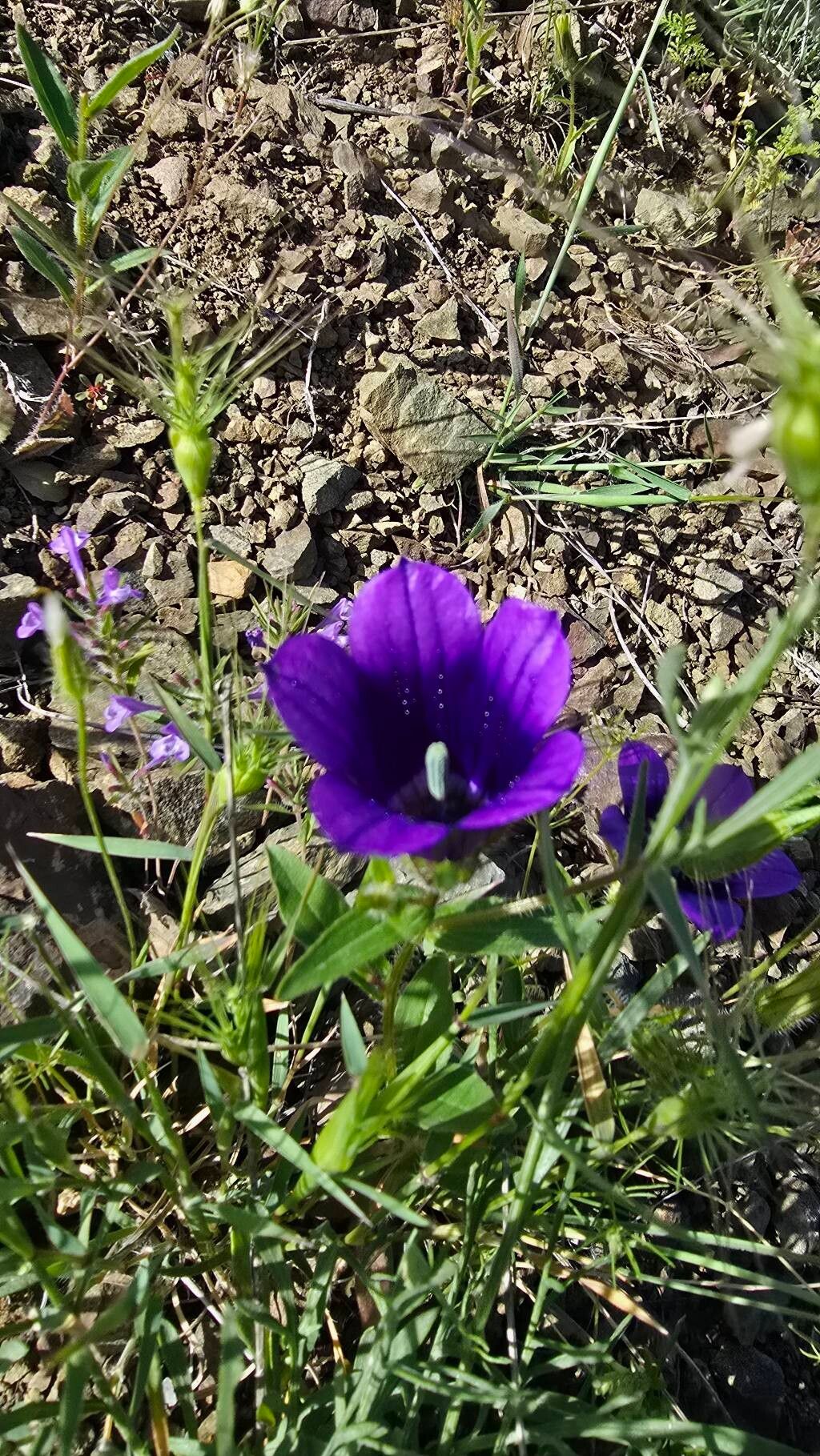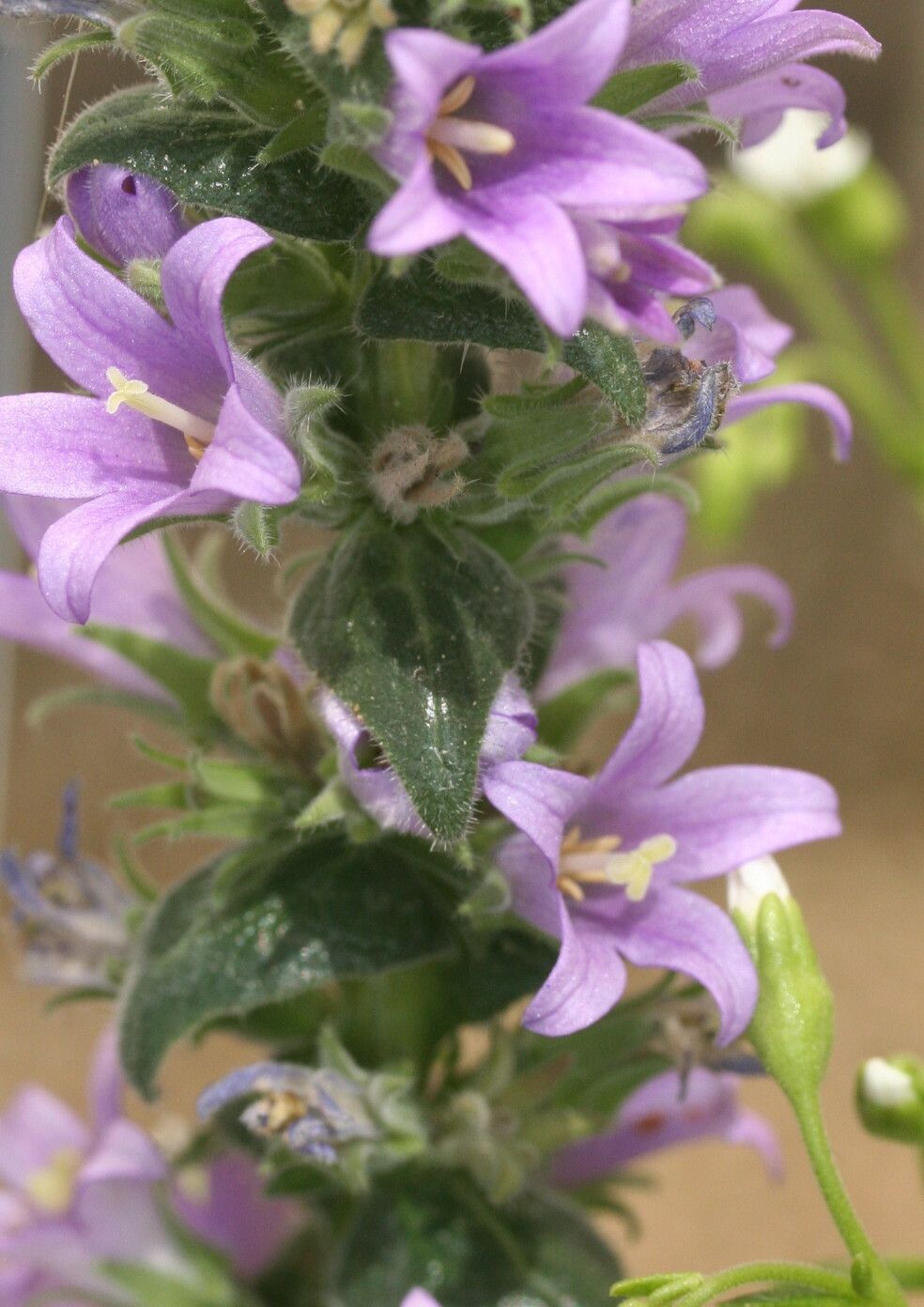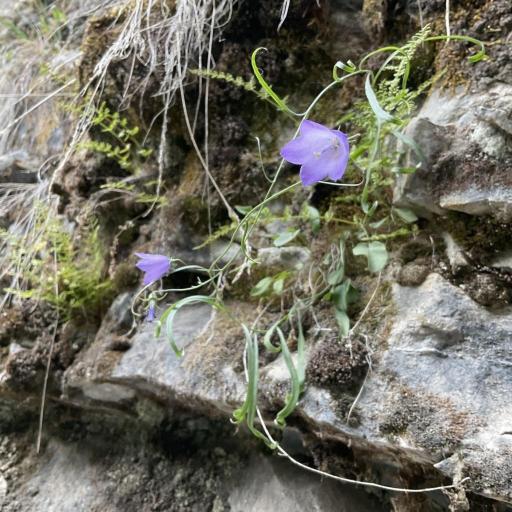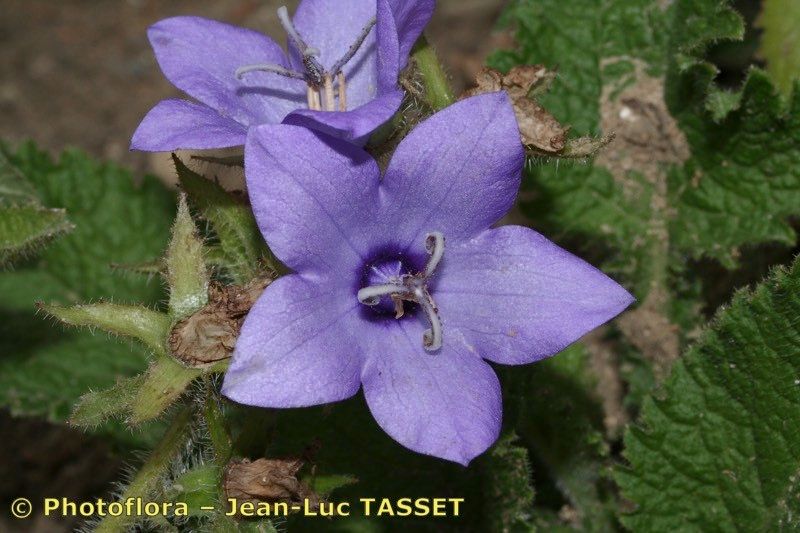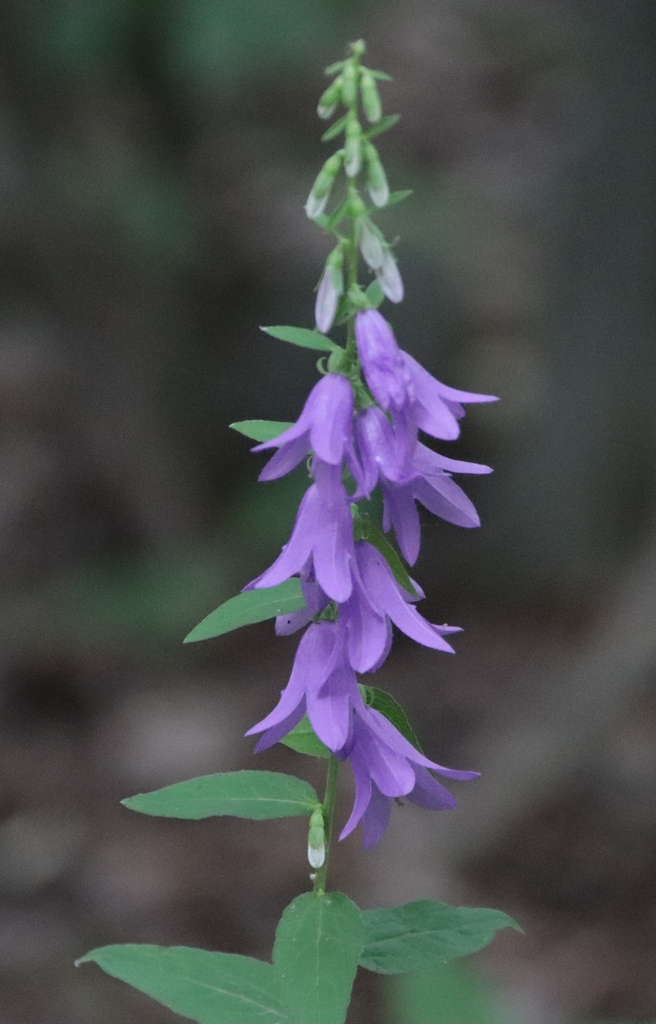
Campanula rapunculoides, commonly known as creeping bellflower or rampion bellflower, is a perennial herbaceous plant in the Campanulaceae family. Native to Europe and Asia, it has been introduced and naturalized in North America.
This plant typically grows up to 1 meter tall with a spreading habit. It features long, narrow leaves with toothed edges. The bell-shaped flowers, which have five petals, can range in color from blue-violet to white. These blooms appear from June through August on tall spikes that rise above the foliage.
Creeping bellflower prefers moist soils but can tolerate dry conditions once established. It spreads rapidly through underground rhizomes and can become invasive if not properly controlled.
Creeping bellflower, originally from Europe, has become highly invasive since its introduction to the United States. Each plant is capable of producing up to 15,000 seeds, and it can also propagate using its thick taproot. This makes the plant difficult to remove once it becomes established. FUN FACT · FROM THE LIBRARY
Traditionally, this plant has been used in medicine for its diuretic properties and for treating respiratory ailments such as coughs and bronchitis.
While Campanula rapunculoides is a beautiful ornamental plant with attractive flowers, it should be planted with caution due to its potential invasiveness if not managed properly.
The creeping bellflower gets its name from its unique bell-shaped flowers. The genus name, "Campanula," actually means "small bell," reflecting this shape. This plant spreads by extending its underground stems, allowing it to creep through the soil. That's why it is commonly known as the creeping bellflower.
Creeping bellflower has strong resistance to disease and is generally not prone to illnesses. However, it can be vulnerable to pests and diseases present in its environment. Those infections are typically not severe. Regarding care, this plant needs moderate maintenance. It requires regular pruning to keep a good appearance and encourage healthy growth. Applying fertilizer can also help stimulate flowering. Creeping bellflower is suitable for anyone with outdoor space, such as a garden or patio, and does not demand extensive care experience. It may need more attention when cultivated indoors.
How to keep Campanula Rapunculoides.
Light
Creeping bellflower thrives in locations that receive moderate sunlight, though it can tolerate areas exposed to stronger light. Native to regions with mixed sun exposure, the plant's growth and health may suffer if it is overly shaded or exposed to excessive light, which can lead to bleaching or sunscorches.
Water
Creeping bellflower flourishes in moist, humid conditions and needs consistent weekly watering. As a herbaceous perennial, it benefits from natural rainfall outside, which aligns with its need for regular hydration. Its growth cycle is adapted to seasonal rainfall, making it a resilient choice for temperate gardens.
Temperature
Creeping bellflower naturally grows in temperate zones. It thrives in temperatures from 32 to 90 °F (0 to 32 °C), so it can be grown in a broad range of settings. In winter, when temperatures fall below freezing, it may need some protection to survive. In summer, occasional watering might be required to prevent drought stress.
Fertilizer
A single fertilizer application in spring is typically adequate for Creeping bellflower, though repeated feedings can maximize growth. Fertilize every month to a month and a half. Fertilization improves leaf appearance and function, helping maintain even color and a healthy texture. It also encourages root growth and nutrient uptake for the plant's long-term health.
Pruning
Creeping bellflower is a hardy perennial known for its blue-violet, bell-shaped flowers. It thrives with regular pruning. The best time to prune is from early to late spring, after the frost has passed. Removing dead stems helps maintain the plant's health and enhances its appearance. Cutting back spent flowers can also control the plant's spread and encourage more vigorous blooming.
Botanical profile.
- Plant Type
- Herb
- Life Cycle
- Perennial
- Genus
- Campanula
- Family
- Campanulaceae
- Hardiness Zone
- 3-7
- Mature Height
- 0.3 m to 1.22 m
- Mature Spread
- 91 cm
- Leaf Color
- Green
- Leaf Type
- Deciduous
- Flower Color
- Purple, Lavender
- Flower Size
- 2.54 cm
- Bloom Time
- Early summer, Mid summer
- Planting Time
- Spring
- Harvest Time
- Mid summer
- Native Area
- Europe and western Siberia
Other names.
Reader questions.
When should I water my Creeping Bellflower?
Watering your Creeping Bellflower is essential for its health and growth, with the ideal time to water being when the top 1-2 inches of soil are dry. Check the soil's moisture level by touching it; if it feels dry, it's time to water. Observe the plant's leaves for signs of under- or over-watering, such as wilting or discoloration. A slowed growth rate or browning of bud tips can also indicate it's time to water. Be mindful of overwatering, as it can lead to root rot, while underwatering can cause the plant to wilt and potentially die. Striking a balance in watering will contribute to a healthy and flourishing Creeping Bellflower.
Why should I put fertilizer on my Creeping bellflower plant?
The Creeping bellflower's leaves are an important part of its structure. Fertilization is key to keeping these leaves looking great and functioning properly. With proper fertilization, you can ensure that the leaves of your Creeping bellflower maintain consistent color and a healthy texture. Additionally, fertilization also supports the growth of new roots and maintains the existing root system below the soil's surface. This not only keeps your plant healthy in the present but also enhances its ability to absorb nutrients from the soil in the future.
What are the sunlight requirements for creeping bellflower (Campanula rapunculoides)?
Creeping bellflower thrives in a variety of sunlight conditions, from partial sun (about 3-6 hours of sunlight) to full sun (above 6 hours of sunlight). It's important to watch how sunlight moves through your garden to find spots that offer a balance of light and shade, ensuring the plant's happiness. While it can grow in stronger light, excessive shade or light can negatively affect its health, possibly leading to bleaching or sunscorches.
What are the essential growing conditions for creeping bellflower?
Creeping bellflower, also known by its botanical name, Campanula rapunculoides, thrives in temperate regions with temperatures ranging from 32 to 90 ℉ (0 to 32 ℃). This wide range makes it adaptable to various environments. To survive winter's freezing temperatures, it may need some protection, although it's highly cold-tolerant and doesn't require additional frost measures. However, ensuring the plant is watered generously before the first freeze can help keep the soil moist throughout winter, aiding the plant through potential drought and water scarcity in early spring. During summer, occasional watering may be necessary to prevent drought stress.
How should I water my Creeping Bellflower?
The Creeping Bellflower thrives with evenly moist soil but is drought-resistant. It's best to use a watering can with a long, narrow spout to direct water to the roots, preventing weed growth and soil erosion. A moisture meter can help maintain adequate moisture levels. Always water at the base to avoid diseases and pests on the foliage, ensuring well-drained soil to prevent root rot. Proper drainage is vital, so excess water doesn't saturate the roots, which contributes to a healthy growth environment for Creeping Bellflower.
When should I fertilize my Creeping bellflower plant?
If you grow your Creeping bellflower outdoors each year, it will start growing new leaves in early spring. This is a signal that it's time to fertilize for the year. Typically, a single application of fertilizer in the spring will suffice for healthy growth. However, if you want to maximize the growth of your Creeping bellflower, you can fertilize multiple times during the spring and early summer. In this case, you can feed your Creeping bellflower once every month to a month and a half.
How does artificial lighting affect the growth of indoor creeping bellflowers?
When natural sunlight is insufficient, especially during winter or in less sunny spaces, artificial lighting becomes crucial for the growth of indoor creeping bellflowers. Adequate lighting promotes faster, healthier growth. LED lights are recommended for their ability to provide specific wavelengths needed by the plants. Full sun plants require 30-50W/sq ft of light, partial sun plants need 20-30W/sq ft, and full shade plants require 10-20W/sq ft. The light should be placed 12-36 inches above the plant to mimic natural sunlight, and most plants will need 8-12 hours of light per day.
How does the creeping bellflower react to low temperatures?
The creeping bellflower is exceptionally cold-resistant and can endure winter temperatures above -35℃. However, if temperatures fall below this threshold, it might not show immediate distress, but you might notice a decrease in its ability to sprout, or it might not sprout at all come spring. To counteract this issue, it's advisable to remove any parts of the plant that fail to sprout in spring.
How much water does Creeping Bellflower really need?
Creeping Bellflower requires 1 to 2 inches of water per week, but the exact amount depends on factors like pot size and plant size. Since it has a shallow root system, frequent but moderate watering is beneficial. Proper hydration is indicated by healthy, vibrant leaves, and sturdy stems. Over- or under-watering can pose risks such as root rot or stunted growth, so adjust watering based on the plant's condition and soil moisture. Despite its tolerance for standing water, avoiding prolonged waterlogging and ensuring good drainage is crucial. Watering in the early morning or late afternoon can minimize evaporation and allow for effective absorption.
When is it a bad idea to put fertilizer on my Creeping bellflower?
During late fall and winter, your Creeping bellflower goes into a dormant phase and stops producing new growth. It's important to avoid fertilizing it during this time. In spring and summer, if you decide to fertilize, gradually decrease the amount as summer approaches because the growth rate slows down. It's generally not a good idea to fertilize when the weather is unusually hot or the soil is extremely dry as this can stress the plant and cause it to die early.
What are the symptoms of insufficient or excessive light exposure in creeping bellflower?
The creeping bellflower can show various symptoms depending on light conditions. Symptoms of light deficiency include smaller new leaves, leggy or sparse growth, faster leaf drop, slower or no new growth, lighter-colored new leaves, indicating a lack of chlorophyll and essential nutrients. On the other hand, excessive sunlight can cause chlorosis, sunscald, leaf curling, wilting, and leaf scorching, indicating damage from too much direct sunlight.
What should be done if the creeping bellflower is exposed to high temperatures?
Creeping bellflower is susceptible to high temperatures. When the mercury rises above 32℃, the plant halts its growth and becomes prone to rot. In such cases, you should trim away the parts of the plant that are sunburned and dried up, move it to a spot where it's shielded from the harsh midday and afternoon sun, or provide shade using a cloth. It's also crucial to water the plant during the cooler hours of the morning and evening to maintain soil moisture and protect the plant from heat stress.