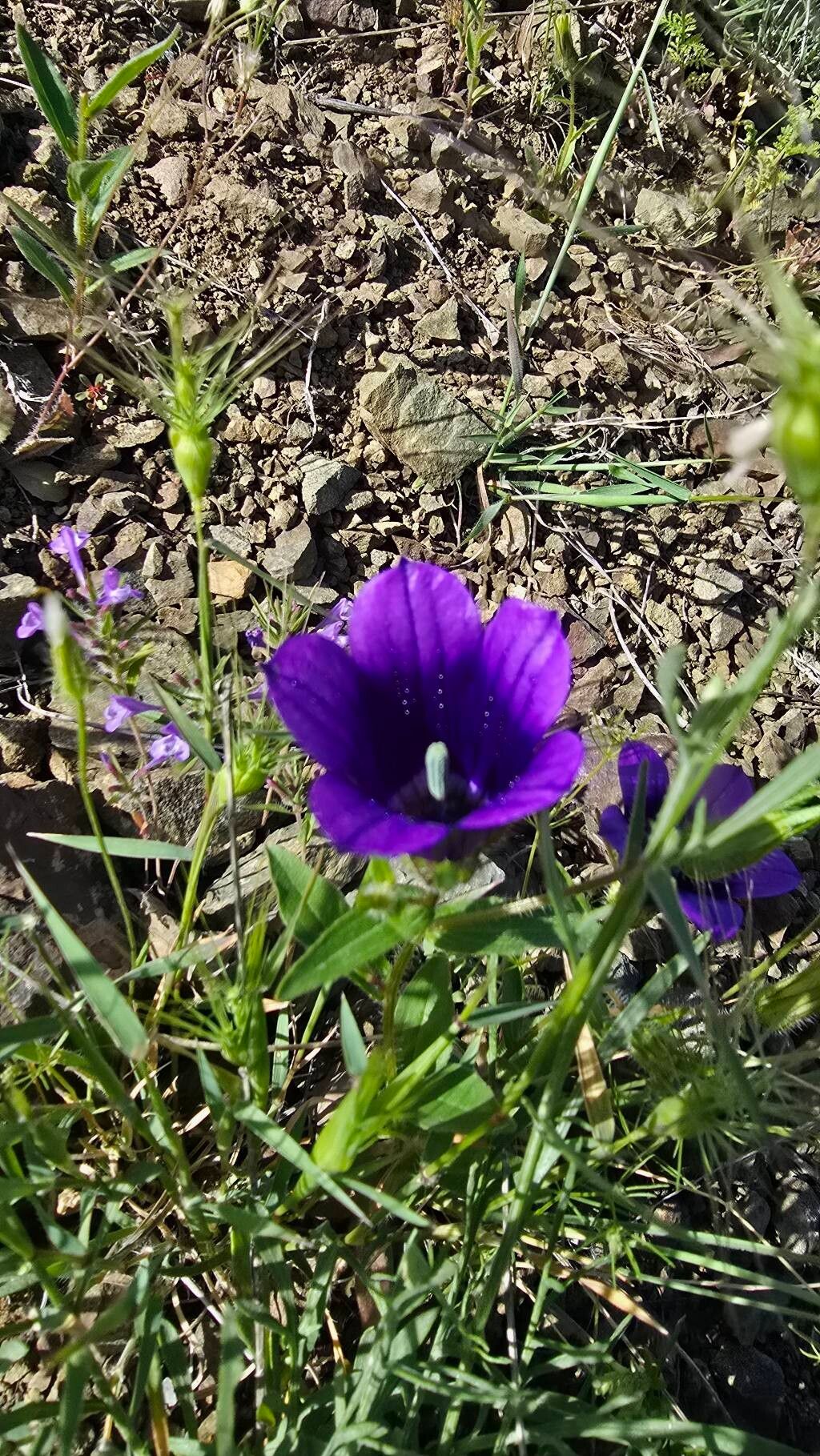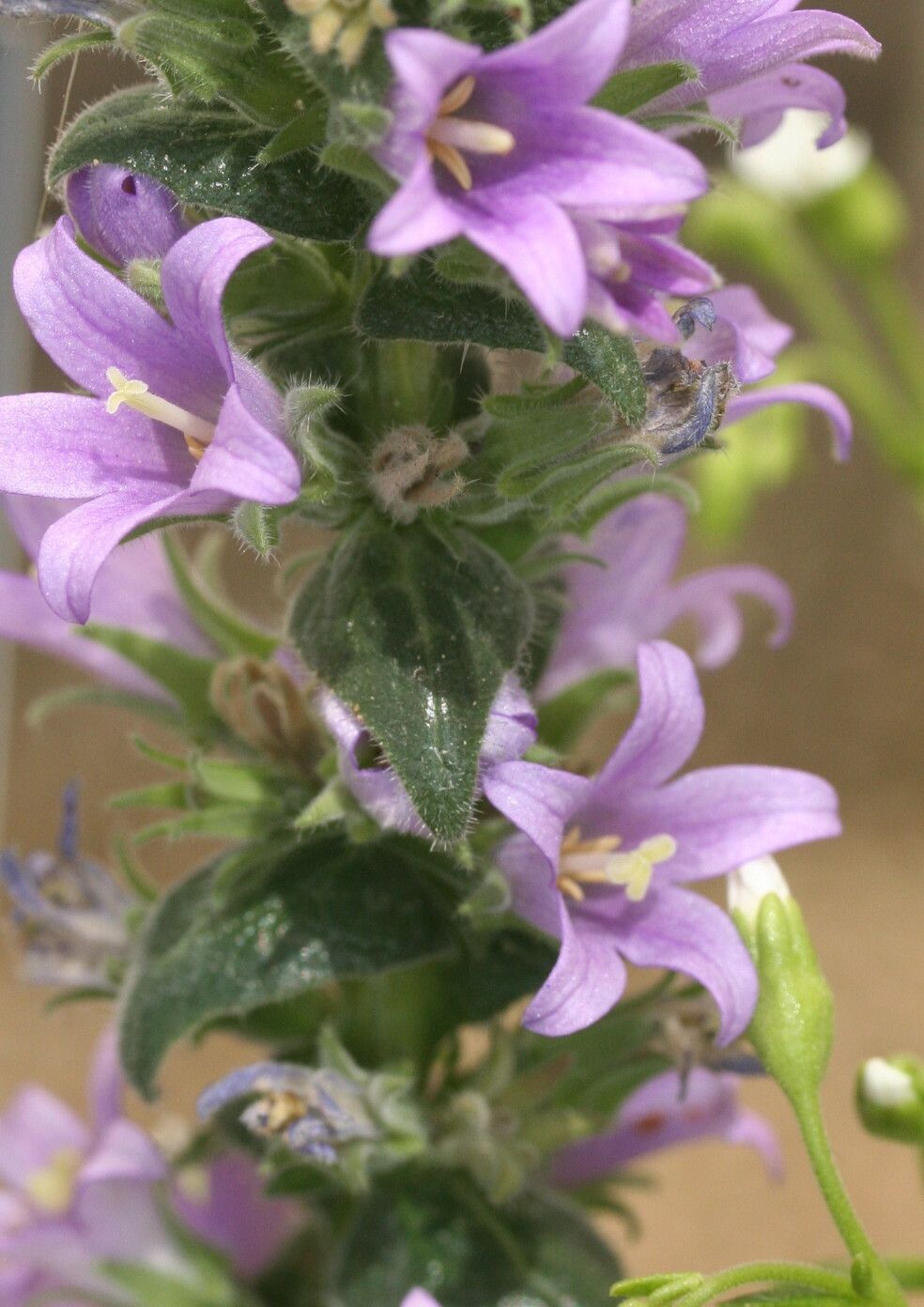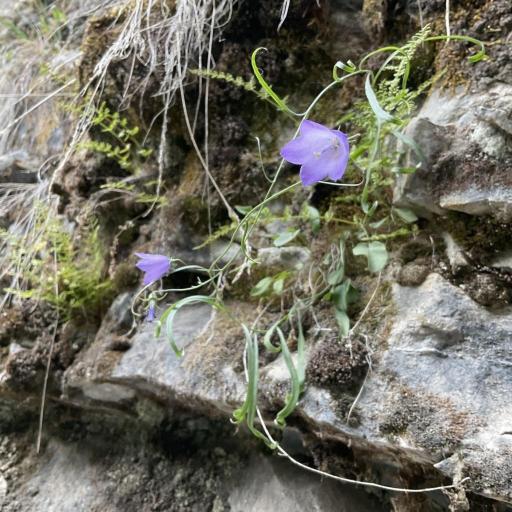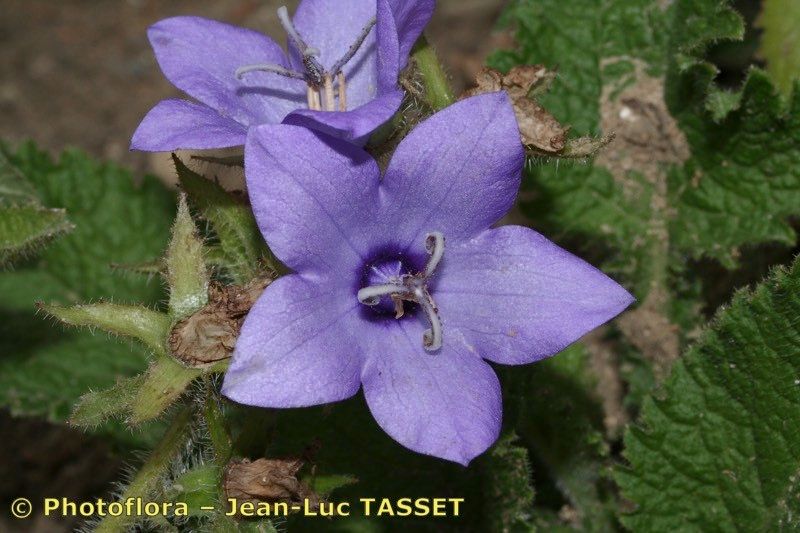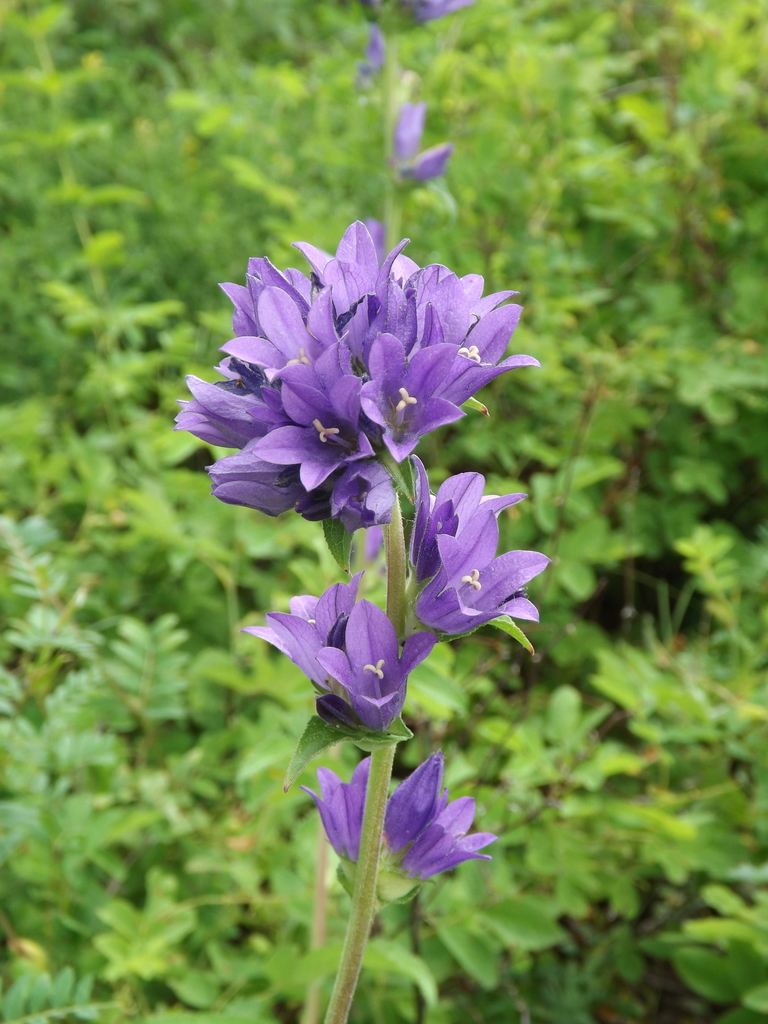
Campanula glomerata, commonly known as the clustered bellflower, is a herbaceous perennial plant belonging to the Campanulaceae family. Native to Europe and Asia, this plant has been introduced to North America as an ornamental. It grows up to 60 cm tall and forms clumps with basal rosettes of lance-shaped, toothed leaves that can reach up to 10 cm in length.
From late spring through summer, the clustered bellflower produces dense clusters of blue-violet flowers. These bell-shaped flowers feature five petals fused at the base to form a tube-like structure. Each flower measures about 2-3 cm in length and has a distinctive white center.
The plant thrives in full sun or partial shade within well-drained soil rich in organic matter. While it can tolerate drought conditions, it requires regular watering during prolonged dry spells.
Campanula glomerata is an excellent choice for borders or rock gardens due to its attractive foliage and showy flowers, which draw bees, butterflies, hummingbirds, and other pollinators. It also serves well as a cut flower for floral arrangements, thanks to its long-lasting blooms.
Overall, Campanula glomerata is a beautiful, easily grown perennial that adds both visual appeal and ecological benefits to garden spaces. Its vibrant flowers and foliage enhance any landscape design while attracting valuable pollinators.
The clustered bellflower gets its name from the way its blossoms resemble a cluster of small trumpets crowding around the stem. The genus name, Campanula, means "small bell," which refers to the bell shape of the flowers. The specific epithet highlights the tight grouping of flowers at the top of the stem, which gives the plant its common name, clustered bellflower.
Clustered bellflower is fairly disease-resistant and usually not prone to illnesses. Nonetheless, it can be susceptible to pests and diseases present in its environment. These problems are typically mild. In terms of care, the plant needs moderate maintenance. It should be pruned regularly to keep a tidy appearance and promote healthy growth. Fertilizing can also encourage more flowering. The clustered bellflower is appropriate for anyone with outdoor space, such as a garden or patio, and does not require much gardening experience. It may need extra care if grown indoors.
How to keep Campanula Glomerata.
Light
Clustered bellflower does best with abundant sunlight, which plays a key role in its vigorous growth and flowering. Native to sunny habitats, clustered bellflower can also grow in more shaded areas. However, changes in light exposure can influence its health and blooming.
Water
Clustered bellflower, well-suited for moderate climates, thrives in consistently moist, well-drained soil. To promote better flowering, water it weekly, and increase the watering during its active growing season. As a hardy herbaceous perennial, clustered bellflower grows well outdoors and can endure short periods of dryness.
Humidity
This plant needs special care because it loves high humidity levels of 60-80% or more. The best way to achieve this is by placing a humidifier near the plant. Daily misting is also essential! Make sure the room has good ventilation.
Temperature
The clustered bellflower originates from Europe and Asia and prefers temperatures between 32 and 90 ℉ (0 to 32 ℃). Because its roots are shallow, it requires frequent watering in summer. In winter, if temperatures fall below 20 ℉ (-6.67 ℃), using mulch to protect the plant is recommended.
Fertilizer
The best time to fertilize a Clustered bellflower is in early spring, when it is coming out of dormancy and starting active growth. Fertilizing supplies essential nutrients for healthy development. Although the Clustered bellflower has relatively low fertilizer requirements, an annual application can improve its survival and encourage better, longer-lasting flowers.
Pruning
The clustered bellflower is a clump-forming perennial known for its bell-shaped flowers. To maintain its health and promote vibrant blooms, prune the plant in early spring to remove dead stems and encourage new growth. Regularly deadhead the flowers and trim back spent stalks to further support plant health, improve air circulation, and reduce the risk of disease. This care will ensure vigorous displays throughout the season.
Pot & Repot
When repotting Clustered bellflower, choose a pot 1-2 inches (2.5–5.1 cm) larger that has ample drainage. Use a well-draining potting mix. Repot in spring or fall, making sure the root ball sits slightly below the rim of the pot. Water thoroughly after repotting and place the plant in a warm spot with indirect sunlight.
Toxicity
Campanula glomerata has no toxic effects reported.
Further reading →
The toxicity and danger assessments provided are for reference only. We do not assure their accuracy, so it's crucial not to depend on them. Seek professional advice when necessary for accurate guidance.
Botanical profile.
- Plant Type
- Herb
- Life Cycle
- Perennial
- Genus
- Campanula
- Family
- Campanulaceae
- Hardiness Zone
- 3-8
- Mature Height
- 20 cm to 91 cm
- Mature Spread
- 30 cm to 91 cm
- Leaf Color
- Green
- Leaf Type
- Deciduous
- Flower Color
- Purple
- Flower Size
- 11.43 cm
- Bloom Time
- Early summer, Mid summer
- Planting Time
- Spring
- Harvest Time
- Mid summer
- Native Area
- Europe and western Asia
Other names.
Reader questions.
How should I water my Clustered bellflower plant?
To properly water the Clustered bellflower, it is best to use filtered water at room temperature. Tap water may contain harmful particles, so filtered water is preferred. It is important to use water that is at room temperature or slightly warmer, as this plant is accustomed to warmer climates and cold water can be a shock to its system. Avoid overhead watering, as this can cause issues with the foliage. Instead, focus on thoroughly soaking the soil with filtered room temperature water. This will benefit the plant by providing moisture to the roots and aiding in their spread through the soil to gather necessary nutrients.
Why do I have to use fertilizer on my Clustered bellflower plant?
Fertilization plays a crucial role in the growth of the Clustered bellflower and other plants. It provides essential nutrients that support the plant's overall development, both above and below the ground. Although the Clustered bellflower has relatively low fertilization needs and can survive without it, annual fertilization can greatly benefit the plant. It helps maintain the plant's health and may enhance the longevity and quality of its flowers. Therefore, those who want their Clustered bellflower to thrive and produce beautiful blooms should prioritize annual fertilization.
What are the sunlight requirements for Clustered Bellflower?
Clustered bellflower thrives best when it is exposed to full sun, meaning it should receive above 6 hours of direct sunlight daily. However, it can also grow in partial sun, which is about 3-6 hours of sunlight. It’s important to observe how sunlight moves through your garden, selecting spots that offer a good balance of light and shade, to ensure the health and happiness of your plants.
What are the native regions of the clustered bellflower?
The clustered bellflower, known botanically as Campanula glomerata, is native to Europe and Asia. This plant thrives in these regions due to their favorable conditions.
What should I do if I give my Clustered bellflower too much or too little water?
Overwatering is a common issue for Clustered bellflowers and can lead to wilting, yellowing, and diseases like root rot, mold, and mildew. Underwatering is less common, but can cause leaves to become brittle and brown. It's important to notice the signs of overwatering early and reduce watering immediately. If the soil doesn't drain well, replace it with a well-draining mix. If underwatering is the issue, simply water more regularly until the signs improve.
When should I fertilize my Clustered bellflower plant?
The best time to fertilize a Clustered bellflower is in late winter to early spring, when the plant is coming out of its dormant phase and starting to grow. Fertilizing at this time promotes healthy growth for the upcoming season. Although it is generally recommended to fertilize in early spring, it is also acceptable to fertilize in the fall. However, it is not advised to feed the plant during summer or winter.
What essentials should be considered for growing Clustered Bellflower?
Growing Clustered Bellflower successfully involves ensuring it receives ample sunlight, as it fundamentally influences its growth and flowering. Originating from sun-rich habitats, this plant can still grow in areas with less light, though its vitality and ability to flower may be diminished. For indoor plants, artificial lighting is crucial, especially in spaces that don’t receive enough natural sunlight or during the winter. LED lights are recommended for their ability to be customized to specific light wavelengths needed by plants. Full sun plants require 30-50W/sq ft of artificial light, partial sun plants need 20-30W/sq ft, and full shade plants should have 10-20W/sq ft. The lights should be placed 12-36 inches above the plant, mimicking natural sunlight as much as possible, with most plants needing 8-12 hours of light per day.
What temperature range is ideal for clustered bellflower?
The ideal temperature range for the clustered bellflower is between 32°F (0°C) and 90°F (32°C). This range supports its growth and flowering process.
How much water does my Clustered bellflower need and how often should I give it water?
If your Clustered bellflower is in a pot, the most precise way to determine if it needs water is to check the soil with your finger. If the top two to three inches of soil are dry, it's time to water. If your Clustered bellflower is grown outside in the ground, you can use the same method. Once again, if the top few inches of soil have dried out, it's time to add water. Typically, during spring and early fall, watering once a week is sufficient. However, during extremely hot weather, you may need to water twice a week or more. It's worth noting that mature, well-established Clustered bellflowers have a remarkable ability to withstand drought.
When is it not a good time to fertilize my Clustered bellflower?
It is best to fertilize your Clustered bellflower only during late winter and early spring, as it has low fertilization needs. Providing a single annual feeding at this time is sufficient. Fertilizing during spring, summer, and fall may lead to overfertilization and its complications, unless you skipped fertilizing in spring, then you can fertilize in fall. Also, avoid fertilizing during winter when the plant is dormant and not growing.
What are the signs of inadequate lighting in Clustered Bellflower?
When Clustered Bellflower doesn't receive enough light, it may show several symptoms indicating light deficiency. These include the growth of smaller than normal leaves, leggy or sparse growth, premature leaf drop, slower or halted new growth, leaves that are lighter in color or exhibit chlorophyll loss, and chlorosis, leading to yellowing of the leaves. Excessive sunlight exposure can cause sunscald, leaf curling as a defense mechanism against water loss, wilting from increased transpiration, and leaf scorching, where leaves develop brown, dry patches.
How should clustered bellflower be cared for in the summer and winter?
During summer, the clustered bellflower requires frequent watering due to its shallow roots, to cope with the heat. In winter, protection is recommended if temperatures drop below 20°F (-6.67°C), often using mulch to shield the plant. Despite its cold resistance, in extremely cold winters where temperatures are expected to fall below -35°C, additional cold protection using soil or straw covering is beneficial. Watering the plant abundantly before the first freeze in autumn is also advised to ensure the soil remains moist, which helps prevent drought and water scarcity during winter and early spring.