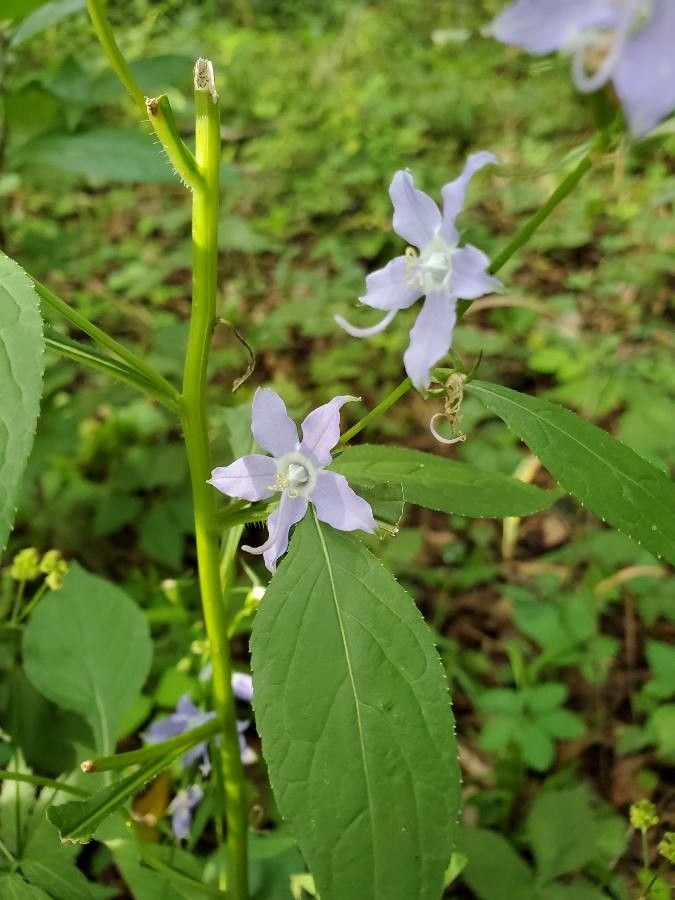
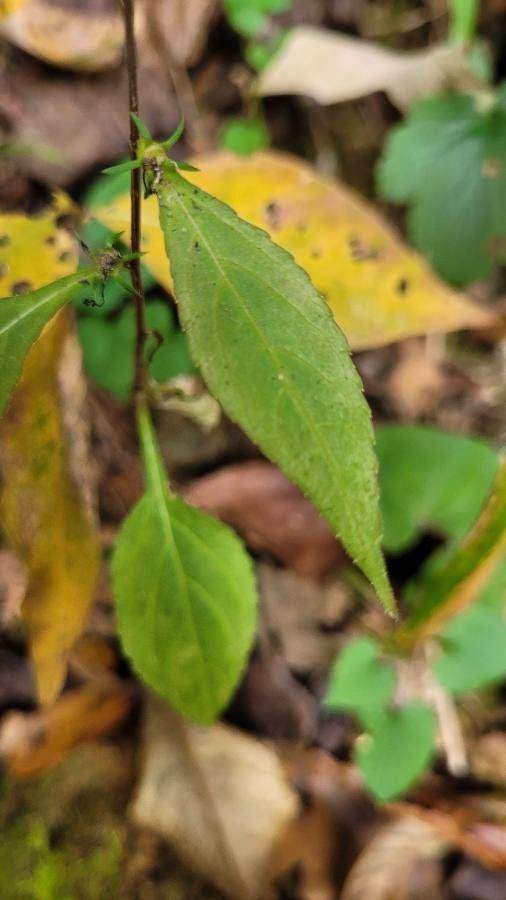
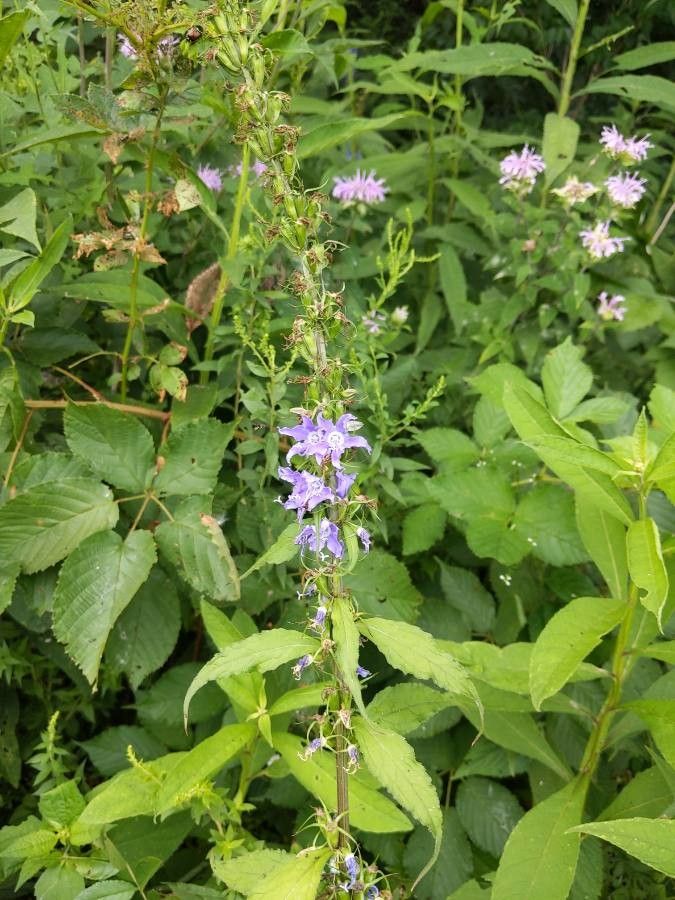
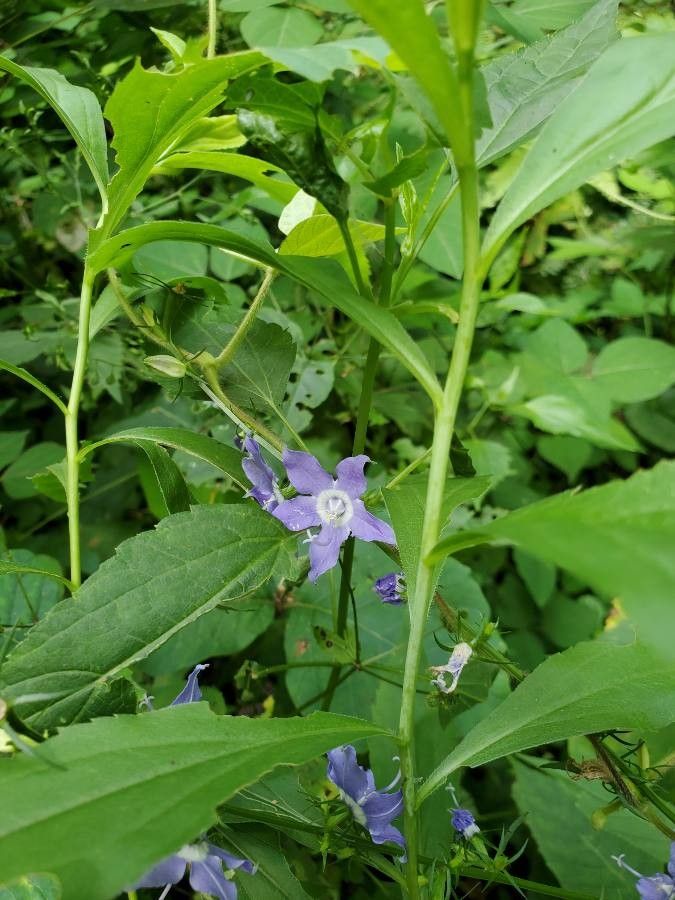
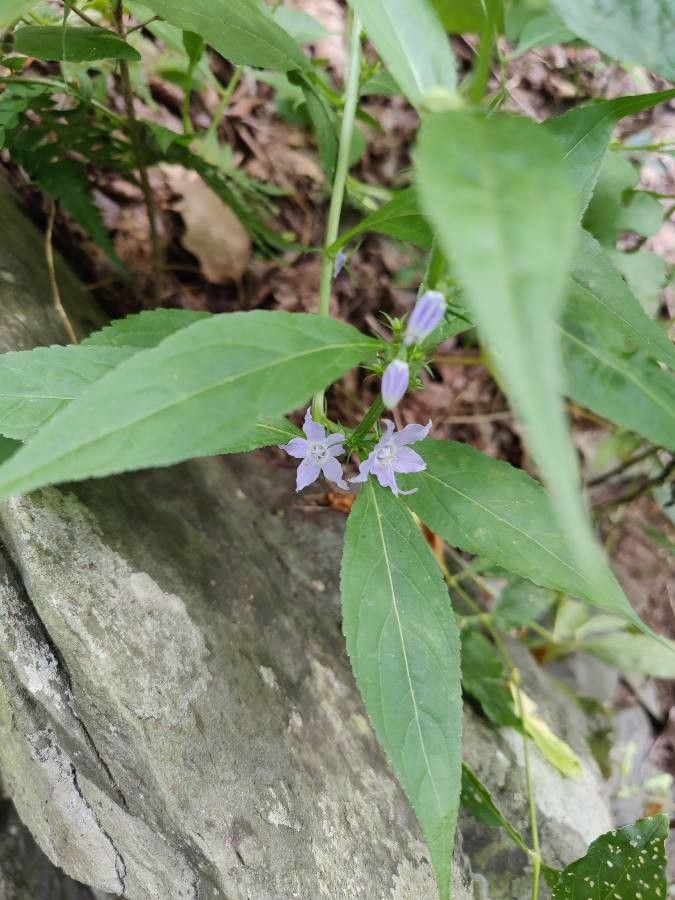
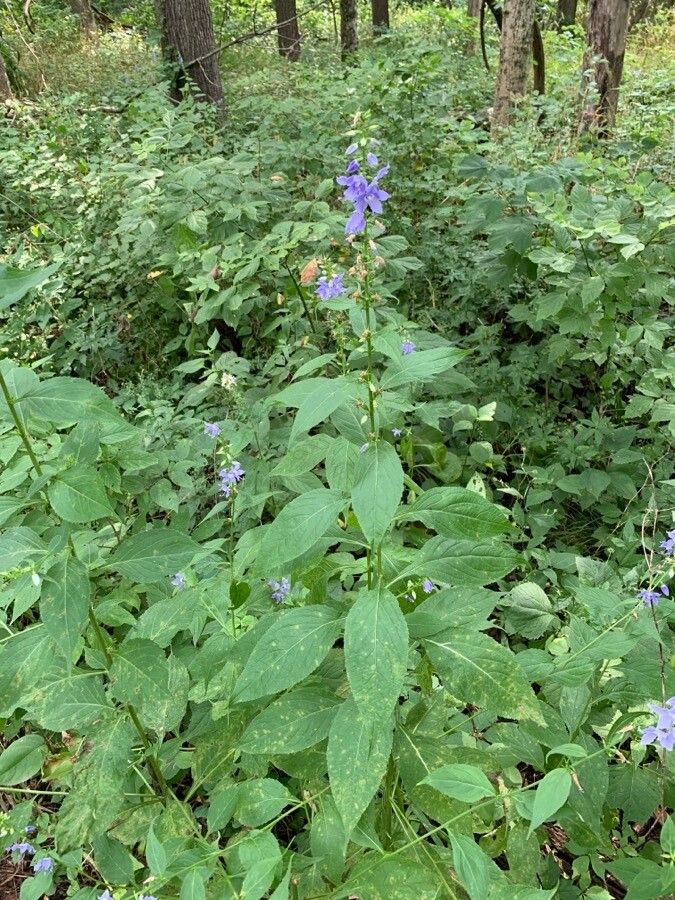
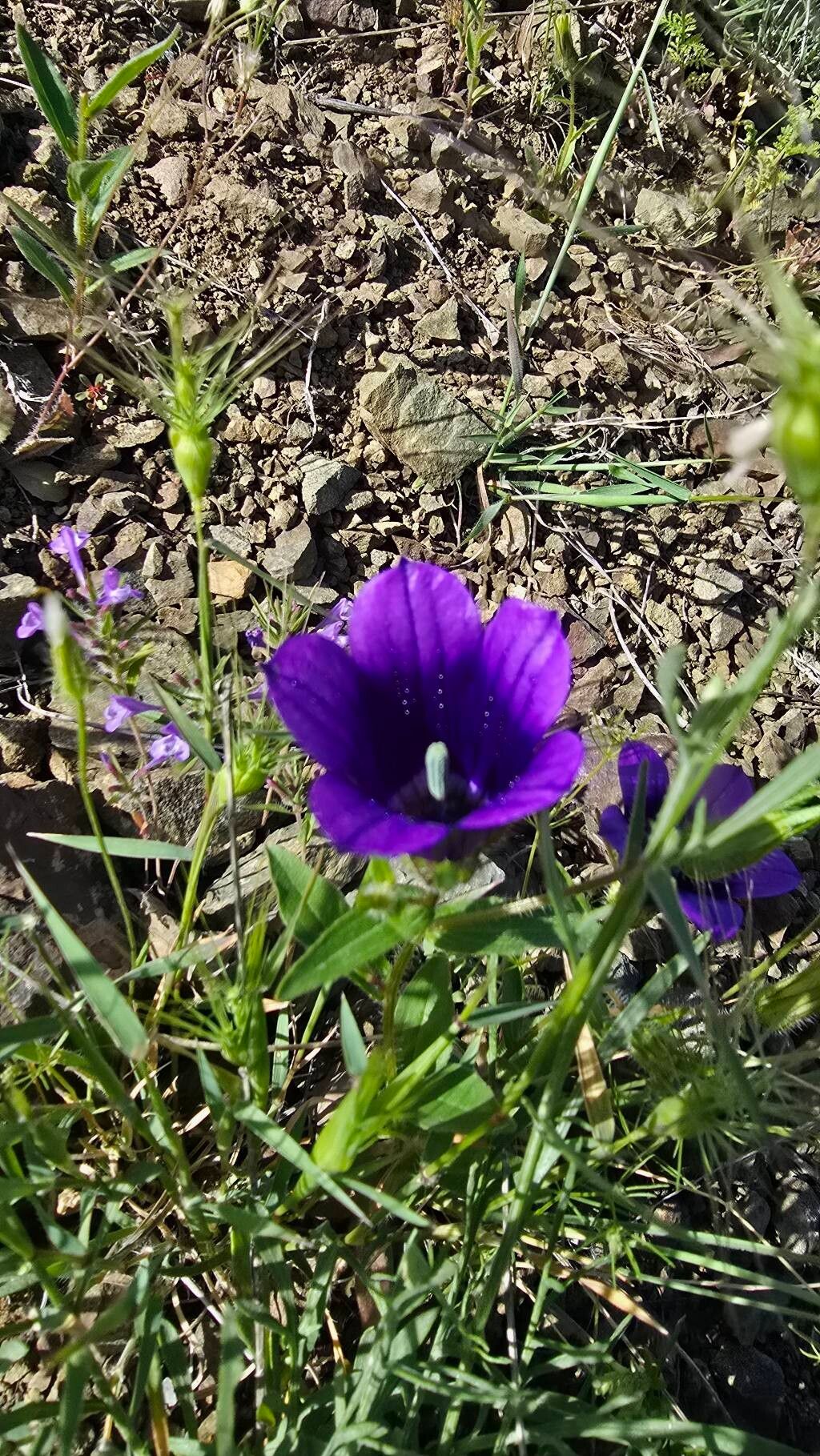
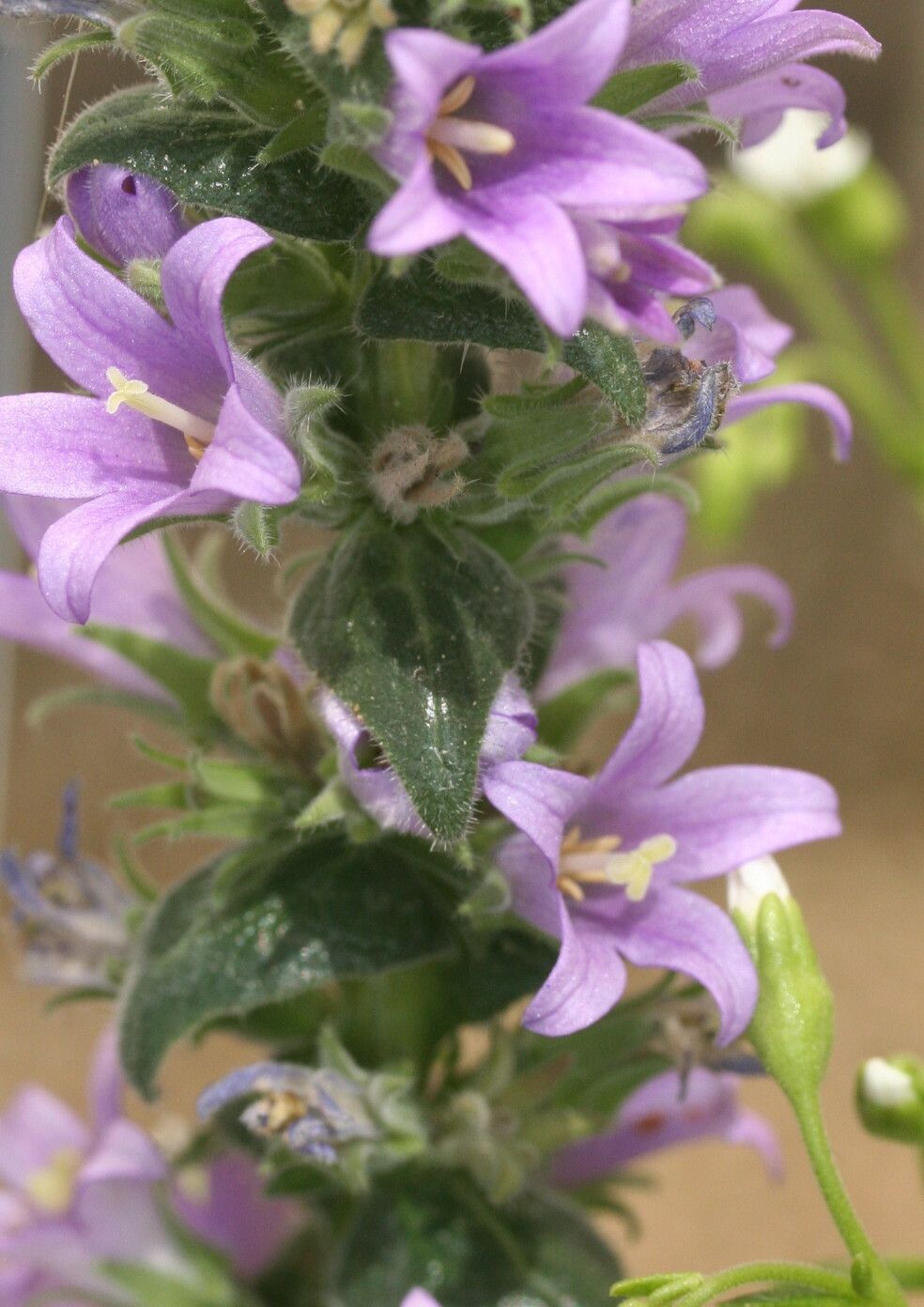
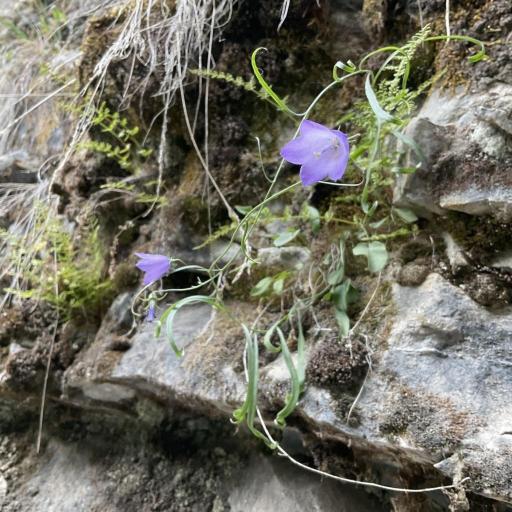
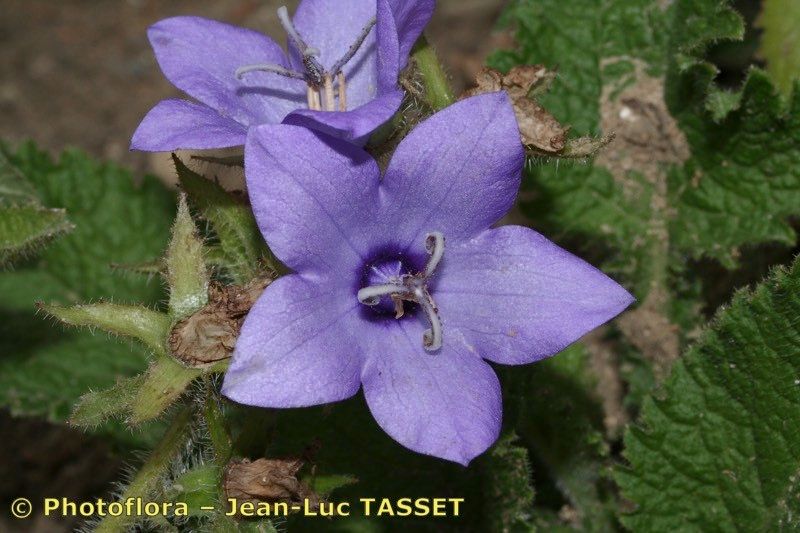
Campanula americana, the American bellflower, or tall bellflower, is a bellflower native to eastern North America. Tall bellflowers can be annual or biennial with a varying life-history with seeds germinating in the fall producing annual plants and spring-germinating seeds producing biennial plants. Long-tongued bees are the primary pollinators, including Megachile campanulae, but halictid bees, butterflies, and skippers may also act as pollinators. Tall Bellflowers do not generally self-pollinate. Some authorities, including the USDA PLANTS database, consider the name Campanulastrum americanum to be the accepted name for this species.
American Bellflower has strong disease resistance and is generally not likely to get sick. Still, it can be vulnerable to pests and diseases present in its environment. Such infections are typically mild. Regarding care, this plant needs moderate maintenance. It should be pruned regularly to preserve its appearance and support healthy growth. Fertilizing can also encourage flowering. American Bellflower is suitable for anyone who has outdoor space, like a garden or patio, and does not demand much care experience. It may need additional attention when kept indoors.
How to keep Campanula Americana.
Light
The American Bellflower thrives with abundant daylight but can also tolerate limited sunlight, which may affect its growth rate and the size of its blooms. Both excessive and insufficient daylight can produce unhealthy conditions, and its natural growing habitat reflects this variation in light.
Water
American Bellflower thrives in moist meadows and prefers consistent moisture without becoming waterlogged. To maintain its lush growth, it benefits from weekly watering. As an herbaceous perennial, the American Bellflower flourishes best when soil moisture levels mimic natural rainfall patterns, promoting optimal growth and flowering.
Temperature
American Bellflower prefers warm climates and naturally does best at temperatures between 68 and 95 °F (20 and 35 ℃). Seasonal changes may require adjustments to keep it within this preferred range for optimal growth.
Fertilizer
When most of the American Bellflower's blooms have fully opened, resume fertilizing. At the peak of bloom production, fertilize every three to four weeks, as the weather allows. Then, once the plant begins producing fewer new blooms, stop fertilizing; there's no need to feed it when it can no longer produce more flowers.
Pruning
The American Bellflower is known for its tall stems and bell-shaped flowers. To encourage new growth, prune the plant from early to late spring. Additionally, trim off any spent blooms to prolong the flowering period. Always use clean tools when pruning to prevent the spread of disease. Regular pruning can enhance air circulation, assist with pest management, and improve the plant's overall structure. Be sure to consult specific guidelines for detailed pruning methods.
Botanical profile.
- Plant Type
- Herb
- Life Cycle
- Annual, Biennial, Perennial
- Genus
- Campanula
- Family
- Campanulaceae
- Hardiness Zone
- 4-8
- Mature Height
- 0.91 m to 1.83 m
- Mature Spread
- 30 cm to 61 cm
- Leaf Color
- Green, Blue
- Leaf Type
- Deciduous
- Flower Color
- Blue, Purple, Lavender
- Flower Size
- 2.54 cm to 7.62 cm
- Bloom Time
- Early summer, Mid summer
- Planting Time
- Autumn
- Harvest Time
- Mid summer
Other names.
Reader questions.
How should I water my American Bellflower plant?
To water American Bellflower, there are various options available such as using a garden hose with a spray nozzle or a watering can. American Bellflower is not too particular about the type of water it receives; it can thrive with rainwater, tap water, or filtered water. Avoid watering this plant from above as it can harm its leaves, flowers, and potentially lead to diseases. It is often best to use a drip irrigation system that evenly and directly applies water to the soil. When dealing with a container-grown American Bellflower, you can adopt a similar watering technique using a cup, watering can, or tap water, directing the water specifically to the soil.
Why should I put fertilizer on my American Bellflower plant?
Not all plants require additional fertilizers as they are able to obtain the necessary nutrients for growth on their own. However, plants like the American Bellflower do rely on nutrients (such as nitrogen, phosphorus, and potassium) to support their growth and internal processes. Among these nutrients, nitrogen is particularly important for foliage development. Given that American Bellflowers often struggle to obtain sufficient nitrogen from the soil, many gardeners choose to provide them with supplemental nitrogen through fertilization.
What are the sunlight requirements for American Bellflower?
American Bellflower thrives best under conditions that offer abundant daylight exposure. It requires full sun, defined as more than 6 hours of sunlight per day, or partial sun, which is about 3-6 hours of sunlight daily. However, it can endure limited sunlight conditions, which may affect its growth speed and the size of its blooms. When planning where to place your American Bellflower, either in a garden or indoors, it's essential to observe the movement of sunlight through your space to ensure that you're providing the ideal balance of light and shade for the plant's health and happiness.
What are the optimal temperature conditions for American Bellflower?
American Bellflower thrives in warm climates, ideally between 68 to 95 °F (20 to 35 °C). To ensure optimal growth, it's important to adjust its environment as the seasons change to keep it within this preferred temperature range. Although it has strong cold resistance, care should be taken to protect it if winter temperatures are expected to drop below -30°C by covering the plant with soil or straw. Additionally, to prevent drought and water scarcity during winter and early spring, it's recommended to water the plant abundantly before the first freeze in autumn, ensuring the soil remains moist.
What should I do if I give my American Bellflower plant too much or too little water?
To remedy underwatering for your American Bellflower, simply water it more regularly when you notice it lacks moisture. Overwatering, on the other hand, can be a serious issue that may lead to diseases and the eventual decline of your plant. To prevent this, choose a growing location with ample sunlight and good drainage to avoid pooling of excess water. If you overwater your potted American Bellflower, consider transferring it to a new pot with proper soil drainage and extra holes. Make sure to use loose soil and an efficiently draining pot when repotting.
What is the best time to put fertilizer on my American Bellflower?
American Bellflower can benefit from regular fertilization, particularly during its active growth period in the spring and summer. It should be fertilized about once a month during these months, but it is not necessary during fall and winter when the plant is less active and requires fewer nutrients. To determine the appropriate time to start fertilizing, observe signs of new growth. Whether the American Bellflower is grown outdoors or indoors in a container, the fertilization schedule remains the same. However, if the plant is in a container, you may not need to fertilize for the first one to two months. Container plants typically contain enough nutrients in the potting soil, so wait until the plant has been in the same soil for a while before starting to fertilize.
How does artificial lighting help indoor American Bellflower plants?
For indoor American Bellflower plants, especially in conditions where natural sunlight is insufficient such as during winter or in less sunny spaces, artificial lighting can be crucial for optimal growth. Adequate lighting supports faster, healthier growth. LED lights are recommended as they can be adjusted to provide specific wavelengths needed by the plant. Full sun plants should receive 30-50W per square foot of artificial light, partial sun plants 20-30W per square foot, and shade plants 10-20W per square foot. The light source should be placed 12-36 inches above the plant, simulating natural sunlight conditions, and provided for 8-12 hours per day to mimic natural daylight hours optimally.
How does American Bellflower respond to low temperatures?
American Bellflower is quite cold-tolerant, thriving best when temperatures stay above 20°C. In winter, it should be kept above 0°C to ensure its health. However, when temperatures fall below -30°C, the plant may not show noticeable changes immediately but could experience a decrease in sprouting or possibly no sprouting at all in the springtime. To address this, remove any parts in spring that have failed to sprout.
How frequently do I need to water my American Bellflower plant?
To keep your American Bellflower healthy, here are some watering guidelines to follow. During the growing season, it is important to water the plant regularly. In spring, watering once a week should suffice. However, as the season progresses and temperatures rise, you may need to increase the frequency to two or three times per week. Be careful not to overwater, as this can harm the plant. It is essential to maintain moist soil, but not wet, regardless of the watering frequency. When it comes to potted American Bellflowers, the watering approach changes slightly. Due to the faster drying of pot soil, you will generally need to water container-grown plants more frequently, about a few times per week. In contrast, in-ground plants only require watering once a week.
When is it not a good time to fertilize my American Bellflower?
To ensure the health of your American Bellflower, avoid fertilizing it if it is already sick or affected by pests. Similarly, refrain from fertilizing a dehydrated plant, as this could worsen the situation. Only apply fertilizer to healthy plants. When watering, take care not to splash fertilizer onto the leaves or stem, as this can cause burn spots. Unless using a designated foliage fertilizer, avoid direct contact between the plant and the fertilizer.
What are the symptoms of inadequate light in American Bellflowers?
When American Bellflowers are grown indoors or under inadequate light, they may show several symptoms indicating light deficiency. These include smaller new leaves, leggy or sparse growth, faster leaf drop, slower or halted new growth, leaves that are lighter in color or show irregular color patterns, and signs of chlorosis where leaves lose their green color and turn yellow due to the breakdown of chlorophyll. Excessive sunlight exposure can also lead to symptoms like sunscald, leaf curling, wilting, and leaf scorching, appearing as pale, bleached, or necrotic areas on the plant tissue. These symptoms are crucial indicators of the plant's need for a better-adjusted light environment.
How to care for American Bellflower during high temperatures?
During the summer, it's crucial to keep American Bellflower temperatures below 35°C. If temperatures rise above 38°C, the plant's leaves may lighten in color, curl, become prone to sunburn, and in severe cases, wilt and dry out. To mitigate high-temperature stress, trim away sunburned and dried parts of the plant. Relocate the plant to an area with afternoon and midday shade or use a shade cloth for protection. Additionally, watering the plant in the morning and evening will help keep the soil moist and further protect the plant.