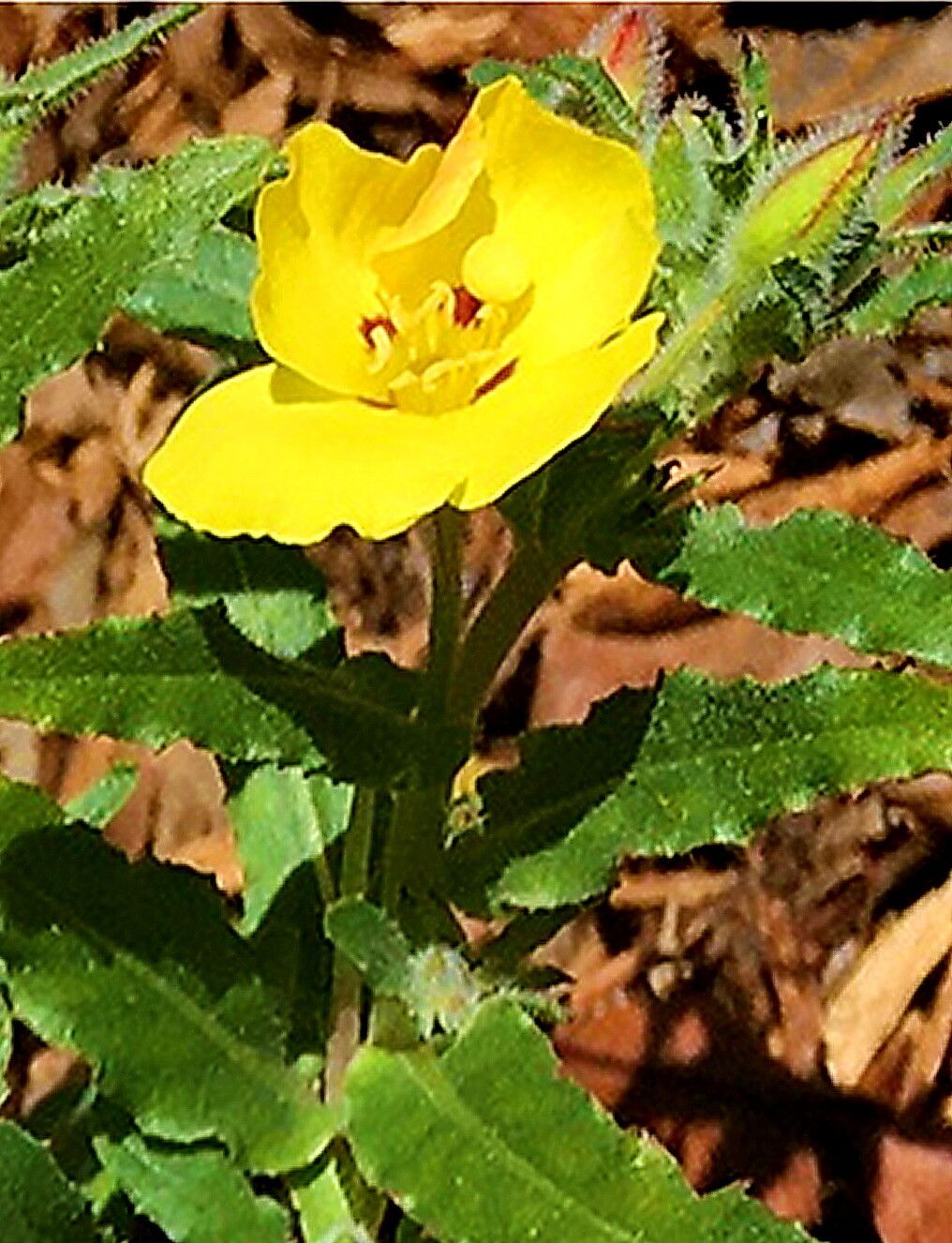
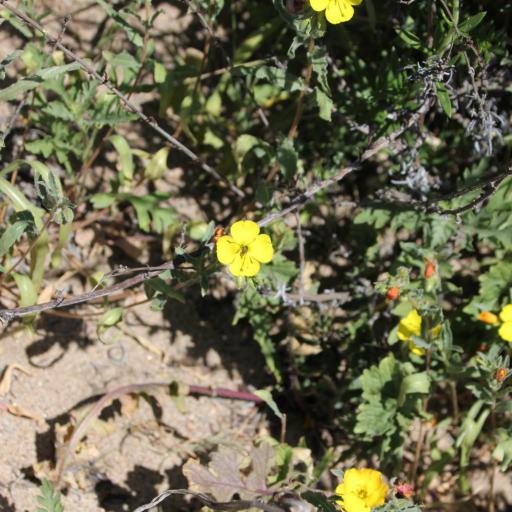
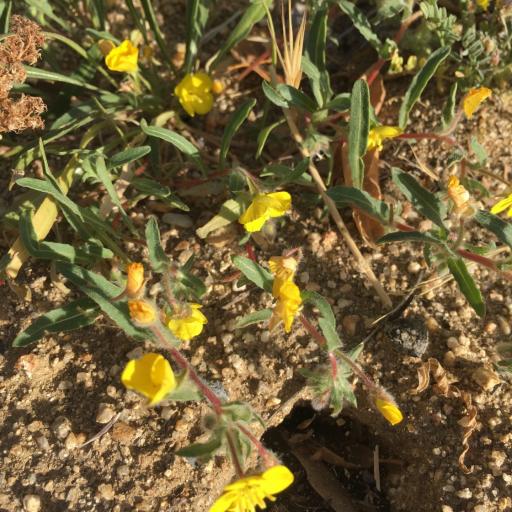
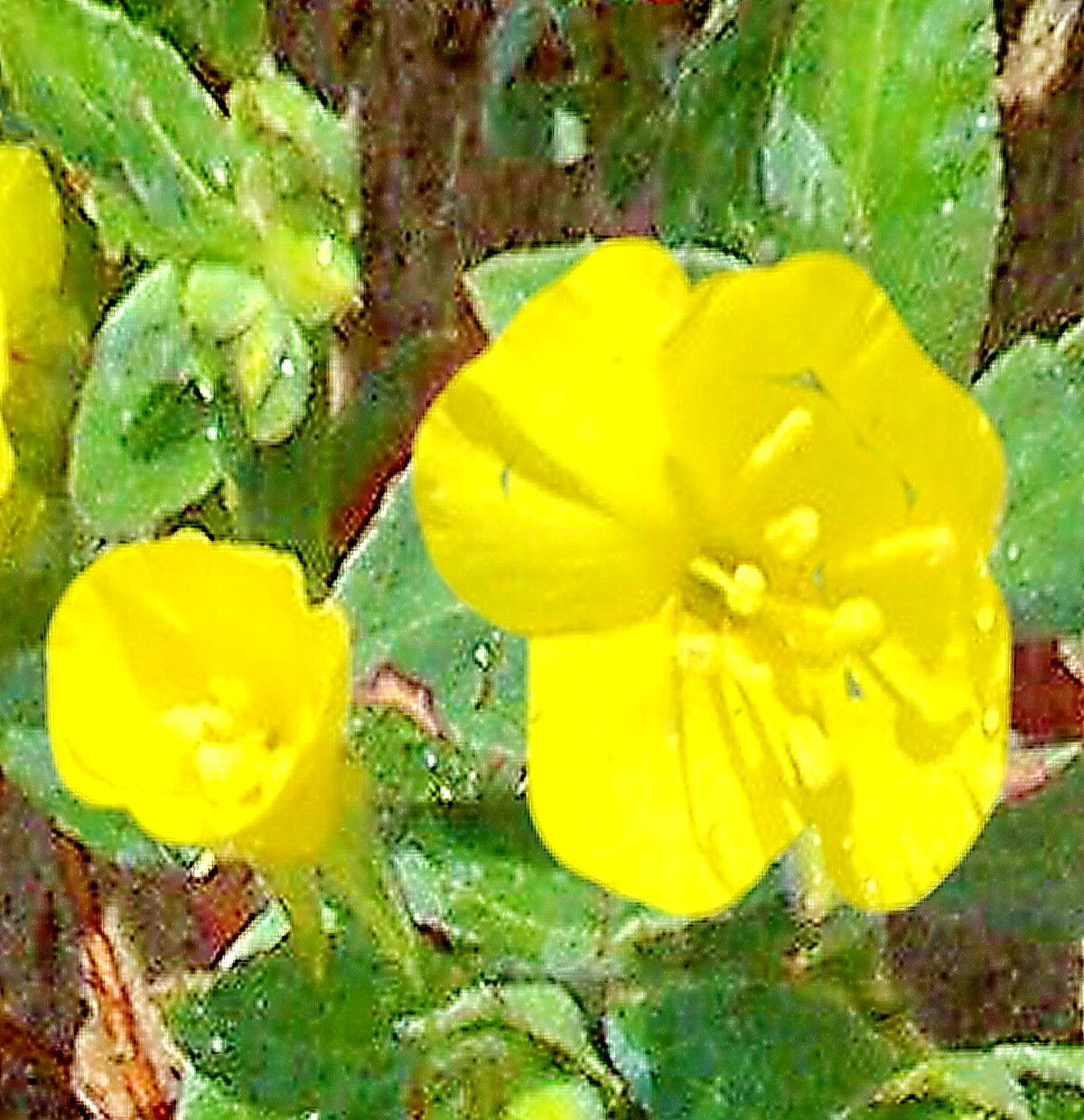
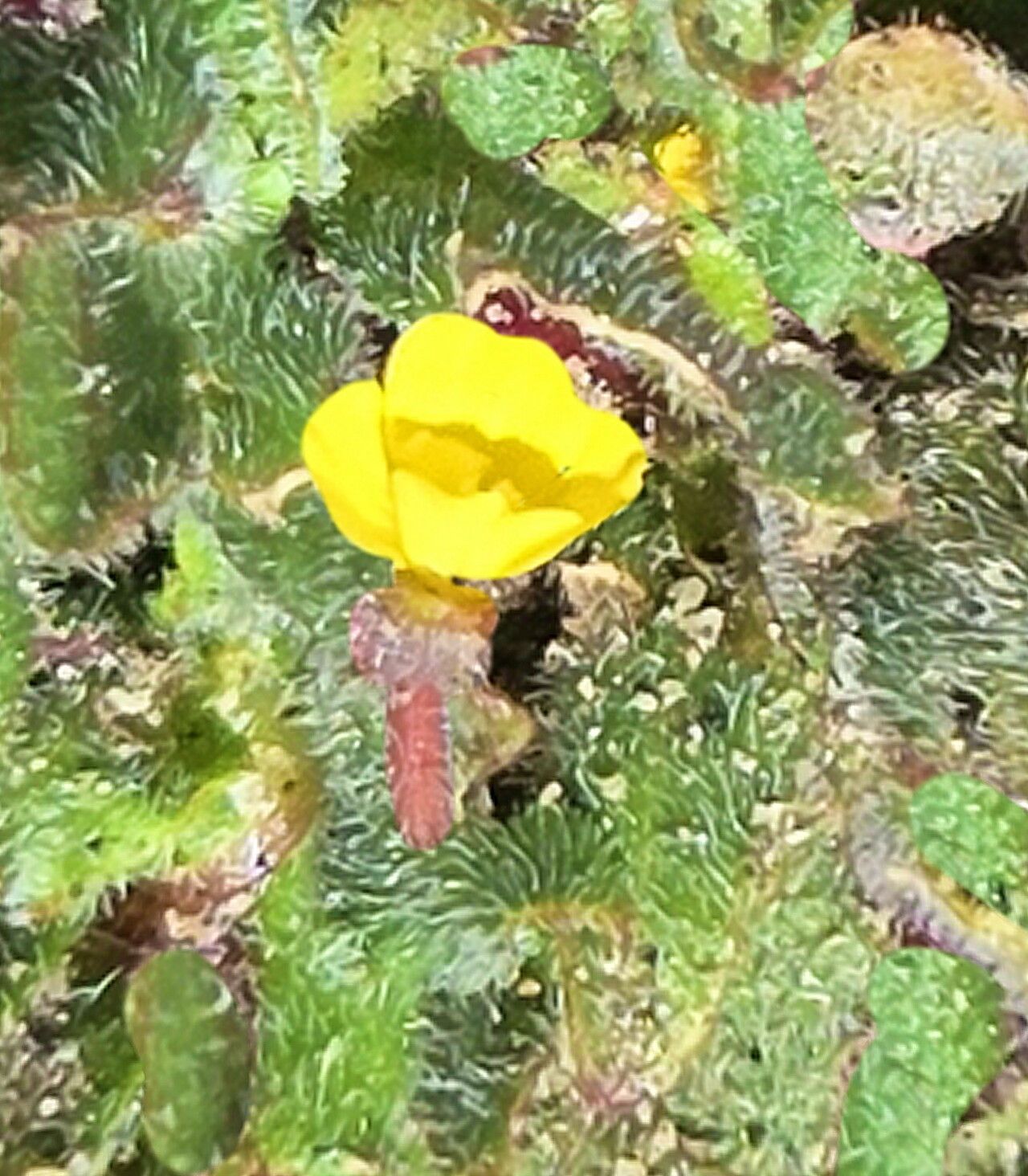
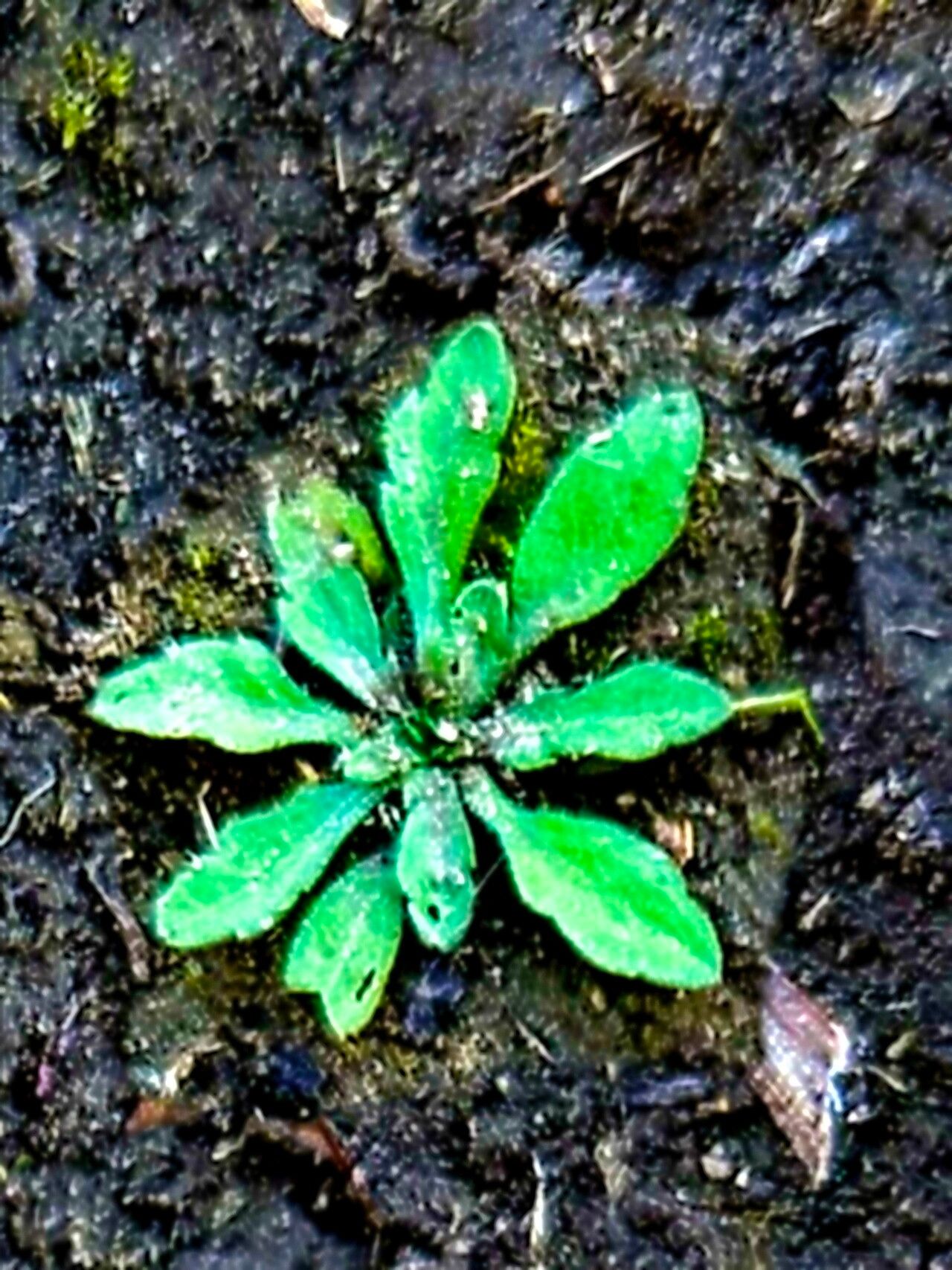
Camissoniopsis bistorta is a species of flowering plant in the evening primrose family known by the common names southern suncup and California suncup. It is native to southern California and Baja California, where it grows in several types of plant community along the coast and in the coastal hills and mountain ranges. This is a hairy annual or perennial herb spreading from a basal rosette with stems reaching up to 80 centimeters long. Leaves are lance-shaped to narrowly arrowhead-shaped and sometimes toothed, and 1 to 12 centimeters in length. Toward the end of the spreading stems are nodding inflorescences of flowers, each flower with four bright yellow petals dotted with red at their bases. At the center are stamens and a protruding, nearly spherical stigma. The fruit is a straight or slightly coiled capsule up to 4 centimeters long.
California sun cup is fairly disease-resistant and generally not prone to illnesses. However, it can be vulnerable to pests and diseases present in its surroundings. These problems are usually mild. Regarding care, this plant requires moderate maintenance. It should be pruned regularly to keep a neat appearance and healthy growth. Fertilizing can also help encourage flowering. California sun cup is suitable for anyone with outdoor space, such as a garden or patio, and does not demand extensive care experience. It may need more attention when grown indoors.
How to keep Camissoniopsis Bistorta.
Light
California sun cup comes from bright, open habitats and does best in full sun. It can tolerate partial sun, but favors direct sunlight for optimal growth. This plant, which can be annual or biennial, is known for its sun-loving nature.
Temperature
California sun cup can tolerate a wide range of temperatures, but its distribution may still be limited by different combinations of water and heat. It grows best in warm summer climates with sufficient rainfall or watering. Long stretches of cloudy, rainy weather, as well as prolonged high temperatures, can increase the chance of California sun cup dying. In winter, adequate protection from cold can improve the plant's survival.
Fertilizer
Once the California sun cup has opened most of its blooms to full size, you should begin fertilizing again. When the flowers are at peak production, apply fertilizer every three to four weeks, weather permitting. Then, when the California sun cup starts producing fewer new blooms, stop fertilizing; there’s no need to feed it when it can no longer produce additional flowers.
Botanical profile.
- Plant Type
- Herb
- Life Cycle
- Annual
- Genus
- Camissoniopsis
- Family
- Onagraceae
- Hardiness Zone
- 8-10
- Mature Height
- 10 cm to 49 cm
- Mature Spread
- 20 cm to 40 cm
- Leaf Color
- Green, Dark Green
- Leaf Type
- Deciduous
- Flower Size
- 1.02 cm to 2.03 cm
- Bloom Time
- Spring
- Planting Time
- Spring, Summer, Autumn
- Harvest Time
- Late spring, Early summer, Mid summer
- Native Area
- Mexico
Other names.