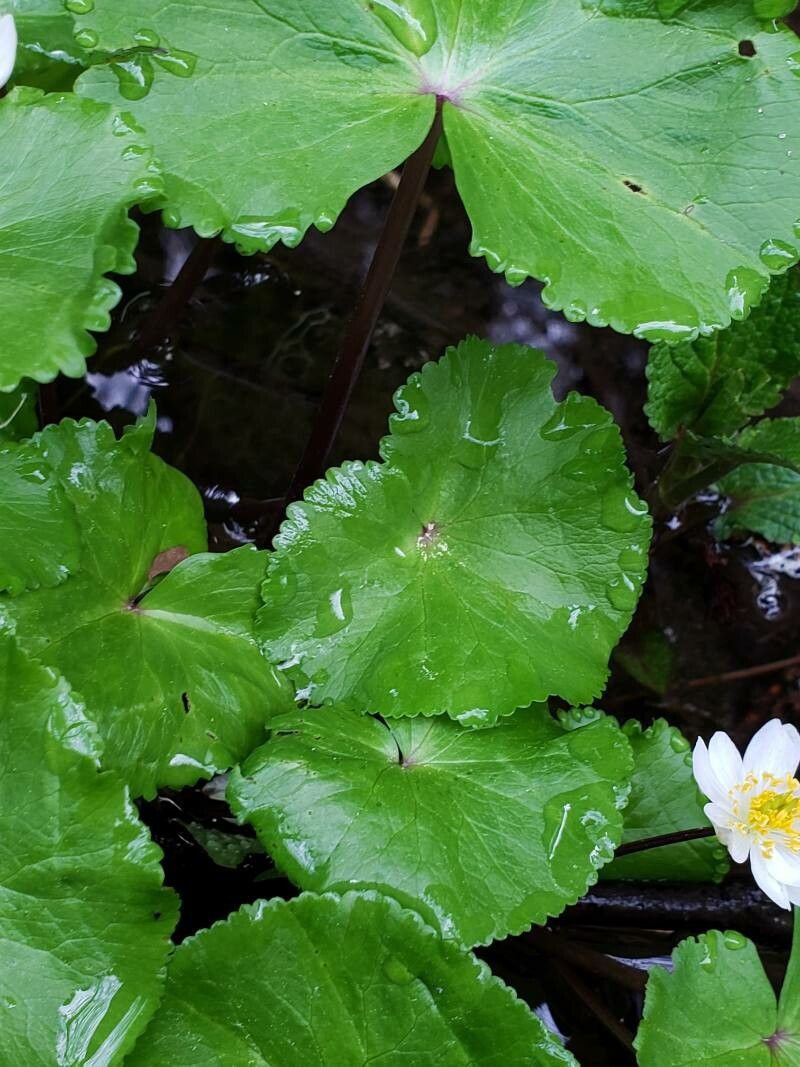
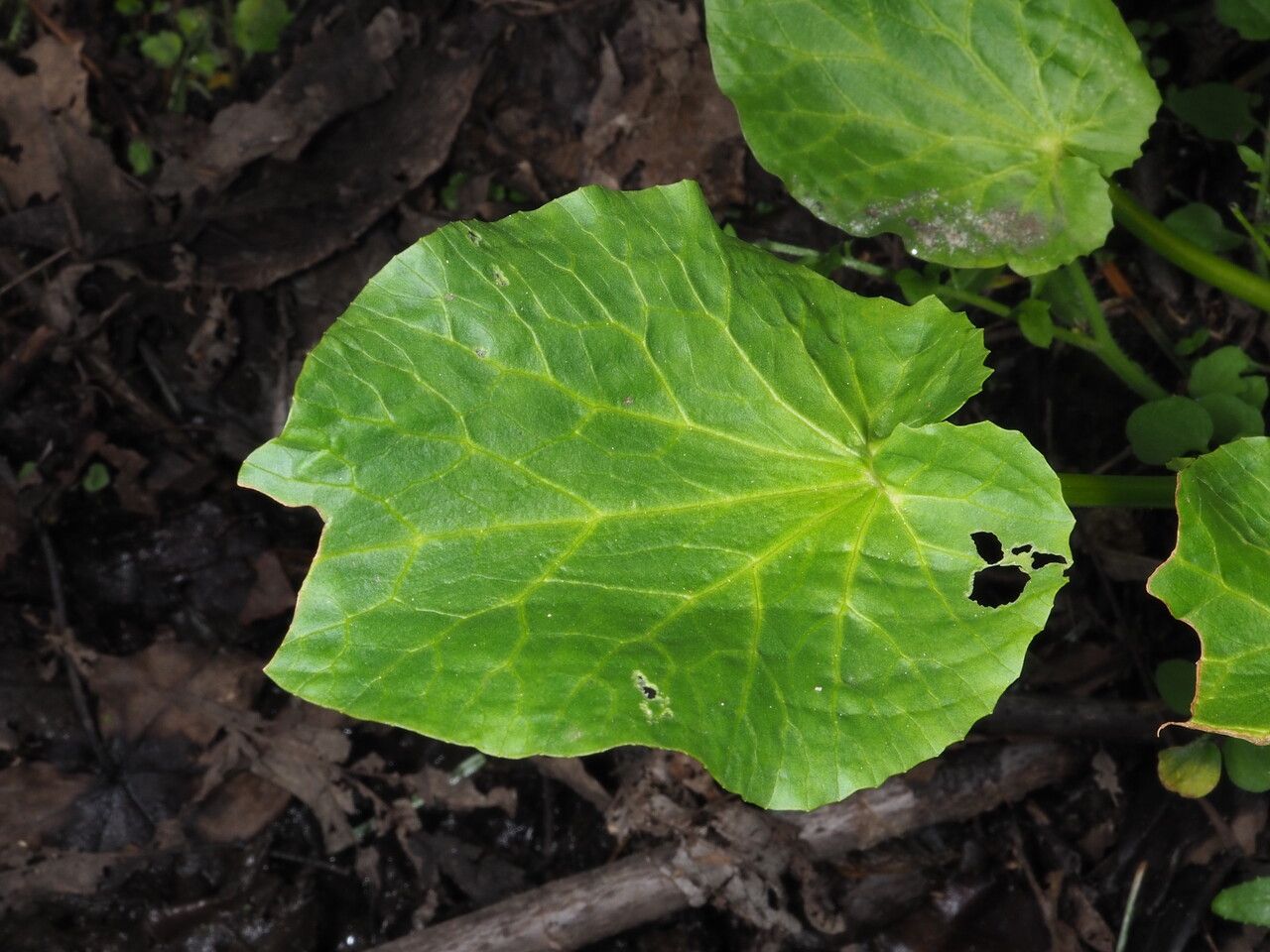
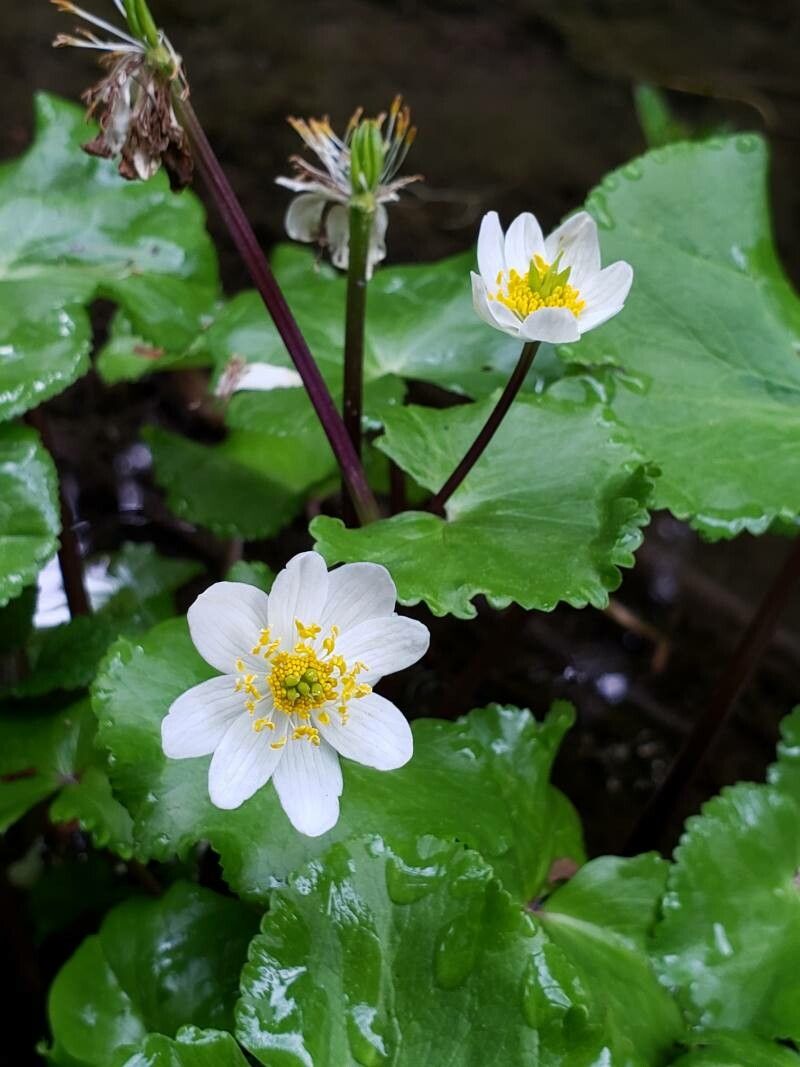
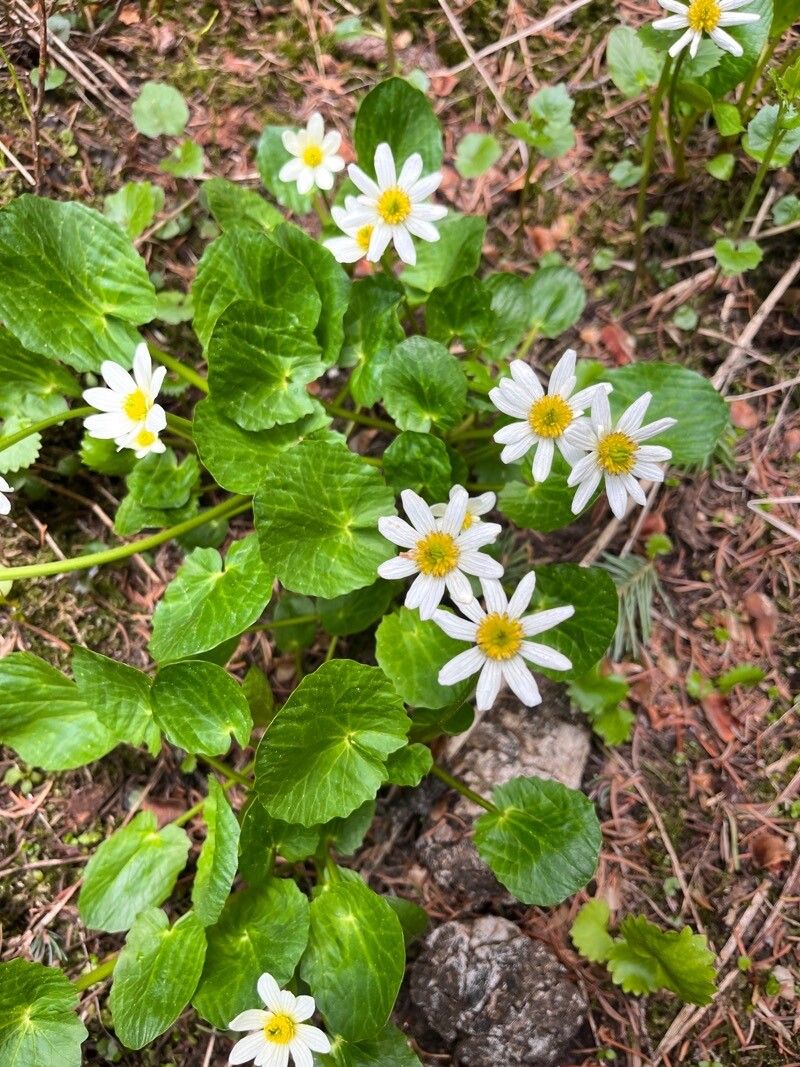
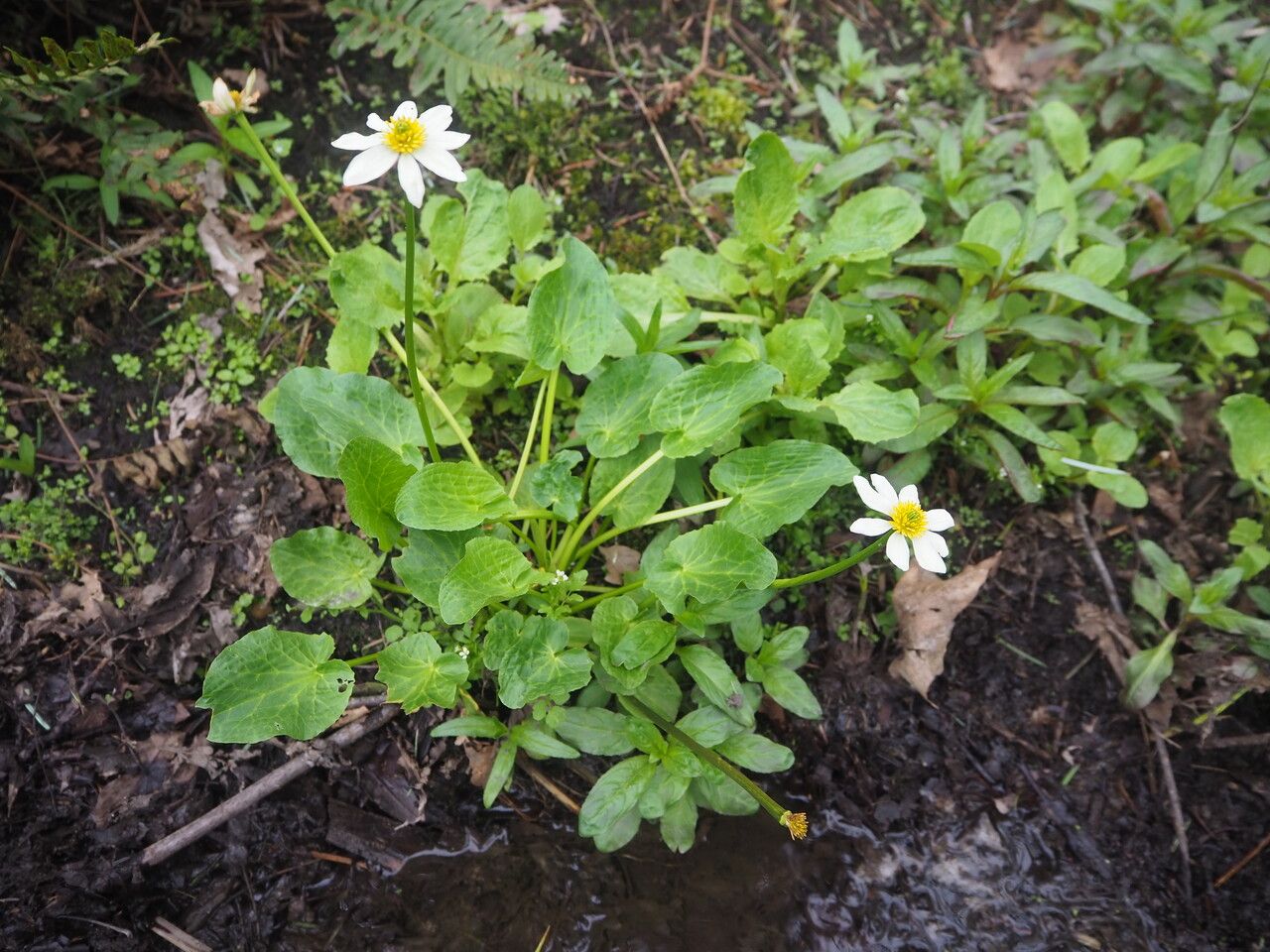
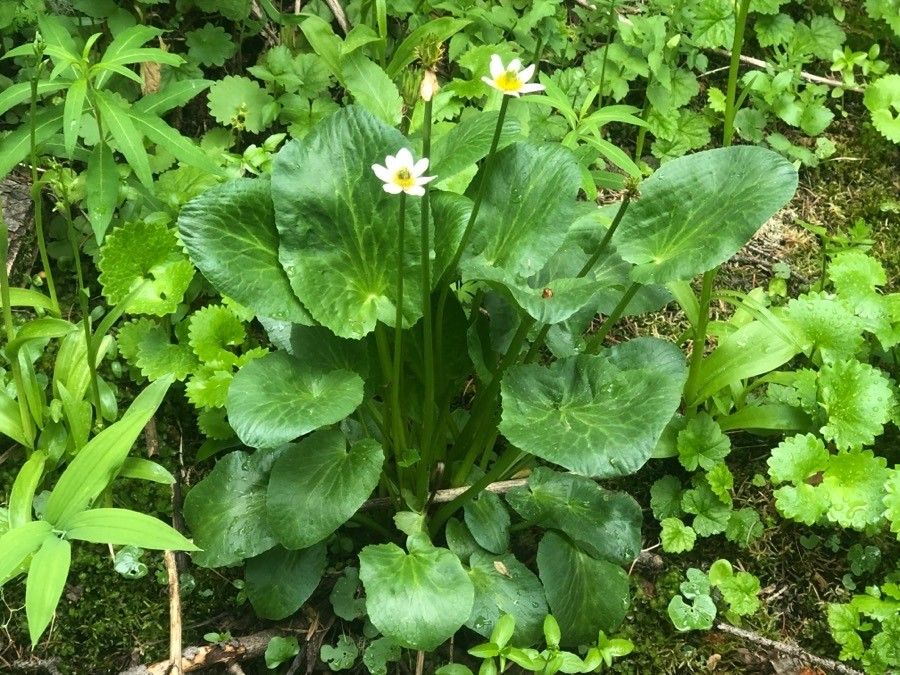
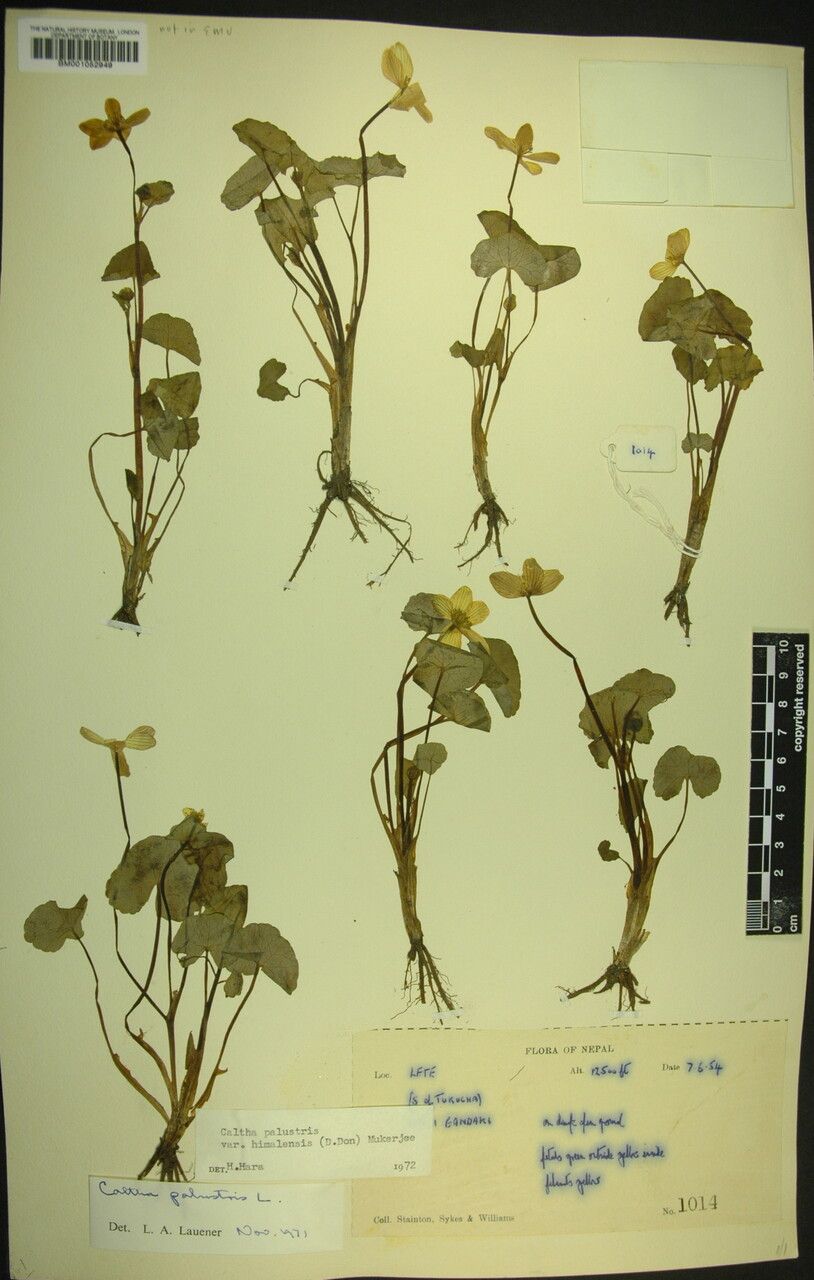
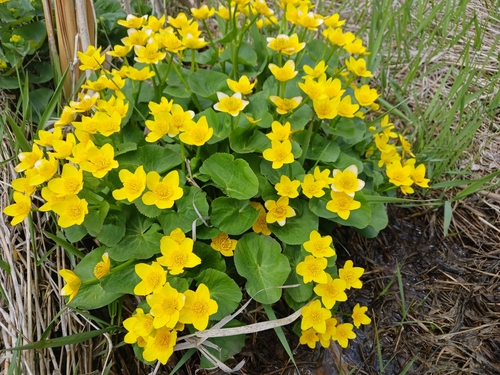
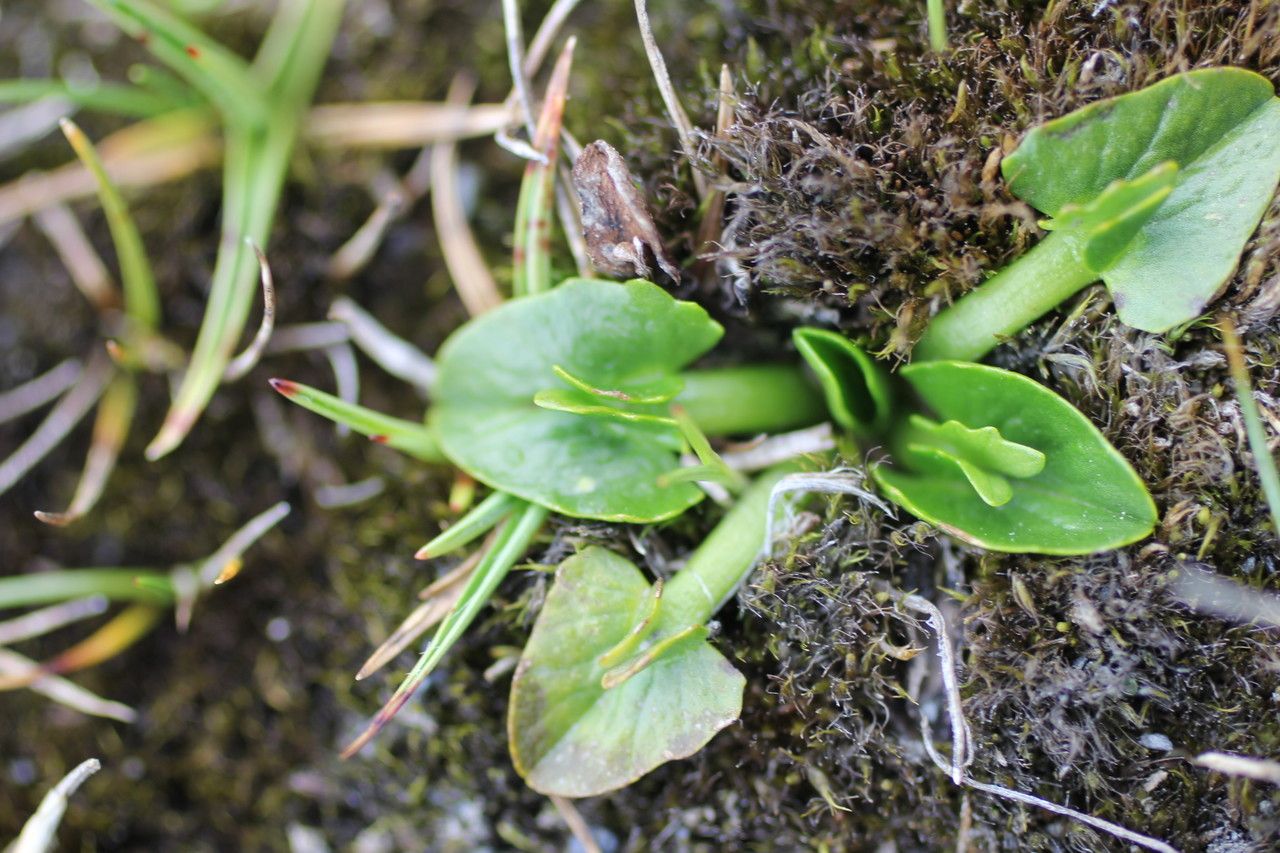
Caltha leptosepala, the white marsh marigold, twinflowered marsh marigold, or broadleaved marsh marigold, is a perennial species of flowering plant in the buttercup family. It is native to western North America from Alaska to New Mexico, where it grows in wet mountain habitats in alpine and subalpine regions. There are two general wild types of this species, one native to the interior and one that grows along the Pacific coast and coastal mountains, but these are not always treated separately.
Howell's marsh marigold is fairly disease-resistant and typically does not suffer from many illnesses. Still, it can be affected by pests or diseases found in its environment. Such infections tend to be mild. Regarding care, this plant needs a moderate amount of attention. It should be pruned regularly to preserve a neat appearance and support healthy growth. Applying fertilizer can also encourage better flowering. Howell's marsh marigold is well suited to anyone with outdoor space, like a garden or patio, and does not demand extensive gardening experience. When grown indoors, however, it may need more attentive care.
How to keep Caltha Leptosepala.
Light
Howell's marsh marigold does best with abundant sunlight. Its requirement for light rises as it grows, influencing its overall health. Native to areas with substantial light, it can tolerate spots with light shading. However, a lack of light can limit growth, and too much exposure may be harmful.
Water
Howell's marsh marigold, which originates from moist alpine regions, thrives in consistently wet soil and can withstand moderate drought. To ensure it stays hydrated, it needs to be watered weekly. This plant is commonly grown outdoors, where it can take advantage of natural rainfall to encourage lush growth during its active season.
Temperature
Howell's marsh marigold naturally occurs in habitats where temperatures range from 32 to 90 °F (0 to 32 ℃). It favors temperate conditions. For healthier growth through different seasons, try to replicate those native temperature conditions whenever possible.
Pruning
Pruning Howell's marsh marigold from early to late spring helps improve airflow and encourages new growth. By trimming dead stems and removing faded blooms, you promote continued flowering. This practice aligns with the plant's growth cycle and aids in controlling its size, maintaining its aesthetic appeal and ensuring its overall health.
Botanical profile.
- Plant Type
- Herb
- Life Cycle
- Perennial
- Genus
- Caltha
- Family
- Ranunculaceae
- Hardiness Zone
- 3-7
- Mature Height
- 15 cm to 30 cm
- Mature Spread
- 25 cm to 30 cm
- Leaf Color
- Dark Green
- Leaf Type
- Deciduous
- Flower Color
- White
- Flower Size
- 2.54 cm
- Bloom Time
- Mid spring, Late spring, Early summer
- Planting Time
- Spring, Summer
- Harvest Time
- Summer
Other names.
Reader questions.
How should I water my Howell's marsh marigold plant?
To properly care for the Howell's marsh marigold, use filtered water at room temperature. Tap water can contain harmful particles, so filtering it is important. The plant comes from a warm environment, so avoid using cold water, as it can shock the plant. Instead of overhead watering, apply the filtered room temperature water directly to the soil until it is completely soaked. This helps moisten the roots and allows them to spread and gather the necessary nutrients.
What are the sunlight requirements for Howell's marsh marigold?
Howell's marsh marigold requires full sun, which means it needs above 6 hours of sunlight daily, though it can also survive in partial sun, defined as about 3 to 6 hours of sunlight. To ensure the plant's health and happiness, it's essential to observe how sunlight moves through your garden over the day to find spots that offer a good balance of light and shade suitable for the plant's needs.
What is the native temperature range for Howell's marsh marigold?
Howell's marsh marigold, botanically named Caltha leptosepala, thrives in environments where the temperature varies between 32°F and 90°F (0°C to 32°C). This plant has a preference for temperate climates and exhibits significant cold tolerance. It can survive without additional frost protection measures during winter. To ensure optimal health and growth through the seasons, it is advisable to adjust the ambient temperature closer to its native range whenever feasible. To prepare for winter, it’s recommended to water the plant abundantly before the first freeze of autumn. This practice helps maintain soil moisture when it enters a frozen state, thereby protecting the plant from drought and water scarcity during the cold months.
What should I do if I give too much or too little water to my Howell's marsh marigold?
Taking care of your Howell's marsh marigold requires careful attention to watering. While both overwatering and underwatering can harm the plant, overwatering is more common and can lead to wilting, yellowing, root rot, mold, and mildew. Underwatering is less likely, but it can still happen and result in brittle, brown leaves. To prevent overwatering, look for early signs and adjust your watering schedule accordingly. If the soil doesn't drain well, replace it with a loose, well-draining mix. If underwatering is the issue, simply water more regularly until the plant rebounds.
How does sunlight affect the growth of Howell's marsh marigold?
Howell's marsh marigold thrives when exposed to abundant sunlight, a condition that impacts its health significantly during its growth stages. Originating from environments with considerable light, it can tolerate slight shading. However, a lack of sufficient sunlight may hinder its growth, whereas too much direct exposure could lead to potential harm.
How should Howell's marsh marigold be cared for in low temperatures?
In conditions of extreme cold, Howell's marsh marigold proves to be remarkably resilient; however, it is crucial to keep winter temperatures above -35°C (-31°F). Should temperatures plummet below this critical threshold, the plant may exhibit no visible distress during winter, yet the onset of spring might reveal diminished or entirely absent sprouting. The recommended course of action in spring for parts of the plant that have not sprouted is to remove them, thus allowing the plant to focus its energy on the growth of healthy parts.
How often should I water my Howell's marsh marigold plant?
If your Howell's marsh marigold is in a pot, you can check if it needs water by touching the soil with your finger. If the top two to three inches of soil are dry, it's time to water it. If you have your Howell's marsh marigold planted outdoors, you can use the same method. Water it when the first few inches of soil have dried out. Usually, you'll need to water this plant about once a week in the spring and early fall. However, in extremely hot weather, you may need to water it two or more times a week. It's worth noting that mature Howell's marsh marigold plants are quite resilient and can tolerate drought.
What artificial lighting requirements does Howell's marsh marigold have when grown indoors?
Indoor Howell's marsh marigold plants require adequate lighting to promote optimal growth. In situations where natural sunlight is insufficient, artificial lighting becomes crucial. LED lights, customizable to provide specific light wavelengths, are recommended. For full sun plants, 30-50W/sq ft of light is needed, partial sun plants require 20-30W/sq ft, and full shade plants need 10-20W/sq ft. The light source should be placed 12-36 inches above the plant, mimicking the length of natural daylight hours, typically 8-12 hours per day.
What are the care instructions for Howell's marsh marigold in high temperatures?
Howell's marsh marigold does not fare well under high temperature conditions. When exposed to temperatures exceeding 32°C (90°F), its growth halts, and the risk of rot increases significantly. To mitigate the adverse effects of high temperatures, it is advisable to trim away sunburned and dehydrated sections of the plant. Furthermore, relocating the plant to a shaded area or utilizing a shade cloth to filter the sun during peak hours can offer protection. Ensuring that the plant is watered in the morning and evening will help maintain soil moisture, thus aiding in keeping the plant healthy under stressful temperature conditions.
How much water does my Howell's marsh marigold require?
To properly water your Howell's marsh marigold, it's important not to hold back. Make sure that the top two to three inches of soil are dry before watering, and then give the plant a good, deep watering until the soil is completely soaked. You should water it enough so that excess water drains out of the pot through the holes at the bottom. If you don't see this excess water, it means you have likely not watered enough. On the other hand, be cautious not to let water accumulate in the soil, as this can harm the plant. If water is not draining properly from the pot, it may indicate that the soil doesn't have good drainage, which is harmful to the plant's health and should be avoided. If the plant is outside, around 1 inch of rain per week should meet its watering needs.
What are the signs of insufficient or excessive sunlight exposure in Howell's marsh marigold?
Signs of insufficient sunlight include smaller new leaves, leggy or sparse growth, early leaf drop, delayed or halted new growth, pale new leaves, and symptoms like chlorosis. Excessive sunlight exposure can lead to symptoms such as sunscald, leaf curling, wilting, and leaf scorching. Monitoring the plant's appearance for these signs can help determine if the lighting conditions need adjustment.
How should I water my Howell's marsh marigold at different times it's growing?
The water needs of the Howell's marsh marigold can vary throughout its growth stages. In the first few years or after transplanting, more water is needed because the plant directs energy towards developing new roots. These roots require additional moisture for optimal growth. As the plant matures, it requires less water. Additionally, during the bloom period, the flower development process demands more moisture, so watering may need to be increased at this time.