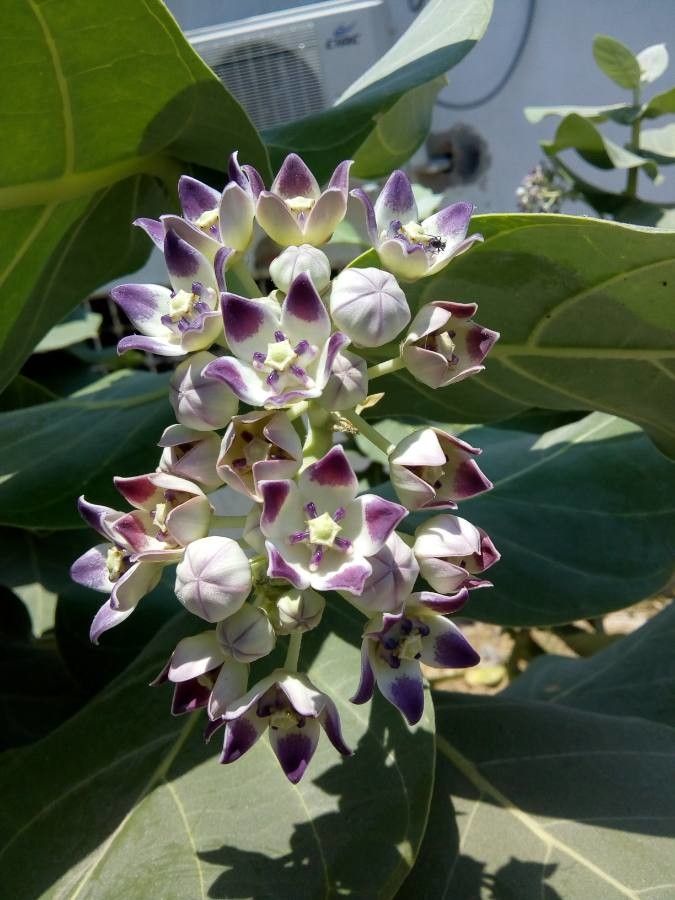
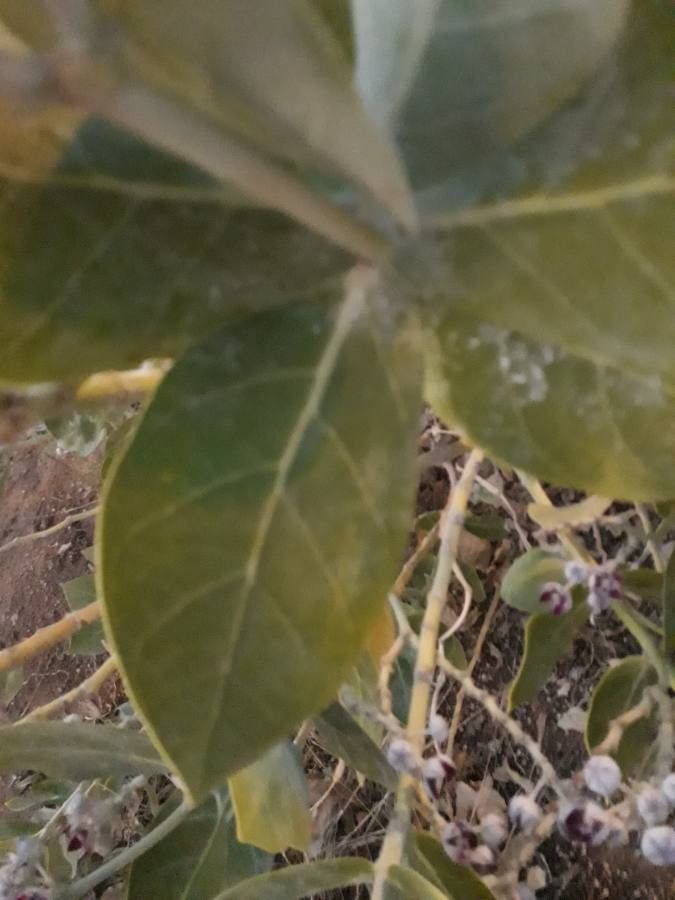
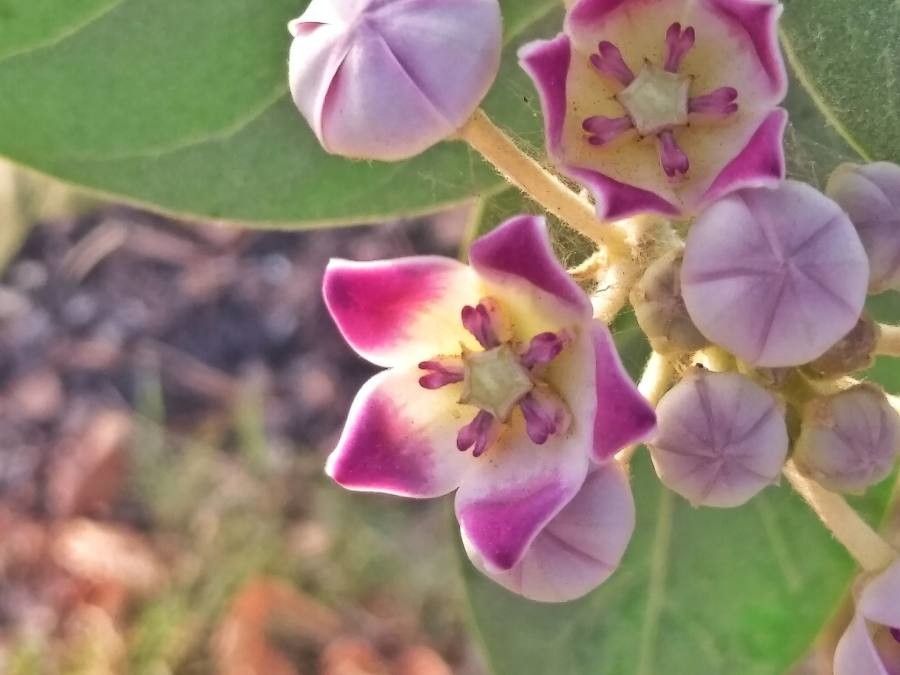
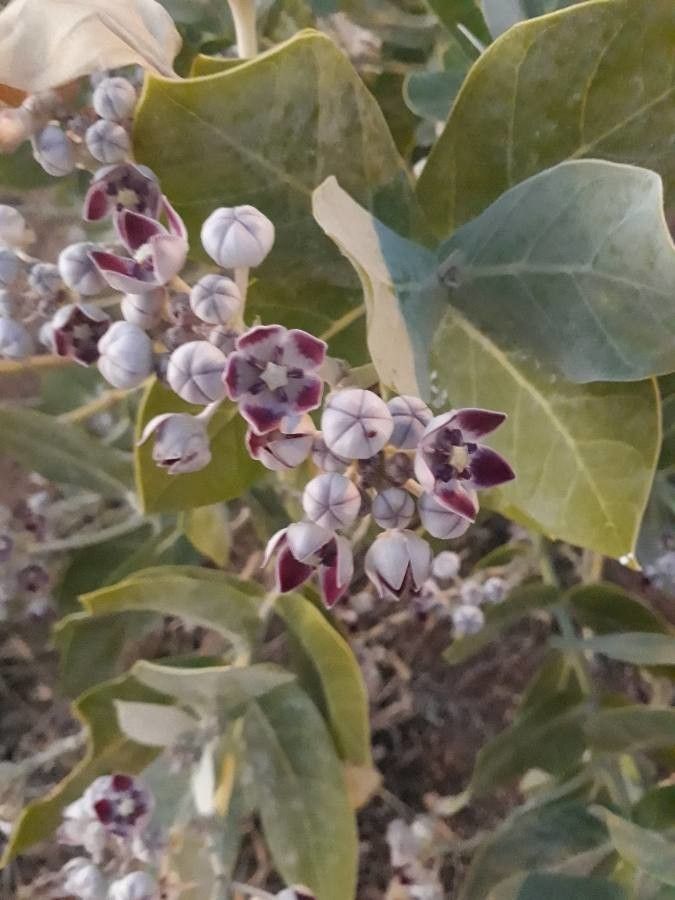
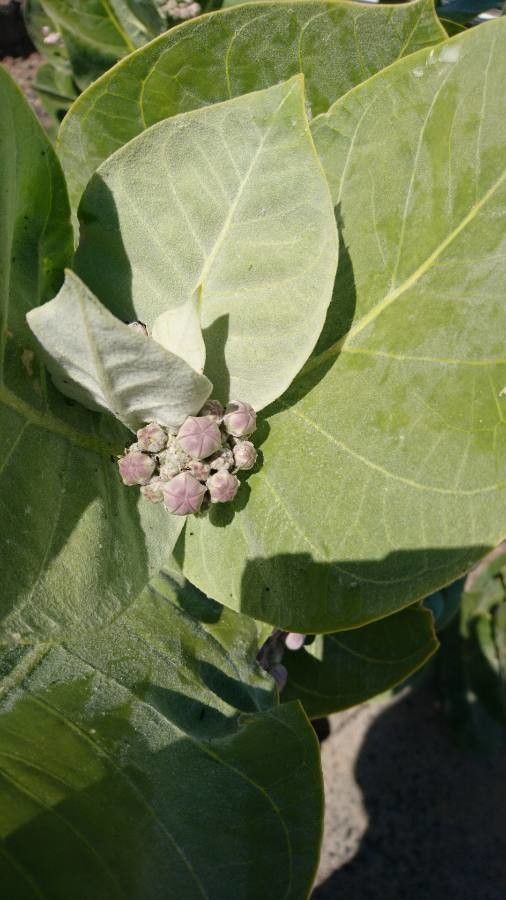
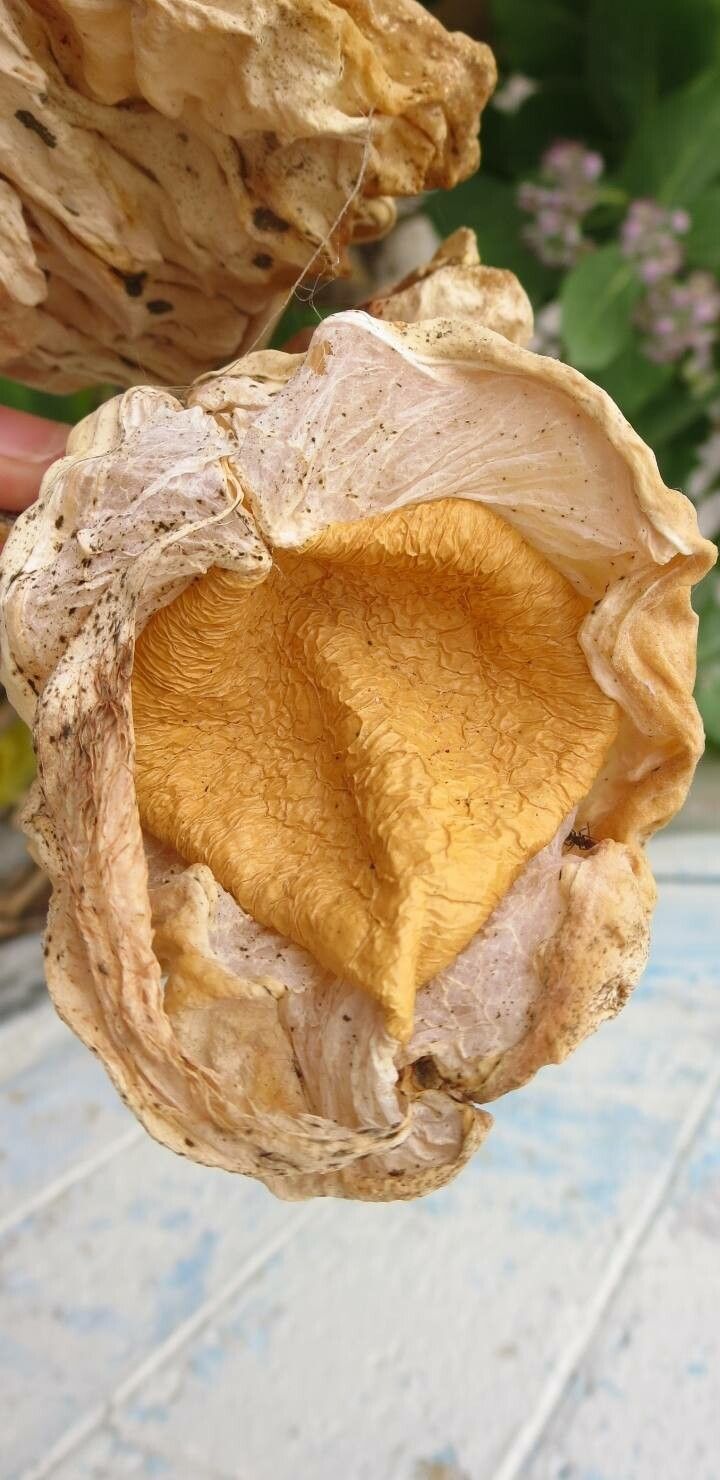
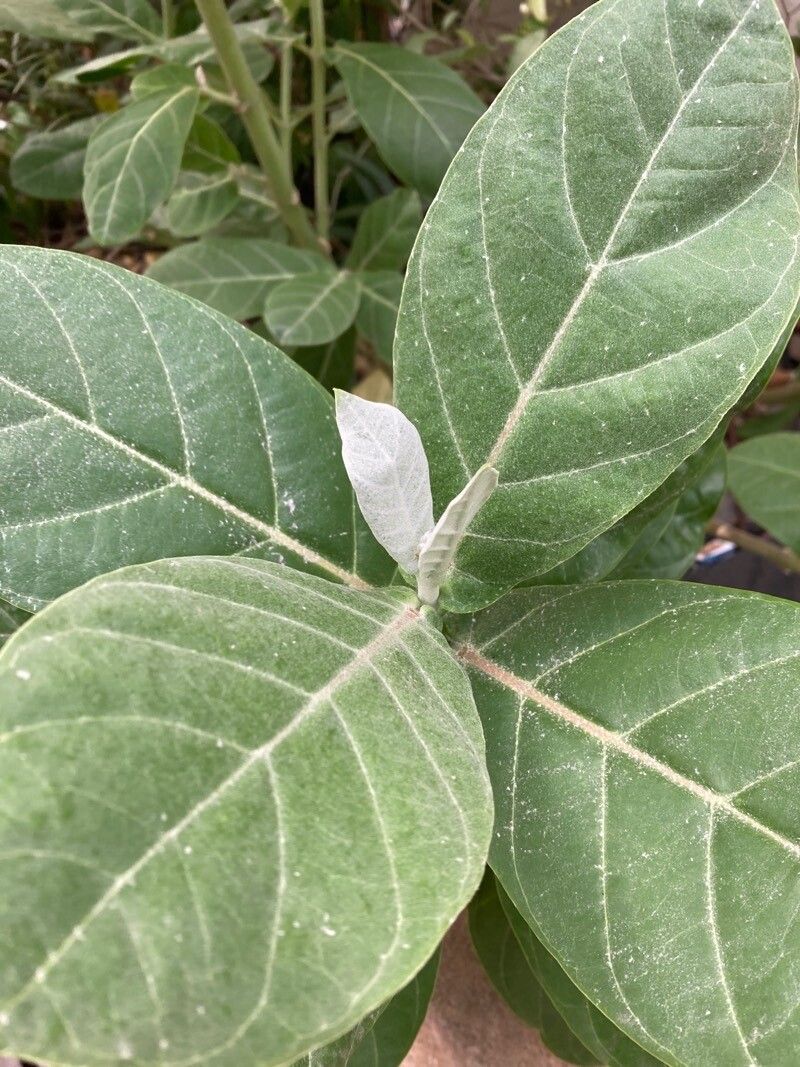
Calotropis procera is a species of flowering plant in the family Apocynaceae that is native to North Africa, Pakistan,tropical Africa, Western Asia, South Asia, and Indochina. The green fruits contain a toxic milky sap that is extremely bitter and turns into a gluey coating which is resistant to soap. Common names for the plant include Apple of Sodom, Sodom apple, king's crown, rubber bush, and rubber tree. The name Apple of Sodom and Dead Sea Apple comes from the fact that the ancient authors Josephus and Tacitus described it as growing in the area of biblical Sodom.
Apple of Sodom is fairly disease-resistant and typically does not suffer from many illnesses. Still, it can be affected by pests and diseases found in its environment. Such infections are generally mild. Care-wise, the plant needs a moderate level of attention. Regular pruning is necessary to preserve an attractive form and encourage healthy growth. Applying fertilizer can also support flower production. Apple of Sodom is a good choice for anyone with outdoor areas like a garden or patio and does not demand extensive gardening experience. It might need extra care when cultivated indoors.
How to keep Calotropis Procera.
Light
The Apple of Sodom requires abundant light for optimal health, a need rooted in its native habitat. Its different growth stages call for plenty of sunlight. Although it can tolerate less sunny conditions, that adaptation suppresses its growth. Prolonged exposure beyond its light tolerance can harm the plant, while insufficient light limits its flowering.
Water
The Apple of Sodom plant thrives in arid environments and is highly tolerant of drought. It benefits from watering every 2-3 weeks, mirroring the conditions of its natural habitat. This plant is well-suited for outdoor growth and can withstand harsh sunlight, making it an excellent choice for xeriscaping. It integrates seamlessly into low-irrigation landscapes.
Humidity
This plant prefers dry conditions, so don't mist it. However, watering it less often can also thrive in higher humidity.
Temperature
Apple of Sodom is suited to temperatures between 59 and 100 degrees Fahrenheit (15 to 38 degrees Celsius). In colder regions, adding extra warmth can help encourage growth. If temperatures fall well below that range, consider moving apple of Sodom indoors during colder seasons.
Fertilizer
Timing is key for fertilizing the Apple of Sodom. Start in early spring and continue with monthly applications until early summer. Fertilizer encourages lovely blooms and supplies energy during both dormant and active growth periods.
Pruning
To help an Apple of Sodom thrive, prune the plant from early to late winter. This encourages growth while minimizing stress. Concentrate on removing dead or damaged branches to enhance air circulation and light exposure, which in turn reduces pests and diseases. Make sure to use clean, sharp tools to prevent infection.
Botanical profile.
- Plant Type
- Tree, Herb, Shrub
- Life Cycle
- Perennial
- Genus
- Calotropis
- Family
- Apocynaceae
- Hardiness Zone
- 8-11
- Mature Height
- 1.83 m to 2.44 m
- Mature Spread
- 1.83 m to 2.44 m
- Leaf Color
- Green, Silver
- Leaf Type
- Evergreen
- Flower Color
- White
- Flower Size
- 2.54 cm
- Bloom Time
- All year round
- Planting Time
- Spring, Summer, Autumn
- Harvest Time
- All year round
- Native Area
- Benin, Burkina Faso, Djibouti, Tunisia, South Africa, Oman, Mauritania, Kuwait, Gambia, Thailand, Central African Republic
Other names.
Reader questions.
How should I water my Apple of Sodom?
Your Apple of Sodom is not picky about how you water it. You can use any common watering tool like a watering can, hose, or even a cup. No matter which tool you use, make sure to water the soil directly. It's important to evenly moisten all areas of the soil to provide water to every part of the root system. Using filtered water is helpful because tap water may have harmful particles. Also, using water that is at or slightly above room temperature is ideal because very cold or hot water can be shocking to the Apple of Sodom. However, this plant usually responds well to any type of water.
Why should I put fertilizer on my Apple of Sodom?
Fertilizing an Apple of Sodom is important for several reasons. One of the most obvious benefits is that it helps the plant produce beautiful blooms. To achieve excellent flowers during the season, it is recommended to apply fertilizer in early spring. Additionally, fertilizer provides the plant with extra energy that can be stored in the ground during its dormant growth phases. By giving the Apple of Sodom additional nutrients during fall planting or late spring, it will have more energy available once active growth resumes.
What are the sunlight requirements for the Apple of Sodom?
The Apple of Sodom requires generous quantities of light for optimal health, a trait that comes from its native habitat. It thrives in full sun, which means it prefers above 6 hours of sunlight daily, but it can also adapt to partial sun, about 3-6 hours of sunlight. Although it can withstand less sunny conditions, such adaptation may stunt its growth. Excessive exposure beyond its sunlight threshold could stress the plant, whereas inadequate light can delay its flowering phase. It's essential to watch how sunlight moves through your garden, picking spots that offer a perfect balance of light and shade to ensure the plant's happiness.
What is the optimal temperature range for Apple of Sodom?
Apple of Sodom thrives in environments with temperatures ranging from 59 to 100 degrees Fahrenheit (15 to 38 degrees Celsius). It is accustomed to this range and can grow well within these temperatures. For colder climates, it may be necessary to provide additional warmth to encourage growth. Transferring the Apple of Sodom indoors or providing extra protection during colder seasons is advisable, especially when temperatures fall significantly below its accustomed range.
What should I do if I give my Apple of Sodom plant too much or too little water?
Outdoor plants, especially newly planted ones or seedlings, are susceptible to lack of watering. It's important to remember to water them adequately for a few months until they establish their roots. Once the roots are established, they can rely on rain for most of their water needs. If you have Apple of Sodom plants in pots, overwatering can be a common issue. If you accidentally overwater your plant, you should take prompt action to address the situation. First, stop watering the plant immediately to minimize the effects of overwatering. Then, remove the Apple of Sodom from its pot and inspect the roots. If there is no sign of root rot, you can return the plant to its container. However, if you find any signs of root rot, trim the affected roots and consider applying a fungicide to prevent further damage. Finally, repot the plant in well-draining soil. On the other hand, underwatering is an easy problem to fix. If you notice drooping, dry, and falling leaves, it indicates that the plant is underwatered. Simply water the plant more frequently, and you will see the leaves regain their fullness. Make sure to adjust your watering frequency as soon as you notice signs of underwatering.
When should I fertilize my Apple of Sodom plant?
To effectively fertilize the Apple of Sodom plant, timing is crucial. Applying fertilizer too early while the plant is dormant can be ineffective and result in the fertilizer getting washed away by rainwater, which leads to waste and pollution. The best time to start fertilizing is in early spring, and it should be applied every month until early summer.
How can artificial lighting be used for indoor plants like Apple of Sodom?
Indoor plants, including Apple of Sodom, require adequate lighting for optimal growth, especially when natural sunlight is insufficient, such as in winter or in less sunny spaces. Artificial lights provide a crucial solution, promoting faster, healthier growth. For the best results, select the right type of artificial light, with LED lights being a popular choice because they offer customizable wavelengths needed by plants. Full sun plants need 30-50W per square foot, partial sun plants require 20-30W per square foot, and full shade plants need 10-20W per square foot of artificial light. The light source should be placed 12-36 inches above the plant to mimic natural sunlight, and most plants benefit from 8-12 hours of light per day.
Does Apple of Sodom have any cold tolerance?
Yes, Apple of Sodom has some degree of cold tolerance. It generally does not require any additional cold protection measures when the temperature remains above -5°C. However, if the temperature is expected to drop below -5°C, temporary measures should be taken to protect the plant from the cold. This can include wrapping the plant with plastic film, fabric, or other insulating materials. It's important to remove these protective measures once the temperature rises to prevent any potential damage to the plant.
How often should I give water to my Apple of Sodom plant?
If your area lacks rainfall, it's important to provide adequate watering for your outdoor plants. In the spring and fall, watering every 2 weeks should be sufficient. However, during the summer, more frequent watering is needed. In the winter, when growth slows down, it's best to water sparingly or not at all. If you have a young or newly planted Apple of Sodom, it will need more frequent watering to help it establish and grow. For potted plants, there are two ways to determine watering frequency. One option is to set a predetermined schedule of once a week or every other week. However, this approach may not always work for your specific growing environment. Watering frequency can also vary depending on the season. During the summer, when the plant's water needs are highest, a predetermined schedule may not be enough. Alternatively, you can monitor the soil moisture and wait until the top two to four inches are completely dry before watering again.
When is the best time to not fertilize my Apple of Sodom?
To ensure healthy growth and blossoming of the Apple of Sodom, it is important to carefully consider the type and timing of fertilizer. Avoid using high nitrogen fertilizer as it can cause excessive leaf growth without many flowers. Instead, opt for a fertilizer with a lower nitrogen content compared to other nutrients. Remember not to fertilize after early autumn, as this can result in rapid growth just before winter, which may not be ideal. Similarly, avoid fertilizing during hot and dry periods as dry soil does not effectively distribute fertilizer, and the stimulation of growth may require more water than is available. It is advisable to apply fertilizer earlier in the season when temperatures are cooler. Lastly, be aware that the Apple of Sodom can absorb fertilizer used on nearby plants or lawns, so avoid accidentally overfeeding the tree or shrub with a double-dose of fertilizer.
What are the key symptoms of light deficiency or overexposure in Apple of Sodom?
Apple of Sodom displays several symptoms when subjected to inadequate lighting or overexposure. Deficiency symptoms include small leaves, leggy or sparse growth, faster leaf drop, slower or no new growth, and lighter-colored new leaves. Each of these symptoms signals that the plant is not receiving enough sunlight, affecting its overall health and growth. Conversely, symptoms of overexposure to sunlight include chlorosis, sunscald, leaf curling, wilting, and leaf scorching. These conditions reflect the plant's struggle with too much sunlight, leading to physical damage and reduced health.
How should Apple of Sodom be cared for in low temperatures?
In low temperatures, especially during winter, it's important to ensure that Apple of Sodom is kept above -5°C. If the temperature falls below -10°C, the plant may exhibit symptoms like drooping leaves which, in mild cases, can recover. However, in severe cases, the leaves may wilt and fall off. The best course of action includes trimming off the frost-damaged parts and taking preventative measures before encountering low temperatures again. This could involve wrapping the plant with non-woven fabric or cloth and creating a wind barrier to protect it from the cold wind.