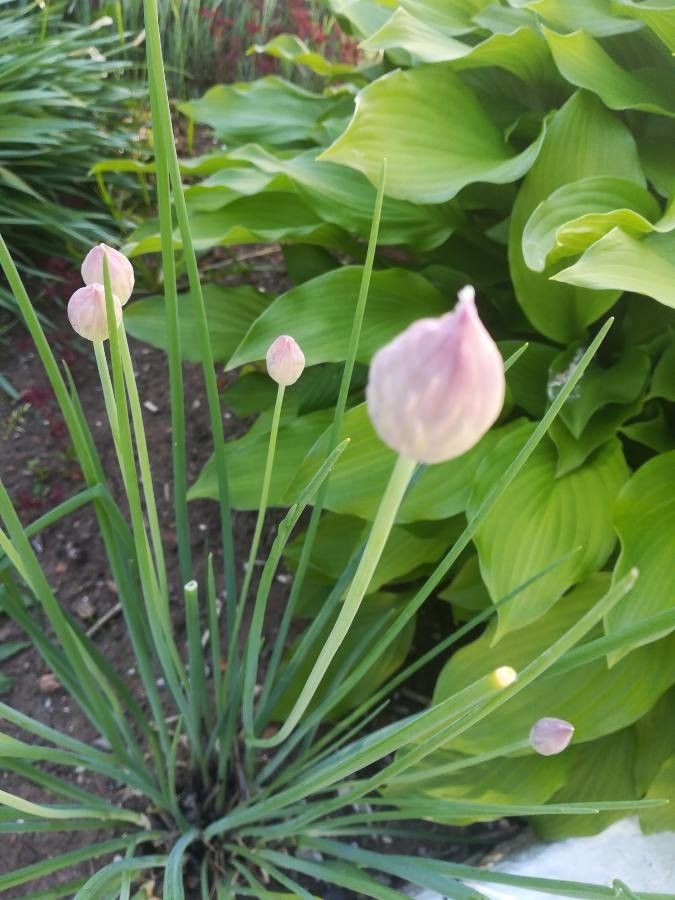
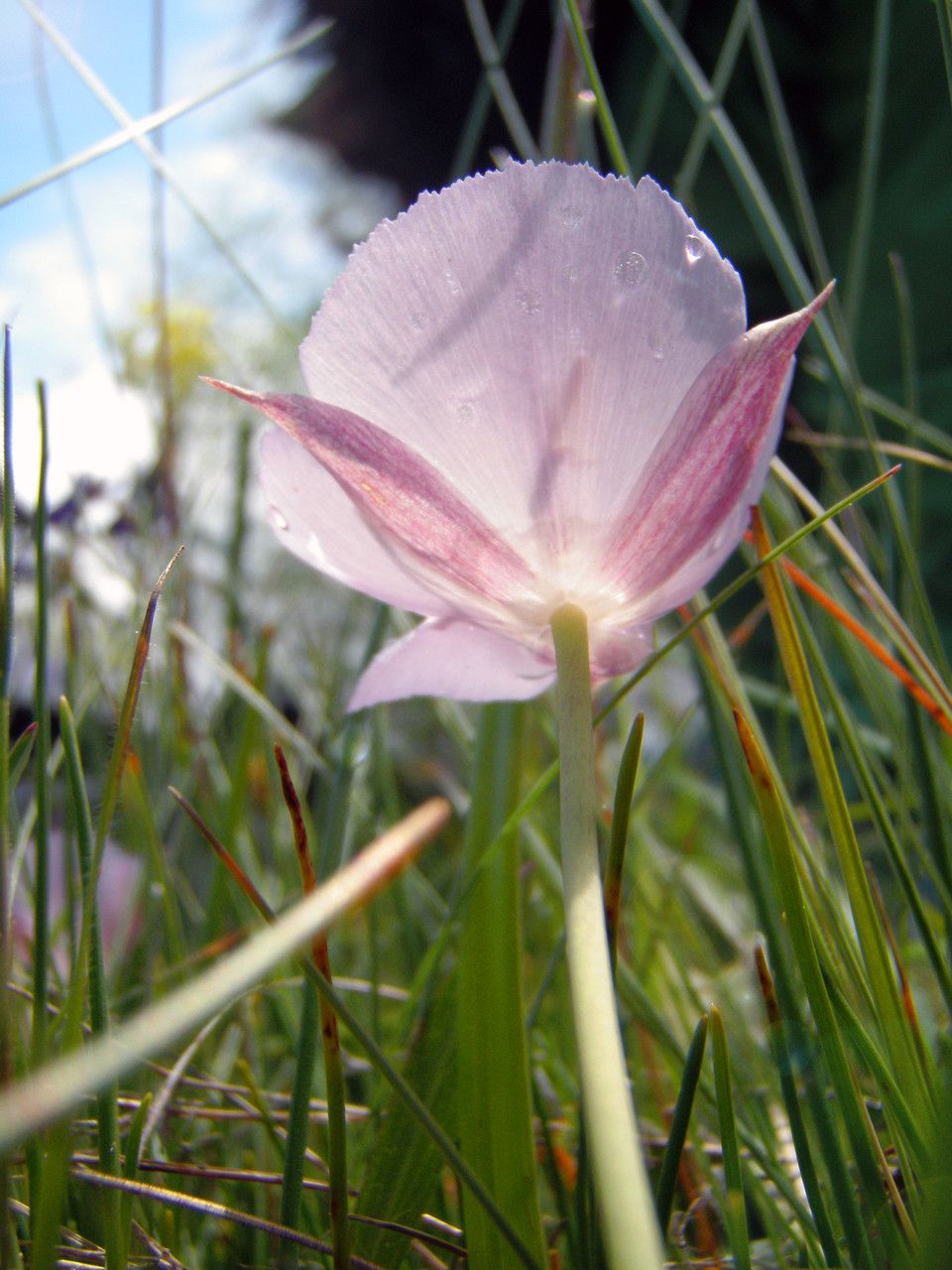
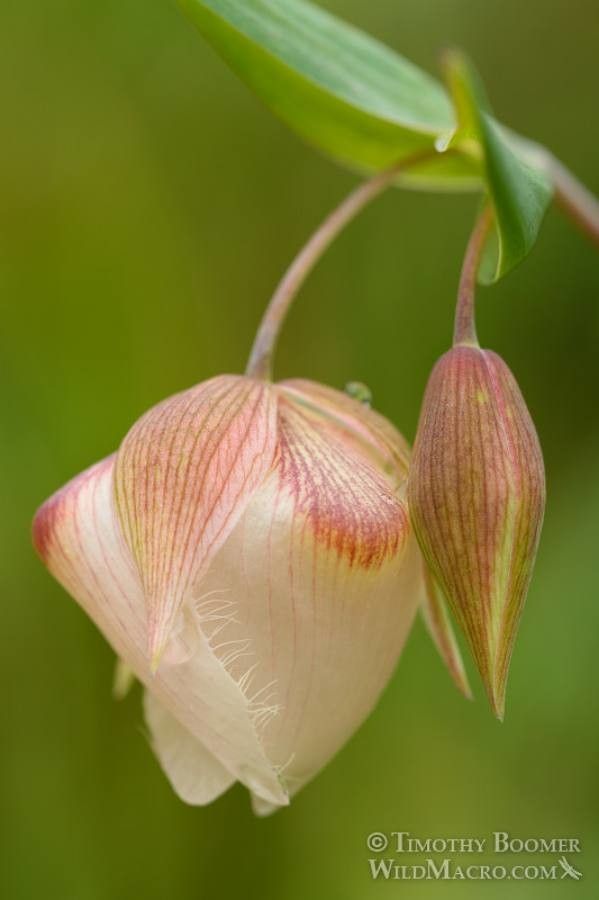
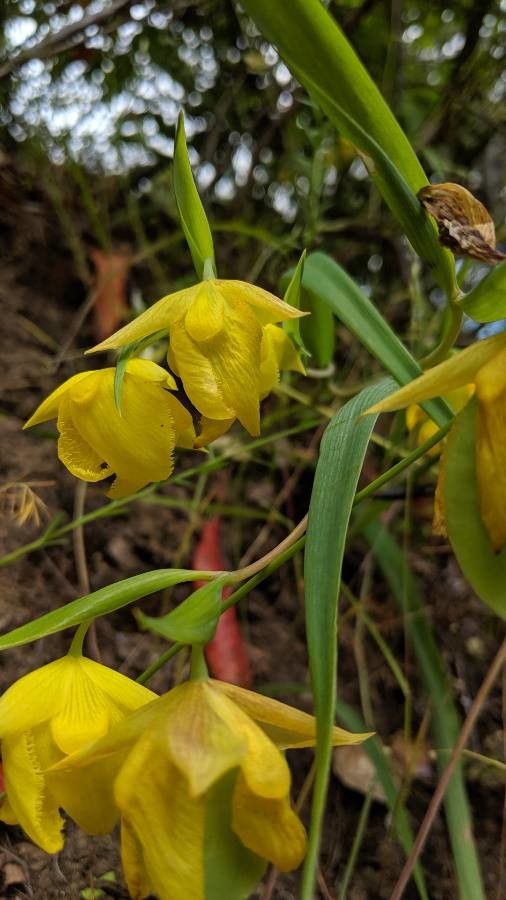
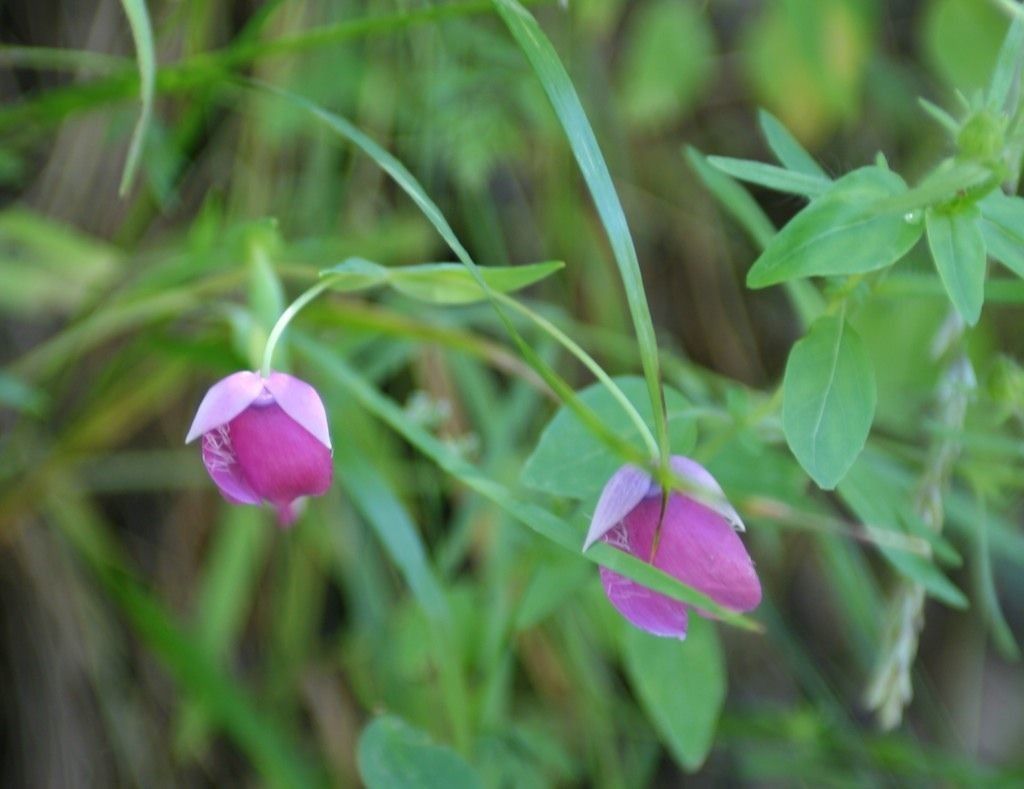
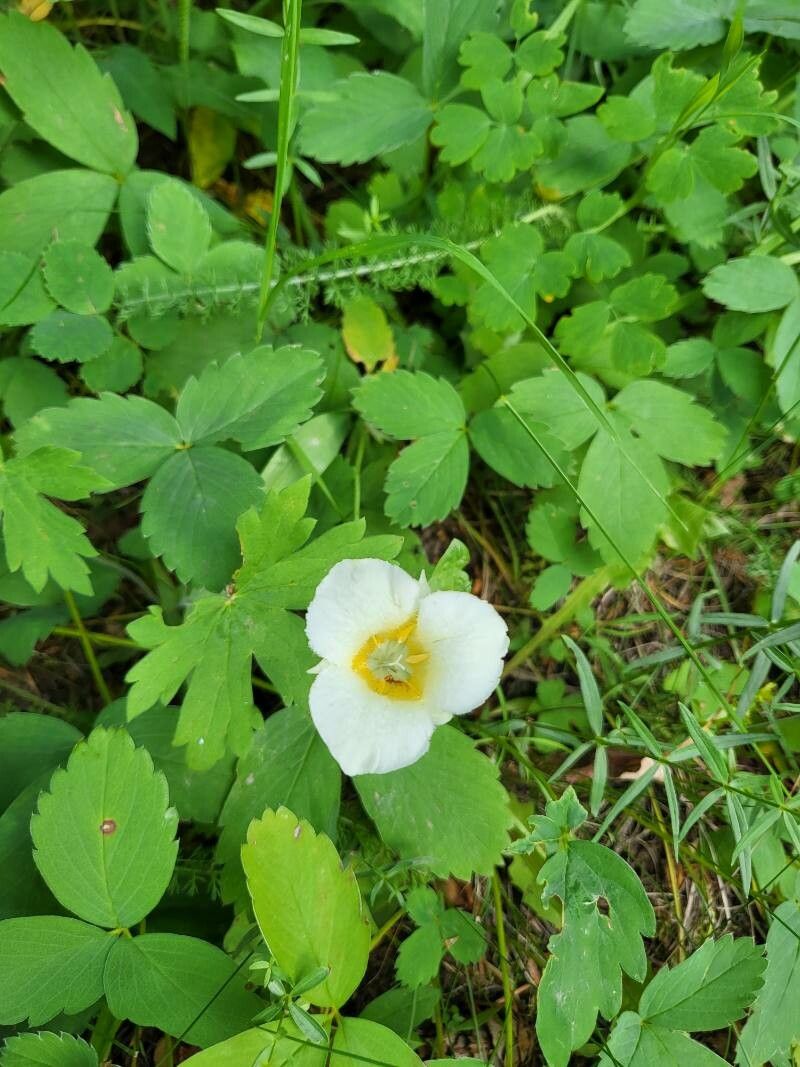
Calochortus uniflorus is a species of flowering plant in the lily family known by the common names Monterey mariposa lily and large-flowered star-tulip. It is native to western Oregon and to California as far south as San Luis Obispo County. It grows in moist areas, such as meadows, in coastal hills and lower-elevation mountains. Most of the populations are found in the Coast Ranges, but some occur in the Cascades and in the foothills of the Sierra Nevada.Calochortus uniflorus is a perennial herb producing a short, unbranching stem generally less than 5 centimeters tall. The basal leaf is up to 40 centimeters long and does not wither by flowering; there may be one or more shorter leaves farther up the stem. The inflorescence is a loose cluster of 1 to 5 erect, bell-shaped flowers. Each flower has three petals up to about 3 centimeters long and three shorter sepals beneath. The petals are white to pink in color and may have purple spotting near the bases. The fruit is a capsule up to 2.5 centimeters long.
The Monterey mariposa lily is fairly disease-resistant and generally not prone to illness. However, it can be affected by pests and diseases present in its environment. These problems are usually mild. In terms of care, the plant has moderate maintenance needs. It should be pruned regularly to maintain a neat appearance and healthy growth. Fertilizing can also help encourage flowering. The Monterey mariposa lily is suitable for anyone with an outdoor area, such as a garden or patio, and does not require extensive gardening experience. When grown indoors, it may need more attention.
How to keep Calochortus Uniflorus.
Light
The Monterey mariposa lily naturally occurs in habitats like forest understories and rocky areas, where it grows in naturally shaded conditions. It prefers partial sun but can tolerate both full sun and full shade, indicating it is adaptable and hardy.
Temperature
The Monterey mariposa lily can tolerate a wide range of temperatures, but its distribution may still be limited by various combinations of moisture and heat. It performs best in warm summer climates with sufficient rainfall or watering. Extended stretches of cloudy, rainy weather or sustained high temperatures can increase the likelihood that the Monterey mariposa lily will die. In winter, protecting it from cold can improve its survival rate.
Fertilizer
For the Monterey mariposa lily, the primary time to apply fertilizer is in early spring when the flowers are developing. The proper fertilizer promotes improved blooms and helps the Monterey mariposa lily produce attractive flowers. Fertilizing in early spring ensures strong flowers during the season and supplies energy for dormant growth phases.
Pruning
The Monterey mariposa lily showcases delicate, bell-shaped flowers. To achieve the best results, prune in early spring and remove any dead stems. Lightly trimming spent flowers encourages more blooms. This practice improves air circulation and reduces the risk of disease, resulting in vibrant blooms and healthy growth, while also preventing stress from heavy pruning.
Botanical profile.
- Plant Type
- Herb
- Life Cycle
- Perennial
- Genus
- Calochortus
- Family
- Liliaceae
- Hardiness Zone
- 7-9
- Mature Height
- 8 cm
- Mature Spread
- 10 cm to 20 cm
- Leaf Color
- Green
- Leaf Type
- Deciduous
- Flower Size
- 2.03 cm to 3.05 cm
- Bloom Time
- Mid spring, Late spring
- Planting Time
- Spring, Summer
- Harvest Time
- Early summer, Mid summer
Other names.