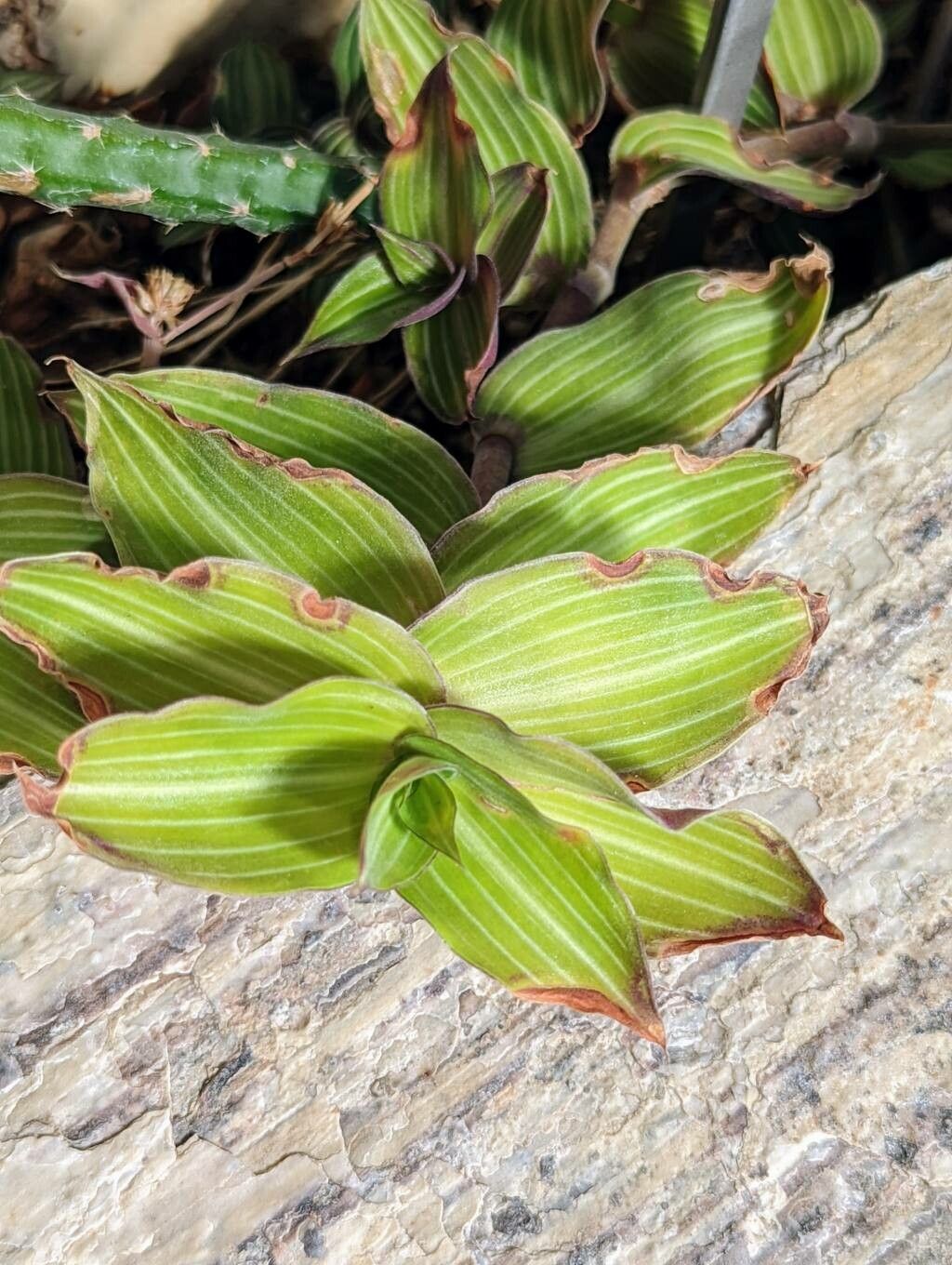
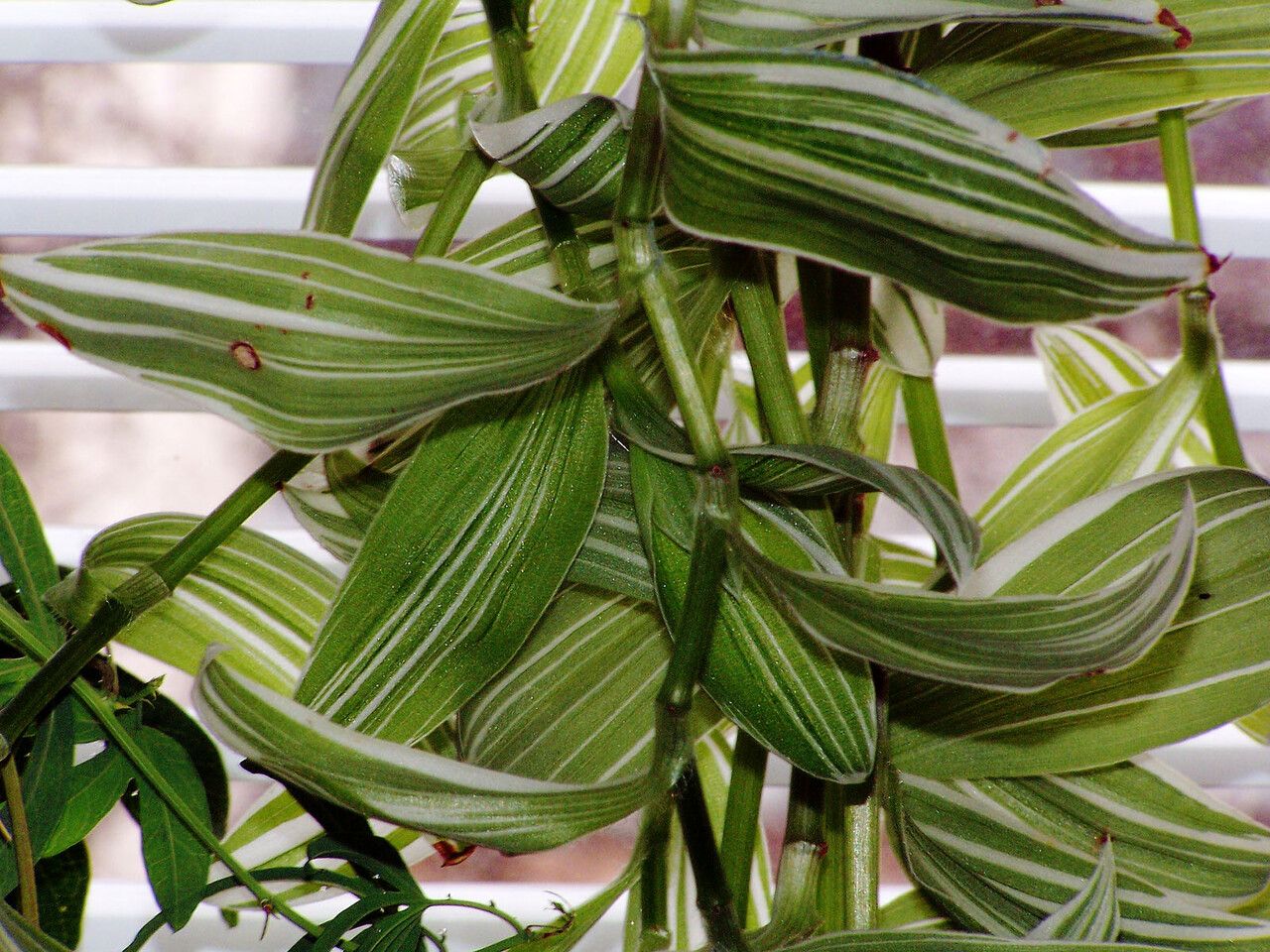
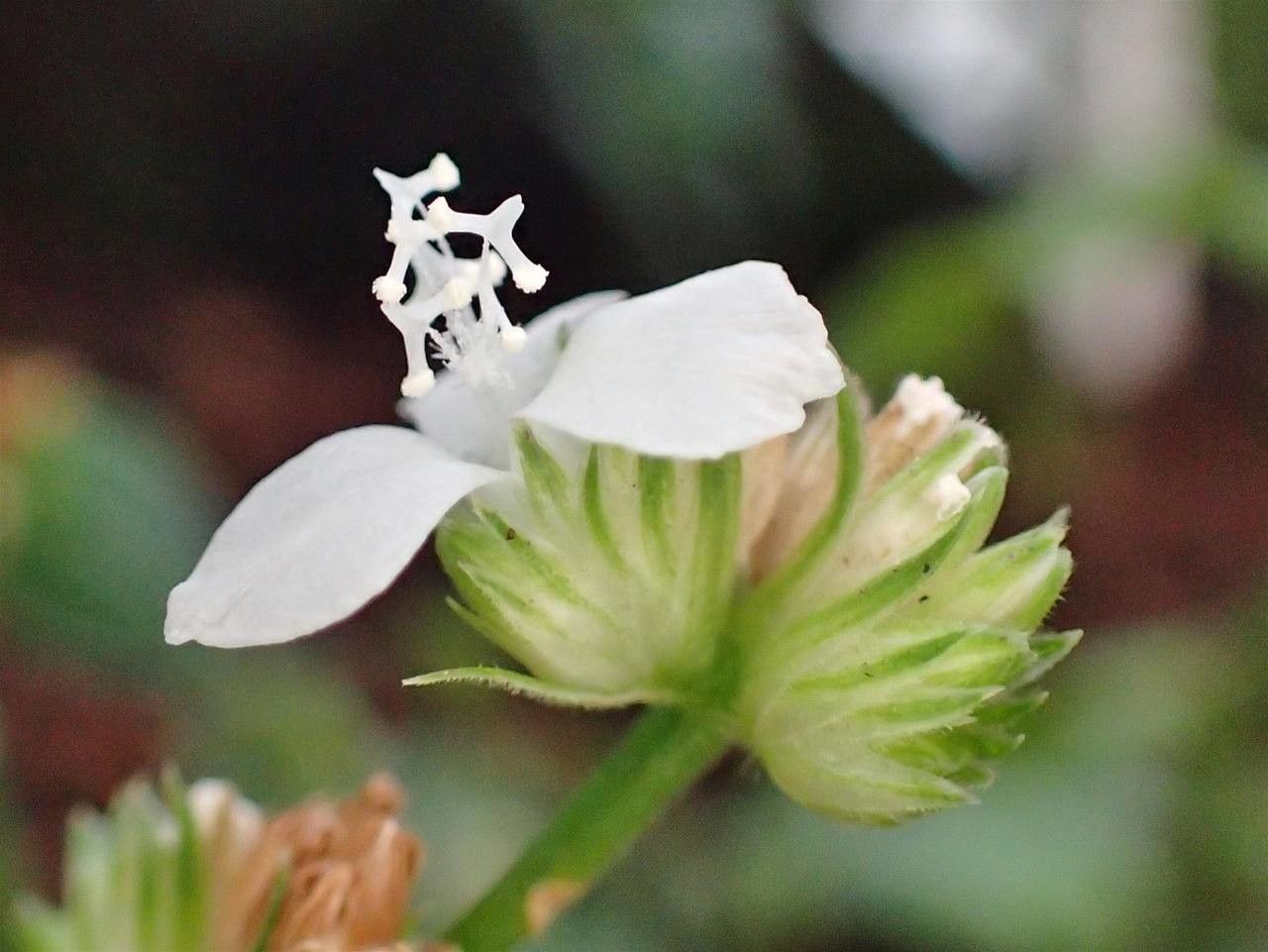
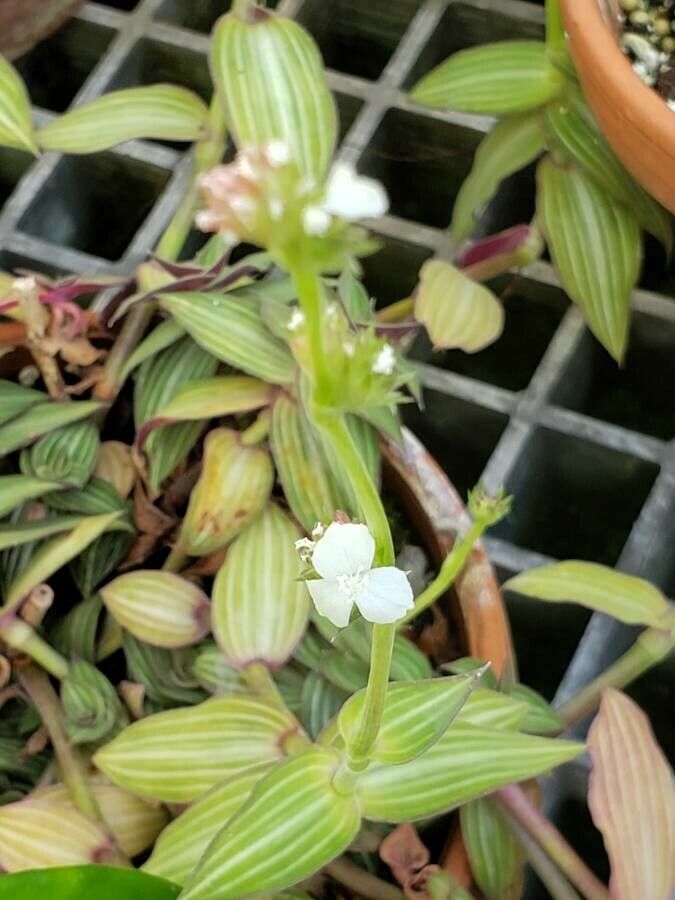
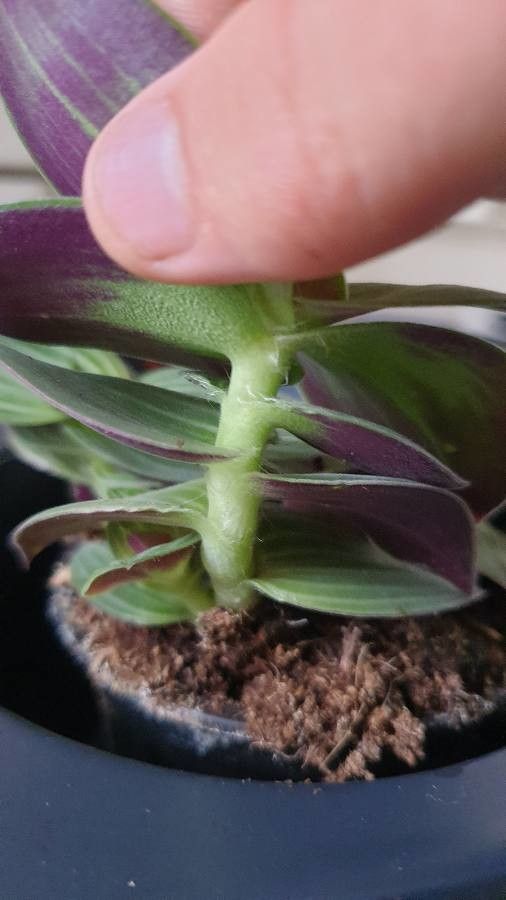
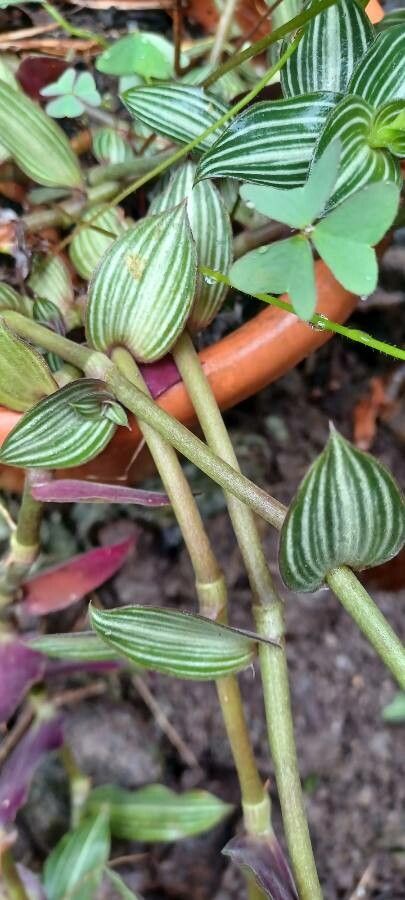
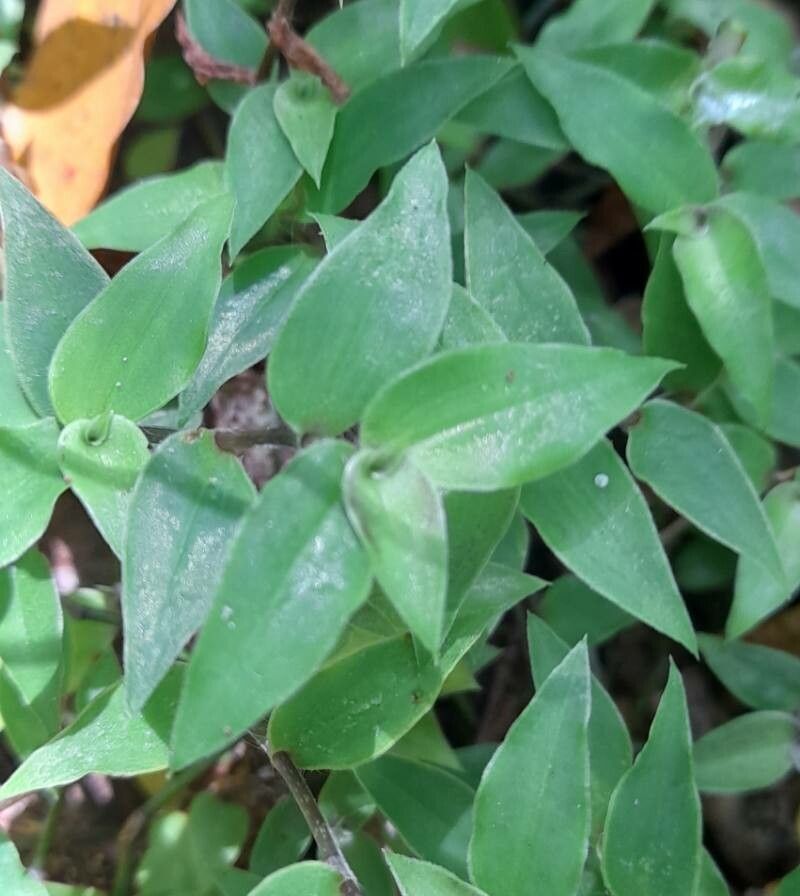
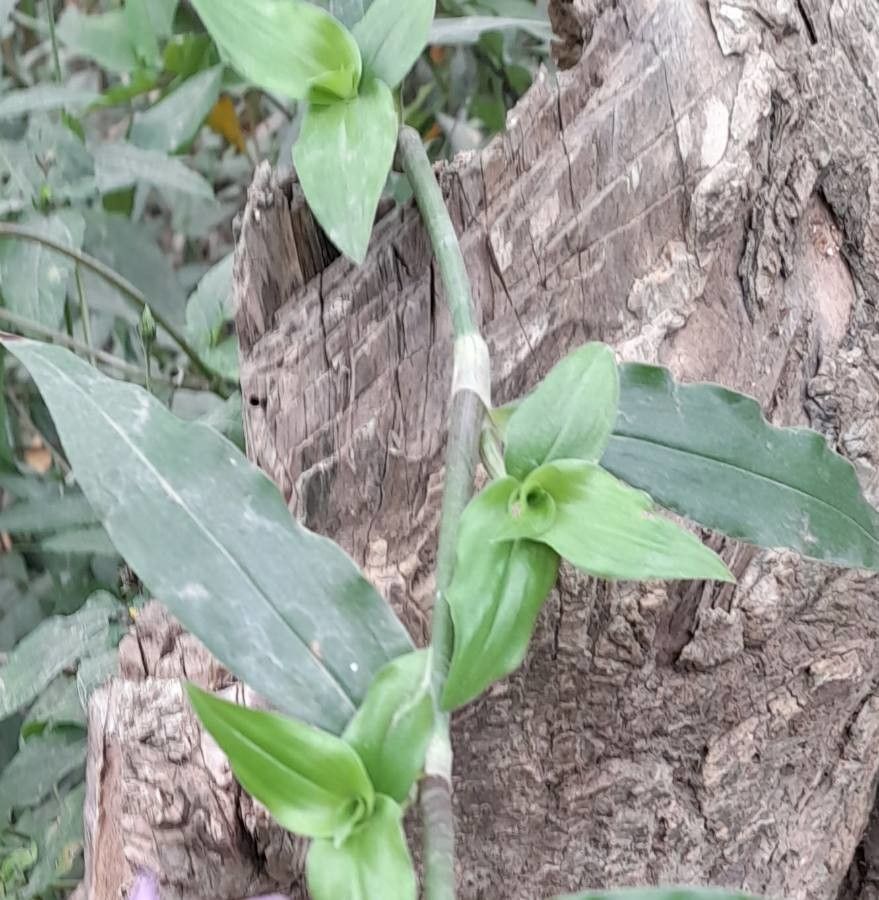
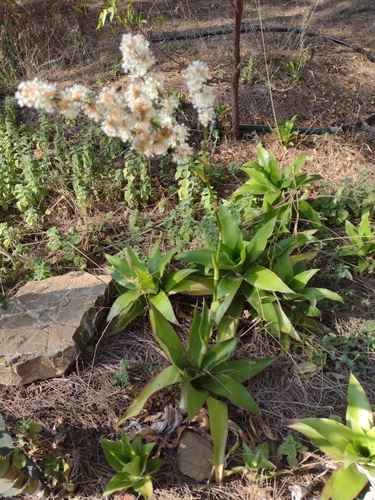
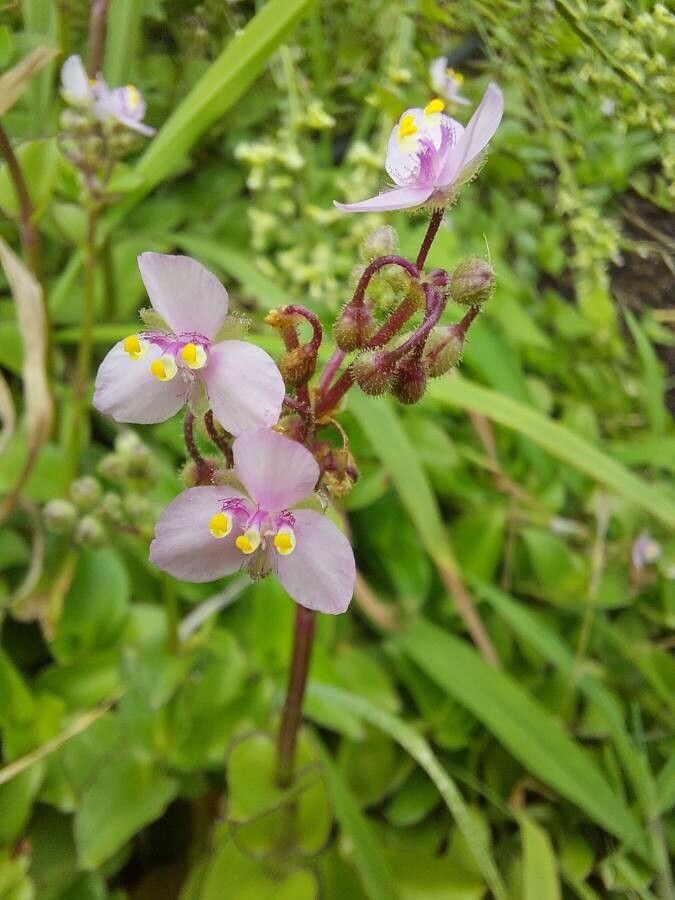
Callisia gentlei is a small, perennial plant belonging to the Commelinaceae family. Native to Mexico and Central America, it is commonly known as the "Pink Lady" due to its attractive pink flowers. This plant has a trailing growth habit, with long stems that can reach up to 30 cm in length. Its small, oval-shaped leaves are glossy green on top and have purple undersides.
Callisia gentlei prefers bright, indirect light but can tolerate low-light conditions. It thrives in well-draining soil and requires regular watering, although overwatering should be avoided to prevent root rot. Occasional fertilization during the growing season also benefits the plant.
Beyond its ornamental appeal, Callisia gentlei has been used in traditional medicine for its anti-inflammatory properties and as a treatment for skin conditions such as eczema and psoriasis.
In summary, Callisia gentlei is an attractive houseplant that requires minimal care while adding aesthetic value to any indoor space.
The striped inch plant has strong resistance to disease and is generally unlikely to develop illnesses. Still, it can be affected by pests and diseases that exist in its environment. These problems tend to be mild. Regarding care, this plant is moderately demanding. It should be pruned regularly to preserve an attractive appearance and support healthy growth. Applying fertilizer can also encourage blooming. The striped inch plant is appropriate for anyone with outdoor areas like a garden or patio and does not need extensive gardening experience. It might need extra attention when kept indoors.
How to keep Callisia Gentlei.
Light
The striped inch plant is native to habitats like forest understories or rocky sites, where it grows in natural shade. It prefers partial sun but can tolerate full sun or full shade, showing its versatile and hardy nature.
Temperature
Striped inch plant comes from tropical areas, where the climate is generally warm and humid. Consequently, it is adapted to high temperatures and moisture. It does not tolerate sudden temperature shifts and prefers a steady temperature, so avoiding temperature fluctuations indoors is important. It typically cannot withstand cold conditions and needs warmer temperatures to grow. If the surrounding temperature falls too low, the plant may stop growing or even die.
Fertilizer
Proper fertilization is essential for the Striped inch plant's health and appearance. Fertilize the Striped inch plant during summer, applying treatment monthly throughout the season. Nutrients supply energy for growth and help maintain the plant's parts. Fertilization improves the Striped inch plant's flower display, ensuring the best blooms.
Botanical profile.
- Plant Type
- Herb
- Life Cycle
- Perennial
- Genus
- Callisia
- Family
- Commelinaceae
- Hardiness Zone
- 10-12
- Mature Height
- 15 cm to 30 cm
- Mature Spread
- 20 cm to 40 cm
- Leaf Color
- Dark Green, Purple
- Leaf Type
- Evergreen
- Flower Color
- White
- Flower Size
- 0.25 cm to 0.51 cm
- Bloom Time
- All year round
- Planting Time
- Spring, Summer, Autumn
- Harvest Time
- All year round
- Native Area
- Honduras, Mexico, Guatemala, Belize
Other names.