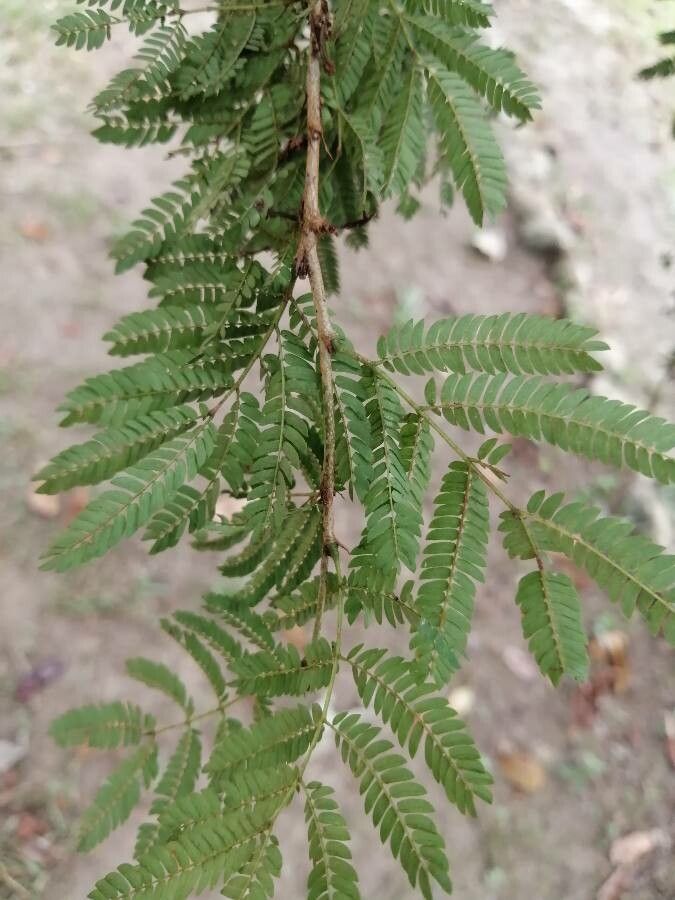
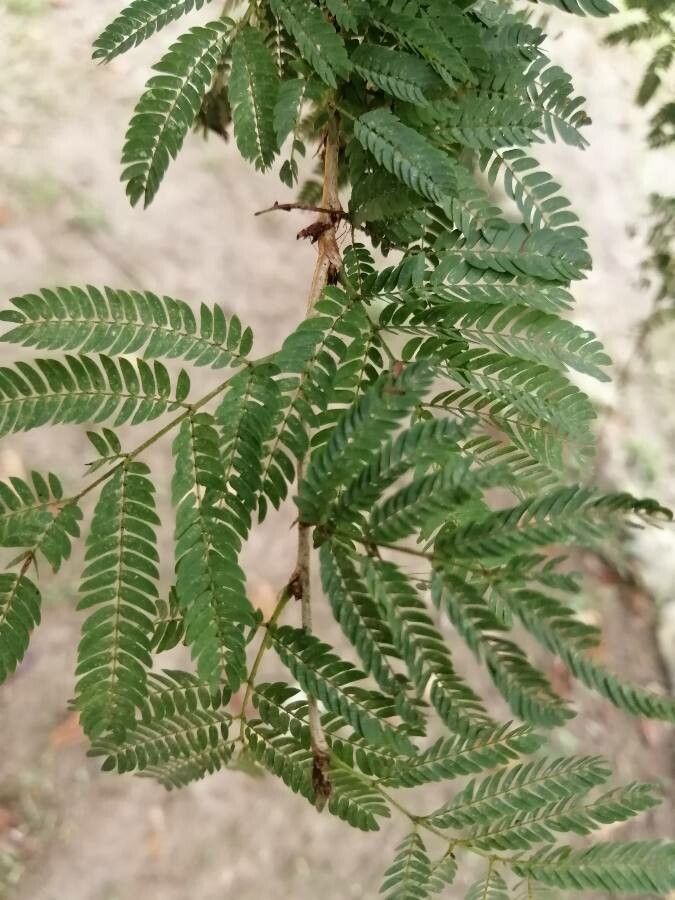
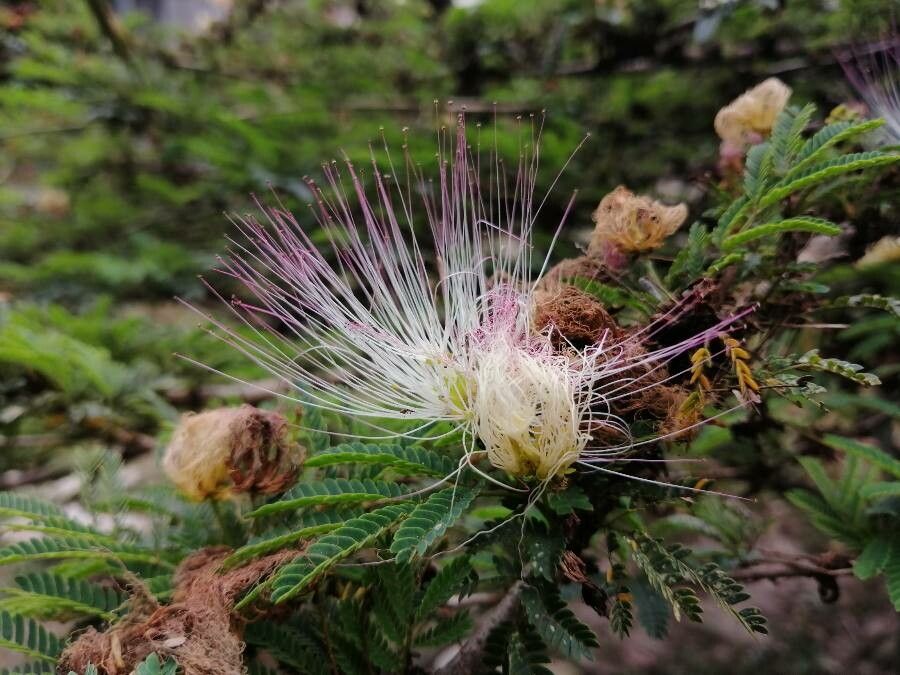
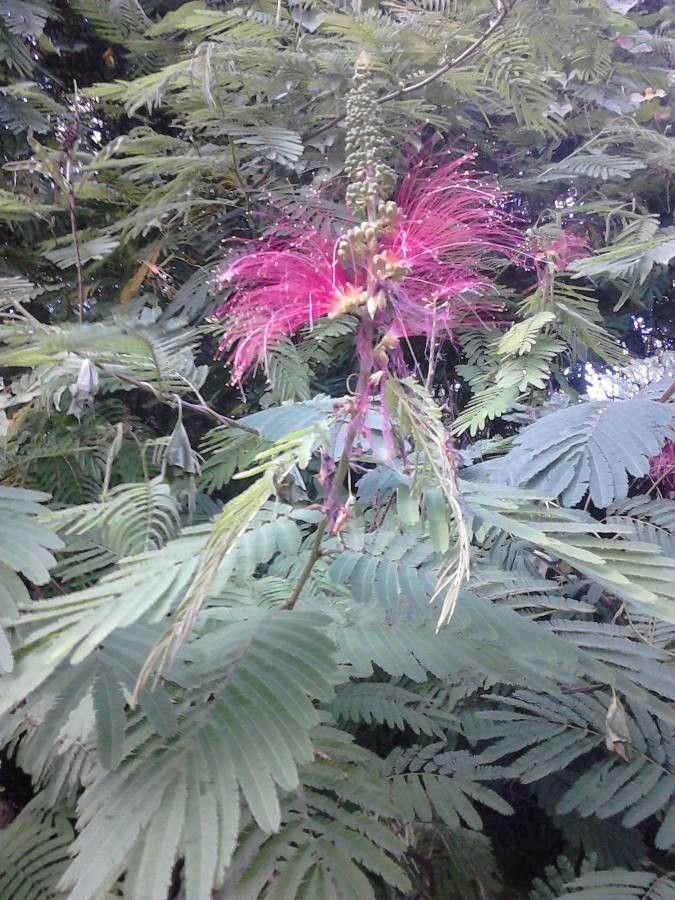
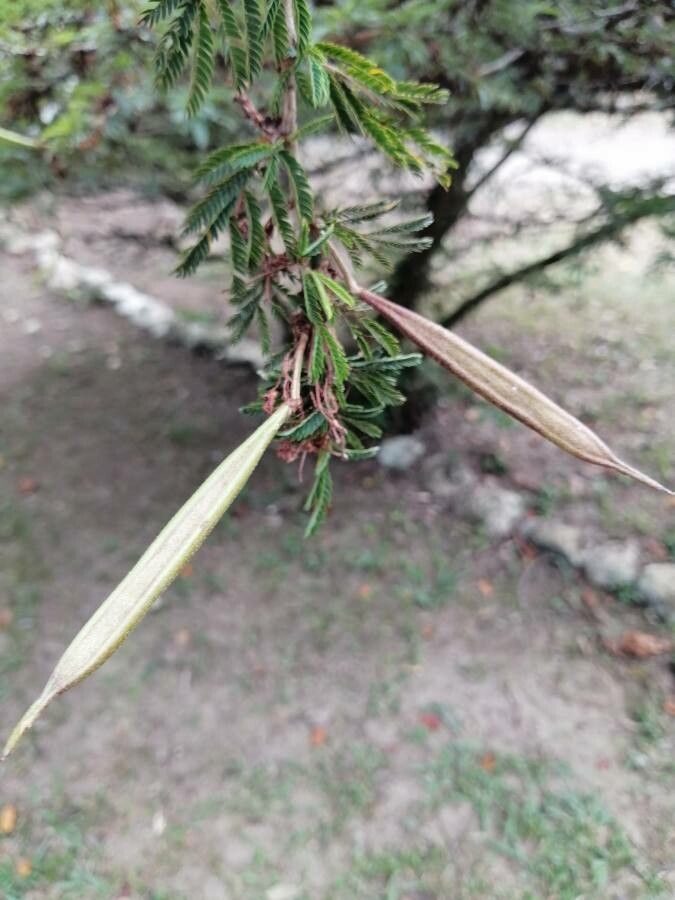
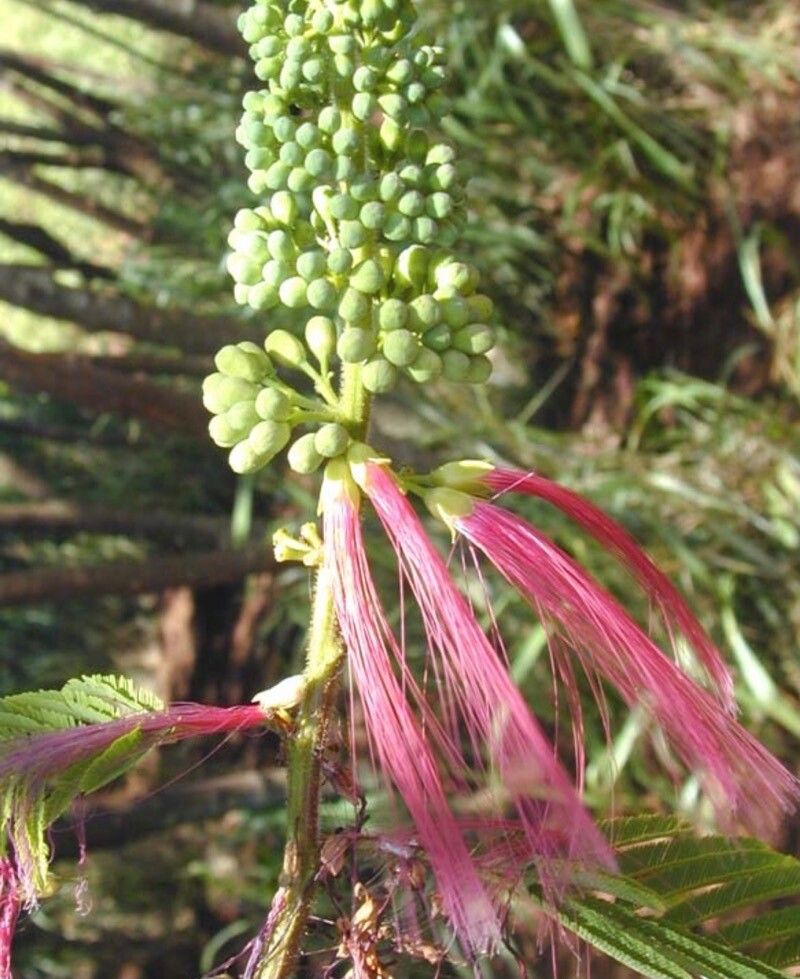
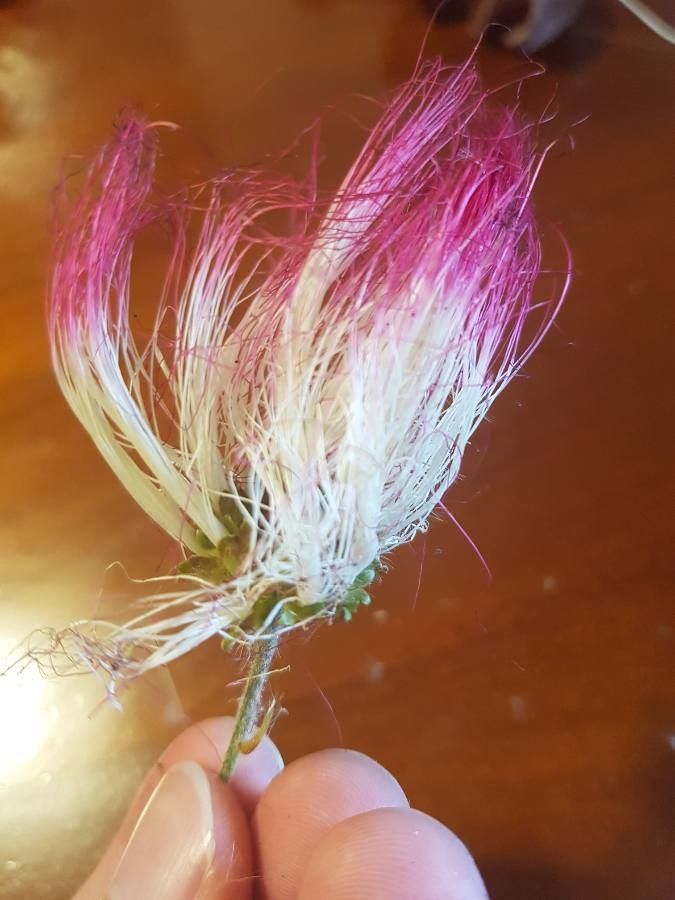
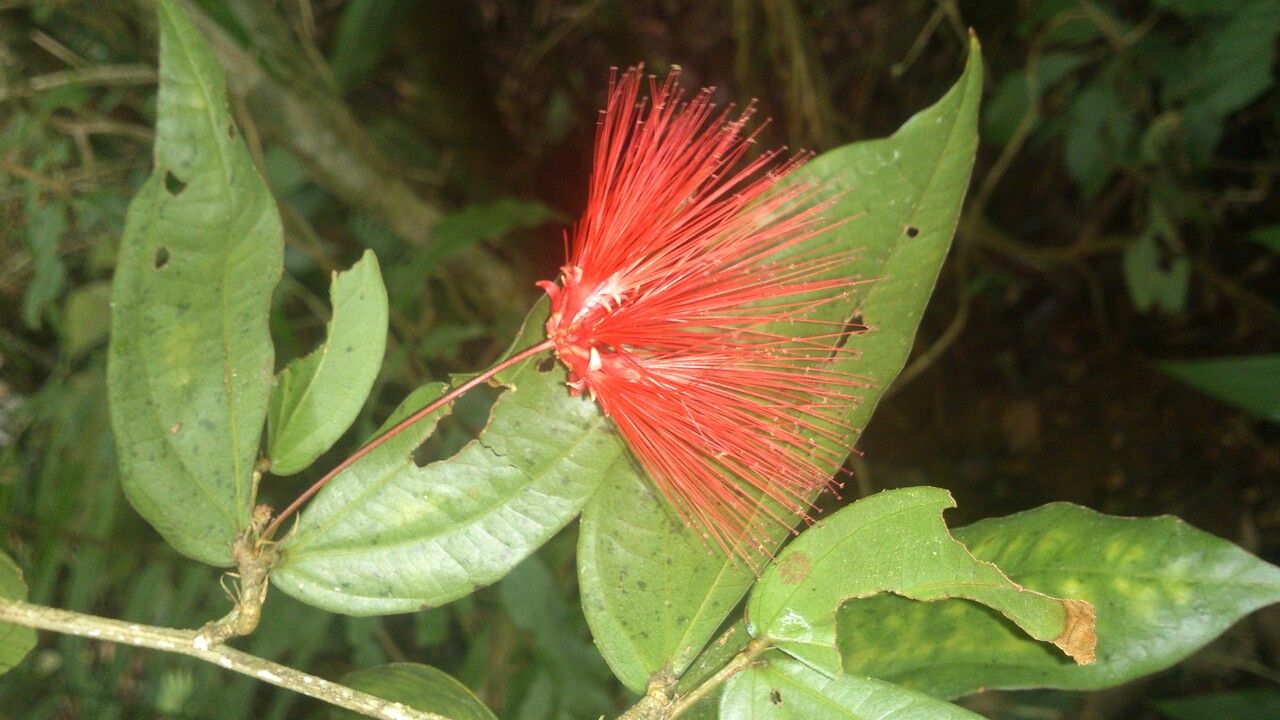
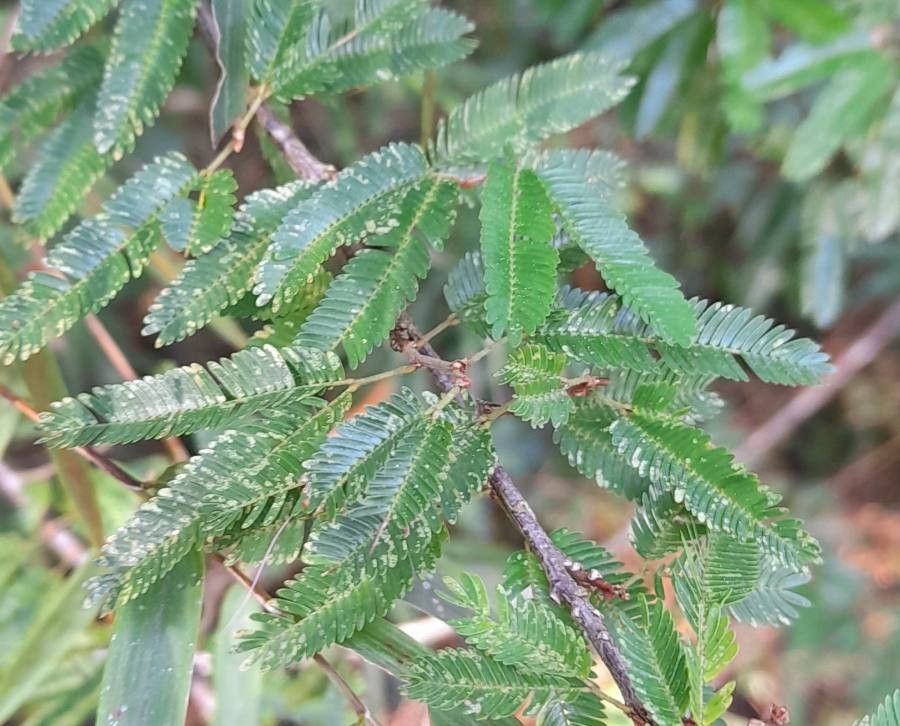
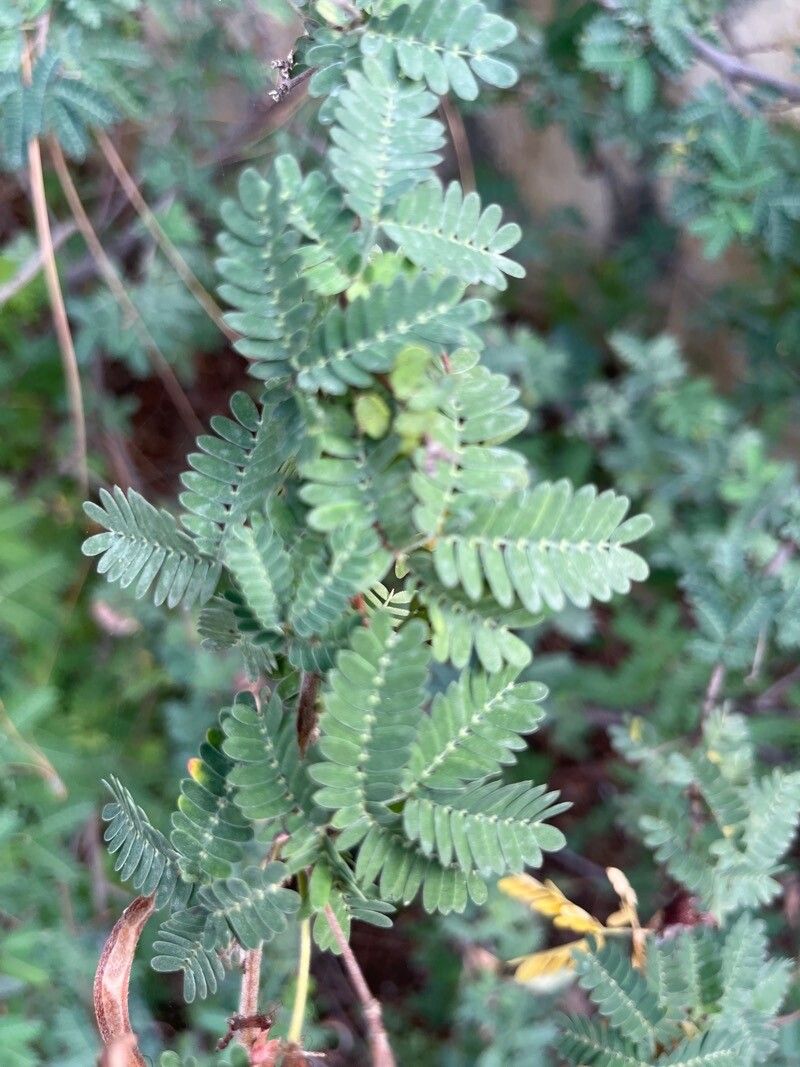
Calliandra calothyrsus is a small leguminous tree or large shrub in the family Fabaceae. It is native to the tropics of Central America where its typical habitat is wet tropical forests or seasonally dry forests with a dry season of four to seven months, when it may become deciduous. This tree grows to about 6 m (20 ft) and has pinnate compound leaves and flowers with a boss of prominent reddish-purple stamens. It is not very drought-tolerant and the above-ground parts are short-lived but the roots regularly resprout. It is a multipurpose legume tree that can improve the soil by fixing nitrogen from the atmosphere. It is easily grown from seed; growth is slow at first but speeds up after the first year. It is used for reforestation, provides soil stabilisation on sloping sites, and provides useful high quality fodder for livestock. It can be regularly coppiced to provide firewood. Because of these features, it has been planted in other parts of the tropics, but care has to be taken that it does not become an invasive species.
Calliandra houstoniana var. calothyrsus shows strong disease resistance and is generally not susceptible to illnesses. In terms of upkeep, the plant is fairly low-maintenance. When planted outdoors it needs only minimal watering, and larger specimens typically do not require pruning. Smaller plants, however, should be pruned after they have finished blooming. Calliandra houstoniana var. calothyrsust is appropriate for anyone with an outdoor area, such as a garden or deck, and does not demand extensive care experience.
How to keep Calliandra Calothyrsus.
Light
Calliandra houstoniana var. calothyrsus is native to open habitats like bright fields and woodland peripheries, where there is abundant sunlight. It flourishes in intense sunlight, yet is also capable of enduring semi-shaded conditions, demonstrating its adaptability to different levels of sunlight exposure.
Temperature
Calliandra houstoniana var. calothyrsus is native to tropical climates characterized by warmth and high humidity levels. Consequently, it thrives in environments with elevated temperatures and moisture. Having an aversion to abrupt changes in temperature, the plant prefers a continues constant temperature profile. If indoor temperatures are prone to fluctuation, it could be harmful to the plant. It is also not resilient to colder climates and necessitates above-average temperatures for development. Adverse consequences, such as halted growth or eventual death, could befall the plant if it's exposed to extremely low temperatures.
Fertilizer
Fertilizing a Calliandra houstoniana var. calothyrsus is best suited for the early spring when the plant is coming out of its dormant state. This promotes growth and the development of flowers. The fertilization process encourages the robustness of foliage, stems, and branches, and fosters the production of large, radiant, and durable flowers. It also assists in the transportation of nutrients from the roots to the flowers, boosting the plant's overall health and resilience against diseases.
Botanical profile.
- Plant Type
- Shrub
- Life Cycle
- Perennial
- Genus
- Calliandra
- Family
- Fabaceae
- Hardiness Zone
- 9-11
- Mature Height
- 4.88 m to 7.92 m
- Mature Spread
- 3.05 m to 4.88 m
- Leaf Color
- Dark Green, Forest Green
- Leaf Type
- Evergreen
- Flower Color
- Pink
- Flower Size
- 4.06 cm to 6.35 cm
- Bloom Time
- All year round
- Planting Time
- Spring, Summer, Autumn
- Harvest Time
- All year round
- Native Area
- Belize, Honduras, Mexico, Guatemala, El Salvador, Nicaragua, Costa Rica
Other names.