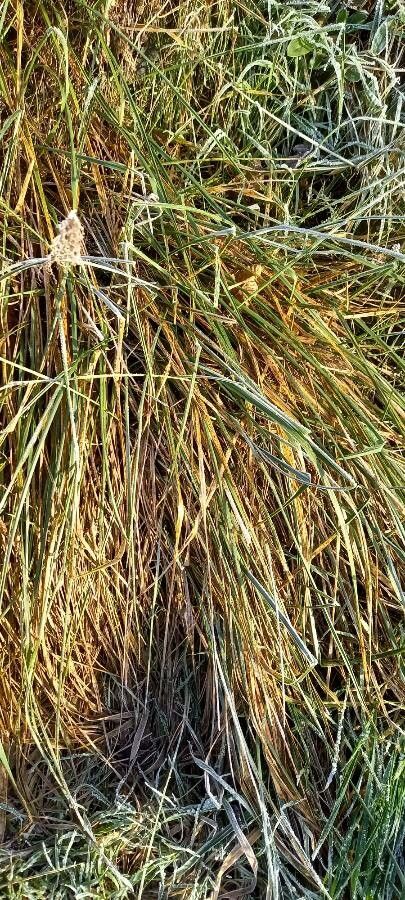
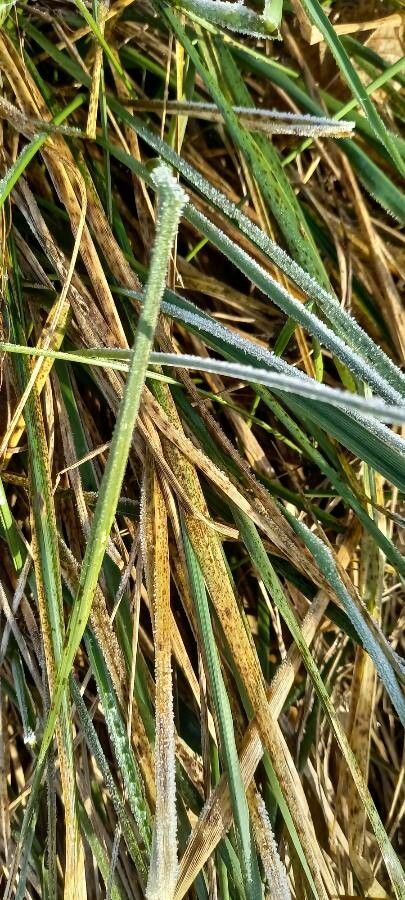
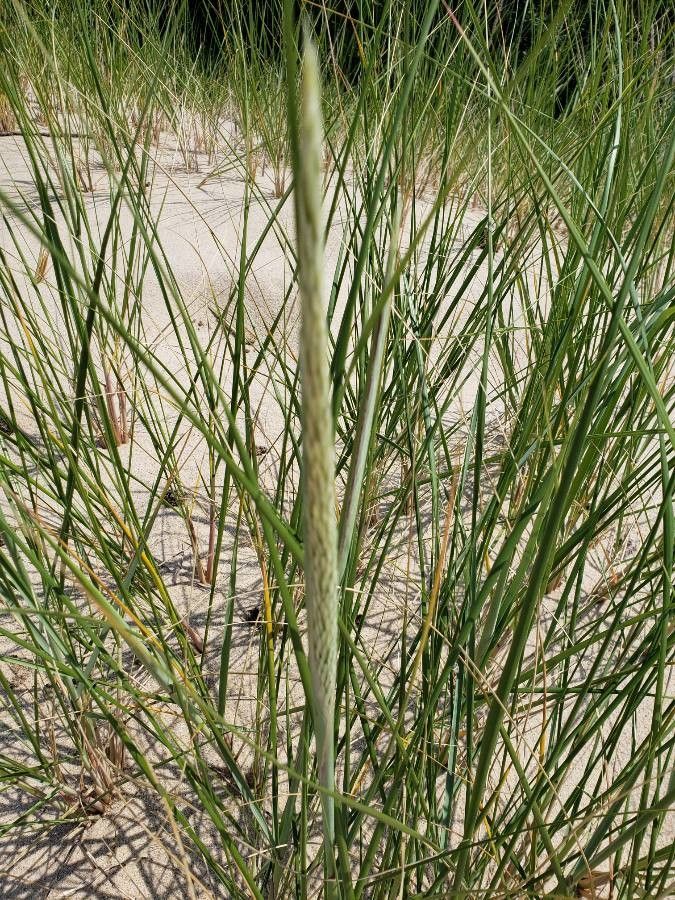
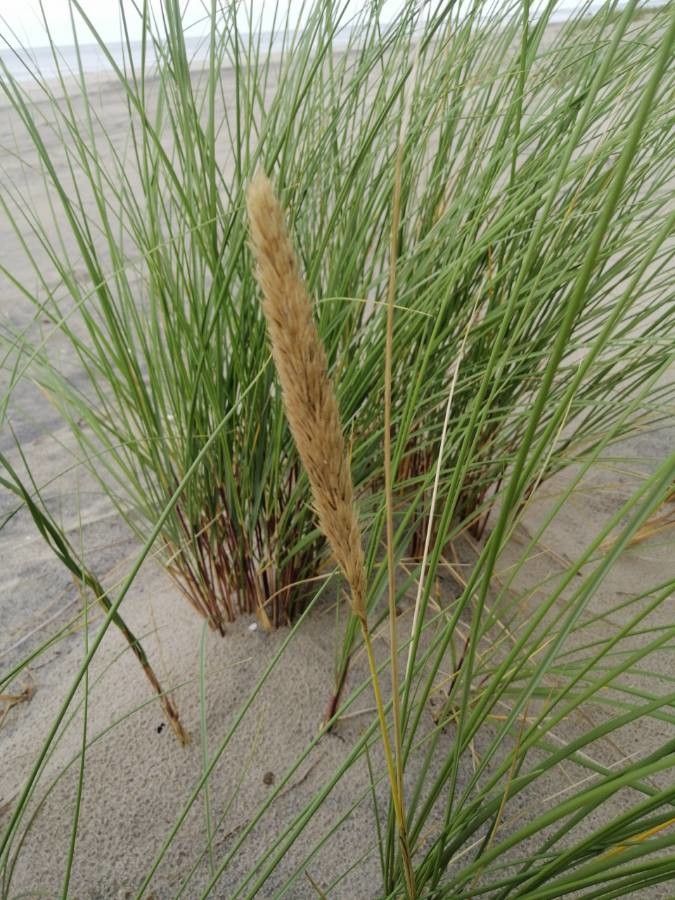
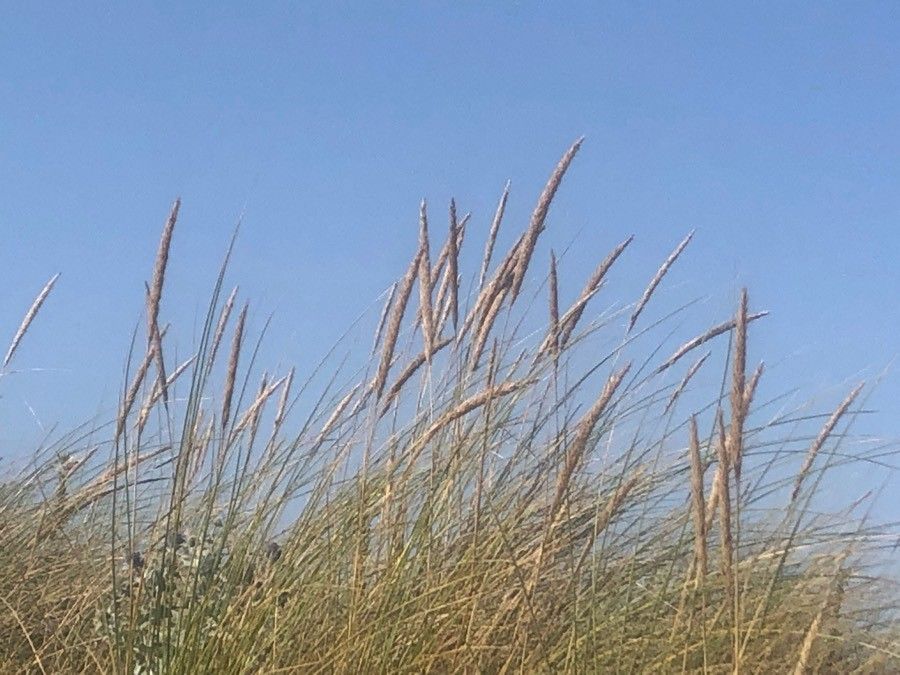
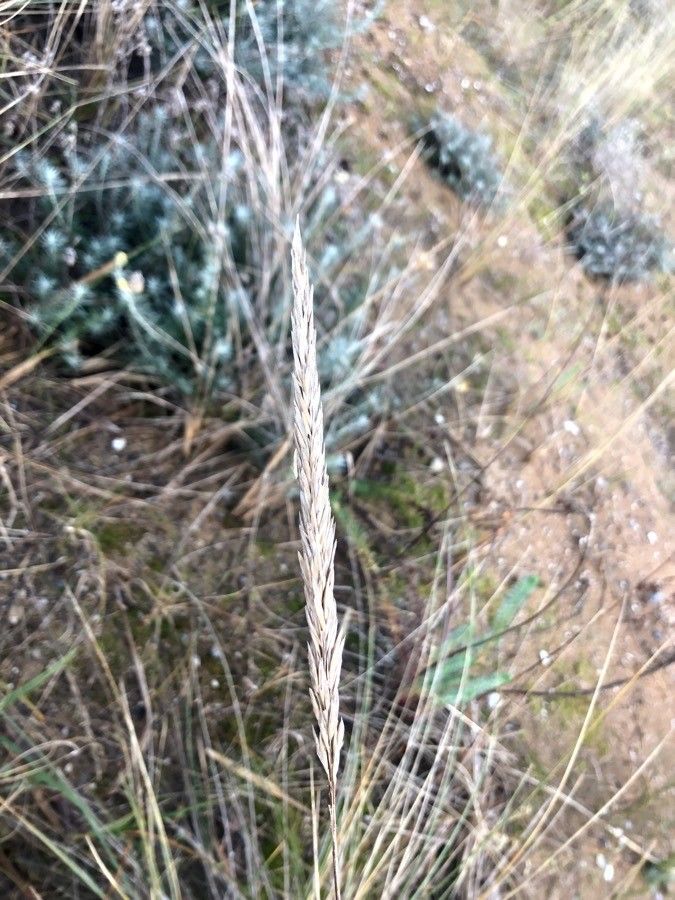
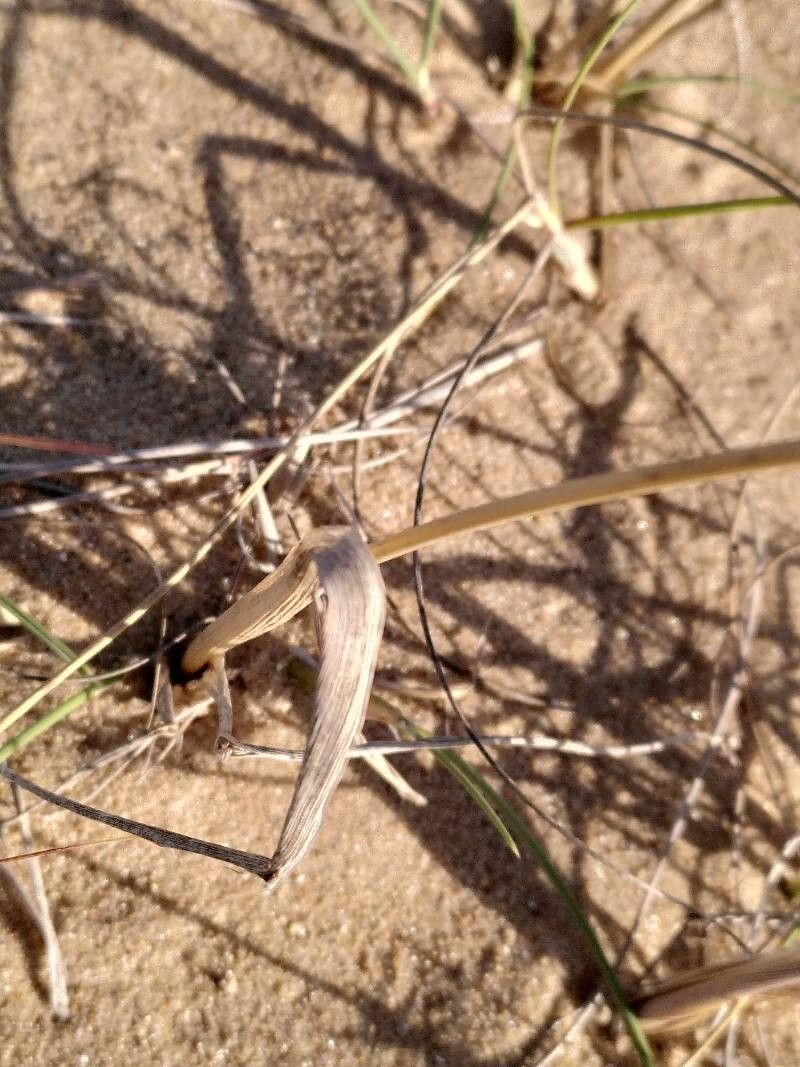
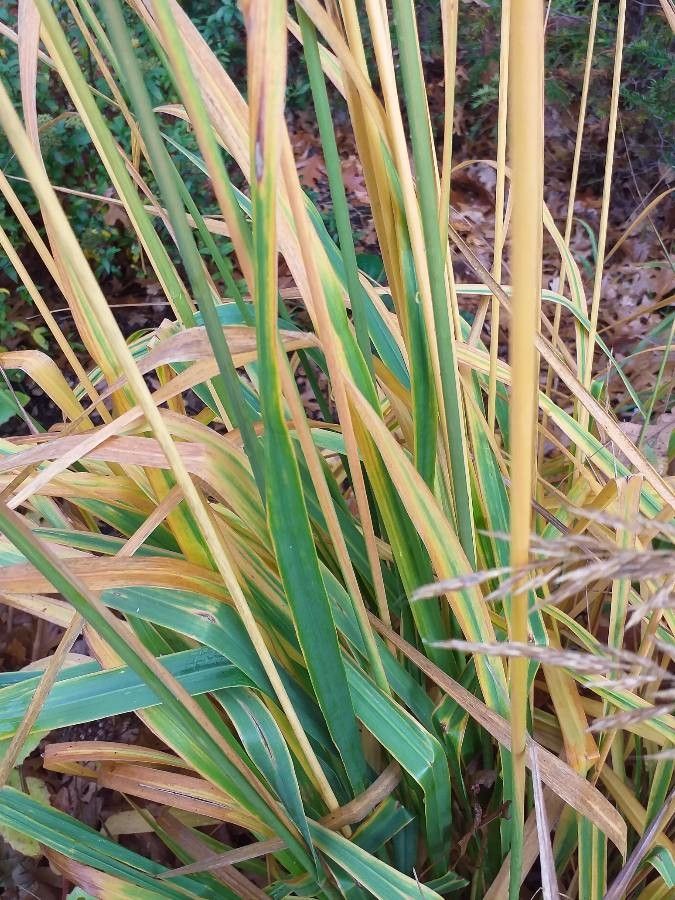
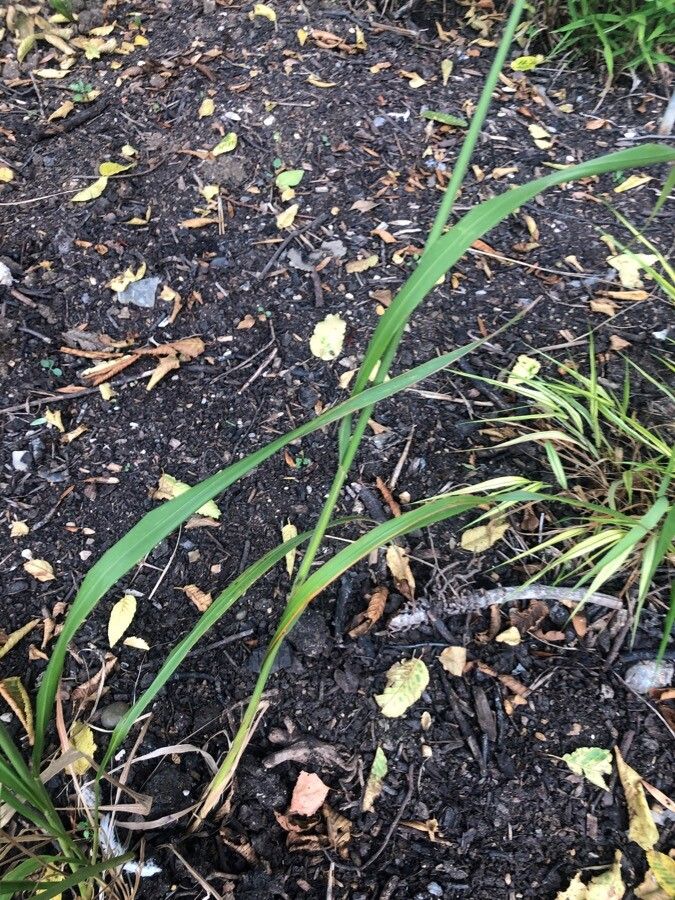
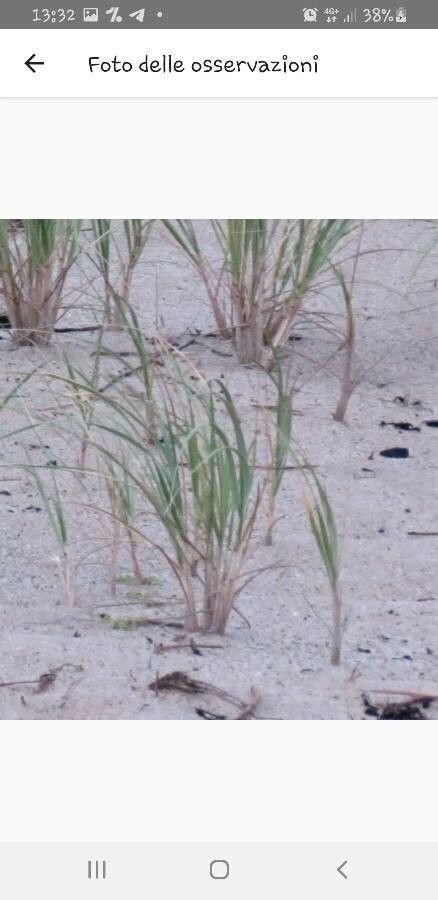
Ammophila arenaria is a species of grass in the family Poaceae. It is known by the common names marram grass and European beachgrass. It is one of two species of the genus Ammophila. It is native to the coastlines of Europe and North Africa where it grows in the sands of beach dunes. It is a perennial grass forming stiff, hardy clumps of erect stems up to 1.2 metres (3.9 ft) in height. It grows from a network of thick rhizomes which give it a sturdy anchor in its sand substrate and allow it to spread upward as sand accumulates. These rhizomes can grow laterally by 2 metres in six months. One clump can produce 100 new shoots annually.
European beach grass is fairly resistant to disease and is generally not susceptible to illnesses. Regarding care, this plant is relatively low maintenance. When grown outdoors it needs little watering, and larger plants typically do not require pruning. Smaller plants, however, should be pruned after they have bloomed. European beach grass is suitable for anyone who has outdoor space, such as a garden or a deck, and does not demand much experience to care for.
How to keep Calamagrostis Arenaria.
Light
European beach grass is a plant that favors abundant sunlight to grow vigorously. Native to coastal areas, it performs best in conditions similar to its natural habitat, characterized by intense, unshaded sunlight. Both too little and too much solar exposure can severely impede its development and overall health.
Temperature
European beach grass comes from areas with steady temperatures and favors a range of 41 to 89.6°F (5 to 32℃). In cooler months, try to raise the temperature slightly when feasible.
Fertilizer
European beach grass benefits from added nutrients to encourage healthy new growth. In spring, spreading some compost around the plant's base can effectively supply the nutrition it needs. Fertilizing supports vigorous growth and helps the plant better withstand diseases and pests.
Botanical profile.
- Plant Type
- Grass
- Life Cycle
- Perennial
- Genus
- Calamagrostis
- Family
- Poaceae
- Hardiness Zone
- 4-8
- Mature Height
- 1.22 m
- Mature Spread
- 3.05 m
- Leaf Color
- Green, Blue
- Leaf Type
- Deciduous
- Flower Color
- Yellow, Green, Cream, Brown
- Flower Size
- 1.52 cm to 2.03 cm
- Bloom Time
- Summer
- Planting Time
- Spring
- Harvest Time
- Late summer, Early fall, Mid fall
- Native Area
- Libya, Egypt, Turkey, Croatia, Morocco, Germany, Estonia, Romania, Latvia, Belgium, Portugal, Netherlands, Saudi Arabia, France, Tunisia, Cyprus, Bulgaria, Poland, Greece, Lebanon, Serbia, Lithuania, Norway, Italy, Spain, Denmark, Finland, Israel, Albania, Ireland, United Kingdom, Algeria
Other names.