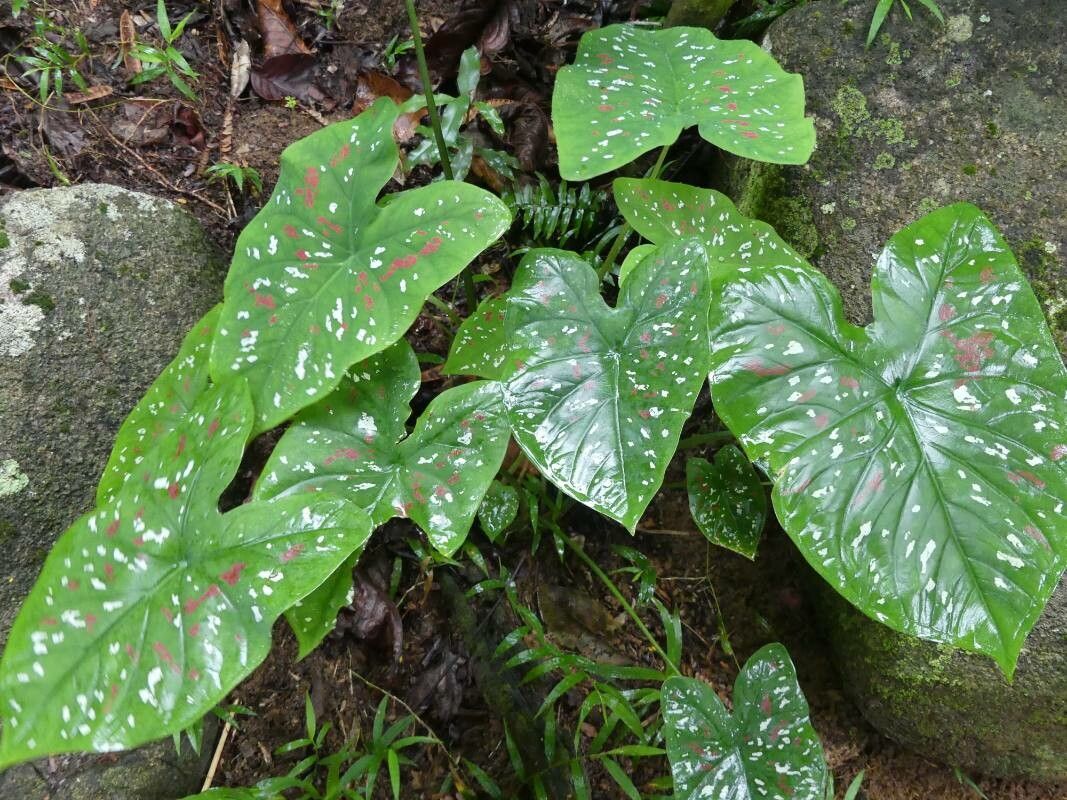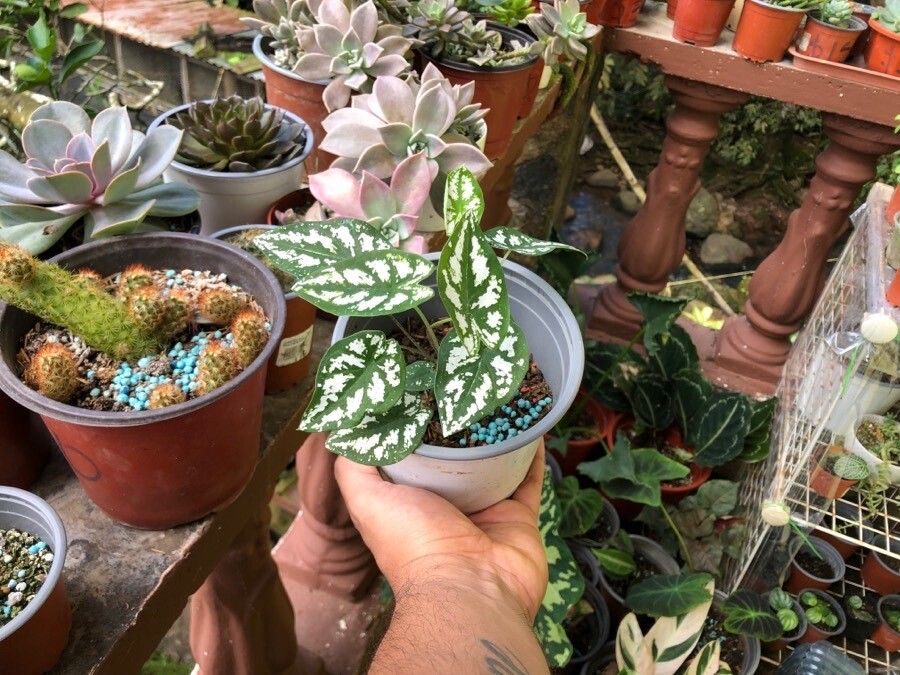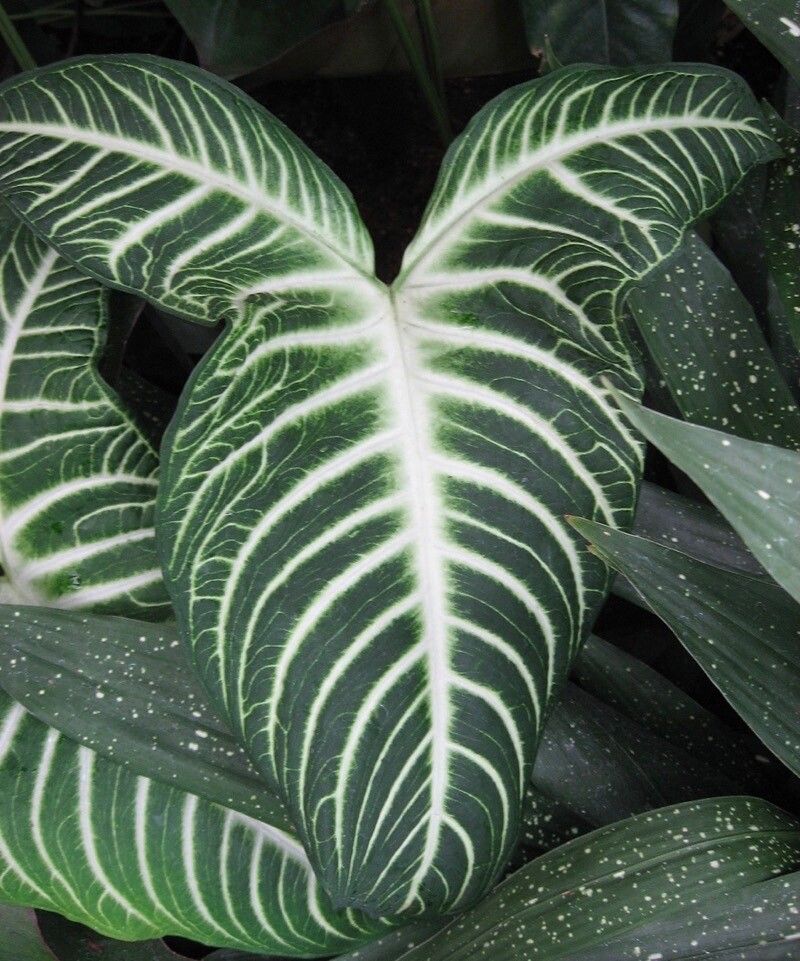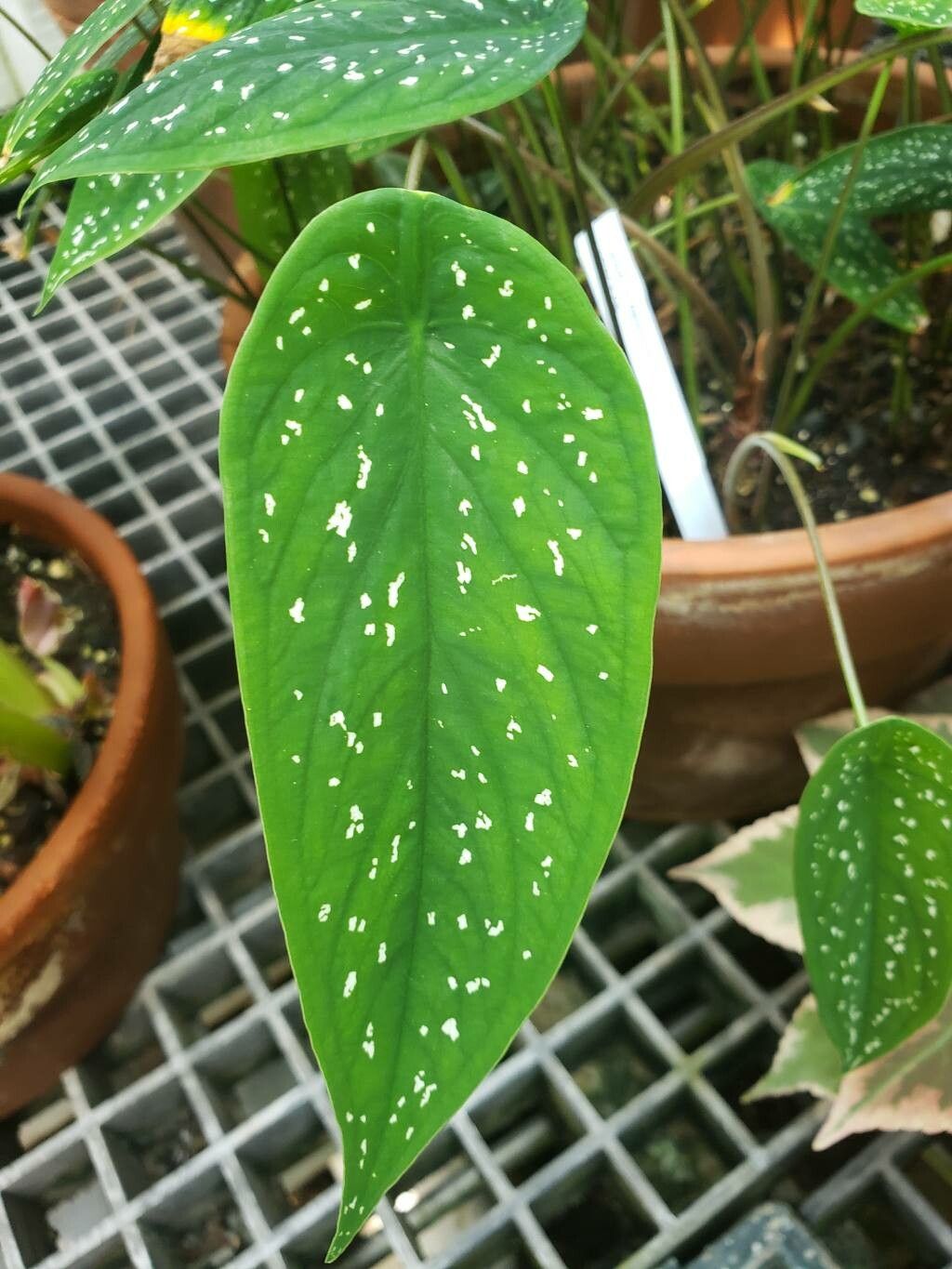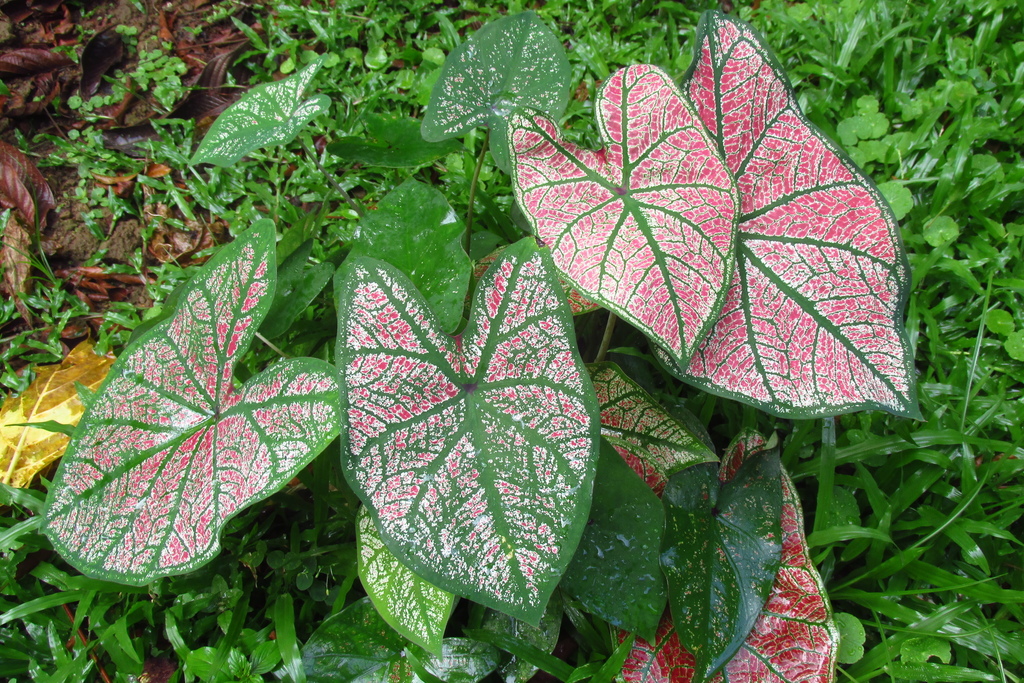
Caladium bicolor, called Heart of Jesus, is a species in the genus Caladium from Latin America. It is grown as a houseplant for its large, heart or lance-shaped leaves with striking green, white, pink, and red blotching. Hundreds of cultivars are available. (See List of Caladium cultivars.) It can be planted outside in USDA Hardiness Zone 10 as an ornamental. It is a problematic invasive species in Trinidad and Tobago, Guam, Micronesia, Palau, Hawaii and the Philippines, and naturalized populations can be found in most of the rest of the world's tropics, including Africa, the Indian subcontinent, southeast Asia and Malesia.
Heart of jesus has strong resistance to disease and is generally not prone to illness. Still, it can be vulnerable to leaf spots when light and ventilation are poor and watering is excessive. Its care level is considered easy, since it only needs regular watering and little else. Heart of jesus is well suited to people who don't have the time or energy to commit to frequent care.
How to keep Caladium Bicolor.
Light
Jesus heart plant flourishes under moderate sunlight, yet it can also withstand comparatively dim lighting conditions. It originates from an environment that offers a beneficial balance between shade and brightness, promoting its health. Excessive sun exposure might lead to the browning of its leaves, while a lack of it could hinder growth and fade the color of its foliage.
Water
The Heart of Jesus plant flourishes in tropical rainforest conditions, where high humidity and consistently moist soil are ideal. While it can withstand moderate drought, it thrives with weekly watering to maintain optimal moisture levels. Often grown indoors, it is crucial to keep the surrounding humidity high to ensure healthy growth and vibrant foliage.
Humidity
This plant needs special care because it loves high humidity levels of 60-80% or more. The best way to achieve this is by placing a humidifier near the plant. Daily misting is also essential! Make sure the room has good ventilation.
Temperature
The Heart of Jesus plant thrives best within a native growing environment that spans a temperature spectrum from 68 to 105 ℉ (20 to 41 ℃). To maintain its health throughout the summer, a setting with temperatures ranging from 80 to 90 ℉ (27 to 32 ℃) is recommended. During the winter, a temperature range of 60 to 70 ℉ (15 to 21 ℃) is considered optimal for fostering robust growth.
Fertilizer
The Heart of Jesus plant mainly requires fertilization during its key growth periods, which are typically in the spring, summer, and early autumn. Fertilizing is essential in supplying vital nutrients which may not be present in the soil, thus promoting the proper development of the root and stem system. It also enhances the growth of appealing foliage, a defining characteristic of this particular plant.
Pruning
"Heart of Jesus is a plant known for its vibrant, heart-shaped leaves. It thrives with regular pruning, especially in the spring. To promote growth and vitality, trim away any yellow or damaged leaves, as well as any spent flowers. Make clean cuts near the base of the plant to prevent disease, maintain its shape, and encourage lush, healthy foliage. By inspecting and pruning the plant regularly, you can sustain its ornamental appeal."
Pot & Repot
Repot Heart of jesus in spring or summer when temperatures are warm enough, choosing a slightly larger pot with good drainage. Water thoroughly after repotting and place it in bright, indirect light. Consider adding a moss pole for support as the plant grows.
Botanical profile.
- Plant Type
- Herb
- Life Cycle
- Perennial
- Genus
- Caladium
- Family
- Araceae
- Hardiness Zone
- 10-13
- Mature Height
- 15 cm to 61 cm
- Mature Spread
- 30 cm to 61 cm
- Leaf Color
- Green, White, Red, Yellow, Variegated, Gold
- Leaf Type
- Deciduous
- Flower Color
- White, Green, Yellow
- Flower Size
- 10.16 cm to 12.70 cm
- Bloom Time
- Early summer, Mid summer
- Planting Time
- Spring, Summer, Autumn
- Harvest Time
- Late summer, Fall
- Native Area
- Colombia, Argentina, Honduras, Bolivia, Venezuela, Peru, Guyana, Brazil, Nicaragua, Ecuador, Suriname, Costa Rica, Panama
Other names.
Reader questions.
How should I water my Heart of Jesus?
- If you have small Heart of Jesus plants in indoor pots, you can take them to your kitchen sink to water them. Hold the pot in your hands and slowly add water from the faucet. Stop when you see water coming out of the drainage holes in the bottom of the pot. - Avoid watering your plants with cold water during winter or in cold climates, as it can harm the root system. - Usually, watering your Heart of Jesus plant with tap water is fine. However, if your tap water has high levels of fluorine, chlorine, or salts, it's better to use rainwater or lake water. - You can also water your Heart of Jesus plant by pouring water overhead or directly into the soil. You can use a watering can, hose, or any other tool that is convenient for you.
Why do I need to feed my Heart of Jesus?
All plants need soil nutrients to grow, including the Heart of Jesus plant. However, it's not always guaranteed that the soil will have all the necessary nutrients. That's why fertilization and soil amendments are important. They ensure that your garden plants not only have the basic nutrients they need, but also the specific nutrients they require. In the case of the Heart of Jesus plant, fertilizer is essential for its root and stem development throughout the growing season. Fertilization also helps produce fantastic foliage, which is especially important for this plant as its leaves are its main decorative feature.
What are the sunlight requirements for the Heart of Jesus plant?
The Heart of Jesus plant, or Caladium bicolor, thrives best in conditions that offer moderate sunlight, specifically requiring about 3-6 hours of sunlight daily, which is considered partial sun. It can also adapt to full shade conditions, where it receives less than 3 hours of sunlight a day. However, the plant's origin in environments with a balanced mix of shadow and light makes it crucial to monitor the sunlight exposure closely. Overexposure can lead to leaf browning, while inadequate light may cause slow growth and lead to fading of the foliage color. Hence, observing how sunlight moves through your garden to find the perfect balance for your plants is essential.
What is the ideal temperature range for the Heart of Jesus plant?
The Heart of Jesus plant thrives in a temperature range of 68 to 105°F (20 to 41°C) in its native environment. During summer, keeping the plant in a location with temperatures between 80 to 90°F (27 to 32°C) is recommended, while in winter, temperatures should be maintained between 60 to 70°F (15 to 21°C) to promote healthy growth. This plant loves heat, and exposure to cold can be harmful. It's also advised to bring outdoor plants indoors in autumn, placing them near a bright window but away from direct heat sources to keep the temperature above the minimum suitable growth temperature and prevent dropping to the minimum tolerable growth limit, which could damage the plant.
What should I do if I give my Heart of Jesus too much or too little water?
If you realize that your Heart of Jesus plant is not getting enough water, the first step to fix this is to give it some water. Make sure to water it deeply until you see excess water running out of the drainage hole, or if it's an outdoor plant, make sure the soil is completely moist. On the other hand, if your Heart of Jesus is getting too much water, start by reducing your watering schedule. You should also consider the soil and container it's growing in. If the soil and container don't allow good drainage, your plant will likely be overwatered again. To solve this, switch to looser soil or a container with bigger drainage holes that allow water to flow freely. It's also important to check the location of the plant. If it's in a corner, consider moving it to a place with more ventilation, like near a window or door. A well-ventilated location will help prevent overwatering to some extent.
When should I fertilize my Heart of Jesus plant?
The Heart of Jesus plant requires the most fertilizer when it is actively growing, which usually happens during spring, summer, and early fall. After winter, you should feed it every two to four weeks until fall. Then, gradually decrease the amount of fertilizer until you stop completely in preparation for winter when the plant has less growth.
How do artificial lights support the growth of indoor Heart of Jesus plants?
For indoor Heart of Jesus plants, when natural sunlight is insufficient, particularly in less sunny spaces or during winter, artificial lighting becomes critical for their growth. Using the right type of artificial light, such as LED lights, can fulfill the specific light wavelength needs of your plants. The lighting requirements vary based on the type of plant; full sun plants need 30-50W per square foot, partial sun plants require 20-30W, and full shade plants need 10-20W. The light source should be placed 12-36 inches above the plant to mimic natural sunlight effectively. Furthermore, the duration of artificial light exposure should mimic natural daylight hours, typically 8-12 hours per day, to promote healthier, faster growth.
How does low temperature affect the Heart of Jesus plant, and what are the solutions?
The Heart of Jesus plant prefers warm conditions and does not tolerate low temperatures well. It thrives when kept above the minimum suitable growth temperature. In winter, the plant should be maintained above the minimum tolerable growth temperature to avoid stress. Exposure to temperatures below the growth limit can cause the leaves to lighten in color, and following frost damage, they may turn brown or black, leading to wilting and drooping. To address this, trim off frost-damaged parts and move the plant to a warm indoor location. Placing the plant near a south-facing window ensures ample sunlight, but it should be kept away from heaters or air conditioning vents to prevent air dryness.
How often do I need to water my Heart of Jesus?
The Heart of Jesus plant does not need consistent soil moisture. It is actually better to let the soil dry out between waterings. If you are growing the Heart of Jesus in a container, you can tell when it needs water by checking how dry the soil is. If about the top half of the soil is dry, then it's time to water. You can check the soil moisture by sticking your fingers or a stick into the soil, or by using a soil moisture meter. If you are growing the Heart of Jesus outdoors, you can plan to water it once every other week unless it has rained recently.
When is the best time to not fertilize my Heart of Jesus plant?
For most of the year, including spring, summer, and most of fall, it's important to consistently feed your Heart of Jesus plant. However, there are a few exceptions to this rule. Firstly, if you notice that your plant has already received too much fertilizer or if you have mistakenly fertilized it incorrectly, causing fertilizer burn or other issues, you'll need to address those problems before resuming regular feeding. Secondly, during the winter season, it is advised not to fertilize your Heart of Jesus plant. This is especially true if you are growing it indoors in a region with cold winters, as the plant will naturally enter a dormant phase during this time. Feeding the plant during its dormant phase is unnecessary, unhelpful, and most likely to result in fertilizer burn.
What are some symptoms of inadequate light in Heart of Jesus plants?
Several symptoms indicate inadequate light conditions for Heart of Jesus plants. Leaves may develop irregular color patterns or appear paler, indicating a deficiency in chlorophyll and essential nutrients. The plant might lose its variegation, displaying more chlorophyll to enhance photosynthesis, and new leaves could turn completely green. Growth may become delayed or stop entirely if the plant enters a survival mode due to poor light conditions. New leaves might grow smaller, and plants may shed older leaves prematurely to conserve resources. Additionally, excessive sunlight exposure can cause chlorosis, sunscald, leaf curling, wilting, and leaf scorching, which negatively affect plant health.
What is the impact of high temperature on the Heart of Jesus plant and how can it be mitigated?
During summer, it's important to keep the Heart of Jesus plant below the maximum suitable growth temperature. Exceeding the tolerable maximum growth temperature can cause the leaves' color to lighten and make the plant more prone to sunburn. To mitigate this, trim away sunburned and dried parts of the plant and relocate it to a spot that offers shade from the midday and afternoon sun. To maintain soil moisture, water the plant in the morning and evening, ensuring it stays hydrated.