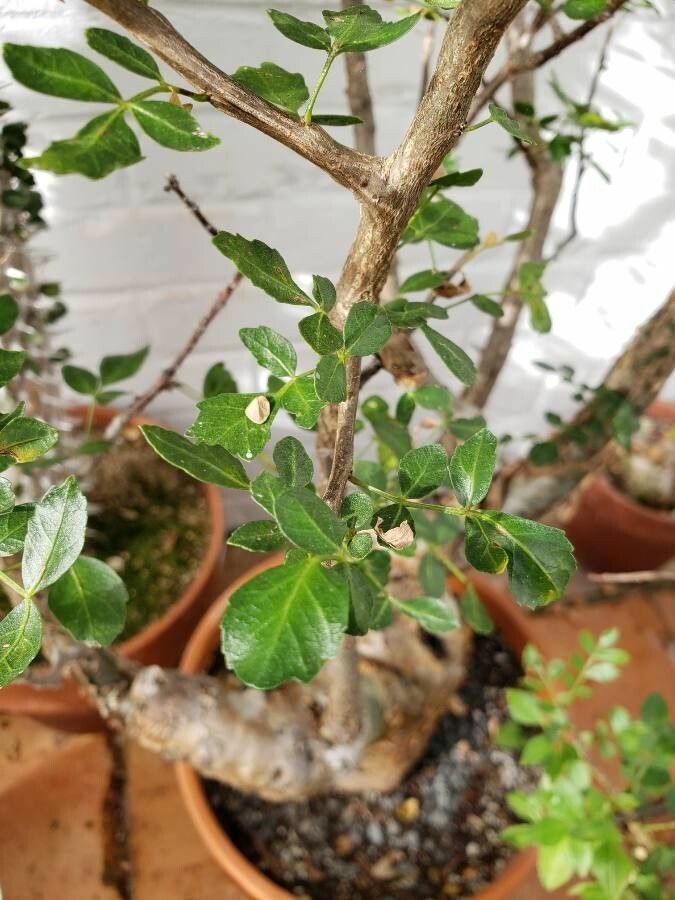
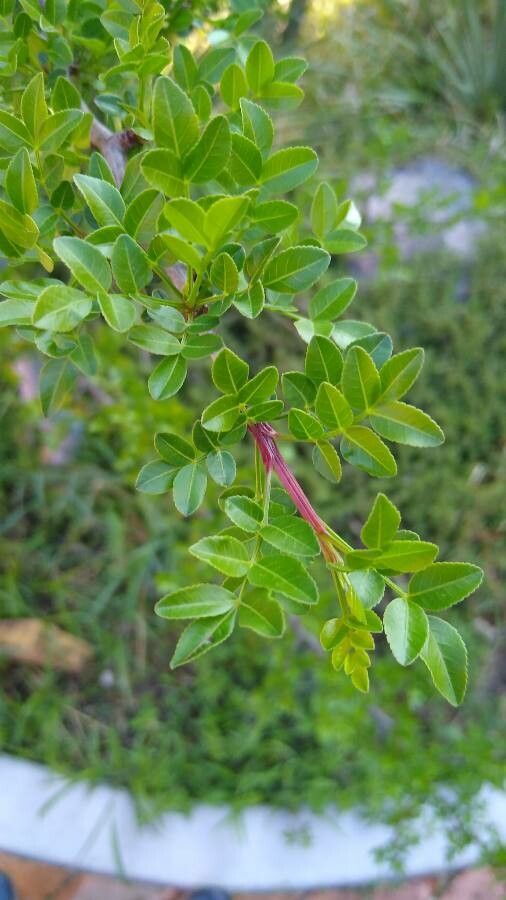
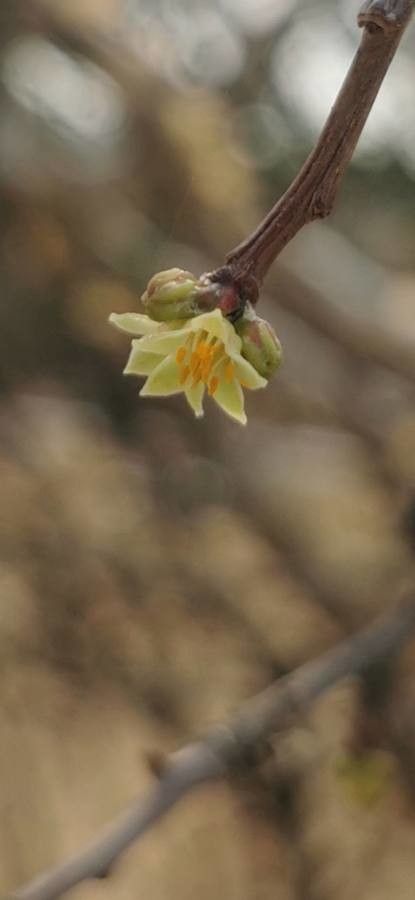
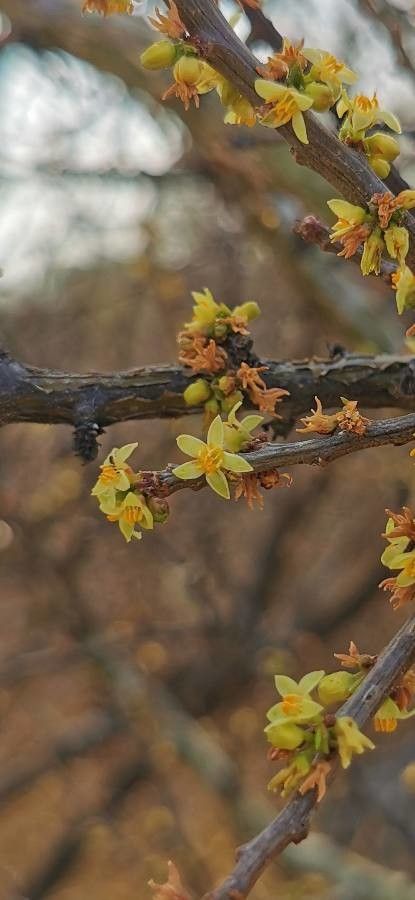
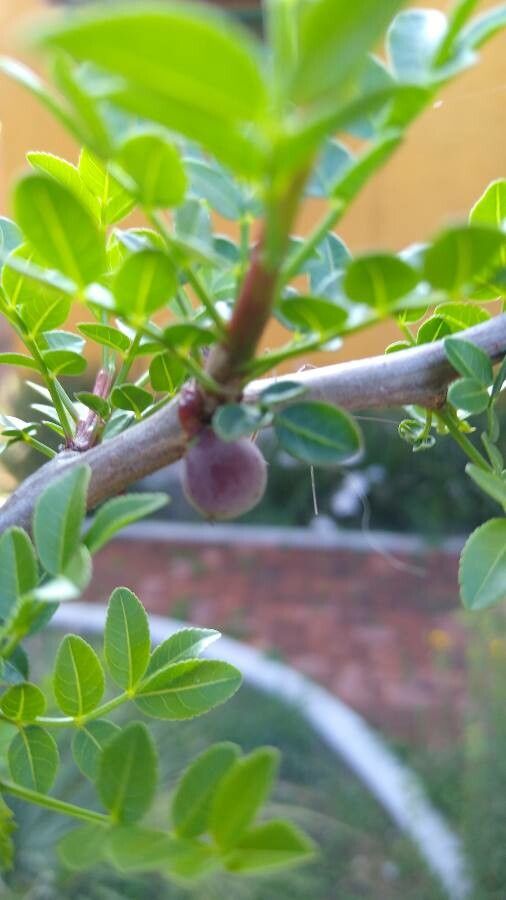
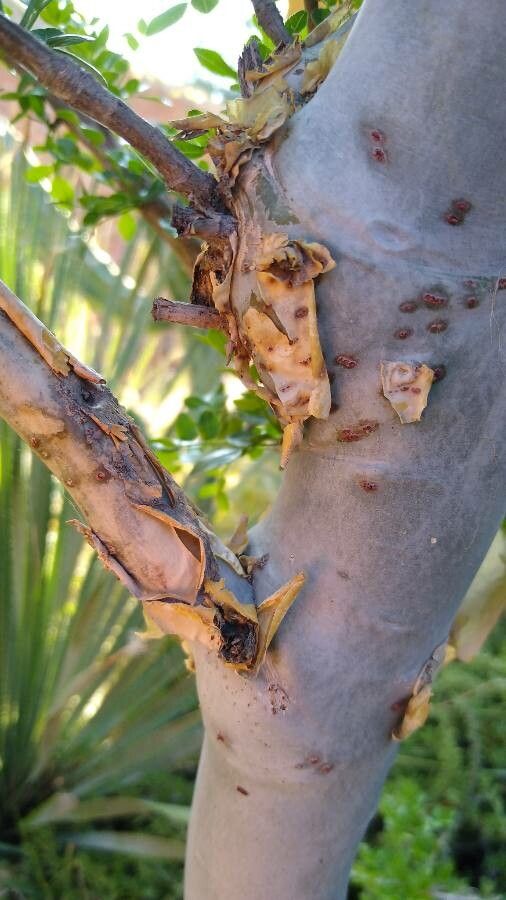
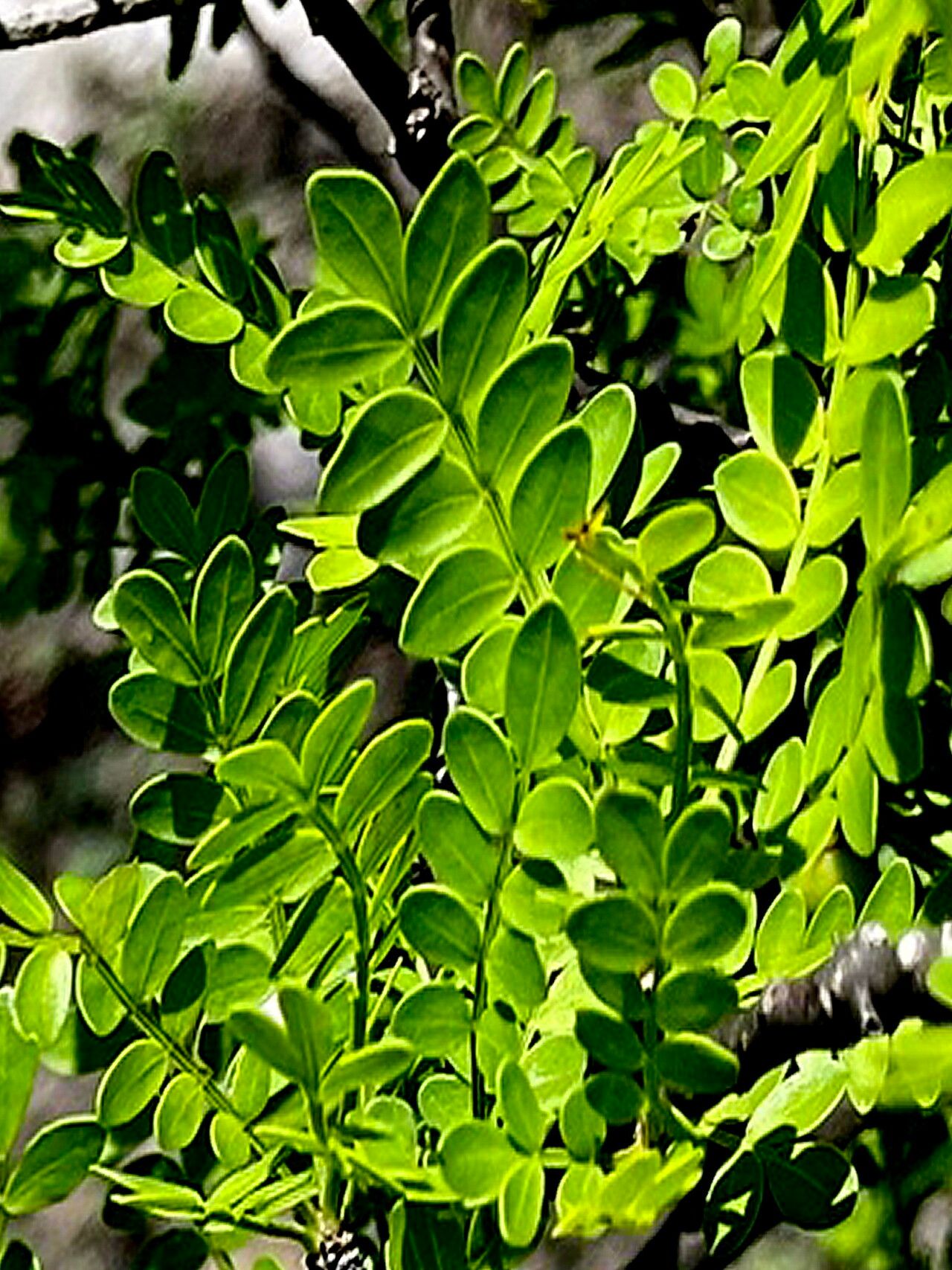
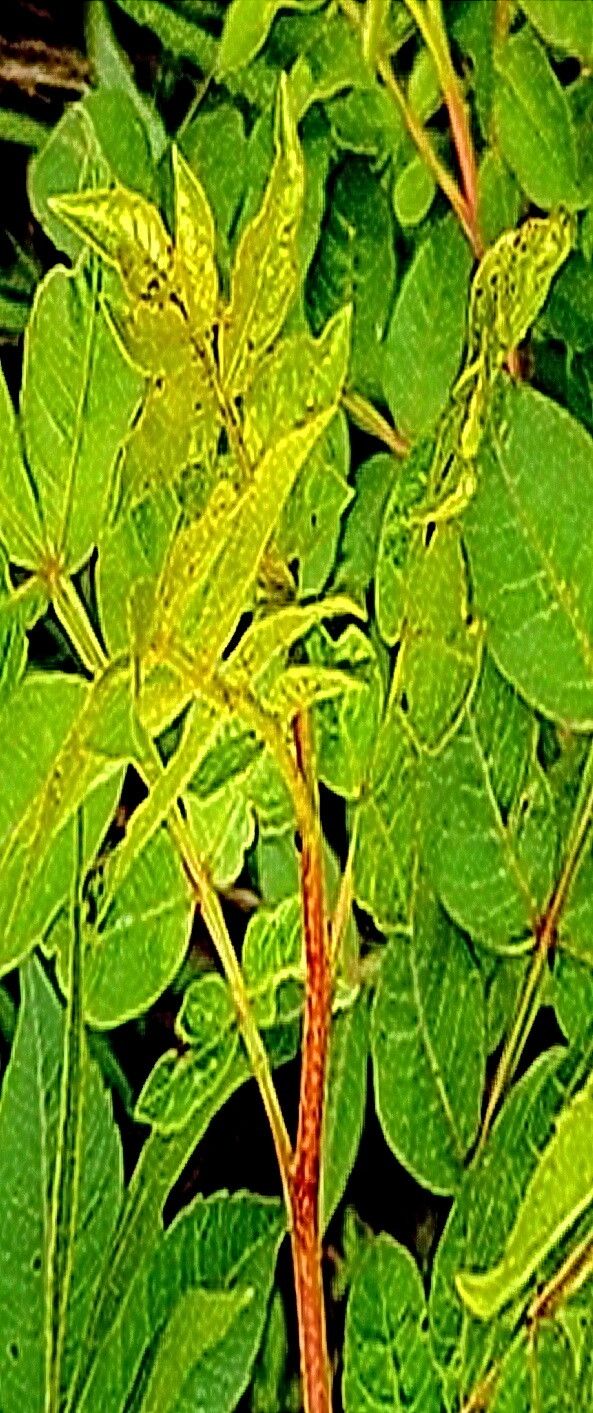
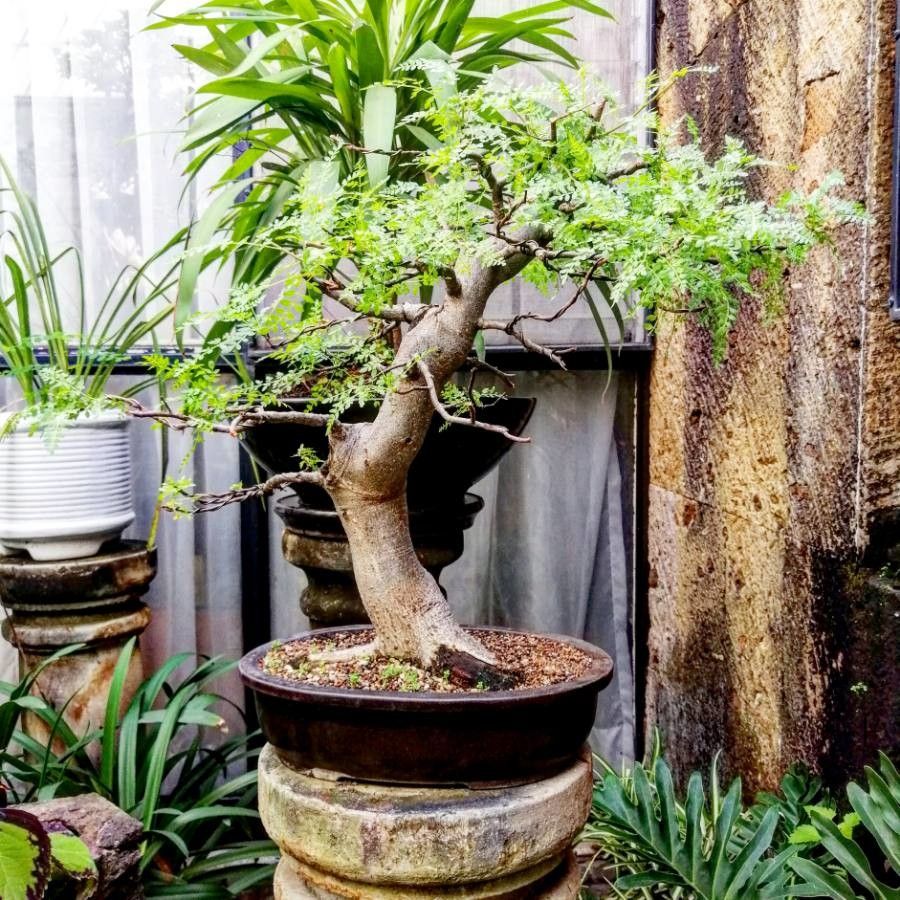
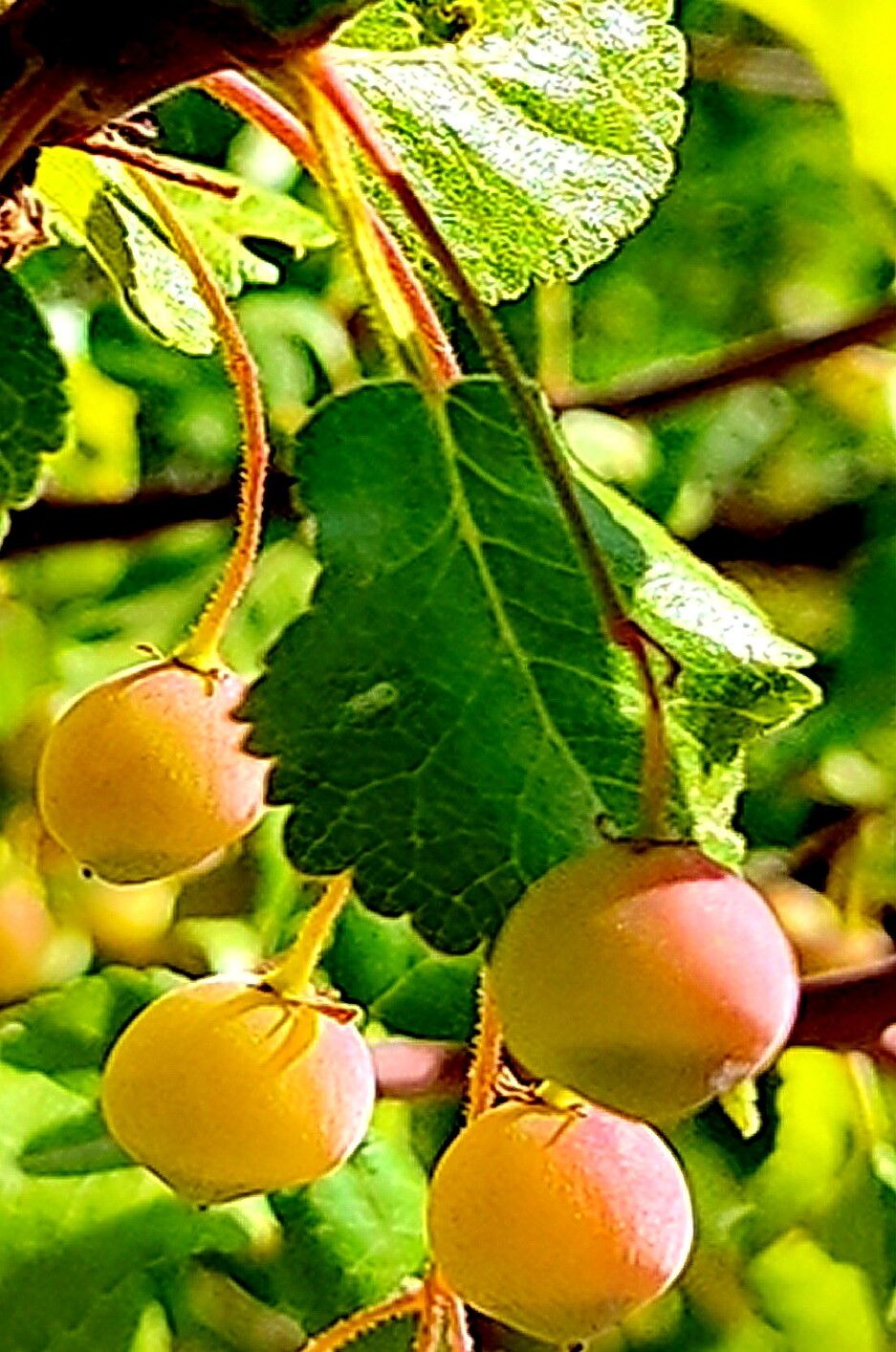
Bursera fagaroides is a species of flowering plant in the genus Bursera known by the common names torchwood copal and fragrant bursera. It is widespread across much of Mexico from Sonora to Oaxaca, and its range extends just into Arizona in the United States, although some sources suggest that it may now be extirpated in Arizona.This plant is a shrub or tree growing up to 10 meters (33 feet) tall. The trunk is swollen, with peeling red-tinged bark. The leaves are pinnate, each made up of 5 to 11 leaflets. The flowers are borne singly or in clusters at the ends of branches and are white, sometimes with a yellow or greenish tint. The gray-brown triangular fruit is about 6 millimeters long and splits open when ripe to release a reddish seed. Bursera fagaroides is similar in appearance to the elephant tree (Bursera microphylla), but can be differentiated by its longer, narrower leaflets.This plant grows in the scrub of the Sonoran Desert. Farther south in Mexico it can be found in arroyos in subtropical scrub habitat. It is found in shallow soils and rocky substrates, often limestone.The seeds are consumed by birds such as the white-eyed vireo (Vireo griseus), and the grey catbird (Dumetella carolinensis).This species is grown as an ornamental plant and can be sculpted into bonsai.
Torchwood copal exhibits strong disease resistance and is typically not susceptible to illnesses. With regard to care, this plant is fairly low-maintenance. When grown outdoors it needs little watering, and larger specimens usually do not require pruning. Smaller plants, however, should be trimmed after they finish blooming. Torchwood copalt is suitable for anyone with an outdoor area, such as a garden or deck, and does not call for extensive gardening experience.
How to keep Bursera Fagaroides.
Light
The torchwood copal grows best with abundant sunlight, which greatly promotes its optimal development. While it can tolerate dimmer conditions, its growth may be impeded if it does not receive enough light. Conversely, excessive exposure can also be harmful, leading to plant stress and possible damage.
Water
Torchwood copal, originally from dry regions, is highly drought tolerant and does well with weekly watering. Its leaves are similar to those of succulents, effectively storing water. To prevent root rot, it prefers well-draining soil, which mimics its natural habitat. Normally grown outdoors, torchwood copal is very hardy when given the right conditions.
Temperature
Torchwood copal is native to warm areas and performs best when temperatures range from 68 to 100 °F (20 to 38 ℃). You may need to adjust temperatures seasonally to maintain healthy growth. In colder months, consider bringing it indoors or supplying a heat source.
Fertilizer
The best time to fertilize a Torchwood copal is in early spring, as it breaks dormancy. This supports overall growth and flower development. Fertilization improves the foliage, stems, and branches, while encouraging flowers that are larger, more colorful, and longer-lasting. It helps move nutrients from the roots to the blooms and enhances the plant’s health and resistance to disease.
Pruning
Torchwood copal benefits from pruning in early spring to encourage growth and help shape the plant. Start by removing any dead or crossing branches to improve air circulation. Opt for light trims rather than heavy ones, and be sure to sterilize your tools to prevent the spread of disease. With this care, torchwood copal will develop a strong structure and be ready for vigorous growth.
Pot & Repot
The Torchwood copal plant is known for its distinctive tortoise-shell bark. It should be repotted every 2 to 3 years, ideally in the spring. When repotting, choose a larger pot with good drainage. After repotting, place the plant in bright, indirect light and reduce watering to help it recover and stay healthy. This care will ensure that its sculptural shape continues to thrive.
Botanical profile.
- Plant Type
- Shrub
- Life Cycle
- Perennial
- Genus
- Bursera
- Family
- Burseraceae
- Hardiness Zone
- 9-11
- Mature Height
- 10.06 m
- Mature Spread
- 4.88 m
- Leaf Color
- Green, Light Green
- Leaf Type
- Deciduous
- Flower Color
- Yellow, Green, White
- Flower Size
- 0.51 cm
- Bloom Time
- Mid spring, Late spring
- Planting Time
- Spring, Summer, Autumn
- Harvest Time
- Mid summer, Late summer, Early fall
- Native Area
- Mexico
Other names.
Reader questions.
What are the sunlight requirements for Torchwood copal?
Torchwood copal, or Bursera fagaroides, thrives in full sunlight, requiring above 6 hours of sunlight daily for optimal growth. It can tolerate partial sun, which is about 3-6 hours of sunlight. It's important to monitor the way sunlight moves through your garden to find the perfect balance of light and shade for these plants, ensuring they receive the right amount of light without suffering from overexposure, which can cause stress and damage to the plant.
What are the ideal temperature conditions for Torchwood copal?
Torchwood copal, also known as Bursera fagaroides, thrives in warm regions and is best suited to temperatures ranging from 68°F to 100°F (20°C to 38°C). It is extremely heat-loving and does not tolerate cold temperatures well. During the cooler months, it's recommended to move the plant indoors or provide a heat source to maintain healthy growth. Specifically, in the autumn and winter, it's advisable to bring Torchwood copal indoors, placing it near a bright window but at a certain distance from heaters, ensuring the temperature stays above 20°C. Any exposure to temperatures approaching 0°C can be detrimental to the plant.
How does artificial lighting affect Torchwood copal growth indoors?
Indoor Torchwood copal plants require adequate lighting for optimal growth, especially when natural sunlight is insufficient, such as during winter or in less sunny spaces. Artificial lights serve as an essential solution, promoting faster, healthier growth. LED lights are recommended because they can be tailored to provide specific wavelengths needed by the plants. Full sun plants need 30-50W/sq ft, partial sun plants need 20-30W/sq ft, and full shade plants require 10-20W/sq ft of artificial light. The light source should be placed 12-36 inches above the plant to mimic natural sunlight and should remain on for 8-12 hours per day, depending on the plant species.
How should I care for Torchwood copal in low temperatures?
In low temperature conditions, Torchwood copal requires special care as it prefers warmth and does not tolerate cold well. If the temperature drops below -5°C, the leaves may lighten in color, turning brown or black after frost damage, accompanied by wilting and drooping. To care for it, trim off the frost-damaged parts and immediately move the plant to a warmer environment indoors for cold protection. It's beneficial to place it near a south-facing window to ensure it receives ample sunlight. Additionally, avoid placing the plant near heaters or air conditioning vents to prevent the air around it from becoming excessively dry.
What are the common symptoms of inadequate lighting in Torchwood copal?
Common symptoms indicating inadequate lighting for Torchwood copal include the growth of smaller leaves than usual, leggy or sparse growth, faster leaf drop, slowed or halted new growth, lighter-colored new leaves, chlorosis (loss of green color), sunscald (damage from intense sun exposure), leaf curling (a defense against excessive sunlight), wilting (due to loss of water through transpiration), and leaf scorching (brown, dry edges on leaves caused by too much sun). These symptoms highlight the plant's need for proper lighting conditions to maintain health and vigor.
What should I do if Torchwood copal is exposed to high temperatures?
During the summer, it is important to ensure that the temperature around Torchwood copal does not exceed 38°C. Exposure to temperatures above 43°C can cause the leaves to lighten and increase the plant's susceptibility to sunburn. To mitigate the effects of high temperatures, trim away the sunburned and dried-up parts of the plant. Move the plant to a location where it can receive shade during the midday and afternoon sun. Additionally, watering the plant in the morning and evening can help keep the soil moist and aid in cooling it down.
What are the solutions for Torchwood copal suffering from light-related issues?
For Torchwood copal experiencing light-related issues, a gradual adjustment to the light environment is key. Indoors, gradually move the plant to a sunnier spot or use artificial lighting, such as lamps or grow lights, for at least 8 hours a day. Outdoors, without causing shock, incrementally move the plant to brighter areas. If obstructions like trees block sunlight, consider pruning them. For small plants, transplanting during their dormant period to a sunnier location may be beneficial. It's crucial to avoid drastic changes that could result in sunburn while adapting to these new conditions for healthier growth.