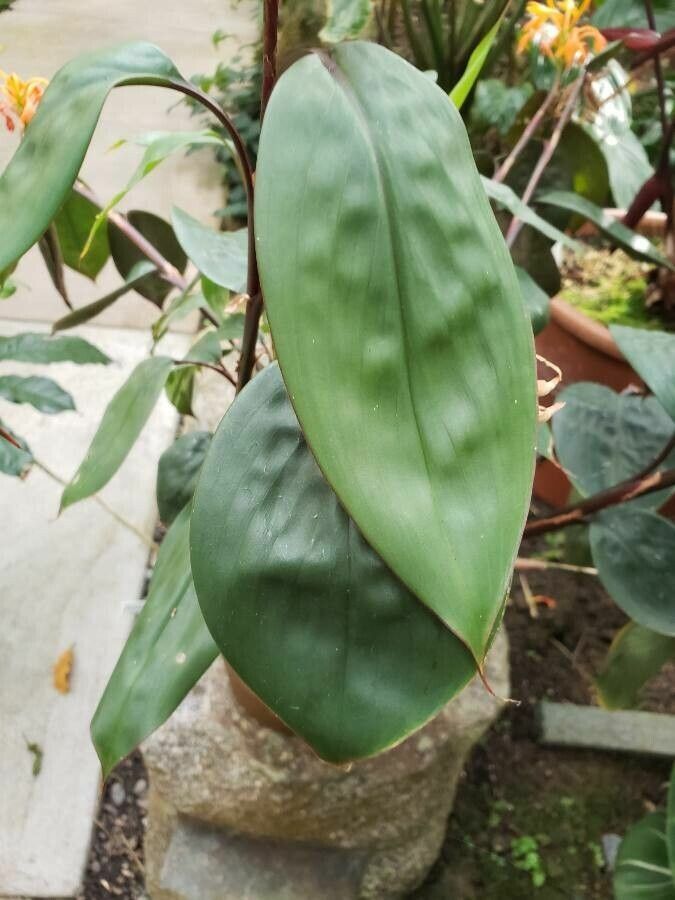
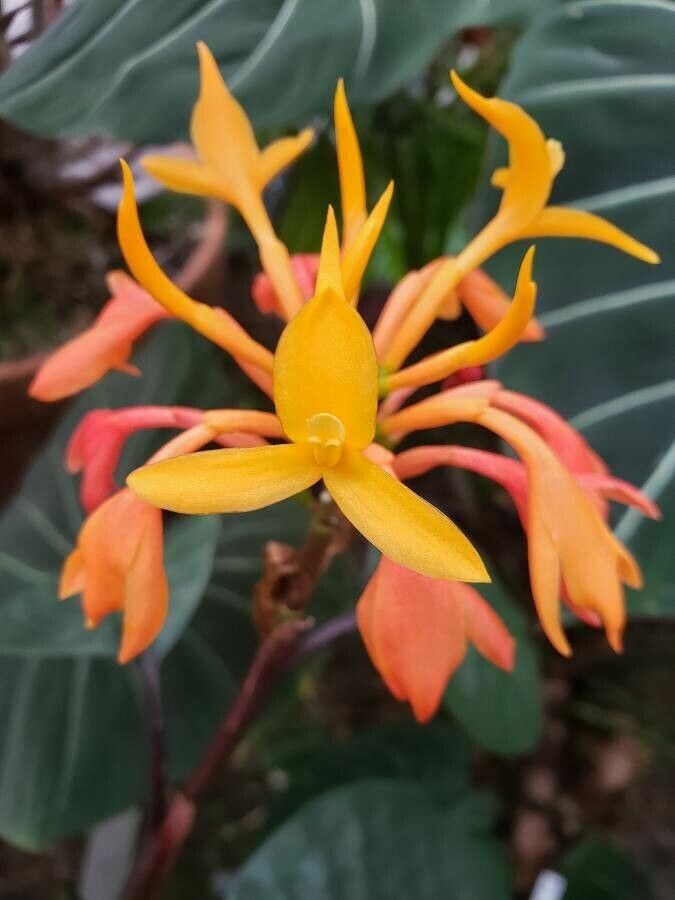
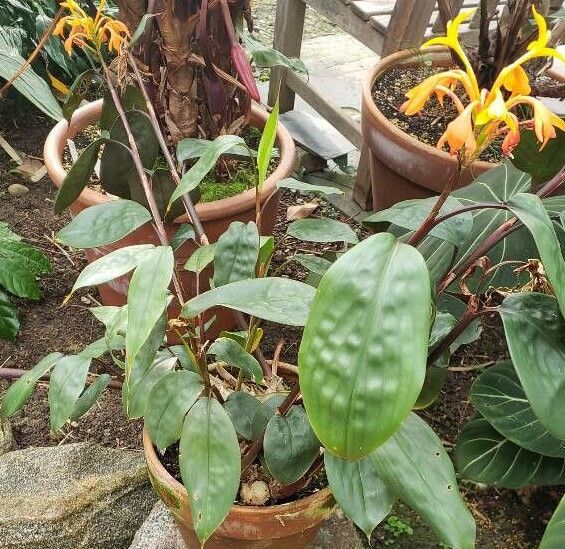
Gold birds has strong disease resistance and is generally not easily affected by illnesses. Still, it can be vulnerable to pests and diseases present in its environment. Such infections are typically mild. Regarding care, this plant needs a moderate level of attention. It should be pruned regularly to keep a good appearance and to support healthy growth. Applying fertilizer can also encourage flowering. Gold birds is appropriate for anyone with outdoor space, like a garden or patio, and does not demand extensive experience in plant care. It may need extra attention when cultivated indoors.
How to keep Burbidgea Schizocheila.
Light
Gold birds is native to habitats like forest understories or rocky areas, where it grows in natural shade. It favors partial sun but can tolerate full sun or full shade, demonstrating its versatile, hardy nature.
Water
Gold birds thrive in tropical rainforests with high humidity, although they can endure moderate drought conditions. For optimal growth, it's best to follow a weekly watering schedule. As evergreen plants, gold birds require careful water management during the growing season to prevent root rot.
Humidity
This plant will thrive in moderate humidity, which is probably the level in your home. However, misting it a few times a week can be very beneficial. Make sure the room has good ventilation.
Temperature
Gold birds come from tropical areas, where the climate is generally warm and humid. As a result, they are well adapted to high temperatures and moisture. They do not tolerate sudden temperature changes and prefer a stable thermal environment, so indoor temperature fluctuations should be avoided. They usually cannot withstand cold and need warmer conditions to grow. If the ambient temperature falls too low, the plant may stop growing or even die.
Fertilizer
Proper fertilization is vital for Gold birds's health and appearance. Fertilize Gold birds in summer, repeating the treatment monthly throughout the season. Nutrients power growth and help maintain plant structures. Fertilization improves Gold birds's flower display, ensuring the best blooms.
Pruning
Pruning gold birds in early to late spring can enhance their growth and blooming potential. Techniques involve removing damaged stems and shaping the plant to improve airflow. Make cuts just above the leaf nodes to ensure healthy recovery. This practice not only maintains the plant's appearance but also promotes strong flowering and overall vigor.
Botanical profile.
- Plant Type
- Herb
- Life Cycle
- Perennial
- Genus
- Burbidgea
- Family
- Zingiberaceae
- Hardiness Zone
- 10-12
- Mature Height
- 0.91 m to 2.13 m
- Mature Spread
- 49 cm to 91 cm
- Leaf Color
- Dark Green
- Leaf Type
- Semi-evergreen
- Flower Color
- Orange
- Flower Size
- 5.08 cm to 6.35 cm
- Bloom Time
- All year round
- Planting Time
- Spring
- Harvest Time
- Late spring, Summer, Fall, Winter
Other names.