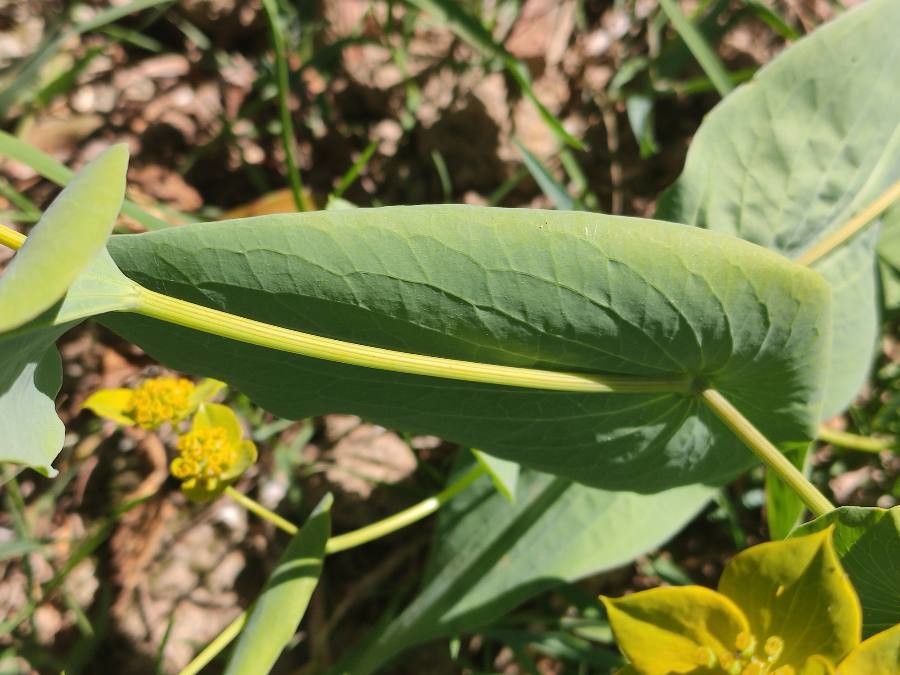
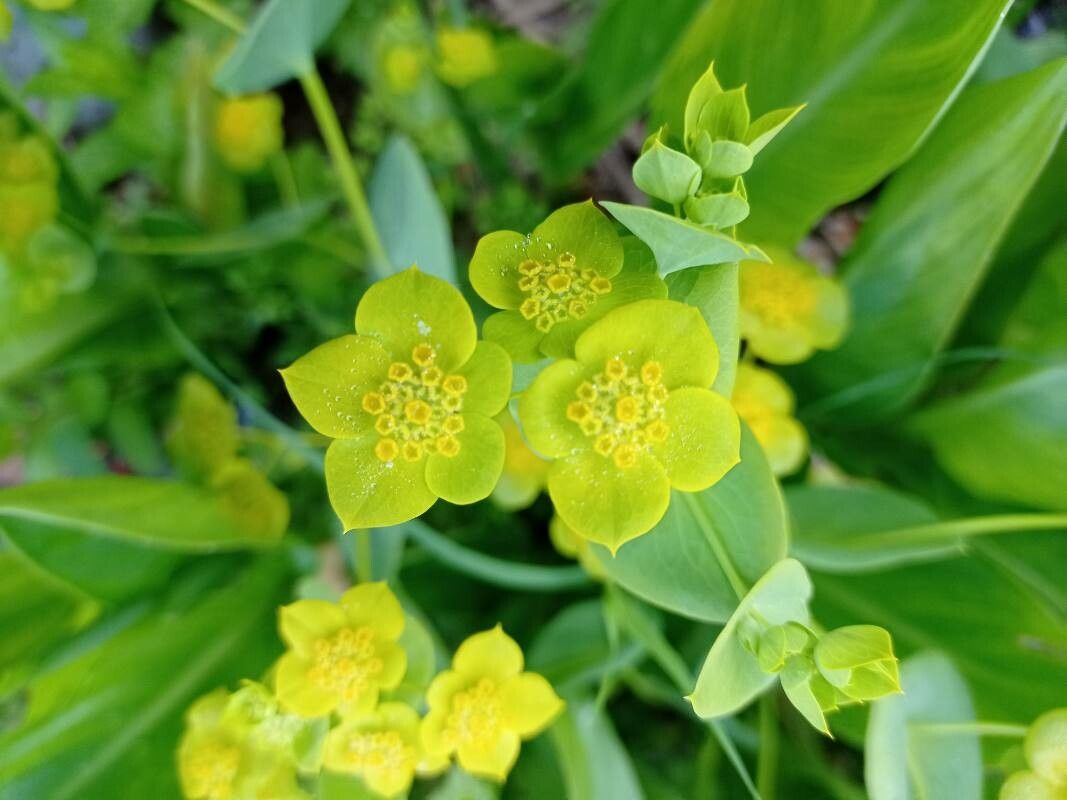
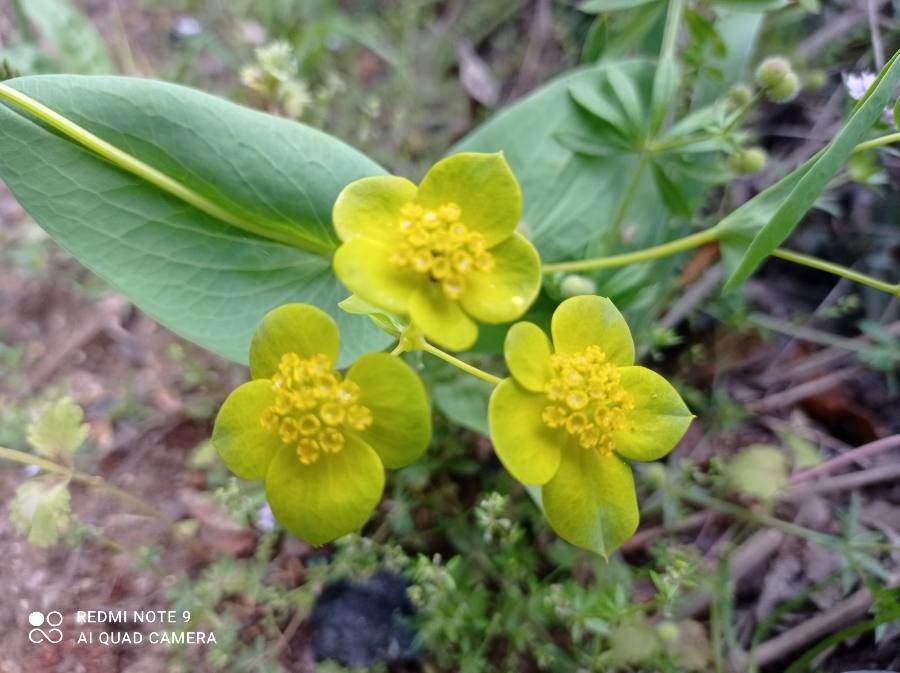
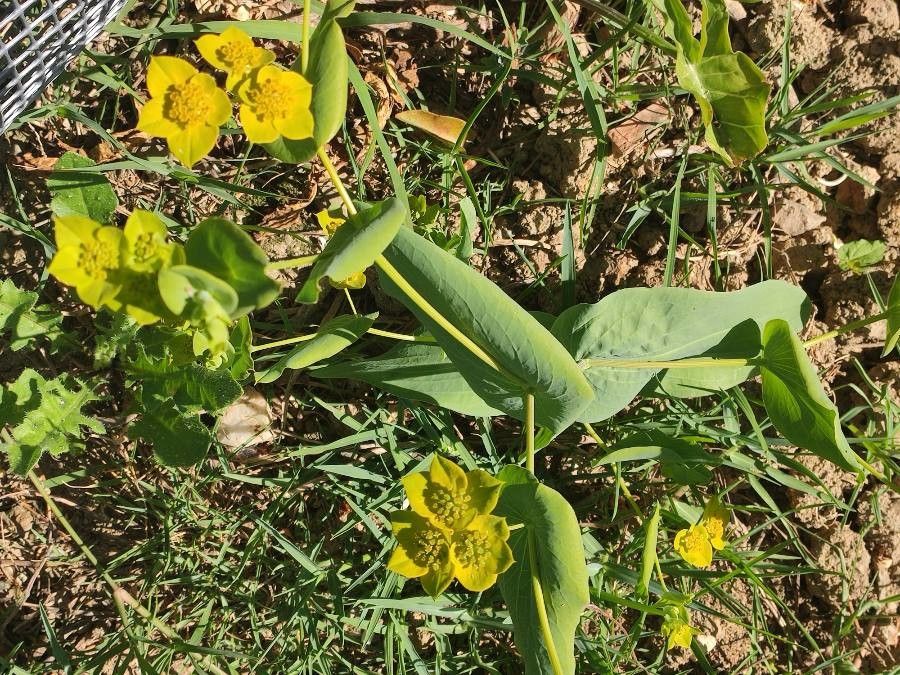
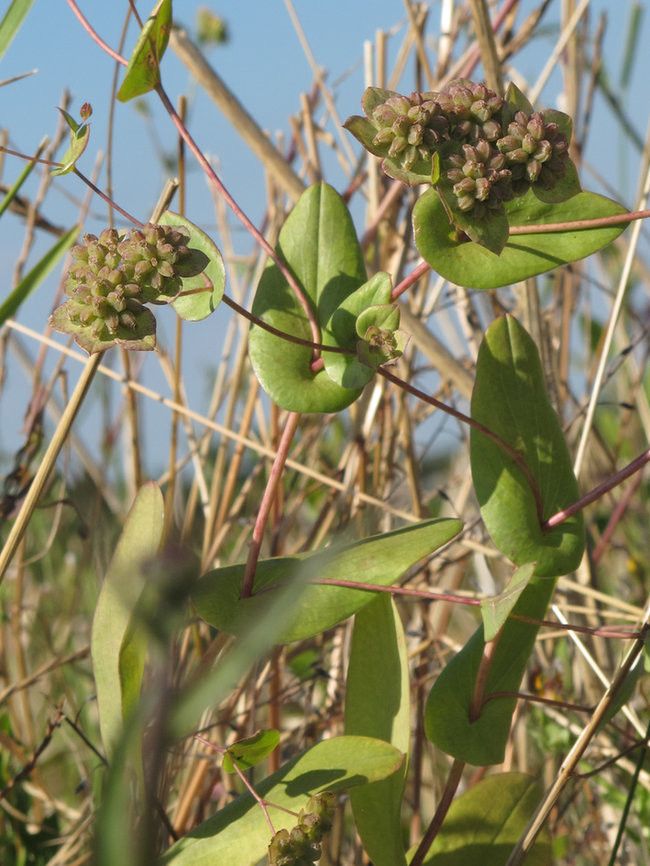
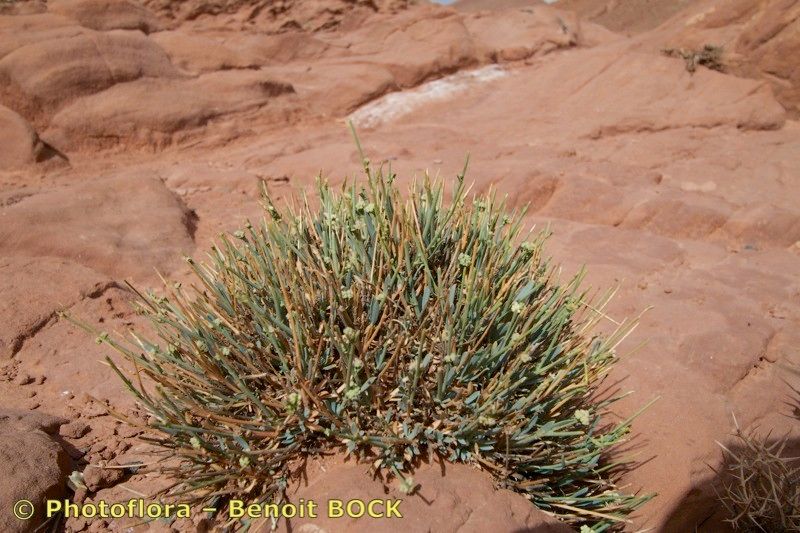
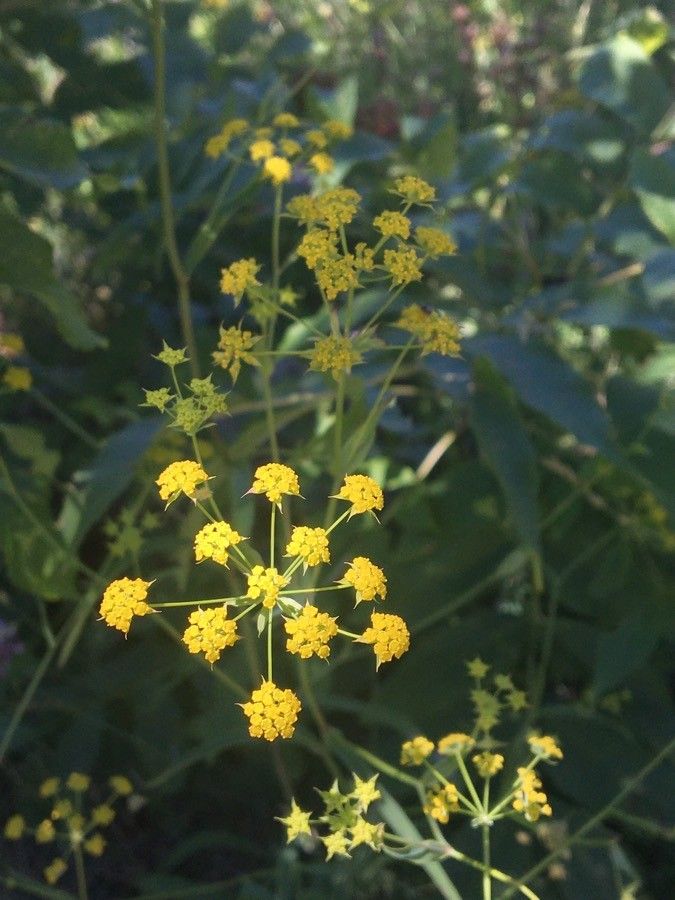
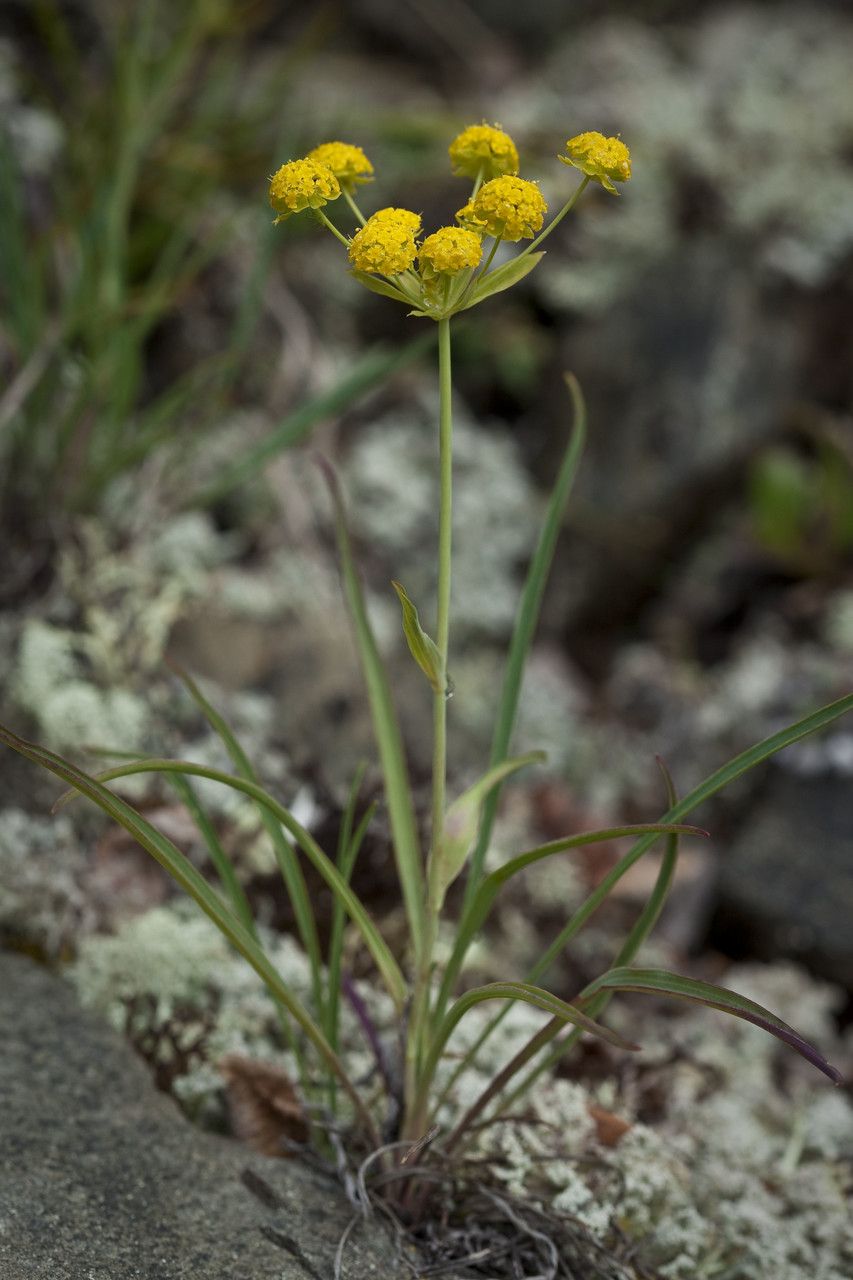
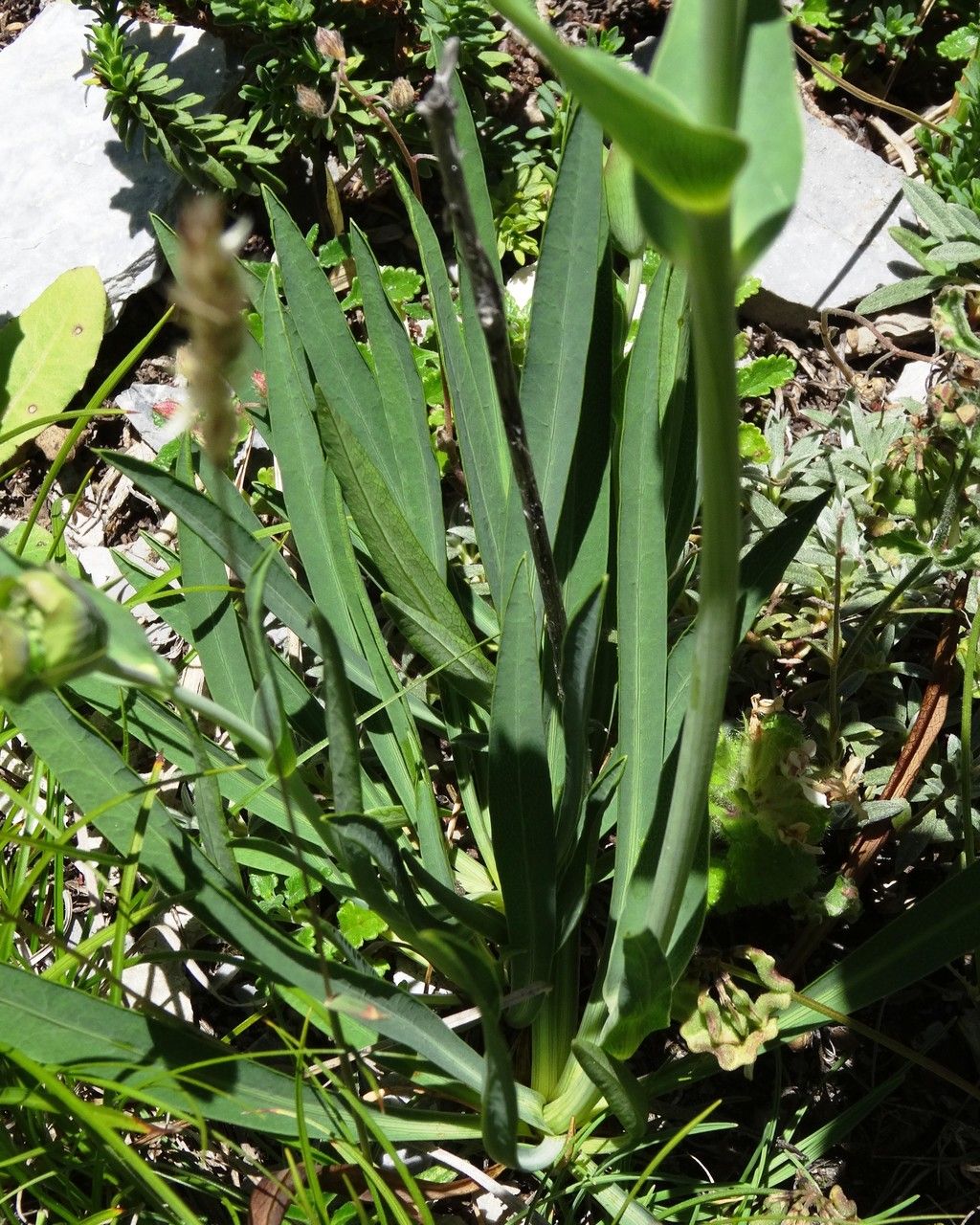
Bupleurum lancifolium is a species of flowering plant in the family Apiaceae known by the common name lanceleaf thorow-wax. It is native to the Mediterranean Basin and it is known elsewhere, including parts of North America, as an introduced species. It grows up to 50 centimetres (20 in) tall with a hairless, waxy stem around which leaves are fused at their bases. The dull, waxy, deep-green leaves are narrowly lance-shaped to nearly oval and 3 to 10 centimetres (1.2 to 3.9 in) long. The inflorescence is a compound umbel borne on a peduncle which may be several centimeters tall. The umbel is surrounded by five wide, round to oval, and sometimes pointed bractlets at the base. The flowers are yellow to yellow-green.
Lanceleaf thorow wax is fairly disease-resistant and typically does not suffer from illnesses. However, it can be affected by pests and diseases present nearby. These problems are usually mild. For care, this plant needs a moderate level of maintenance. It should be pruned regularly to keep a neat appearance and support healthy growth. Fertilizing can also encourage flowering. Lanceleaf thorow wax is appropriate for anyone with outdoor space, such as a garden or patio, and does not require extensive experience with plant care. It may need more attention when kept indoors.
How to keep Bupleurum Lancifolium.
Light
Lanceleaf thorow wax comes from bright, open habitats where it does best in full sun. It can tolerate partial shade but prefers direct sunlight for optimal growth. This plant, which occurs as both an annual and a biennial, is known for its sun-loving nature.
Water
Lanceleaf thorow wax is native to temperate regions and thrives with moderate moisture and regular watering. To maintain a healthy balance, it should ideally be watered once a week. Since its growth cycles depend on water availability, providing adequate hydration is essential, especially during the active growing season.
Temperature
Lanceleaf thorow wax can tolerate a wide span of temperatures, though its range may still be restricted by certain combinations of moisture and heat. It performs best in warm summer climates with sufficient rainfall or watering. Extended periods of cloudy, rainy weather or prolonged high temperatures increase the risk of the plant dying. In winter, adequate protection from cold can raise its survival rate.
Fertilizer
When most of the Lanceleaf thorow wax blooms have opened to full size, it's time to resume fertilizing. At about the peak of bloom production, fertilize once every three to four weeks, as weather permits. Then, when Lanceleaf thorow wax begins to produce fewer new blooms, stop fertilizing; there's no need to feed the plant when it can no longer produce more blooms.
Pruning
Lanceleaf thorow wax is known for its distinctive lance-shaped leaves and bright yellow-green flowers. To keep the plant healthy, prune it from early to late spring. Remove any dead or damaged stems and thin out crowded areas to improve air circulation. This encourages healthier growth, more abundant blooms, and helps maintain the desired size and shape.
Botanical profile.
- Plant Type
- Herb
- Life Cycle
- Annual
- Genus
- Bupleurum
- Family
- Apiaceae
- Hardiness Zone
- 7-10
- Mature Height
- 49 cm
- Mature Spread
- 20 cm to 40 cm
- Leaf Color
- Light Green
- Leaf Type
- Semi-evergreen
- Flower Color
- Yellow
- Flower Size
- 0.20 cm to 0.25 cm
- Bloom Time
- Late spring, Early summer, Mid summer
- Planting Time
- Spring, Summer
- Harvest Time
- Mid summer, Late summer, Early fall
- Native Area
- Libya, Iraq, Tunisia, Syria, Turkey, Egypt, Spain, Iran, Cyprus, Algeria, Greece, Morocco, Turkmenistan, Lebanon
Other names.
Reader questions.
What are the sunlight requirements for Lanceleaf thorow wax?
Lanceleaf thorow wax requires full sun, which means it should receive above 6 hours of sunlight daily for optimal growth. It can also tolerate partial sun, with about 3-6 hours of sunlight. It's important to watch how sunlight moves through your garden to ensure that you choose spots that provide a good balance of light and shade for your plants, promoting their health and happiness.
How does Lanceleaf thorow wax thrive in different lighting conditions?
Originating from bright, open environments, Lanceleaf thorow wax thrives in full sun and prefers direct sunlight for optimal growth. While it can tolerate partial sun, direct sunlight is ideal. Indoor plants may require artificial lighting for optimal growth when natural sunlight is insufficient. LED lights are a popular choice for indoor plant lighting, with full sun plants needing 30-50W/sq ft, partial sun plants 20-30W/sq ft, and full shade plants 10-20W/sq ft of artificial light. The light source should be placed 12-36 inches above the plant, matching natural daylight hours, with most plants needing 8-12 hours of light per day.
What are the symptoms of light deficiency in Lanceleaf thorow wax?
When cultivated indoors with inadequate light, Lanceleaf thorow wax may exhibit several symptoms indicating light deficiency. These include smaller new leaves, leggy or sparse growth, faster leaf drop, slower or no new growth, lighter-colored new leaves, chlorosis (yellowing leaves), sunscald, leaf curling, wilting, and leaf scorching. These symptoms suggest the plant is not receiving enough light to maintain healthy growth and function properly.
How can I address light deficiencies for indoor and outdoor Lanceleaf thorow wax plants?
For indoor plants, gradually move them to a sunnier location each week until they receive at least 6 hours of direct sunlight daily. Use a south-facing window and keep curtains open during the day. If the plant is large or not easily movable, consider using artificial light, keeping a lamp on for at least 8 hours daily or investing in plant grow lights. For outdoor plants, also gradually move them to sunnier spots to adapt them without causing sunburn. If light exposure is blocked by obstructions, you might need to prune blocking trees or transplant smaller plants to sunnier locations with ample sunlight and good drainage. Note that parts of the plant affected by insufficient sunlight may not recover, but new growth will be healthy after increasing light exposure.