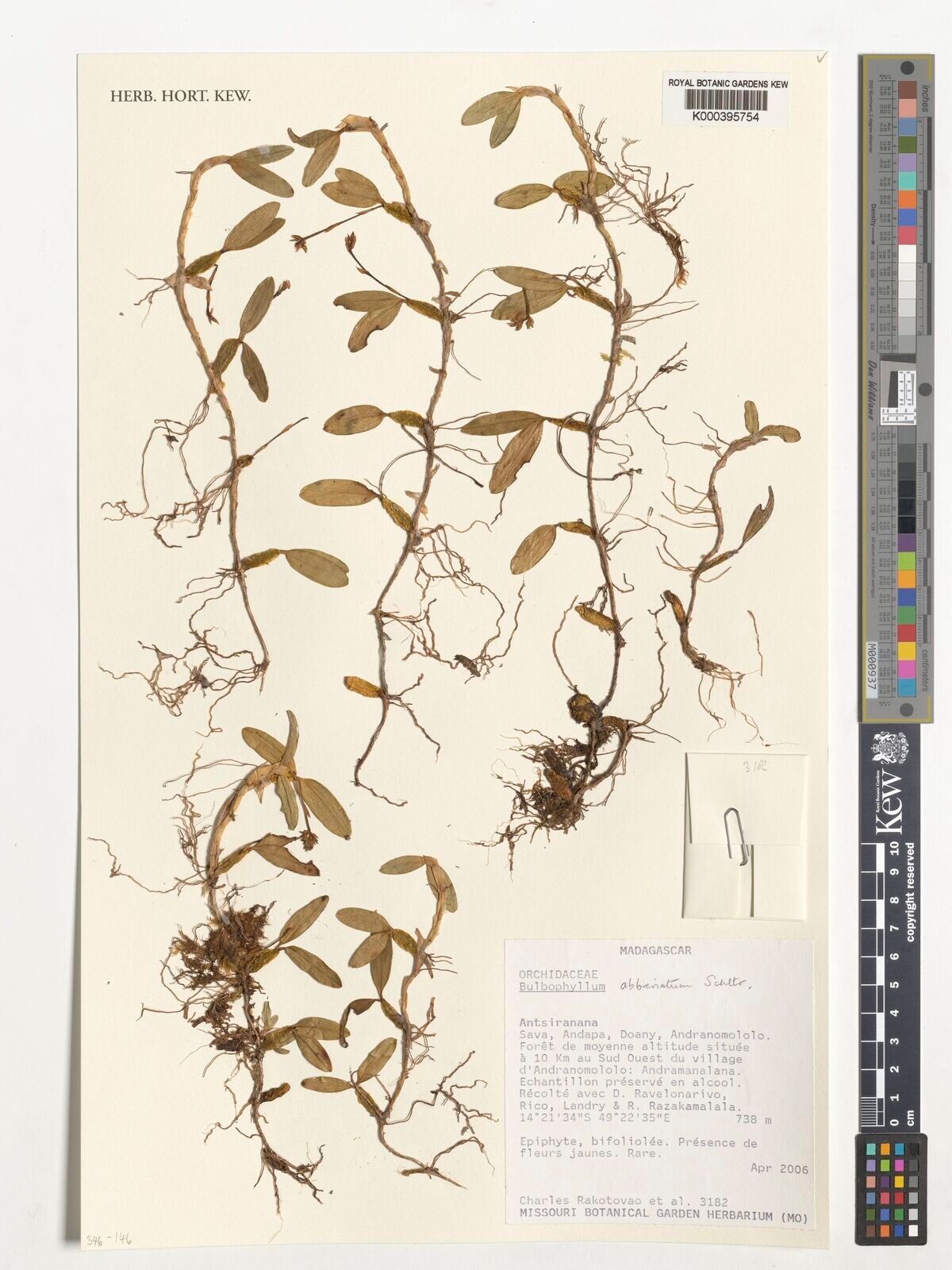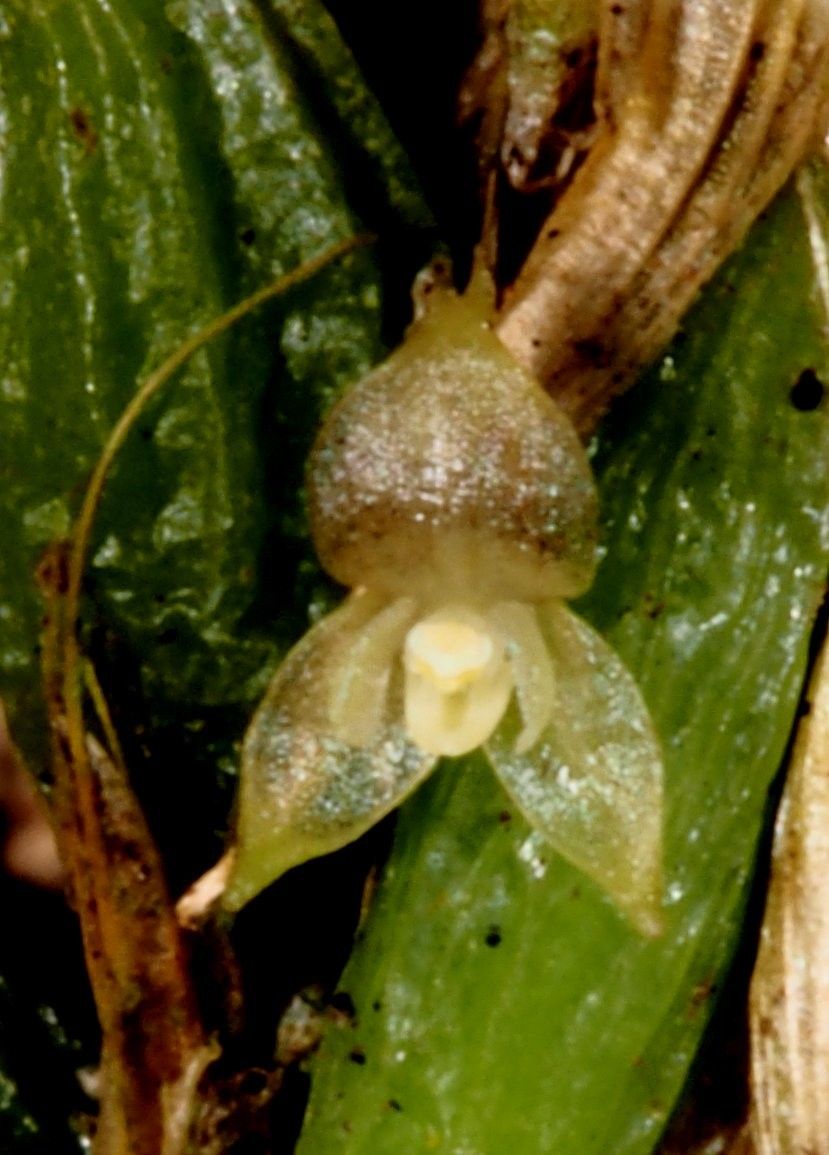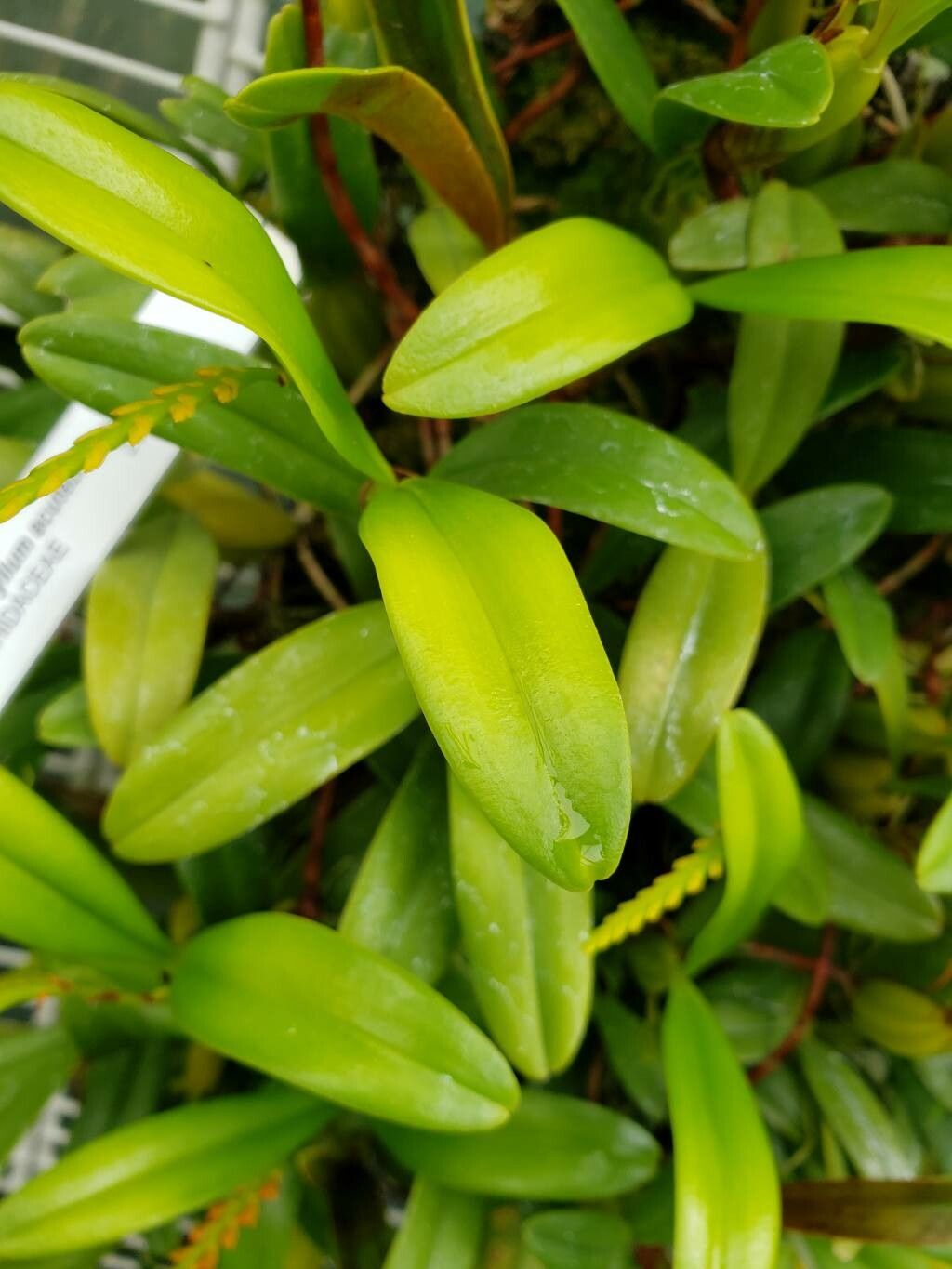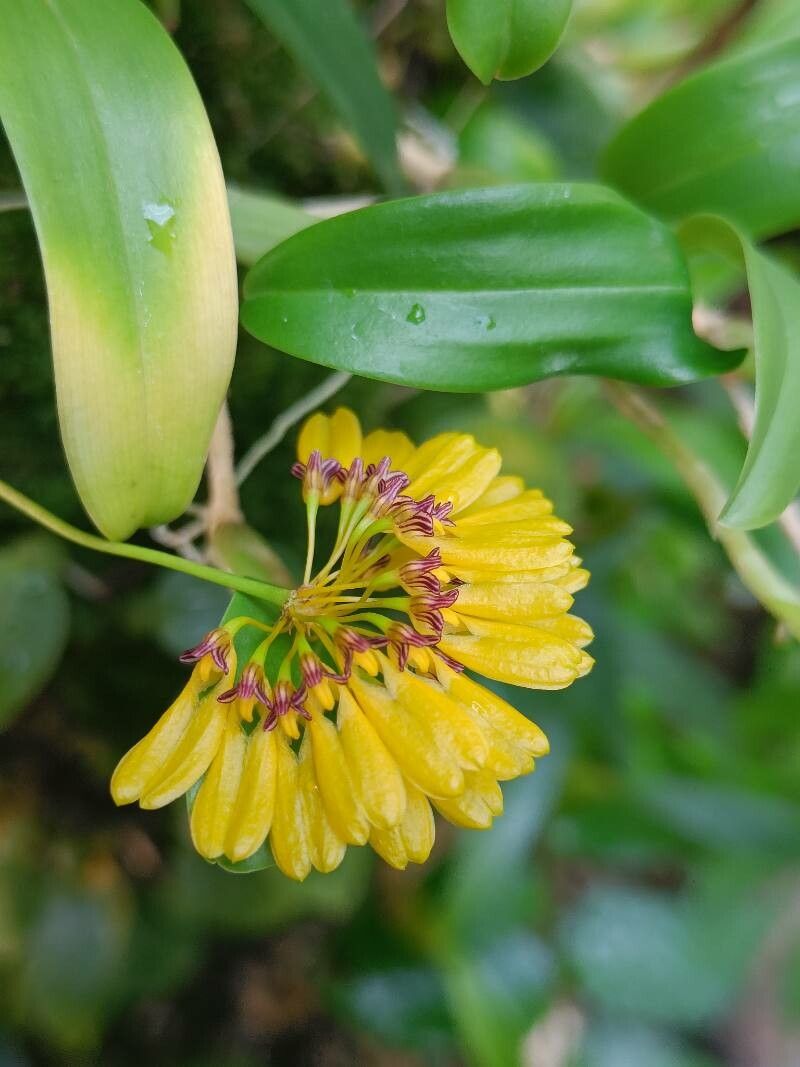
Bulbophyllum omerandrum is a species of orchid in the genus Bulbophyllum in section Cirrhopetalum.
Bulbophyllum omerandrum typically shows strong resistance to disease and is affected by relatively few insect pests. Its care is considered difficult because it needs high humidity combined with good ventilation and an environment with few harmful pathogens. Overwatering can result in root rot. While anyone can grow Bulbophyllum omerandrum, keeping it healthy and getting it to bloom again requires more cultivation experience.
How to keep Bulbophyllum Omerandrum.
Light
Bulbophyllum omerandrum is native to the lower levels of tropical forests or amongst stones, providing it with natural shade. It has a preference for semi-sunlight but is also able to withstand full sunlight, effectively adapting to diverse lighting situations.
Water
Bulbophyllum omerandrum, a plant that thrives in tropical environments, requires consistent moisture and high humidity to grow well. To maintain optimal soil conditions, it is essential to water it weekly. This species is well-suited for indoor cultivation and is perfect for terrariums or humid areas such as bathrooms.
Temperature
Bulbophyllum omerandrum is originally from regions where the temperature ranges between 68 to 100 °F (20 to 38 ℃), and it prefers a warm to hot climate. In colder periods, modifying your indoor climate or employing a heat lamp could replicate its natural habitat.
Fertilizer
The health and look of Bulbophyllum omerandrum significantly rely on appropriate fertilization. Furnish Bulbophyllum omerandrum with nutrients during summer and continue this on a monthly basis throughout the season. The nutrient supply helps in fostering growth and preserving plant parts. Further, properly fertilizing Bulbophyllum omerandrum boosts its floral appearance, guaranteeing the most attractive blooms.
Pruning
Bulbophyllum omerandrum boasts unique floral structures and flourishes with appropriate care. To ensure the plant's health, prune it from early to late spring by removing dead or diseased pseudobulbs and thinning out crowded areas to improve air circulation. Be careful to avoid heavy pruning, as it is crucial to preserving the plant's vigor and bloom quality.
Pot & Repot
During the repotting of Bulbophyllum omerandrum, opt for a slightly bigger pot that boasts efficient drainage, ideally a transparent orchid pot. Employ a well-draining mix intended specifically for orchids and comprising bark or moss. Carefully cleanse the roots and snip off those that are dying or decaying. Undertake the repotting process post-bloom, typically in the spring or autumn season, drench it with water, and position it under bright but diffused light. Refrain from perturbing the roots once you've repotted them.
Botanical profile.
- Plant Type
- Herb
- Life Cycle
- Perennial
- Genus
- Bulbophyllum
- Family
- Orchidaceae
- Hardiness Zone
- 9-11
- Mature Height
- 10 cm to 18 cm
- Mature Spread
- 10 cm to 20 cm
- Leaf Color
- Green
- Leaf Type
- Semi-evergreen
- Flower Color
- Yellow, Orange
- Flower Size
- 1.02 cm to 2.03 cm
- Bloom Time
- Summer, Early fall
- Planting Time
- Spring, Summer, Autumn
- Harvest Time
- Late summer, Fall
- Native Area
- China