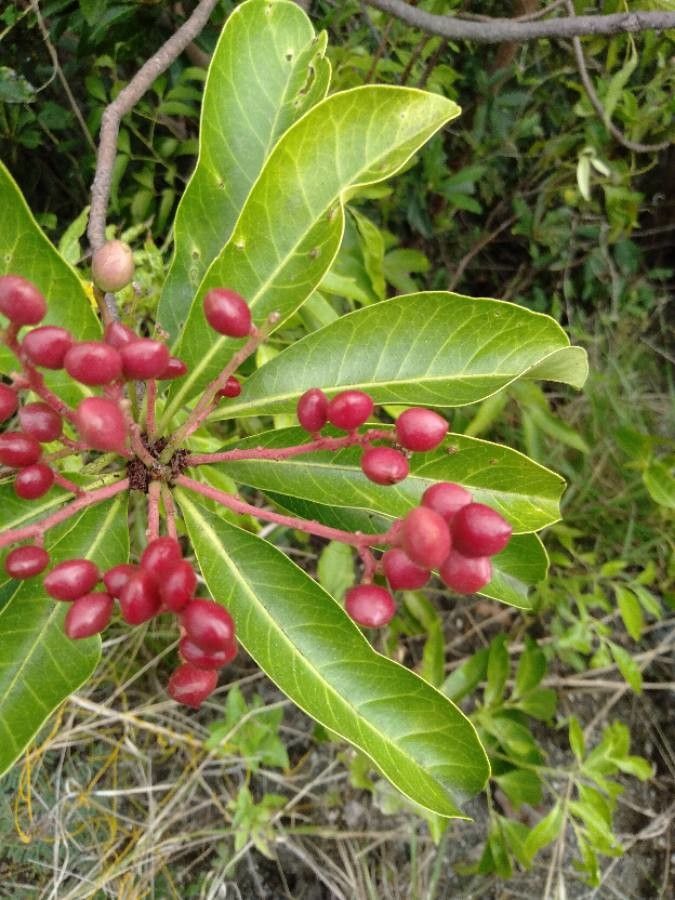
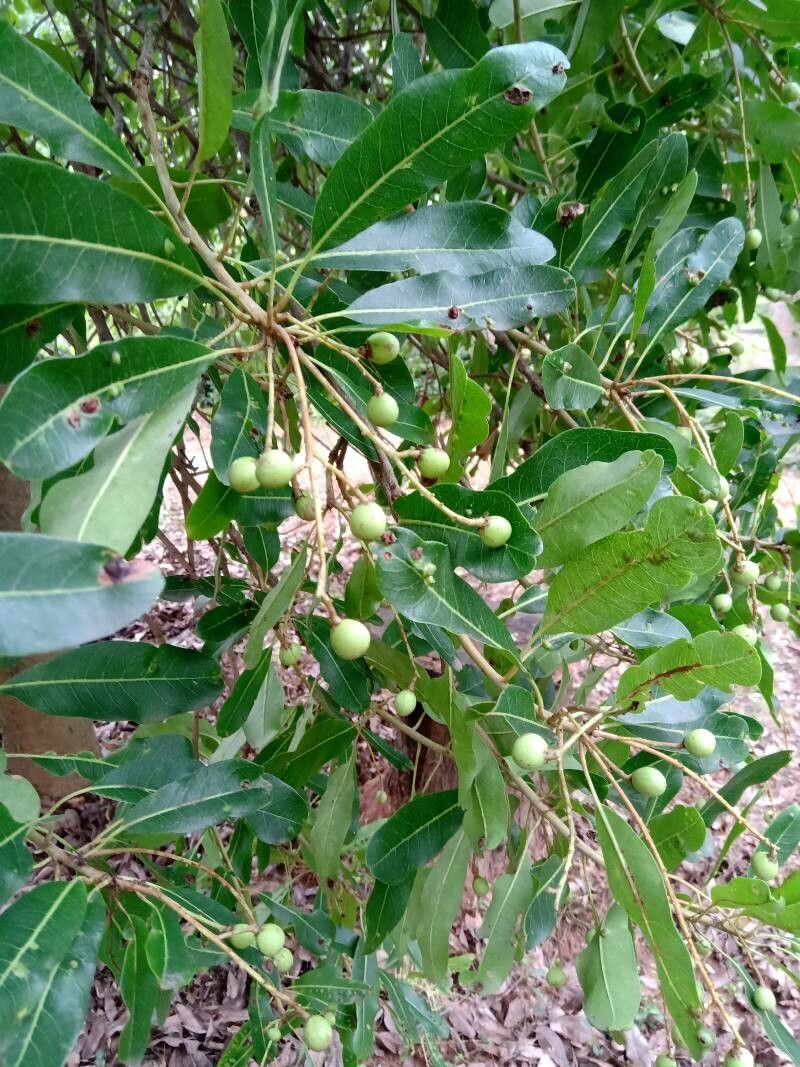
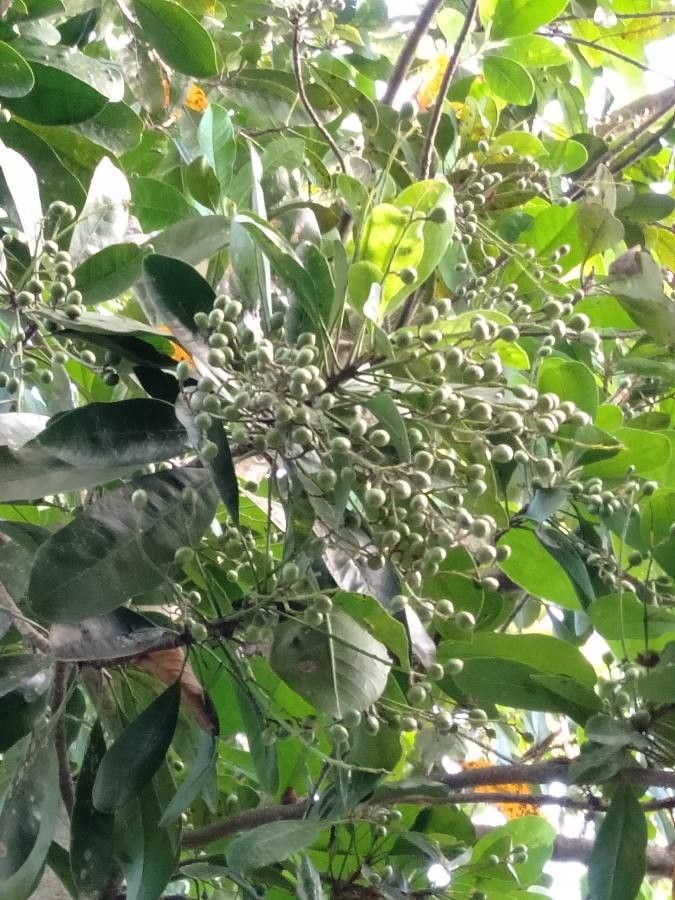
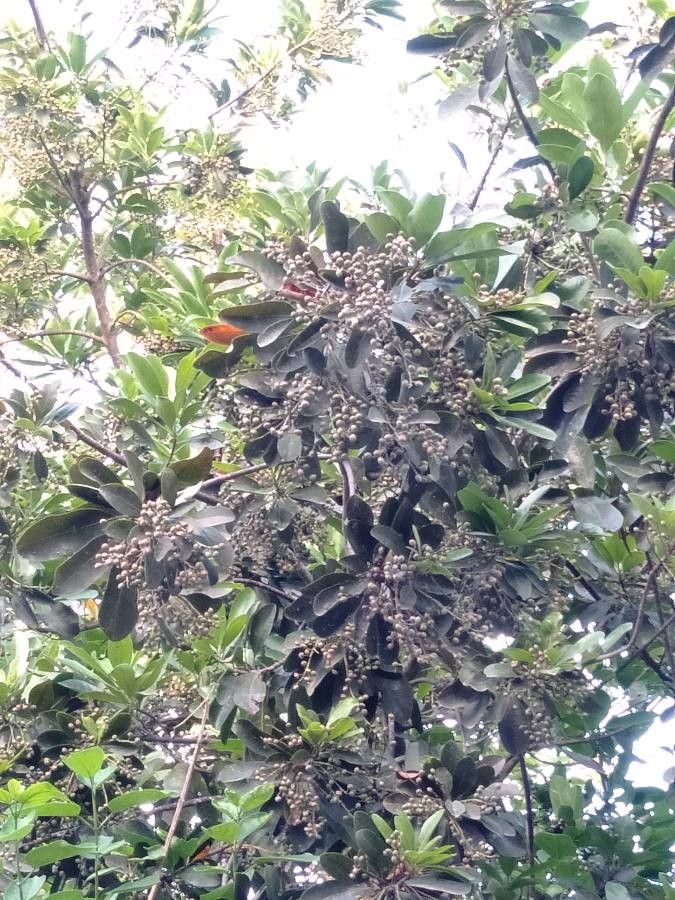
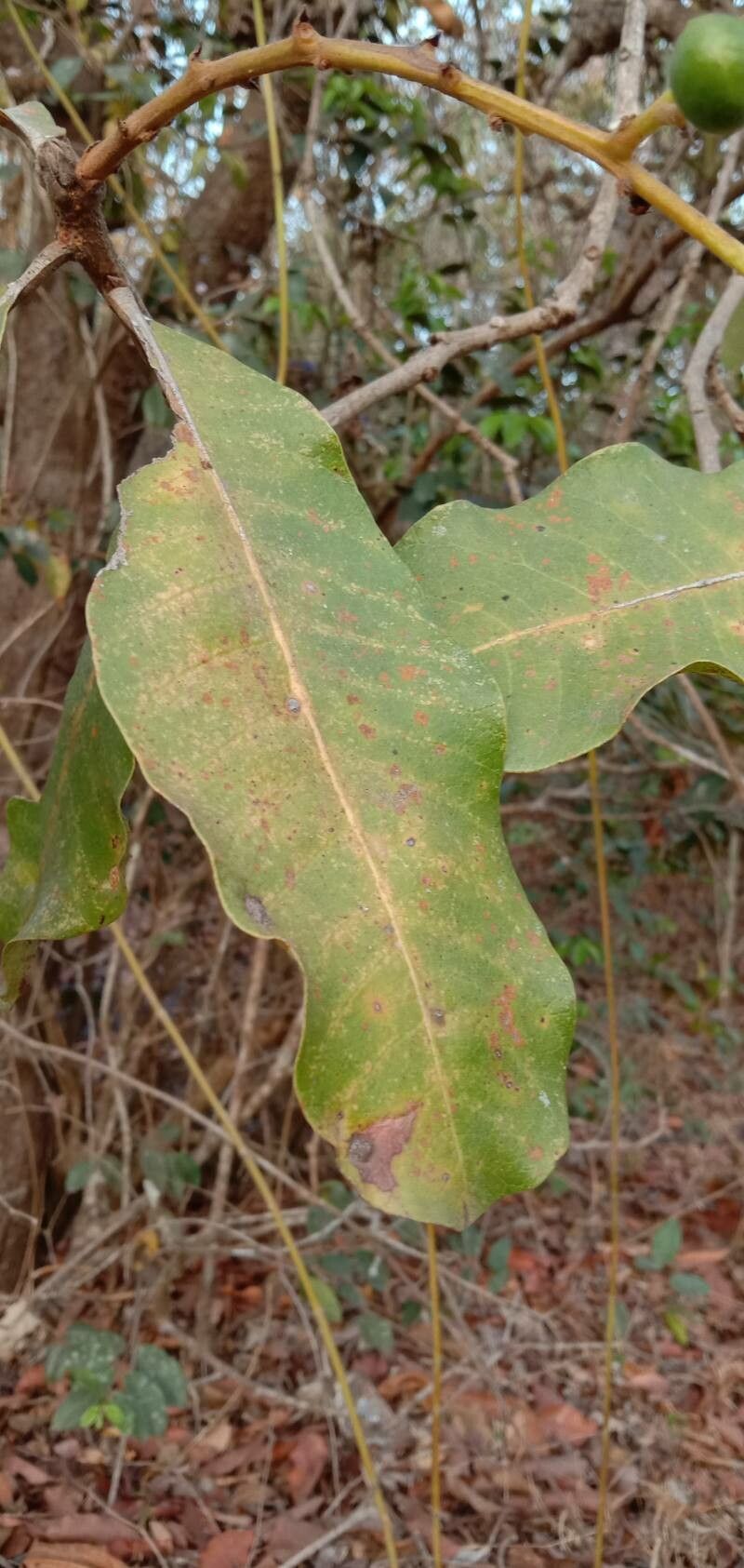
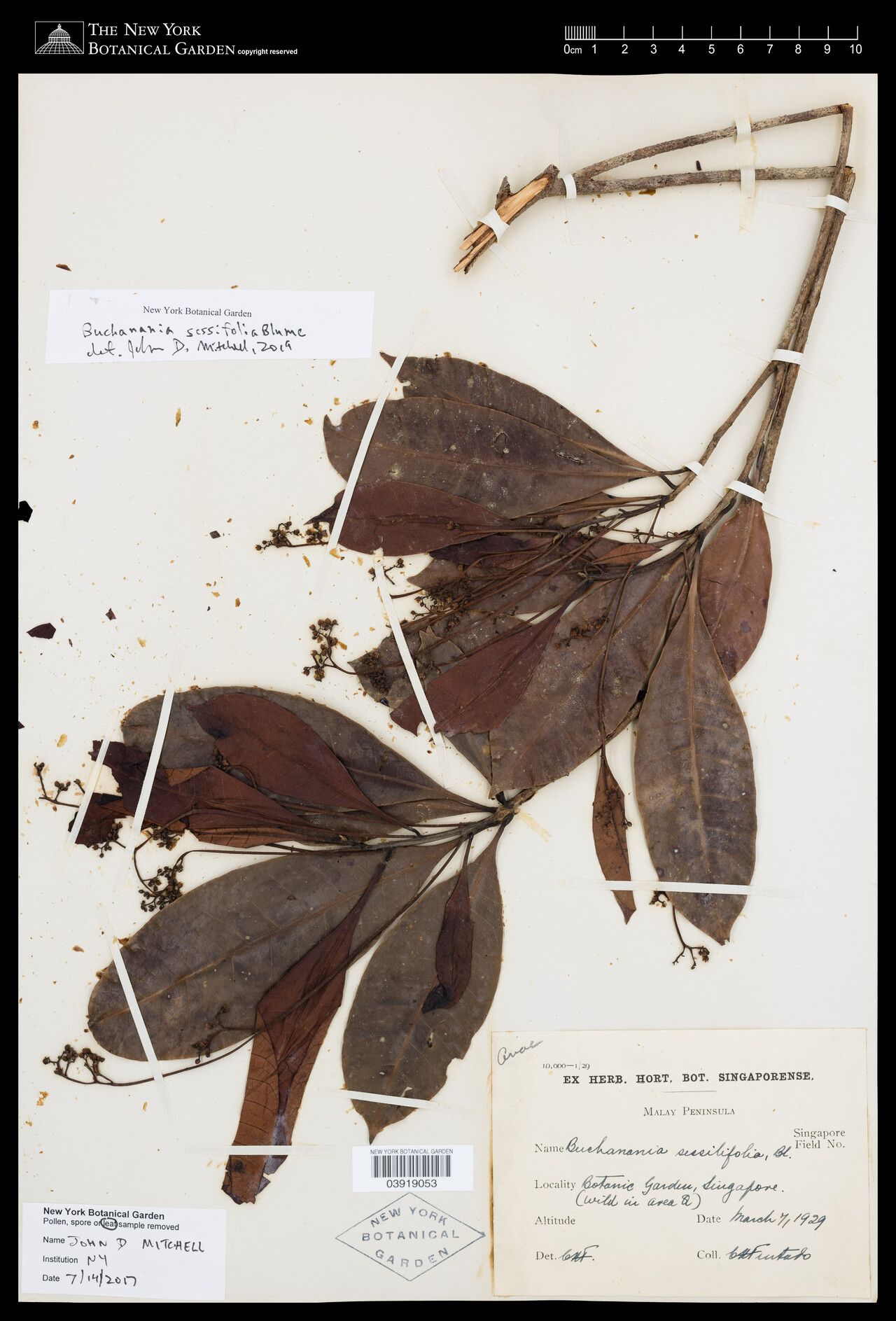
Buchanania arborescens, commonly known as Chironji, is a deciduous tree belonging to the family Anacardiaceae. Native to India, it thrives in the tropical and subtropical regions of the country. The tree can grow up to 15 meters in height and features a dense crown of dark green leaves. During the summer months, the Chironji tree produces small, white flowers. Its fruit is a small drupe with an outer shell that splits open when ripe, revealing an edible kernel inside. These kernels, which have a sweet taste similar to almonds, are used in various culinary applications. In addition to its culinary uses, Buchanania arborescens possesses several medicinal properties. The bark is used to treat diarrhea, while the leaves are effective against skin conditions such as eczema and psoriasis. Overall, Buchanania arborescens, or Chironji, is a versatile plant with applications in both food and medicine. It holds significant cultural and economic importance and contributes to biodiversity conservation efforts in India.
The little gooseberry tree has strong disease resistance and is generally not vulnerable to illnesses. In terms of care, this plant is fairly low-maintenance. When grown outdoors it needs only minimal watering, and larger specimens typically do not require pruning. Smaller plants, however, should be pruned after they have finished blooming. The little gooseberry tree is suitable for anyone with outdoor space — such as a garden or a deck — and does not demand much gardening experience.
How to keep Buchanania Arborescens.
Light
The little gooseberry tree prospers when exposed to full daylight, though it can endure periods of reduced light. In its native outdoor habitat it soaks up abundant sunlight that fuels its growth. Yet excessive light can make it wilt, while insufficient light may stunt its growth, underscoring its particular sensitivity to light levels.
Water
The little gooseberry tree, native to arid regions, is highly drought-tolerant and requires minimal moisture. It needs watering only once every two weeks. As an evergreen, it keeps its foliage throughout the year, and during cooler months, it requires even less water because of reduced evapotranspiration rates.
Temperature
The little gooseberry tree comes from tropical areas, where the climate is usually warm and humid. Consequently, it is adapted to high temperatures and moisture. It does not tolerate abrupt temperature changes and prefers a steady thermal environment, so avoiding temperature fluctuations indoors is important. It generally cannot withstand cold and needs warmer conditions to grow. If the ambient temperature falls too low, the plant may stop growing or even die.
Fertilizer
Choose organic fertilizers (e.g., fish emulsion, compost) rather than chemical ones for the Little gooseberry tree. Provide higher nitrogen and phosphorus to young plants during spring. Incorporate compost or fertilizer into the soil before or after planting. For mature plants, supplement in spring with a balanced fertilizer or one targeted to a specific deficiency. Nutrient deficiency causes small leaves, short branches, yellow/bronze foliage, acidic fruits, premature fruit fall, and splitting.
Pruning
The little gooseberry tree has a dense canopy and produces small clusters of fruit. To ensure its health and productivity, it benefits from pruning in early spring while it is actively growing. Key pruning techniques include removing dead branches, improving air circulation, and shaping the tree to enhance its strength. Pruning not only boosts fruit production but also helps maintain the tree's overall health. It is essential to use clean, sharp tools during pruning to prevent disease and promote proper healing.
Botanical profile.
- Plant Type
- Tree
- Life Cycle
- Perennial
- Genus
- Buchanania
- Family
- Anacardiaceae
- Hardiness Zone
- 10-11
- Mature Height
- 10.06 m to 14.94 m
- Mature Spread
- 4.88 m to 7.92 m
- Leaf Color
- Dark Green
- Leaf Type
- Deciduous
- Flower Color
- White, Cream
- Flower Size
- 0.25 cm to 0.51 cm
- Bloom Time
- Late spring, Early summer
- Planting Time
- Summer
- Harvest Time
- Late summer, Early fall, Mid fall
- Native Area
- Malaysia, Indonesia, Cambodia, Vietnam, Myanmar, Philippines, Singapore, Laos, Brunei, Thailand, China
Other names.
Reader questions.
What are the sunlight requirements for the Little Gooseberry Tree?
The Little Gooseberry Tree requires full sun exposure, which is above 6 hours of sunlight daily, to thrive but also can manage in partial sun, receiving about 3-6 hours of sunlight. It's important to observe how sunlight moves through your garden to find spots that offer the perfect balance for your Little Gooseberry Tree, ensuring it receives the adequate amount of light without being overexposed or underexposed.
What is the name of the Little gooseberry tree in scientific terminology?
The scientific name for the Little gooseberry tree is Buchanania arborescens.
How does the Little Gooseberry Tree respond to artificial lighting?
When the Little Gooseberry Tree doesn't receive sufficient natural sunlight, particularly during winter or in less sunny spaces, artificial lighting becomes essential for its growth. For optimal growth under artificial lights, LED lights are recommended as they can be tailored to the specific light wavelengths needed by the plant. Full sun plants, such as the Little Gooseberry Tree, require 30-50W/sq ft of artificial light. The artificial light source should be placed 12-36 inches above the plant and turned on for 8-12 hours per day to mimic natural sunlight conditions.
What are the symptoms of insufficient light exposure in the Little Gooseberry Tree?
When the Little Gooseberry Tree is not receiving enough sunlight, it may show several symptoms signaling its struggle. These include smaller new leaves, leggy or sparse growth, faster leaf drop, slowed or halted new growth, lighter-colored new leaves, and symptoms of excessive light such as chlorosis, sunscald, leaf curling, wilting, and leaf scorching. These symptoms indicate the plant's inability to photosynthesize effectively, either due to too little or too much sunlight.
What solutions can help the Little Gooseberry Tree thrive in indoor, outdoor, and ground settings concerning light exposure?
For indoor Little Gooseberry Trees suffering from light deficiency, gradually moving them to a sunnier spot or using artificial lighting like desk or professional grow lights for at least 8 hours a day can improve their condition. Outdoors, plants should be gradually introduced to sunnier locations to prevent shock. If sunlight is blocked by physical obstructions, consider pruning or transplanting smaller plants to sunnier areas, ensuring the new location has good drainage and ample sunlight. It's crucial to remember that affected parts may not recover, but increased light exposure will encourage healthy new growth.