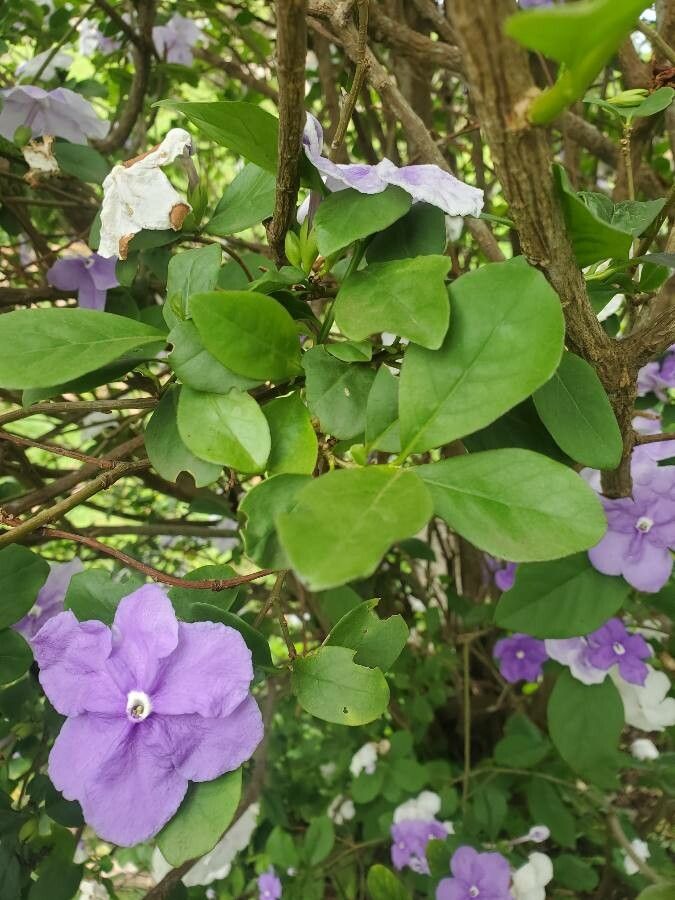
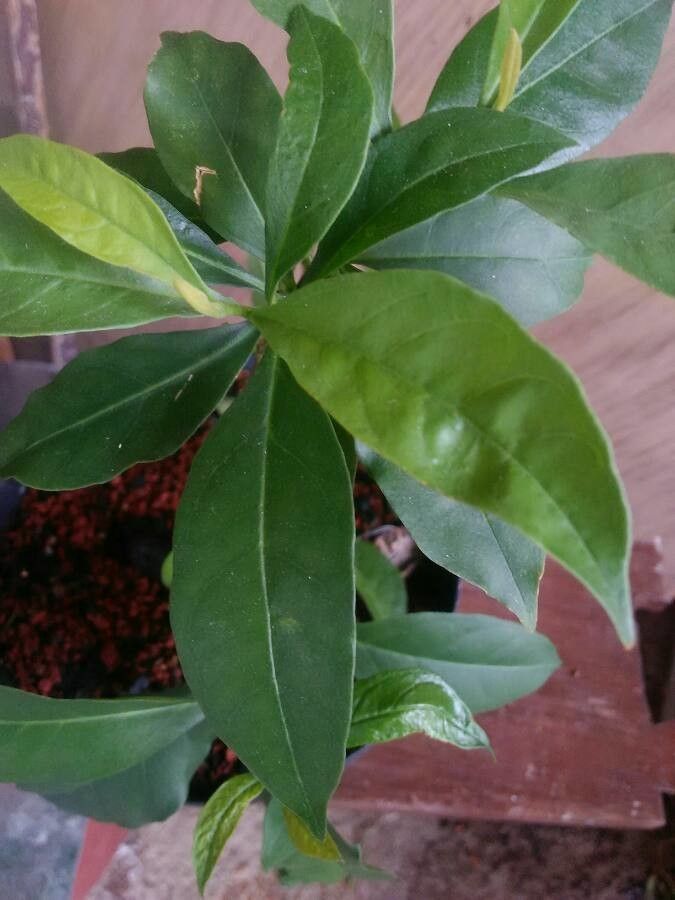
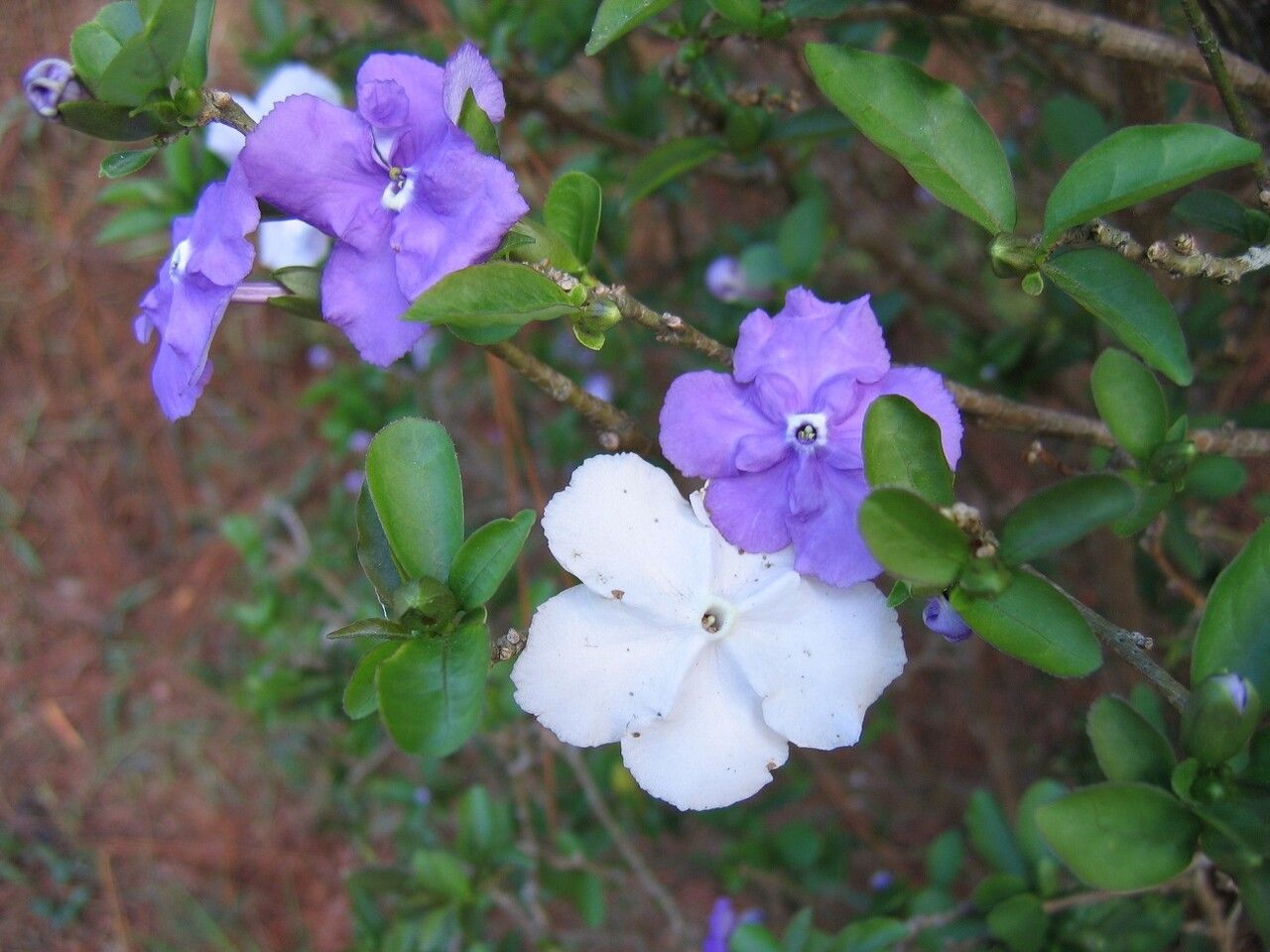
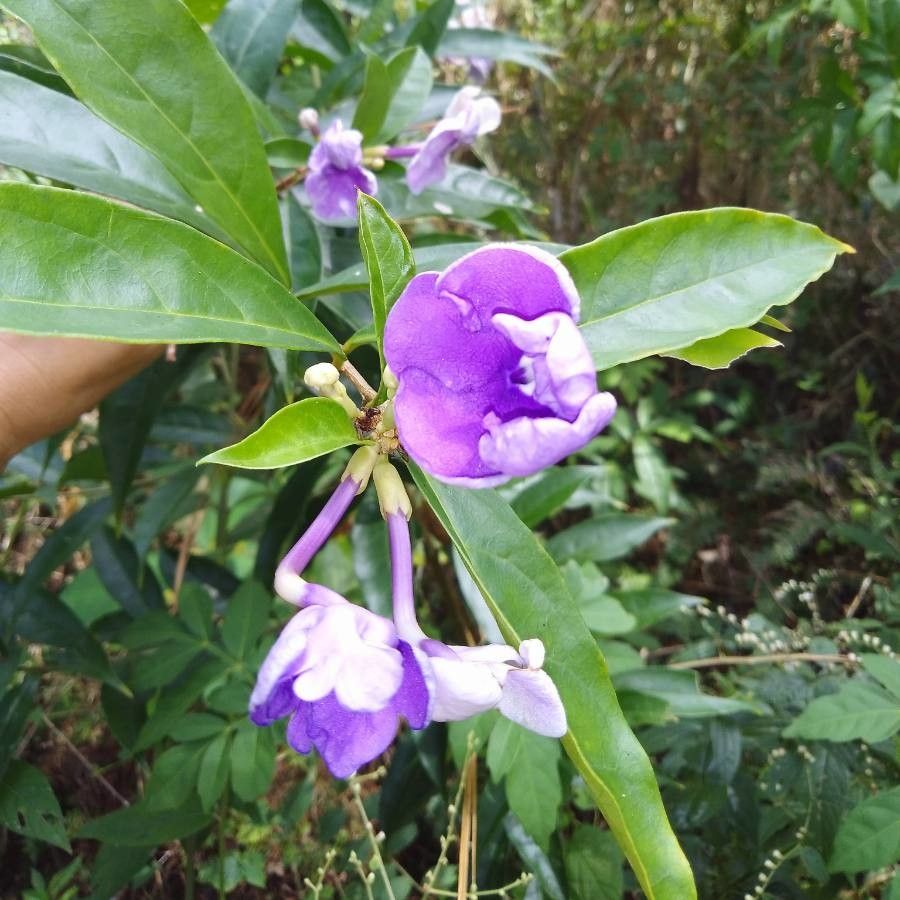
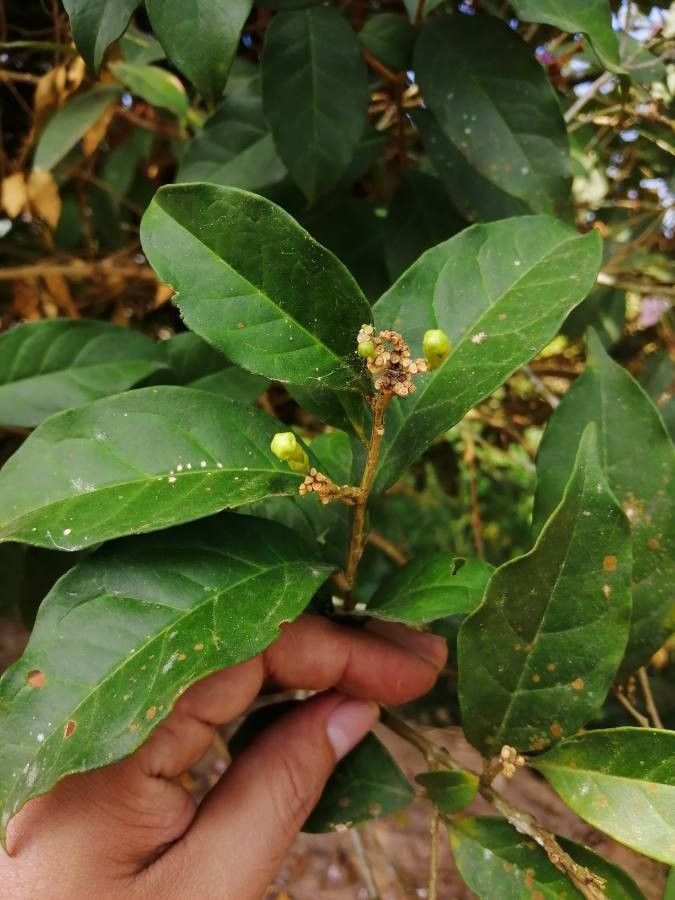
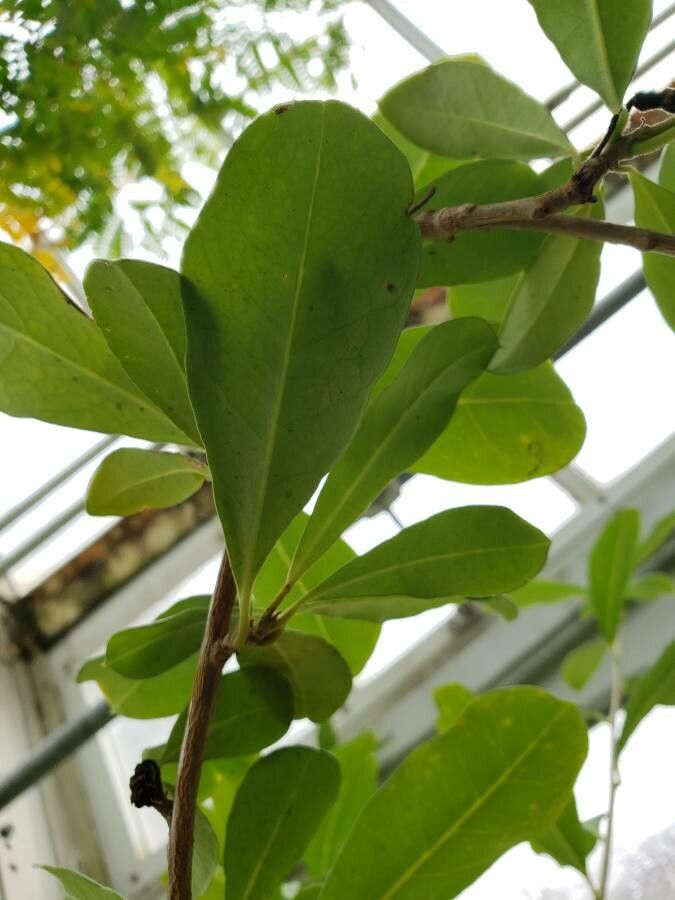
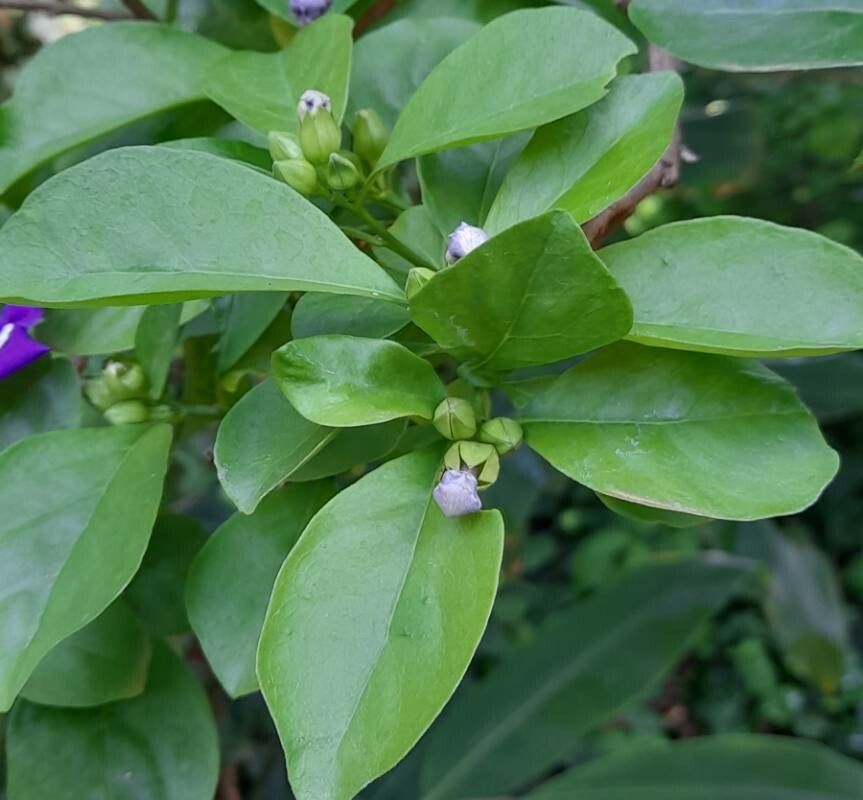
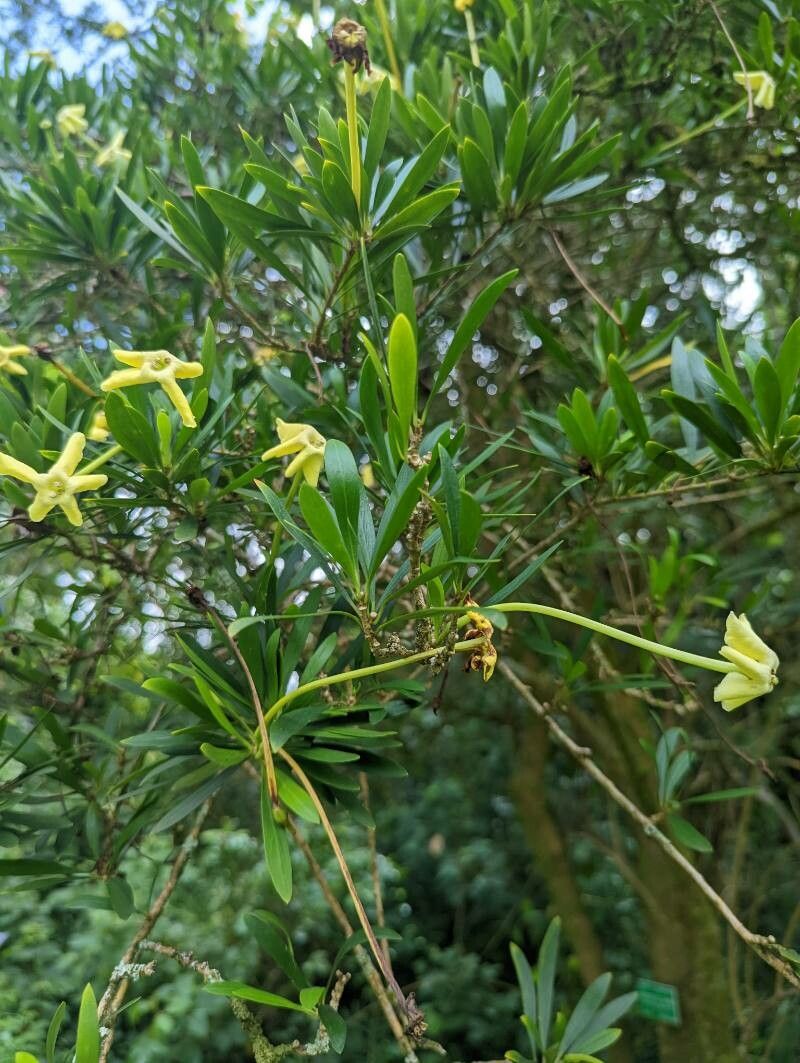
Brunfelsia grandiflora is a flowering shrub in the nightshade family. It is native to South America. In English is known by the common names royal purple brunfelsia, kiss-me-quick, and yesterday-today-and-tomorrow. In Peru it is known by the Spanish-Quechua name chiricsanango.This shrub grows up to 10 feet tall by 8 feet wide. It has a dense foliage of alternately arranged leaves each up to 12 inches long. The fragrant flowers are white or shades of purple. They bloom nearly year-round.In its native range it is used in traditional medicine to treat fever, rheumatism, syphilis, and arthritis. It is sometimes used as one of the active plant additives contributing to the hallucinogenic effects of the South American drink ayahuasca. In laboratory tests, extracts of the plant were active against the protozoa that cause leishmaniasis, especially Leishmania major.Brunfelsia grandiflora is sometimes cultivated as an ornamental plant, such as for landscape design.
Royal purple brunfelsia shows good resistance to disease and is generally not susceptible to illnesses. Regarding care, this plant is fairly low-maintenance. When grown outdoors it needs minimal watering, and larger plants typically do not require pruning. Smaller plants, however, should be pruned after they finish blooming. Royal purple brunfelsia is suitable for anyone with outdoor space, such as a garden or a deck, and does not demand much gardening experience.
How to keep Brunfelsia Grandiflora.
Light
The royal purple brunfelsia performs best in sites that receive abundant sunlight for most of the day. It can also tolerate locations where sunlight is somewhat reduced at times. Native to areas that typically get plenty of sun, the royal purple brunfelsia's growth is hampered by insufficient light, while excessive exposure can scorch its leaves.
Water
The Royal Purple Brunfelsia is a drought-tolerant plant that thrives when the soil is allowed to dry out between waterings every 2-3 weeks. Although it is typically grown outdoors, it benefits greatly from mulching, which helps retain moisture during its active growth phase. This plant originates from regions with variable moisture levels and has adapted well to environments with less frequent rainfall.
Temperature
Royal purple brunfelsia comes from tropical areas where the climate is usually warm and humid. Consequently, it is well suited to high temperatures and moisture. It does not tolerate sudden temperature shifts and prefers a consistent temperature environment, so avoiding indoor temperature fluctuations is important. It typically cannot endure cold conditions and needs warmer temperatures for growth. If the surrounding temperature becomes too low, the plant may stop growing or even perish.
Fertilizer
The best time to fertilize a Royal purple brunfelsia is in early spring, as it comes out of dormancy. This encourages overall growth and the development of flowers. Fertilizing improves the foliage, stems, and branches, and supports flowers that are large, vibrant, and long-lasting. It also helps move nutrients from the roots to the blooms and enhances the plant’s health and resistance to disease.
Pruning
Pruning your Royal Purple Brunfelsia from early to late winter is essential for encouraging healthy growth. By removing spent flowers and dead branches, you promote bushier growth, improve airflow, and enhance the plant's overall appearance. To achieve the best results, use clean, sharp tools, as recommended by reputable sources, to ensure optimal plant health.
Botanical profile.
- Plant Type
- Tree, Shrub
- Life Cycle
- Perennial
- Genus
- Brunfelsia
- Family
- Solanaceae
- Hardiness Zone
- 9-11
- Mature Height
- 3.96 m
- Mature Spread
- 3.05 m
- Leaf Color
- Green, Red
- Leaf Type
- Evergreen
- Flower Color
- White, Purple, Blue, Lavender, Violet
- Flower Size
- 2.54 cm
- Bloom Time
- All year round
- Planting Time
- Autumn
- Harvest Time
- All year round
Other names.
Reader questions.
What are the sunlight requirements for royal purple brunfelsia?
Royal purple brunfelsia thrives best in locations that receive substantial sunlight for most of the day, ideally in full sun conditions with above 6 hours of sunlight. They can also adapt to partial sun conditions, where sunlight intensity is somewhat diminished, approximately around 3-6 hours of sunlight. Attention to the plant's sunlight needs ensures its healthy growth and flowering. It's essential to monitor the sunlight patterns in your garden to find a spot that offers the right balance of light and shade, as noted in the advice to 'watch how sunlight gracefully moves through your garden.'
What is the Royal Purple Brunfelsia?
The Royal Purple Brunfelsia, scientifically known as Brunfelsia grandiflora, is a plant species known for its distinctive characteristics. However, the provided data does not include specific details on its essentials, symptoms, or additional information related to its care, appearance, or habitat.
How can artificial lighting supplement natural sunlight for royal purple brunfelsia?
Artificial lighting can be a vital solution for indoor royal purple brunfelsia plants, especially in conditions where natural sunlight is insufficient. LED lights are a preferred choice for they can be tailored to provide specific wavelengths of light required by the plant. For plants that primarily require full sun, 30-50W/sq ft of artificial light is recommended; for partial sun plants, 20-30W/sq ft, and for full shade plants, 10-20W/sq ft are necessary. The correct placement involves positioning the light source 12-36 inches above the plant, mimicking natural sunlight, and ensuring the plants receive about 8-12 hours of light per day to promote healthy growth.
What are the symptoms of insufficient or excessive sunlight in royal purple brunfelsia?
Royal purple brunfelsia shows various symptoms when exposed to suboptimal lighting. Insufficient light can cause small and pale new leaves, leggy or sparse growth, faster leaf drop, slower or no new growth, and chlorosis where leaves turn yellow due to a lack of chlorophyll. On the other hand, excessive sunlight exposure can lead to symptoms like sunscald, leaf curling as a defense mechanism against water loss, wilting from increased transpiration, and leaf scorching where leaves show brown, dry, and crispy edges. These symptoms highlight the plant's specific needs for balanced light conditions.
How can light exposure be optimized for royal purple brunfelsia?
To optimize light exposure for royal purple brunfelsia, indoor plants can be gradually moved to sunnier locations to receive at least 6 hours of direct sunlight daily, utilizing a south-facing window and keeping curtains open. Artificial lighting, such as desk lamps or professional plant grow lights, should be considered for plants that are large or not easily movable, ensuring at least 8 hours of light daily. For outdoor plants, a gradual transition to sunnier spots is advised to prevent sunburn, acknowledging that plants already affected by insufficient light may not recover fully, but new growth will be healthy. Minimizing obstructions and considering transplanting during the plant's dormant period for smaller plants in the ground can also enhance sunlight exposure.