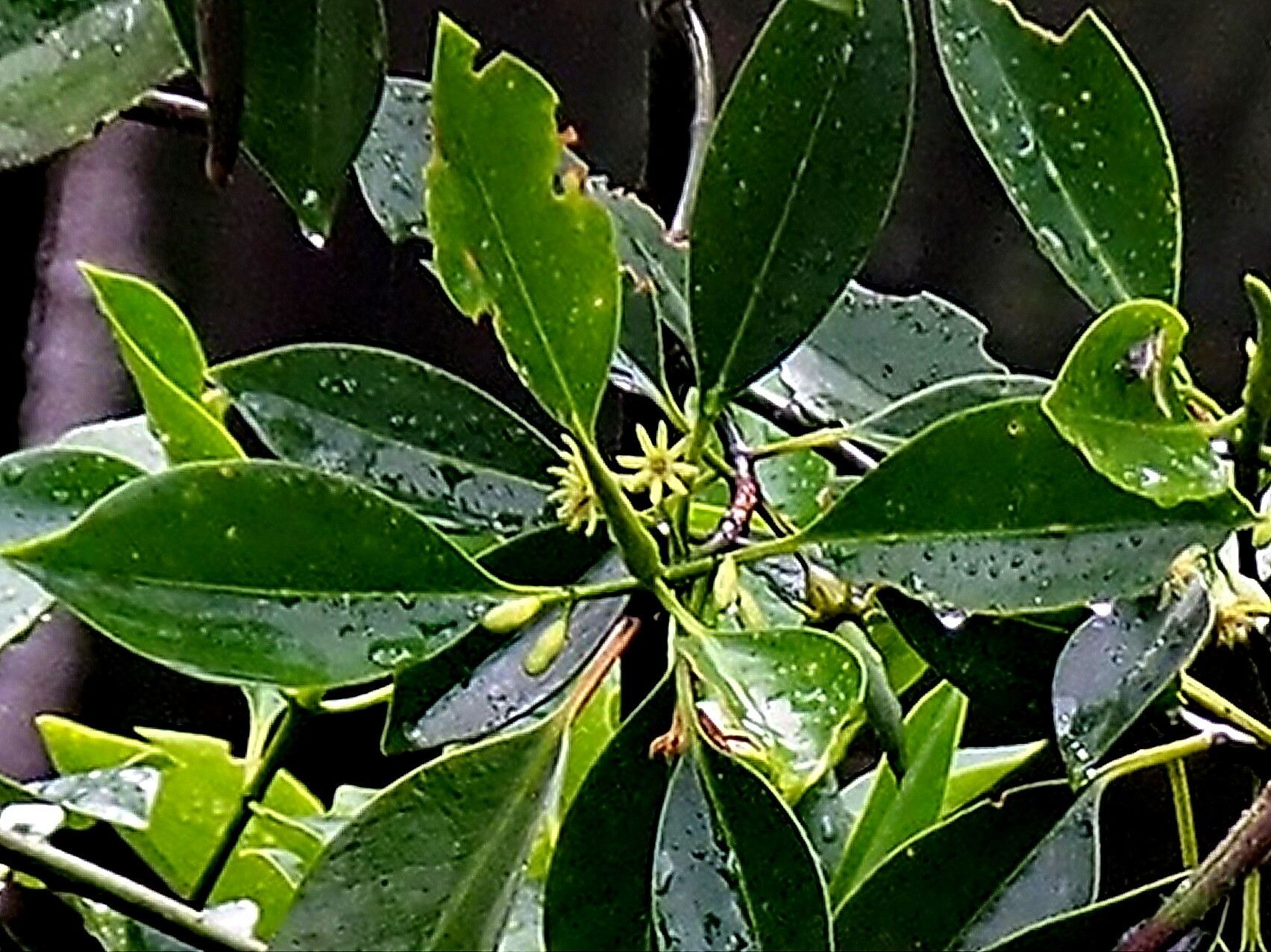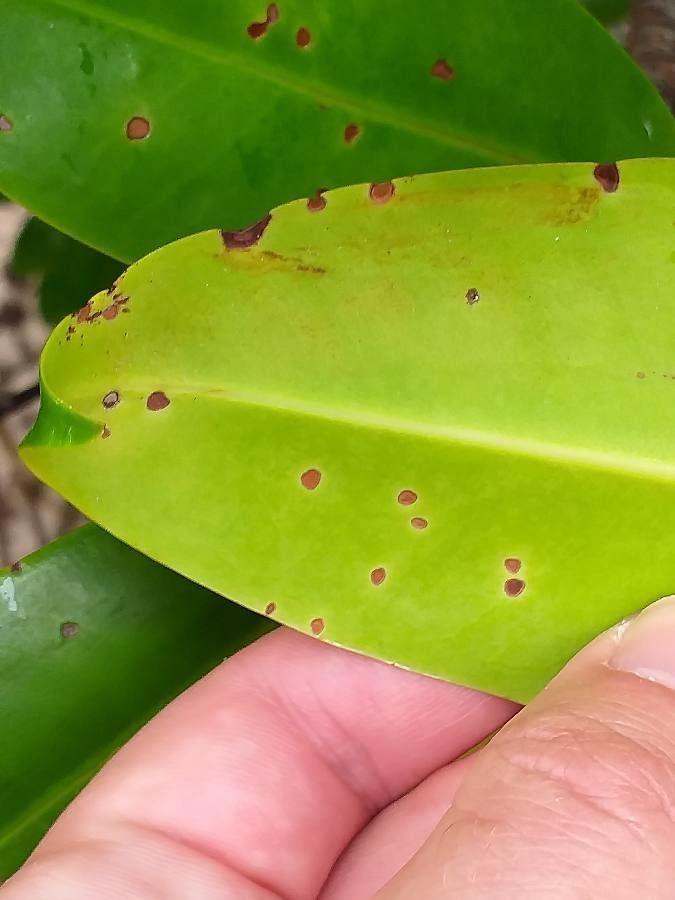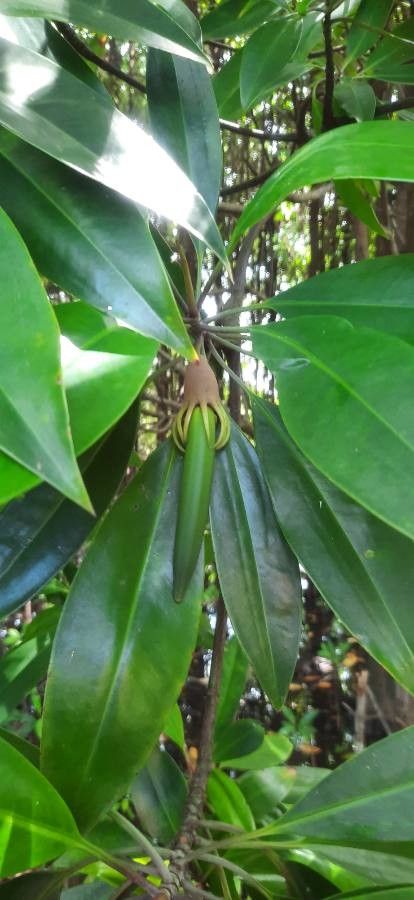
Bruguiera sexangula, commonly called the upriver orange mangrove, is a mangrove shrub or tree usually growing up to 15 m, occasionally 30 m, in height.
The Oriental mangrove is highly resistant to disease and is, in general, not susceptible to illnesses. In terms of care, this plant is fairly low-maintenance. When grown outdoors it needs little watering, and larger specimens typically do not require pruning. Smaller plants, however, should be pruned after they have finished blooming. Oriental mangrovet is suitable for anyone who has an outdoor area, such as a garden or deck, and does not demand extensive care experience.
How to keep Bruguiera Sexangula.
Light
Oriental mangrove comes from open habitats, such as sunny meadows and forest edges, which provide abundant light. It does best in Full Sun but can also tolerate Partial Sun, adjusting well to various sunlight conditions.
Water
Oriental mangroves originate from saline coastal regions and thrive in high humidity while being tolerant of saltwater. Although they can withstand moderate drought, they need consistent moisture and should be watered every 2-3 weeks. Typically found outdoors, these mangroves benefit from tidal influences and rely on brackish water for survival.
Temperature
Oriental mangrove comes from tropical areas, where the weather is usually warm and humid. Consequently, it is well suited to high temperatures and humidity. It does not tolerate sudden temperature shifts and prefers a constant temperature, so avoiding indoor temperature variations is important. It typically cannot withstand cold and needs warmer conditions to develop. If the ambient temperature falls too far, the plant may stop growing or even perish.
Fertilizer
The best time to fertilize an Oriental mangrove is in early spring, as it comes out of dormancy. This encourages overall growth and flower development. Fertilization improves the foliage, stems, and branches, while promoting large, vivid, and long-lasting flowers. It helps move nutrients from the roots to the flowers and enhances the plant's health and resistance to disease.
Pruning
The Oriental mangrove thrives in coastal areas with its dense foliage and robust root system. To promote growth and prevent overcrowding, prune the plant from early to late winter. Start by removing any dead branches, and then shape the canopy to improve airflow. Always use clean, sharp tools to enhance the plant's health and reduce the risk of disease.
Botanical profile.
- Plant Type
- Tree
- Life Cycle
- Perennial
- Genus
- Bruguiera
- Family
- Rhizophoraceae
- Hardiness Zone
- 10-12
- Mature Height
- 14.94 m to 29.87 m
- Mature Spread
- 4.88 m to 10.06 m
- Leaf Color
- Dark Green
- Leaf Type
- Evergreen
- Flower Color
- White
- Flower Size
- 1.52 cm to 2.03 cm
- Bloom Time
- Late spring, Summer, Early fall
- Planting Time
- Spring, Summer, Autumn
- Harvest Time
- Late summer, Fall, Early winter
- Native Area
- Sri Lanka, India, Malaysia, Indonesia, Cambodia, Vietnam, Myanmar, Philippines, Singapore, Bangladesh, Brunei, Thailand, China
Other names.
Reader questions.
What is the botanical name of the Oriental mangrove?
The botanical name of the Oriental mangrove is Bruguiera sexangula. It is a species recognized for its significant ecological role in coastal environments. Unfortunately, additional details regarding its essential characteristics and symptoms, if any, relating to its environment or conditions, were not provided.