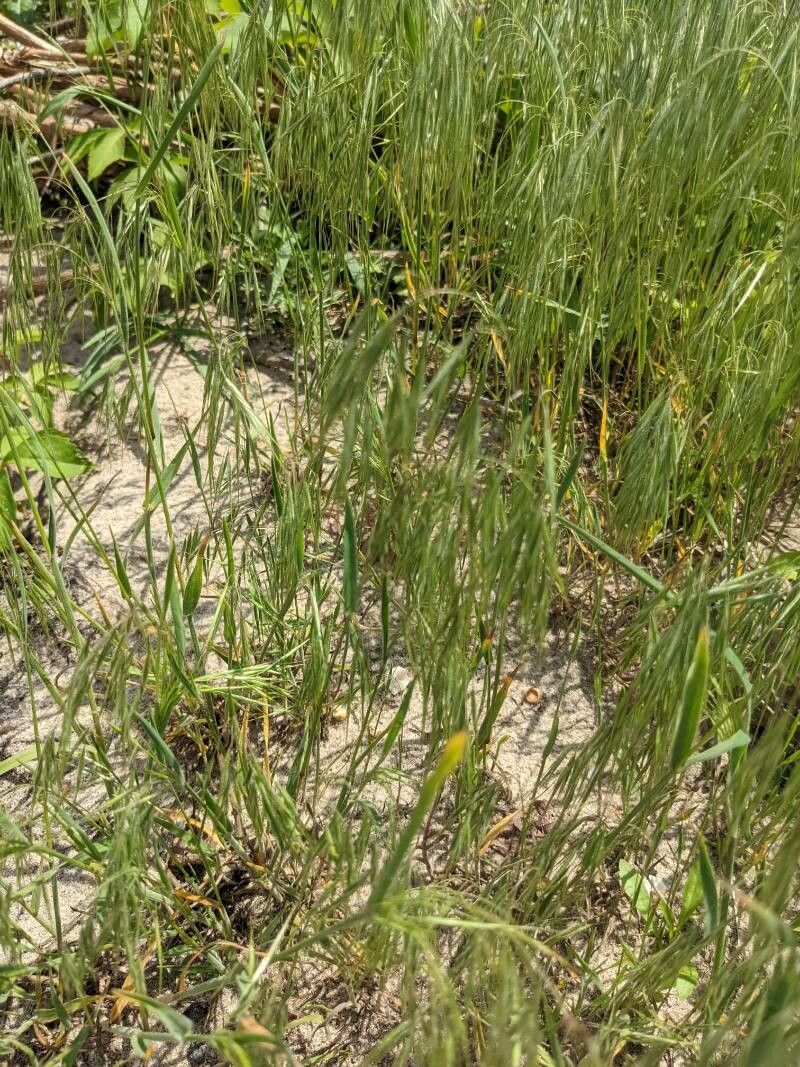
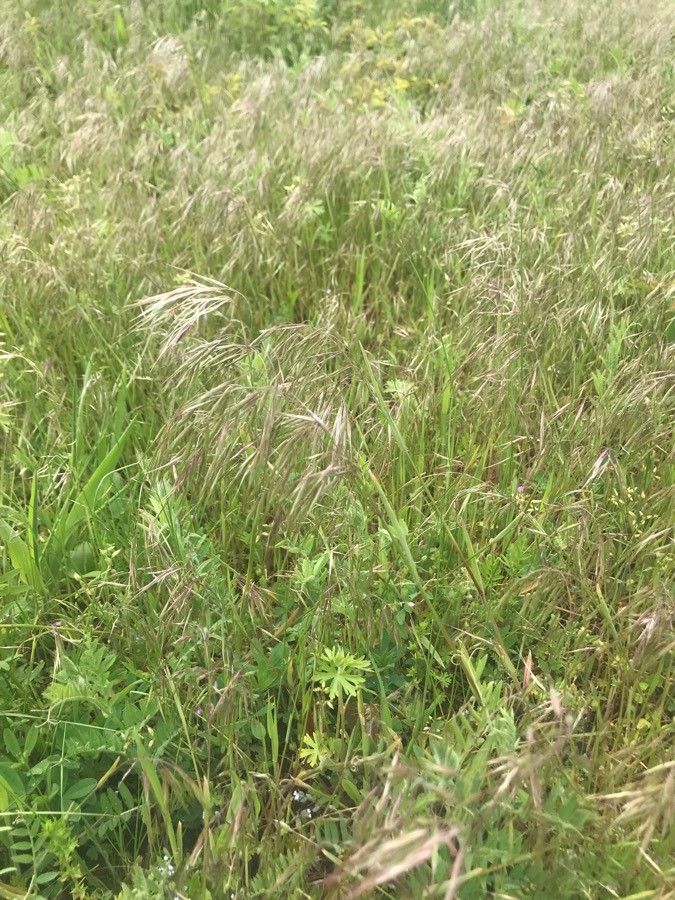
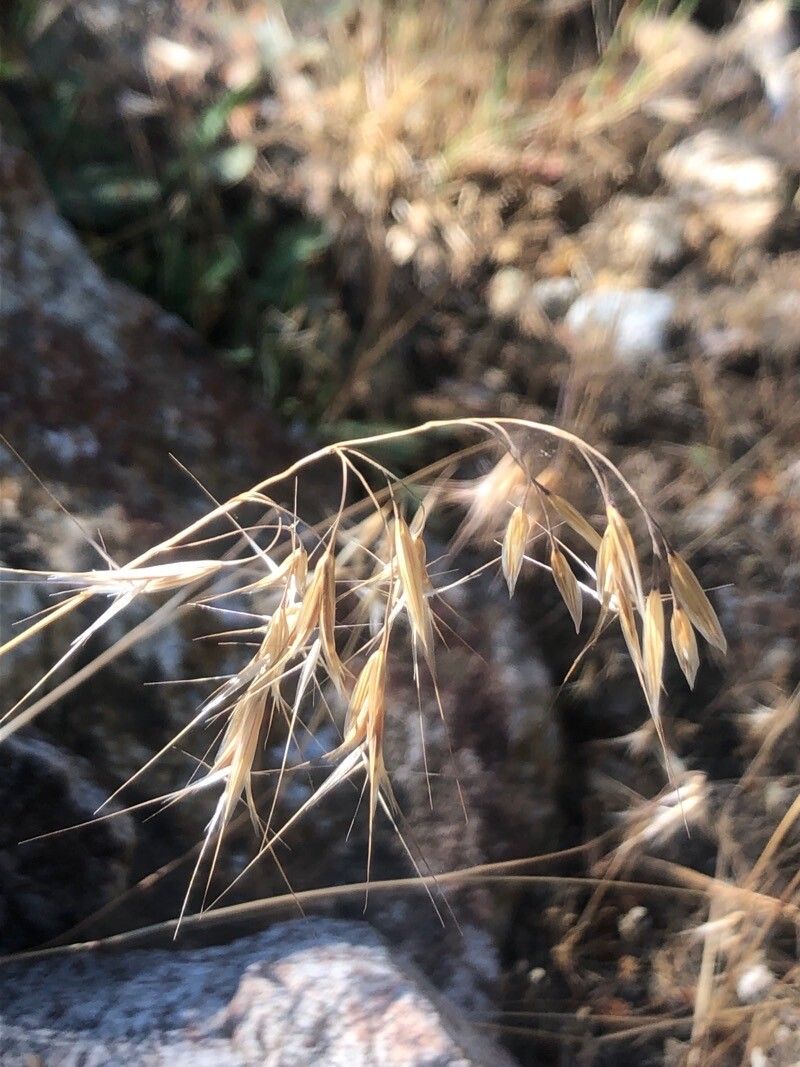
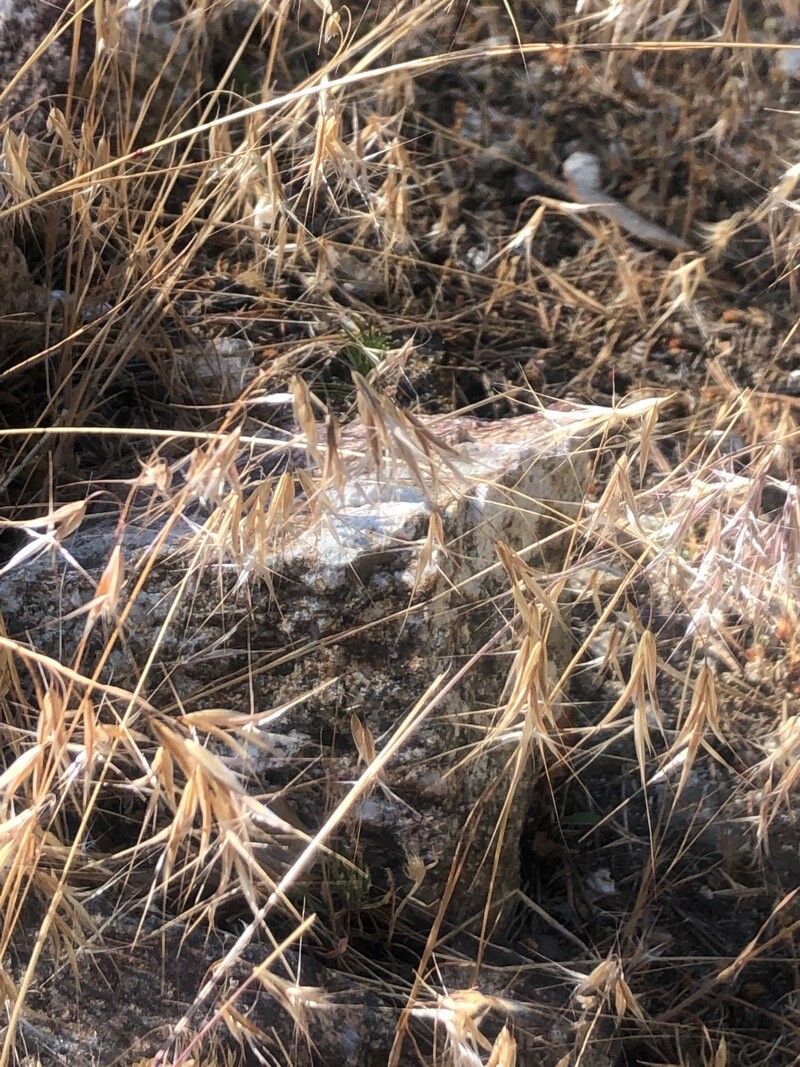
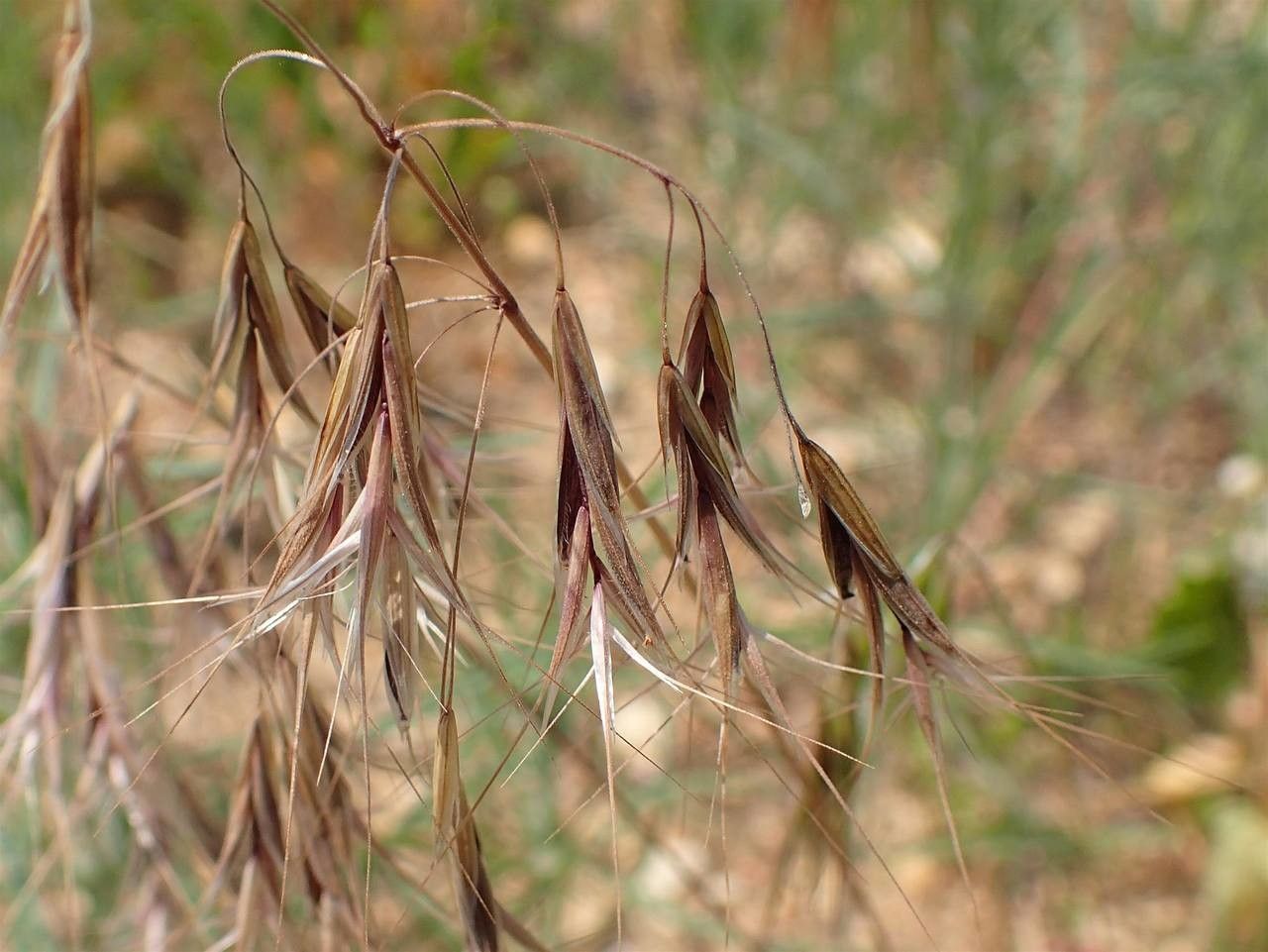
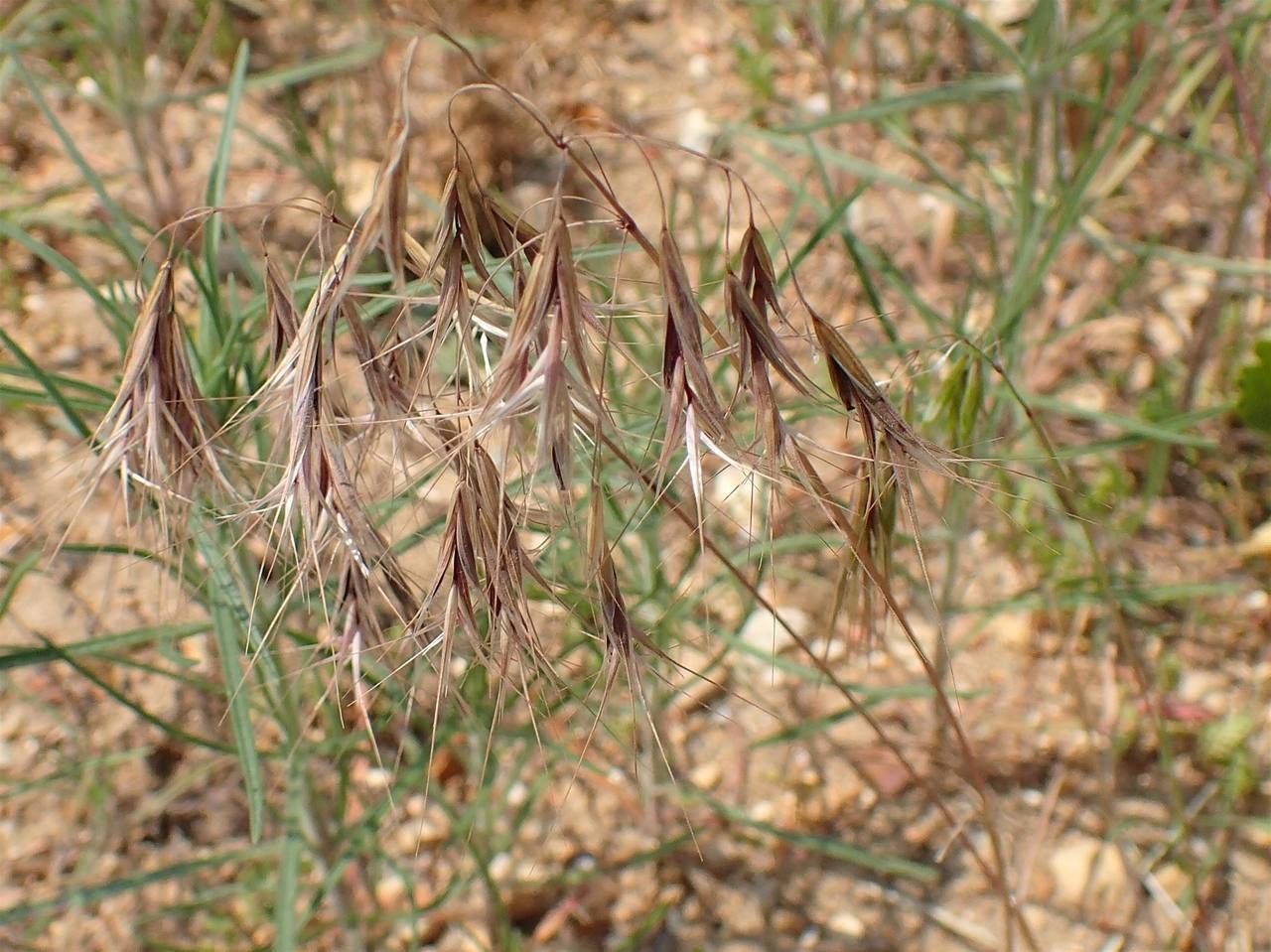
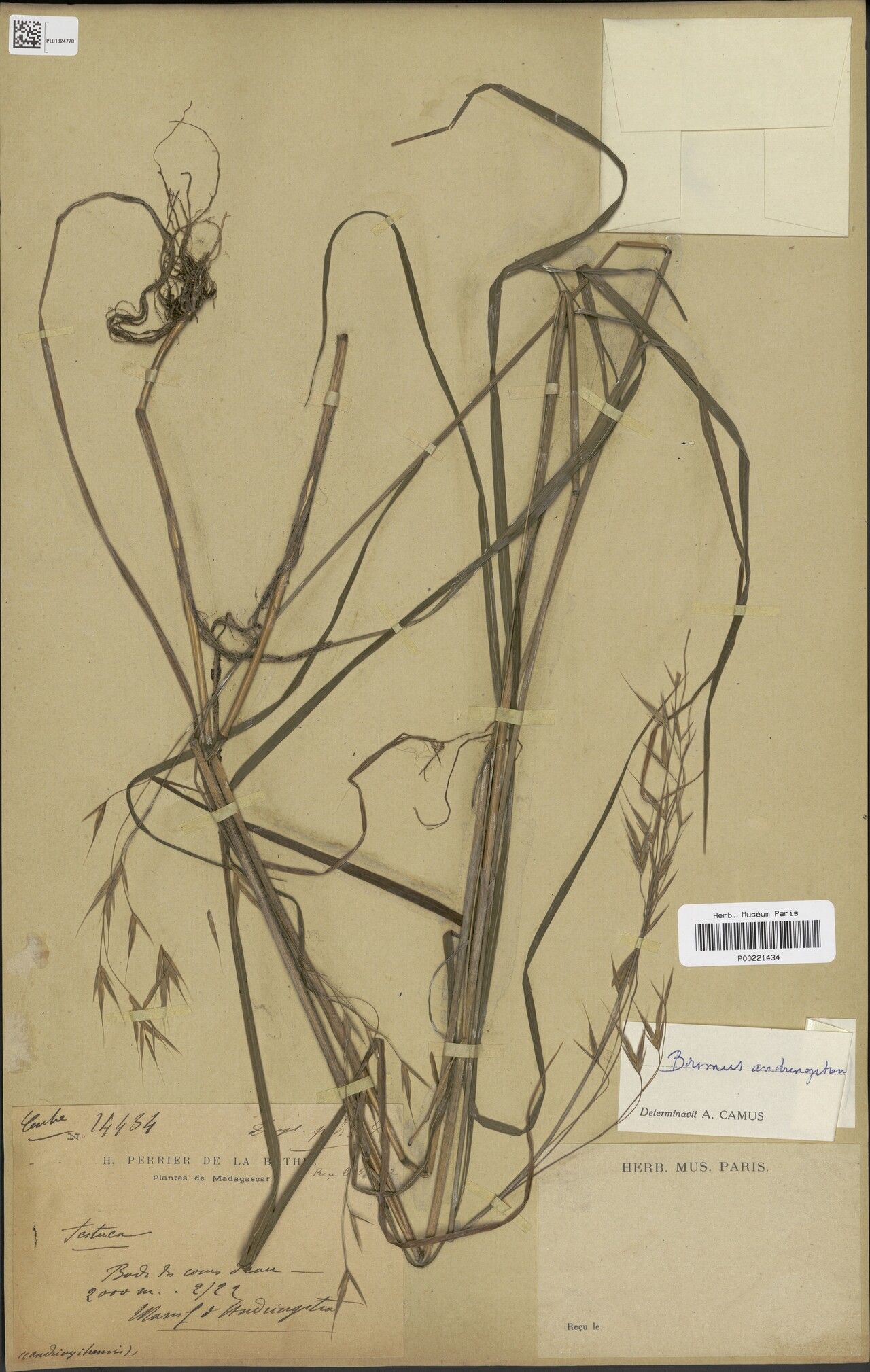
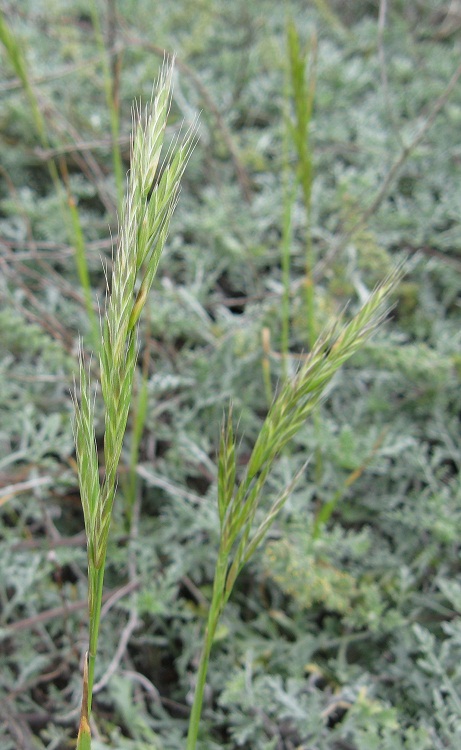
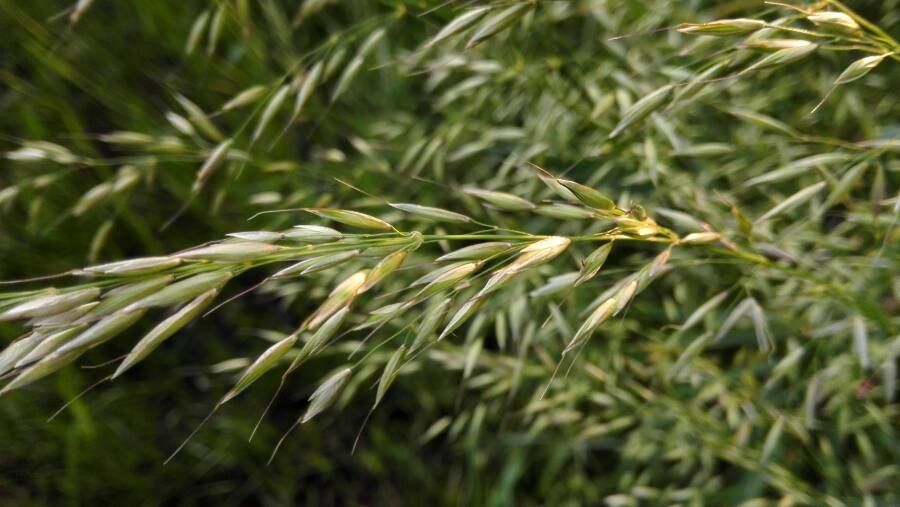
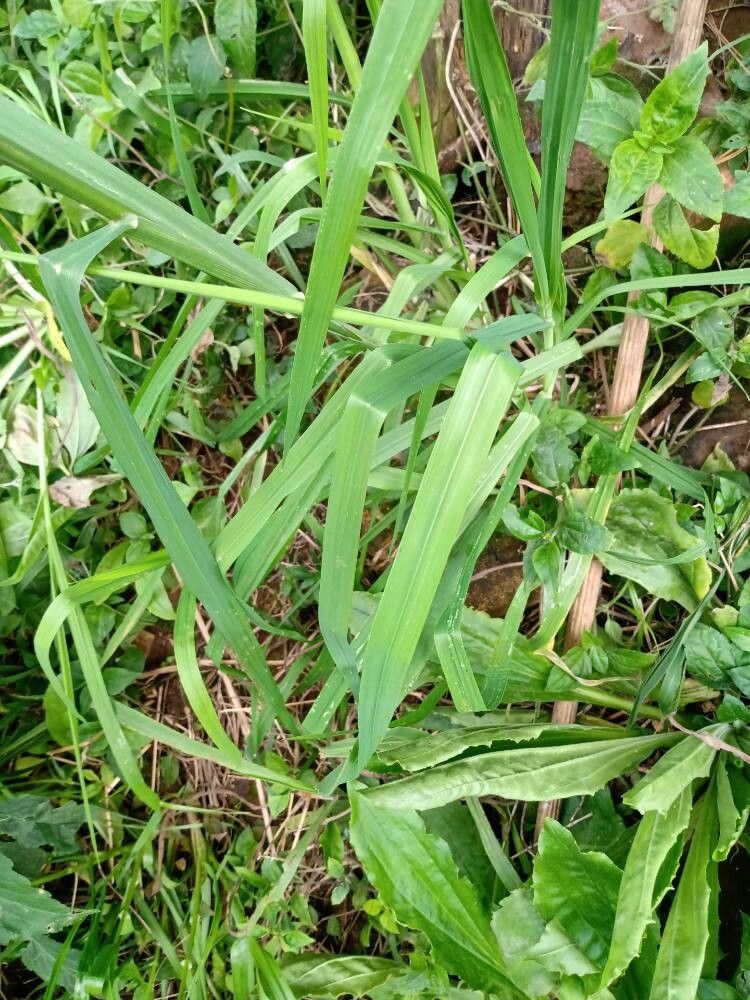
Bromus tectorum, known as downy brome, drooping brome or cheatgrass, is a winter annual grass native to Europe, southwestern Asia, and northern Africa, but has become invasive in many other areas. It now is present in most of Europe, southern Russia, Japan, South Africa, Australia, New Zealand, Iceland, Greenland, North America and western Central Asia. In the eastern US B. tectorum is common along roadsides and as a crop weed, but usually does not dominate an ecosystem. It has become a dominant species in the Intermountain West and parts of Canada, and displays especially invasive behavior in the sagebrush steppe ecosystems where it has been listed as noxious weed. B. tectorum often enters the site in an area that has been disturbed, and then quickly expands into the surrounding area through its rapid growth and prolific seed production.The reduction of native plants and the increased fire frequency caused by B. tectorum prompted the United States Fish and Wildlife Service (USFWS) to examine if the greater sage-grouse needed to be listed as a threatened or endangered species due to habitat destruction. After the review was completed by the USFWS, Secretarial Order 3336 was signed with the goal of reducing the threat of rangeland fires and preserve habitat by reducing downy brome. Research has shown that ecosystems with a healthy biological soil crust and native plant community will be resistant to B. tectorum invasion. In areas where B. tectorum is invasive treatments that are being researched/used by land managers to control B. tectorum include seeding of native plants and non-native bunch-grasses to out compete B. tectorum, herbicides, and prescribed burns. The effectiveness of these treatments is tightly linked to the timing of the water availability at the site. With precipitation shortly after herbicide and seeding treatments increasing the success, and overall high precipitation increases B. tectorum growth, causing the treatment effects to be statistically insignificant.
Cheatgrass is fairly resistant to diseases and is generally not vulnerable to them. Nonetheless, it can be affected by pests and diseases present in its environment. Such infections are typically mild. Regarding care, this plant requires a moderate amount of maintenance. It should be pruned regularly to preserve a neat appearance and support healthy growth. Fertilizing can also help encourage flowering. Cheatgrass is appropriate for anyone with outdoor space, like a garden or patio, and does not demand extensive care experience. It may need more attention when grown indoors.
How to keep Bromus Tectorum.
Light
Cheatgrass grows best in locations that provide plentiful sunlight. Too little light can limit its growth, while too much light generally does not significantly harm it. Coming from open habitats, it is adapted to receiving a generous amount of light throughout the day at every stage of its growth cycle.
Water
Cheatgrass is well-adapted to arid environments where it is able to conserve water and thrive in dry conditions. Although it can grow in various climates as an invasive species, cheatgrass requires careful management of soil moisture. To maintain balance and prevent excessive growth during its vigorous growing season, it should be watered only once a week.
Temperature
Cheatgrass originates from cool, temperate regions and prefers temperatures of 68 to 95 °F (20 to 35 ℃). As the seasons change, adjust its environment to replicate those conditions. If temperatures fall below that range in winter, protective measures may be necessary.
Fertilizer
Cheatgrass does well with regular, light applications of fertilizer to encourage healthy leaf development. You should apply fertilizer to Cheatgrass about once a month during the summer. Nitrogen is important for foliage, and providing nitrogen-rich sources helps Cheatgrass prosper.
Botanical profile.
- Plant Type
- Herb
- Life Cycle
- Annual
- Genus
- Bromus
- Family
- Poaceae
- Hardiness Zone
- 7-10
- Mature Height
- 40 cm to 91 cm
- Mature Spread
- 11 cm
- Leaf Color
- Green
- Leaf Type
- Semi-evergreen
- Flower Color
- White, Yellow, Green, Purple, Brown
- Flower Size
- 0.10 cm to 0.20 cm
- Bloom Time
- Late spring, Early summer
- Planting Time
- Spring, Autumn
- Harvest Time
- Early summer, Mid summer
- Native Area
- Egypt, India, Turkey, Sweden, United Arab Emirates, Slovakia, Montenegro, Pakistan, Croatia, Slovenia, Morocco, Yemen, Belarus, Uzbekistan, Iraq, Germany, Jordan, Romania, Belgium, Moldova, Portugal, Nepal, Saudi Arabia, Netherlands, France, Tajikistan, Tunisia, Czech Republic, Cyprus, Bulgaria, Poland, Armenia, Greece, North Macedonia, Ukraine, Serbia, Lebanon, China, Norway, Afghanistan, Syria, Kyrgyzstan, Kazakhstan, Italy, Spain, Switzerland, Mongolia, Israel, Bosnia and Herzegovina, Bhutan, Iran, Albania, Azerbaijan, Algeria, Hungary, Kuwait, Turkmenistan
Other names.
Reader questions.
How should I water my Cheatgrass to make it grow well?
To water Cheatgrass, you have a few options such as using a garden hose with a spray nozzle, a watering can, or any other common watering tool. Cheatgrass isn't too particular about the type of water it receives, whether it's rainwater, tap water, or filtered water. It's best to avoid watering this plant from above as it can harm the leaves and flowers and potentially lead to disease. A drip irrigation system is often the most effective way to water Cheatgrass, as it delivers water evenly and directly to the soil. If you're growing Cheatgrass in a container, you can use a cup, watering can, or tap water to water it directly into the soil.
What are the sunlight requirements for cheatgrass?
Cheatgrass thrives best when exposed to abundant light, requiring above 6 hours of sunlight daily to ensure optimal growth. It is important to watch how sunlight moves through your garden and select locations that provide a balance of light and shade. Originating from open habitats, cheatgrass is accustomed to ample sunlight throughout all stages of its growth, meaning too little light might hinder its growth while excessively high amounts won’t considerably damage it.
What is the ideal temperature for growing Cheatgrass?
Cheatgrass, scientifically known as Bromus tectorum, thrives in cool, temperate climates. It prefers temperatures ranging from 68 to 95°F (20 to 35°C). To ensure the plant's health, it is essential to adjust its environment to mimic these conditions as seasons change. During winter, the plant has strong cold resistance, but if temperatures are expected to fall below -15°C, cold protection measures should be taken, such as covering the plant with soil or straw. Additionally, watering the plant abundantly before the first freeze in autumn is recommended to maintain soil moisture and help prevent drought and water scarcity during the colder months.
What do I do if I give my Cheatgrass too much or too little water?
The solution to underwatering Cheatgrass is simple: when you notice your plant needs more moisture, water it regularly. However, overwatering can be a serious problem. If you don't catch it early, your Cheatgrass may get diseases and die. To prevent this, choose a proper growing location with sunlight and good drainage. If your potted Cheatgrass is overwatered, consider changing it to a pot with better drainage. When repotting, make sure to use loose soil and an efficient draining pot.
How does artificial lighting support cheatgrass growth?
Artificial lighting becomes crucial for cheatgrass, especially for indoor plants or during periods when natural sunlight is insufficient, like winter or in less sunny spaces. LED lights are recommended due to their ability to be customized to provide specific wavelengths needed for optimal growth. For full sun plants, 30-50W per square foot is needed; partial sun plants require 20-30W per square foot, and full shade plants need 10-20W per square foot. The artificial light source should be placed 12-36 inches above the plant, mimicking natural sunlight for about 8-12 hours per day to promote faster, healthier growth.
How does Cheatgrass react to low temperatures, and what should I do in spring if it has been exposed to extreme cold?
Cheatgrass is cold-tolerant and performs best when temperatures stay above 20°C, though it should ideally be kept above 0°C during winter. If exposed to temperatures below -15°C, there might not be noticeable changes during winter; however, a decrease in sprouting or a complete lack of sprouting might be observed in spring. If this happens, any parts of the plant that have failed to sprout should be removed come spring to promote healthy growth.
How many times should I water my Cheatgrass?
To successfully water Cheatgrass, keep in mind the following tips. During the growing season, which starts in spring, aim to water the plant once a week. As the weather gets warmer, you may need to increase the frequency to two to three times per week. However, be cautious not to exceed this rate as it can harm the Cheatgrass. Additionally, it's crucial to maintain relatively moist soil, but not overly saturated, regardless of how often you water. Watering Cheatgrass in a pot differs slightly. Due to the pot's tendency to heat up and soil drying faster, you'll generally need to water container-grown Cheatgrass a few times per week compared to just once for an in-ground plant.
What are the symptoms of inadequate light exposure in cheatgrass?
Cheatgrass displays several symptoms when it does not receive sufficient light, including small and light-colored new leaves, leggy or sparse growth, faster leaf drop, slowed or halted growth, chlorosis, sunscald, leaf curling, wilting, and leaf scorching. These symptoms indicate the plant is struggling with light deficiency, affecting its growth, photosynthesis process, and overall health.
How does Cheatgrass respond to high temperatures, and what measures can be taken to protect it?
During the summer, it's crucial to keep Cheatgrass below 35°C, as exposure to temperatures exceeding 41°C may cause the leaves to lighten in color, curl, become susceptible to sunburn, or in severe cases, the entire plant may wilt and dry up. To protect the plant in such conditions, trim away any sunburned or dried-up parts and move it to a location that is shaded during the midday and afternoon sun. Using a shade cloth to create shade can also be beneficial. Additionally, watering the plant in the morning and evening can keep the soil moist and help alleviate the stress from high temperatures.
How much water does my Cheatgrass plant require?
There are a few ways to decide how much water to give your Cheatgrass. One approach is to check the soil moisture by feeling it. Water until the top six inches of soil feel damp. Another option is to use a specific measurement. Generally, give your Cheatgrass about two gallons of water per week, considering factors like temperature and soil dryness. However, this method may cause overwatering if your plant needs less water. When growing Cheatgrass in a container, use a different approach. Make sure all soil layers are moistened by watering. Test by sticking your finger in the soil or look for excess water draining from the pot's holes.
How can you manage light exposure for cheatgrass for optimal health?
To manage light exposure, gradually move cheatgrass to sunnier locations until it reaches at least 6 hours of direct sunlight daily. If moving the plant isn't feasible, consider using artificial light, keeping a lamp on for at least 8 hours daily or investing in professional grow lights. For outdoor plants, avoid drastic changes in light exposure to prevent sunburn. Reducing obstructions like pruning trees or relocating plants can also help maximize sunlight exposure. Note that parts of the plant affected by insufficient sunlight might not recover, but new growth should be healthier after adjusting light exposure.
How can I know if I am giving enough water to Cheatgrass?
Caring for Cheatgrass can be challenging when it comes to watering. On one hand, the plants have deep roots that need weekly moisture. However, Cheatgrass are prone to root rot and browning if overwatered. Underwatering is less of a concern as Cheatgrass can survive without additional watering for quite some time. However, if the plant goes too long without water, it will wilt and its leaves may become dry.