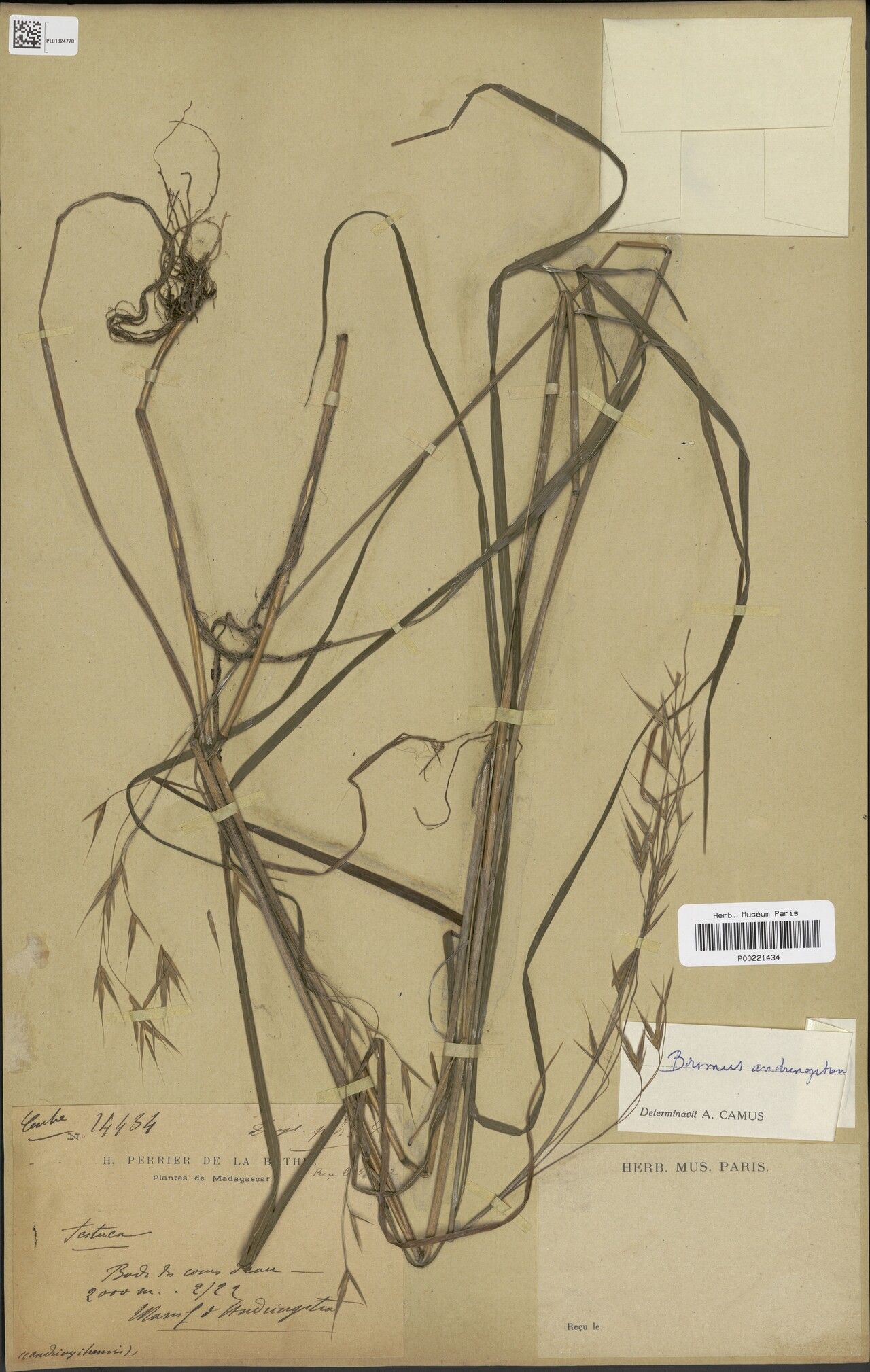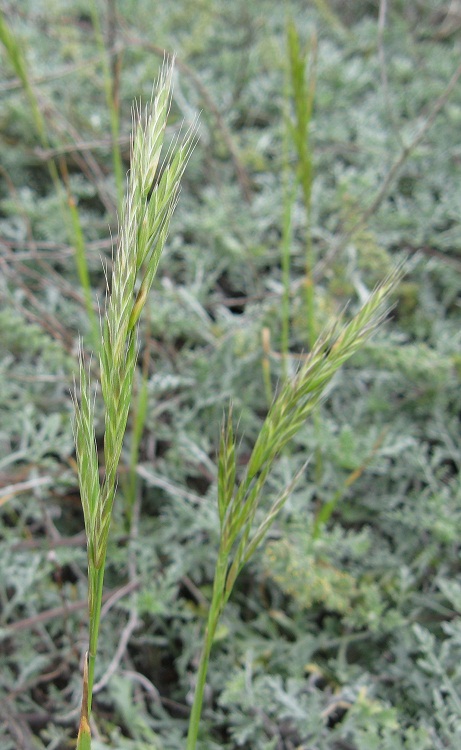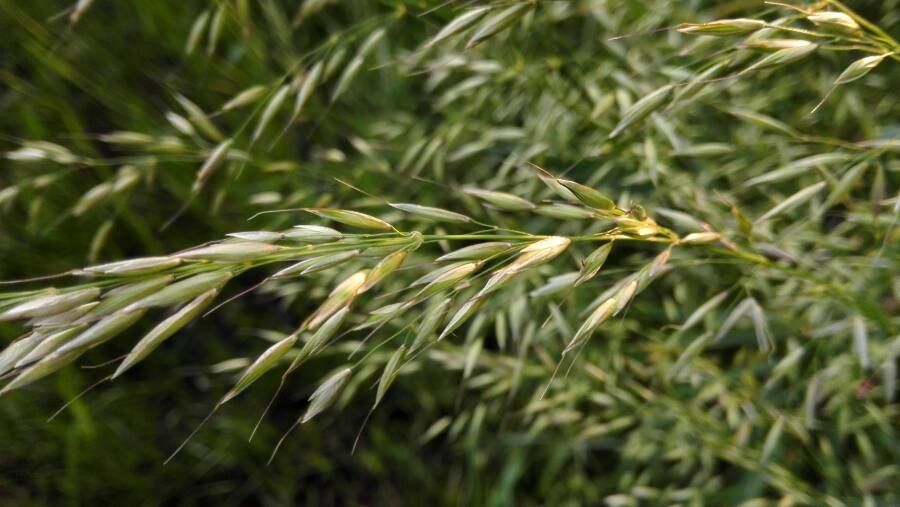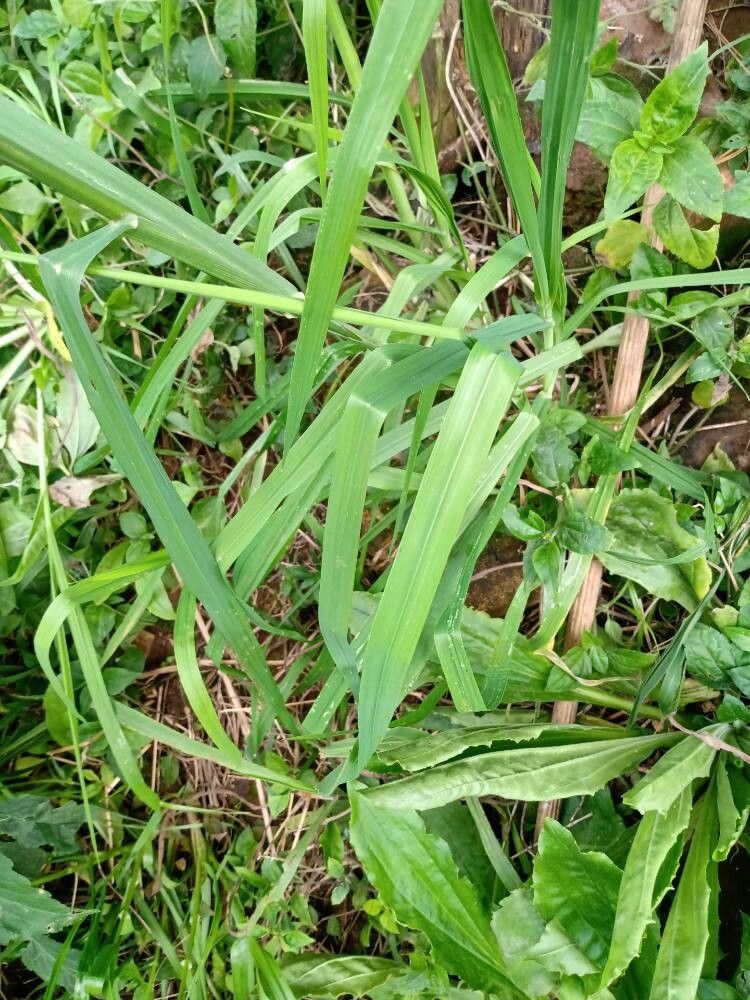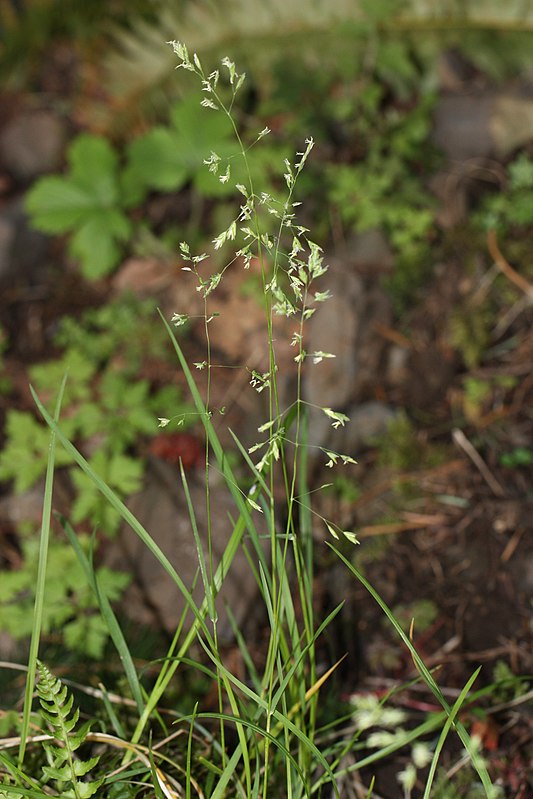
Bromus sitchenis, the Alaska brome, is a perennial grass native to the North Pacific coast of North America, in woods and banks from Alaska to Oregon. It can grow up to 1.8 m tall, but is often shorter. Leaf blades are elongate, 7–12 mm wide, and as much as 35 cm long. Spikelets 2.5 to 3.5 cm long with between 6 and 12 flowers, awn is 5 to 10 mm long.The grass has winter dormancy, and is intolerant of aluminum in the soil. There is some utility as a forage crop in cooler, wetter regions.The species appears to have been naturalized in Belgium as well as New Zealand.
Alaska brome has strong resistance to disease and is typically not susceptible to illnesses. This plant is fairly low maintenance. When grown outdoors it needs only minimal watering, and larger specimens usually do not require pruning. Smaller plants, however, should be trimmed after they finish blooming. Alaska bromet is appropriate for anyone with outdoor space, such as a garden or a deck, and does not demand extensive gardening experience.
How to keep Bromus Sitchensis.
Light
Alaska brome is a sun-loving herbaceous perennial that originates from open habitats and commonly thrives in meadows and grasslands. It prefers full sun but can also tolerate partial sun.
Temperature
Alaska brome can tolerate a wide range of temperatures, though its range can still be restricted by various combinations of moisture and heat. It grows best in warm summer conditions with sufficient rainfall or irrigation. Extended periods of cloudy, rainy weather or prolonged high temperatures can raise the chance of Alaska brome dying. In winter, protecting it from cold can increase its survival.
Fertilizer
Alaska brome needs extra nutrients to encourage healthy new growth. In spring, putting compost around the plant's base can effectively supply the nourishment it requires. Fertilizing helps promote vigorous growth and improves the plant's resistance to diseases and pests.
Pruning
Alaska brome is a type of tall, tufted grass known for its distinctive nodding inflorescences. To promote healthy growth, improve air circulation, and lower the risk of disease, it is best to prune it in early spring. Pruning at this time removes dead stems and encourages new growth, helping to maintain the plant's natural beauty and align with its growth cycle.
Botanical profile.
- Plant Type
- Grass
- Life Cycle
- Perennial
- Genus
- Bromus
- Family
- Poaceae
- Hardiness Zone
- 4-8
- Mature Height
- 0.61 m to 1.52 m
- Mature Spread
- 30 cm to 61 cm
- Leaf Color
- Green
- Leaf Type
- Deciduous
- Flower Size
- 1.02 cm to 2.03 cm
- Bloom Time
- Early summer, Mid summer
- Planting Time
- Spring, Summer, Autumn
- Harvest Time
- Late summer, Early fall